
Inogashira Park, Near Spring
Inogashira Park is always good for birding, if only sometimes for ducks. It’s also good for up-close birding, as the birds get fed by visitors regularly, and so are fine with people getting close to them. That allows for good, up-close photos.

One duck that is commonly found at Inogashira is the Mandarin, a very colorful drake along the lines of the Wood or Harlequin Ducks. Mandarins at Inogashira tend to gather right off a little, off-the-main-walkway path at the far west end of the park’s lake. Go along this path, and you can practically walk right up to them. They often rest in mating pairs on low branches near the water, and immature ducks can be seen as well.


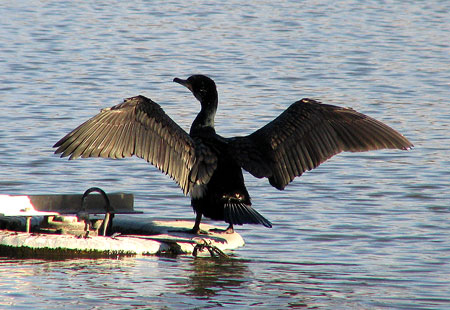
Although not great in number, Cormorants can also be seen. This one below is doing what a lot of Cormorants do, holding out its wings in the breeze. A Cormorant’s feathers are not fully waterproof, so it must do this after swimming in order to dry off.
A common duck at Inogashira is the Tufted Duck:
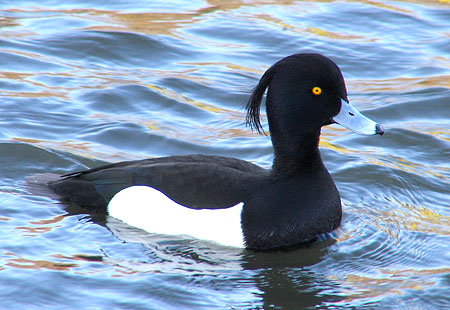

The first is a drake, the second a hen. Both have the crest, but the male’s is much more in the style of Elvis.
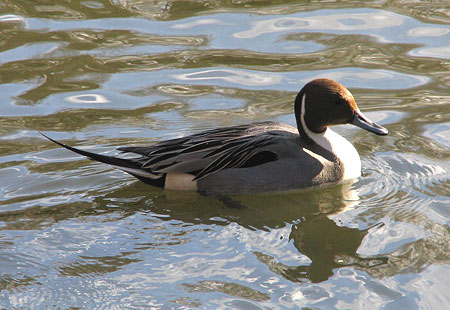
The Northern Pintail is easy to spot; it’s a larger though more slender duck, with the namesake tail.
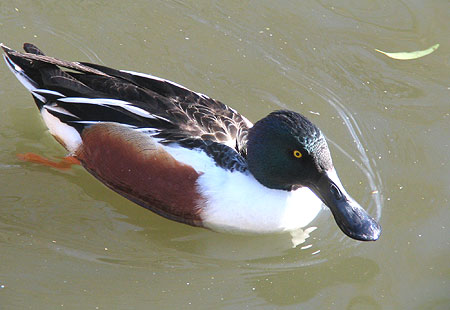
The Northern Shoveler is also easy to spot; it may have a superficial resemblance to a Mallard (see below), but the spoon-shaped bill and the beady yellow eyes are a giveaway.


Rounding out the seven common Inogashira ducks (the Spot-billed is not pictured here) is the Common Pochard, similar to American Redheads or Canvasbacks, except for its bill, which has a black base and tip and a lighter color in between (the Redhead has only the black tip, and the Canvasback has an all-black bill).
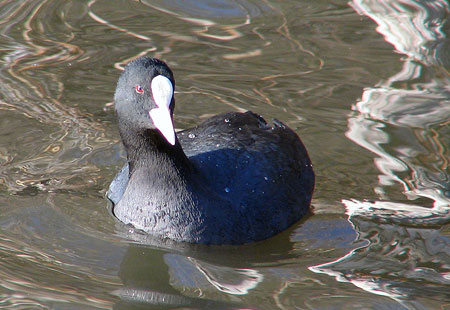
Swimming along with the ducks being fed along the main Inogashira Lake bridge was a Eurasian Coot. I’ve never seen one of these with the ducks at feeding before; usually they’re off at the west end by themselves.

A relative to the Coot is the Common Moorhen, smaller and more colorful. These can often be spotted along the main bridge, though usually they hang back at the rear behind the feeding ducks.
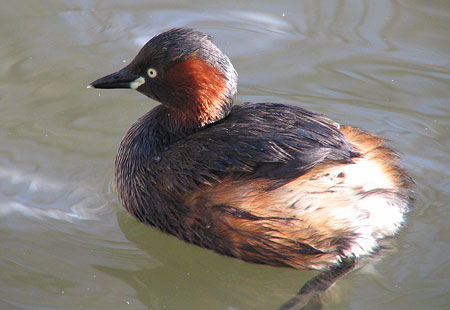
Finally, there’s the Little Grebe, a little fuzzball which can sometimes be seen at this park. This one came right up to a lakeside feeding area, to my surprise; usually they’re out on the lake doing their usual diving behavior.
Aside from these birds, there were the usual numerous crows, and you could easily hear the Brown-eared Bulbuls in the trees.
Next: the Tokyo Port Wild Bird Park.