
A Year Later
It’s 3/11.
Last year, it was a Friday, and like today, we were emerging from winter, still cold but warming. I was at school, on the 6th floor of my college’s building with other faculty members, preparing for my afternoon classes.
When the quake started at 2:46 pm, we felt a slight shaking. It was so similar to quakes commonly felt–Tokyo gets them all the time–we simply noted it at a level where we wondered whether or not to even say anything, to note, “hey, there’s a quake.”
This is also where you stop what you’re doing and pause, knowing that it could get bigger. And it did.
After a few seconds, the quake intensified to the level where we thought, “Wow, this one is a bit bigger than we normally feel.” Again, we felt it was nothing big, but at the same time, remained paused and alert should it grow.
And it did. By the third increase, we were all beginning to fear that this was a large one. I think somebody said that, something like “this could be big!”; it might even have been me, I don’t remember.
I think it was about at the time of the fourth surge that we got the distinct impression that it was big. A free-standing divider wall started shaking more than we’d seen it in even the strongest quakes. Things we’d never seen move before started moving.
And then it got intense. Books and stacks of paper started shifting across desks and shelves. You could hear the structure of the building beginning to complain. Furniture on casters, like chairs and the copy machine, started moving around. People started to scramble for cover, moving under desks; I got under a desk chair well myself.
And then we hit the strongest stage. Things started flying around; desk drawers flew open. Most items on the desks were dumped onto the floor. Under the desk, I re-evaluated the wisdom of being there as the damn thing kept moving back and forth, in the process banging the side of my head every beat of the quake.
It was at this point that everyone started to fear that the building itself would collapse. We were all thinking, “this is the big one.” However, I remember also realizing at the time that if it had been centered in Tokyo, or nearby, it would likely by more vertical in the shaking, and probably would not build as slowly as it did. It struck me that, as bad as this was, we were not even close to the epicenter. And yet, this was a huge quake, stronger than anything I’d ever felt–and I lived all of my life in either the San Francisco Bay Area, a few miles from the San Andreas fault line, or in Tokyo, near the convergence of four major tectonic plates (North American, Eurasian, Filipino, and Pacific).
A geologist who lectured on the event at LCJ later told me that the quake was actually a series of events, each one triggered by the last, this being the reason for the stages of intensification, rather than all the force hitting at once.
Eventually, after what seemed like five minutes but was more likely two or three, the quake started dying down. We came out from our hiding places and it began to sink in what had happened. The office looked exactly like this:

We evaluated and then acted. After something this big, we knew we could not stay in the building. We had no idea if an aftershock could send the structure tumbling down or not. After taking a few photos like the one above, I started going down through the building, telling people to make their way down to the street, where we’d organize and move to an evacuation area. When I got to the library, it was a mess. Books were literal everywhere. Thanks to the librarian’s foresight in having special braces on the stacks, however, none of them had fallen, and our students were spared injury from that, at least.

We got down to the street, really unprepared for what was going on. Few thought to bring their things with them, and some were without sufficient layers in the still chilly air. Everyone was outside chatting, people trying to figure out what happened, speculating on where the earthquake had been centered. Phones were out, but 3G Internet connections were still going (they slowed after the quake, but never stopped), and within a 10-15 minutes, we started seeing reports on news services, reporting a 7.9 quake.
We were hardly the only ones outside. Everyone was. I never knew, for example, how many dogs lived in the area, but walking around, you could see all the tenants of local buildings, gathered with family and pets. Workers from all nearby offices wandered around or clustered together.
Aftershocks hit frequently. There was a 40-story high-rise under construction nearby, still with four cranes at the top of the building, each with a crow’s nest control booth. We could still see them swaying widely. I can only imagine what it must have felt like to be in one of those when the quake hit. It must have been a nightmare.
There was surprisingly little damage. A few ceramic roof tiles falling to the street and breaking was as bad as it got in most places. The worst I saw that whole day was near the evacuation center, where a retaining wall for a temple and cemetery broke and spilled earth down on to the street below.

We eventually migrated to a nearby school yard designated as a post-disaster gathering place. We had established the fact that no one was hurt in the actual quake–very few were in Tokyo, surprisingly. Students began grouping and talking. I remember one student mentioning that they had family up in Tohoku, where by this time we knew the quake had struck. He was worried about them, worried about a tsunami. I believe that was our student from Ishinomaki, one of the towns most devastated by the tsunami.
After an hour or two, it was apparent that everything was under control. The staff were organizing what to do, and most teachers had no way home and were set to stay with the students in the same situation. Some students were already filtering out, especially those who lived not far away. Others had gone to local train stations and had come back–the lines were out and not likely to start running anytime soon.
Two to three million people commute into Tokyo every day, and now they had nothing but their feet to take them back. Good luck getting a taxi. I don’t even know if buses were running, but if they were (traffic was actually rather normal), they were bound to be overflowing.
I was in a special situation. Usually, I take the train like everyone else, as I have since we moved out to West Tokyo. However, that day, by pure chance, I had my scooter. I needed to get some documents from city hall for our house purchase, and I had decided on the spur of the moment to use my scooter and pick up the documents on the way.
Luckily, while everyone was being taken to the evacuation area, I decided to go to a gas station and fill up. I say it was lucky because after that afternoon, gas became incredibly scarce (due to refinery fires and broken distribution lines). When I got to the gas station–an expensive one, being in downtown Shinjuku–business was surprisingly light. I was even more surprised that the gas station was still operating after such a huge quake. I filled up my tank–the last gas I would be able to get for another two weeks.
However, after everything was getting squared away, I was beginning to worry about Sachi. Phones were out, and I could not get in touch with her by text messaging. I felt guilty leaving the school and the students, and stuck around for as long as I felt I could be useful, but eventually, could not take it any more. People were already striking out to walk home–some of them 5-15 kilometers away–and enough faculty and staff were staying on that there would be no lack of supervision. As everyone prepared to head back to the school for shelter for the oncoming evening, I took my scooter and headed home, traveling with a regularity few enjoyed that day.
Traffic was normal, and damage along the way was very hard to notice. Some emergency vehicles were out and about, but on my way home, things looked surprisingly normal. I got home, and Sachi was OK. Nothing was damaged. Later that day, I rode my bicycle to the house we would later buy, and it all checked out–no damage there, either.
So we watched the news, and learned of the tsunami, and learned of Fukushima. There is a gravity to such things as they unfold, a terrifying slowness, a feeling of falling, out of control, and nothing to do but watch. We saw the eastern coastal cities washed under water, we saw the buildings at the nuclear plant literally explode. We began to study wind patterns and find web sites to monitor radiation levels.
With Fukushima, everything was clouded by politics and secrecy. Neither TEPCO nor the Japanese government were telling the public what they needed to know. People in the nuclear industry reported that things were not nearly as bad as they were. People in the anti-nuclear realm regularly forecast major disasters, some saying that it was inevitable that much of Honshu would be uninhabitable. You feared the worst, hoped for the best.
The people hardest hit were in fact in the path of the tsunami. At least 20,000 people died. Entire towns were wiped out, erased with a graceless swath of ocean. It will take years before anything like normalcy will return for most of them. They still need help today.
Distribution lines were cut, suppliers temporarily out of business. Instant noodles, toilet paper, and batteries disappeared the most quickly, but for at least 10 days, half the shelves at most markets were empty. You could get food well enough, but at that point, we weren’t sure how long any of this would last, so there was some insecurity. Bread, milk, and other perishable goods returned to market shelves in Tokyo after a little less than two weeks. Some brands and products never returned, making us wonder why they didn’t.
My school shut down operations, switching to online mode, with teachers handling students from a distance. Aftershocks, large ones, hit regularly. In the days following the quake, they hit every hour or two, or so it seemed.
Fukushima, however, overshadowed everything. The tsunami, as terrible as it was, was over; the plight of those who had lost everything was drowned out by the drama of the nuclear power plants.
Foreign media and governments tended to react badly, If the Japanese government played their cards too closely, the foreign reaction was the equivalent of a meltdown on its own. TV reporters tried to sensationalize everything, suggesting that Tokyo was gripped by panic and fear. People were “evacuating” the capital city, and the streets were deserted by a fearful populace.
The truth, however, was far from that. The only people I saw panicking were some foreign residents, primarily the ones who paid too full heed to the alarmists warning that Japan was effectively a death trap waiting to explode. Most Japanese people I knew took the whole thing as calmly as you could expect anyone to. People were uneasy, but there was nothing much anyone could do about it, so life went on. The empty streets reporters highlighted as evidence of panic were in fact empty because businesses were shut down and trains were not running regularly. Expecting people to mill around as usual in a downtown area which had been more or less shut down was a ridiculous proposition at best.
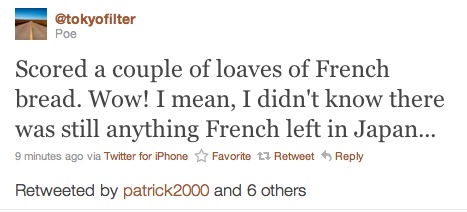
Because of the sensationalist hair-on-fire attitude of the foreign media, a lot of people left, many never to return. Many of the rest of us who stayed were less than respectful, I will admit. One person I knew, who commonly freaked out at things like the health hazards of WiFi base stations, left Tokyo for good out of fear of the radiation–and relocated, in all places, to Poland. This person had roots there, but I am not sure if they were aware that Chernobyl was not far away and probably represented just as serious a radiation threat as Fukushima did to Tokyo.
Foreign reporters covering the tsunami would either stay in Tokyo to avoid traveling anywhere near Fukushima, or else would take incredibly circuitous routes to get around the radiation plumes–apparently unaware that their flight to Japan exposed them to more radiation than they could possibly be exposed to by anything less than being close up and personal with the nuclear plant itself.
It’s a year later, and while Fukushima is pretty much screwed, we seem to be doing just fine here in Tokyo.
As I said, the victims of the tsunami were the ones who actually deserved the attention. And far from running around in a panic, they held up as gallantly and as well as one could hope. Here’s an excellent example of a man coming out of his ruined house, in the midst of a destroyed town. At age 72, he looked out cheerfully and said, “Let’s rebuild again!”
That was more like how Japan reacted.
A year on, the region is still devastated, but people are resilient. Life goes on. You want to see how things have happened, see if you can catch this movie, Pray for Japan, which documents what happened in Ishinomaki. That town, by chance, is where one of my college’s students came from, and which my school has focused on helping since then.