Archive

Author Archive

What Your Beliefs Are Based upon Does Count for Something

January 1st, 2011 7 comments

It’s telling that those who accept global climate change do so because they accept the science, even though it goes against their own personal interests. Truth be told, we want to gulp up energy using all of our modern conveniences and drive big, cheap gas guzzlers just as much as the next guy, when it comes right down to it. Those who oppose global climate change do so not because of any scientific models–in fact, it’s despite the science, “dissenting experts” BS aside–but because they are ideologically opposed and/or because they don’t want to go to the trouble or expense required should the theory be true. Like everyone else, they also want to enjoy conspicuous energy consumption. But instead of accepting a painful truth and making sacrifices, they simply reject the science so they can enjoy the luxuries without believing they are destroying the world for future generations in doing so.

In short: one side believes against their personal interests because the science tells them so, and the other believes because it is personally and politically convenient to do so. Which has more likelihood of being correct?

Categories: Quick Notes, Science Tags:

Happy New Year!

January 1st, 2011 3 comments

Actually, it was two hours ago. Going to bed now. Still, Akemashite Omedetou Gozaimasu, wherever you may be!

Categories: Main Tags:

Once Again: Record Snowstorms Support Climate Change, Not the Opposite

December 30th, 2010 1 comment

Not that climate change deniers are usually honest, but if they really do respect fact instead of what they want to believe or what they want others to believe, then it’s time they recognize the long-known fact that global climate change does not mean everywhere gets hotter and snowfall decreases. Global warning trends disrupt weather patterns, causing some places to get colder despite overall warming. And more warmth means more evaporation which means it snows more in winter.

There. I’m sure that changed nothing.

Categories: Quick Notes Tags:

iPad Magazine Sales Mysteriously Drop

December 30th, 2010 1 comment

Reports are out that despite a couple of magazines having a strong debut on the iPad, sales are dropping rather quickly.

It’s a complete mystery as to why, except for the fact that it’s not. Sorry for the sarcasm, but it’s been crystal clear from the start why they’ve failed. And while some of the blame lays at the feet of the publishers, Apple is chiefly responsible. It sold the iPad as a media-industry savior, but did not give publishers a workable means of selling magazines.

Magazines are sold in two ways: newsstand and subscriptions. Newsstands work because people walk by, see an interesting cover, maybe leaf through it, and decide to buy it. You can’t do that on the iPad. Instead, you have to go to the app store and seek out either magazines or a specific magazine by name–it’s a multi-step process, in a location most people don’t even think of as a source of reading material. It’s like selling magazines at a hardware shop, and you have to ask for the magazines at the counter. And you can’t even see issue covers, unless you first download the app and check each one out. Most people just don’t buy magazines that way, certainly not at newsstand prices.

The other way is subscriptions, and Apple hasn’t been good in that respect, either. They demand their 30% off the top, and won’t allow magazine publishers to sell subscriptions elsewhere. Fair enough, I suppose–but Apple doesn’t even allow for subscriptions in the App Store–you just have to buy each copy as it comes out as an in-app purchase. Apple’s reluctance to let the publishers have direct contact with and information about the consumers is also reportedly a problem.

Apple needs to make a special effort for the magazines. Either create a magazine store or include mags in the iBook Store, for starters. Give publishers a special rate for subscription sells–they mark down, so why not Apple? And make subscriptions possible, of course.

Not that Apple is wholly at fault on this, of course. Some publishers are still freaking out about piracy (a huge issue with textbook publishers, gee I wonder why). These people have simply got to get over themselves. Their paper issues are just as pirate-able, but unless they feature porn, they simply aren’t a target for the pirate crowd.

Most notably, however, publishers have just been too damned greedy. They have way overpriced their issues. Almost all of them started out at $5 a pop, and many are still at that price point, despite subscription prices for the paper copies going for far less. People magazine, for example, started at $4 per issue but the most recent issue jumped to $5; you can get it for $2 per issue by mail. TIME is still $5 on the iPad, but less than 30 cents by mail–almost 18 times more expensive electronically. Most magazines fall within that disparity range, and most consumers will see that and will blanch. Yes, I know, newsstand prices–but that simply won’t work in the long run, and $5 for magazine content simply isn’t reasonable, when $12 can get you a novel. Many publishers simply saw the chance to fleece people who plunked down fair amounts for a sexy media device.

Yes, publishers have to create special versions for the iPad, but the lack of printing & distribution costs should make up for that and way more, just as with book publishers. Maybe it’s not as easy to cram ads into the electronic version, but I doubt that fully explains the prices either.

A lot of people undoubtedly went for initial issues for the novelty of it, and people who still buy are probably those who would pay the full newsstand price otherwise. But as it stands, this just will not work. Not unless the publishers start providing better selections at prices closer to subscription rates, e-mags simply will not sell. So Apple, get your act together and make a better magazine rack as well as subscriptions that don’t bleed the publishers, and publishers, get your heads out of your arses and give your readers more reasons than flashy presentation to buy your wares.

Categories: iPad Tags:

Obama to Give Manhattan Back to the Indians: Development of a Bizarre Right-wing Meme

December 29th, 2010 4 comments

When I saw this first, I thought it was out of The Onion. Then I figured, OK, it’s true, but it’s just some unknown blogger or wild-eyed rant rag publishing some looney conspiracy theory that even they didn’t take too seriously. It was a report that right-wing sites are clamoring that Obama is planning to give America, or parts of it, especially Manhattan, back to the Indians. OK, I thought. A left-wing site has taken some random post by a nutball wingnut blogger and had fun with it. The sad fact is… not really.

It regards something called the “United Nations Declaration on the Rights of Indigenous Peoples,” a document intended to symbolically recognize the suffering and mistreatment of the 370 million indigenous people around the world. It recognizes their equal rights and generally how they have been shafted throughout history. Naturally, this has aroused the ire or many who exist among the “shafting” peoples, worried that they might be called to actually do something about it, or worse, in the areas of the world where people are still being displaced because they live in areas others want to use, development of these new resources might be inconvenienced.

But in the U.S., this is a sore point primarily because of the fact that it points out rather unfortunate aspects of our own history. In short, we’ve done some pretty nasty stuff–stealing what they had, violating our agreements, and generally treating them like crap. Just recognizing this fact chafes the right wing, which prefers to whitewash history so that we never did anything wrong (or you are an America-hater who apologizes to people, as if America ever needed to do something so shameful and self-vilifying) or at least had really good reasons for doing things that kinda looked bad, but it wasn’t as bad as those left-wing traitors are trying to make you believe.

This, and their relentless quest to find anything to smear Obama with and make the American people fear and loathe him, have led right-wingers to find news in the fact that Obama has reversed Bush’s policy and now backs the UN declaration. They are making the claim that this will lead to court cases which will return U.S. property to Native American tribes. Well, at least that’s the tamed down version of the claim.

Keep in mind that the declaration is wholly non-binding, and has no real legal relevance.

Conservative coverage of the otherwise tame story started in the right-wing Washington Times, which dredged up concerns that Obama’s support for the declaration would lead to legal restitution battles:

Objections to the declaration include its potential to conflict with U.S. law, its failure to define exactly who indigenous peoples are, and its support for tribes seeking claims on lands occupied hundreds of years ago. Article 26 of the declaration states that “indigenous peoples have the right to the lands, territories and resources which they have traditionally owned, occupied or otherwise used or acquired.” …

Article 28 states that indigenous peoples “have the right to redress,” which can include “restitution” or “just, fair and equitable compensation” for lands and resources they have traditionally owned or occupied, but which have been “confiscated, taken, occupied” without their consent.

The article, printed on December 16, fell short of saying we were giving America back to the natives, but definitely raised concerns about reparations.

On the blogger level, this started generating concern, with the article reprinted on a number of right-wing sites.

Then, a few days later, right-wing news sites started reworking the story to a gradually more alarmist tone:

(CNSNews.com) – President Barack Obama, addressing a tribal nations conference at the White House last week, announded that the U.S. government is now supporting the United Nations Declaration on the Rights of Indigenous People, which includes a sweeping declaration that “indigenous peoples” have a right to lands and resources they traditionally occupied or “otherwise used.”

“Indigenous peoples have the right to the lands, territories and resources which they have traditionally owned, occupied or otherwise used or acquired,” says the U.N. resolution.

The story goes on to emphasize several points in the U.N. declaration which give the impression–especially to those steeped in right-wing mythology–that America will soon be awash with apologies to others, reparations, liberal-media-driven national self-recriminations, and so forth. Weight is given to the declaration as a driving legal force:

Brent Schaefer, an analyst with the Heritage Foundation, told CNSNews.com that although the U.N. declaration now supported by the Obama administration is non-binding, it represents a “significant policy shift” from the Bush administration.

Schaefer also said that before crafting legally binding international treaties, the U.N. usually starts the process with a non-binding resolution — a fact that will put the U.S. in a more difficult position if it objects to similar language in a formal treaty.

“It puts our negotiators in a weaker position going forward,” Schaefer said.

Introduced into the story at this point is a minor Obama PR event where, like pretty much every president before him, he welcomes members of a Native American tribe and accepts an symbolic offer to become a tribe member–in Obama’s case, the Crow tribe. Emphasis is put on the Crow name he is given: “One Who Helps People Throughout the Land.”

This again stirs a number of right-wing blogs into spreading the meme. Other sites jump forward to more alarmist language, but we’ll get back to that a bit later.

A few days after the CNS account, the story swings back to the Washington Times, which attempts to fan the flames with an editorial:

Some of UNDRIP’s articles are so vague that they promise virtually unlimited government largesse, such as Article 21: “States shall take effective measures and, where appropriate, special measures to ensure continuing improvement of [indigenous peoples’] economic and social conditions.” Those concerned that UNDRIP is a devious means to justify some form of reparations to American Indians for the sins Mr. Obama has declared the United States guilty of need look no further than Article 11. This proposition explicitly states that the government “shall provide redress through effective mechanisms, which may include restitution, developed in conjunction with indigenous peoples, with respect to their cultural, intellectual, religious and spiritual property taken without their free, prior and informed consent or in violation of their laws, traditions and customs.”

Articles 26 through 28 are even more alarming. They deal in detail with the issue of the “lands, territories and resources which [indigenous peoples] have traditionally owned, occupied or otherwise used or acquired.” UNDRIP compels governments to “establish and implement, in conjunction with [the] indigenous peoples concerned, a fair, independent, impartial, open and transparent process” for addressing historic land claims and asserts the “right to redress” for “confiscated, taken, occupied, used or damaged” lands. Compensation is to take the form of “lands, territories and resources equal in quality, size and legal status or of monetary compensation or other appropriate redress.”

It would be easy to dismiss UNDRIP recognition as the type of symbolic gesture the embattled president has to make to placate his left-wing base. The declaration is not yet legally binding, but it lays the groundwork for the next stage in the process of codifying its mandates as international rights in an international convention or covenant. And even though UNDRIP is not binding, it plays to Mr. Obama’s personal sentiments and post-colonial worldview, and his administration is certain to formulate policies that treat the declaration’s mandates as compulsory even if they aren’t. UNDRIP is the ultimate “evil white man” guilt trip. For those who would wipe clean the past 400 years of “European colonization of North America,” this is the next best thing.

Again, the writing is distributed around the right-wing blogosphere. A few days after that, Fox News adds its voice–not an editorial, so a bit more tame, but still alarmist, using John Bolton this time:

But John Bolton, the former U.S. ambassador to the United Nations, said the “abstract” document — which in several sections discusses the “right to redress” — will probably be used to fuel new legal claims. And he predicted the issue would complicate those cases more than it would help either side actually resolve them.

“It’s a kind of feel-good document that has so many unclear phrases in it that nobody’s really sure what it means when you agree to it,” Bolton told FoxNews.com. “It’s wrong and potentially dangerous to sign onto a document that you don’t fully understand the implications of.”

Get that? It’s “potentially dangerous” with frighteningly vague “implications.” The Fox article does some interesting gymnastics to both mention the non-binding status of the declaration, but alternately to stress that there is something insidiously binding to it, but we can’t really say, it’s just this thing we’re trying to tell you but can’t without being called out on it, wink wink.

Tellingly, the article ends thusly:

Carl Horowitz, a project manager with the National Legal and Policy Center who follows discrimination cases against the federal government, used the r-word — reparations — to describe those implications.

“It reflects a global egalitarianism,” he said. “It’s a shakedown.”

So now, by Christmas, we have the meme pretty fully established. All that is left is for the minions to run with it. By this time, the alarm has already started to spread at the lower levels; even before some of the more alarmist media stories ran, we saw stuff like this, people like Bryan Fisher, writing for a blog hosted by the fundie AFA org, on December 21:

President Obama wants to give the entire land mass of the United States of America back to the Indians. He wants Indian tribes to be our new overlords.

The Bush administration rejected this proposal in 2007, on the common sense grounds that it would give a sub-national group veto power over the laws enacted by a democratic legislature.

I see no reason why the president, after he leaves office, can’t submit himself to the authority of any Indian tribe he wants to. Perhaps he figures that, as an adopted Crow Indian, he will be the new chief over this revived Indian empire.

I’m pretty sure that’s not satire. I tried to check the site but could not find an “About” page, where satire is usually announced, and checked out other portions of the site, which seem to be just as serious, or at least apparently so. The problem is, this is so lunatic in its tone, it comes across as outrageous satire. But I think that, while he may have been using what to his sense was a a bit of sarcastic hyperbole, the article was serious in its intent.

So by Christmas, when the major media outlets have already hyped up the story, the stage is set to take it further at higher levels. WorldNetDaily jumps in with an article titled–not sarcastically or satirically–Obama to give Manhattan back to Native Americans?

President Obama is voicing support for a U.N. resolution that could accomplish something as radical as relinquishing some U.S. sovereignty and opening a path for the return of ancient tribal lands to American Indians, including even parts of Manhattan.

The issue is causing alarm among legal experts.

So now Manhattan, for its symbolic value as the incredibly valuable land we cheated Indians out of for cheap jewelry, is being given away. “Legal experts” are expressing “alarm” now. This shored up with an editorial. Again, with the reprinting and echochamber effect.

As for the Manhattan bit, the WND article buried its justification for that bit at the bottom of the article; apparently, a major source for the story, a college professor who (from what I could tell of web searches) is either an itinerant adjunct or perhaps now has a position at a community college in Arizona, noted that some tribes want to repurchase land in Manhattan. That, apparently, is it–this somehow morphs into “Obama to give Manhattan back to Native Americans.”

This is what passes for “spreading truth” in the right wing. A story which, in any other venue, would be laughed off as a joke, or presented as rank satire, is taken seriously, making the top conservative news outlets, including newspapers and media networks which reach millions of people who take what is printed there as gospel.

I’m still having trouble accepting the fact that this is the level of their “journalism” and that so many on the right actually seem to think there is some real-world relevance to what they’re ranting about. In one sense, it simply is yet another example of the craziness we have been seeing for years; but even after seeing stuff like this again and again, I still cannot fully accept that this crap is actually happening.

Health Care Reform, Always Popular, Gains Even More Support

December 28th, 2010 34 comments

Just a reminder of the BS that’s too often passed around:

Obamacare was opposed by most Americans when passed. It’s gotten even less popular now and most Americans support repealing it altogether.

CNN released their latest poll [PDF] that would appear to support the idea that Americans oppose the new health care reform:

 
Dec. 17-19
2010
Aug. 6-10
2010
Mar. 19-21
2010
Favor
43%
40%
39%
Oppose
54%
56%
59%
No opinion
3%
4%
2%

So it would seem that Americans oppose “Obamacare” because they don’t want the government getting involved in health care.

Except when you look at the reasons why they oppose it:

 
Dec. 17-19
2010
Aug. 6-10
2010
Mar. 19-21
2010
Favor
43%
40%
39%
Oppose, too liberal
37%
41%
43%
Oppose, not liberal enough
13%
13%
13%
No opinion
7%
6%
5%

Not that this is new–we’ve known for a long time that a good chunk of the opposition is because they want stronger government involvement, not weaker or less. Considering that the people who oppose because it doesn’t go far enough want at least as much as the reform offers now, the grouping should not have the “Opposed, not liberal enough” counted with the “Opposed, too liberal,” but with the “Favor.” Otherwise, it’s like counting Tea Partiers who don’t like the Republican Party as “Democrats.”

Recognition of this simple fact would make the numbers represent reality better, as such:

 
Dec. 17-19
2010
Aug. 6-10
2010
Mar. 19-21
2010
Favor and/or want more
56%
53%
52%
Oppose, too liberal
37%
41%
43%
No opinion
7%
6%
5%

Now consider that the above numbers are arrived at without most respondents being aware of what the reform measure actually consists of–when that is factored in, support only grows.

While the claim that a majority “opposed” the plan is technically correct, the assumption behind it–that a majority don’t want government health care reform–is a bald-faced lie. Those who want what was passed at least have always been in the majority. And now, despite a constant media campaign to malign the program, even the plurality approves of the plan as passed.

And, hmm, “Gotten even less popular.” Kinda hard to take that from any of the numbers. Support is actually growing, meaning that people are more and more realizing the benefits of the plan despite the campaign of lies. But the lies are still too thick and heavy for Americans to approve of a single-payer plan which would be the best of all. We’ll have to wait at least another generation for that, sadly.

Merry Christmas, Heroes. We’ll Consider Pretending to Give You Some Crumbs When We Can Take Credit for It. Maybe.

December 28th, 2010 2 comments

59 Republicans voted against even scaled-back health care for 9/11 first responders. Among them, unsurprisingly, is Michele Bachman, who boasted about her “no” vote:

The last vote taken by this Congress offered a sad commentary on the abysmal lame duck session that was run by the Democrat[ic] majority. Almost 40 percent of House members were not even present for the vote on the 9/11 Health and Compensation Act. Additionally, Members of Congress have a responsibility to review bills before they vote, but Speaker Pelosi hurried this bill through, disregarding normal House procedure. The heroes who responded on 9/11 deserve to be made whole, but the measure which passed the House today falls short, and that’s why I voted against it. …

At a time when government spending is out-of-control this Congress should not have pushed a bill with more than $4 billion in new spending through this lame duck session.

So, she’s proud to vote against health care for 9/11 heroes because…

  1. Almost 40 percent of House members were not even present for the vote. Why is this? It’s because Republicans stopped the bill from being voted on earlier, and have been obstructing it for a few years. It had to be handled now because it is unlikely the next House, run by Republicans, would pass the bill at all. Not the Democrats’ or the legislation’s fault that so many Congresspeople left town before business was finished, nor is it material in any way otherwise–about the same number of Democrats left as Republicans, and their being present would not have changed the outcome. So this point is totally irrelevant.
  2. Members of Congress have a responsibility to review bills before they vote, but Speaker Pelosi hurried this bill through, disregarding normal House procedure. Considering that the bill was introduced almost two years ago and was voted on in the House in September, one would think Bachmann and everyone else would be familiar with the bill by now. The Senate amended it–but these amendments were proposed by Republicans, not Democrats. If Bachmann doesn’t know what her own party is doing, then she can only blame herself. But we can be certain that (a) she (and all other Republicans in the House) knew damn well exactly what was in the bill, and (b) are demanding something that would simply kill the bill–which is what they want.
  3. At a time when government spending is out-of-control… …because of the GOP’s wars and massive tax cuts for the rich…
  4. This Congress should not have pushed a bill with more than $4 billion in new spending. Um… this bill’s costs are paid for [PDF]–plus several tens of millions of dollars to boot–by a 2% excise tax on foreign manufacturers selling to the U.S. government. Bachmann was perfectly fine with hundreds of billions of dollars, unpaid for, spent on tax cuts for rich people who don’t need them, but health care for 9/11 first responders which is paid for is “out of control spending.”

Bachmann even claimed she voted no on the bill, cut by 40% by her party, because it “falls short.” I suppose that by “falls short,” she meant that the bill should have been cut down to zero instead of just down to $4.2 billion. She certainly could not mean that she herself wanted more to be spent, as she clearly pointed out that even $4.2 billion is too much spending.

Either that or she’s just throwing together a heap of nonsensical B.S. to explain off why she is being a heartless ass, especially right before Christmas. But that couldn’t be.

Banks

December 28th, 2010 5 comments

A pretty scary article about how, in the hundreds of thousands of foreclosures they are carrying out, banks get sloppy–or, one might say, over-eager. Without notifying owners, they break into the homes, change the locks, pilfer all their valuables, and trash all their other belongings. And in some cases, the owners were either not in debt to the bank, or the property had not yet been foreclosed.

When Mimi Ash arrived at her mountain chalet here for a weekend ski trip, she discovered that someone had broken into the home and changed the locks.

When she finally got into the house, it was empty. All of her possessions were gone: furniture, her son’s ski medals, winter clothes and family photos. Also missing was a wooden box, its top inscribed with the words “Together Forever,” that contained the ashes of her late husband, Robert.

The culprit, Ms. Ash soon learned, was not a burglar but her bank. According to a federal lawsuit filed in October by Ms. Ash, Bank of America had wrongfully foreclosed on her house and thrown out her belongings, without alerting Ms. Ash beforehand.

In an era when millions of homes have received foreclosure notices nationwide, lawsuits detailing bank break-ins like the one at Ms. Ash’s house keep surfacing. And in the wake of the scandal involving shoddy, sometimes illegal paperwork that has buffeted the nation’s biggest banks in recent months, critics say these situations reinforce their claims that the foreclosure process is fundamentally flawed.

“Every day, smaller wrongs happen to people trying to save their homes: being charged the wrong amount of money, being wrongly denied a loan modification, being asked to hand over documents four or five times,” said Ira Rheingold, executive director of the National Association of Consumer Advocates. …

Some of the cases appear to be mistakes involving homeowners who were up to date on their mortgage — or had paid off their home — but who still became targets of a bank.

In Texas, for example, Bank of America had the locks changed and the electricity shut off last year at Alan Schroit’s second home in Galveston, according to court papers. Mr. Schroit, who had paid off the house, had stored 75 pounds of salmon and halibut in his refrigerator and freezer, caught during a recent Alaskan fishing vacation.

“Lacking power, the freezer’s contents melted, spoiled and reeking melt water spread through the property and leaked through the flooring into joists and lower areas,” the lawsuit says. The case was settled for an undisclosed amount.

Somehow, it simply does not seem right that it can be legal for a bank to simply break into someone’s home and take everything without there being a formal, open motion to do so, with the owner being given a chance to rebut. If they were notified and could not pay the loan, then a court or some other body could give the go-ahead. But it seems that we live in a society in which the banks are almost a law unto themselves.

At the very least, they seem to be answerable for their errors–though in the above cases, however anecdotal, it seems like we’re looking at people who could get decent representation. How many get everything taken and trashed and just don’t have the wherewithal to do anything about it?

Categories: Economics Tags:

Christmas Sushi

December 26th, 2010 2 comments

10% off!

Xmas-Sushi

Categories: Focus on Japan 2010 Tags:

You’ve Probably heard This

December 24th, 2010 15 comments

Many people who voted in the midterm elections voted Republican, not because they knew Democrats did a bad job, but because they were misled into believing so. A poll conducted by the university of Maryland found that not only were voters misinformed on key issues, but viewers of Fox News were most misinformed, with the greatest lack of understanding about what is true and what is not. The highlights of how Fox News viewers fared on some basic points that the average voter should be be responsible for knowing:

  • 38 percent believe that most Republicans opposed TARP
  • 49 percent believe income taxes have gone up
  • 56 percent believe Obama initiated the GM/Chrysler bailout
  • 60 percent believe climate change is not occurring
  • 63 percent believe Obama was not born in the U.S. (or that it is unclear)
  • 63 percent believe the stimulus legislation did not include any tax cuts
  • 72 percent believe the economy is getting worse
  • 72 percent believe the health reform law will increase the deficit
  • 91 percent believe the stimulus legislation lost jobs

Seriously, it’s a pretty solid conviction of Fox as being a source of misinformation rather than of information. The evidence could not be more clear that the stimulus saved millions of jobs–not a few, but millions. And that a quarter to a third of it was tax cuts. And half of these people don’t even know what their own tax status is? Almost two-thirds are birthers?

Some of these I could almost understand–the economy certainly would feel like it’s getting worse to many, and it could be hard to understand health care’s impact on the budget. But let’s face it, it’s not as if these are issues that Fox gives a fair and balanced look at. They constantly spread lies (excuse me, “opinions”) about this kind of thing.

Nor are Fox viewers innocent dupes, the likelihood is that many if not most of these people watch Fox because it tells them what they want to believe. Which right now is anything bad about Obama.

Categories: "Liberal" Media, GOP & The Election Tags:

START Ratified, 9/11 Responders Cared for (Sort of), Senate Looking to Reform Filibuster

December 23rd, 2010 11 comments

As 26 Republicans voted against a nuclear treaty which is clearly in the best interests of the nation and the world, they seem to have inadvertently handed Obama a bigger victory than he would have gained otherwise. Without opposition, the treaty would probably have been ignored by the media as simply business as usual. Instead, its passage has made headlines and comes across as an Obama victory.

This only emphasizes what Obama could have gotten done had he and the Dems had any kind of backbone when it came to the tax cut legislation, or any number of other issues that they became spineless on. The START treaty is poor compensation for other, even more critical decisions that were flubbed. In this case, in classic Obama fashion, he gave Republicans credit for not overwhelmingly sabotaging American security, saying, “The strong bipartisan vote in the Senate sends a powerful signal to the world that Republicans and Democrats stand together on behalf of our security.” So, a dozen Republicans voting for something clearly necessary for American security–while double that number voting against said security so they could score political points–is “strong bipartisanship”? Only relative to Republican standards, i.e., any Republican who votes for anything that could cast even a halfway-decent light on Obama and/or the Democrats is a traitor.

In the meantime, the 9/11 First Responders bill finally passed after years of Democratic attempts to get it through and repeated Republican attempts to block it–but not before Republicans slashed the amount of care they will get by 40%, and cut the length of coverage by three years. Because nothing is too good for the heroes, except, of course, money, health care, and respect. Dozens of Republicans in the House still voted against the bill, but even the GOP had a hard time justifying a “no” vote on this one.

Something interesting, if two years too late: Senate Democrats seem unified in approving a change in the filibuster rules. Every Democratic senator signed the petition. It’s not a call for a “nuclear option,” but a change in the rules that would change filibustering from dead-simple, no-pain casual act into, well, a filibuster. Maybe. The details are not fully clear, but it’s pretty certain it would simply make it harder for anyone to anonymously stop a vote cold, or for one party to kill a bill simply by saying so. How the details are worked out should be interesting–and expect the Republicans to make huge noises about it.

I somehow doubt they’ll call it a “constitutional option” this time.

Late Night Bouncy Quakes

December 22nd, 2010 1 comment

Interesting–we just had a few small quakes here in Tokyo. One was very weak, just barely felt it. The other came as much as a minute or two later, and might even have been the same quake–but it was stronger and had more of an up-and-down motion to it. All I get on the quake sites is a 4.2 just off of Ogasawara Island, about 1000 km away. That doesn’t seem strong enough to account for what I felt here. But it seems that that’s the one.

Update: I thought so. The revised report says it was a 7.4 on the Richter scale, and now there’s a tsunami warning for the southern coast of Japan. The quake was felt as far north as Hokkaido.

Categories: Focus on Japan 2010 Tags:

Tell Santa to Suck It, Rudolph

December 21st, 2010 1 comment

Can anyone explain to me, aside from there being a catchy jingle, why “Rudolph the Red-nosed Reindeer” continues to be such a popular Christmas story? Even as a child, I remember being disturbed by this tale–perhaps it was because I was bullied and excluded quite a bit as a kid, and upon hearing the story, found its message to be shallow and insulting.

A child has a physical deformation, and so is laughed at and excluded by other children. But instead of the other children learning that it’s wrong to ridicule and punish someone for being different, the child is instead left to prove some special utility to the community before he can be accepted. Not even the authority figure, Santa, recognizes the child’s innate value as a living being. Instead, the authority only helps the child because he can get something out of it, while the community only accepts the child because the authority recognized him. The child, starved for love and attention, happily accepts all of this. Yay!

Seriously, if I were Rudolph, I would have told Santa to go screw himself. You don’t teach the other kids how to treat others with respect, and let me wallow in misery until I’m of some practical use to you? Go light your own way, you selfish prick. The Spirit of Christmas, my ass.

Some see the story as anti-bullying, but I cannot see where they get this. The idea lies within the concept that you better watch who you bully, because they might just be an important person one day. I don’t see this in the tale, because we never saw the bullies change their ways. Yes, they eventually accepted Rudolph–but only after he demonstrated utility, and never showed remorse for their past behavior. Their acceptance was entirely conditional. And what if Rudolph had never showed any special value, but was just a normal kid with a deformed nose? The song does not show that he would have been accepted at all–just the reverse. That doesn’t discourage bullying, and sends the completely wrong message. Kids who bully get the message that until someone shows a special value, it’s open season on them. Now, had his nose been of no use whatsoever–like high beams in fog–and yet Santa loved him and convinced the other reindeer to do so as well, admonishing them for making fun of someone for being what they were, that would have been a good story. But as is, the story is a terrible one for children to learn.

It does not surprise me, therefore, that Rudolph, like the current physical portrayal of Santa, is a commercial gimmick thought up by a marketer, in this case one working for Montgomery Ward. He was asked by his supervisor to come up with a story for a coloring book to promote the store. A recent version of the story changes it into a sappy tale of a man crafting a loving story for a four-year-old girl to accept the loss of her mother to cancer–but that version is fictional and has been debunked. Not that it would make the song less terrible.

Seriously, the song ought to be trashed.

Categories: Social Issues Tags:

Republicans Try to Shoot Down START

December 20th, 2010 6 comments

Despite the fact that five former Republican secretaries of state–Powell, Kissinger, Shultz, Baker, and Eagleburger–as well as George H. W. Bush are all on record as saying that the new START treaty is good and will make the world safer, Republicans in the Senate are making sounds about voting down the treaty.

Why? According to Mitch McConnell:

Republican senators are “uneasy” about the treaty, and trying to get a vote before Christmas was not the best way to “get the support of people like me,” McConnell said.

He makes it sound like this was just suddenly thrown at the Senate and they’re flustered about whether or not it’s good enough. Despite having had eight months since the treaty was signed to study the treaty, 18 Senate committee hearings (12 by the Foreign Relations Committee), dozens of witnesses, thousands of questions asked, a National Intelligence Estimate, and a State Department report and analysis all confirming that the treaty is sound and we should sign it. The former Republican president and five Republican secretaries of state endorsing the bill are just the cherry on top.

But Republicans don’t like the timing of how it’s being pitched to them. Bullshit. If they’re not fully briefed on the treaty, then it’s due to their own incompetence. What else?

Their main substantive objection is that the treaty would limit America’s ability to deploy missile defense systems. Ah, well that sounds important, and could be a real sticking point, right? Well, if the objections were based in reality, yes. Of course, they’re not–the Republican claims are thoroughly debunked here.

What Republicans are doing in the Senate smacks of political game-playing. They are trying to get changes made to the preamble of the treaty–which is legally non-binding and would have no effect on our obligations–and other changes that would necessitate going back and renegotiating the treaty with Russia, throwing a rather significant wrench into our nuclear security options.

The fact that the objections are rather transparently false, and the way the Republicans are doing this, suggest pretty clearly that they are not interested in national security so much as they want to deprive Obama of another achievement and create the impression that they were responsible for making the treaty actually work.

“Country First” indeed.

Somebody Check That Man for Rabies

December 19th, 2010 Comments off

Either John McCain really hates gay people, or maybe he’s just going senile. First, the guy abandoned virtually every principle he had when running for president, including pulling a flip-flop on almost every major issue where he did not already take a hard-right stance.

However, the man’s inability to stand by his word came to a pinnacle with DADT, with him first saying that he would respect whatever the generals said, then that he needed a study, then that the study wasn’t the one he wanted, and then we better study this some more. The definitive epitome of moving goal posts. This despite DADT being pretty much inevitable, something long overdue in the military; I mean, really, it’s degrading to the soldiers to assume that they would be decimated by something that virtually every other profession deals with so easily that no one even notices anymore.

And today:

If John McCain gets any more hostile toward his Senate colleagues, they might consider having him go through the metal detector before he enters the Capitol.

Saturday’s debate on the repeal of the “don’t ask, don’t tell” policy was only half an hour old when the Arizona Republican burst onto the floor from the cloakroom, hiked up his pants and stalked over to his friend Joe Lieberman (I-Conn.) and Senate Majority Whip Dick Durbin (D-Ill.). Ignoring Sen. Jim Inhofe (R-Okla.), who had the floor, McCain hectored the men noisily for a few moments, waving his arms for emphasis.

When McCain finally stormed off, Durbin shook his head in exasperation and Lieberman smiled. A minute later, McCain returned – he had apparently remembered another element of his grievance – and resumed his harangue.

It’s not like the man has been quiet otherwise. He’s become one of the most smugly partisan politicians out there. Either he’s found his niche for staying popular in his party–abandon all principles and reason to get what you want–or maybe he’s taken the mantle of Sore Loser to before un-reached heights and just wants to destroy anything Obama might sign which might make it look like he’s getting stuff done. Which, of course, would just bring him in line with most of the rest of his party.

Categories: McCain Hall of Shame Tags:

App Store Gripe

December 19th, 2010 Comments off

I’m getting pretty tired of something which is becoming a standard practice on the iOS App Store: reeling you in with “free” apps that aren’t free. It used to be that you could tell the difference because if it was branded “Lite” or even “Free,” that would almost always mean that it was a demo version of some sort. You could count on the label letting you know what you were getting.

However, now that we have in-app purchases (a good thing, in general), we see more and more apps which are released crippled or limited in some fashion, and you have to make in-app purchases to get them to work. This would also not be a problem–if the apps were sufficiently labeled.

What we get instead is developers trying to pass off their apps as free when they are anything but. The app is listed as free and advertised as fully functional–until you get to the 16th paragraph of the app’s description where the developer makes an oblique reference to the app not being fully functional or completely free.

Obviously, the developers want to mislead you into downloading a “free” app, hoping you won’t notice the buried text indicating that it’s not. They want you to be invested enough in terms of time spent and anticipation and desire of the functionality that when you do come across the limitations that require you to pay, you’ll figure, “What the hell” and tap the button to pay.

This irritates the hell out of me. I prefer to be told up-front: if I see a possibility that I would use the app, I will download the demo and try it out, and pay for the full version if I am satisfied–I have done so many times. But if they back-end the payment, hiding behind obscurity, it pisses me off and I will abandon the app on principle alone, not paying for something I might otherwise have bought were it presented straight up.

Now, you have to start developing a new sense as to what constitutes such a play at tricking you and wasting your time. Any app that seems like it should cost money probably does. A “free” app with a long description in the App Store usually has such a long description to hide the statement that it’s not free–let that be a red flag. The admission of guilt is never at the top, nor at the very end–it is usually about 60% to 80% of the way down–I just skip to that part and usually find the offending statement after a few moments. But it still ticks me off, like any attempt to defraud me. It insults me and makes me not want to download not only that app, but any app that developer makes.

Categories: iPad, iPhone Tags:

Assange, Censorship, and Impropriety

December 19th, 2010 Comments off

A few interesting points. First, Visa and MasterCard stopped processing payments for WikiLeaks. These companies have taken such steps in the past, such as with Russian sites selling copyrighted music for pennies a song, in which the legality of the company’s actions were in question. Visa makes an interesting case for doing so:

Visa Europe has taken action to suspend Visa payment acceptance on WikiLeaks’ website pending further investigation into the nature of its business and whether it contravenes Visa operating rules

In short, they don’t even know if WikiLeaks is doing anything illegal or not, but they’re shutting down the organization’s ability to collect money–apparently, just in case, or something.

MasterCard was more specific:

MasterCard said it was cutting off payments because WikiLeaks is engaging in illegal activity. “MasterCard rules prohibit customers from directly or indirectly engaging in or facilitating any action that is illegal,” spokesman Chris Monteiro said.

This is interesting, considering that Assange has not been convicted of a crime. As for the leaks themselves, how about the chairman of the House judiciary committee’s opinion of whether or not a crime was committed:

“As an initial matter, there is no doubt that WikiLeaks is very unpopular right now. Many feel that the WikiLeaks publication was offensive,” Conyers said, according to prepared remarks. “But being unpopular is not a crime, and publishing offensive information is not either. And the repeated calls from politicians, journalists, and other so-called experts crying out for criminal prosecutions or other extreme measures make me very uncomfortable.”

Other financial organizations have taken similar bogus stands for cutting off WikiLeaks’ financial grounding. Here’s Bank of America’s rationale:

“Bank of America joins in the actions previously announced by MasterCard, PayPal, Visa Europe and others and will not process transactions of any type that we have reason to believe are intended for WikiLeaks,” the bank said in a statement issued on Friday. “This decision is based upon our reasonable belief that WikiLeaks may be engaged in activities that are, among other things, inconsistent with our internal policies for processing payments.”

Got that? If the bank has “reasonable belief,” based on unspecified evidence, they can cut your legs out from under you. And not just payments directly made to you, but payments that they even suspect might be headed your way, even indirectly–which could potentially include payments to defense funds and the like.

The Swiss postal service has closed Assange’s account on the grounds that he gave “false indications regarding his place of residence,” something which apparently never bothered them before.

PayPal has an interesting take as well:

“PayPal has permanently restricted the account used by WikiLeaks due to a violation of the PayPal Acceptable Use Policy, which states that our payment service cannot be used for any activities that encourage, promote, facilitate or instruct others to engage in illegal activity. We’ve notified the account holder of this action.”

This is a bit more clever, as it refers to the criminality of anything that could be done with the data–and since the government has more or less restricted any of its people from reading any of the documents, the release of the information could be considered “facilitating” illegal activity. The problem is, taken to logical limits, this rationale could be applied to virtually anything you could imagine.

The entire assault on Assange and WikiLeaks is fairly obviously contrived, impelled by the U.S. government’s anger at having its internal communications revealed. However, these actions taken against Assange are troubling to say the least. The rape charges, for instance, whatever their actual truth, are obviously a pretext for reeling Assange in and getting him in a jail cell. If this is not made crystal clear by the timing of the charges, then it should be simply by the fact that international extradition treaties are usually not exercised in various directions so vigorously for similar charges of sexual misconduct. Let’s face it, we all know that if Assange had not released the documents he did he would not be facing the charges at all, nor would there be any calls for extradition. The action on the charges are at the very least opportunistic.

I am of the crowd that believes in more freedom of information release. I agree that releases such as these are more for the public benefit than anything else. While they might be embarrassing politically or diplomatically, they do more good than bad, and shed a light on the inner workings of political systems that are badly in need of light being shed. Too much goes on under cover of secrecy which in the full light of day would be clearly recognized as illicit or illegal.

The fact that Assange and his organization are being persecuted in such indirect and questionable ways only cements the impression that it is the U.S. government, and not Assange, which has acted improperly.

The Hunt Is On, Again (or, where I write too much about the houses we saw)

December 18th, 2010 2 comments

Sachi and I are again on the lookout for a home. We started looking about a year ago, but ran into the problem of my not having Permanent Residency, thus kiboshing the house loan. I got my PR a few months back, but my busy schedule precluded gearing up for a search again. Now that the December break is here, we’ve started again. Previously we went down to Kanagawa to search on the Toyoko Line between Musashi-kosugi and Kikuna; this time we’re focusing on the area near Hibarigaoka, where we are currently staying.

Both times, we more or less randomly chose a realtor; without a specific recommendation, it’s a crap shoot anyway. The last time we found someone in Kosugi, and either there just weren’t many homes available in the area, or the realtor wasn’t very good. He showed us something like 3, maybe 4 houses per visit, and most were not very good at all.

The guy we found in Hibarigaoka is certainly putting a bit more effort into it–today we saw about a dozen properties, with some interesting prospects, spending about five hours running around the area. And unlike the Kosugi realtor, this guy didn’t waste our time with obvious dogs, like that house behind the railroad tracks. One or two were certainly questionable, but all had some potential merit.

Naturally, there is quite a bit of leeway in making the choice–very similar to finding an apartment, but some new wrinkles added in. We would like a new home, of course, but that always carries a premium. Closeness to a good train station and shopping is important. A quiet neighborhood is also very preferable. Our personal preference is for a room downstairs Sachi can use for her reflexology and aromatherapy work; to have a big enough LDK (living-dining-kitchen), at least 13-14 “jo” (tatami mats), a bedroom that hopefully is 7 mats or better, and one or two extra rooms–small is OK–for private work rooms for myself, and then another for Sachi if there’s on to spare (she would have the work room downstairs as well). It doesn’t matter to us if the LDK is on the 1st or 2nd floor. More important is getting sunshine and having enough closet and/or storage space. Space for a garden or even just a bit of leg room outside is a nice plus, but not necessary for us. And of course you have to consider whether that parking lot next door will become a construction site, with a building going up that will cut off your light and box your house in.

Of all the places, we were able to rule 3 or 4 right out. We saw two places near Higashi-kurume Station, which is just beyond our preferred zone; one was too small and strangely shaped, the other too far out. One was inside our zone and just barely within our walking-from-the-station comfort distance, but it was too far from any shops and high-tension power lines loomed too close for our comfort. One place we went to only because we were in the area, but we knew it was out before we even saw it. It was on a narrow road with no sidewalks, but tons of traffic, including frequent buses. The place was not only noisy, it frequently vibrated due to trucks roaring by outside. Pass.

Some were possible, but missed at least one key point, like a workroom for Sachi, or a big enough LDK. Most in this category simply didn’t interest us so much.

Of the original prospects, five remained as potential keepers, but none were particular standouts. One was an empty property, but less than 5 minute’s walk from Hibarigaoka. The land space is good–about 100m2–but zoning laws require that we use no more than 40% of the land area for the building, which in Japan is pretty restrictive, lots being as small as they are. Unless we built a 3-story home, we’d be restricted to no more than 80m2 for the whole house–barely enough for us. The good point is the location–convenient to everything–and the fact that we can design our own house. One bad point is that it is down the street from a railroad crossing, which has a warning bell clanging almost constantly (trains come every few minutes most places in Tokyo). It also means more traffic than usual for the small and narrow street. The crossing is about 90m away. Sachi feels that it would not be so loud inside the house–but we couldn’t know for sure until we bought the land, built a house, and went inside.

Another place, not too much farther out in the same neighborhood, is the very first place we saw. It’s about 12 minutes from the station, just a minute’s walk from a small shopping area with a good supermarket. The LDK is a tad too small, though acceptable. The LD part of it has a high ceiling with large windows high up to catch the light–almost too bright! The house is 2 stories, but there’s a small roof balcony–more attractive in summer, for certain. The front of the house has enough room to park a car sideways (we won’t have one, but Sachi’s customers might) and still leaves space for a bench or chairs or whatever, if we wanted to relax in front of the place. It’s almost perfect–but off just enough to make us hesitate. One other point is the cost–it’s a few tens of thousands of dollars beyond our hoped-for price.

Another place was the only used property we saw. The location is very good–less than 10 minutes to several nice shopping areas, including two major department stores and a good-sized and reasonably-priced supermarket. It has two very large rooms upstairs–almost too large–and a fairly spacious downstairs as well. The price is a few tens of thousands of dollars below our limit, and we could possibly even talk it down a bit more. The problem? It’s used. It smells moldy. Does that mold smell even ever come out? I’ve seen places that are renovated (“reformed,” as they say in Japan) and later re-acquire the mold smell. Also, the design is quirky; for example, in the LD area, there’s a raised three-mat tatami dais, which would be perfect if we were to put on puppet shows or something–but for us, it’s superfluous. Plus, there’s a post almost right in the middle of the room. I would hope it’s superfluous and not load-bearing, but if it’s superfluous, I can’t begin to guess why it’s there. If we got the place, there would definitely be quite a bit of remodeling done. I don’t know if remodeling usually entails new flooring and replacing every glass door and window with double-paned glass, but if that’s in the usual budget–and if that mold smell can be banished–the place would be great.

The two remaining places were in the next town over. Both were places pretty distant from shopping, not exactly convenient for anything. But the houses were both cheap and either were spacious or felt that way, in ways just about perfect for us. Had one of them been in a location we saw the previous three in, we probably would have gone for one of them. Both were very nicely made, the rooms were all just about right, and one of them–one I really liked–was in a very, very quiet area. But that one was also inconvenient for Sachi–distant supermarket, for one, and maybe hard to find for her customers for another.

It’s not as if we expected to find the perfect place in the first week or anything. We still have to try to get life insurance, which apparently is kind of a precursor for a loan, and then we have to get the loan approved. Heck, if we run into roadblocks with the loan, the whole idea might go down the drain.

But it’s a start.

Categories: Focus on Japan 2010 Tags:

Startling Augmented Reality App

December 18th, 2010 1 comment

A company called Quest Visual has come out with a rather startling iOS app called Word Lens. This one is pretty amazing in that it not only translates printed material between English and Spanish just by processing a visual image, but when it does so, it replaces the original printed words on the sign with words in the other language, so naturally and seamlessly that on the iPhone it can look like the sign was printed in the other language. It somehow manages to scan and read the text, translate it to the other language, and re-create the graphic image of the letters–immediately, almost the moment the sign appears. And it seems to do a very good job of moving with the sign, making the text look natural. It even does a decent job of mimicking the font size and color, though not the exact font and thickness.

Wordlens

When I first saw this, I assumed it was a fake, a mock-up or a concept app–but everyone seems to be saying it’s for real, and can be downloaded now. It’s “free” as in demo–the basic app only reverses or erases words to show you how it can work, and dictionaires cost $5 a pop ($5 per language to language–meaning $10 if you want English to Spanish and Spanish to English). If I lived in a Spanish-speaking country, or planned a trip to one soon, I would definitely buy the dictionary. I am not excited about the prospect of a Japanese version, however–computerized Japanese-English translation systems are still pretty horrific, when they are not hysterically funny.

Here’s the company’s video showing how the app works. A big “however” after the video below…

And the “however”? Well, I downloaded the app, it’s real, and it works… however, not nearly as well as the demo in the video suggests. While I found that it potentially can read and understand the text immediately, it does not always do so. With some text, it comes up more or less immediately, but with other text, it grinds for quite a while, “getting” some text before other text–even when they are words next to each other in exactly the same style and size.

Here are a few examples:

Catext

The app immediately got the rather large and easy title for an old Contemporary Astronomy text I have.

Iatext

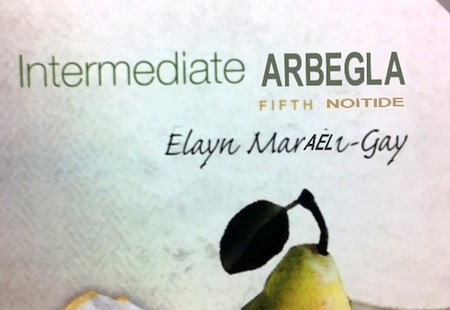
This Intermediate Algebra text, however, caused it to hiccup. Notice that it both got and missed one word each in the title and the edition–and had too much trouble reading the script font with the author’s name.

Galtext

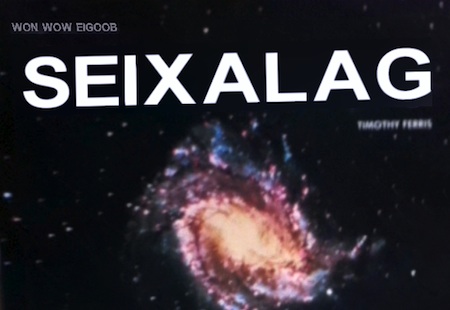
This is my favorite. It got the title Galaxies just fine… but the text in the top left corners is “A SIERRA CLUB BOOK,” and therefore should be shown here as “A ARREIS BULC KOOB.” Instead, it reads “WON WOW EIGOOB,” which reads backwards: “NOW WOW BOOGIE.” I almost have to assume that’s an intentional easter-egg kind of text translation when it can’t figure anything out…

Clearly this should not be trusted 100% with translations. I can imagine using this as a translation aid going to a foreign country. “My nipples explode with delight!”

Categories: iPhone Tags:

Is It Ethical to Scam Someone into Keeping to a Deal?

December 16th, 2010 3 comments

Normally I would say that two wrongs don’t make a right, but I think this is an example of a loophole in that particular ethical dilemma. If you’d rather read the whole story directly instead of the summary below, visit the page on Reddit, and then skip the next two paragraphs.

A fellow had four tickets to a sporting event scheduled to take place in less than three days, but he could not attend, so he decided to sell them on eBay using a one-day listing. The auction would end at 10:00 am the day before the event, and the terms made it clear they would have to be picked up. A woman bid $600 for the tickets, so the seller emailed her to arrange the pickup. She did not reply to the emails until almost 12 hours later–late on the night before the event–and when she did, it was to back out of buying the tickets, commenting coldly, “It’s eBay, not a car dealership. I can back out if I want.” No other buyers were still willing to purchase, so the seller was stuck with his goods, unable to use them or sell them.

So the seller comes up with an idea. Using an alternate eBay identity, he sends a message to the woman claiming to be someone who saw the auction too late, and wanted to know if she would be willing to resell the tickets for $1000. By telephone, the woman says she’ll sell them–for $1100. The deal is made, and the woman contacts the seller’s original address–not knowing it’s the same guy–and says she’ll buy the tickets after all. However, she demands that the seller come to her–and by now it’s midnight. He goes to see her, gets the money–and then cuts off the deal via the fake account. When the woman blows her top, he replies, “Ma’am, this is eBay, not a car dealership.”

Now, assume–as the seller claims–that the story is not the least bit embellished or exaggerated, and is told 100% accurately. Was the seller within his rights to do what he did? In effect, he did nothing to her that she did not do to him–promise to buy and then renege on the deal. Under ordinary circumstances, I would say that it’s not right to do so, any more than it is right to assault someone who assaulted you.

This case is a bit different, however. First of all, buying something on eBay does obligate you to pay up–in eBay’s own words, “A bid or commitment to buy on eBay is considered a contract and you’re obligated to purchase the item.” I am not clear on how far that extends legally, but my impression (not being familiar with eBay) is that a seller really doesn’t have much option save to give the non-buyer a complaint against their eBay buyer’s record–something that would probably be less than a slap on the wrist. Maybe they could sue in small claims court, but with only an email address and an eBay user name, it might not be so easy to do.

Second, the (non) buyer deprived the seller of the value of his goods by promising to pay for perishable items and then waiting until it was too late to back out of the deal; this furthered her obligation to compensate. Had she immediately informed him of her intent soon after the auction ended, he probably could have found an alternate buyer. That she ignored emails for most of the day suggests that she knew early on that there would be a problem–and even if not, it was still her responsibility to live up to her side of the contract.

The final straw, of course, is the fact that she finally agreed to the sale only to profit. This, in my mind, completely deprives her of the right to object, if she had one to start out. She claims to have backed out of the deal, but when offered a $400 boon–which she jacks up an extra hundred bucks out of greed–she quickly reclaims the buyer’s title. Now, had she told the seller, disguised as a re-buyer, that she had backed out and the original seller would probably be happy to find a new buyer, then the seller would have been screwed–and the woman would at least come across as genuinely regretful. However, as she instead tried to get $500 extra for herself out of the deal, she pretty much cements the impression that she deserves no sympathy.

From the seller’s perspective, yes, he did use a short con to get the woman to pay–he lied in order to complete the sale. And yes, he did jack up the price by $20 at the last moment, in his mind to compensate for his troubles, which included driving across town at midnight, a term not in the original deal (a compensation one can easily accept, considering the circumstances). However, he may well have been able to jack the price up even more, claiming he had found another buyer, etc.–which he did not. In the end, he did nothing but persuade a person who had wronged him to live up to their obligations.

I would call no foul on his part. But then, maybe it’s just because this kind of story is so much fun to read about.

One final–and not so satisfying–consideration: technically, the woman could probably still make her $500. When making the fake counteroffer, the seller nonetheless establishes a “meeting of minds” on the $1100 deal. If I were in the woman’s position–and had no shame–I could probably take the guy to small claims court, and might possibly win. Hopefully, the woman in this case will not figure that out.