
The Black Kite
One of the birds that surprised me when I went to Enoshima was the Black Kite. It surprised me not just in how close one could approach it, but more so in what numbers it was present in. When I first appeared on the beach, more than a dozen were immediately visible. A half dozen or so perched close together in a tree on a nearby cliff; three or four more perched on masts of docked small ships and on lamp posts close to the shore; and another more than half dozen circling in the air. I rarely saw one swoop down and take anything, so it didn’t seem like there was an abundance of prey that would attract them. And they persisted in the area, from the coast beach to Enoshima to Kamakura; they were everywhere.
So here are some of the images, several having blow-ups when you click them–like these first two, nice portraits of Kites on ship masts:
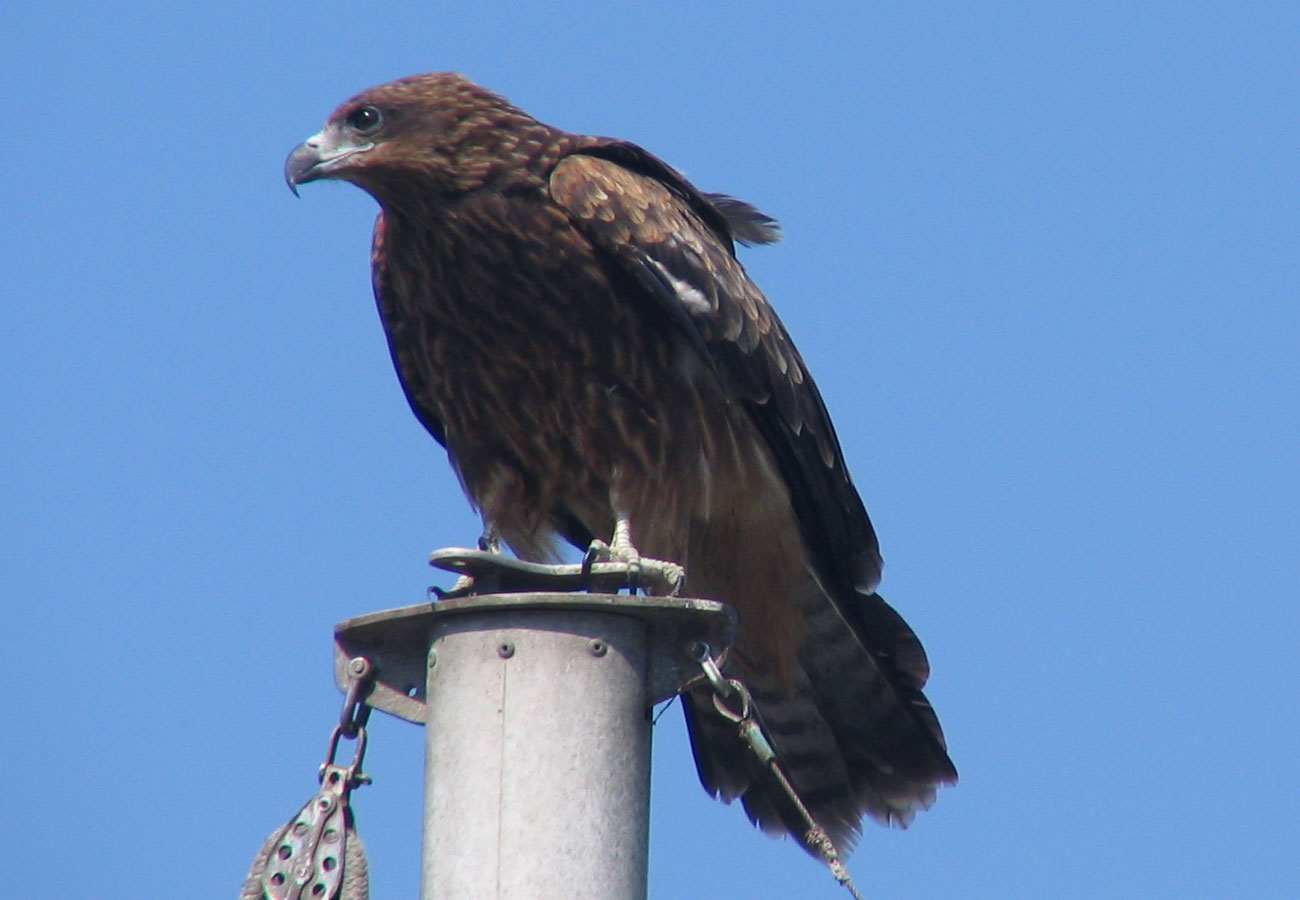
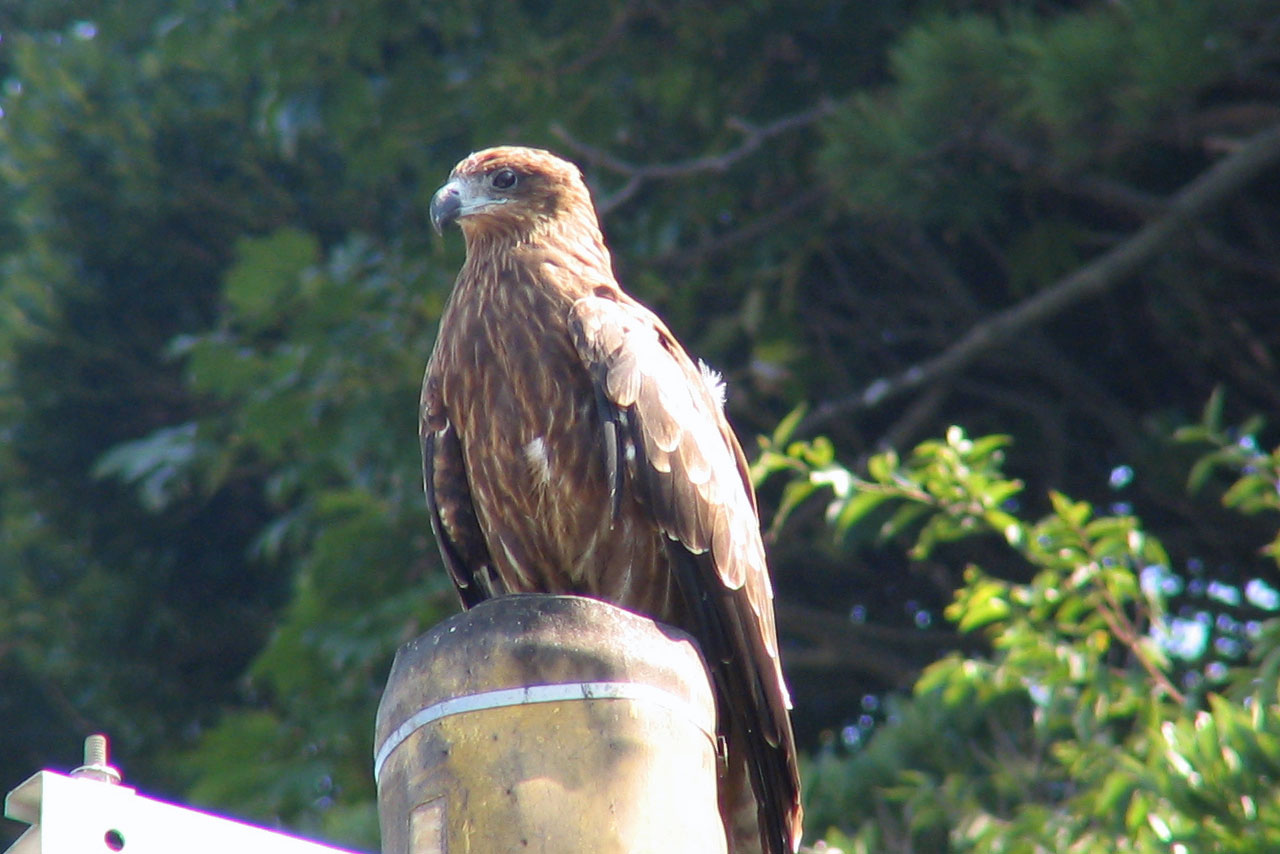
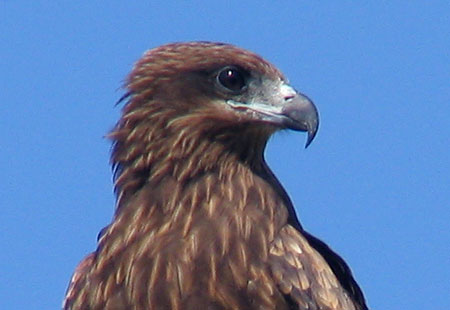
And here’s a close-up shot of the first bird’s head:
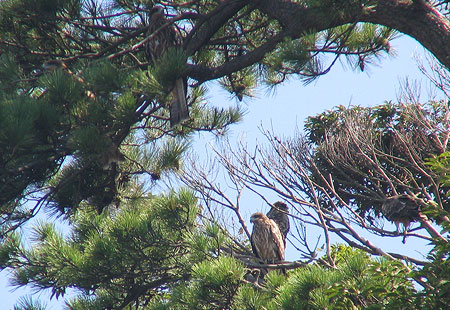
Here’s the best shot I could manage of the Kites in the trees; if you look closely, you’ll see five Kites in this photo; more were perched in the area, but it wasn’t so easy to get all of them together.
I was able to get some nice shots of Kites circling against the cliffs on Enoshima, near where I spotted the Blue Rock Thrush. Usually, the birds are silhouetted against the sky, making it hard to see light detail on their undersides. These photos had the cliff in the background, bringing less of a contrast and a better image. The first has a large version when clicked:
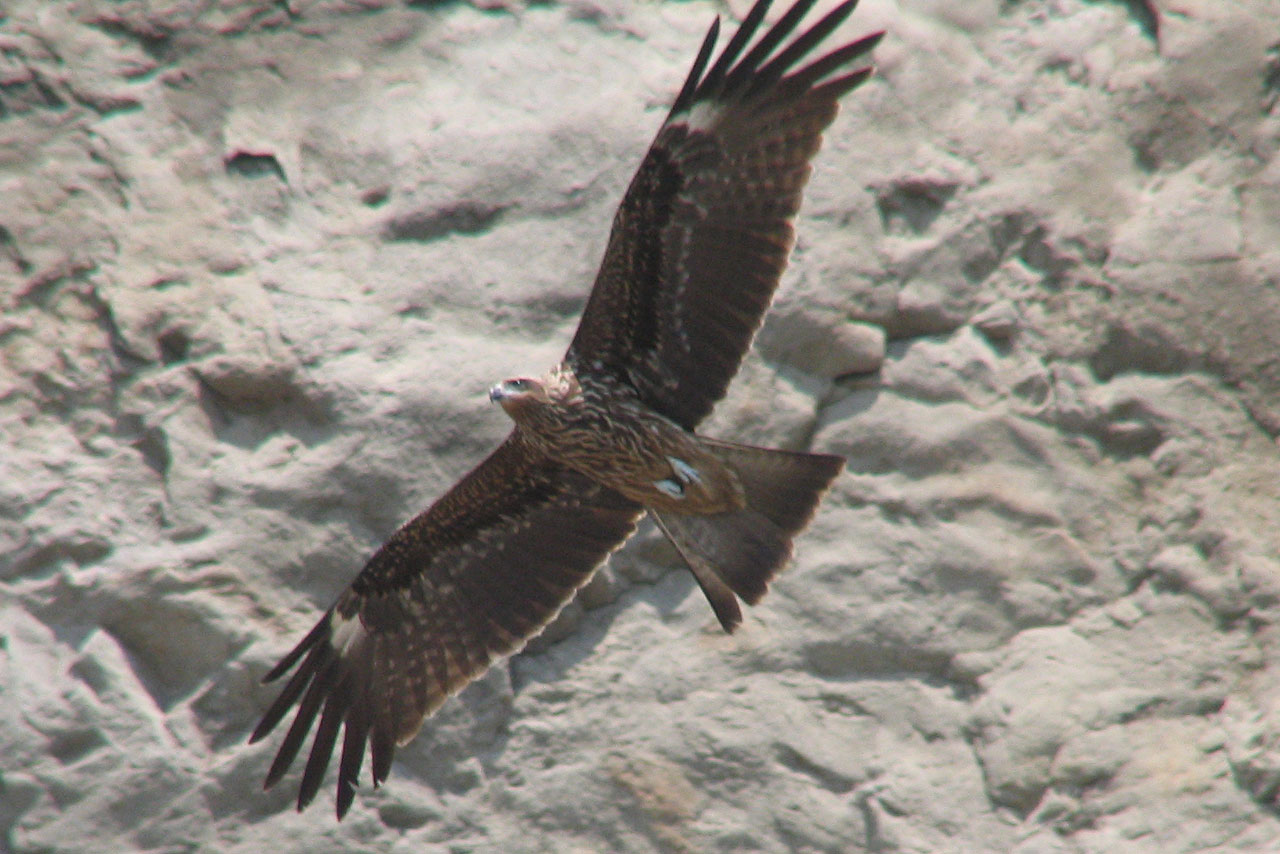
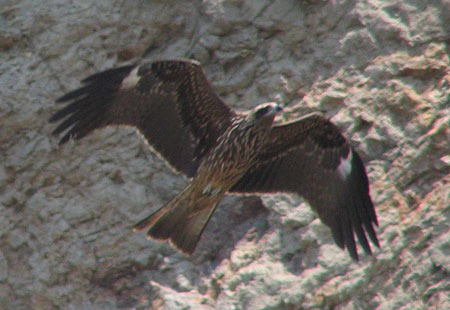
Notice the white patch near the ‘finger’ feathers; that’s a key identification point for the Black Kite. But look at this other, less-detailed shot:
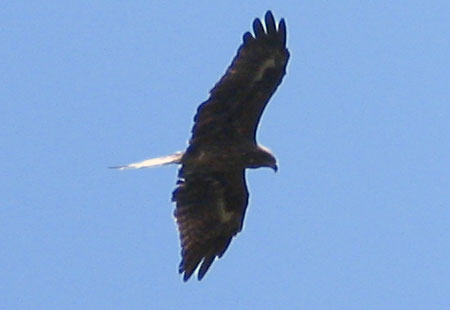
The white area seems different. A different species? Hard to say, I’ll have to look into that.
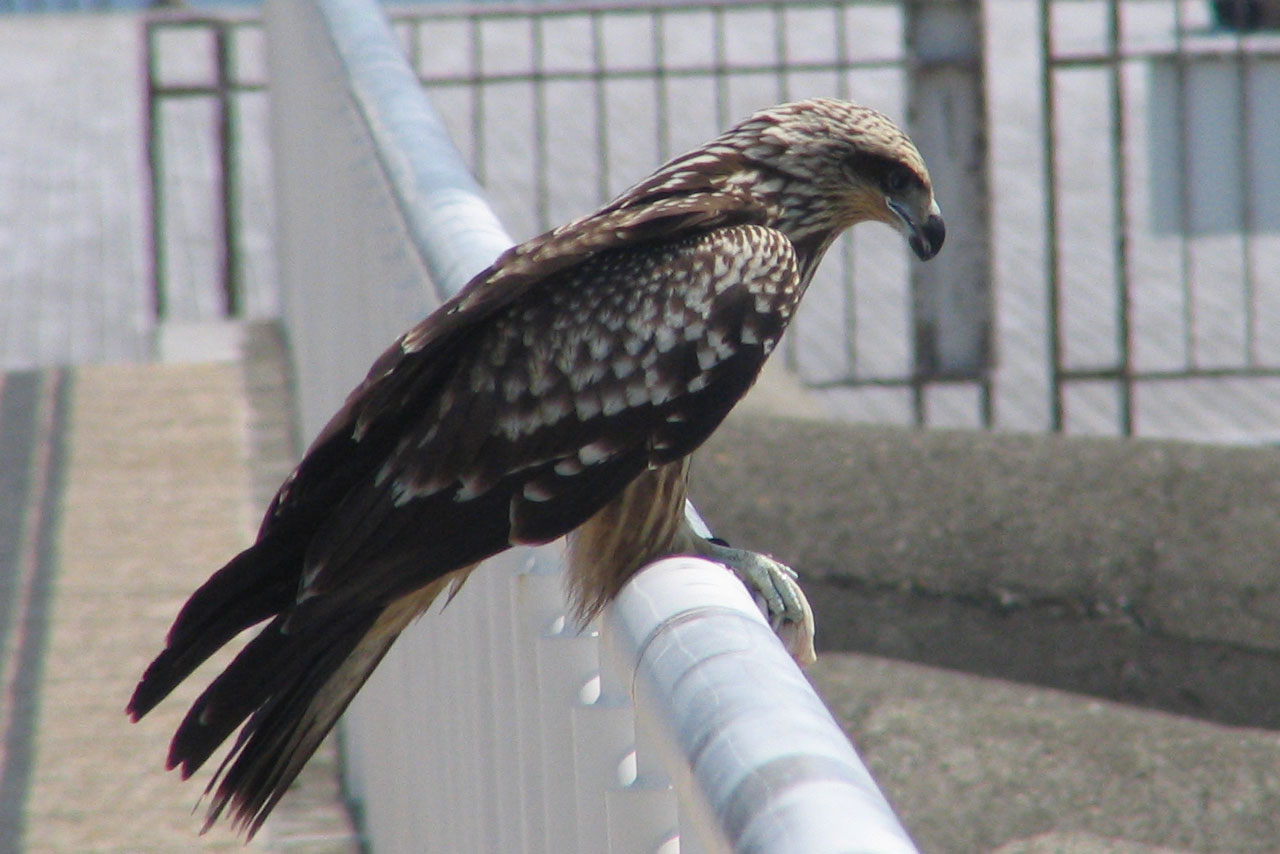
Finally, I got a gorgeous look at a Black Kite that apparently had snagged some chicken skin or something. It had perched unsuccessfully on slippery, angled lamp post, which led it to land on a railing for the main walkway on the Enoshima ocean view, very close to me. Note the food in its right claw, and how it’s not using the claw to perch. A large version available on clicking.
Some pretty birds here.