
The iPad
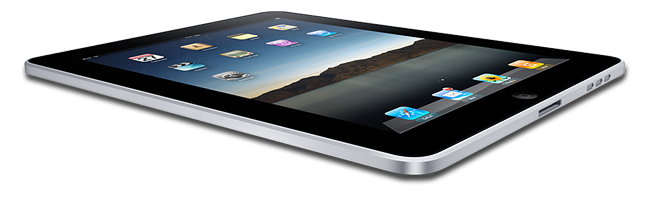
One word: potential. Remember how I mentioned people hyping it up too much? This is what I was talking about. Clearly Apple wanted to start from bare basics and then upgrade. Essentially, this is exactly what people heard since a while ago: a giant iPhone or iPod Touch. Apple clearly wants to ride the familiarity people have with the iPhone, which may or may not be a mistake. People were expecting something revolutionary, and instead they got the familiar, just bigger.
In one respect, the iPad is disappointing in that it really doesn’t do anything new. No 3-D interface, no use of advanced multi-touch, and no steep learning curve. It doesn’t even have multitasking, which people expected the iPad would bring to the iPhone. Instead, we’re all trapped under a single app at a time, which is virtually inexplicable for a device with a 1 GHz CPU that reportedly performs very quickly. I can only guess that Apple wanted to prevent the device from slowing down after opening up too many apps at the same time.
What Apple did right: the price. The base unit, 16GB WiFi and no carrier contract, starts at $499, which, if you recall, is exactly what the original 4GB iPhone cost with a contract. The 16GB price is obviously meant to sell, as I seriously doubt that doubling the memory really costs an extra $100. Apple wanted the low-end model to be at a price people wouldn’t gag at, and they did it: $500 for a tablet computer is actually pretty damn good. Add the pre-existing app base and how comfortably anyone will be able to slide into using this, and you begin to understand Apple’s strategy.
And that, I suppose, was a key point: make it available for most people, get the basics down right, and then follow up with more features every model. You can fully expect a new iPad in 8-12 months with a front-facing camera, Bluetooth and a compass, then another one after that with new screen sizes and multitasking, and so on. This is what Apple does. I called that one spot-on in my prediction 10 days ago:
Like the iPhone, one should expect a relative paucity of such features upon the initial release, allowing not only for everyone to focus on the core innovations of the product, but also to allow for Apple to make the subsequent generations of tablets more attractive.
See?
Apple is indeed going with the closed ecosystem; again, they are going with their strengths. Hopefully, you will be able to “authorize” the iPad so it can use all of your purchased apps right off the bat, without having to buy them all over again. Apple is adding iWork to the mix, so we get a long-overdue office suite. The apps are priced at $10 a pop, I presume no discount to buy all 3. But $30 for an office suite seems quite acceptable to me.
Missing from the presentation: any indication of how the file system will work. Now that we have an Office-style set of apps, surely we’ll need a place to save them. How will that work? If they introduced that, I haven’t seen it yet.
And textbooks! What’s up with that? No mention of textbooks in the keynote? Surely there will be something coming, but Apple better not make it so you have to buy a separate textbook app for each publisher. Even free apps from each publisher would be a pain in the ass, as you’d have to remember which textbook you’d gotten from what publisher, and you’d have to switch back and forth.
My predictions for the tablet were not bad–I got a lot right, probably more wrong, though I probably fared better than most analysts. The iPad is slightly larger than I thought, in order to accommodate the border/bezel, which I believe I accurately predicted–I think that’s about a half-inch, maybe a bit wider. I nearly nailed the pixels-per-inch prediction, guessing 130 (it’s 132), and was right that there’d be at least a 720p resolution–I guessed 1080 x 720, it’s really 1024 x 768, not spot-on but fairly close. I predicted that viewing angles would be an issue, and was right–Apple went with a special type of LCD called “IPS” which was a wide viewing angle. I don’t recall many other prognosticators addressing that issue. I was right about the camera not being there, and why not; I was right about the price but for the wrong reasons; and I was right about the importance about there being a Wi-Fi-only option.
I was wrong in my expectations for the interface to use advanced multitouch, though I fully expect Apple to start from the familiar base OS and upgrade gradually instead of shocking people with a new, hard-to-learn UI. I was wrong about the home button location, but right on all the other buttons. I was wrong about the mini-USB and the mic, and missed it on the CPU.
Overall impression: Jobs did not hit one out of the park like he did with the iPhone, in that this is not a huge, awe-inspiring device. Instead, it is far more subtle and subversive: it will slide people into a new way of computing, slowly acclimating them instead of diving right in.
In the end, the question is, will people buy it? It’s a very nice, familiar tablet/ebook device for an affordable entry-level price. I think people will indeed go for it, though not in the excited droves they went for the iPhone. Jobs is playing this one safe rather than taking risks. It’ll be a sleeper, slow in the short-term, but a long-term hit.