Archive

Archive for the ‘Focus on Japan’ Category

20 Years in Japan

September 25th, 2005 2 comments

I just realized that I have an anniversary coming up: my 20th anniversary of my coming to live in Japan. I thought I had let it slip past in August, but after checking my old passport, I found that it is instead coming soon: October 8th. I haven’t lived here for 20 years straight–I went back twice for a total of about five years to get my higher degrees. So I’ve lived here for 15 years, but it will have been 20 years since my first working visa became active, in a few weeks, give or take. Probably when that day comes, I’ll blog on the experience of getting here. Until then, I want to touch on some changes since the good old days–how things have changed.

I was on the phone with my father last night, and we spent more than an hour and twenty minutes chatting. We realized that such a long call was going to cost maybe six or seven dollars on his present calling plan, and a lot less on a plan he is considering joining. I myself pay maybe 8 cents per minute calling the U.S. This is all in contrast to what we used to pay 20 years ago. Or more accurately, what I had to avoid paying in Japan. Back then, KDD was it–the only long-distance carrier, period, and calling the U.S. cost a few bucks every minute. Calling from the U.S. wasn’t cheap, either, but it sure was by comparison. So we had a system: I would call via the operator, making a collect call, saying that Quincho was calling for Malachi. Those names belonged to our dog and cat, respectively. So when my dad got a call from an international operator saying that the dog was calling the cat collect from Japan, he knew I wanted to talk. So he would tell the operator that the cat was out, but would call the dog back in 15 minutes. The code was necessary because the operator would not let us hear each other, and would relay only limited messages. But it was enough so that I knew my family was home and I would be getting the call back soon.

That was back in the days when people actually used public phones. When the phones in Japan were red, yellow, green, pink, and I think pale blue, and you needed a scorecard to figure out what the colors meant. Back when you had to pay a 70,000 yen non-refundable deposit to get a phone line, instead of signing up for a cell phone. There was no email, no voice-over-IP, no instant messaging.

So one of the things I want to do this week is to be an old fart and tell you about how I had to walk for miles in the snow to get an English-language magazine, and how there was only one bilingually-broadcast English-language movie on TV each week, and it was usually Death Wish III with Charles Bronson and we were grateful for it. And believe it or not, the last sentence was actual truth. So sit right back down, you young whippersnappers, and get ready for some nostalgia.

Categories: Focus on Japan 2005 Tags:

Neighborhood Noise

September 11th, 2005 1 comment

[Note: sounds should open in a new window when clicked. For full effect, play them all in sequence.]

Well, now that the election is over, hopefully now all the noisy political campaign loudspeaker trucks will stop crisscrossing the neighborhood all day long until 8:00 in the evening. But that’s little relief, because just as the loudspeaker trucks and vans vanish into the night, the Star-Trek-Phaser-on-Overload insects are startup up. I swear, they sound just like phasers about to blow up, a constant, incredibly loud, piercing high-pitched whistle. And then at sunrise, the other bugs, including the annoying “MEEEE, ME-ME-ME-ME-MEEEEEEE!!” cicadas and the Bone-Chilling-Wail-Eminating bugs, get started for the day. That along with the morning crows and partridges, and the afternoon bulbuls. But that only lasts through the summer. When they stop, it’ll be just in time for the Kerosene-sellers to weave through every single parking lot in the neighborhood at 5 kph, with their loudspeaker-enhanced mind-numbing electronic note song: “DO-doo … do-Do-DOO-Doo-do … do-Do-DOO-DOO-do-do-DO-do-do-DOO-DOO!!” Now. Repeat that. ONE… HUNDRED… TIMES.

I suppose I can at least thank God that they don’t all come at once, all the time. But what I would like to ask is, what happened to that famous Japanese neighborhood “wa” that we heard about? Okay, so we can’t control the bugs or the birds, but what’s with all the loudspeaker trucks? I want some wa, dammit!

In for a Storm

August 25th, 2005 1 comment

Typhoon #11 is making its way for Tokyo, dead-on, hitting us from the southwest via Shizuoka and Kanagawa. Should be overhead after midnight (peaking maybe at 3 am), about six to eight hours from now; right now, the Izu Peninsula is getting hit pretty hard, affecting some train services, with many services closed after 4 pm today. Dozens of flights have been cancelled tonight out of Haneda. The forecasters say that 14 inches of rain will be dropped on Tokyo and Tama by tomorrow morning. Strong winds and high waves are also in the cards.

This is, after all, Typhoon season, which lasts from June to November, most storms hitting in August and early September. While this is not the first typhoon to hit Tokyo this summer, it is certainly the strongest to hit this area so far this year. They’re showing scenes on TV of huge waves breaking on docks, a lot of rain and winds. Trees are down in Shizuoka. Three houses have been flooded and more than 80 households have been evacuated along the coast. Looks miserable there, and already rain is falling pretty heavy inland here, the wind throwing the rain directly onto the windows.

If you go to work really early, expect some train delays. If you’re planning on staying out late tonight, don’t expect to get back easily.

This should be quite a storm.

Categories: Focus on Japan 2005 Tags:

Big One — No Way That Was a “3” in Tokyo

August 16th, 2005 5 comments

A big, rocking quake (must have been distant) hit us in Tokyo just now. That was not the most forceful in terms of a jolt, but that thing made my building sway big time. Felt like a 4 or 5 here.

It is now being reported at a 6 in Miyagi where a tidal wave warning is being given.

Update 12:05 pm: The quake was a 6.8 on the Richter scale, 20 km below the ocean floor a short distance off the Miyagi coast. A half-meter tidal wave is predicted for that area in just moments from now. Hi-Net is showing a “shake amplitude” of the quake as being strong from Miyagi through Kanto. It is now being reported as a “4” in Tokyo, by the way.

Update 12:30 pm: No pictures on what tidal waves may have crashed into Miyagi, so it probably wasn’t a big deal on that. Trains and planes are grounded for the time being while tracks and surfaces are checked–hope you didn’t get stuck on a train or in a station when it hit. Narita will be down for one hour. Haven’t heard of any injuries or deaths yet.

You don’t get immediate views of damage from the affected areas from TV reporting, but you get to intimately know what it was like in news offices and from the tops of buildings, camera footage that TV has immediate access to and shows over and over after a quake here in Japan.

Update 12:36 pm: Apparently there have been reports of several injuries in the Sendai area, no details yet. Nobody is providing a distance off the coast or offering a measure scale on their maps, but I did get the map coordinates of the quake from Tenki.jp (N38.1 E142.4) and plugged it into Google Maps, and got the results of 70 km offshore from the closest land, a peninsula west and north of Sendai, and got that the epicenter of the quake was about 120 km from Sendai City itself.

Update 12:55 pm: All three nuclear power generators at the Onagawa plant in Miyagi prefecture (70 km north of Sendai) were shut down when the quake hit; no damage or incidents reported. At a sports facility in Miyagi (capital city of the prefecture), the roof is reported to have caved in, resulting in many of the injuries reported there. TV stations here are showing stores with lots of products having fallen to the floor off of shelves and tower displays.

Update 1:05 pm: Alternate reports are making this quake out to be a 7.2 on the Richter scale. Hi-net reported it as 7.2 at 44km depth, and I thought that was an initial mistake, but the USGS is reporting it as a 7.2 as well, so now there are two reports appearing in different places with differing magnitudes and depths. I’m seeing a TV report on the Miyagi sports center and the roof appears intact, so it must have been an internal ceiling collapse–a lot of apparent damage inside.

Update 1:15 pm: Wow. They just showed the inside of that sports center. Massive damage there. Looks like a ceiling fell in and there’s debris all over inside. From the looks of it, it seems like a miracle no one died. As many as 80 people were injured.

Update 1:35 pm: Television reports are now amending the strength of the quake to 7.2 also. 17,000 homes lost electricity in the quake. A house in Kazo City, Saitama, a few hundred miles from the quake’s epicenter, collapsed, and a woman inside was safely rescued. A shinkansen (bullet) train on the Tohoku Line stopped on the tracks and the passengers were released from the train along the tracks. Reports about the sports center in Miyagi say that 16 people were injured, including 3 children. This is, by the way, the O-bon holiday season.

Categories: Focus on Japan 2005 Tags:

Hiroshima

August 6th, 2005 8 comments

Today was graduation day for the students of my school, so my eye was not so much on the news today, and I almost missed the fact that today was the 60th anniversary of the atomic bombing of Hiroshima. I’ve been to Hiroshima twice and Nagasaki once, and have toured the memorials and museums there (albeit many years ago). I’ve read a certain amount on the matter, though hardly enough to be considered well-read. And in the end, I think I fall somewhere in the middle on the question of whether or not Hiroshima and Nagasaki were war crimes.

In essence, “war crimes” is a variable and subjective term, used mostly by people who are on the receiving end, defined usually by those who win conflicts. It’s hard to distinguish war crimes from regular acts of war. For example, Hiroshima and Nagasaki are often mentioned in this respect, but more people died in the firebombing of Tokyo; isn’t that a war crime? Is it numbers? The amount or type of suffering? Or perhaps just how much the news of the act kicks you in the gut when you hear about it?

There are always justifications. Avoiding a land invasion is the most often heard; it would have cost the lives of an estimated 250,000 American soldiers, which is what would have mattered more to American leaders than the number of Japanese killed; but it also would have cost the lives of an estimated million or more Japanese lives, well in excess of the total number killed in Hiroshima and Nagasaki combined. A land invasion would have killed not only by combat, but also by suicide and starvation of the long course of such an invasion. One could easily question which would have been the more cruel route.

There is the suggestion that none of this was necessary, that Japan was ready to surrender, was trying to surrender. But the surrender being offered was not unconditional, else it would have been accepted. The conditional surrender of Germany at the end of the first world war had arguably brought on the second; there was good reason to wish to avoid this from happening again, and it says something that the American government was willing to seize the difference at the cost of a quarter-million soldiers’ lives.

Then there is the Soviet influence: America witnessed what happened in Europe at the end of the war there, and knew that Russia would make a similar land grab in Asia. After having practically won the war there over four long, bloody years of battle, they did not want to see the Soviets marching in and taking most of the continent. Russia had agreed to enter the war on August 8th, exactly three months after the German surrender. So that pressure almost certainly shaped decisions as well.

Still, in my mind, that does not justify bombing Hiroshima and Nagasaki, at least not the way the matter was handled. Even in the cruel logic of war, there are alternatives. The one that I believe was mistakenly abandoned was that of the warning shot. Instead of bombing Hiroshima, a bomb should have been dropped on a carefully selected, sparesely- or un-populated target near Tokyo. The target should have made the flash and the mushroom cloud easily visible from Tokyo; it should have been in a place where the population was low or almost non-existent, but where the military in Tokyo could easily have visited so as to witness the devastation. Probably the low mountains in west Tokyo or Kanagawa (ironically, very close to where I now live!). There would have been some victims, but only a few compared to the victims of a direct hit on a city. But enough to show the force and deadly power of the bomb, with an impressive flash and cloud display for those still in Tokyo to see. Then America could deliver the message: we have these bombs. We have enough to waste one on a warning shot. A city will be next if you do not signal a surrender in three days.

The argument against this was that we didn’t have enough for a warning shot. But we did have three that could have been used on a certain schedule; if the Japanese would not surrender after one warning shot and two cities destroyed, would they have surrendered at all? There was an argument that if the bomb failed to go off, we would be handing the Japanese a terrible weapon. Well, not likely; even if the bomb were found and it was understood what it was, the damage to the bomb from a drop like that would have made it unusable, not to mention that it would not have worked in the first place. It is highly doubtful that Japan could have used the weapon back against us. Besides, if we dropped it on a city and it didn’t work, the exact same danger would have existed–only in that case, there would be no doubt that the bomb would be instantly found.

So I feel that the bombings as they were carried out, even accounting for hindsight, were not justified; I believe that at least a warning shot was required. If the Japanese leaders had not surrendered after that, then using the bomb on a city would still have been horrific, but with all end games being horrific and weight of the decision in the Japanese court, it would have been somewhat more justifiable. The hoped-for result, of course, is that the Japanese leaders would have been shocked into the realization that unconditional surrender was not the worst of outcomes.

There is the question of the intent of the bombings. Several cities were left unbombed, the reasoning being that the atomic bombs were expected to be used and America wanted to leave cities otherwise unmarred so they could serve as laboratories, experimental grounds upon which to measure the effects of the weapon. This may be true, but I do not believe the oft-implied meaning that America did not need to drop the bombs and only did so to see what would happen. In Japan, it is sometimes suggested that Japan was offering a surrender and America bombed Hiroshima and Nagasaki just for the experimental value–not exactly a fair representation. Were America certain to win without the bombs and there was no time pressure, I do not believe that the bombs would have been used. Had Japan offered an unconditional surrender before August 6th 1945, I am all but certain the bombs would not have been dropped.

There is also the question of Japan’s moral high ground in the retrospective concerning the atomic bombs. Japan has long made an issue and not a little bit of political hay about having been the only country which had been atom-bombed. Japan was the victim, and Japan has the right to the moral voice for peace. Now, if that is said of the people of Hiroshima and Nagasaki or the cities themselves, I will fully accept that. But not from the Japanese government or the nation as a whole. The reason for this is that Japan had two atomic bomb projects in progress itself during the war, a little-known truth today, especially in Japan; in fact, the first effort, led by Japanese physicist Dr. Yoshio Nishina at the Riken Labs, pre-dated the American program. One well-known element of this was a German submarine with half a ton of uranium bound for Japan, which was intercepted by the U.S. in 1945. But the point here is that Japan can not necessarily cry foul when its intentions were exactly the same; it is unlikely that Japan would have hesitated to use the bomb on the U.S. were the positions reversed. Which is why I do not accept this being a matter of Japanese moral high ground, but I would absolutely accept the legitimacy of that claim by anyone who experienced the bombings.

All in all, it is a complex issue, and any judgment will by definition be subjective. This is just where my personal opinion lies; I could be misinformed or just wrong, but this is what I see. Your own views are very much welcomed below.

Categories: Focus on Japan 2005 Tags:

Japan iTunes Music Store: August 4?

July 28th, 2005 2 comments

Apparently, some kind of “Apple Music Event” has been scheduled for 10 am on Thursday, August 4 at the Tokyo International Forum. Reporters have been invited to the event by Apple, so unless this is something completely unexpected, it’s probably going to be the long-rumored opening of the Japan iTunes Music Store.

Still unknown will be the pricing (rumored to be ¥150, undercutting all other music download services in Japan) and the selection–Sony’s rather large collection of music may likely not be available because Sony is trying like crazy to undercut Apple and its success with the iPod.

Categories: Focus on Japan 2005, Mac News Tags:

BIG Earthquake

July 23rd, 2005 5 comments

It’s mostly over, but it’s still rocking as I write this. That had to be the biggest earthquake I have ever experienced. More as news comes in.

It also felt close, by the way–while the later shakes were horizontal, the first ones were vertical.

Update 4:40: Okay, it’s being reported as a 5.7 on the Richter scale, 90 km beneath Chiba. So it wasn’t nearby (I guess the later shakes were the better indicator), but it was close enough, and it sure felt big as hell here in Eastern Tama. If it was that powerful here, I hate to think about what it must have felt like in Chiba…

Update 4:43: Just felt a small aftershock. The epicenter seems to have been close to Narita. Addendum: No, closer to Chiba City, with 10-15 km. Farther from Narita than from Chiba.

Update 5:20: According to this page (a Japan quake page I just discovered), the quake was felt most strongly in East Tokyo, even stronger than in Chiba. On the Japanese scale of 7, the quake registered a strong 5 in Tokyo’s Adachi Ward, and a “weak 5” in Edogawa and Ota Wards. In Chiba itself, the quake registered only as a weak 5 in six locations. The quake registered as a 4 as far away as Atami City, Shizuoka, more than 100 km distant.

Update 5:42: Reports coming in: no deaths or even injuries reported so far. One partially-collapsed building in Edogawa, some small fires across Tokyo, and trains stopped and delayed all over the region. There’s a fireworks show at 7:20pm in Chofu today (near where I am), and so some people might be delayed or inconvenienced by the train stoppages.

Categories: Focus on Japan 2005, Main Tags:

Google Maps Japan

July 18th, 2005 4 comments

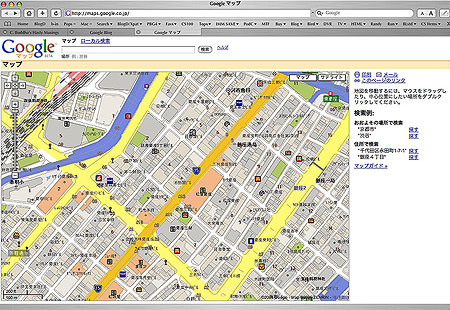
Finally. Thought it would never get here.

Gmapj

Here’s Mt. Fuji, by the way.

Categories: Focus on Japan 2005 Tags:

Fireworks in Japan

July 18th, 2005 2 comments

Summer is the season for fireworks in Japan. Unlike the U.S., where almost all firework shows are reserved for one day in July, Japan has them all summer long. Better this way, I think–you can go see them more.

Japanese firework shows are also pretty impressive; they really know their stuff here. Though this season’s shows seem be be relatively short, an hour or so for most of them, I’ve seen shows an hour and a half and even longer in the past. And they don’t scrimp, either–some pretty good displays get put on. One of their trademark moves is the shaped fireworks: hearts, stars, smiley faces, fish, and even Mickey Mouse and Doraemon appear in the lights in the sky. Usually, the show ends in one, long, continuous culmination of explosions, climbing higher and higher, with one really big one at the very end. Forgive me if this sounds mundane to you, if you’ve seen it a lot; I don’t have much experience beyond my childhood to compare these shows to others in other countries.

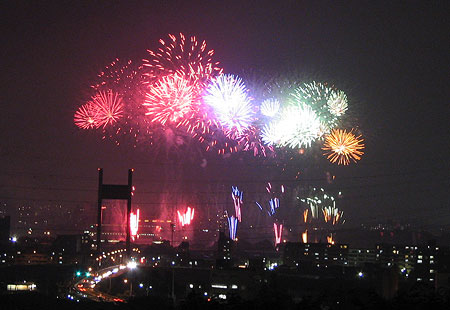
Tonight there were a few well-known shows, one in Yokohama (a bit of a trek from where I am, so I didn’t go), and one right in my backyard, at the Fuchu Racetrack–though I always neglect this one for some reason. Every year, there’s a display where all I have to do is walk a few blocks and I’ve got a great view, and every year I forget to check when it is. And then I’m watching TV and I hear some booms outside, and I realize it’s on. The problem is, this one particular show is only about a half hour, maybe a shade more. By the time I get there, there’s only ten or so minutes left. But here are a few photos that came out OK:

705-Fkbfw1-450

705-Fkbfw2-450

705-Fkbfw3-450

705-Fkbfw4-450

Always pretty, they are.

A few more displays are coming up in this area. Next Saturday, the Chofu City fireworks, which I blogged on last year; I can see them from my apartment window, but they’re better viewed up close, a few stations away. The Saturday after that, there’s a display at Show Kinen Park in Tachikawa. Lots more in the area, too; here’s a page in Japanese, another in English. (Be careful: there are discrepancies between the pages in terms of which day some displays are, and I don’t know which page is right!)

Categories: Japan Fun Facts Tags:

Is Japan a Militaristic Society?

July 12th, 2005 8 comments

I’m not trying to be jingoistic or anti-Japanese here, it’s an honest question.

Ever since I can recall, I have always heard of modern, post-WWII Japan referred to as a peaceful nation. Scarred by the war and in particular by the atomic bombings of Hiroshima and Nagasaki, Japan truly renounced war–not just because that was imposed on the country–and stood as a symbol of peace in a post-nuclear world.

Not to see how things are going in Japan today, though.

Right-wing newspapers, for many years, have been fighting an aggressive media campaign to convince the people of Japan that it is necessary to amend or rescind Article 9 of the Japanese Constitution–the article that says Japan forever renounces war. Back when I had subscribed to the English-language Daily Yomiuri, I remember frequent front-page headlines along the lines of “Japanese People Support Revision of Article 9.” (Closer examination of the data suggest that a majority of Japanese approve of general revisions to the Constitution, but most oppose revising Article 9.) And a point could be made that Japan has technically, if not officially, crossed those bounds; for example, ever since the 80’s, many have noted that though superficially only a self-defense force, Japan’s navy is one of the largest and most powerful in the world. A few decades ago, the question was about how far above the legal % of GDP Japan spent on the military; today, Japanese “self-defense” troops are station in Iraq. And the pressure to get rid of Article 9 has only increased. Certainly, the present conservative government seems determined to take this path.

Furthermore, the media seems to be taking the same tack. Japan has never been big on self-scrutiny in terms of its wartime wrongs. Few films like “Platoon” get released here. Instead, the tone is more one of “we got framed.” A 1999 film called Pride (which was lavishly budgeted as far as Japanese films go) took a revisionist tack, painting Hideki Tojo as a hero and presenting Japan’s wartime actions as defensive. Current author Harutoshi Fukui, described as a “Japanese Tom Clancy,” is seeing three of his books released as films this year alone, the first of which dealt with a Japanese WWII submarine foiling an American attempt to atom-bomb Tokyo. In short, you see and hear quite a bit in the media about a yearning for militarism, and less and less about peace.

Granted, a good deal of this probably has to do with the identification of the Constitution with a rule of law imposed on Japan by the United States. American bases with tens of thousands of soldiers still dot the Japanese countryside (one of them, in fact, is quite literally in my own backyard, the border fence just a few dozen meters behind my building). Whenever there is any infraction by an American soldier against a Japanese person, it makes national headlines. Japan has seen American culture, politics, and military needs trump its own. A lot of Japanese see Koizumi as Bush’s lapdog and are not pleased with that. Perhaps this was better tolerated when Japan was on an economic high roll, but now Japan is more than a decade into a recession and the compensations may seem less attractive.

The history of relations between the two countries is also felt strongly here, especially one statement made by Douglas MacArthur during the occupation to the effect that Japan was/is a “nation of twelve year olds.” Author Fukui addressed this, saying “We were 12-year-olds just as Americans said, but over the last five years, we think we’ve become at least 14-year-olds. There is a clear difference between 12 years old and 14 years old, when self-consciousness sprouts and the person reaches adolescence. … It’s like a person who says, ‘The world is a scary place, and I should learn to fight like my father.’ But the same person says, ‘I want to get away from my father and go my own way.'”

Then there is the fright factor, just like Americans are reacting to with terrorism. Not only does the specter of al Qaeda hang over Japan, but North Korea is very, very close and is now the country’s number-one boogeyman, firing its missiles over Japanese territory and sending its ships into Japanese waters.

And then there are those who say that Japan is and always has been militaristic, and has lost its way since America imposed a system where money rules. Certainly, with Japan’s famous bushido traditions, there is support for this; however, it again reflects more what the ruling class has imposed, and not perhaps the true voice of the people, now more important in a more democratic society.

However, most of the factors bringing on militarism seem to crowd in from the outside, pushing the people instead of following their desires. Are the Japanese people militaristic, more often than not? A difficult question to answer objectively as an outside observer: an American asking that question to a Japanese citizen is just as likely to receive the answer which the Japanese citizen feels the American wants to hear. Not from deception, of course, but from a desire to avoid possible conflict.

This is something about which I intend to speak with some of my Japanese friends and acquaintances, and would like to hear your opinions as well. Is the recent trend towards militarism a product of the media, a push by right-wingers within and without the government, or is it really the will of the people? I am not asking if Japan is on the path to becoming like it was 60-plus years back, that would be taking things too far too soon. But is Japan on the general track of militaristic independence and possibly military influence, and if so, from where within Japan is that coming?

Categories: Focus on Japan 2005 Tags:

TV Guide, Japan

July 4th, 2005 6 comments

About 8 months ago, I switched from cable to satellite TV here in Japan. When I was on cable TV, there was a program guide mailed to me every month; however, with satellite TV, there’s no guide. Yes, there’s a live “what’s on” channel that you can go forward for one week, and they even have an English version for it–but it’s clunky at best.

So for six months, I subscribed to an English TV Guide magazine, which gave all-English listings for cable and satellite channels (not the terrestrial Japanese-language channels). That was good, but it was also expensive–¥800 ($7.20) an issue, with no price break at all for 6- or 12-month subscriptions. At almost ten thousand yen per year, that’s a pretty pricey TV guide–especially if you only use it for half a dozen channels or so.

I was about to re-subscribe, however painfully, when I figured I’d give it a pass for at least one month. During that time, I found out something that made me feel a bit foolish: you don’t need to pay for it. Each channel publishes its full schedule on their web site, and most–even though they’re Japanese companies in Japan–publish an alternate schedule in English. Each one is presented as a PDF file, and these files are sometimes almost identical to what I’d been paying so much for. All you have to do is visit the sites for the channels you watch each month and print out the PDF file: instant TV guide in English, for only a few pennies. Like I said, I felt like a fool for dishing out that much.

Strangely–or not so strangely, considering–the Fox channel (entertainment, not news) is the only one I watch that does not publish and English-language schedule. Which kind of figures; Fox is also one of two, maybe three channels on all of satellite TV (another is the Disney channel) which does broadcasts bilingual (Japanese and English) in a non-standard format that defies the usual technology for extra audio channels. With other channels, like Super-Channel or AXN, you can set the channel to bilingual mode and it will always be in English from then on. But with Fox, you have to switch from Japanese to English every time you change the channel. Furthermore, it’s not easy to switch; at least on my set, you have to activate the menu, move up one level, across one, and then down to, and then set–pushing five different buttons six times just to change the audio. But worst, the audio cannot be controlled from my DVR–meaning that I have to manually switch audio for every programmed show recorded off of Fox. A huge pain in the neck.

All whining aside, here are the pages where you can download English versions of monthly programming schedules:

AXN
Super Channel
LaLa (a cumbersome PDF, takes a while to display)
Movie Plus
Cinefil Imagica (click “Schedule” on the left)
Fox (Japanese only)

Categories: Japan Fun Facts, Media & Reviews Tags:

Quake

June 20th, 2005 3 comments

A fairly strong quake just hit. Not so much as to make anything fall, but it shook pretty strongly here, in the higher range of strong earthquakes as they tend to go in this region. Enough to make me worry about bolting for a few seconds, at least.

Preliminary reports have it as a 5.1 on the Richter scale, centered on the coastline of Chiba, about 70-100 km east of where I live. On the Japanese scale, it’s a 4 in Chiba, and a 3 in Tokyo and Kanagawa. NHK is talking about it–it was strong enough for them to interrupt broadcasting and show maps and pictures of building-top cameras swaying.

Always interesting when the world shakes.

Update: the quake has been upgraded to a 5.6 on the Richter scale.

Categories: Focus on Japan 2005 Tags:

Birth Slump

June 1st, 2005 1 comment

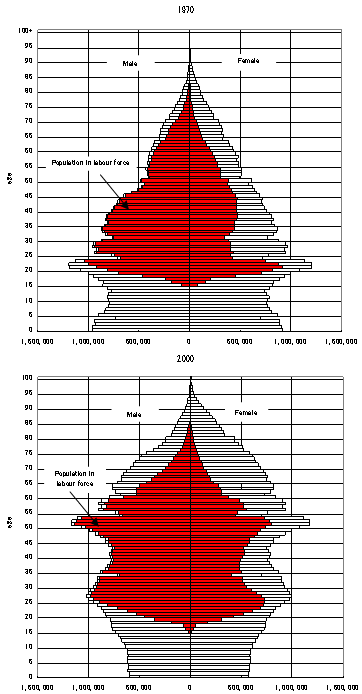
Japan’s birth rate has been slow for some time, but now the rate has slowed below what was predicted. The national birthrate in Japan is down to 1.29 (just a shade below), marking its lowest point ever. The rate has been low for some time, but the fact that it is still going down is a worrying point for the country.

PopchThe immediate concern is for retirement pensions: supported by the present workforce, it buckles when the number of retirees swells and workers shrinks–and that’s just what is happening. The post-war baby boom is close to retirement, and Japan has fewer young people working to support them.

Fixes have been in the works for years. As early as 1980, Japan required the minimum mandatory retirement age to be gradually raised from 55 to 60, the goal to be reached by 1998; in 2000 (and through to 2004), the youngest permissible mandatory retirement age was raised again to 65, to be reached by 2013. With the largest number of retirees reaching retirement age at present, it is unlikely that future boosts would do anything in time.

There is also an economic reason to avoid hikes in the mandatory retirement age. Japanese men often wish to work beyond that age, and companies take advantage of that, sometimes forcing them to retire, and then accepting them back afterwards at greatly reduced pay rates. Sometimes the retirees could not even achieve that; many switch over to what are effectively make-work jobs. Try parking a bike outside a train station before 10 am–you’ll likely be approached and chided by retirees working as bike parking police.

The decrease in the birth rate also affects my own profession, colleges. The decrease in population will continue for another few years and will then level out, but the overall number of students is also at a record low. In a few years, the number of students of college age will, for the first time, fall to or even below the number of available openings in colleges and universities. Fortunately for my school, Japanese institutes of higher education are slow to change; they are still stuck in the same mode they were when applicants far outstripped available seats, and when what you studied was less important than what school you got into. They still focus less on delivering an actual education at a time when businesses no longer wish to spend money to train workers themselves, as they did during the boom years. As a result, colleges which aim to deliver marketable skills are still not so common in Japan, making foreign institutions such as my own more attractive to students who look forward and see what will work best for them.

Categories: Focus on Japan 2005 Tags:

I Don’t Buy Used Stuff Anymore

May 27th, 2005 5 comments

I remember when I first came to Japan in the mid-80’s, Japan was in a boom period and consumption was rampant–and garbage was of fairly high quality. At the time, Japanese people were throwing out some pretty nice stuff. The foreigners who came to Japan in that period often didn’t have much to spend, especially at first (you usually don’t arrive in a new country flush with cash, your first pay doesn’t arrive for one and a half months, and paying 6 month’s worth of rent before getting the key to your apartment has the effect of draining whatever resources you have), so many depended on the junk to be found in the streets. No dumpster-diving–you’d just see a nice gas cooker laying on the side of the street and take it home to find that it worked. Now, this is not as pathetic as it might sound; it was pretty good junk, and there was no reason to let it go to waste. From furniture to electronic items, if you found it before it rained, there were some more-than-acceptable items. I knew a few people whose apartments were almost fully furnished with stuff off the streets.

When the economy crashed, things changed. People stopped throwing out perfectly good stuff so much. Secondhand shops started sucking up what remained–bad news for people trying to get by on the cheap. A lot of the stuff the shops get is discards that would have ended up in the gomi piles; they have small trucks roaming the streets now, crying out for you to give them your stuff. This not only takes away any usable items for people walking past to find and pick up, but it annoys the hell out of me by adding yet another damn loudspeaker truck to the horde that continuously drive through every last parking lot in the area at 5 kilometers per hour.

But that’s not the only reason I don’t buy from such places. They also charge way too much. They pay nothing or close to nothing if you’re trying to get rid of something, and way too close to the list price for new items to justify a used purchase. And often you get something (no refunds, thank you) you didn’t expect. One experience I had was the purchase of a dining room table. A solid wood table, looked fine, the price high but not prohibitive. But after I got it home, something changed–the smell of my apartment, specifically. But it was subtle enough at first that I didn’t recognize the table as being the source of it. You see, I started smelling cigarette smoke on a regular basis.

At first, I attributed it to my chain-smoking next-door neighbor, who always left his front window open with smoke pouring through so if I left my own front window open, it was like having a smoker in my place. I had already had trouble with the smoke; I discovered that whenever I turned on the air vent in my bathroom or over my stove, the cigarette smell from my neighbor would get sucked in via a small air vent most Japanese places have by the front door. But this new smell wasn’t getting in like that, I eventually determined. I finally identified the source as my new used table. Apparently, the former owner had been even more intense a smoker than my neighbor, and the stink permeated the wood. I tried various solutions such as hosing down every crevice of the table and applying spays and solvents, but eventually it was just a matter of letting the stink escape from the wood until there was no more.

Buying used stuff from other people was even less satisfying. In a previous stay in Japan, I moved into a place in Koganei and had to buy a refrigerator. I looked at both secondhand shops and personal ads, and found some guy out in Kasai who had a fridge priced at 11,900 yen. A rather odd figure–most people choose nice, round numbers for personal used items, and when I asked the guy about it, he even admitted that he felt such numbers sold better. What sold me, however, was a reasonable price for a reasonably-sized fridge. I went to the guy’s place, and he proved it was working by showing me the ice in the freezer and inviting me to stick my hand in the main section and feeling the coolness. Figuring it worked from this evidence, I paid him and arranged for the delivery.

When the fridge came, I turned it on, and lo, it froze ice and it made my hand feel cool when I felt inside. But the damned thing didn’t get cool enough. The freezer would just barely make ice when turned on high (anything less wouldn’t freeze anything), and the fridge probably didn’t get down below the high 50’s fahrenheit, tops. (It was summer, which made it feel colder when you put your hand in.) The refrigerator was useless–and the guy I bought it from refused to take it back or give any refund at all. I despise people who sell stuff they know is broken–but when you buy used stuff, that’s just a common risk you face.

But the fridge story had a happy ending which dovetails nicely with the trash angle of this post. Just a few days after I bought the good-for-nothing fridge, one of the most unlikely things I’ve experienced happened: one of my building’s occupants threw out a broken refrigerator. And that refrigerator just happened to be the exact same model and color as the broken fridge I’d just bought from that creep. The discarded fridge, which sat just a few meters from my front door with a sign on it designating it as large-trash-item-for-pickup, had a broken door–somehow it had become warped and did not close properly. The fridge I had was broken because of its internals, but the door was fine. So I got an idea. I got out a screwdriver, took the door from my fridge and put it on the broken refrigerator outside, ran an extension cord to it, and plugged it in. Sure enough, it worked perfectly. I could hardly believe how that had happened to work out (what are the odds on that?), but was not about to question such good fortune. So I put the piece of junk I’d bought with the swapped broken door outside and took the newly amalgamated fridge into my kitchen, where it worked just fine until I left Japan two and a half years later.

But that experience turned me off to buying used stuff from individuals, as the smoking table and high prices turned me off to used junk stores. And having lived in Japan for 7 years straight, I have enough money that I don’t have to buy used junk, thankfully. In the end, it’s just not worth the hassle, and it is just a nice luxury to have new stuff.

Categories: Focus on Japan 2005 Tags:

Rubbish!

May 16th, 2005 1 comment

Hoh, boy. Anyone who’s been reading my blog for the past month or so will probably be able to guess how I would react to this article in the New York Times (free subscription). It’s an article on trash sorting and collection, and the certainly offending parts include:

Enter the garbage guardians, the army of hawk-eyed volunteers across Japan who comb offending bags for, say, a telltale gas bill, then nudge the owner onto the right path.

One of the most tenacious around here is Mitsuharu Taniyama, 60, the owner of a small insurance business who drives around his ward every morning and evening, looking for missorted trash. He leaves notices at collection sites: “Mr. So-and-so, your practice of sorting out garbage is wrong. Please correct it.”

“I checked inside bags and took especially lousy ones back to the owners’ front doors,” Mr. Taniyama said. …

Shizuka Gu, 53, said that early on, a community leader sent her a letter reprimanding her for not writing her identification number on the bag with a “thick felt-tip pen.” She was chided for using a pen that was “too thin.”

“It was a big shock to be told that I had done something wrong,” Ms. Gu said. “So I couldn’t bring myself to take out the trash here and asked my husband to take it to his office. We did that for one month.” …

One young couple consistently failed to properly sort their trash. “Sorry! We’ll be careful!” they would say each time Mr. Kawai knocked on their door holding evidence of their transgressions.

At last, even Mr. Kawai – a small 77-year-old man with wispy white hair, an easy smile and a demeanor that can only be described as grandfatherly – could take no more.

“They were renting the apartment, so I asked the owner, ‘Well, would it be possible to have them move?’ ” Mr. Kawai said, recalling, with undisguised satisfaction, that the couple was evicted two months ago.

Sorry, but if you ask me, these people are nothing more than nosy little self-important tyrants. Getting people evicted for improper garbage sorting? Shaming people for using a certain type of pen? Makes my own experience with the neighborhood garbage tyrant seem mild in comparison.

But the garbage situation has just been getting worse. When I came here, we had these big bins with covers and could toss out garbage any day we wanted without worrying about smell or animals; it also was easier for the collectors, who had machines to haul the garbage up into the trucks without the collectors getting their hands much dirty. But then the city banned that (though neighboring cities still have it, I’ve noticed), and a few years later, they came up with the famous colored-bag-purchase scheme, essentially a tax that will be raised as time goes on. I shudder to think of the day when this neighborhood, like the one mentioned above, will require us to personally identify ourselves on each bag so as to make it easier for the garbage tyrant to find something wrong and rub our noses in it. I recall that years ago, Tokyo tried to start such a system–require transparent bags and have everyone write their names on each–but that it did not go over well and was dropped.

And there is yet more to annoy one in the article:

In cities, though, not everybody complies, and perhaps more than any other act, sorting out the trash properly is regarded as proof that one is a grown-up, responsible citizen. The young, especially bachelors, are notorious for not sorting. And landlords reluctant to rent to non-Japanese will often explain that foreigners just cannot – or will not – sort their trash.

Now, I know that foreigners will sometimes be this way, but I’m getting tired of the damned stereotyping. I’ll bet that the percentage of non-compliance among foreigners is not much higher than among Japanese–it’s just that we stand out more, and landlords who don’t want foreigners for other reasons just use this as an excuse for discrimination.

In the meantime, this article quote is a strange one:

Some 15 minutes later, Mr. Tokimoto was done. The town had gotten much cleaner with the new garbage policy, he said, though he added: “It’s a bother, but I can’t throw away the trash in the mountains. It would be a violation.”

Why would he mention that? It’s like saying, “I don’t have much money, but I can’t rob a bank–it’d be illegal.” It sounds like a translation error of some kind…. Of course, dumping is unfortunately something that a lot of people are not shy about doing. Having walked a lot of mountain paths in my recent birdwatching, I can attest to how often people drive up these isolated roads and dump loads of trash off steep embankments, making it near-impossible to clean up. What kind of weasel does this? If you’re going to dump garbage, at least be thoughtful enough to dump it where someone can clean it up without a major operation. But then again, people who dump garbage in the first place would be natural-born weasels anyway.

This part of the article, however, seemed to hold a very good idea:

For Yokohama, the goal is to reduce incinerated garbage by 30 percent over the next five years. But Kamikatsu’s goal is even more ambitious: eliminating [burnable] garbage by 2020.

In the last four years, Kamikatsu has halved the amount of incinerator-bound garbage and raised its recycled waste to 80 percent, town officials said. Each household now has a subsidized garbage disposal unit that recycles raw garbage into compost.

Hey, if they have that kind of subsidized unit on sale in my neighborhood, I’m getting one. Even if it means sorting more.

Categories: Focus on Japan 2005 Tags:

Revenge of the Sith Japan

May 15th, 2005 1 comment

As I posted before, the final Star Wars movie is being released worldwide May 18-20th, with the sole exception of Japan, which will see it open on July 9th (with no good reason that I can see for the delay). But there is at least one thing that will make it a bit less late, if you really want to see it: advance screenings. Japanese theaters will often give advance showings one and two weeks before a film gets released. Warner/MyCal, an American-style theater chain in Japan, will have screenings on June 25 and July 2, tickets for which will go on sale on June 16. Toho Cinemas (formerly Virgin Cinemas, and so another western-style chain) will be having screenings the same day, though they haven’t decided when ticket sales will begin. The advance screenings will likely begin in the morning and go past midnight each day.

I frequent those two chains because of the theater styles. If you’ve been to movie theaters in Japan, you will know what I’m talking about, the concessions in particular. Stale popcorn with minimal salt and no butter, and otherwise a limited selection of supermarket-type snacks, some very odd to the westerner. Drinks often are sold from vending machines in tiny cups. The western-style chains have the full fresh buttered-popcorn, large drink, and more appealing snack routine–interestingly at prices that can often be less than at U.S. chains (though the high ticket prices in Japan make up for that). They also have designated seating–when you buy your ticket, you can see exactly what seats are available and choose where you’ll sit–though if you buy e-tickets, they make you choose blindly by section (dividing the theater into only a few large sections, meaning you could be seated way up front or far in back), a weird idea, making it less convenient to buy online (unless you don’t care where you sit too much).

Ticket prices are a standard ¥1800 for adults (almost $17), with advance tickets going for ¥1300 ($12) or ¥1500 ($14). Though they don’t have matinees in the morning or afternoon, they do have late shows (after 9pm usually) for ¥1200 ($11), and “First Day” specials on the first of every month for ¥1000 (just over $9). Wednesdays are usually “Ladies’ Days” with women getting in for ¥1000.

Sometimes theaters in Japan sell memorabilia for big movies, including movie program booklets, large-size glossy photo books introducing the movie, its characters, cast credits and other stuff like that.

NHK English Must Be Good

April 20th, 2005 2 comments

Whenever I meet a Japanese person who speaks English very well, but they have never lived overseas, it is almost always the case that they have studied English by the NHK courses. I’ve never bought the materials or watched the courses, but I have a very high opinion of them simply from the evidence alone.

Has anyone else here made the same observation, or a different one?

Categories: Focus on Japan 2005 Tags:

Nightingale Song

April 3rd, 2005 Comments off

The Nightingales are back! At least in my neighborhood. Haven’t got a photo of one yet–they seem to like hiding–but you can see what one looks like here (found through Google Image Search, by the way). A small sample of the song is here–you can see why they stand out, aurally, at least. I remember that the Nightingale call was used a lot on the Kurosawa movie Tsubaki Sanjuro (a real fun flick).

Categories: Focus on Japan 2005 Tags:

Blackouts

April 2nd, 2005 3 comments

Why are there so few power blackouts in Japan?

In the U.S., they do not happen all the time, but they do occur with some frequency. In my personal memory, it happened maybe once or twice a year on average, though that may vary a great deal from area to area.

But in fifteen years in Japan, I have never experienced a blackout. Not one.

I was first made aware of this back in the 90’s when I was in San Francisco. After a local blackout, a Japanese friend questioned the quality of the power supply, surprising me with the idea that this was not a universal phenomenon.

Now, in my current neighborhood, power lines are underground–which seems like a wise choice, for esthetics, safety, access and protection from the most common cause of electricity failures: falling branches of trees during storms.

But most neighborhoods in Japan have above-the-street power lines. So what’s keeping blackouts away, especially during storms and typhoons? Are there simply that many fewer trees? Are there backup systems? The ability to reroute? Different technologies in play? Newer infrastructure? Stronger power lines? I’d be interested to know the reason why…

Categories: Focus on Japan 2005 Tags:

A Day Out

March 27th, 2005 Comments off

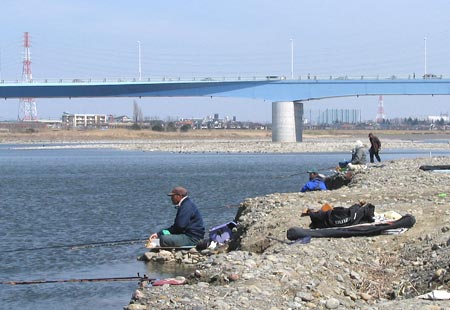
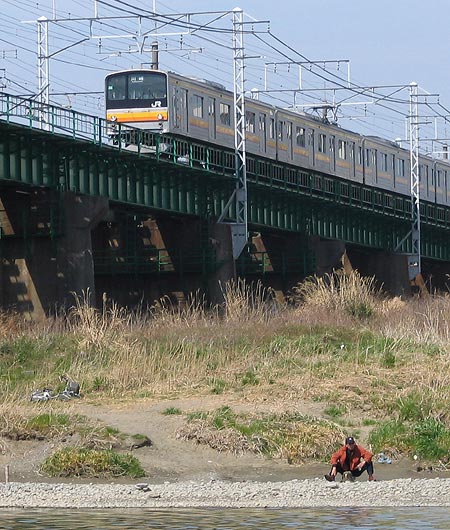
It seems like everyone was out there today–I’ve never seen so many people out at the parks and on the river. Tons of people. Too many, in fact, for good birding. A lot of guys fishing out there, especially. You see them out a lot of the time, but today they were everywhere.

050327-Fishermen

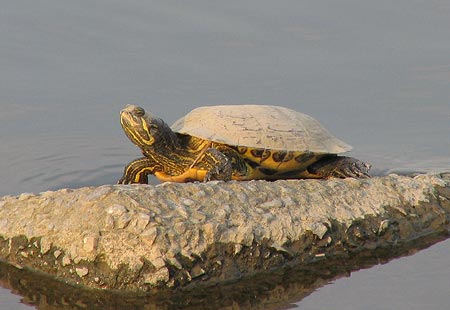
Though my usual spot on the river didn’t have any birds because of the crowds, there was one interesting visitor near the embankment:

050327-Turtle

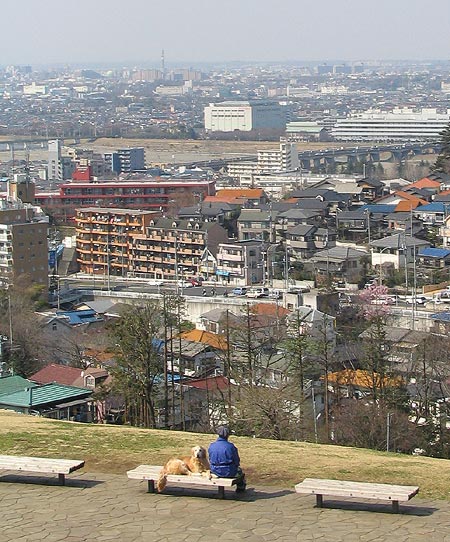
So I traveled around quite a bit, up and down the Tama River, and up into Sakuragaoka Park (no birds there, but some nice views). One thing this birding will do for me is give me some much-needed exercise. Though my feet are killing me.

In any case, a few nice photos from today–vertical shots, this time. Photos of the birds I found later.

050327-Fishertrain

050327-Mandog

Categories: Focus on Japan Miscellaneous Tags: