Archive

Archive for the ‘Focus on Japan’ Category

Not a Snow Town

March 5th, 2005 Comments off

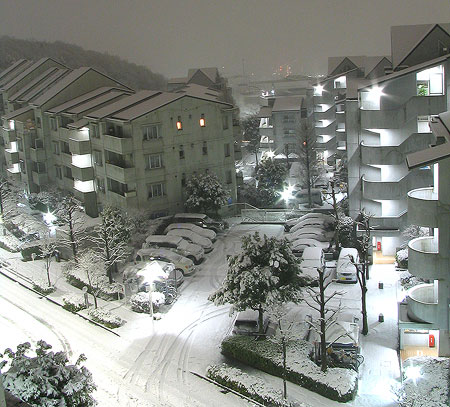
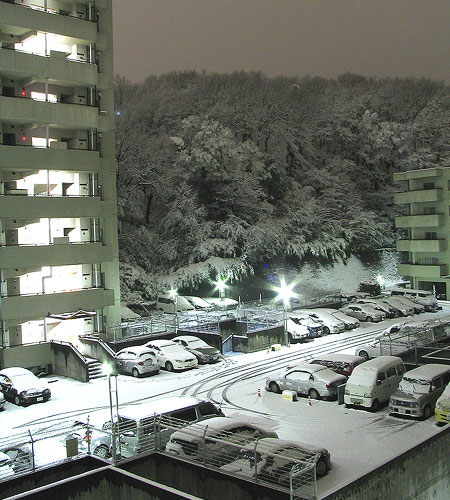
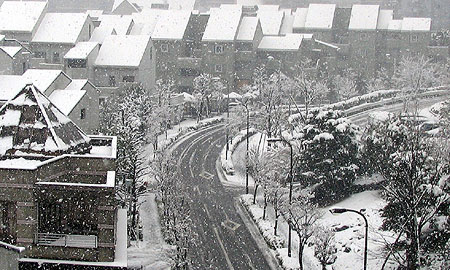
Well, Friday brought quite a bit of the white stuff into town, though the weekend-long storm predicted fizzled out in the end. But we did get a few inches all over town, and for Tokyo that’s quite a bit.

305-Snowstreet

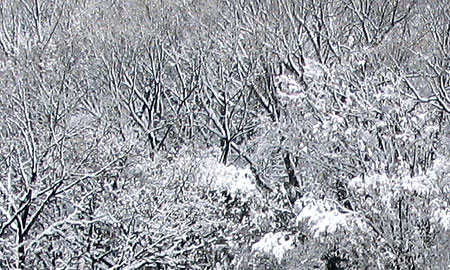
305-Snowtrees

This city is not really geared up to handle much snow. I remember back in the countryside, where we got real snow, meters of it, things would run relatively smoothly. Trains would operate. Business would go on. And in the evening we’d watch the news shows with images of a few inches of snow in Tokyo and people slipping, sliding, and waiting for late trains, and we’d have a good laugh. Of course, it’s not the people, it’s the city and its readiness. Even several hours after just a light snow, the trains were still running late.

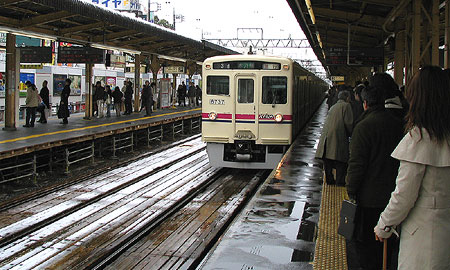
305-Snowtrain

One small note–they’ve added wooden planking to the railroad tracks next to the platforms at stations, at least some on the Keio Line. I have no idea if this is a snow measure or not. If it is, it doesn’t seem to help the trains stay on time in bad weather.

Categories: Focus on Japan Miscellaneous Tags:

New Money

March 2nd, 2005 Comments off

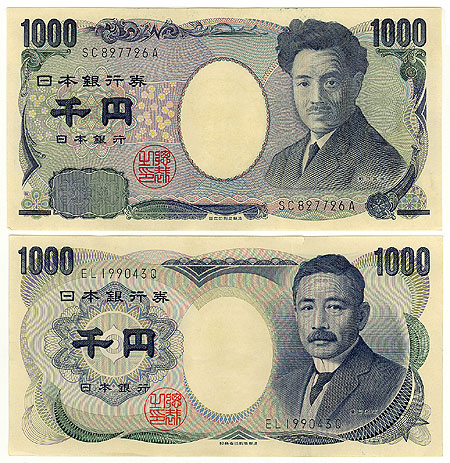
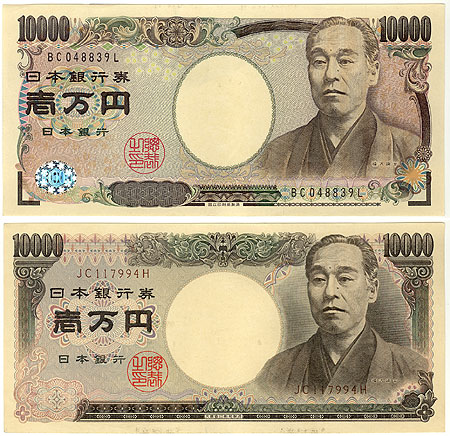
Japan has recently overhauled its paper money. There are only four bills–the 1,000, 2,000, 5,000 and 10,000-yen denominations. The 2,000-yen bill is a new introduction; I like it a lot personally, but merchants hate it, so that’s that. In practice, there’s just the three bills. So recently, those three got face lifts with several anti-counterfeiting measures, just like U.S. money has been revised recently (more than once–what’s with that?). Here are the new bills next to the old ones (new bills on top):

1Ksml

The old 1,000-yen bills have famed author Natsume Soseki (“Kokoro“) on the front, but he has been replaced by microbiologist Hideyo Noguchi, Whose claim to fame is that he isolated the cause of syphilis (umm, okay). Personally, I think he looks a lot like a Japanese version of Lyle Lovett, what with the hair and all.

Lovettnoguchi

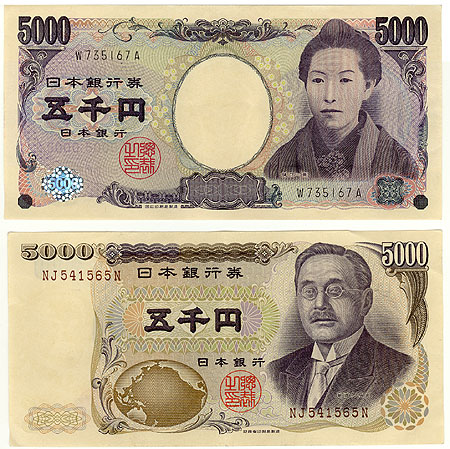
The next bill is the 5,000-yen denomination, and this bill has something even U.S. paper money hasn’t had yet: a woman on the front.

5Ksml

The woman’s name was Ichiyo Higuchi, a 19th century author. A fitting decision in principle, as women’s rights have advanced at least somewhat over the past few decades, and this choice seems to acknowledge that. She replaces Inazo Nitobe, a bespectacled educator of the 19th and 20th centuries.

Finally, 19th century educator Yukichi Fukuzawa remains on the 10,000 yen bill, though it did get the anti-counterfeiting makeover:

10Ksml

And maybe it’s just my imagination, but Fukuzawa seems to be standing up just a tad straighter. Maybe he thinks he has to shape up a bit or the next time he’ll get replaced.

Categories: Focus on Japan 2005 Tags:

Crazy Weather

February 24th, 2005 7 comments

Talk about extremes.

205Snowynight

Just two days ago, we had a warm spike, the weather rising to 65 degrees F (18 C), possibly even more than that. And tonight we’re having a pretty significant snowstorm, several inches at least. That’s quite a shift in temperature… and an excuse to upload a few photos of the white night to the ol’ blog.

205Snowy2

Categories: Focus on Japan Miscellaneous Tags:

Inogashira Birds

February 21st, 2005 Comments off

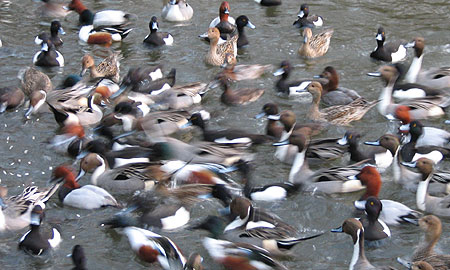
Went to Inogashira Park today, and did something I haven’t done in many trips past: looked at the birds. You take them for granted, but there are so many there. At least three or four different kinds of ducks, for example, including the Tufted Duck, Common Pochard, the Northern Pintail, and I think Mallards, though I’ll have to research the identity much more closely. Here is a photo of a bunch of them in a feeding frenzy…

205Ducks1

…But the interesting find was this bird, which I haven’t fully identified yet–maybe a Black-crowned Night Heron, but I really have to look into it–when I have time.

205Bird1

One other bird we spotted, but only in a flash, with an emerald or turquoise flash of back feathers–maybe a Kingfisher. I’ve got to go there again sometime soon. But I’ve also identified three parks with bird sanctuaries–one in Setagaya, Koganei Park, and Showa Memorial Park in Tachikawa. All should be good places to go.

Categories: Focus on Japan Miscellaneous Tags:

Japayuki

February 20th, 2005 14 comments

EDITOR’S NOTE: Please read this first. I have received angry comments from [presumably] Philippine citizens who seem to presume that this article brands all Filipina entertainers and/or workers as sex slaves. This is not true. If you read the article carefully, it does not at any point say that all, 60%, or any other number or percentage of Filipinas entering Japan are prostitutes, willing or unwilling. I am not saying that there are no legitimate Filipina workers. This article only states that some undetermined number of that group are forced into prostitution. It could be 3%, it could be 30%, it could be more or less, I have no idea, and I am not guessing. But it does happen, that much is certain. I am not stereotyping, I am not accusing, I am not branding anyone as anything. So please stop accusing me of such. Thank you.


“Japayuki” was a popular term used in the 1980’s–literally, it means “Japan-bound”–to describe young foreign women, predominantly Filipinas, who came to Japan on the promise of work in the entertainment or housekeeping industries, but wound up all too often working as prostitutes, essentially slaves in the sex industry. Their passports taken from them upon arrival, locked in small rooms with many other women in the same situation, and forced to pay off “debts” to their owners, these women were treated little better by the police, who commonly did not “find” them until they had served their owners for some time, and were treated as criminals themselves, instantly deported from Japan after being arrested. If the men who trafficked in them were ever arrested, it was rarely if ever reported.

And this is not something that disappeared in the early 90’s–it still goes on today, perhaps just as strongly now as it did back then.

The sex industry in Japan has long been overlooked by the law. Go to Kabukicho near Shinjuku, or any of many other red-light districts in Tokyo and in Japan, and you’ll find the sex industry is pretty blatant. I recall even seeing a late-night television show many years ago in which a house of prostitution was even shown, following a patron inside where money was paid and the patron was directed to a room where a girl in a towel sat on a bed and directed the patron to use a condom (then cut away). The address of the brothel was even flashed on the screen.

This is, of course, in violation of Japanese law, but there are laws and then there are laws. The sex industry is ignored except for once every year or so when a politician accompanies a police raiding party, with news cameras in tow, in a raid against some club or another. It makes the evening news, prostitution is in check, yadda yadda yadda, and then business goes on. Yakuza gangs have long been similarly tolerated despite illegal gambling, prostitution and drug peddling; some say it’s because the police are too afraid or ill-equipped to do anything, others say it’s because the police and the yakuza are chummy, and others still say that the police tolerate the yakuza because they keep their turf clean–they keep other thieves in check and don’t step over understood lines of conduct. You can even see gambling going on, sometimes even institutionalized. Pachinko, for example: when you win at pachinko, you’re only supposed to be given prizes, not money (which would essentially be gambling). But there are little “shops” around the corner from some pachinko parlors, I am told, which will take the gifts you won and give you money in exchange.

Whatever the case, the yakuza are allowed to operate without too much interference, and so are the human traffickers–until, we are to believe, just now. Japan signed a U.N. treaty against human trafficking in 2002, and now it has to live up to its agreement–and is even more in the spotlight because of its very unsavory reputation in this area. The question is, will Japan really crack down on this industry? Or will it just continue to turn a blind eye, while having unenforced laws on the books that make it seem like the problem is being addressed?

One way to evaluate this is to look at what the new anti-trafficking law does. Although the provisions of the law are not laid out in detail anywhere I can find, three provisions are reported: first, immigration laws will be tightened. Presently, 130,000 “entertainer” visas are granted per year (something should have appeared fishy right there long ago, one would think), fully 60% of them issued for Filipinos. The reform? The Japanese government “will abolish a provision that allows singers and dancers certified as such in their home countries to automatically receive a Japanese visa.” Apparently, most Filipino “entertainers” are certified in the Philippines, which the Japanese government claims leads to human slavery. Hmmm. Sounds a little evasive to me; it does not seem to say anything about how the licensing will be monitored in Japan, or how Japan will stop the local criminals from doing the exact same thing on this side of the immigration counter. Nor is it clear how this will affect legitimate entertainers; there is protest from the Philippines and from within Japan about how this would hurt legitimate workers and employers.

Second: women found working as sex slaves arrested by police will not be immediately deported. The stated reason is so that the women will be able to stay to testify against the traffickers, but not much more is stated nor is very clear. Will the women be deported after testifying? What if they refuse to testify? If they are allowed to stay on, what support will they be given so as to have legal employment? Will they be protected against the criminals who employ them? I sincerely doubt all of these questions could be answered satisfactorily.

And then there’s the third provision, and perhaps the most dubious: foreign nationals may be summarily deported simply on the suspicion of being human traffickers. This may sound okay on the surface, but there are two huge caveats. First, it seems to suggest that a large number of the traffickers are non-Japanese. While I have no data on this, I quite frankly doubt that this is even close to being true, seeing as how territorial the Yakuza are. The provision seems more likely yet another attempt to paint the problem as a foreign crime, not as something the Japanese would be responsible for. And second, there is the question of abuse. No courts are involved, and from the appearance of things, no evidence is required. Apparently, the police could simply arrest you, claim you’re a trafficker, take you to Narita Airport and send you off, never to return. I don’t expect that English teachers or Otemachi businesspeople will be deported in such a way, but Koreans, often stereotyped as gangsters, could be targeted especially, and the law could at some point be used as carte blanche to conveniently expel anyone the government doesn’t like.

I would be far more impressed if the police actually started doing their jobs–something that Japanese as well as foreign nationals agree is all too seldom the case.

Categories: Focus on Japan 2005 Tags:

Pills, Capsules, Powder

February 15th, 2005 2 comments

205Pills

When I first came to live in Japan, I was in Toyama City, up near Niigata, on the Japan Sea coast. As usually happens, I fell ill enough to see the doctor from time to time. One time it was for ringing in my ears. I went to see the doctor, and after a short examination, he gave me three types of medicine: pills, capsules, and bags of powder to be taken with water. Some time later, I had a stomach illness. The doctor examined me, then gave me three types of medicine: pills, capsules, and bags of powder to be taken with water. Later still, I suffered from headaches. Guess what the doctor gave me?

It began to be a bit of a joke, and the beginning of my lack of respect for doctors in Japan. All the medicines looked alike, and I kind of doubted that all three of those maladies really would require so similar a course of the exact same types of medicines. And if the doctors were just trying to placebo me into feeling well, wouldn’t a single medicine suffice?

Of course, this was before I found out more about how the insurance system works. It has set fees for medical treatments, and doctors find ways to milk this for all it’s worth. That’s why a dentist once scheduled me for four appointments to have my teeth cleaned–lower left teeth one visit, lower right the next, and so on. Another dentist did root canal on me, and did it over twelve appointments–again, dividing the visits into tiny tasks. The insurance, it turns out, pays more for multiple visits. How nice–waste my time and make unnecessary alterations to my medical treatment to get a few more bucks here and there.

It’s the same thing with drugs. Each hospital has a pharmacy across the street or somewhere very near, and that’s where they send you to buy your drugs. It also is usually a business which the doctors either co-own or get kickbacks from. So people get rather over-medicated quite often. Thus the rather large assortment of pills, pictured at top, turned up when I was cleaning out my cabinets and drawers last weekend.

Another disadvantage is that you get them in the blister-pack form, and usually only with directions for taking them. What you do not get is drug names or explanations of what each one is for, unless you ask the doctor when s/he prescribes them. I prefer the orange-brown-bottle-with-the-white-childproof-cap system where it says the name of the drug and what it’s for. And don’t expect drug names to be the same, especially not the brand names printed on the packing. The doctor can be helpful there, though–which is how I found out that one drug I was prescribed was none other than Rohypnol, which I had heard mentioned in news stories and TV dramas as the date-rape drug. Kind of startled me at the time.

Your best bet: either find a doctor you can trust (not always easy, especially to find one nearby enough to be convenient), or ask your doctor if those medications are really necessary, and which ones could you perhaps do without?

Categories: Focus on Japan 2005 Tags:

Tokyo Speed Trap Redux

February 14th, 2005 2 comments

Caught another speed trap on film recently. It’s not too hard to do, actually, if you happen to use the streets the police here choose for their little setup. I have seen three speed traps in Japan. Actually, I’ve seen a speed traps dozens of times–but it’s always in the same three places. Not just the same general area, but the exact same spot, every time. I’ve posted on this before, but didn’t have time to document it all on film in detail.

One would think that drivers along these roads should easily enough be able to note where the cops set up their traps, and just slow down at those specific points. Not very smart or creative on the part of the police–drivers should be able to figure out that they can break any and all traffic laws elsewhere, they just have to slow down and behave on this 50-meter stretch of road.

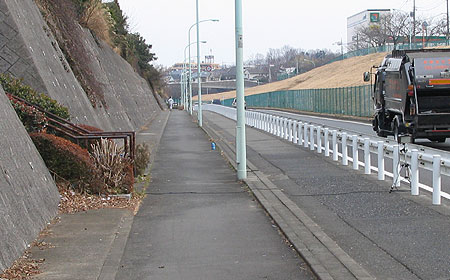
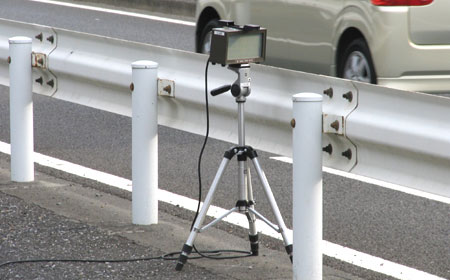
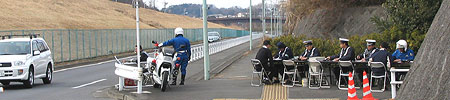
Here’s how it works. First, they choose a road out in the countryside. The road is always the same type: long and wide, no pedestrian crossings, intersections only every half kilometer or so, and one side of the road a river or embankment. The kind of road where, say, 50 mph (80 kph) is completely reasonable–but where the posted limit is 25 mph (40 kph). You’ve got the radar cop sitting at a hidden spot (behind a telephone pole, in some bushes, etc.) with his radar setup exposed but placed so as to blend in as well as possible. In the shots below, you’ve got the radar gun looking almost like a post in a long white railing, and the cop sitting behind bushes on some stairs.

205Stradar0

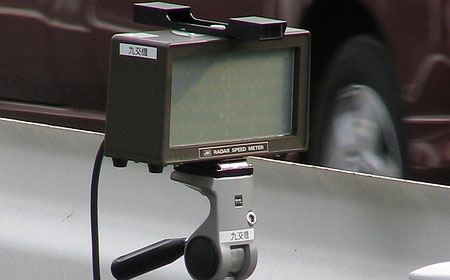
It’s almost invisible, but you can just see the guy’s nose sticking out from behind the bushes at left, just where the hand railing disappears behind the bushes. Below, closer looks at the radar:

205Stradar1

205Stradar2

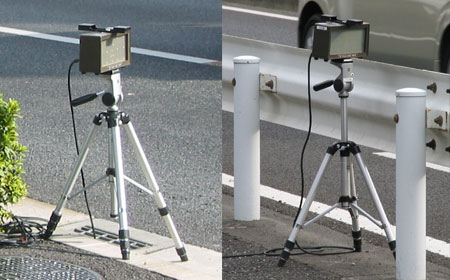
You might even notice how close the radar gun is in appearance to the one I caught 1 1/2 years ago, about 10km away in a different city (older photo on left):

205Radarcomp

After the hidden cop catches a car or bike going fast enough, he talks to the other cops (by radio, but he also stepped out and signaled sometimes) down the street:

205Stcops2

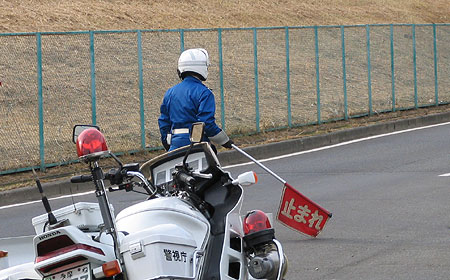
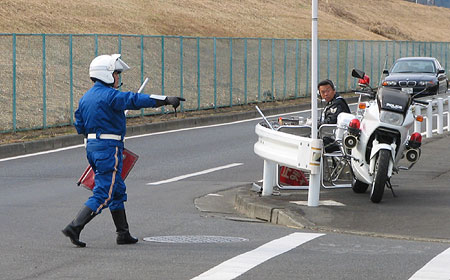
One of these guys has a machine which is in radio contact with the radar machine run by the first guy, and he has a little receipt printer which spits out the incriminating data. He does this while the uniformed motorcycle cop goes out into the street with a little “Stop” flag on a pole, while he and another motorcycle cop stand ready to zoom after anyone who decides to make a break for it. (Another reason they choose roads like this: there are no streets for people to turn off to in case they notice the radar gun too late; this is the “fish in a barrel” aspect to the exercise.)

205Stcops3

205Stcops4

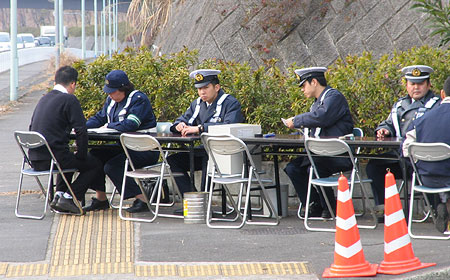
Then the driver is led over to a desk set up by the cops, who can handle up to five speeders at a time, no waiting:

205Stcops1

Of course, this would be far more respectable if they were catching people who sped unreasonably–in a way that was dangerous at all. But one common characteristic to all speed traps in Tokyo that I have seen or heard of is that they are set up at a location based upon how easy it is to catch people, not how dangerously they are driving. The people they stop are not hazards on the road, they are simply driving in excess of speed limits which are set ridiculously low for the road. And from what I understand about Japanese traffic tickets, the cops involved get a cut of the proceeds.

It really puts you in mind of the “Speed Trap” song by Hoyt Axton:

I’m the cop in a little bitty town
And I don’t get much pay
Oh but I caught seventeen out of state cars
And four of my friends today

Yeah, I let the hometown boys go home
They paid five dollars’ bail
Oh but all the drivers in the out of state cars
Had to go to jail

Well, they hollered and they moaned, and they cried and they groaned
They all swore that they’d sue
But the judge was high, and so was I
And we needed the money, too

Yeah, the judge and me, we got a deal y’see
We split the money fair
‘Cept for thirty percent to the county seat
To keep the law out of our hair

And old Charlie’s working out real good
Down at the corner store where the red light is
He sees them out of state plates two blocks away
And when they get right up on top of that green light
Old Charlie pushes that secret button underneath the corner drugstore counter
That yellow light only lasts for a tenth of a second

Yeah, the county pays me about forty a week
Ain’t that the livin’ end
If it wasn’t for them tourists in them out of state cars,
I’d have no loot to spend

But the way it stands this year so far
I’ve made a hundred thou’
For a high school dropout, I’m-a doin’ fine
I make more than the president now (‘course,
he’s honest)

So if you’re drivin’ down the road
And flashin’ lights you see
If they’re on top of a red Rolls Royce
You can bet your boots it’s me

‘Cause I’m the cop in a little bitty town
And I’d sure like to see
All them drivers in them out of state cars
Try to get by me

205Speedtrapend

Categories: Focus on Japan 2005 Tags:

Japan Fun Fact #10: Where the Streets Have No Names

February 9th, 2005 4 comments

Well, not all the streets have no name. The larger ones do. But most don’t.

Japan’s streets are usually not laid out in a rectangular grid like American streets more often are. The blocks seem to be divided in a much more haphazard fashion, like people just claimed this bit of land or that, and the streets just flowed around them. This by itself is enough to confuse any non-native person navigating Japan’s streets, but the fact that most streets have no name, no street signs to guide your way makes it even more difficult. Because streets tend to jig this way and jag that way, it is very easy to lose your sense of direction–I’ve done that more than once, and I’ve got a fairly good sense of direction.

Here’s how it’s laid out. You start with a city block (called a “banchi“), which has a certain number of lots on it. Each lot has a number. The numbering begins at some point on the block, then runs around that block ascending, until you reach the starting point again. Not all numbers are used, and the pattern–if there is one–is hard to see. Certainly not like the U.S. system where even and odd numbers are used on either side of the street. And the block is not usually going to be a rectangle, and the lots are often uneven Rarely are they organized, and usually very different kinds of buildings share the same block–you can have an apartment building next to a factory next to a wealthy person’s home next to a convenience store next to a few regular houses and then a trucking company, and so on. Okay, usually it’s not that diverse, but after seeing so many neighborhoods in Japan, you get the clear sense that zoning is not a big thing here.

Next, the blocks are grouped together into divisions of the “neighborhood,” as you might call it. Each division is called a “chome” and is made up of some dozens of blocks. Each block has its own number, and while they usually are sequential, that sequence may wander and meander somewhat. You could be walking down a street, and come to an intersection, and even though all four visible blocks are in the same division, they might have numbers like 7, 8, 21 and 34. The sequence of numbering is usually most apparent on a map, not from the ground. There seems to be no universal logic to how the block numbers are assigned.

Each “neighborhood” (called a “cho” or “machi“) is divided up into anywhere from one to perhaps even a dozen “chome.” Usually the number of chome is four or five, but there are all kinds of variations, again seeming to follow rather non-standard rules, if there are any rules to this.

Finally, put all the neighborhoods together and you get a ward/borough (“ku“), or some sort of village, town or city (“mura,” “machi” or “shi,” respectively). These then collect to form a prefecture, kind of like a state or a province.

In the U.S., our addresses are initially linear–using streets–but then go to a radial zooming-out system. In Japan, addresses are purely radial. First there is the building number, then the block number, then the neighborhood division number, then the neighborhood, city/ward, prefecture and country.

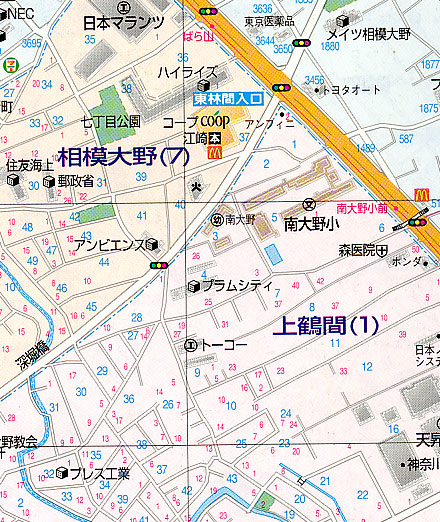
Take the map fragment, from Machida City, shown below:

205Map1

This focuses on the area shared by two neighborhood divisions: the orange 7th chome of Sagami Ohno Neighborhood at top, and below, the pinkish 1st chome of Kami Tsuruma Neighborhood. The big bright orange line is a major boulevard, so it’ll have a name (Tokyo Kanjou, or the Tokyo Ring Road). You can see that it is intersected by a semi-largish white road; sometimes a road that size has a name, but not this time–the Tokyo Ring Road is the only named street on this part of the map. The blue numbers are block numbers, and the smaller red ones are lot numbers. Note the “block” numbers for the uppermost neighborhood above the orange road: the numbers are in the thousands, indicating that it is a neighborhood (machi) with no divisions (chome); in this case, there are no division numbers and even no block numbers–each number is a lot number. So instead of having an address like 7-31-22, the number is just something like 1880.

You might think that the block numbers and lot numbers could help, but these are not always easy to spot on the ground. The closest thing to street signs in most places in Japan are small placards on telephone poles which, along with local advertising, show the address down to the block number. But these are too small to note while driving, and even when walking, they are sometimes absent; people rarely use them for directions. Some residences will have the address on a small plate on the outside wall of the lot, but that is the exception, not the rule.

Now, there are some landmarks to assist you. Note the blue box with the white letters; that’s the name of the intersection. Intersection names can be a help as they do not depend on street names, but as you can see, there are not many of them. So what we are left with are landmarks. You can see two McDonald’s, a 7-11, and a supermarket (“Coop,” right at the named intersection). After that, you have to depend on traffic lights, pedestrian overpasses, schools (the brown buildings just above left of center are an elementary school), hospitals (the cross-in-a-shield mark at center right is one, the Mori Clinic), car dealerships (trust me, there’s a Toyota and a Honda dealership in there), and so on. So directions from point A to point B are heavy on landmarks. “Go two traffic lights down, take a left and when you see the fire station, take the next right. The place you’re looking for is about 30 meters down the road, just after the small park on your left.”

Needless to say, a lot of people get lost. Especially when maps provided by businesses are heavily distorted in terms of distances and relative positions.

You can also see on this map the haphazard layout of blocks and streets. And you can see the variety of buildings in a small area. Take the Coop supermarket: above it is an apartment block, and above that is a factory (marked by the circle with what looks like a Roman numeral “I” in it). Just below it on the map is a fire station, across from which is a kindergarten. Kitty-corner from the Coop across the intersection is the Toyota dealership, and across from that is a pharmaceutical company. In all the vacant spaces are houses and any number of small shops, warehouses, apartments, and so on. In short, it’s a mess. But people get by somehow.

Categories: Japan Fun Facts Tags:

Denial Is a River in Japan

February 4th, 2005 2 comments

Japan’s treatment of the Mad Cow Disease phenomenon is becoming increasingly similar to how the media in this country reacted to the AIDS outbreak in the 80’s: it’s a foreign problem. I recall a case in the 80’s where a Japanese callgirl (from Kobe, I believe) died of AIDS. The stories were all over the press: she got it from her foreign boyfriend. Despite the fact that she slept with a great many men over many years, and despite the fact that she met her boyfriend not too many years before dying of the disease (not enough to make it likely he was the source), there was almost universal agreement in the domestic media that it must have been that European guy. AIDS was a foreign disease, and this was proven by how few Japanese got it–though since it was a shameful disease, whenever someone died of it, the doctor protected the family from stigma and shame by certifying the death as caused by the opportunistic disease that finished the patient off and not the syndrome itself, thus skewing the numbers to prove an “AIDS-free” country.

Well, here we go again, this time with Mad Cow Disease. I’ve already pointed out how Japan’s ban on American beef is rather irrational, since America has had only one case and that cow came from Canada, while Japan has had fifteen purely domestic cases (the most recent just a few months ago), and on the first one in 2001, they even sent the carcass to be turned into cattle feed after the diseased cow had been diagnosed–but Japanese beef remains as freely sold as ever.

But now comes the story that the first case of the disease variant in humans has taken its toll: this week a Japanese man died from Creutzfeldt-Jacob Disease, and although there is no evidence to show where he got it, Japanese doctors are now all but certain that he must have contracted the disease in Britain because he stayed there for one month three years ago. No matter that the disease has been rampant in Japan the past four years, where he likely ate 98% of all the beef he consumed during that period. It must have been the 2% of beef from England that killed him. Well, when pressed, the Japanese doctors admitted that it is possible he got the disease from eating Japanese beef, and ministry “experts” will continue to “investigate.” Meanwhile, this death, while having nothing to do with U.S. beef, reportedly may hold up Japan’s decision to start importing U.S. beef again. Talk about using any excuse!

In the meantime, I continue to avoid Japanese beef….

Categories: Focus on Japan 2005 Tags:

Can’t Get Enough Fuji

February 3rd, 2005 4 comments

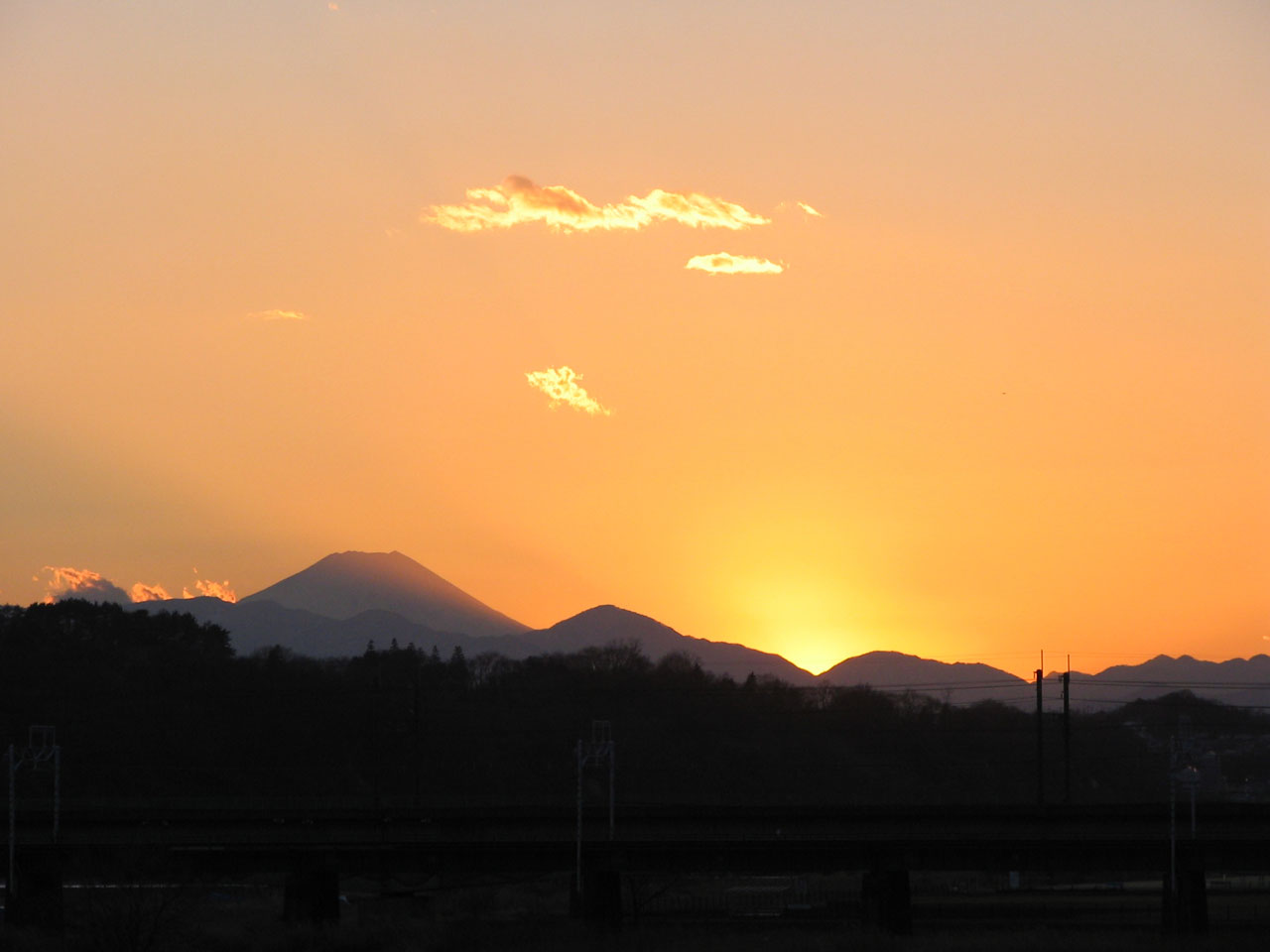
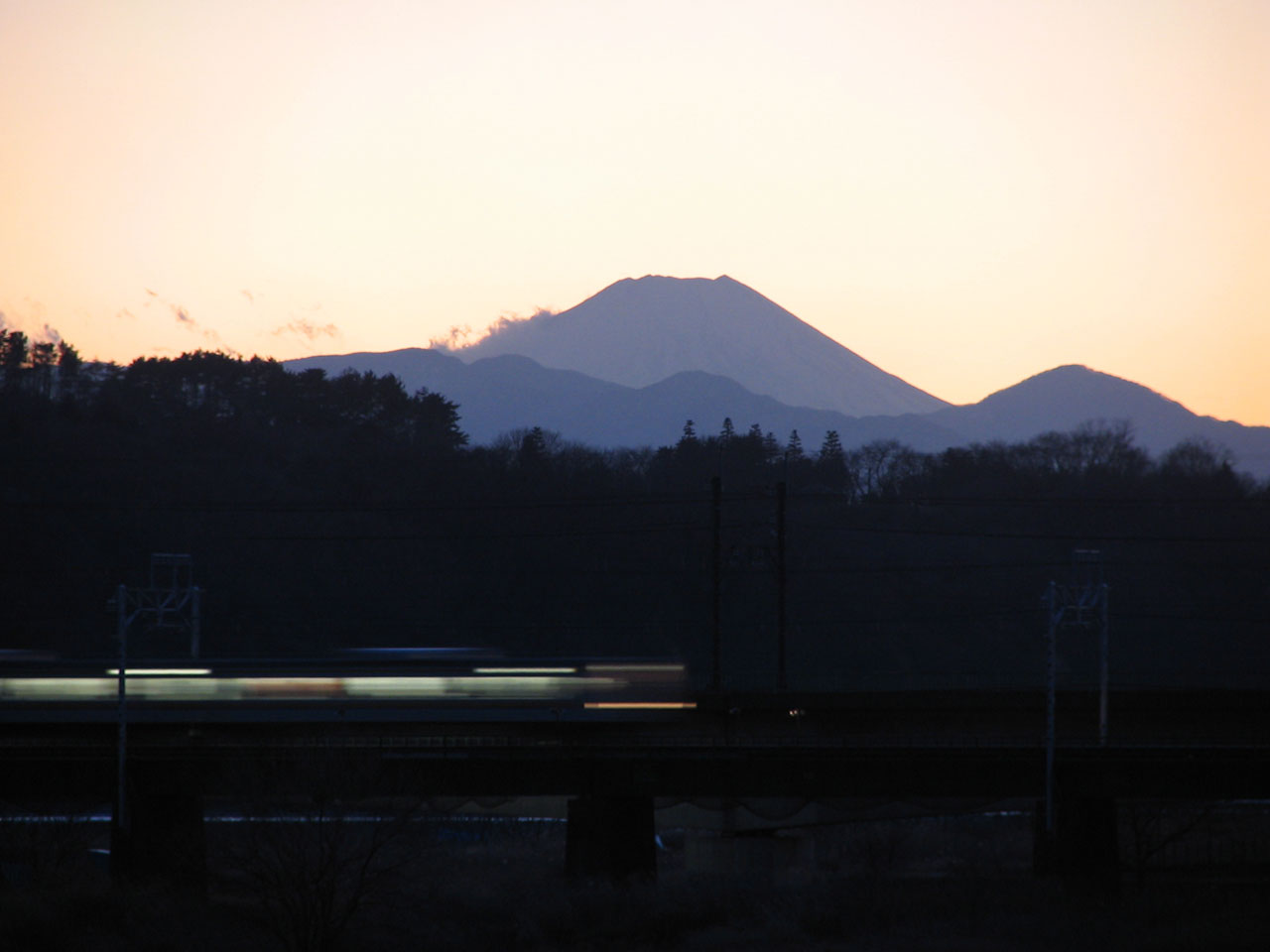
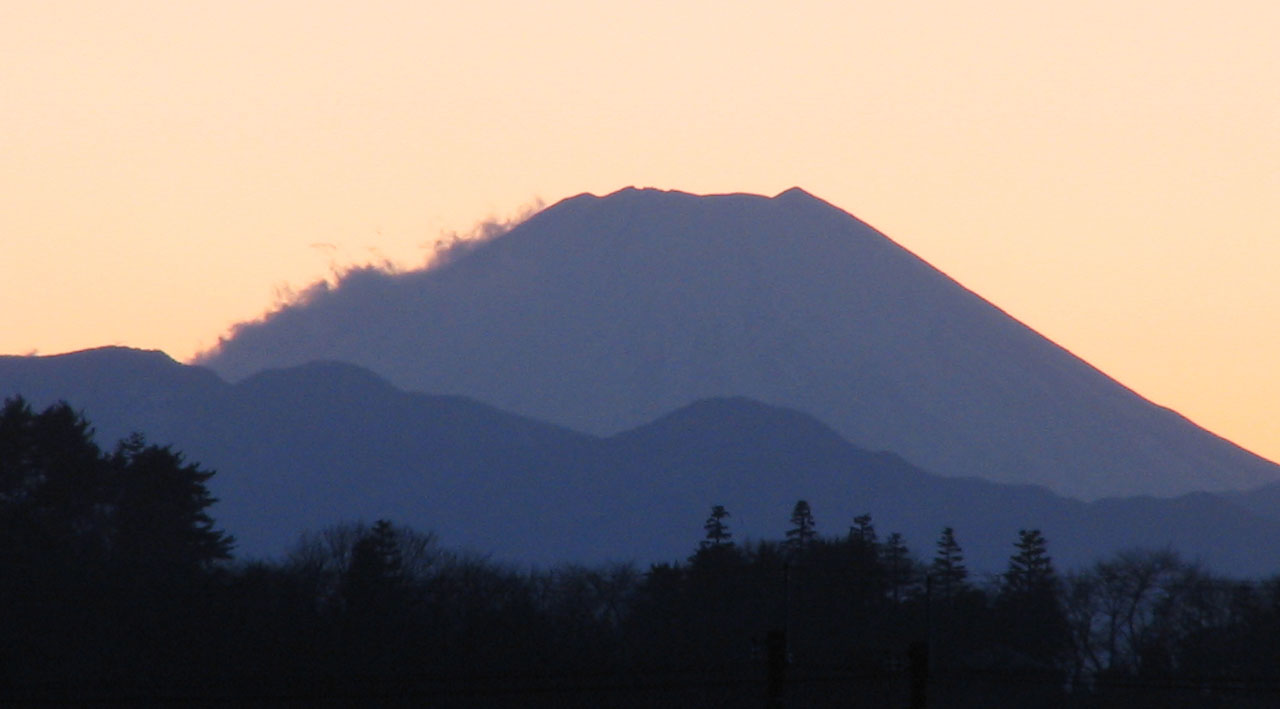
Some more nice sunset photos of Mt. Fuji from the banks of the Tama River. Click on any of the photos for a 1280×960 full-sized image (about 60KB each).

205Fujiss1A

205Fujiss2A

205Fujiss3A

Categories: Focus on Japan Miscellaneous Tags:

Laying in Wait

February 2nd, 2005 1 comment

Every once in a while you come across the sight below: a traffic cop laying in wait. They love to do that at major intersections, expecting people to violate traffic laws there. Not that they really do their job well–if I had the slightest feeling that they were really trying to maintain traffic safety, I’d have some respect for them. But the tend instead to avoid danger spots, instead hiding in spots where there’s very little danger from vehicles crossing yellow lines and such, but where it’s easy to catch and ticket people. A lot more on that in this past post.

205Cop2

205Cop1

205Cop3

I watched him for a few minutes while waiting for my order at McDonald’s to get made. He never went after anybody, and apparently gave up, as he left just as I was heading back. A little video of that–nothing really interesting, just a bit of video for fun. (Quicktime movie, 1.4MB.)

Trafcop

Categories: Focus on Japan 2005 Tags:

Japan Fun Fact #9: Apartment Hunting, Part II

January 27th, 2005 17 comments

All of the experiences I outlined in my last post about apartment-hunting were from the 1980’s. Those were heady days for Japan, when it was the nation of the future, buying up everything and set to take over the world economically. Japan was feeling its oats a lot more, and there was a lot more conflict, especially in trade, with the United States. Japan was the country of success–in business, in education, in a safe society; the United States, and other countries, were seen in a more adversarial light than today, and foreigners were seen more as a threat, commonly represented in media as violent, criminal, or diseased, a contrast to Japan.

Then came the 90’s. Aum Shinrikyo and the subway gassings. Children killing children in the schools. Horrific stories being told about domestic crime in the press. And, of course, the bursting of the bubble economy. Japan’s ego took several palpable hits, and the recession kept going and going and going. America retook the computer industry, Japan was no longer seen as the juggernaut, and Japan’s markets opened and Japan’s ironclad grip on the future of the world economy seemed like a strange illusion of yesterday. Suddenly, Japan was no longer on top of the world–the economy sputtered, and crime seemed to spike at home. In short, things changed. The national ego lessened, the feelings of superiority ebbed, and the adversarial atmosphere thinned.

Those changes were also reflected in how foreigners were regarded. Less and less were we threatening aliens who were taking over sumo and baseball; less and less were we icons of crime and disease. Or, perhaps, more and more Japan focused on its own ills. Japan is kind of like that, in extremes when it comes to international comparisons–either it sees itself on top of everything, or on the bottom, to overstate the matter perhaps a bit.

Not that this changed much immediately in the early 90’s when I came back to Japan and looked for an apartment anew, but it changed things somewhat. The real change was much more apparent when I returned again in the late 90’s. I heard a lot fewer stories about foreigners being stopped on the street and asked for ID, or accused of having stolen their bicycles. The media represents foreigners in a far less negative light today. And apartment hunting similarly became easier.

By the time I left Japan for the second time in 1995, I had lived in five apartments: two in Toyama and three in Tokyo, the last one secured in 1993. I had also found an apartment for my brother when he moved here (I used the same agent who had pushed for me in finding my own apartment). In every case, I found myself up against the rather formidable “gaijin wa dame” element.

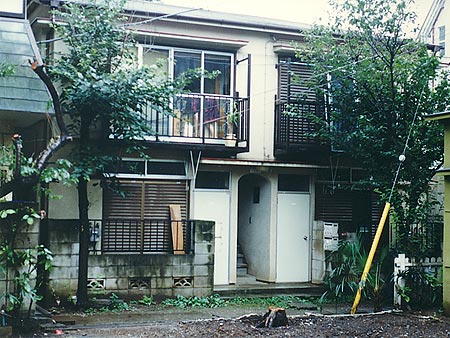
When I returned in 1998, things had noticeably changed. Though I was looking for an apartment in much the same areas, I found a lot less resistance, and a lot more possibilities. This time, I found a place just a ten-minute bicycle ride away from that first cockroach-infested dump in Asagaya, but this place was a lot nicer. It cost a little more, but for the price, it was much nicer. Two seven-tatami-plus rooms, plus the kitchen/bath areas, but also a nicely-built three-unit apartment with a rather kind landlady living with her family on the second floor, just five minutes’ walk from an express station on the Seibu Shinjuku line just 12 minutes out from Shinjuku. And this I found after only a very brief search that lasted only a few days, not a few weeks. The agencies I visited along the way were much more accommodating than the ones I had experienced five years and more before, and I had several units to choose from despite the brevity of my search.

After two years, however, I decided to move up. The job I had originally been hired for changed–soon after I had moved into my new place, I was promoted from newbie EFL instructor to the coordinator and effective dean of the academic department of the college–a change that shocked me, but which I happily accepted, and it came with a nice increase in pay, needless to say. I stayed in the first apartment more through inertia than anything else, but after two years, I faced the familiar one-month’s-rent gift money fee, and I also was getting tired of bumping into furniture when I had to get up and move around at night. So I started looking again.

Let me stray from the narrative a bit here so I can explain a bit more about apartment hunting in Japan. First off is cost, and cost is determined roughly by a formula which includes the chief variables of distance from central Tokyo, distance from the local train station, and the size of the apartment, though not necessarily in that order. Go far out from central Tokyo and rent a small place 15 minutes away from the station by bus, and you can get it for a pittance; the reverse will be costly. Some train lines are more expensive than others as well: the Chuo Line, for example, can be pretty pricey, and express stops are at a premium. If you can walk to the local train station in a few minutes, that’ll cost you. It matters a lot more than what shops or schools may be nearby, as most people commute by train in Japan. Proximity to town can also mean a lot to people; some cannot stand having to commute long distances to get to work every day; that can be a deal-breaker for many. The trade-off is for size, and that’s what I’ve chosen myself; It’s a 45-minute-to-one-hour commute to work from where I am, but I have a nice, spacious place.

Size of apartments in Japan is usually measured by square meters, and room sizes are measure in tatami mats (thatched straw mats three feet by six feet in size), even if the room in question does not use tatami mats. Tatami can be nice–softer than hardwood floors and less prone to be cold–but they also have their drawbacks, in that they don’t last too many years, and often are home to small bugs.
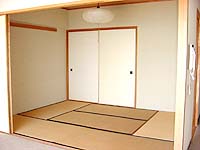
3A standard room size is six tatami mats, or nine by twelve feet–a smallish room, especially if that’s the only real room of your apartment. Standard studio apartments in Japan will consist of a single 6-mat room with a small kitchen area, a bath room and a toilet room (or both bath and toilet combined in a pre-fab “unit bath”). No room for a western-style bed without serious crowding, so a futon is used. Not like many futons in the U.S., which are often thicker and more rigid, Japanese futons are more like thick, heavy blankets than mattresses, and are folded up and put in large two-tiered cupboard/closets during the day, leaving space for moving around and the like. The image at right illustrates this kind of room, the double doors in back being the cupboard/closet.

The apartment I had in Tokyo in the mid-90’s had a six-tatami room and a three-tatami room; the three tatami room (six feet by nine feet) was pretty much just enough for a futon to be laid out in. Eight-tatami rooms (twelve feet square) are considered fairly spacious in Japan. See this page for standard tatami layout patterns. Newer apartments have hardwood floors more often, though multi-room apartments often have one tatami room.

Another way to measure the size of apartments is by room counts. In this system, L is a living room, D is a dining room, and K is a kitchen. Often they are combined to read LDK, especially if they are in fact one room. Additional rooms are represented by number. If there is just one room, it is called so: a one-room (studio) apartment. A 1LDK would be one room plus a living-dining-kitchen room, or what in the U.S. would be called a one-bedroom apartment.

Other considerations for apartments in Japan include the age of the building (chikunen); if the building is more than, say, twenty years old, it is much less desirable. The construction type is also important–you have apartments and mansions. “Mansion” doesn’t mean the same thing here as in the U.S.–a Japanese mansion is like a condo, as they are more often bought than rented. The building is usually much more solidly constructed–thick concrete walls and floors, for example, rather than the thinner, shoddy walls found so commonly in apartments.

Okay, back to the story. When I got tired of the apartment I had lived in since arriving in Tokyo, I decided I would be willing to spend a bit more and live farther out in order to get more space. After searching for a while (I had more time to hunt this time), I found the place I was looking for when an acquaintance clued me in on public housing. I’m still not entirely sure exactly how “public” it is, but I get the feeling that it is more publicly-subsidized than publicly-owned. They used to be called Toshi Kodan (都市公団), or the Urban Development Corporation, but sometime last year they changed to Toshi Kikou (都市機構, or “Urban Renaissance”), and I have no idea what that signifies.

But what it mean for apartment hunting is just what I was looking for. First of all, you don’t go to a real estate agent for these places–you go straight to the local UR office. That means no paying one month’s rent for the agent. Second, and more significantly, because it is not a regular landlord, that means no gift money, a huge advantage. And finally, it’s government-related, so that mean they can never say “gaijin wa dame“–you don’t even need a guarantor! I just walked into the office, asked to see a place, and then reserved it once I found I liked it. You do have to certify that you can earn enough to pay for the place, show some tax forms or the like, and there’s a bit more paperwork than the usual apartment requires. And there is still a deposit–a bit steeper than usual, three months’ rent–but that’s refundable. Moving in was just the deposit and first month’s rent.

Also, the building I got was a mansion type, meaning great walls and floors–there’s a couple who live right next door, and they have an infant. I never hear it, not even a bit. At most, I’ll hear people upstairs banging around a bit, but not often and it’s not loud. My previous place was so un-sound-proofed that every time my smoking next-door neighbor went to the bathroom, I could hear him go, even when he didn’t loudly hawk and spit into the toilet. The soundproofing in my new place also means that I can play music or have the TV on at high volume even late at night, and I never have to worry; I’ve asked neighbors if they can hear anything, and they say nothing gets through.

But the best part of the new place is the size: 84 square meters, almost double my older room. All hardwood floors, it consists of an 8-mat-size master bedroom, a 4.5-mat second bedroom, a large genkan (vestibule, or whatever) leading to a toilet room and a bath room off a small dressing room with sink and mirror, and then the big “LDK-plus” area–an 8-mat living room, 4.5-mat dining room, 4-mat kitchen and 6-mat extra room, all in one large joined area (no doors, but a few interior walls). And that does not include the walk-in closet (albeit a small one). If you want to take a look, I have the layout and some photos of the place I made before I moved in.

Then there’s the rent–at ¥136,000 when I moved in, it was low for such a big apartment–but then something strange happened: it went down. Usually it’s supposed to be the reverse, but not with this place. After a year, it went down to ¥131,800, then ¥127,200, then to ¥123,400, and this year it’s ¥119,800. All this despite the fact that the apartments are almost completely occupied, more than when I first moved in. And there’s also no contract renewal fee–just another rent decrease. Bizarre. Great, but bizarre.

I’ll likely stay here until I buy into a new place, either a mansion or a house–which will lead to a whole new level of possible conflicts, including taking out a loan, which I kind of dread. But, as I like to say, I’ll burn that bridge when I come to it.

Japan News, January 25th 2005

January 25th, 2005 11 comments

Some interesting news items about Japan recently:

Highlighting Japan’s reluctance to take in immigrants is this story about Japan deporting U.N.-recognized Kurdish refugees back to Turkey despite the fact that they will likely be persecuted there. In response to sharp international criticism, Japan belatedly allowed five of them, the mother and children, to stay in Japan–for one additional month only–after the two adult males, the father and eldest son, were sent packing. Not that Japan has always been the choice of immigrants, anyway–I recall hearing that when Japan has, in the past, opened its doors to refugees, though in far smaller numbers than other countries, few refugees choose Japan as the destination of choice. Even when other countries’ much larger quotas get mobbed, Japan’s quota has remained unfilled (though I don’t have a source on that).

Meanwhile, there is argument over the privatization of Japan’s postal system. I have to admit that wasn’t even on my radar. Many do not know that Japan’s post office is not just a post office–they also sell insurance and are the nation’s largest bank–in fact, it is the world’s largest bank, with trillions of dollars in savings and assets. When you go to a post office in Japan, there are windows for mail and others for banking and other services.

Under the privatization plan, the post office would be split into four groups (banking, insurance, and then mail services would somehow be divided into two different sections), but all four would remain connected under an umbrella organization–presumably so they can remain operating in the same locations instead of having to split the 24,000 post offices between them and opening up huge numbers of new offices. The privatization would begin in 2007 and be complete by 2017. The 290,000 workers for the post office would be transformed into private-sector jobs, which many are unhappy about, but it would also cut the federal payroll by a whopping 30% of its total.

It’s still not a done deal, but one way or another, it will almost certainly happen. The effects are anyone’s guess, though many see it as a sop to the banking and parcel delivery services, which would gain from lessened competition–since today the Japanese post office is not taxed, and has fewer restrictions than private commercial institutions. The claim that this privatization will benefit consumers is dubious at best.

The head of NHK, the government-owned broadcasting corporations, is being forced to step down after some scandals dogged his career. In Japan, every TV market has NHK as two of its stations–General and Educational channels, usually channels 1 and 3 on the dial–which are operated by the government. Broadcast satellite also has two NHK channels. Most foreign residents are familiar with NHK primarily as the organization that sends people to your door demanding that you pay a monthly fee for the NHK service, whether you watch it or not. They say you have to pay, but if you don’t there is no penalty. As for me, I refuse to pay for what is essentially a propaganda arm of the Japanese government, even if I did watch it–which I do not.

NHK is not like PBS in the U.S.–NHK is much more closely related to the government. As a case in point, the latest scandal was over an NHK documentary about sex slaves during Japan’s occupation of Korea. Some politicians–predictably–did not like the subject matter, and pressured NHK to censor parts of the broadcast, which it did.

Not that this is really shocking or worse than other countries, of course; actually, I think that at this time, American media are far more influenced by political pressure than NHK is.

North Korean residents in Japan are fearful of how the Japanese population will treat them as relations with North Korea are not going well, There have been many unsavory incidents including assaults on North Koreans–particularly high school students in recognizable garb. Much of the resentment stems from North Korea’s admission that they did indeed kidnap perhaps a dozen Japanese citizens some decades ago in order to use them to train North Korean spies bound for Japan.

Of course, there is rather supreme irony here, in that Japan has been incredibly obstinate in apologizing for or making reparations for its 35-year occupation of Korea, the kidnapping of hundreds of thousands of Koreans to Japan for forced labor, or using their women as sex slaves for Japanese soldiers during the war. But a dozen kidnappings of Japanese by North Korea has Japan inflamed. I guess that there’s a 60-year statute of limitations or something.

Japanese citizens seem just as pessimistic about Bush’s second term as I am. In their man-on-the-street interviews, Japan Today printed eight responses to the question of whether things will get better or worse under Bush in the next four years. Three of the eight pleaded ignorance and refrained from opining, but the other five were less reticent:

“Of course, the world will be more dangerous. Bush is ferocious. He is for armed force and so I’m sure we will see more bloodshed and death in the next four years.”

“There is absolutely no way that the world will be safer. I don’t think Bush will withdraw his troops from Iraq. He won’t give in until he gets what he wants. Things will just get worse and worse. The Americans will see hell sooner or later.”

“I think the world will be more dangerous because of Bush. I don’t like the whole Bush family and the new administration. But since half the U.S. elected him, apparently they are not fed up with war yet. They still want to fight more. That’s a scary thought.”

Finally, every year, some institutions make predictions about the future. Also from Japan Today is the report on one magazine’s predictions, which include:

Global warming and the heat island effect will torment Tokyo even more this summer than they did last. Look for temperatures of 45 degrees and clouds of “killer bugs” breeding in the congenial torpor. AIDS will spread. Suicide, too, will rise among retiring baby boomers who have lost their reason for living, and among younger people who feel they never had one.

Gloom and doom indeed. 45 degrees C? That’s 113 degrees F! And swarms of killer bugs, eh? Here comes the apocalypse!

Categories: Focus on Japan 2005 Tags:

Japan Fun Fact #9: Apartment Hunting, Part I

January 23rd, 2005 12 comments

Looking for an apartment in Japan can be a trying experience. When I first came to Japan, I had trouble because few apartments would rent to me. The first agent I saw showed me three apartments; I did not like any of them. When I asked to see more, I was told that there were no more. Apparently, the city of Toyama, population 300,000, only had three vacant apartments in the ¥60,000/month price range. So I went to another real estate agent. They showed me three places also. All were the exact same as the ones I’d been shown by the first agent. Back at the office where I worked, I asked the receptionist to call a third agent and ask them to show me apartments. They said that they would see me in an hour, then asked the receptionist for my name. She told them–and then was asked to wait. After a few minutes, they said that they would have to wait until the next day to show me any open units. And when they did, they were–you guessed it–the exact same three units as the other places showed me.

It was clear what was happening: before showing me any apartments, they were checking with managers in advance to see if foreigners were allowed to stay. Thus the sudden wait-until-tomorrow change from the real estate agent when they found out they would be dealing with a non-Japanese. And few landlords were willing to let a foreigner live in their units. When I asked agents–two different ones–about all those other, many apartment buildings studding the landscape, I was told uniformly that they were inhabited by yakuza gangsters and prostitutes, so i wouldn’t want to live in any of them. Let me tell you, that town must have been brimming with yakuza and prostitutes.

When I moved to Tokyo, things were different. Not in that discrimination was lesser, but rather in that people were far more open about it. Instead of trying to save me face by making up stories, they just out-and-out told me: gaijin wa dame, literally “foreigners are no good.” That was the exact phrase used by everyone, and its constancy was somewhat startling–no one used variations, just the same exact words.

And I heard them a lot. When I was moving from Toyama to Tokyo, I was on a three-week vacation in which I looked for both a job and an apartment. The job I found fairly easily; the apartment nearly broke me. My method was to visit at least two or three train stations per day, and I would find maybe four or five real estate agencies at each station. At each agency–that is, the ones that let me in, though only a few refused to let me enter–I would look through their bound book of available apartments. I got to know those books pretty well. Each apartment would have a one-sheet, which showed a layout of the apartment and had all the relevant information. First, the amount of rent (yachin), the deposit (shiki-kin), and the “gift money” (rei-kin, more or less an outright extortion fee demanded by the landlord), each denoted in the number of months’ rent each would cost. Typically, the deposit and the gift money would be two months’ rent each. Unspoken but understood would be the additional one month’s rent paid to the real estate agent as a commission for the sale. That means that moving in–including paying the first month’s rent in advance–typically cost 6 months’ worth of rent, which could really put a dent in your wallet.

Also noted on the sheet were the age of the apartment building (I got to recognize the age of units just by the floor layouts, which were different according to age), and which units were available. The latter was most important because which floor you live on makes a big difference. In apartment buildings with just two floors, the second floor was commonly reserved for female tenants, likely for reasons of privacy, to guard against peeping toms and underwear thieves. Finishing up the one-sheet data would be distance from the local station, and special items in the apartment–was there an air conditioner, TV antenna, tatami or hardwood floors and the like.

Back tot he story. I would go to a real estate agent, look through the book, and find a unit which was in my price range, was not too far from the station, and which wasn’t a really terrible-looking place. I wasn’t too fussy, really (evident from the fleabag place I eventually settled for), but I didn’t have much luck, either: despite finding three or four okay-looking units at each agency, I only saw a total of five or six units in the entire two-week period in which I searched. And I enquired about a few hundred places in total. I asked about so many because I was not finding anything I liked–the few places I was allowed to see were really unattractive units, so I kept looking and looking, stepping up my search as time ran out. But even if we assume I am misremembering, there is no way in heaven or earth it was less than a hundred in all–and even at that, I was refused 95% of the time.

The refusal was, as I noted, strangely identical, like there was an agreed-upon expression. Gaijin wa dame. Gaijin wa dame. Gaijin wa dame. Over and over and over again, many times a day. (And Japanese friends would wonder why I didn’t like the term “gaijin.”) I was not presenting myself poorly; I was clean-cut, clean-shaven with trimmed hair, and wearing the business suit I used in job interviews. I spoke Japanese fairly well, and explained at each place that I had lived in Japan a few years and was familiar with Japanese living customs, and knew how to take care of an apartment. I also presented at each place a copy of my new work contract, which showed I had ample salary to pay for the place, and could pay the entire six-months’-rent fee in cash, all right there. In addition to which, I had the all-important guarantor, my new boss (a Japanese national for a major corporation), who would cover any damages should I flee the country. But it seldom made any difference.

One place in particular still sticks in my memory. It was one of the last agencies I visited, so I had the patter down strong. I explained all of my good points to the agent, the experience in Japan, new contract, so forth and so on, and instructed the agent, when he spoke to the landlord, to relate all of these things so that the landlord would know that this was not some gonna-trash-the-apartment-and-ditch-the-country foreigner. I asked the agent if he understood, and if he would relate all of this. He grunted acknowledgment, and picked up the phone and dialed. “Hello? Mr. Landlord? Yes, this is Yaddayadda at the agency. That apartment you have open? Foreigners are no good, right? Yeah, OK. Thanks. Bye.”

Sometimes you didn’t have to wait for the agent to call up the landlord. I saw perhaps half a dozen apartment one-sheets that had it written down right there in black and white: petto, mizushobai, gaijijn fuka. No pets, prostitutes or foreigners allowed.

I eventually got a place, because one landlord really did his best to sell me as a tenant. “Hello, Mr. Landlord? Yes, about that apartment. I have a possible tenant. He’s a foreigner, BUT he’s a gentleman. He seems very nice.” And so on. He actually used the word “gentleman,” the English word in katakana pronunciation. He had to push the landlord for several minutes, but finally got me in. I took the place, but it was not exactly the ritz. The good points were that it was just a 3-minute walk to Asagaya Station on the Chuo Line, a short hop into Shinjuku, where my job would be. It was fairly cheap, ¥60,000 yen for a 6-tatami main room and a 4-tatami kitchen (more on that later). But that was about all that was good about the place. The building itself was pretty rickety, and as I would find out later, it was a sieve–it had tons of cracks and crevices, through which, I found to my disappointment, cockroaches entered in droves.

Still, I survived there for two years, until faced with a decision: apartment contracts usually last two years, and if you want to stay longer, you are forced to pay an additional one month’s rent “gift money” at the signing of the new contract. So I instead opted to find a new place. More on that in the next post…

Asagapt

Categories: Japan Fun Facts Tags:

Japan Fun Fact #8: Japanese Bacon

January 22nd, 2005 7 comments

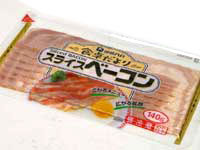
JbaconWhatever it is, whatever has been done to it, it sure isn’t like the bacon back home. For some reason, bacon in Japan doesn’t cook anything like it’s supposed to, at least by American standards. Instead of cooking up crispy and juicy, the Japanese stuff cooks up flat and relatively dry. Imagine taking thinly-sliced ham and trying to fry it–kind of like that.
the only thing I can figure is that it’s pre-cooked or otherwise treated before it’s sold. From my first year in Japan, I noted that a lot of bacon here is barely cooked when served–often times you get it pink and (pardon the expression) limp, so much so that I initially feared food poisoning. That would explain why it cooks so badly. Anyone have any information on this?

American-style bacon is pretty much impossible to find here. Costco had it for a while, up to maybe 8 months or so ago, but then they stopped carrying it. When I called them up, they said that they had stopped carrying it because–and yes, I couldn’t believe it either–of mad cow disease. Which is just as bogus a reason to deny pork imports as it is to deny beef from America, considering that only one confirmed case of mad cow has been reported in the U.S., and that was from a Canadian cow, and it did not enter the food supply; additionally, despite thorough testing of 140,000 high-risk cattle, no new cases have emerged in the U.S. for more than a year. Meanwhile, Japan has found no fewer than 15 cases in the past four years, including the first one where the carcass was actually sent to be turned into cattle meal after the disease was detected. See more on that here.

It also doesn’t explain why bacon isn’t imported from Australia or other countries without even a single case of mad cow–or why Costco continues to stock pork sausage from the U.S. (pretty bad sausage, alas).

UPDATE: I tried asking a meat counter guy at the supermarket about the bacon today. He seemed unsure about how the bacon was prepared, but he did know one thing: he held up a package of bacon and told me I could eat it as-is, right out of the package, without cooking it. Yech. But it does mean they’re sure doing something to it….

Categories: Japan Fun Facts Tags:

Japan Fun Fact #7: Vending machines

January 18th, 2005 4 comments

Jff7Vm

You’ve probably heard about all kinds of crazy vending machines in Japan, like those that sell jewelry, hot lunches and even schoolgirls’ underwear–but the fact is, such machines are pretty rare. That’s not to say that vending machines are rare in Japan–quite the opposite. Aside from scattered cigarette butts in the street, they are perhaps the most ubiquitous sight in Japan. And while most are for soft drinks (including water, coffee and tea) and most of the rest are for cigarettes, there is still a fair number that are for alcoholic beverages (and still fewer, though no less noticeable, for condoms, usually located outside pharmacies). One such alcoholic vending machine set is pictured above, though only beer is sold from it (some offer saké and/or bottles of whisky).

Now, you would think that such publicly available and unpoliced vending machines would be an open invitation to minors to buy and consume alcohol–and you’d pretty much be right. The only measure taken to safeguard against such things is that the machines automatically turn off at 11:00pm. Which, if you ask me, is pretty stupid–as if that’s the time after which minors are mostly out and about? What’s to keep a 15-year-old from buying up drinks at 10:30?

But, as I said, most vending machines are for drinks, and yes, they are everywhere. It is hard to go several blocks without seeing a cluster of them, and they are not just outside convenience stores and other shops. You’ll find them everywhere. Even on Mt. Fuji. In fact, the vending machines on Mt. Fuji are an excellent way to keep track of your progress up the mountain: the higher you go, the more expensive the drinks become, from normal prices at the fifth station starting point, until you pay 300 yen for a drink at the peak (at least that was the price when I last climbed).

A few small notes about Japanese vending machines: first, there are no snack or candy vending machines. I don’t know why. And second, in my experience, they never have problems with old paper money. Every American knows quite well that if you try to put a beat-up dollar-bill into a vending machine, you have to unfold the corners, feed it into the slot repeatedly, and pray real hard. Never had that problem in Japan.

Japan Fun Fact #6: Now Entering Hell

January 17th, 2005 Comments off

This last weekend was not just an ordinary one for 570,000 high school students in Japan–it was the highlight of what is called “Exam Hell,” the extensive period of intensive study culminating in a series of exams that have decided the fate of millions of Japanese for many decades, and continues to this day. Students who do well get into name institutions; those who don’t get into lower schools or no school at all.

First off, Japan’s compulsory education only goes up to age 15, the end of junior high school (it’s 16 in America). What surprised me was that, unlike in the U.S., getting into a senior high school is not guaranteed here. Back in Toyama in the 80’s, one of the office workers in my conversation school had two young daughters, neither of which passed their senior high school entrance exams, so mom had to pay for them to get into private schools.

But getting into universities is harder, and even more exclusive. This weekend was the exam time for almost all students, but it’s not like the SAT or ACT exams. Here, there is one test for nearly all schools on the same day–but you have to choose to take the test for just one school. Not like in the U.S., where you get an exam score and can take that to any school. No, here you not only have to choose one school, you have to choose one major, and take the test for that. If you don’t get in, then your options suddenly become much more limited. Public universities are now closed to you, unless you wait a year (as a “ronin,” like a masterless samurai) and take the tests again, pass or fail again. But for right now, you’ve lost, you’re out in the cold. But not without options: you can take another test for a private school–probably a much lower-ranking one than you had hoped–and if you pass that test you can get into their school.

But even for those who passed, it’s not over; typically, the top schools are flooded with more applicants than they can take in, so there is a second entrance exam for them.

And even if you get in after that, you are stuck in the major you chose. Unlike in the U.S., where you can switch majors practically at a whim, in Japan, you must first take an even harder cross-major entrance exam, and if you pass that, you must pay a fee of several thousand dollars to complete the transfer.

So I am informed, at least, by a highly reliable source. The Internet does not exactly seem to be brimming with this kind of information, at least not in English. Does anyone have anything to add to this, or to correct?

Categories: Japan Fun Facts Tags:

A New Computer Class

January 13th, 2005 3 comments

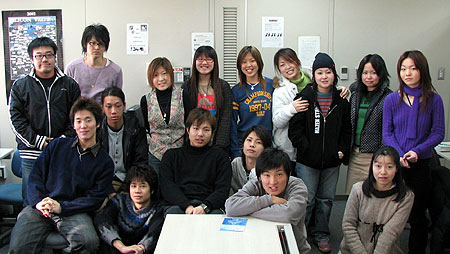
These are my new students for the Winter 2005 semester of Introduction to Computers at Lakeland College Japan. A big class this year!

Lcjcs1

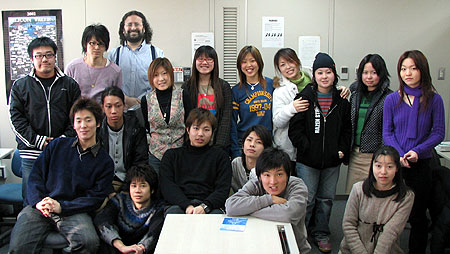
Of course, after the photo was taken, I realized that someone was missing–but there was no way to take the photo without leaving someone out of the picture. Except, of course with Photoshop–so we took another picture just of me, and with a little retouching–

Lcjcs2

Voilà!

Categories: Focus on Japan Miscellaneous Tags:

Yowza–This F/O Is Fast

January 9th, 2005 Comments off

One piece of evidence that the new fiber optic Internet connection I just got is indeed blazing: I tested large downloads from big-name sites, both Apple and Microsoft, and got the following measure:

Windl1

The download was about 300 MB and took a little more than 100 seconds–almost 3 MB per second, or 24 Mbps. Not too shabby at all. Unfortunately, not everyone has such a high-speed upload connection, meaning that while I can potentially get 45 Mbps, I really won’t, unless I download simultaneously from several sources–something which does not often happen. But it’s nice to have the speed. For example, movie trailers from Apple’s site come down about 3 or 4 times faster than I can watch them.

And the difference, the contrast between now and 4 years ago when I was limited to ISDN at 64 Kbps, feeling lucky if I was getting a download at 6 KB/sec, and now getting nearly 500 times that speed in a real-world test…

What, am I crowing too much?

Hiring Foreign Teachers

January 4th, 2005 Comments off

Either the JET Program is being junked, or Japanese schools are taking a wrong turn in hiring teachers. A news story in Japan Today reports that vacationing foreign university students can, from February, serve as language instructors at Japanese public elementary, junior high, and high schools. Now, if we’re talking JET-style human-tape-recorder jobs, then okay, I guess. But the article leaves open the possibility that these people will be teaching classes, possibly even solo. Maybe I’m mistaken, but I think the policy up until now has been that no foreign teachers, no matter how qualified, were allowed to teach solo in any public schools. If this new policy has university students teaching classes solo, then they’re out of their mind. But I figure there’s gotta be some qualification of the circumstances in there somewhere. Anyone know about that?

What Japanese schools need is to allow fully qualified non-Japanese TOEFL teachers to get full-time jobs teaching language in those schools; that alone will seriously improve the end result of those long years of otherwise half-wasted study. In my experience as a student in American schools, I never saw a class that was taught by a non-native speaker. I’m sure there are quite a few in America, but I’ll bet that they’re the exception rather than the rule. And I think it’s a good rule to have someone who is both intimately familiar with the language in question, and with professional credentials, to teach the class.

Categories: Focus on Japan 2005 Tags: