Archive

Archive for the ‘Focus on Japan’ Category

Oh, Crap

June 21st, 2004 6 comments

Here we go again.

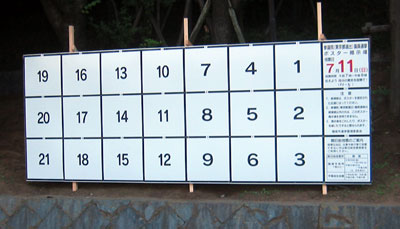
When you see these boards, pictured at right, go up around the neighborhood, it can only mean one thing:

We’re about to get bombarded by day-and-night loudspeaker trucks.

That, and an election is coming. From looking at the sign, it seems that the election will be going on for the next three weeks or so.

When I started this blog about a year and two months ago, one of the first things I blogged about was the noise created by these damned trucks (it’s a miracle that we’ve been free of them since then). It’s like they have no concern about what people feel. They are supposed to avoid schools and hospitals, but there are two schools nearby and they don’t let up. They love to crawl through the neighborhood, blaring out at full blast, but unlike the other trucks that do the same (selling food or collecting secondhand junk), the political trucks keep coming by all day long, every day.

What’s more, they love to park in front of your building, where the politician steps out and gives a 15-minute political 4-loudspeaker harangue right in front of your building. They love big apartment buildings.

To listen to what I’m gonna be in for for the next three weeks, take a listen from the last election’s noise pollution.

Categories: Focus on Japan 2004 Tags:

Yaki~imo!

May 29th, 2004 Comments off

In Japan, there are sales trucks all over the place. Most are just plain noisy and annoying–the secondhand shop truck, the kerosene truck, lunch and snack trucks, and so on. Annoying because they drive at 5 kph and wander through all the driveways and small roads in the neighborhood, all the time blaring annoying announcements and mind-numbing repeating electronic tunes at full blast. Their slow and winding path keeps them well within earshot for perhaps half an hour each, and it’s impossible to shut out unless your listening to headphones with the volume way up.

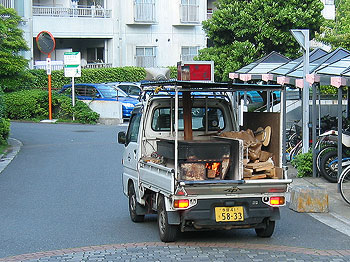
One truck selling stuff that regularly wanders by is a bit less annoying: the sweet potato truck. A traditional standard in Japan, a small truck (in older times, a cart) with a small oven furnace and sweet potatoes (“yaki-imo,” or baked potatoes” in Japanese) hot and ready to eat. Hard to miss when it comes, there is always a musical call, a voice singing, “yakiiiiiiii… imooooooo!”

This is a bit less annoying than the others because it is (a) an organic sound, and (b) not shouted at blaring volumes–they seem to be aware of the annoyance factor and keep it down to a reasonable blast.

Not only that, they even emit a nice smell–a product of the wood-burning stove in the back of the truck, a kind of fireplace/campfire smell.

I’m not a big fan of sweet potatoes, though, so I can’t review the taste. But I’d have to say that if these were the only trucks going around selling stuff in the neighborhood, I wouldn’t mind quite so much. Well, at least the weather is warmer and that blasted kerosene truck no longer comes by Wednesday and Saturday evenings.

Categories: Focus on Japan 2004 Tags:

Tama-Cats

May 26th, 2004 3 comments

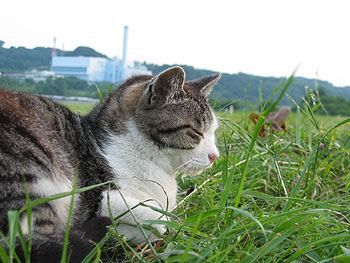
On a nice saunter down to the Tama River today–the weather has been beautiful lately, I couldn’t pass up the chance–I found something which is quite rare in Japan: friendly cats.

By “friendly,” I mean ones that you can walk up to and pet. Living in Japan for a while, you tend to get used to the fact that neighborhood cats never let you get near them; they get skittish at anything less than 20 feet at least. I used to wonder why this was, and I think I found the answer some years back. There was a cat once I saw in the street, and was having some success approaching it. But then, about 100 feet down the road, a child darted out into the street. Despite the distance, the cat bolted. Ah. In addition, I’ve seen cats getting treatment not exactly in line with cat protocol, for instance people picking up poor felines by their front legs.

So when I saw two cats lazing in the grass on the banks of the Tama River, I did not expect to be able to get close. Instead, I got out my camera so I could take some pictures. To my surprise, when I looked up, I found that both cats were approaching me. I let them sniff my hand, let them see where I was going to pet and scratch, and both cats were cool to it. As a number of adults walked by, the cats paid no heed. But as I expected, when a group of young boys walked by, both cats ran for cover–not too far though, and they came back. So I snapped my pics and enjoyed some tame, friendly cats for a bit in the warm, late afternoon.

To see some of the photos, I’ve posted them here.

Categories: Focus on Japan 2004 Tags:

A Few Recent Shots

May 15th, 2004 Comments off

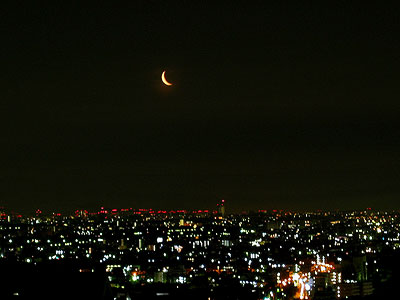
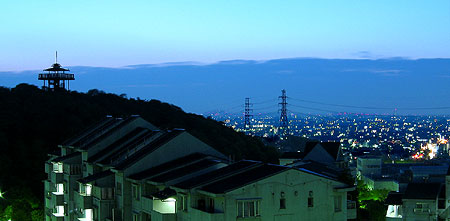
A small break from politics… a few shots I’ve taken recently.


and one taken shortly after I noticed the moon rising tonight

Categories: Focus on Japan Miscellaneous Tags:

Morning Photo

April 27th, 2004 Comments off

During vacations my sleep schedule gets shot to hell. One advantage of this is that I see a lot more sunrises. I really should aim towards waking up to them and not going to sleep by them, though…

Categories: Focus on Japan Miscellaneous Tags:

Japanese Politicians Turn Viciously on Heroes

April 26th, 2004 10 comments

The three Japanese people initially taken hostage in Iraq may have thought that they were having the worst experience of their lives. Apparently, Japanese politicians and right-wing organizations are making it even more unpleasant for them now that they are back home. The way these people have been treated in their home country is cruel, heartless–and highly politically motivated.

Usually these people would not be treated like this. In America, we greet returning victims of kidnapping with yellow ribbons. Japan does not have that custom, but usually it treats with high regard those sons and daughters of Japan who have shown strength overseas, representing Japan well.

These three should have been such heroes of Japan. Nahoko Takato, 34, was helping Iraqi street children, an act of selfless charity at her own great personal risk. Even after her ordeal in Iraq, she did not want to stop helping people in the war-torn country. The kidnappers, she said, “did things to me that I did not like. But I cannot hate the Iraqi people.”

Soichiro Koriyama, 32, is a freelance photographer, and sees it as his job to document what is happening in Iraq. He has photographed people who have suffered from war and disease in developing countries like Thailand; this is no money-seeker, but a man who wants to publicize the suffering of people in an attempt to stir awareness of their plights, to make people aware of what is happening in the world so they can help. Koriyama, a former soldier in Japan’s self-defense forces, labored as a construction worker in Japan to raise the money to go to Iraq.

The third, Noriaki Imai, is a man concerned with depleted uranium shells used in wars; these shells are left behind in war zones, and create a radioactive hazard, contaminating the landscape; Imai planned a picture book about Iraqi children poisoned by the shells.

These were no seekers of fame, they were not there for the money or the glory. All three of them wanted nothing more than to help others who could not fend or speak for themselves. The three are humanitarians all. And two of them, Takato and Koriyama, wanted to keep on doing their work, despite the great risks involved. And that dedication to the welfare of others was their downfall.

Once Koizumi and the right-wing politicians heard that at least two of the three former hostages wanted to stay on, the attacks began. Koizumi said publicly, “It doesn’t matter how good their intentions are. After this ordeal and having had so many officials working without sleep or food to help them, they still talk that way. They should be aware of their actions.” Another politician said, “If they really hate to return to Japan, I want them to defect to Iraq. Since we’ve paid so much from the state coffers, I feel they should compensate us for it.”

Why such icy hatred? Well, the three humanitarian heroes had become inconvenient to a conservative government that is intent on dismantling a vital part of Japan’s constitution, the part that says Japan should militarize only for self-defense, and never for offense. Japan’s participation in Iraq, no matter how small and tenuous, is the first fragile step towards bringing Japan back onto the world stage as a military power. It embarrassed Koizumi and his party, with a bellwether election just a few weeks away to test how the public reacted to the new role of the military. The hostages screwed up that mission for them because Japanese citizens started asking why the troops were really there, and perhaps they should be removed. Japanese friends I have spoken to about this say that they would prefer the troops come home, especially if it puts Japanese into harm’s way.

The government could not stand this. So as soon as the Japanese government (some say by bribing the hostage takers) successfully got the hostages released, they wasted no time in vilifying them. They called the reckless, irresponsible, trouble-makers, self-righteous, nuisances, even “Japan’s shame,” and attacked them for going into harm’s way. They whined about how government workers sacrificed so much, and the government spent so much time and money to help them, and they want to stay in Iraq?! Ultra-right-wingers–a nasty group here in Japan–showed up at the airport to insult and harass them.

Then the real smear campaign began. Takato, the woman who helps street children, was featured in the gossip rags and right-leaning newspaper editorials as a juvenile smoker and drug addict who had connections with terrorist organizations. Noriaki Imai was accused of coming from a Marxist home and was called a “communist sympathizer,” however that could possibly have any relationship to his work to help children in Iraq.

To add insult to injury, the Japanese government plans to bill them at least $6000 for air fare and medical checkups.

Having returned home, they have been so hopelessly smeared by the right-wing establishment in this country that neither they nor their families can show themselves in public. Nahoko Takato had to be calmed with tranquilizers, and doctors have announced that their treatment here in Japan has been far worse in many ways than their captivity in Iraq:

Dr. Satoru Saito, a psychiatrist who examined the three former hostages twice since their return, said the stress they were enduring now was “much heavier” than what they experienced during their captivity in Iraq. Asked to name their three most stressful moments, the former hostages told him, in ascending order: the moment when they were kidnapped on their way to Baghdad, the knife-wielding incident, and the moment they watched a television show the morning after their return here and realized Japan’s anger with them.

“Let’s say the knife incident, which lasted about 10 minutes, ranks 10 on a stress level,” Dr. Saito said in an interview at his clinic on Thursday. “After they came back to Japan and saw the morning news show, their stress level ranked 12.”

Well, Koizumi’s tactics worked. They won the elections.

And three selfless Japanese heroes have been ground into the dirt. Job well done.

Categories: Focus on Japan 2004 Tags:

Entrance Ceremony

April 21st, 2004 Comments off

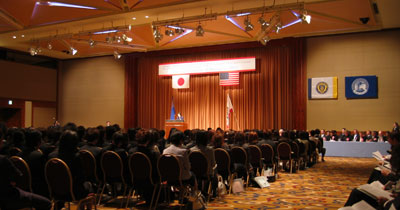
Well, the Winter semester has ended where I teach, and that means another new year at the school. Our attendance has been down a bit since 9/11–our school prepares Japanese youngsters of college age to go to institutions of higher education in the U.S. and elsewhere (though many take our own Associate of the Arts degree program here in Japan before moving on), and since the terrorism scare, and then the build-up to the Iraq war, more people have been a bit more nervous about studying abroad. However, that appears to be turning around, as our numbers are growing again–as you can see a bit in the photo above, about 600 new students entering this Spring.
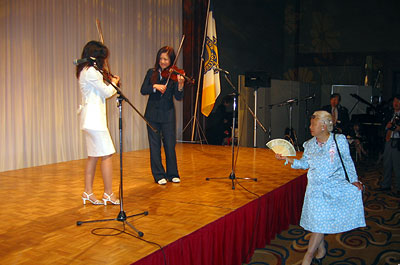
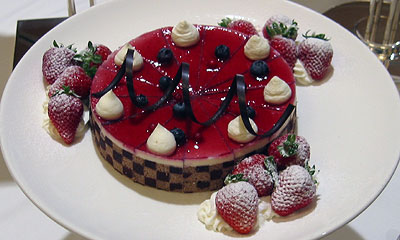
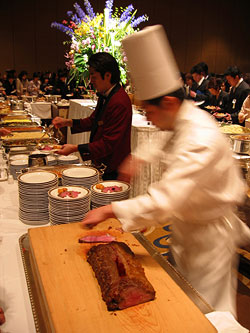
So we had our annual entrance ceremony, which is always fun–meeting the new students and their parents, getting to know some of the people we’ll be spending a lot of time with in the next year and two. Also, we hold these events at nice hotels (this year at the ANA Hotel, last year at the Century Hyatt), where the halls are nice and the food excellent–see the chef carving the roast beef at right, and one small example of the pastries below.

There was also entertainment; some from the outside, like a marching band, a professional bagpipe player, a magician, and a string quartet–and from students, including a violin duet (two young ladies who styled themselves “The Violin Vixens”), a choir singing an original composition, and a pair of dancers. That along with the requisite speeches and presentations of awards to last year’s students.

All in all, quite a big and impressive bash. If you’d like to see more photographs, you can visit a small gallery of photos from the event.


An elderly woman made an impromptu dance for the Violin Vixens


Yum…

Categories: Focus on Japan 2004 Tags:

Hostages and Mad Cows

April 17th, 2004 Comments off

The first three Japanese hostages are back, but two more (a journalist and a “civic group activist,” whatever that is) have been taken, so I guess it’s back to work for the government. Meanwhile, opinions in Japan remain varied but low-key on the long-term impact of the SDF presence and Japanese hostages in Japan. One young woman commented, “Those three people were doing what they wanted, even though the Japanese government repeatedly warned that Iraq was too dangerous a place to go to. However, Koizumi was the one who sent the SDF in violation of the Constitution. I wonder what he would have done if those three had died. Their release is good news and a lucky break for Koizumi, even though he did not recall the SDF.”

Well, Koizumi is none too happy that two of the three released hostages want to go back to Iraq and continue their work. While the government got fairly good marks for how it handled the crisis, it remains vulnerable on the issue. Not too surprising, since most Japanese people–86%–will blame him for any deaths, whether they’re SDF or civilians. He commented on an advisory by Japan warning Japanese civilians to avoid travel to Iraq, reminding the former hostages how much work they put the government through to get them back. “It doesn’t matter how good their intentions are,” Koizumi complained. “After this ordeal and having had so many officials working without sleep or food to help them, they still talk that way. They should be aware of their actions.” One senior official, apparently on the condition of anonymity, remarked, “If they really hate to return to Japan, I want them to defect to Iraq. Since we’ve paid so much from the state coffers, I feel they should compensate us for it.” Which makes one wonder if indeed there was a payoff. It should be noted that mostly the anger towards these dedicated people comes from the government, which has the most to lose politically.


Meanwhile, Japan is slowly opening the gates for U.S. beef to be imported into Japan. The previous reopening of the market consisted of allowing U.S. beef to enter Japan only if each carcass is tested for Mad Cow disease–pretty fair, considering that all Japanese beef must undergo the same requirement. Even so, this has not mollified the U.S. government completely, as it recently prevented one cattle producer that wanted to test their cattle for export from carrying out those tests.

Yesterday, Japanese government announced that it is loosening the standards a little, allowing cows younger than 20 months to be imported without any testing. Considering that only one case of mad cow disease has been found in America, and that cow was raised in Canada, there is the possibility that Japan is being a bit strict. However, there remains the question why the U.S. government is so strong against testing. If they are taking that stance out of principle, then OK, but if they are trying to hide more possible cases of the disease, then there may be reason to worry.

Categories: Focus on Japan 2004 Tags:

Tax Time, Japan-Style

April 16th, 2004 6 comments

So, you’re an American living in Japan, it’s past April 15th, and your taxes are still not ready? Well, don’t worry about it quite yet. You get an automatic 2-month extension from the IRS, until June 15th, to file your income taxes. And if you want to, you can file for another extension after that, and usually you get it–but June 15th is enough, and filing for an extension would actually be more trouble than it’s worth unless you have some unfortunate and bizarre situation going on there.

Since we all get the Foreign Earned Income Exclusion (FEIE), now at $80,000 per year, most of us unlucky enough not to earn more than that end up not paying anything in taxes to the U.S.–which is fair, because we have to pay full taxes here in Japan. But we have to file with the IRS anyway.

“But I don’t owe anything, and I paid taxes to Japan, so I don’t need to file.” Well, we all wish it were so. But alas, you have to file no matter what. In fact, you have to file to get the Foreign Earned Income Exclusion–if you don’t file, then technically you will have to pay complete U.S. taxes! So make sure you do file…

In order to file, you need Form 1040, Form 2555, a 2003 “gensen chusho” form (a small slip that documents your income and tax fess for the year) from your work, and the 2003 Annual Average Rate for the yen and dollar.

By the way, here’s a news flash: As of June this year, the IRS office at the Tokyo embassy will be shutting down permanently, which sucks big-time. The person at the office said the shut-down is to save money (money that Bush has spent on Halliburton or tax breaks for billionaires). They have always been there to answer phone calls, not to mention being there to help you in person if you have problems that can’t be handled by phone. So now if you need help, you have to pay international dialing rates and wait on hold for an hour and a half to talk to someone in Philadelphia who knows nothing about paying your taxes from Japan. Ah, Bush’s America.

But if you want help in the next two months, then call (03) 3224-5466; press “8” as soon as you hear talking in order to avoid the mind-numbing voice mail handling, and instead get switched directly to an “assistor.” If they’re busy or out to lunch, then you can leave a message and they’ll get back to you.

Anyway, I decided that this year I was going to explain how to get those forms done, because there is a bit of a confusing process to go through for this (it wouldn’t be taxes if it weren’t at least a little confusing), and I tend to forget how to do this from year to year. This explanation should help all you regular Americans living in Japan do your tax returns, although:

DISCLAIMER: I am not a professional tax preparer. I do not guarantee that any of the information or advice on this page is correct. If there are any errors which lead you to make errors, that is your responsibility.

In other words, I want to try to help you, not get sued by you. So follow my advice at your own risk. that said, here we go:

(see continuation)
Read more…

Categories: Focus on Japan Miscellaneous, Main Tags:

Spring Sunrise

April 12th, 2004 2 comments

sunrise410

One of the benefits of spending a sleepless night because of a bad cold–you get to see the sunrise.

Categories: Focus on Japan 2004 Tags:

Hostage Terror

April 9th, 2004 9 comments

knifeMore details have come out about the three Japanese hostages held in Japan, some of them harrowing:
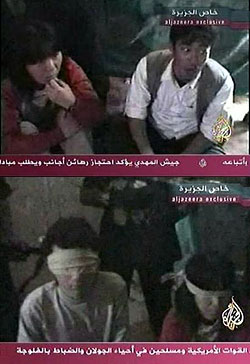
“The government will do its utmost so that those who have become hostages will be safely released as soon as possible,” he said, adding there is “no reason” for Japan to withdraw troops that are conducting humanitarian reconstruction aid for Iraqi people. …

Armed with assault rifles and rocket-propelled grenades, the kidnappers shouted “Allahu akbar” — God is great — in the video and held knives to the throats of the Japanese. …

In the full video, four masked men point knives and swords at the blindfolded captives as they lay on the floor of a room with concrete walls.

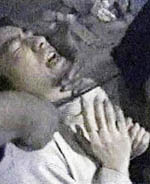
At one point, a gunman holds a knife to the throat of one of the men, whose blindfold has been removed; his eyes widen in panic and he struggles to try to get free. The woman screams and weeps.

A Senior SDF (Self-Defense Forces) official said, “We could be laughed at by other countries if we run away.” Perhaps true enough, but it seems to me that this is not really the point. I think that it is a foregone conclusion that Japan will not agree to any sort of pullout in exchange for the hostages. The question is whether the hostage-takers, if they can even be contacted, will agree to anything less than a troop pullout as a reason for not killing the hostages.

And if the hostages are killed, especially if it done in a way that would shock the Japanese people–especially with such personal information, names and faces and families to associate with the victims–what will be the political fallout, not just for the current Koizumi government, but for the whole right-wing-led movement to remilitarize Japan?

Interestingly, the news reports in Japan seem to be emphasizing the fact that this terrorist group, calling themselves the “Mujahedeen Brigades,” is not on the list of known terrorist groups, and seem to be suggesting that this is not truly a political terrorist action, but rather one done for money or other non-political reasons.

I spoke to two Japanese acquaintances about the issue, one who supported sending the SDF forces, the other against. Both mentioned that the three people who went there went of their own volition, and they knew the risks; therefore, although this is a terrible thing, it is not really related to the SDF forces being in Japan. The target–three civilians–didn’t seem to make sense. Japan’s SDF forces, while armed, are only doing reconstruction work, so why target Japan? My friend who supported the SDF being there said that killing these three civilians wouldn’t change their mind on sending people to help reconstruct Iraq, though they did say that if SDF forces became the targets, they might change their opinion because it would clearly be too dangerous.

One factor that plays into this matter laterally is the nature of the SDF forces sent overseas. This is a political hot potato in Japan, though the lines are sometimes blurred. My friend who supported the SDF being in Iraq saw them as purely reconstruction workers, and while armed, armed only for self-defense. That much is of course true, but there are deeper politics involved. If the forces are only there for reconstruction, then why send military troops? My own belief is that this is a gradated political effort to transform Japan’s constitutionally mandated self-defense-only military stance into one that allows Japanese troops to go overseas–right now, just a fledgling step to do reconstruction, but as time goes on, perhaps they will take on more of a military role–one which would naturally evolve as armed Japanese soldiers are sent into combat zones.

So while I agree that the hostage situation is not really connected to the political situation per se, and the hostage takers chose a strange and perhaps even meaningless or powerless manner to effect change, this situation is a direct consequence of changing Japan’s military stance.

Comments?

Japan Now Tested on Its Military Commitment

April 8th, 2004 1 comment

Three Japanese civilians Japanese civilians have been kidnaped in Iraq, along with seven or eight South Koreans. The three Japanese are being focused on now, as a videotape has been released (and shown on NHK national television) showing their identities, along with a message of extortion forwarded by Al-Jazeera: “Three of your sons have fallen into our hands. We offer you two choices: either pull out your forces, or we will burn them alive. We give you three days starting the day this tape is broadcast.”
The three, two men and one woman, have been identified as Noriaki Imai (18), Soichiro Koriyama (32) and Nahoko Takato (34).

This will be an extremely difficult problem for Prime Minister Koizumi, as the story of these three Japanese citizens will be closely followed, and he and his policy to support the Iraq war and sending Japanese military (Self-Defense Forces, or SDF) to battle zones. If the Japanese people are faced with three of their citizens, with names and faces, being burned alive as sacrifices to Koizumi’s militaristic policies, then Koizumi’s government will be faced with a grave test to justify themselves.

This is significant because Koizumi and others have been pressing for Japan to take a much more militaristic stance, changing the post-war constitution (or sidestepping it) to allow Japan to send armed troops overseas and have more than just defensive forces. The conservatives here have long been pressing hard for this, with the right-wing Yomiuri media corporation especially using its media outlets to popularize the campaign.

But when you do things like that, things like this happen. Until now, the Japanese people have uneasily acquiesced to this campaign–but faced with a terrorist response with such a personal face, it is uncertain how the Japanese people will respond to all of this.

UPDATE: The seven South Koreans, evangelical Christian ministers, have been freed. Two Arab men have also been kidnaped, and at least one had a U.S. driver’s license, and attended school in the U.S. The Japanese government has already stated publicly that it will not withdraw its troops, saying it has “no reason” to do so.

This information on the hostages comes from Japan Today:

Koriyama, 32, is a freelance journalist from Miyazaki Prefecture. The video footage showed his staff identification card from Japanese magazine Weekly Asahi.

The Asahi Shimbun said Koriyama is currently not contracted to the company but has frequented the office due to personal ties with editors there. He had provided photos for the weekly magazine by contract on several occasions.

Takato, 34, is a volunteer worker from Chitose, Hokkaido. Her mother Kyoko said on Thursday night, “That is her in the footage. I believe the Foreign Ministry will contact us later.”

Imai, 18, is also from Hokkaido. His family said he is a friend of Takato’s and that he got to know Koriyama in Amman. His mother confirmed the man in the video is her son, and said he was scheduled to return around April 17-18.

Categories: Focus on Japan 2004 Tags:

Blossom Time

April 5th, 2004 1 comment

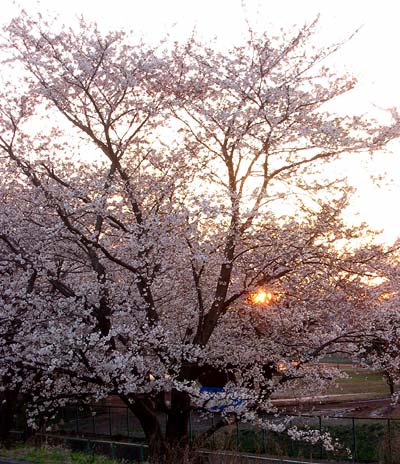
Caught this nice image on the way home the other day, the sun setting behind a cherry blossom tree. The trees are in full blossom in Tokyo now, and the trees are very popular, and are all around. It’s a beautiful time, even though the past few days of rain have subdued the trees a bit.

Categories: Focus on Japan 2004 Tags:

American Bases in Japan

March 16th, 2004 58 comments

Something that Americans do not often think about is what it would be like to have foreign military bases in your country. Even living in Japan, knowing the bases are here, it doesn’t come to mind much, and though there are many who protest the bases in Okinawa and sometimes elsewhere in Japan, the truth is, you don’t hear about it often. But then, most Japanese people will not complain about the obnoxious politicians during campaign season with their all-day loudspeaker truck battles, so it doesn’t mean that nobody minds. I certainly know that Americans would mind if, say, England had bases across the country.

Living out in Western Tokyo, I tend to be reminded of this a bit more often. Just tonight, several jets flew over–more than usual, but still, we get them flying out of Yokota Air base, the main American base in Japan, housing the HQ for a string of military bases with as many as 50,000 American servicepeople living on them, along with about 52,000 dependents. That’s a lot of people.

Most of the forces are based in Okinawa (around 78%), including bases at Kadena, Futenma and Torii; Okinawa is a well-known island at the southernmost end of the Japanese archipelago. It’s famous for being a Hawaii-like resort, and for the fact that American bases occupy 30% of the land area on the island. Next is Tokyo, with bases in Yokota (air base), Yokosuka (naval), Zama, Sagamihara, Fuji and Atsugi. That probably does not include the U.S.-military-run area in tama, immediately behind my apartment building in fact, which houses ammunition storage and a golf course/recreation center. There’s also the naval base at Sasebo (Nagasaki), the Marine Corps base in Iwakuni (Yamaguchi, also southern Japan), and Misawa Air Base (Aomori, in northern Japan).

I remember first going to Yokota, to visit a coworker living there. You come through the gate, and suddenly you’re looking at an American landscape. The streets, the green-lawned front yards, the building styles, the shops and their contents–it’s like being suddenly transported to the U.S. In the days before Costco and other now-common import stores, the shops on base were a major attraction–if you could buy something there. You need to have base ID to do that. I remember one friend who said he’d found a way to sneak on base at Yokota–had to do with following train tracks until they intersected with a road on base, which was unguarded–and usually got away with shopping there by claiming he’d forgotten his ID cards at home.

But few Japanese know what it’s like on the base, save for those who work there or those who visit for air shows and the like. It’s something I’d be interested in talking to more Japanese people about. One time, it came up while I was visiting the local hospital. A man in his eighties, very gregarious, struck up a conversation (in Japanese), and we talk about various topics. One that came up was the bases (the entrance to the local munitions dump and rec center is right next to the hospital), and I asked him how he felt about it. He didn’t mind, he said; “we lost the war, after all.” I suppose that made a certain sense to him, having lived through that time. But I have to wonder what younger Japanese people feel about it. Strange that I’ve been in Japan close to 12 years now and have never asked. But I suspect the answer would be along the lines of not knowing much and not caring much–it’s just the way things are.

Do any of the visitors here have their own stories, conversations you can relate on the subject? I’d be interested to know.

Categories: Focus on Japan 2004 Tags:

Another Quake

March 11th, 2004 Comments off

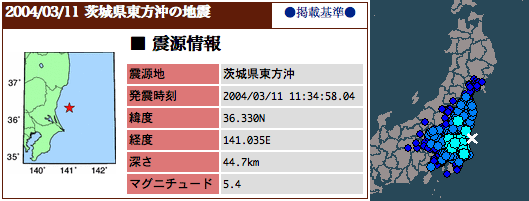
Got hit by another quake, this one as I was winding up a class. The quake measured 5.2 (some reports say 5.4) on the Richter scale, but was centered off the coast, so it wasn’t huge in town–it never got to the we’d-better-leave-the-room scale or anything. But the class did shake and rattle some. At that point in time, a student was giving her PowerPoint presentation, and as the students in the class reacted to the quake nervously, this one student just kept going right through her presentation without so much as blinking.

Turned out, afterwards, we found out she was the only one in the class that didn’t even notice the quake! She was so focused on what she was doing–and was pretty surprised to hear that it was the room that was shaking.

I know exactly how she felt.

Categories: Focus on Japan 2004 Tags:

Smoker’s Paradise Lost? Not Yet…

March 10th, 2004 7 comments

Last weekend, Sako and I met to discuss the goings-on at The Expat, and sat down to eat at an Italian place near Hashimoto Station. As we were being seated, I asked if there was a no-smoking section. Sorry, the waiter told us. Not here. Afterwards, we went for a drink at Starbucks, the ubiquitous U.S. coffee and snack lounge–one of the few places in Japan that is non-smoking. That contrast might show the divide between past and present in Japan, but the country is still pretty firmly on the smoking side of things.

Historically, Japan has been a smoker’s paradise. Whatever concessions that were made for non-smokers was superficial, at best, and many times they still are. For example, not long ago I stopped at a McDonald’s for a quick lunch. I was told that in the seating area, there was a non-smoking section–but before I even got there, I knew what I would find. And sure enough, the “no smoking” section was three small tables at the back end of the room (almost always opposite from the windows), and not more than five feet from several other tables filled with smokers, with no air currents favoring the no-smoking area. When I left a half hour later, my clothes and hair smelled like an ashtray.
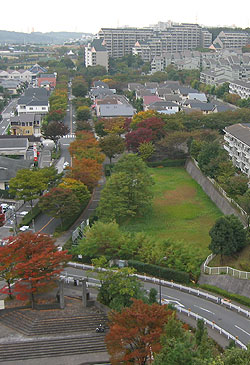
That’s what has been called the “Menagerie Lion,” a famous child’s mispronunciation of “Imaginary Line,” a standard smoking issue in Japan. Separate areas for smoking and non-smoking are found only when they are naturally formed, like restaurants with tables on two different floors. Sometimes the floor area is great enough to allow for some actual semblance of separation. But usually, you can expect no real protection from the smoke, and precious few eating establishments have entirely no-smoking policies.

Some areas have improved, however; trains and train stations are an excellent example. Local trains are now of course no-smoking, but many trains with seat reservations (like the Narita Express) have smoking cars. That would not be so bad, but the non-smoking cars allow smoking in the areas at the ends of cars near the doors. There is a door closing that area off, but it is motion-activated, and since the smoker almost always sets it off every minute or so, the smoke rushes in–which is less of an issue anyway as the air conditioning is recycled and shared through the areas, meaning that it’s pretty much a smoking car anyway.

Train platforms are mostly non-smoking; the Keio Line recently banned smoking altogether on them. Other lines have a few smoking areas along the platform, and despite the outdoor ventilation one generally has to stand a fair distance away from them (or upwind if there’s a breeze) to stay in fresh air–not that smokers will always honor the no-smoking signs.

Things are improving, but at a snail’s pace. I do remember back in the mid-80’s having to get up from my seat at the movie theater every other time I saw a film to tell some guy five rows in front to stop smoking (it’s not just the smell, it gets in the way of the picture), and that never happens to me any more. I see fewer people taking ashtrays from smoking areas into the non-smoking areas for a few puffs. And the yakitori place I’ve been a regular at for 15 years, despite being a smoking joint, watches out for me–the guys behind the counter, knowing my preferences, kindly try to arrange seating for me so as to keep me segregated enough to make a big difference.

But it should be noted that Japan’s tobacco industry is still coddled by the government, which is still a major stockholder in Japan Tobacco, the third biggest cigarette company in the world. Warning labels, last time I checked, were still very mild (along the lines of saying, “Try not to smoke too much”). Campaign girls can still be seen handing out free sample packs on the streets near major stations. And cigarette butts decomposing on the sidewalk and streets are still more ubiquitous than cell phones. So it’ll be a while yet. But things are getting better.

Categories: Focus on Japan 2004 Tags:

Meanwhile, Back in Japan

March 9th, 2004 Comments off

The Daily Yomiuri, for all its faults, has a nice event every year with its cartoon contest. Tied for third place was this cartoon, which prompted me to laugh out loud–but I caution you that you have to be a bit familiar with things Japanese to understand it.


The Japanese government moves closer and closer to amending its American-imposed peacetime constitution so as to curtail or repeal the no-war stipulation. But it also realizes that Japan is going to need more soldiers when that happens. Not to worry; the Japanese government is on the job. What’s the strategy?

Dancing sailors.

Really. The commercial features seven men dressed as sailors, prancing about the deck of a warship, singing, “Nippon Seaman Ship, Seaman Ship, For Love…For Peace.” Really. I kid you not. I mean, they might have taken the “Navy of One” route. Or perhaps, “Sea All You Can See.” But it looks like they opted for, “The Few. The Proud. The Dancing Navy.”

You gotta take a look–the Japanese Navy, called the Japan Marine Self Defense Forces, has put the commercial up on their web site (Flash plugin required), complete with high kicks and gyrating hips. It’s quite a thing.

Update: Here’s the video via YouTube:


The end of an era: Beef in a Bowl. Gyuudon, as it’s called, has long been a favorite dish for diners seeking fast food in Japan, at places like the now-famous Yoshinoya. But that is beginning to end now, after a single cow in the United States tested positive for Mad Cow Disease. The gyuudon restaurants are taking beef off the menu, as U.S. beef is banned and Aussie beef doesn’t sit as well with the customers. So beef is out, and many gyuudon lovers will have to find cheap culinary satisfaction some other way.

Of course, one has to wonder, why U.S. beef is banned. The single cow that tested positive came from Canada, and the U.S. has found no other cases in three months. You could say that they are being careful, but if that is so, then why is Japanese beef still on the market? Japan just uncovered yet another case of Japanese BSE, the eleventh so far since the first was discovered on September 10th, 2001. And all of those cows were born and raised in Japan.

Seems to me U.S. beef is safer.


You might enjoy this man-on-the-street bit from Japan Today. The question: What kind of attitude toward Japan or Japanese by foreigners don’t you like? Some pretty interesting answers there, and some discussion by mostly non-Japanese people afterwards.

Poor Mr. Aso.

Categories: Focus on Japan 2004 Tags:

Cable Conundrum

March 7th, 2004 9 comments

One of the nice things about living where I do is that the neighborhood is very nice. I’m just 45 minutes from downtown Tokyo by train, but the town I live in is open, spacious and green. Lots of parks, great view from where I live. There are drawbacks, however–fewer stores, and my place is a good distance from the train station, so I have to depend on buses, and they usually are not very convenient.

And oh yeah, the cable TV sucks.

Cable TV in Japan is very different from back home. You don’t get fifty channels here. Nor seventy. With the most liberal count, you get 35 where I live. Only about 20 count as non-broadcast type of channels, the rest are just local stations you can get for free. And of the non-broadcast channels, few are worth watching. CNNj, Super Channel (U.S. TV shows), Movie Plus, and Discovery Channel are all that are really worth watching. MTV if you like that. But the rest are pretty much mind-numbing, like the “Go and Shogi Channel,” a channel devoted to the Japanese board games go (or “i-go,” the one with black and white stones on a grid) and shogi (Japanese chess). Not included are channels most other cable companies give their clients, like the BBC, FOX (entertainment, not news), AXN (lots more syndicated TV shows), TBS Movies, and lots of other good channels.

Every once in a while, they dangle the hope of new channels in front of you. I just got a questionnaire which asks to rate which channels you like, which you don’t, and which channels would you like to get. Last time this happened, they listed all the really good channels everyone else has–but the “results of the survey” apparently prompted them to get rid of an excellent news channel and a few other decent stations, and add pretty much just crap–including the “Go and Shogi” channel, yet another sports news channel (we already had three), and a home shopping channel. Oh, joy.

So I’m filling out the questionnaire yet again, but without hope of getting anything decent. Probably they’ll take away the Discovery Channel and give us “The Golf Network” or “The Golf Channel” (both are candidates this time, but I’d rather go with Nader on that one), “The Jidai Geki Channel” (24-hour bad samurai dramas from 30 years ago), and Yet Another Sports Channel (5 of the 20 extra choices offered are sports).

I’d go for the SkyPerfecTV satellite dish, but another apartment building is 10 meters too far in the wrong direction and is blocking the reception.

Ah, the horrible suffering I must endure.

Categories: Focus on Japan 2004 Tags:

Composite Resin and a Good Dentist

February 13th, 2004 6 comments

Here in Japan, a good dentist is worth his weight in amalgam. Or, as is the case with my latest visit, composite resin.

A filling that I had filled maybe a decade ago started to chip a few days back. It didn’t hurt, but it was enough to make me worry and naturally warranted an immediate visit to the dentist. After a horrifying dental experience with a doctor close to my apartment which cost me a tooth, I looked for and found a good doctor: Dr. Nishibori, with offices in Sendagaya (very close to the JR station) and Roppongi, in central Tokyo. Dr. Nishibori was trained in the U.S., and has a very modern office–and two very important elements here are that (a) he speaks English well, and (b) he takes National Health Insurance.

I had visited Dr. Nishibori earlier for a full exam and to get a bridge put in (to fix up the disaster the other dentist had left behind), and I liked his offices–good, modern equipment, fast service, good people. He even recommended another dentist when he felt that other dentist provided better work than he, a sign of professional integrity.

When I came in for the tooth work yesterday (made the appointment just a day and a half before–but there was almost no wait), I noticed some new equipment. Every dental station was now equipped with a flat-panel computer display. From looking around the room, I could see that they were used for X-rays. I didn’t get to see it close-up because I didn’t need X-rays then, but I could see that the X-rays showed incredibly large and clear on the screen. A new system, Dr. Nishibori told me. Very cool.

He also gave me a resin filling instead of amalgam, the first time a dentist had done so for me. The composite resin filling, aside from being white and blending in better, bonds to the teeth better and contains no mercury, along with other benefits. The downside: some sensitivity after treatment–my teeth still hurt a bit a day later.

Nishibori, despite his qualifications, modern office equipment and central location, does not charge much: the whole session was completed in about an hour, and I was charged about 1,500 yen (maybe $13). That’s my 30%, with insurance picking up the other 70% of the bill. Not bad, as resin fillings are supposed to cost up to twice as much as silver fillings.

If you live in Tokyo and are interested in seeing Dr. Nishibori, the Sendagaya office phone number is (03) 3403-8885 (alternate is -8886). They’re open weekdays till 6 pm, and until noon on Saturdays.

Categories: Focus on Japan 2004 Tags:

Resources for Japan

February 3rd, 2004 1 comment

I just wanted to let you in on a few web resources for living in Japan that I find useful.

Yahoo Trains and Jorudan

With Tokyo’s labyrinthine train system, it is a wonder anyone can make it around town–what with the dozens of train lines crisscrossing this way and that around Tokyo, with the psychedelic spaghetti that is the subway system in midtown. Should you take the Chuo, Tozai, or Marunochi line to Kichijoji, and then transfer via the Inogashira line, or should you go by the Keio instead? Which one is cheaper? Which is faster?

Well, there’s a great web utility for those in doubt. You can find it on Yahoo Japan’s web site; just enter the starting point, destination, and when you want to travel, and the engine will produce a list of possible ways to get there, citing departure and arrival times, transfer points, and total cost and transit times. Links to maps of the station areas are included. Unfortunately for those unable to read Japanese, the Yahoo site is not provided in English (though station names may by typed that way), but not to worry: the Japanese Traffic Guide by Jorudan accomplishes the same thing in English. The Yahoo version is better if you can get by the language barrier, though.


Free Maps

None of the Japanese mapping services are in English, but if you know the language enough, they are excellent for finding what you want. Both Yahoo Maps and Mapfan allow you to find a location by narrowing down by prefecture, city, and local area–or by typing in the address, station name, or postal code.

My preference is for Mapfan–their interface is easier for me, and their maps have greater detail.


Good Weather

There are many sites to give you weather reports, but the best weather site for Japan that I have seen is the one provided by TBS. Nationwide and Tokyo-specific forecasts include an every-3-hour forecast for the day, a one-week forecast, typhoon tracking, and up-to-date satellite images and radar readings–including an animated radar display that projects rainfall hour by hour up to six hours in advance. The forecasts are not always correct, as you would expect, but they are pretty reliable–and the whole thing is available in English.

Just a few… if you have any favorites, please leave a comment and point them out!

Categories: Focus on Japan 2004 Tags: