Archive

Archive for the ‘Focus on Japan’ Category

Snowfall

January 23rd, 2012 8 comments

Tonight is the second day we’ve had snow this year, and it’s coming down. What you see here may not look like much, but had been falling only a little over an hour by the time I took this photo. It was falling heavily at the time, but this is a time exposure and so the falling snow is not visible. (Click for a larger image.)

Hibari-Snowynight

It should be quite a blanket on the ground by the time it stops, probably around of just after midnight.

Categories: Hibarigaoka Tags:

New Year’s Quake

January 1st, 2012 1 comment

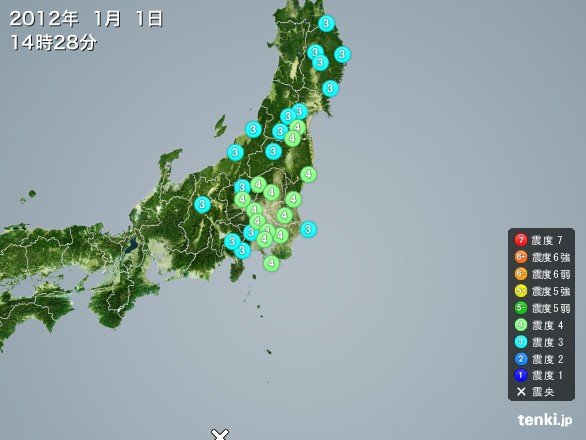
Sachi and I just felt a really strong tremor. Looks like it might have been a 5 or so in the Pacific to the south. Really shook us strongly here.

Update: now they’re saying it’s a 6.8.

Update: Now it’s upgraded to a 7.0, 300 miles to our SSW. Despite that, it registers as being strongest from Tokyo northward to Fukushima.

Large

This one may have been distant, but it registered strong here. It had Sachi and me getting ready to look for cover.

Categories: Focus on Japan 2011 Tags:

Year of the Dragon

January 1st, 2012 Comments off

This is my year, my fifth time around, so I’m turning 48 in June. Holy cow, I’ll be 50 soon. Just after midnight, Sachi and I celebrated with a snack of ham, cheese, and nuts with red wine (a gift from a friend), not the healthiest of late-night snacks, but it’s not like we do this every night. Even Ponta got a nice snack of rice and a little bit of cheese.

2011 was, well, a full year. I started out with a case of the flu in January. Since I got permanent residency in late 2010, we were in full house-hunting mode throughout the first four months of the year. We got scammed by our realtor who faked us into signing for our house (which, fortunately, turned out to be a house we’re happy with, which does not excuse the scumball realtor). Between that and actually finalizing the deal, a 9.0 earthquake shook the whole of eastern Japan, causing a tsunami which killed as many as 19,000 people, and setting off a nuclear disaster which seemed to go on forever. Stores were low on supplies for weeks while the whole nation sat on the edge of their collective seats waiting to see how bad bad could get in Fukushima. My school closed for the remainder of the semester. Then we moved into our new house, with all the work and technicalities involved with all that. We bought a bunch of new furniture and settled in. In May, we landscaped our small garden and learned that bin Laden had been killed. Judgment Day came and passed, and then came and passed again. Sachi and I planned a housewarming party, but then her father, Junzo, passed away. We went to Nagano for the funeral. I fractured a bone in my right foot which I had broken some years back, which kept me on crutches for more than a month, foiling our plan to buy a puppy in late July. Then I fell and sprained my left wrist which made it hard to use crutches. I made a DIY PC. I stopped blogging on a regular basis just as the right wing went nuclear and the Occupy movement started gaining steam. After my foot got better, we got Ponta, for whom I started a blog. A typhoon hit, prompting my school to close early that day. Steve Jobs passed away. Sachi and I planned another housewarming party and had to cancel it as my mother fell ill and I had to take an emergency trip back to America. My mother passed away while I was there. I came back to Japan, finished my semester here, and bought a used car (having a car is a fairly big deal if you live in Japan). Then I went back to America for a two-week visit, and came back to Japan to celebrate Christmas and New Year’s with Sachi and Ponta.

It’s hard to think back to a year as event-filled as this one, and brings to mind the Chinese curse about living in interesting times. But there’s been good along with the bad, the most significant of which was getting Ponta, who has been a particularly bright spot in our lives.

Let’s hope this year will be a better one, Mayan calendars notwithstanding.

Categories: Focus on Japan 2011, Main Tags:

Merry Christmas!

December 25th, 2011 5 comments

2011 has been a long year for us, with unusually extreme ups and downs. This was the year of the Tohoku earthquake, tsunami, and nuclear crisis. It was also the year we lost Sachi’s father and my mother.

On the other end of things, however, we bought a car, got our brilliant little puppy Ponta, and bought a new house. I was even supposed to get Spanish citizenship, though that was thwarted at the last moment by Spanish bureaucracy (I’ll almost certainly get it later, though). Things have changed fast, making life today almost unrecognizable from what it was a year ago.

So here’s looking towards a bright future, with greetings from us here in the Poza household.

Here is our Christmas Card (enlarge on click) for this year:

Pozas-Merry-Christmas

And yes, I photoshopped the license plate, we don’t really have all fives. If you would like to see Sachi’s souped-up and doggie-fied version of this, go check out the post at Shiba Me.

Merry Christmas!

Categories: Focus on Japan 2011, Ikebukuro Tags:

The Number Four

December 4th, 2011 Comments off

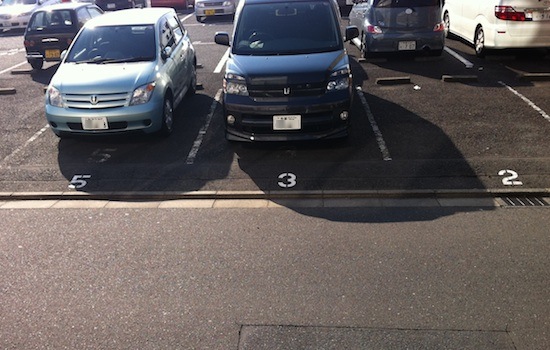
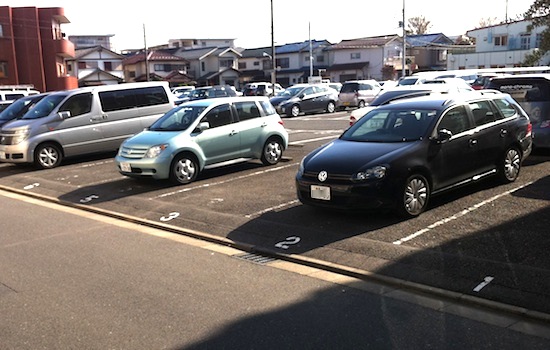
This feature of a parking lot around the corner from our house kind of stands out when you pass it:

Nofour-Pl01

Nofour-Pl02

It caught me by surprise at first, and then I realized: Japanese have a superstition about the number four, as it is phonetically similar to the Japanese word for “death.”

The strange thing is, this is not typical. Hospitals are famous for omitting the number four for rooms, the same way we leave out the 13th floor in buildings. But outside of hospitals, the number four is not usually left out. I’ve never seen a parking lot with the same gap.

Stranger still, in the same parking lot, they begin at “one” again a few rows in–and the number four is present there. As is the number “42,” even closer to the sound for the word “death” in Japanese.

Strange.

Categories: Focus on Japan 2011 Tags:

Whee!

December 4th, 2011 1 comment

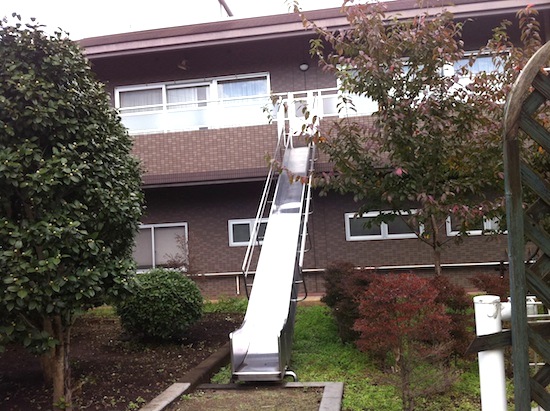
This is a prominent feature of a building in the neighborhood:

2Fslide

At first I thought it was a cool feature in a facility for kids. What kid wouldn’t love to have this around instead of a staircase? I went around the side of the building to see what kind of place would have this.

Turns out it’s an old folk’s home. Huh?

That puzzled me for a while, then I figured it out: if there’s a fire, many would have trouble going down stairs. It is, in all likelihood, an emergency slide.

Categories: Focus on Japan 2011 Tags:

Will the iPhone Succeed in Japan?

October 26th, 2011 5 comments

When the iPhone 4S was released, the iPhone was divided into eight different listings in Japan’s smartphone sales figures; no other phones were so divided. Despite this, the iPhone 4S dominated the top six spots, with the old iPhone 4 taking two of the following five spots for a total of 8 of the top 11 best-sellers.

How’s it doing in the second week? It now holds the top seven spots, and eight of the top ten.

In other words, every single variation (in capacity and carrier) of the 4S outsells the total number sold for any other smartphone–but even if you subtract all of those, the year-old iPhone 4 still tops the charts. Even just one of the the capacity versions (the 32GB) all by itself outsells the latest of any other brand.

Remember when the iPhone was supposed to fail spectacularly in Japan? From Businessweek, December 2007:

[C]onsumers here won’t be as starstruck by the iPhone’s high-tech gadgetry as users elsewhere. Japan’s 10 handset makers, which dominate the domestic market, already offer dozens of models typically costing several hundred dollars that send e-mail, browse the Internet, shoot photos and videos, and even pick up live TV broadcasts. Most come with a built-in global positioning system, and some even double as credit cards and commuter passes or safeguard personal data using fingerprint or face-recognition technology. … In its current form, the iPhone’s 3.5-inch touchscreen and its access to online applications such as YouTube and Google (GOOG) Maps are about all that set it apart from other handsets in Japan.

Ha. A few months later, when the iPhone was still seen as an unsure thing in Japan, I wrote about how these “features” in Japanese cell phones were virtually useless:

I tried using some of those feature-rich ones a few times when I passed a cell phone shop and had some time to look. It was painfully hard. I had a tough time understanding what the heck to do even when I got the salesperson to switch the phone to English (it took them a minute or two to figure even that out themselves). After ten minutes with a nice-looking phone, I decided that I did not want to use the damned thing, as attractive as all its touted features were. Not to mention that some of the “great” features are in fact dogs.

I pointed out that while the iPhone had no TV reception, digital wallet, or even the all-important hook to let little plastic toys dangle from a strap, the magic of the iPhone was in its ease of use–that, seeing as Japanese phones were impossible to figure out how to use, any one feature on the iPhone was worth ten on any other keitai. Not to mention that with the App Store, the iPhone had far greater potential to multiply its utility. I had a hard time understanding why so few people could see this, but it has always been true–many people pay attention to little else but the list of tech specs, and completely ignore the user experience. That’s why tablet computers failed before the iPad came along. That’s what Jobs was great at–making things a joy to use, instead of simply having a something with tech specs you could brag about but not really put to much use.

And yet, years later, many people still don’t get it–ergo the number of people believing that removable media, USB ports, or faster CPUs are all that a tablet needs to dethrone the iPad. Sadly, competitors seem to be unable to think independently–or, to think different–as is evidenced by the fact that virtually all iPhone and iPad competitors look virtually identical to the Apple products they seek to outclass.

They won’t be successful until they do what Jobs did: come up with something new and better.

Categories: Focus on Japan 2011, iPhone Tags:

Hummingbird Hawk Moth

September 24th, 2011 3 comments

I’ve seen these over time, and thought I blogged on it years ago, but apparently not. There is an insect which appears all the way from Western Europe to Japan which is large (about an inch and a half long by maybe just less than half an inch wide), brightly colored, and might fool you at first into thinking it’s a hummingbird. The insect hovers over flowering plants, moving just like a hummingbird might–stopping and even backing up in mid-air, and even making a humming sound as it does so. There are no hummingbirds in Japan, though, so it is a simple step from there to identify it as an insect. That plus the antennae.

Meet the Hummingbird Hawk Moth:

Hhm01

Hhm02

This one has been visiting our garden for the past couple of days.

Categories: Focus on Japan 2011, Nature Tags:

Typhoon Roke

September 21st, 2011 1 comment

The typhoon is over Yamanashi, passing just to the north of Fuji soon, and will pass just north of Tokyo in a few hours. We have strong rain and high winds; the house sometimes shakes as gales pass, and the heavy rain is pretty much constant now. Landslides and flooding from overflowing rivers is being reported all over.

Usually, I work until about 7:30 and get home as late as 9 p.m. on Wednesdays, but today my school (very wisely) cancelled all classes after three in the afternoon. The Odakyu train line closed early, and lines have been closing steadily all afternoon–the Yamanote was just reported closed (though a few counter-clockwise trains are still going). The Sobu is closed, as well as the Chuo beyond Hachioji. Some parts of the Saikyo Line are also out of service. Bullet trains are pretty much shut down.

After it passes over the Kanto area, it should hit Fukushima head-on at about 9 p.m. As if they didn’t have enough problems.

Categories: Focus on Japan 2011 Tags:

6.5

August 19th, 2011 3 comments

Less than an hour ago, a 6.5 quake (some reports put it at 6.8, but the USGS has 6.5) struck off of Fukushima, causing a 1.5-foot-tall tsunami in areas. The quake shook us fairly well here in Tokyo; Sachi and I felt it strongly, and it shook the TV as we were watching it. (Ponta didn’t budge, but this one had an epicenter pretty far away, if that makes any difference.) But we took it in stride, waiting to see how big it got and then going on with our business.

Now, normally, a 6.8 is a big deal. The Loma Prieta quake of ’89 was a 6.9, killing over 60 people. The 2003 quake in Bam, Iran, was a 6.6 and killed more than 40,000. There are at least 16 quakes in the past hundred years that killed 2000 or more people.

Today’s quake was one of the largest aftershocks of the 3/11 quake; there have been 71 aftershocks greater than 6.0, and 16 at 6.5 or greater. (This site has the best data.)

Now, I know it was a 9.0–but it’s been five months now. Exactly when do we see these things end?

Support Whom?

August 16th, 2011 1 comment

I was behind a truck in traffic for a bit today. On the back of the truck, there was a ribbon decal. Wondering what cause the trucker was supporting, I read carefully at the next stop. It said, “Support Our Troops.”

Now, in an American context, there’s simply nothing strange about that. But this is Japan. And the decal was in English. So, WTF? It could be just another decoration where a Japanese person chose a random English-language design without understanding what it meant. Still, it strikes me as odd.

Categories: Focus on Japan 2011 Tags:

Well, Finally

August 11th, 2011 7 comments

Hulu plans on a launch in Japan later this year. There is also mention of Netflix planning a launch in 43 countries at some indeterminate time, which echoes this report from March about it hiring someone to set things up in Japan and Korea.

Currently, there are postal rental services in Japan, but they are more expensive than shop rentals and only offer set numbers of rentals per month (usually 4 or 8). Nothing streaming, or even rotating rental schemes like Netflix’s original postal setup. Certainly nothing reasonable in terms of cost.

So, Hulu and/or Netflix in Japan sounds great–if it’s done well. Which is the sticking point. I expect it may be crippled in some way, either by the existing businesses or license holders in Japan lobbying to restrict them in some vital way, or the imports getting greedy and making it expensive simply because they can. Best-case scenario: the newcomers mirror the American service, do well, and get even better copycats here. We’ll see.

Categories: Focus on Japan 2011 Tags:

Meet Ponta

August 8th, 2011 6 comments

Meet Montgomery Pontevedra Samadi Poza, doing his best Mister Sleepyhead act here.

We don’t have him with us yet; we’ll be picking him up on August 16th. But he’s ours now.

Read all about Ponta and his continuing adventures at Shiba Me ( http://shiba.me/ ). He’s also now on Twitter.

Categories: Focus on Japan 2011 Tags:

Anniversary Dinner

August 5th, 2011 1 comment

I spent 11 hours today at hospitals (checkups and follow-up on the leg) and then working non-stop at school, so I didn’t have a moment to do the day justice. Sachi and I first met on August 5, 2006, so this was the 5th anniversary of that day.

When I got home at 8:45 pm, though, Sachi was prepared. She made a spectacular dinner (more so than her usual great dinners). First, an anise-flavored potage soup, with garlic bread and salad on the side, with a dish of pineapple and cream cheese wrapped in prosciutto.

Din01

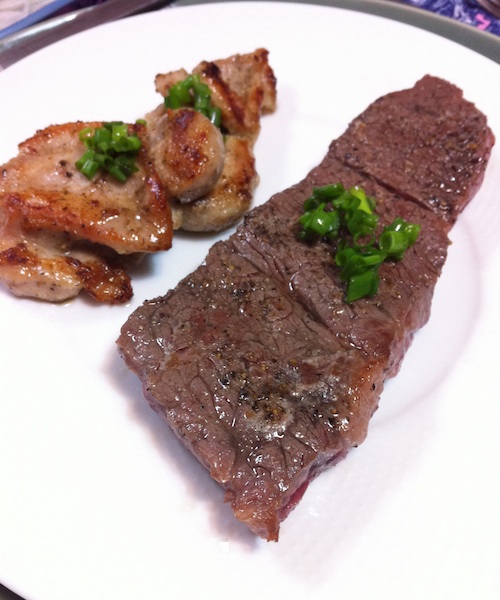
Then a meat course with dark chicken meat and a nice marbled steak, flavored with a new ruby-colored rock salt that has just a touch of Indian Kala Namak seasoning–a volcanic salt with enough sulfur to give it a egg taste, but tastes really good on lots of stuff–especially steak.

Din02

All washed down with some Californian red wine. Really good. Gochisou sama.

Categories: Focus on Japan 2011 Tags:

Neighbors and Noise, More and Less and More

August 3rd, 2011 4 comments

About a month or so ago, the immediate neighborhood changed: we got next-door neighbors.

When we first saw the land our house is built on, it was just a foundation, one of two which were being built on land vacated by an older, larger house. The one next to ours had been spoken for from much earlier on. Ours was finished first, however, and we moved in in mid-April.

For the following few months, the noise was pretty bad. On the one hand, the house next to ours was under construction, which meant buzz-saw and hammering wake-up alarms at 8 a.m. daily, including weekends. On the other hand, there was the incessant buzzing from the parking lot for the fitness center next door. It’s a member’s-only lot controlled by a ticket machine like in a pay lot, and every time someone left (which was constantly) a loud buzzer would sound. I noticed it when we first saw the finished house, but accepted it when it was suggested that it wasn’t that bad. Well, it was, and annoyed me quite a bit for some time.

When the new family moved in, the construction sounds died down, eventually. They were replaced by squealing kids sounds–they have three young children–but those are usually later in the day, and not too frequent. Besides, especially in this area of Tokyo, you’re going to hear kids whether you like it or not.

Something I noticed a few days ago, however, was that I had, at some point, stopped noticing the parking lot buzzer. That pleased me, as I had thought I would not be able to get used to it. Well, it turns out I hadn’t: the buzzer is no longer used. I simply hadn’t noticed when it stopped. My guess is that it happened when Sachi and I were in Nagano for her father’s funeral.

It then struck me as to why the buzzer stopped–it happened very soon after the new family moved in. Which makes sense: the buzzer was much closer to their place, and must have bugged them even more. Their family room was practically just ten or fifteen feet away from the machine; if it bothered me with double-paned glass windows shut from about four times the distance, it must have been driven them nuts over there. I haven’t asked, but would bet good money on the idea that they complained to the fitness center. I had thought of doing that myself, but had figured that it was required, some safety regulation or something, and they would likely not turn off an annoyance to me in the face of possible liability should there be an accident. Turns out I was wrong.

However, it seems that there cannot be a period without some neighborhood fixture causing noise. Just a week or so ago, starting at 7:00 am, we started hearing a frequent low-frequency noise–something like a cell phone set to vibrate, on a hard surface nearby. But it kept going, and going, and going–for hours. Turns out there’s a dry-cleaner’s about 50m away, and they have some new machine inside which makes that sound. Or, that is, an industrial-level steam-pressing-like sound which, from 50 meters away with windows shut tight, sounds like a cell phone vibrating.

Japan has very different zoning laws than the U.S., and most places you can see a much wider variety of buildings. That’s why, when walking down a single block, you could see a medium-sized apartment building, an old, run-down house, a small shop, a large residence, a small-business factory, a parking lot, and a convenience store, all in a line. Oh, there is zoning, and there are rules, but many areas are much more an eclectic mix than you might expect.

You might also have heard of the concept of wa, explained as the neighborhood peace where everyone is sensitive to any disturbance or noise that might disrupt things. Well, if it exists, it sure doesn’t seem to be set on “automatic,” at least not around here. We’ll have to talk to them–at the very least ask them not to start at 7:00 in the morning.

Categories: Focus on Japan 2011 Tags:

Fractured

August 3rd, 2011 1 comment

About five and a half years ago, I was leaving my apartment, rounding the corner leading to the stairwell when I slipped. I fell, but my foot remained level, wrenching it so that extreme pressure was put on my fifth metatarsal, which snapped cleanly. It took almost 9 months to completely recover, and for about three months, I lived on crutches–a pain even if you have a decent set.

Well, three and a half weeks ago, I slipped and fell at work, placing stress on the same bone. I thought I heard something, though not the definite crack I heard when I broke the bone cleanly. The foot hurt like heck, but was not ballooning up like the break had, so I prayed it was a sprain and went off to class. After an hour, the pain and swelling was enough to convince me that a hospital visit was definitely better sooner than later, so I cut the class short (it was the last class on Friday, so a tiny bit of luck there) and took a taxi to the closest emergency room.

Sure enough, this one was a hairline fracture. I didn’t need a full cast, but they made one of those half-cast things that they activate with warm water so the material hardens and makes something that can be bandaged onto your foot to keep it immobile. So it was back to crutches, and I switched back to riding my scooter to work.

The scooter was a godsend, as it was years ago. The crutches I got this time were terrible, the handles hard bare wood with no padding, just murder on my hands. Now, imagine going to the station–the south side, as the side closest to me has no escalator or stairs–a 15-minute walk even when healthy, on crutches the whole way. Then a similar walk from the station to work at the other end. Then repeat that on the way home. No. Fracking. Way.

Hell, when the typhoon hit recently, I had to abandon the scooter for one day, and that was bad enough. Even taking a taxi from and to stations, I still had to navigate the stations, and nearly fell several times because of the effect of the slippery floors on the rubber pads on the crutches. In one station, I had to ask a guy working there where the elevator to the street was–and he sent me to the wrong one, which was a long, painful crutch ride to an elevator that deposited me to a place I knew–smack between a very lengthy hallway between stations. I could have killed the guy. The pain was excruciating by the time I got to the street.

On the scooter, I just hop out my door, ride the thing to work, and hop in the door. No problem.

Things got worse, however; my first day back to work, I tried to navigate a small space, lost my balance, and fell over backwards–spraining my left wrist. The one I needed to use the crutches. Well, that was fun. Back to the emergency room, nice to find I had no breaks, but still, I now had a fractured foot and a sprained wrist, and had to get around on one crutch.

It was not a fun few weeks.

Worse, it put off the puppy search Sachi and I had planned for so long. I wanted very badly to get the puppy at the very start of a vacation period so I could be there full-time for as long as possible while the pup was small. But a fractured metatarsal means no driving, and we’re not getting the puppy from a pet store–we are set on checking out breeders and finding a puppy from a good one.

Just this week, I was able to mostly abandon the crutch, which was an improvement. Previously, I had to use my ass to go up and down the stairs–sit down and push myself up or down one step at a time, whilst moving the crutches up or down every three or four steps. Now, I am using the heel of my right foot instead and so can get around without crutches most of the time, and hopefully can start using the full foot soon. I should be good enough to drive by this weekend, and we’ll check out a few breeders with a rental before we go to Sachi’s hometown for O-Bon.

Categories: Focus on Japan 2011 Tags:

Never Buy from Dospara

July 10th, 2011 11 comments

For the past week, I have been ordering parts of a DIY computer kit. In order to get it made this weekend, I have been ordering parts online for a while, and on parts that would have taken longer, I paid special expedited fees to get them “within 24 hours”) though some of those took two days). The CPU cooler is an integral part, and Dospara is the only established chain that claims it is both in stock and can be express-delivered. So I pay the extra fee. It takes more than the 24 hours they promised, but only by about 8 hours.

So finally, by late Sunday afternoon, the parts are here. I am ready to go. I open the CPU cooler, knowing that the back-plate is the first thing I have to install. I am all set to go–maker’s video page is open with a tutorial, parts laid out, all ready. I open the box… and immediately something is screwy. The seal is broken. I take the parts bag out, and it’s open, and bits are falling out. Apparently it is a used item, though it was sold to me as new. And then I notice that one of the parts is screwy. This is what it should look like:

Parts02

And this is what it does look like:

Parts01

Note the two screws/pins on the one arm. they are upside down. The central pin can be removed and the arm turned upside-down, but then it does not function correctly. I tried various ways of fitting them together, it could not be done. The screws/pins at the ends cannot be removed by the user and turned upside down. Apparently, this was a mismade item.

Right out of the gate, I am stymied. So I try calling the closest retail store. Despite being listed as open, there is no answer. I call the next-closest shop. He lets me explain for five minutes before telling me that the online shop has a number (it was not listed on the contact page in a way I could easily find), and he tells it to me. I call it up, and, in a recording so low in volume I have to strain to hear it, I hear a recording saying their hours are up, so too bad. Dial tone.

I call up the same guy and he tells me there’s nothing I can do–call up tomorrow. I hung up. I was pissed. I know, don’t sweat the small stuff–but so much has been going wrong for me, including a deep cut to my finger, an imminent cold, and a fractured metatarsal in my foot that is making my life hell, I am in no mood for being treated like crap. I took the photos above, set them up in a temp folder on one of my sites so I could show them the problem, and I called their main store in Akihabara. Again, no answer. I tried a different shop. That guy, after another 2-3 minutes tells me to call their online number, and when I tell him they’re not open, he says that the first guy gave me a wrong number. Sure enough, I call, and the number is operating., So, thanks, Mr. Shinjuku Idiot.

Then I get the bad news: I’m screwed, at least for the next several days. Their “system” won’t “allow” them to help me the way it should–namely, express-ship a replacement and have the delivery guy take the old one in exchange. Nope. I have to wait until their repair center calls me up tomorrow (“sometime after noon”), then they arrange for someone to pick up the part, then I wait for them to confirm what they can clearly see in the photos I sent, and then they’ll send me a replacement. I say, screw that, give me my money back and I’ll express-order from someplace else. Nope–no refunds! We have your money, so screw you. That’s the Reader’s Digest account–the call took about ten minutes while this guy gives me the teineigo “by my actions I will ritually demonstrate that you’re not really important to us” speech, in which he tells me that I will have to jump through hoops to get what I paid good money for a few days ago.

Essentially, they don’t give a crap about customer service–they sold me a bad unit, probably a returned item they falsely sold as new, for which I paid to have express-delivered, and then they tell me I have to sit on my hands and wait–after having set this up carefully–until next weekend before I can even get started.

Short version: never buy anything from Dospara–they are, apparently, incompetent jerks who don’t give a damn about you once they have your money.

Categories: Focus on Japan 2011 Tags:

A Japanese Funeral

June 29th, 2011 8 comments

Last week, my wife’s father, Junzo, passed away after a long illness. We got the call late Thursday, and so headed up to Nagano on the weekend. We decided to rent a car, as there would be driving around to do, and family members would not likely be available often to cart us around. We drove up Saturday morning, hoping to get there by 1:00 pm so Sachi could spend time preparing for what her role would be. However, as soon as we got on the expressway, we discovered that the last three segments of the road to Saku, Sachi’s hometown, were jammed to a standstill because of at least one accident in the tunnels which make up most of the way at that section of the expressway.

As a result, we got off the expressway early, at an interchange called Shimo-Nita (known for its konnyaku and negi), and took the local roads through the mountains and into the Saku valley. We wound up not losing much time after all, arriving at just past 1:30. We even decided to take this way next time as it is somewhat more pleasant.

For funerals and the time leading up to them, everyone dresses according to custom–all in black. Women wear simple black dresses (or, for the ceremony later, black kimono), with basic pearl strands; girls of high school age or younger wear their school uniforms, as Junzo’s youngest granddaughter did. Men wear black suits with white shirts and plain black ties. At the entrance of the home, two large white lanterns are hung on either side; by coincidence, we noted another house just a short way down the street also had these lanterns, indicating that they too had lost someone.

By this time, Junzo’s body was laid out in Sachi’s brother’s living room. (The eldest son is usually the one to take on family responsibilities, and is supposed to stay with the body until it is cremated.) Dressed in a plain kimono, Junzo was laid out on a futon, covered with a white blanket with iridescent white patterning, with a white handkerchief covering his face. A knife in a purple cloth scabbard rested on his chest. Squarish pillows were on either side of his head to keep it straight. As is usual in Japan, the body was not embalmed; the body is preserved with dry ice, though one never sees it or the mist one might expect. To one side, there was a large photo of Junzo in health, with white and black bunting.

Visitors would come to a floor pillow next to the body and pray for a moment. Behind Junzo’s head was a small table with food offerings (including the traditional bowl full of rice with the chopsticks standing straight up), a candle, and a pot of incense. The visitor would take a stick of incense, light it with the candle, and then place the incense stick in the pot. Each visitor could, if they chose, remove the handkerchief and see his face.

The body stayed there throughout that day and into the next, while the family held meals and went about other activities. Family members, neighbors, friends and others would come to pay respects. I found it a little odd at times to be, for example, eating dinner, with everyone chatting away, and–oh yeah, there’s Junzo’s body on the other side of the room.

That evening, a vigil (otsuya) was held. A Buddhist priest came, and with most family members in attendance, sitting behind him, he knelt before the body and chanted–what Sachi referred to as “Namu namu namu,” denoting the specialized speech used, called o-kyou, which many Japanese themselves mostly cannot understand. As this was taking place, a special incense box was passed around; it contained a burning coal and a side tray of incense crumbs; you were to take a pinch of incense, hold it to your forehead, and then drop it on the coals. This is called o-shoukou. After he finished, everyone visited the body again, praying and burning more incense.

Afterwards, we had dinner, with the priest staying to join us. There were no special ceremonies, we just ate and talked. Afterwards, Sachi and I returned to our inn (ryoukan), and slept.

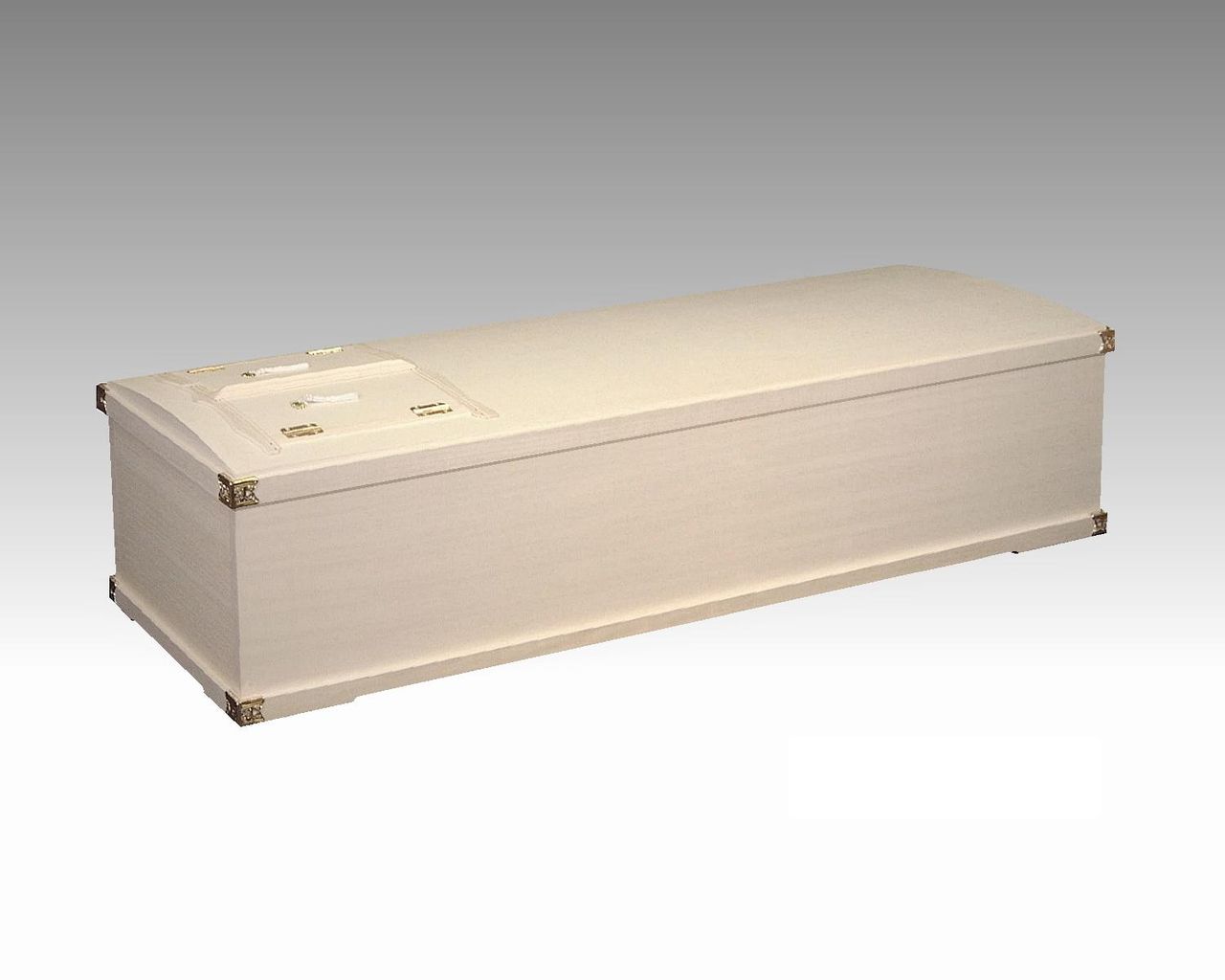
We woke up the next day, and everyone arrived for moving the body to the casket. A man who I figured was the coordinator for the funeral brought a straight (rectangular), narrow wooden casket lined with white silk; it was placed on the floor, sitting on small footstools, beyond Junzo’s now uncovered body. The coordinator waited for everyone to get arranged, and to tie rice-reed ropes (not too dissimilar to what is used at Shinto shrines) around their waists, the stiff strands pointing up and down to indicated heaven and earth.

Then the coordinator brought out a green and purple silk kimono (colors chosen due to Junzo’s preferences), and proceeded to dress Junzo in it. He then placed white cloth coverings over Junzo’s hands and ankles, and slippers on his feet, leaving at least eight cloth strings for family members to then come forward and tie closed. Male family members, myself included, were then asked to come forward and take part of the edge of the top two sheets Junzo rested upon, lift the body up, and place it in the casket. This whole step is called the noukan. The coordinator then covered the body with the blanket used previously, made sure everything was in place, and asked family members to add straw zori sandals and a walking stick to the casket. A box of flowers and petals was then unwrapped, and we were called upon to place these around Junzo’s head until it seemed to float in a pool of color.

The casket was then covered; the top was not on hinges, but was a separate piece, rounded, with small hinged doors above the head. The coordinator hammered four nails almost all the way in at each corner; two rectangular green stones were then given to family members, each of whom used their left hand to tap one of the nails twice. After this, the eldest son was asked to finish hammering in the nails. A white netting was fitted around the casket, and a silk covering around that, both with openings for the doors above Junzo’s head.

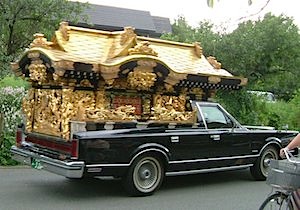
JhearseAt this point, male family members were asked to help move the casket to the hearse. The one used for this funeral was western in style, though often a Japanese hearse will have an ornate golden top (see Wikipedia image at right); I saw one as we returned from the crematorium. We all then removed the rope belts and got into cars for the procession. Family members carried items such as the oversized photo with us. When we were ready, the hearse let out a loud, long blow of its horn (not a standard car horn), and took off for the crematorium, all of us following.

The crematorium was in the hills not too far to the south. A beautiful place, I hope to go back there some day to do birdwatching. We collected in a room with two doors leading to ovens, where a metal cart on hydraulics (still radiating heat from the previous cremation) sat waiting. On the other side of the room, Junzo’s photo was placed, and again, incense was lit by all. We were asked to carry in the casket and place it on the cart. The doors above Junzo’s head were opened, so everyone could pay final respects. The casket’s coverings were removed, and the cart was moved into the cremation furnace. The doors were closed and the furnace lit.

The family was then told to wait in one of the buildings nearby, equipped with kitchens and toilets, but mostly common tatami rooms with low tables to sit around. It would be an hour and a half before things would be ready, we were told. We ate snacks and drank juice (saké for those not driving and who wished it), and some of us took walks. I almost wished I had brought my camera with the zoom lens–I know there were some birds I had never seen before.

After the time was up, we were called back in. The cart had already been pulled out, and most of the matter was gone–but a fair number of bone fragments remained, including ribs, vertebrae, recognizable ends of femurs and other parts. They were burned dry, light, and brittle, fragmented but some as much as six inches long. As the family stood and watched, an attendant used a large metal dustpan to collect the bone fragments with a brush, leaving behind remains of the casket. He deposited what he found on a larger metal tray, with the bones from the head in a special part of the tray.

The tray was moved to a part of the room near the shrine with Junzo’s picture, and several sets of rough, oversized bamboo ‘chopsticks’ were handed out. Each family member was called upon to use these to place pieces of bone (not pieces from the head) into a plain white urn. At first, primary family members were asked to do so left-handed; then we came in pairs, using our right hands, two people working together to move individual pieces into the urn. Then primary family members worked to move most of the remaining pieces in, including the dust, which was sifted out by the attendant. This left the pieces of bone from Junzo’s head, which were saved for last–you don’t want them to be in the urn the wrong way up.

The attendant used a stick to compact the bones already in the urn (making slightly uncomfortable crunching sounds), and then the bone fragments from the skull and jaw were added, and the urn closed. The urn was placed in a decorated box. Sachi’s brother was outfitted with a sling which wrapped around his neck, in which the box with the urn was fitted. It was at this point that I teared up more than any other–not just remembering Junzo, but realizing that, if Sachi gets her wish and passes before I do, then I would be doing this for her someday.

Sachi’s brother then walked to the head car with his mother and his wife, as we took the photograph and other mementos with us in the motorcade back home. The urn was placed in the living room where the body had been kept, and we had a light lunch.

Afterwards, we all got in cars again and went to a temple for the actual funeral ceremony. We arrived at the temple and waited for everything to be arranged. Junzo’s remains, along with his photo, were placed upon a dais with other accoutrements, and eventually, we all sat arrayed to one side on strips of thick, bright-red felt carpet while visitors were received. Up until this point, it was a purely family affair. But now, friends, colleagues, neighbors, and other people related to Junzo and/or the family came to pay respects. Each of them made an offering of incense, of the type in the box with the burning coal.

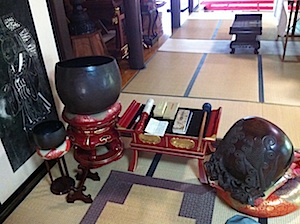
After they had all left, chairs made for tatami rooms were brought out, and we sat through the formal ceremony. The chief priest came out, with his assistant–the same one who had visited the house the night before–sitting on the side at a low desk with metal bowls and a drum along with other devices. The chief priest sat on a low chair atop a floor cushion before the altar with Junzo’s remains, and began chanting. He did so alone at first, but eventually was echoed by or chanted in unison with his assistant. The assistant also made use of the instruments–sometimes the drum, sometimes banging one of two metal pots for a bell sound (one low, the other high), and a hand-held bell on a handle which he would tap slowly and then quickly in three sets of ringing.

Temple01
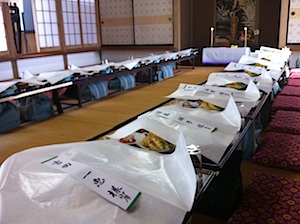
Templemeal

As the chanting went on, at two different points we were asked by the coordinator to stand, and come forth in line to offer the coal-top incense behind the main priest. Finally, after about a half hour, the chanting ended, as did the ceremony.

After this, we moved to a dining room with an altar and two rows of low tables. All the meals, previously prepared, lay under white sheets with names written on paper strips atop them. They mixed up my given and family names, so that Sachi’s name was given as “Luis Sachiko.” All but the primary family members were given gift bags, similar to a wedding; the bags, I discovered later, held a small bottle of saké, a rice dish, bean-paste snacks, and a set of towels, along with a card with a small package of tea.

The meals were quite elaborate–grilled fish, meat pâté, sushi and sashimi, tempura, various soups and egg pudding, fruits and so on–maybe as many as two dozen small dishes, common in style but much better quality than fancy inn-style dinners in Japan. There were a few speeches, including one by the head priest, and we all sat down to eat.

After this, I had to get back to Tokyo to catch up on long-delayed work, but after I left, the family took the remains up to the family grave site and placed his remains with all that had gone before him. Before I came home, Sachi called and made sure that, upon entering, I would take a pinch of salt from one of the bowls she had prepared on either side of the door, and throw some on each shoulder and then the top of my head before brushing it off–what you must do before returning to any home after you have attended a funeral.

Thankfully, these two days happened to give a break in the oppressive summer heat; no rain fell during the day, and it was sometimes cloudy, but otherwise relatively cool.

It was quite an experience, and more than most non-Japanese experience unless they are members of Japanese families. While some parts of it were strange to a westerner (like having the body laid out in the living room, or picking out bones of a person I not only knew but to whose body I had shortly before said goodbye), I thought that it was a fairly good way of doing things. In the west, we tend to distance ourselves from death too much, and so fear it perhaps disproportionately. In Japan, from a young age, people are not shielded from this; proximity and contact with the body and its remains seems a sensible thing to expose young people to–though that might just be me.

Categories: Focus on Japan, Focus on Japan 2011 Tags:

Buying a Home in Japan (Very Long Post)

June 7th, 2011 12 comments

Now that we’ve been here almost two months (Has it been that little time? Were we really still in that 21st-floor apartment in Ikebukuro only a little more than a year ago? Jeez…), it’s probably about time to do a wind-up on the whole home-buying process here.

For me, buying a home was a no-brainer. If you pay rent, you get nothing back, assured. You buy a home, and yes, something terrible could happen and you could lose it all–but it’s much less likely that you would come out worse than you would if you instead paid a hundred grand per decade and got nothing back. For about a quarter of a century I paid rent, more than a quarter of a million dollars I won’t ever see again. For the first half of that, I was moving about and buying a house was not a really strong option anyway, and for three quarters of that time, I didn’t really have enough for a down payment anyway. But after getting married and having enough for a fairly healthy down payment, it really didn’t make much sense to keep renting.

When Sachi and I moved in together, we were both working, and could afford a more expensive place; we got our Ikebukuro apartment, on the 21st floor of a big building that was a few minutes away from pretty substantial shopping, about a 15-minute walk from one of the biggest stations in Tokyo. We paid about 250,000 yen a month in rent (roughly $3100, ouch). Some time into that, Sachi stopped working and started studying, and out of inertia we stayed, until it was pretty clear that we simply could not sustain that. By that time, we had already started contacting real estate agents and looking at properties.

Knowing that we would not get a house immediately, though, prompted us to move to a cheaper apartment, so we moved to Hibarigaoka. The apartment was much bigger (about 90m2), and was 60% of the cost, or 150,000 yen ($1870). We were still 15 minutes from an express station, but it was a 15- to 20-minute express train in to Ikebukuro, moving us that much farther out. This was much more in line with our budget, relieving some of the pressure to make a purchase that much sooner.

One thing I looked forward to: the mortgage payments on a house amount to somewhat less than the rent for a place just as big. We could own a nicer place than our apartment and pay less, and much of what we paid would eventually come back to us. In more ways than one, this promised to be a money-saver.


When you first start looking, the first thing to consider is the location. In Tokyo, that means focusing on train lines and stations. Ideally, you want something which has good options for transportation, and that means a train line convenient for where you expect to go to work, but also easy transfers or line conjunctions that allow you to go almost anywhere else with as little difficulty as possible.

We first started looking in a place called Kosugi, just across the Tama River from Tokyo in Kawasaki. It’s on the Tokyu Toyoko Line, which runs between Shibuya and Yokohama, with through connections to the Hibiya Line and, in a few years, the Fukutoshin Line–meaning that you could step on a train in Kosugi and it would be bound directly for the Hibiya or Fukutoshin Line destinations.

We looked at places in Kosugi itself, which has excellent shopping and, being close to the river, nice park areas, but discovered that we were late to the game–Kosugi has been a popular area for some time now, has been expanding, and so is fairly expensive. We found that in stations a bit further out, like Hiyoshi or even Kikuna (both express stations), nicer places could be found.


The next thing you want to decide on, in Japan, at least, is whether to get a house or a mansion, what the Japanese call a condominium. Mansions are very popular in Japan, and do have some attractions: they are usually located closer to the station, you don’t have to worry about maintenance or do any yard work, and often you get a nice view, if you can get a unit high up enough. For me, however, this wasn’t enough. While mansions are often located close to stations, you could get homes close in, too. I also found that mansions really did not provide any price advantage–in fact, for the same price and general location, houses tend to have more floor space. With mansions, neighbor problems are more an issue than with a house; you share walls with them, and more people are closer to you. Also, mansions come with rules that must be obeyed, and you can’t just do anything you want with the property without having to get other people’s consent.

But most of all, it just didn’t make sense as an investment. For me, the house is a possible fallback for retirement; when we’re 65 or 70, we could sell the place and that would help augment our retirement finances. With a mansion, after living there for 20 or 25 years, what you have is an old apartment in an old building–not the most attractive purchase. Even with a home purchase, after that long, the building is worth very little if anything at all–and with a mansion, the building is pretty much all you’ve got. Some mansions have communal agreements to completely renovate the structure every x-number of years, but that not necessarily a deal-saver. In the end, owning a mansion is essentially like owning a small sliver of land that is inextricably locked in with dozens of other land-sliver owners.

Buying a house made much more sense. You own the whole land, which is at least two-thirds, maybe three quarters of the whole cost. The resale price will be at least the value of the land, and establishes a base value that rises or falls no more or less than that of a mansion. In the end, the options for selling are more attractive. In addition, with a house, you make your own rules, for the most part. (For example, we can get any dog we want, while most mansions either forbid any dogs or limit the size you can own.) There are fewer immediate neighbors. There is more floor space. Yes, there is yard work and other maintenance, but it’s your house. That intangible counts for quite a bit.


By this time, you should be thinking about the house loan. When I first applied, I was rejected. Sachi already was engaged in a loan with her family, and could not act as my co-signer. I had a good chunk of change for a down payment, and I had a good, steady, well-paying job I had held for a dozen years. However, they told me that my visa standing was the deal-breaker. Although eligible, I had not applied for permanent residency. Do that, they told me, and they would consider giving me the loan. So I did, and eventually got that loan. I am not sure if having the permanent residency outweighs the co-signer benefit, if I would have been approved on a working visa had Sachi been able to co-sign for me. She couldn’t, so it never came up.

The loan is also important to consider because it helps determine your price range. For such-and-such a down payment, with a loan stretching out so many years, at such-and-such a monthly payment, you could calculate the price range you could afford.

Interest on the loan is very low; we’re paying a shade over 1%–though that could increase over time. Japan’s interest rates are usually a good deal lower than American rates, in any case. Also, property taxes are very affordable here (again, that could potentially change, but does not appear to be about to do so).

When we did the calculation, we got our price range, which was not too bad. We could afford a place not too far from a decent station, with maybe between 80 and 100 square meters of floor space. That was what we felt we wanted, minimum. So far, so good.

Another consideration in getting the loan is the insurance check. If you cannot qualify for life insurance of a certain kind or level, they won’t want to give you the loan. Which means you have to be in at least reasonable health for a person of your age.


So, by now, I knew I wanted a house, and once I got permanent residency, my chances at getting cleared for a loan were good. By this time, we had settled in Hibarigaoka, and found that we liked it as a prospect better than the Kosugi area. We had also checked out many other areas, but were limited by various preferences. One was that I didn’t want to live too close in to central Tokyo, as I value floor space more than proximity to town–but Sachi preferred closeness, and would not accept a place too far out. That gave us only a narrow range, a kind of irregular ring surrounding central Tokyo. I preferred west of central Tokyo, as my work is on this side of the Yamanote, and I have always lived in this general area and I like it.

While we looked at areas on the Keio and other lines, this area stood out better. The Seibu Ikebukuro Line is a good one; aside from going into Ikebukuro, there are direct through connections to the Yurakucho and Fukutoshin subway lines. Between those three lines, you could make connections to go almost anywhere with a minimum of fuss. Compare this with the Seibu Shinjuku Line, for example–that line has no through connections, and the terminus, while in Shinjuku, is a bit of a walk to any other train line. The Seibu Ikebukuro, at least, now gives me a direct train to the station closest to my job. While we looked at properties between Shakuji Koen and Kiyose, Hibarigaoka appealed to us as an express stop with good amenities and reasonable prices. A direct express train takes 30 minutes to get to Shinjuku, while a local train takes 42.

Hibarigaoka is also a fairly nice station area. There are two department stores and many restaurants and other businesses in the area. Parks are not too abundant, but there are enough in the neighborhood, and a whopping big one on the south side of the station. Eventually, we narrowed our search down to this area.


While selecting a real estate agent can be more or less a crap shoot, it can be important. Using more than one is a bit redundant, as they all tend to have the same list to choose from.

A warning, though–and this is where the only major down point came in our experience–no matter how nice, helpful, or resourceful the agent is, never forget that their only concern is to get your money. We let ourselves forget this, and paid for it.

We chose a realtor close to where we lived, Seibu Kaihatsu to be specific. The agent we got was as congenial and helpful as you would expect, especially here in Japan. He showed us a variety of locations, was patient and generous with his time, and had a very friendly and easygoing manner.

But at one point, he screwed us, and good. In net terms, it may not have cost us a penny or changed our final decision at all, but at the very least he royally pissed me off and robbed me of much of the joy of buying my first, and likely only home.

It was, in fact, when we had narrowed our search down to our current house. I was content to search for as long as it took, so I could get the right place. I was ready to spend a few years in the search, if need be. It was hard to do–you would see a place that was almost what you wanted, and had to gamble between getting a good place and waiting for something better which might not ever come.

When we got to this place, we were mostly sold on it. It was the right size, distance, and general location. The floor plan could have been better, or so it certainly seemed, but for the price, it was pretty attractive.

It was at this point that the agent sold us on putting down a deposit with the developer that had built the house. And here’s where he screwed us: he led us to believe that this was just something to hold the property, so no one else would take it, while we looked at it and made the final decision. He knew we were first-timers, and by this time, had a sharp sense of what we knew and didn’t know.

When he put this idea forward, the idea sounded plausible; the property could still be showcased, but putting money down would demonstrate that we were serious enough, and they could get interest off the money in the meantime, something which a corporation making many such transactions might appreciate more than a private seller.

Still, I was suspicious; this was, after all, a million yen (about $12,500), and while that might have been enough to profit the holder in terms of interest income while not costing them much in sales opportunities, it was still an appreciable chunk.

So I asked the agent, to be clear–if we decide not to buy, we get the money back, right? His answer was in the usual floral language in which clarity evades me, but between Sachi translating and my re-asking the question, the answer came through as a clear “yes.” So we got the money and came in to make the deposit.

When we did so, I began by asking again: if we decide not to buy, we get all of the money back, right? We have one month to look and think, and if we say, “we don’t like the house,” the developer returns the whole deposit, yes? The agent assured us, though he pointed out that the 15,000 yen ($187) in revenue stamps would not be returned. No mention of bank loans or any contingent events, just “yes, the money is refundable.”

Then he laid out a lengthy contract, and we went over it line by line. Again, my suspicion was roused–why such a big contract for just holding the property while we thought? In the back and forth, Sachi said that the realtor explained this was to set things up, so if we decided to buy, we would be ready to go. It sounded strange, but I really had no idea how things were done.

When we got to the part about refunding the deposit, the language in the contract was far less than clear. One last time, I asked the question, putting it as clearly as I could. If we decide not to buy, the million yen, though not the revenue stamp fee, gets returned in full, right? I tried my best to establish that it was contingent on our decision to buy or not. Again, he answered in the affirmative. No mention of conditionals. This is not just my memory–I was taking notes, I have them right here. I remember phrasing my question as carefully as I could and asking Sachi to translate. I even remember feeling a bit sheepish about repeating it so much, but I wanted to be sure.

So we signed. By now, you must think we were huge suckers. Maybe we were. But we had built up a relationship with this guy, he seemed to be working a good deal for us (he had talked the developer’s price down by about $50,000), and he had repeatedly assured me on this particular point. I simply hadn’t considered the idea that he would lie to us so baldly.

A few weeks into this “consideration” period, I started finding a few concerns. Nothing that was deal-breaking, but things that I wanted reassurances over, and points which I felt we could negotiate with the seller over. I mentioned these to the agent as we viewed the house one day, and after the viewing, I had to go to work, while Sachi went to the realtor’s office to go over some details.

I got a distressed call from Sachi later that afternoon: the realtor was suddenly claiming that the deposit was non-refundable, and if we backed out of the deal, we would lose not only all of that money, but also a significant sum to cover his commission.

I was livid. I called him up and complained. He came to our apartment, by this time it was 11:00 pm, and we had a confrontation. The guy was as unrepentant as he was dishonest–politely and firmly. He claimed, to our faces, that what he had told us was that we could get the money fully refunded only if the bank refused to give us the loan. Otherwise, we were committed and would lose the money if we decided to back out.

He called it a “misunderstanding.” I call it “bullshit.” The three times I had asked, he never mentioned a bank loan. I know the vocabulary for that, and had he mentioned it, I would have known it and asked about how it played into it. I had asked him three times, and though my Japanese is not perfect, I knew I had expressed, clearly, that I saw this as hinging purely on our decision to buy or not. He simply stuck to his story about the bank loan contingency.

In the end, we had nothing but words which could not be proven–our word against his. He had a signed contract, which, if a lawyer were to read it, said what he said he told us. But the language was not clear–Sachi, for example, read it directly, but did not see the catch–only in hindsight, being told what to look for, did she notice that contingency.

Clearly, the realtor knew this to be a hook he could use, and I have little doubt he has used it often. I am pretty sure that many Japanese would either quietly eat it, or even see themselves to blame. And yes, I was to blame as far as you can be to blame for getting scammed–but in the context of fair dealing, we were right and this guy was wrong. That didn’t help us, though–we were now in a position of either buying the house, or losing tens of thousands of dollars. Of course, as much as we could, we took the mindset of accepting the loss rather than getting a place we didn’t want–but it is impossible to truly know that it had no effect on our final decision. Maybe, free of any penalty, we would have given up on what could have been an acceptable choice, opting instead to keep looking. And maybe we wouldn’t have found anything as good, who knows.

However, this was not just about that. Buying a house is cool. It’s fun. Yes, there is worry, stress, second-guessing–but all of that is ameliorated by the joy of buying a home you can call your own.

That joy was pretty much crushed by what the agent did to us, souring the entire experience. I am pretty sure that we would have bought this house anyway–but now I cannot be absolutely sure. I will always think back on the purchase of this home as possibly being a decision that was coerced.

Furthermore, since we were committed to the tune of tens of thousands of dollars, we suddenly had no negotiation leverage. For example, the house was not supplied with some amenities that houses sometimes come with–screen doors, hanger rods in the closets, little stuff like that. Things that would cost us much more than it would the developer, stuff we could not include in the loan and would have to be paid for up-front. I was mentioning some of these things to the realtor in the context of getting the developer to throw them in as part of the package–and that’s probably what prompted him to let on to what he had done to us.

Maybe it was just this one agent, maybe this kind of thing happens wherever you go. But my advice: steer clear of Seibu Kaihatsu. And whatever agency you do choose, don’t sign a thing and don’t hand over a single yen unless you know you’re ready to buy. Maybe this would have been obvious to you and we were just dumb hicks, but all the same, keep in mind that the agent is not your friend.


That drama aside, let’s get back to the general narrative on home-buying.

So, we decided to buy a house, not a mansion; we settled on the Hibarigaoka area; and we knew what our general price range was.

There are three common options you can go for in buying a house: used, pre-built, and building on land.

Used is difficult, as homes for sale tend to be older and flawed in some ways. Structural damage, musty smells, custom changes by previous owners which may not suit you, etc. We visited some used properties, but didn’t see any used buildings that had been renovated and looked like new. No warranties on the structure. Insurance would likely cost more. Older structures often don’t live up to current building codes, and might not weather things like earthquakes as well. The building might not take more modern accessories, like fiber optic cabling or cable TV connections. Locations were good and prices were low, but the houses were no great deals.

Buying land is a nice option, if you can find the land, get a builder you can trust, and get the design you want. That way, you get to design the house yourself and ask for the little custom changes that you might not get otherwise. A little room under the stairs for the dog. A bath closer to the master bedroom. Exactly the garden space you hoped for. A door from the kitchen to the outside. A dishwashing machine or western-style oven. A better living-dining layout to take the best advantage of space. More closet space. A small loft. The home office in just the right place. Ethernet jacks throughout the house. An electrical socket outside for outdoor tool use or even Christmas lights. And so on. There are firms that will listen to all the things you want and design a place to your specifications. It might end up costing a little more, but might be worth it in the end. We were following this parallel track until the agent derailed us with his “misunderstanding” about the deposit.

The last option is to buy a pre-made home. Developers will buy a property and build homes, based on what I don’t know, but I assume that at least part of it is based on what they can assemble most economically. The big advantages are in terms of overall price and immediate move-in–you don’t have to start monthly mortgage payments to the bank while the structure is planned and built. On the other hand, it will probably never be exactly what you wanted in a house. In our place, for example, I don’t think I would have made the shower in a straight line-of-sight with the front door, so as to cause an accidental flashing if a shower exit, open bathroom door, and unexpected caller all happen at the same time. Smaller details about the pre-built home might not fit exactly–the shade or quality of the flooring, the type of wall coverings, the moldings or railings, the choices for built-in appliances, etc.

You might want to look for any possible deals among those categories, not ruling any one of them out.


After those basic decisions, it’s a matter of looking and getting to understand the details involved. there are a lot of variables, and you have to weigh them all in your final decision. Here’s a basic list:

Distance from the station: a classic Japanese consideration. Unless you plan on having and regularly using a car or cars, this will be something you will have to take into account. You don’t want to be so far away that it is a major trek, especially as shopping tends to be clustered around stations. However, the closer you are to the station, the closer you may be to train noise, including railroad crossing alarms. We wanted something closer in than a 15-minute walk, but preferred closer than 10.

General neighborhood: what shops are close by? What is the general quality of the area? Are there things that could affect resale value? For example, our house is built on land that could, in twenty years, be bought by the city to put in new roads. It’s part of a city plan that may or may not ever come to fruition. Even the address can make a difference–we live a block away from Niiza City in Saitama Prefecture–but our Nishi-Tokyo address, in Tokyo Prefecture, adds value to our home.

Immediate neighborhood: Japan often has irregular zoning. Your house might be next to a small factory, a schoolyard, a cemetery, or a karaoke bar. Is there any business nearby which has trucks coming in at 4:00 a.m., making loud beeping sounds? Do the neighbors have little kids? Are there noisy pets? Our place is right next to the parking lot of a fitness center; the cars don’t make much noise, but the warning buzzer as cars leave is a bit of an annoyance. There’s also a Muay Thai gym a few doors down across the way; you can hear the punching and kicking in the evening if you have the windows open. But we’re OK with these, for the most part. (Mostly we’re waiting for the new home construction next door to stop.) Access is also an issue–we’re rather easy to find, but we earlier turned down a place that would have involved difficult directions and resulted in many a lost house guest.

You have to look at the location in four dimensions, in fact. A private parking lot just to the south could become a construction site at any time, and if it’s big enough, it might be a mansion that will block out the sun or at least ruin the view, if you have one. Our south side has another house under construction, so we know what will be there, for the near future in any case.

Size of the plot of land: We hoped for at least 100 square meters (1076 square feet). One thing to keep in mind is what amount you are allowed to build on. Many properties restrict the footprint of the building to be no more than 50% of the property area. Others allowed 80%. The size of the plot also restricts the total floor space in the building–often restricted to no more than double the maximum footprint. If you get a plot of land too small, you can’t always just build higher; it may determine the floor space available to you.

Shape of the plot of land: Some land plots are not your basic rectangles. Some have arms stretching out to give street access. You might have a larger plot but be unable to utilize a good chunk of it. Also watch out for regulations about certain areas required to be empty on the street side, or leaving clearance to adjacent lots, etc.

Outdoor amenities: Is there a parking space? Most places have one, but often it’s noting more than just concrete to squeeze a car onto it. Is there a garden space, and if so, is it in sunlight enough to plant what you want? Is the balcony space what you need? Where will you park your bikes? Can you put a shed somewhere if you want?

Layout: How is the house interior designed? That living-dining area may look spacious, but when you actually try to place furniture in it, you might find that a good amount of that area is unusable–you can’t put anything there without blocking passage, and it just winds up being wasted space. Look at the living room–where will the TV, sofa, chairs, etc. go? There may not actually be a way to set things up the way you imagined. My solution was to set up the floor plan on InDesign, where I could measure things down to the centimeter, and then try putting furniture in there. That saved me a bad purchase at one point–the floor plan looked nice, but would have been a nightmare to live in. Then there are considerations I mentioned above, like shower-front door placement, and proximity of the bath to the bedroom.

Rooms: What will you use the rooms for? Where will all your stuff go? Will everything really fit? With housing being as cramped as it is in Japan, that’s a real problem sometimes. Will the kitchen be too narrow after those cabinets go in? What space will be left over once you put that double bed where you want it?

I’m sure there are things I am missing here, but these come to me right now as being some of the bigger considerations.


When you are looking, unless there is some pressing deadline you have no say about, take your time. Don’t feel pressure to take the first acceptable place you see. Ignore the realtor when he claims that most people, in retrospect, realize that the first place they saw was actually the best. Don’t worry about somebody else snatching up the place; that may happen, and so be it. Make yourself comfortable with spending a full year or more looking at places, if need be. Consider it a part-time hobby. Sure, maybe a better place than this one your found won’t come along–but time is usually on your side, or at least this is my impression.

Don’t be afraid to ask any and all questions, or to ask to visit the developer’s office, where they’ll explain everything about construction methods, how the house passed inspections, where it rates in terms of those checks, and what features there are–for example, the earthquake-proofing, the insulation methods (our place: styrofoam, apparently), or the techniques to protect against mold or termite damage, and so on.

When you do find a place that you like, then you will do what we were misled into doing too soon: you’ll be asked to put down money as a deposit while the bank considers your loan. The contract is long, and you go over every section with the realtor.

You are going to need a hanko, a “chop,” or seal with your name on it. Usually these are wood or some artificial substitute, about a centimeter in diameter and maybe four or five centimeters long, with a kanji (possibly katakana) impression of your name on the stamp side. It must be registered with the city office–though be careful after that, as the chop will then equal your signature, and if someone dishonest gets it, you could be screwed. In a home purchase, you will be using this chop a lot. I mean, seriously, a lot. Sometimes it seems like every piece of paper needs to be stamped, twice–and there are lots of papers. You will also learn your address pretty darned well, as you will have to write that personally a lot, in this step and most others. And no, no one else can do it for you, it has to be in your hand.

You then hand over the deposit (ours was a million yen, I don’t know if that’s typical but I assume so), and wait for the loan approval. This involves a visit to the bank to make the formal application, with the usual dozens of forms and stamps. You get a lecture on interest rates, and how you can switch between low variable and higher fixed rates for varying periods of time.

After this happens, you’ll also be required to decide on insurance. The cost is pre-paid and is covered by the loan. The main structure of the house comes under a 10-year warranty if you buy new, but you will want insurance to cover various types of damage, including fire, theft, flood, etc. Insurance to pay for damage to other homes if a fire from your home damages them. Optional earthquake insurance, in five-year chunks instead of the twenty for the main insurance. Do you want insurance for the structure only, or for your personal possessions as well? How much coverage?

If the bank approves, then the sale goes forward. If not, then you’re in trouble–because if one bank turns you down for reasons you cannot change (health, financial standing, etc.) then it is considered unlikely that other banks will approve you. Nonetheless, you can try; I was ready to try Citibank, for example, should the Japanese banks say no for some reason. I have no actual idea if they would have been any different, but I would not have given up.

When the loan was approved, we went back to the bank, and, once again, went through an hour or so of writing my name and address a dozen times and applying my chop to each form.


So, now we have our place–or, at least, are beginning to pay off the 33-year loan. Two payments down, 394 to go. Unless we pay off more quickly–you can pay more than is scheduled, along certain rules and plans. I hope that we can do this, otherwise we won’t own the house until we’re 79 years old. I asked the bank, by the way, if they would agree to a base plan where I paid more per month over a shorter time. They said no.

So now, including property tax and other expenses, we’re paying less per month than we were paying in rent at our last apartment–with roughly the same floor space (some of it wasted on stairs, but not too much). On paper, the place looks small, but as it turns out, the rooms are about exactly what we need–less space would cramp us badly, but more space would not be necessary, so we don’t miss it much. The house has an “LDK”–Living room, dining room, kitchen–plus a spare room (Sachi will use for her home business) on the first floor. On the second floor are three rooms–the master bedroom, my home office, and a third room we use as an upstairs living room, with reclining sofa-chairs and the TV and media stuff. There are toilets on both floors, and the shower/bath/dressing room is on the first floor.

Small things have come up. After the earthquake and resulting power crisis (that hit just after we found ourselves semi-committed, further complicating things), the train lines were irregular for some time–and when they came back to full schedules, they had taken the opportunity to change things. One change: they limited the number of through trains to the Fukutoshin. This is a pain, as now my options are less than they were before. But not a travesty or anything.

That buzzer in the parking lot next door is proving to be more of a pain than it seemed when we were looking at the place before we bought it. It’s livable, and I will probably stop noticing it after a while. But for now, it’s a tad grating. I’d consider going to the place and asking them to consider toning it down, replacing it with something else, or even eliminating it–I’m not sure if it is legally required or not–but I have the feeling it won’t be something they’ll change. Maybe a baffle or dish to focus the sound away from us.

Otherwise, we’re happy. The interior soundproofing is pretty good, so we have relative quiet indoors. Too good, in fact, sometimes–Sachi was yelling at me to come down for dinner and I couldn’t hear her, especially if I was wearing headphones, but even without. It was leading to friction until I went to a home center and bought a wireless ringer–when Sachi presses a button in the kitchen now, I get a chime and flashing light.

The doors are nice–they close silently, and have cool little magnetized gizmos set in the floor to hold them fully open. Water pressure is great, and it only takes a few seconds for hot water to come out-mostly because the water heater (in Japan, it’s just that–it immediately heats the water, and has no holding tank) is situated close to the bath and kitchen. However, aside from the toilet and its hand washlet, there is no running water upstairs. The toilet seats, as I feared when we first saw the finished place, are a shade smaller than usual (a problem for me, not for Sachi), and the bowls are shallow at the front (also a problem for me but not Sachi–now if I lean forward too much, there’s a cold shock!). But the flush is well-designed, and the bathrooms, though lacking ventilation fans, somehow don’t hold odors like our old apartment toilets did.

And finally, sometimes you just realize that this is your house, and that’s pretty cool. Everything is working fine–and yes, I know, wait ten years and things will change–but for now, it’s a new house.

So far, so good.

Categories: Hibarigaoka Tags:

The Skilled Veterans Corps

June 1st, 2011 Comments off

Noble, inspiring, logical, and yet sad:

A group of more than 200 Japanese pensioners are volunteering to tackle the nuclear crisis at the Fukushima power station. The Skilled Veterans Corps, as they call themselves, is made up of retired engineers and other professionals, all over the age of 60.

They say they should be facing the dangers of radiation, not the young.

It was while watching the television news that Yasuteru Yamada decided it was time for his generation to stand up. No longer could he be just an observer of the struggle to stabilise the Fukushima nuclear plant.

The retired engineer is reporting back for duty at the age of 72, and he is organising a team of pensioners to go with him. For weeks now Mr Yamada has been getting back in touch with old friends, sending out e-mails and even messages on Twitter.

Volunteering to take the place of younger workers at the power station is not brave, Mr Yamada says, but logical. “I am 72 and on average I probably have 13 to 15 years left to live,” he says. “Even if I were exposed to radiation, cancer could take 20 or 30 years or longer to develop. Therefore us older ones have less chance of getting cancer.”

And quite Japanese.