Archive

Archive for the ‘Focus on Japan’ Category

Gardening, So to Speak

May 23rd, 2011 3 comments

Pregarden01

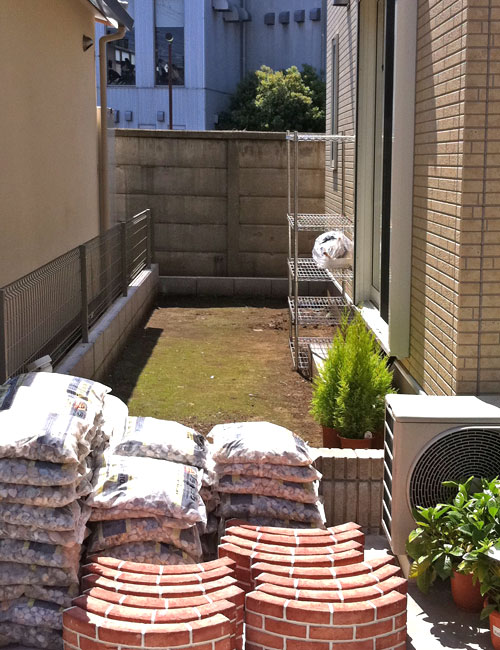
It’s not much of a garden, even by Japanese standards, but it’s what we’ve got and it’s there. It’s a patch of dirt which measures 22 feet by 6 feet along the south side of the house, and despite there being a house just inches beyond it, it still gets a respectable amount of sunlight–quite a bit in the summer, in fact. So we wanted to do something with it, make it much more presentable.

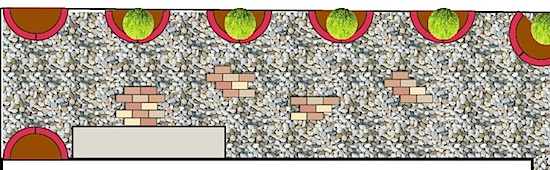
When we got the house, it was loose dirt, but after a few rains, became somewhat more caked, and moss and weeds started growing. It would likely soon become a wild mini-weed-field soon enough. Our plan was to add planters and stepping bricks, and then fill the rest with garden stones. The stones are often used in Japan as a security feature–someone prowling around outside will make themselves known by the crunching sounds.

In any case, after scouting a few materials, Sachi sketched out an idea and I took it to InDesign and made a basic layout:

Garden-Plan

We went to a “Home Center,” the type of store in japan that specializes in this kind of stuff (like a “Home Depot,” I suppose), and found the exact stuff we wanted. We got some Goldcrest conifer shrubs and flower bushes, some low, curved brick enclosures, bricks to use as stepping stones, and a truckload of 10kg bags of the landscaping stones. We needed at least 50 bags of the stones; they were a bit less than ¥300 each. The materials arrived in the middle of the week, and have been sitting there waiting for us since then.

Pregarden02

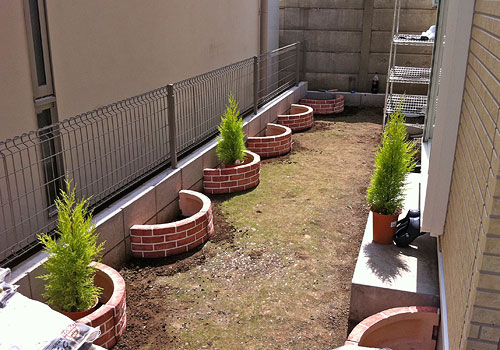
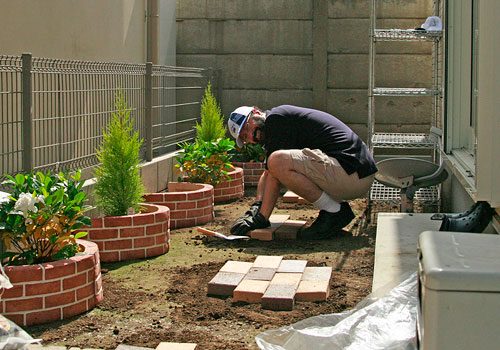
We set aside Saturday to do the work, and fortunately, it was nice weather, if a bit hot. First, we placed the faux-brick enclosures. Since the ground had dried unevenly, I had to dig up the dirt (which smelled uncomfortably like fish parts) and level it out before we could place them.

Garden01

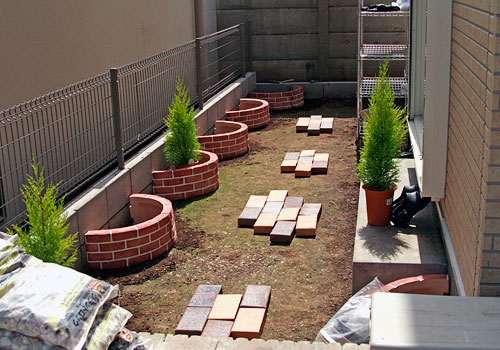
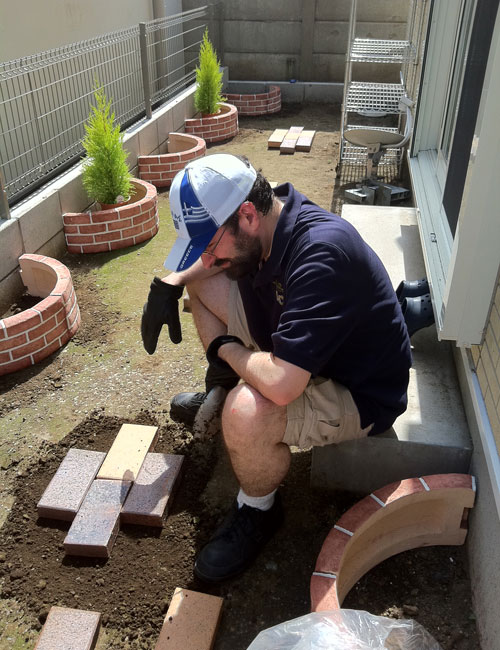
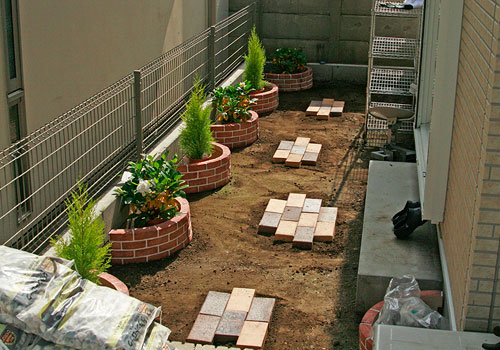
Next, we placed the stepping bricks as we wanted them to be, but they also sat unevenly, so it was back to churning up and the flattening out the dirt beneath them as well.

Garden02

Garden03

Garden05

Garden04

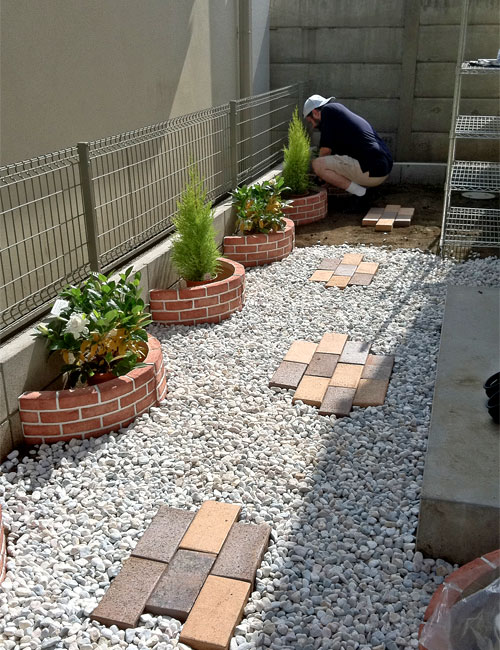
Then we were ready to lay out the stones; Sachi opened the bags, and I took them in and spread them out over the area.

Garden06

We had just about enough for the minimum, but could probably use more–maybe another 20 bags to make the stones deeper where we’d like, and a few more bags to fill in the narrow dirt area on the other side, at least near the front.

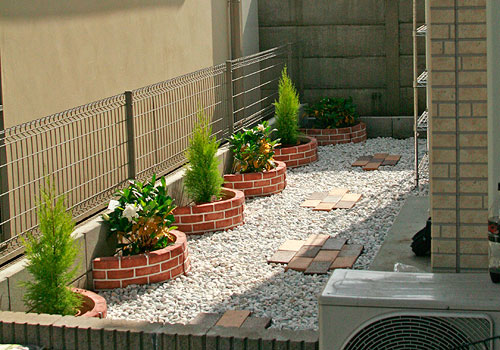
When we finished, it looked pretty nice.

Postgarden01

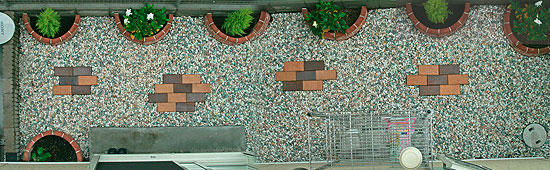
Later, I got a view from overhead (after it started to rain and the stones took on more color), and stitched together a few photos to see how close we came to the plan I made at the beginning:

Garden-Plan

Garden-Above-550

Eventually Sachi wants to get a wire arch for the entryway (at left in the above diagram/image) which will have rosebushes growing over it. Should look nice! Now all we have to do is keep the plants alive…

Categories: Hibarigaoka Tags:

(Mostly) Moved In

April 17th, 2011 5 comments

This kind of time is always pretty hectic. Previous to the 15th, Sachi and I were packing everything we owned into boxes, not a trivial task. Whenever I had to make a run to the new house, I would load up two backpacks and sometimes another carry bag with stuff to bring, and cart it over on my scooter, as a way to get things done just a bit more quickly. We had to stop electricity, water, gas, Internet, cable TV, and probably another service or two I am forgetting. Inform the post office and file all kinds of forms.

Two days before moving day, we had construction crews at the new place installing hanger poles in the closets, curtain rods on every window, and a shelf above the door in the bath anteroom (there is almost no storage there). In the meantime, the moving crew’s electrical team came to take down the air conditioners and remove the washlet on the toilet.

On moving day, there was the predictable task of disconnecting and pre-packing the final bits, the stuff we wanted to use until the last day, and then help the movers and clean up after. In the meantime, the cable guy came to take away the old tuner. As they finished loading up the truck for the first of two trips, Sachi stayed at the old place to organize and clean, while I went to the new place to receive them and tell them where to put everything.

However, between the two trips, the cable TV guys came too early and the movers were late; while we had the TV at the new place, the power cords were in a box waiting to be brought on the second trip. So the cable guys instead did everything short of connecting the tuner–they hung cable from the street, added a booster in the space above the bath where the cables split, and brought in all the stuff. Then they had to wait, as the movers were late coming–a team of four or five guys just sitting in their vans.

When the movers finally came, they claimed that the boxes were not too far back, and they would get to them as fast as they could. But as the cable team waited, the movers not only went at a normal pace, they cleared out every other item aside from the boxes–which were crammed into the very back of the truck–and when they got to the boxes, made no effort to uncover enough so I could find the box in question. So I had to keep the cable guys waiting more than an hour before they could come in and install the tuner box.

While all that was happening, the gas guy came to get that started, and the guy who installs the screen doors came two days early. So we had, at one point, four different teams coming in and out at the same time.

After that, we faced un-boxing everything. Still maybe a quarter or a fifth of the boxes are not unpacked, but we’ve done enough over the past two days to make it look like we’re not drowning in them.

Today, the guys came to install the air conditioners–not an easy task as the house has nothing but electrical sockets for the machines. So they had to install the frames, hang the units, set up the piping–but most of all, they had to drill through the walls. We opted for covers for the outside so the piping didn’t look horrendous and the elements don’t wear down the pipes too quickly; I have to say, it looks a lot nicer than it otherwise would have.

The hole-drilling, however, left a find residue of plaster dust, like chalk dust, everywhere in the rooms they did the drilling–nearly everywhere, that is. As they were doing this, we discovered that a dresser was misplaced on the first floor–it should have been on the second floor–and the dresser was damned heavy, had drawers you can’t remove, and had no handles or bevels for getting a purchase. Nevertheless, we managed to get it up the stairs one step at a time.

We still have to unpack a few dozen boxes. Internet, as I mentioned, comes mid-week. A whole set of furniture we ordered–a reclining chair, reclining sofa, bedroom dresser, and three kitchen pieces–won’t come until the 25th, at which time I will have to assemble most of it. And we’ll have to go to the local police station to have ID cards amended. And, of course, a whole bunch of smaller projects–for example, I want to try to install carpet on all the stairs to improve purchase on them, but it will involve a lot of sizing and precise cutting and laying. Lots of little stuff like that.

So it’s a bit too early to call it a complete home yet, but at least it’s taking shape. Maybe by the end of the month, it’ll be ready.

Even as such, having your own home feels good. Park in your own driveway, do whatever you want to the walls without involving a landlord, and generally you just have your own house.

Categories: Focus on Japan 2011, Hibarigaoka Tags:

Moving Day

April 15th, 2011 4 comments

We woke up at 5:30 am to get a fresh start, and spent much of the time until 8 am finishing the last of the packing–the phones, WiFi, TV and video boxes, computers, all the stuff we wanted to use to the last day.

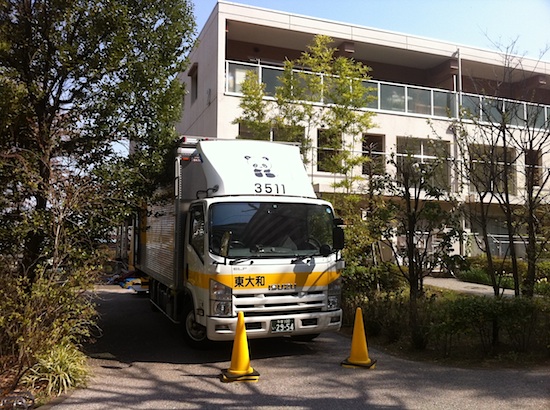
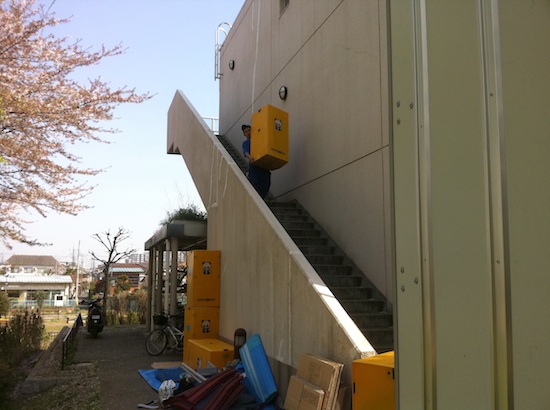
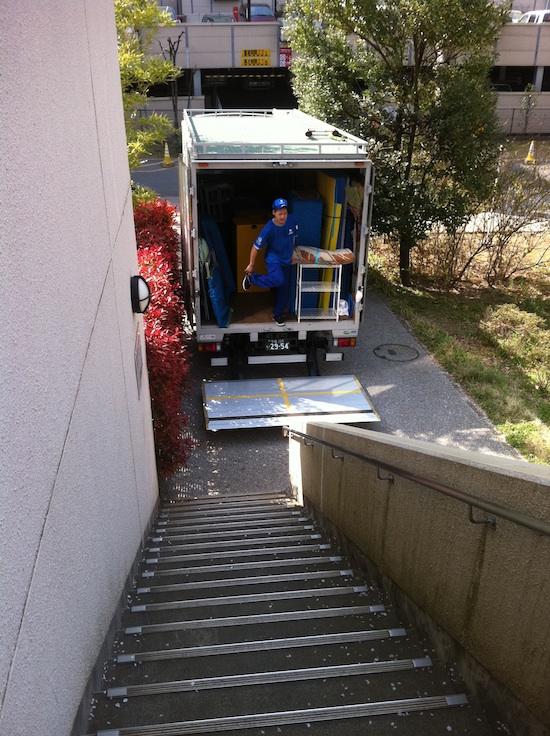
The movers arrived promptly at eight, and we got started closing up boxes and setting stuff up while the blue-walled everything and started wrapping up the furniture. Because the new house is so close to the old apartment, they’re using only one truck, making two goes. As I write this, they are finishing up the first round and we’re about to break for lunch.

These guys have this down to a science. They make sure that they tell you in advance all the dents and scuff marks on the furniture and the walls and floors so you’ll know they didn’t put them there. They seem to know exactly what order everything has to go in so they can cram it all into the relatively small truck. Before they make the truck run, they show you numbered plastic bands that they attach to the doors, and make sure you OK them when they are taken off at the destination, so you know they that didn’t stop and unload anything along the way.

So far, they’ve dropped a few things (like drawers falling from desks which are moved), but nothing is damaged, and as is common (though not universal; Ark was good, but Heart was not so great) with moving companies, they tend to be cheerful, helpful, and efficient.

Moving01

Moving02

Moving03

Categories: Focus on Japan 2011, Hibarigaoka Tags:

Internet Connections

April 14th, 2011 1 comment

When you tell a Japanese ISP that you want a connection, they give you the same predictable response: it’ll take three to four weeks to hook it up. It’s as if there is an eternal backlog, as that is always the lag time. Why, I cannot guess. It should not be backlog of previous orders, as it is always in effect, no matter what the season; if they were always three weeks behind in orders, all they would have to do is hire some extra people to catch up and then there would be no more problem. Or else, hire a few more people for the long run.

As a result, I can only figure that there is either some regulation causing the delay, or else the ISPs just don’t give a damn and this works for them financially.

I keep forgetting about this, and so in this current moving process, I waited until just after we closed the deal on the house to make the arrangements. Now, that’s what they tell you to do–technically, they are not allowed to start the process until you have officially taken up residence. In the past, when I remembered and planned ahead, I lied about living there and they never knew the difference. This time, I contacted them after we closed on the house, a few weeks before we moved, and kicked myself mentally when they reminded me of the 3-4 weeks thing. I was looking at at least a few weeks without Internet. I was not too worried, though–I had considered doing the 2-week trial for WiMAX during the transition anyway.

Apparently they have learned from customer complaints, however–they have given us a loaner. It’s a USB dongle which seems to use CDMA, but when you use the utility to connect, it claims it’s WiMAX. Huh. So far, in testing I have only gotten 2 Mbps from it–enough, but not exactly what you would expect from WiMAX. KDDI didn’t explain very clearly what the connection is, but whatever.

The problem is, it only gives an Internet connection to one computer–and Sachi and I have four devices that need a connection, one (the iPad) requiring a WiFi hookup. Fortunately, it’s possible to turn your computer into a WiFi hotspot. From what I can tell, to do so with Windows requires that you download and install software called “Connectify.”

On the Mac, however, the capability is built-in. In System Preferences, you can open Sharing and then activate Internet Sharing, choosing which connection (Ethernet, WiFi, FireWire) to share. Then just use the network menu in the menu bar to create a network, give it a name and password, and that’s it. I tested it at the new house and it works great–I was able to get a strong signal from anywhere else in the house.

For fun, I might also do the 2-week free trial for WiMax anyway; you go in and sign up, and they give you your choice of base station (e.g., fixed or portable), and you take it home. I have a feeling that they won’t make it that easy–there will doubtlessly be a form and I’ll have to register my credit card, and ending without signing a contract will probably be a hassle.

In the meantime, KDDI has picked up on a trick used by cell phone carriers (which, via “au,” they are), and is now hooking customers with two-year contracts by overcharging for setup fees. In the past, ISPs I contract with either offer a free setup, or a setup fee around 10,000 yen which they immediately discount. Now, however, KDDI is telling me that setup fees are 31,500 yen (about $375). When they tell you this, they know you’ll object, so the reps are trained, when they mention this, to immediately, without pause, add that this is spread out of 24 months, and KDDI discounts 1/24th of the fee each month–so long as you stay with KDDI.

In short, it’s an artificial way of forcing customers to stay with their business for at least two years, styled after the telephone companies’ subsidization plans for cell phones like the iPhone.

I’m not fazed by it, primarily because it works out the same in the end–I’ve been with KDDI for some time and their service is pretty good, plus they have English tech support. I was, however, amused by the rather blatant artificial fee and the transparent hook. I am now wondering where else I will see the 2-year “deal” appear, and what fees previously discounted freely will be parceled out to keep customers on the line. I also wonder why it’s always two years; is there some law which prevents companies from stringing it out longer?

Of interest: up until now, we have been using KDDI’s 100 Mbps fiber optic service. When I arranged for service at the new house, they informed me that the 100 Mbps service is no longer available.

The only fiber-optic plan they offer is 1 Gbps. Monthly fees are ¥4,777. With IP telephone services, it’s ¥6,090.

While 1 Gbps sounds nice, it’s also overkill. I am also kind of irked that I am paying not for just one, but for three Internet connections: the home connection, and two cell phone data plans. If I want to get a connection with my iPad anywhere I go, that would be another connection–and each one is up to 5000 yen ($60) a month–pricey, to say the least.

When the iPhone 4’s contract comes up, WiMAX should have its 300 Mbps service going. I will be sorely tempted to terminate our fiber-optic connection, keep using our iPhone 4s without data plans, and instead get two WiMAX accounts. That way, we’ll always have connections for all of our devices, at less cost than we have now.

Ideally, ISPs and carriers will catch on and offer an “Internet everywhere” family plan, which will do the same thing for a flat fee. Not that I’m holding my breath.

Hanami

April 11th, 2011 2 comments

Yesterday, Sachi and I did a little hanami (cherry-blossom viewing, usually while drinking beer and eating snacks) at a local park. It was OK, but the trees at the park, while nice, were no big deal. So today, we decided to do a proper viewing picnic, going to a larger park (Koganei Park this time), with better food this time (chilled beer, warm yakisoba, full compliment of snacks).

We couldn’t go when we wanted to though–we had to wait on a takkyubin delivery (new curtain rails) at the new house, one of those “be at home between 9 am and noon” deals–but it had to be at the new house, which is still bare. Fortunately, I had the sense to call the delivery company the night before and made sure they would call us 15 minutes in advance, so we could stay at our comfortable apartment and run over to receive the delivery when they called. Good thing, too–the delivery didn’t come until half past twelve, so we saved ourselves three and a half hours of waiting on cold floors. And the delivery guy called with only 5 minute’s warning, on the wrong phone. Fortunately, I had decided to go over at that time anyway, and so was waiting when they came. Good timing.

However, this all delayed our departure until about one o’clock. While I was taking the delivery, Sachi was cooking the yakisoba and packing everything in a thermal bag. We hopped on our bicycles and rode the 5 km (3 miles) to the park. Thank god for GPS and the Maps app on the iPhone, it kept us from getting lost in the labyrinth of small streets along the way.

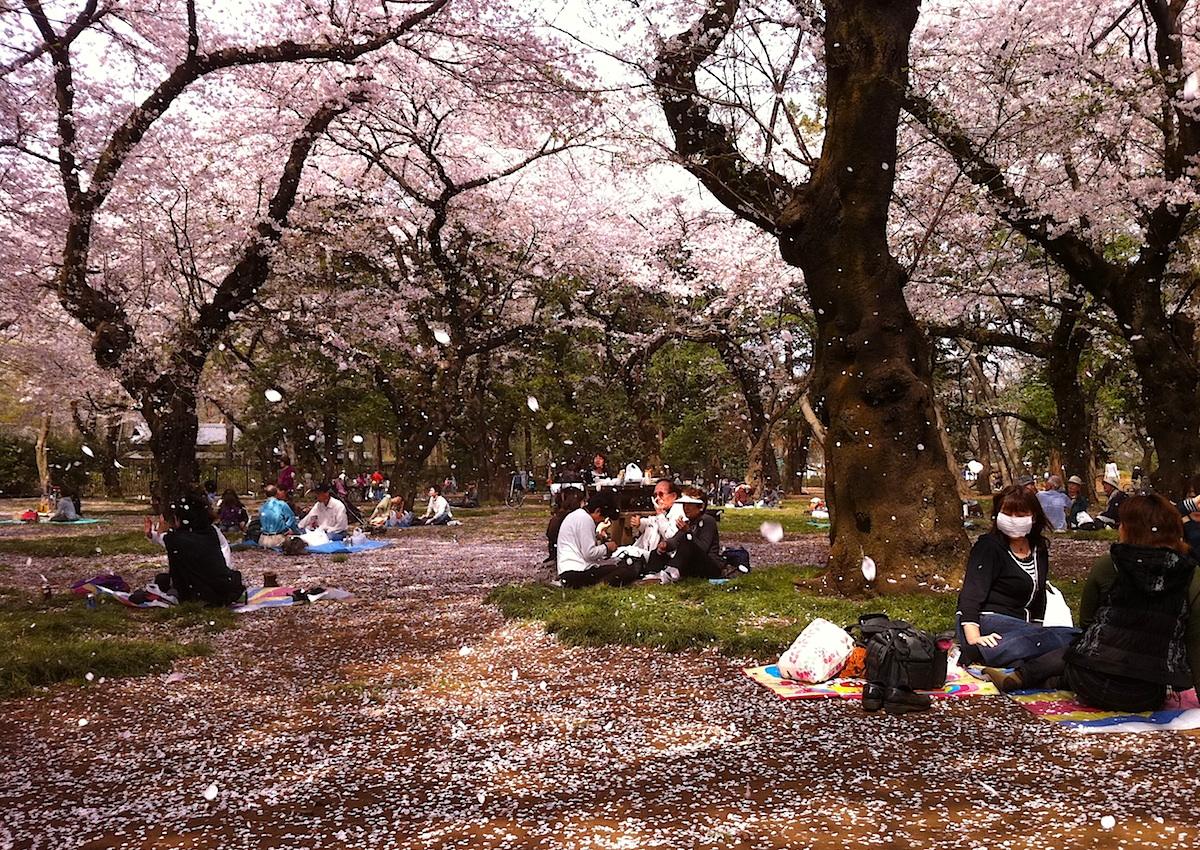
When we got to the park, we headed over to the “Cherry Blossom Garden” where all the action was. This year, the blossoms came late and are leaving early. It seems our timing was perfect–the trees were still full of blossoms (Sachi calls the “popcorn trees”), but the blossoms had just started to fall–and did they fall. It was the time where a good wind made the blossoms fall like heavy snow, the ground a carpet of petals. Just beautiful.

Our timing was good in another respect: this is Monday, and so while there were many people, it was not very crowded. We were able to find a nice spot with ease.

So we sat, drank, snacked, and enjoyed ourselves for an hour or two, and generally got covered in flower petals. It was a little cool at times, but mostly warm enough. Everyone was having a good time. A couple of Peruvian flute bands provided a nice background music.

As usual, click on the images to see larger versions.

Hanami01-500
Note tha carpet of petals; they were everywhere

Hanami02A-500
The camera did not do the “petal-fall” justice…

Hanami02-500
A crop of the last photo, you can see the petals better

Hanami03-500
Cheers!

After we had relaxed for a while, we decided to walk around, and then rode our bikes around the park a bit.

Just then, at about three o’clock, we decided to go home a few minutes early–despite the forecast of rain by 6 pm, the clouds to the north seemed a little dark, and we thought we heard thunder. So we headed back. Again, the Maps app saved us–even with it, we almost headed east instead of north. Still, the 5 km ride was longer than we would have liked, with the weather threatening like that. As we arrived home, heavy thunder and lightning were already all around us, though we walked in the door completely dry. Literally seconds after we walked in the door, heavy rain began to fall. Our timing could not have been more perfect, especially in that we had no rain gear.

So, good timing for pretty much everything. And a fun, relaxing day.

Categories: Focus on Japan 2011 Tags:

A Walk in the Park

April 1st, 2011 2 comments

It’s been a while since I have been birdwatching. It’s nice weather these days, which is to say, clear and sunny but not so cold. So Sachi and I took a walk outside to a few close-by parks. One was really close, right outside the door; the other just a block or so away. Anticipating a few birds, I took the camera with the zoom lens. There were a lot more birds out than I thought–none unusual, but some nice standards.

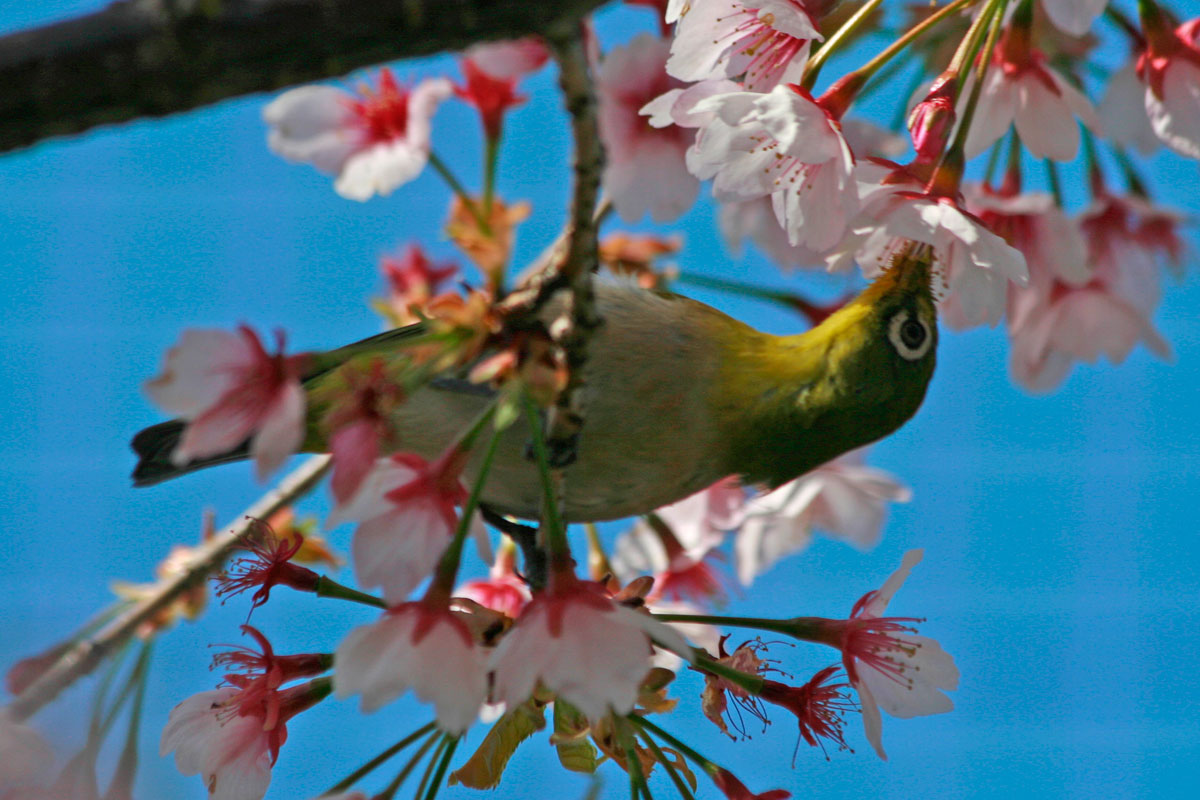
We got the Japanese Pygmy Woodpecker, Great Tit, Brown-Eared Bulbul, Oriental Greenfinch, Dusky Thrush, Grey Starling, Japanese White-Eye, and the Bull-Headed Shrike. (There were sparrows and crows also, but aren’t there always.) The Shrike was the least expected, but the prettiest was the Japanese White-Eye, pretty partly because of the yellow-green plumage, but also because it is framed by the newly-arrived cherry blossoms. They were mostly in the daikan-zakura, a kind of cherry tree that blossoms early despite the cold.

In any case, here are the better shots I took this morning. Click to embiggen, with only a few exceptions. First, the mejiro, or Japanese White-Eye:

Mejiro01 500-1

Mejiro02 500-1

Mejiro03 500-1

This next image is not upside-down, the bird is. The White-Eyes often hang upside down to reach the blossoms and drink the nectar.

Mejiro04 500-1

Next is the kawarahira, or the Oriental Greenfinch.

Greenfinch02 500-1

I was lucky enough to catch one in mid-flight, which is where you can see the lovely yellow and black wing markings.

Greenfinch01 500-1

Greenfinch03 500-1

In our local park, I caught the Pygmy Woodpecker (kogera), always a nice little catch.

Kogera 500-1

Kogera02 500-1

Kogera03 500-1

Less spectacular is the Grey Starling:

Mukudori01 500-1

Often on the ground at this time of year is the tsugumi, the Dusky Thrush:

Tsugumi01 500-1

Tsugumi02 500-1

And the nice surprise, the Bull-Headed Shrike, with lovely color, the eye stripe, and the overbite:

Mozu01 500-1

Mozu02 500-1

Mozu03 500-1

Mozu04 500-1

Mozu05 500-1

…and, of course, the flowers were pretty.

Sakura01 500-1

Sakura02 500-1

Finally, this annoying Bulbul–one of my least-favorite birds (they’re everywhere and don’t sing, but instead screech) which did nothing to improve my opinion by chasing off all the White-Eyes–the two birds compete for the same food source at this time, namely the cherry blossoms.

Bulbul01 500

Afterwards, we stopped by the small pizza house at the edge of the park, the one that was really a coffee house and had just one type of pizza. But it was nice, and more than anything, a nice little day out.

Categories: Focus on Japan 2011 Tags:

First Flower

March 30th, 2011 1 comment

For the past few days, the cherry blossoms in the trees outside our apartment have been showing buds, almost ready to blossom. The weather this week is sunny, and for the next few days at least, is middling-to-warm–good weather for the trees to open.

Sakura01-560

Today, in fact, the first one opened. It looked like it would yesterday evening, and as it turns out, we were right.

Sakura02-560

In a day or two, the trees should start to look nice and fluffy, but will likely be gone before we move out. We closed on the new home today–got the keys and everything–and appropriate timing too, just as the first blossom arrived.

Click on either image to enlarge.

Categories: Focus on Japan 2011, Hibarigaoka Tags:

Signing, a Year Later

March 23rd, 2011 2 comments

Last March–exactly a year ago today, in fact–we laid a claim to the apartment we’re now occupying, so we could move into the place in early May. Well, less than a year later, we’re moving out, unless Fukushima erupts in a manner that would shock even Troy. (My guest, not the ancient city.) This morning, we went to the bank to sign papers for the house loan. We will close the deal in one week, barring something catastrophic, which, by my reckoning, will happen about 15 minutes after we close the deal.

If all goes well, we will be moving house in mid-April, moving into the new place–hopefully the last move in a long time.

The shortest time I have stayed in one place in Japan was when I rented an apartment in Tachikawa for one year back in 1989. The longest was my stay in Inagi, from 2000 to 2007. Our stay in Hibarigaoka will be the shortest yet, followed by the longest to be–also in Hibarigaoka, but to the north of the station. Close enough that we can almost walk our belongings over. Well, not quite, but I figure I can get some smaller stuff over in a series of quick scooter rides–I haven’t timed it, but I bet I could make the run in less than five minutes.

Categories: Hibarigaoka Tags:

Moons

March 21st, 2011 4 comments

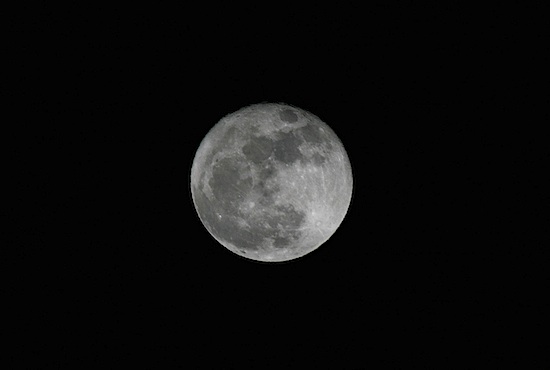
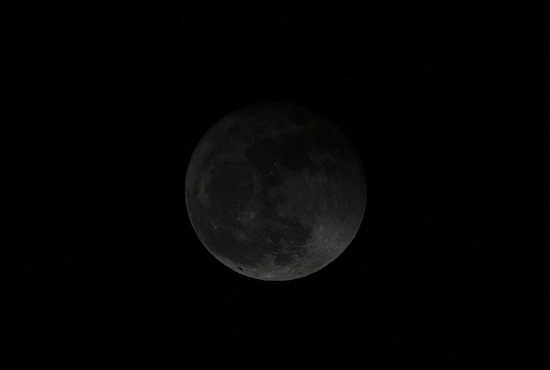
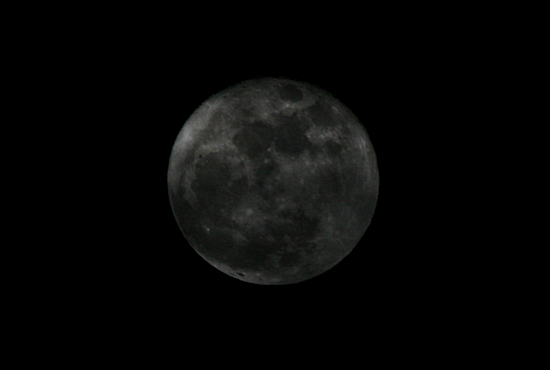
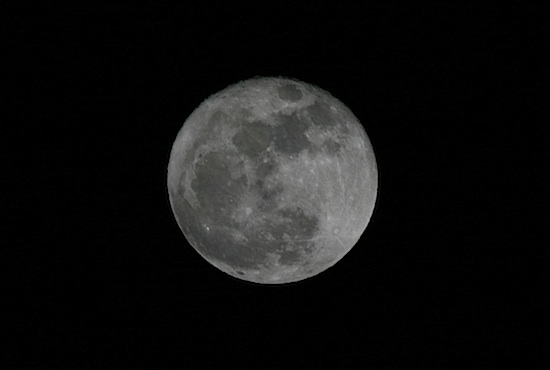
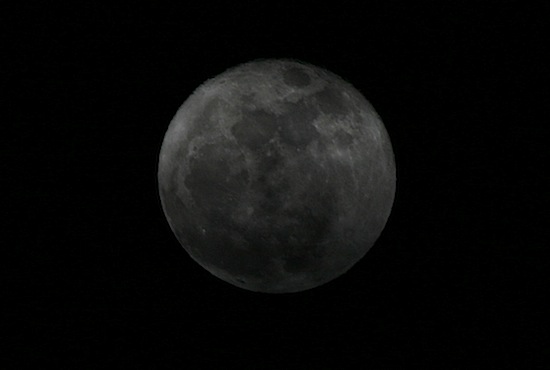
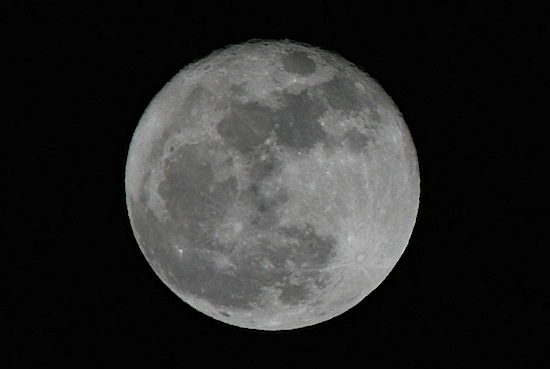
The big full moon is out. I don’t have a telescope, but a 300mm zoom lens will do OK for tonight. Here are some pictures as the moon dodged in and out of fast-moving clouds. Really very pretty, even if it did look quite different to the naked eye. The second to last has a larger version on click.

0311Moon08

0311Moon03

0311Moon01

0311Moon02

0311Moon04

0311Moon06

0311Moon05

And then here’s a video of the clouds moving in front of the moon. Don’t be fooled by the poster image for the video, the quality is better than that–but not great. It’s taken with the iPhone 4, no zoom, but imported into iMovie which can crop & zoom. Still, it gives you a small idea of how lovely it was. Just gotta use your imagination a little…

Categories: Focus on Japan 2011, Hibarigaoka Tags:

Quake–Under Tokyo? Updated: In Ibaraki

March 16th, 2011 14 comments

A quake just hit. It felt more like an up-down quake, meaning it was probably local…

Update: I was wrong, it wasn’t under us. It was a 5.3, centered in Ibaraki, just north of Chiba. And I had just said to Sachi a few minutes earlier, “Hey, there hasn’t been a big quake tonight.” That’ll teach me.

This Is Japan

March 16th, 2011 3 comments

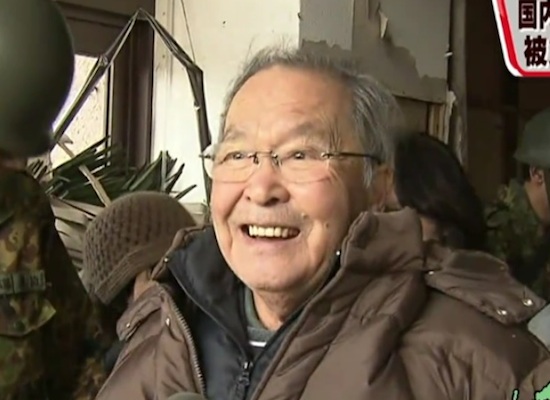
72Yroldman

One thing to remember is that when you read the stories about “panic” and how it is “sweeping over” Tokyo and Japan, these reports are by western media outlets, and is usually speaking about foreign visitors they find leaving from the airports. That’s not the Japanese you will find on the streets of Tokyo, or any city in Japan. And it is not the Japanese you will meet in Tohoku. Yes, there is sadness and misery; this is natural. But not panic.

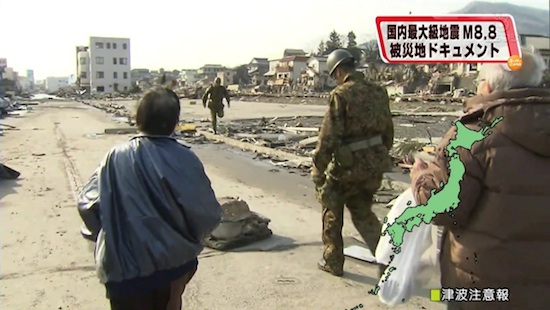
You want to see how real Japanese people are reacting? Here’s one fantastic example–a 72-year-old man who had been stranded with family on the 3rd floor of his house, in one of the towns devastated by the tsunami in Tohoku. As he is rescued by self-defense force personnel, he steps out onto the street, his whole town washed away before him. But he’s got a big smile on his face. “I’m all right!” (大丈夫です!) he announces to a reporter gaily. “I experienced the Chilean tsunami (a similar wave that hit Japan in 1960), so I’m OK!” (チレ津波も体験しているから、大丈夫です!)

As he steps out onto the street with his family and dog, he says with great vigor and spirit, and in a wonderful Tohoku accent, “Let’s rebuild again!” (また再建しましょう!)

Here’s the video:

Indeed, this is not the first time for this in Japan. A giant earthquake hit the Kanto region in 1923. Japan was flattened in the wake of WWII, and spent more than a decade recovering, but that they did. In 1960, the Chilean quake sent a similar tsunami to the east coast of Japan–the one the old man is referring to. Japan has been hit, again and again in the past. And recovered every time. The rest of us overlook this.

Japan will rebuild. It will recover.

Onagawa1960
The city of Onagawa, 1960, being hit by the Chilean tsunami.
Onagawa was the closest city to last Friday’s quake.

This article from The Globe and Mail, forwarded by Steve, details the people’s state of mind fairly well:

In another country, there would be panic, rage and shouts aimed at the government and the sky. But not Japan. Despite the multiple catastrophes that have simultaneously hit this archipelago, a very Japanese calm and politesse has held back the chaos.

As one catastrophe piled on top of another, a very Japanese deference to authority emerged, as well as a national desire to see civility prevail, no matter the circumstances.

Along the crowded highway that connects Tokyo with the tsunami-battered north, people waited in orderly fuel lines hundreds of cars long without any shouting, honking or cutting in line. In the worst-hit city of Sendai, streets were shattered and cars were flung on top of homes by the force of the tsunami, but in three days there was not a single report of looting.

And here in Koriyama, the city closest to the escalating crisis at the Fukushima nuclear plant, residents queued around the block for drinking water being distributed from trucks parked outside a local gymnasium. When an official announced over a loudspeaker that supplies were running low and dozens of families would have to go home without, the line quickly and quietly dispersed.

Most notably, no one panicked and fled south even as the three reactors of the Fukushima plant continued their weekend-long flirtation with disaster. The French and U.S. governments advised their citizens to leave not just the region around the reactor, but also Tokyo 260 kilometres to the south, but most Japanese who live close Fukushima seemed in no hurry to flee.

There is a Japanese word for it: gaman. To persevere.

This quote from Tennyson’s Ulysses comes to mind:

Though much is taken, much abides; and though
We are not now that strength which in old days
Moved earth and heaven, that which we are, we are—
One equal temper of heroic hearts,
Made weak by time and fate, but strong in will
To strive, to seek, to find, and not to yield.

72Streetview

Trying Twitter Again

March 16th, 2011 Comments off

Our power is due to go out in 15 min. or so. I am getting on Twitter, to see if I can get back in that swing again and to post while the area is dark… if 3G remains up, that is.

Count on Fox to Lighten the Mood

March 16th, 2011 6 comments

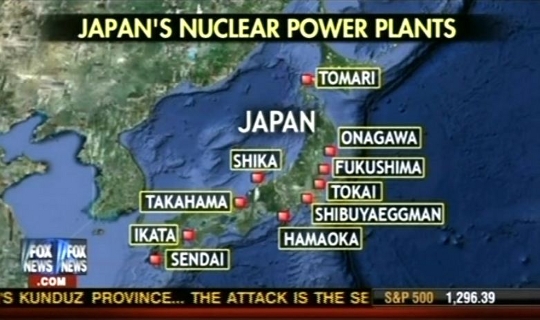
A little comic relief from Fox. At least, I am assuming this really happened–hard to believe, but then again, this is Fox we’re talking about, and the site reporting on it is usually pretty dependable about getting the facts straight. On Your World With Neil Cavuto, Fox reportedly showed a graphic depicting the location of nuclear plants in Japan:

Eggamn

First, that list seems a bit sparse; there are dozens of reactors in Japan. A quick check on Wikipedia (the IEAE site isn’t responding now) shows some of them clustered, but the Fox graphic is incomplete anyway. No big surprise there.

However, one of those names Fox does include seems a little funny: Shibuyaeggman, and it appears situated right here in Tokyo. We have a nuclear plant? And is that supposed to be in Shibuya? And “Eggman”? What the–oh, yeah, this is Fox I’m looking at. Neil Cavuto, even more to the point.

If this report is accurate, and I am betting it is, Fox identified a nuclear reactor existing in a Shibuya nightclub.

I would love to hear how Fox managed this one. I have to say, it makes me feel a bit better about having been taken in by Oehmen & Co. But then, I do expect more from myself, a random guy sitting in his apartment in Tokyo, than I do from the Fox News organization.

Power Outage… Maybe

March 16th, 2011 3 comments

Looks like we might actually have a power outage today. The time is unclear, though–the local loudspeakers said 10:20, the TV seems to be saying after noon. We’ll see when it happens.

This Helps

March 16th, 2011 7 comments

Like many others in Japan, I am on the mailing list of the U.S. Embassy in Tokyo, and get their warnings, advisories, alerts, and updates. This just came in, from the ambassador:

Since the first reports of trouble with the reactors, American nuclear experts have worked around the clock to analyze data, monitor developments, and provide clear assessments on the potential dangers. While at times we have had only limited access to information, I am personally committed to assuring that our experts have as much access and information as possible, and the necessary resources to understand the situation. I have personally been deeply engaged in these efforts.

After a careful analysis of data, radiation levels, and damage assessments of all units at Fukushima, our experts are in agreement with the response and measures taken by Japanese technicians, including their recommended 20kms radius for evacuation and additional shelter-in-place recommendations out to 30kms.

Let me also address reports of very low levels of radiation outside the evacuation area detected by U.S. and Japanese sensitive instrumentation. This bears very careful monitoring, which we are doing. If we assess that the radiation poses a threat to public health, we will share that information and provide relevant guidance immediately.

That message is also available online here, on the page where all such messages are made public.

I have heard some people worry that the government will hide information to keep the public from mass panic or whatever, but I don’t really accept that. Yes, they’ll try to cover up blunders or foolishness, and they may suggest lame “duck and cover” style solutions–but if a cloud of radioactive vapor is headed our way, I don’t think they’re gonna try to hide it from us.

What may be harder to debate is whether they will let on exactly how potentially bad things can get. I tend to think that the Japanese government may try to hide things that could go badly wrong and would not really help the Japanese people if they knew–but I don’t really see the American government doing that in Japan. I could be wrong. Maybe I am. But I don’t think so.

And so far, I think the U.S. government’s advice to its citizens has been far more helpful and sound than that given by the French and Chinese governments, who seem to be more comfortable with playing it safe and not caring if it gives people the wrong idea.

Quake Under Fuji

March 15th, 2011 4 comments

We just felt a sizable quake–and it wasn’t on the original fault line. This one was right under Mt. Fuji. It came just a few minutes after a different tremor.

Not very comforting…

Update: It was a 6.0 quake, but a “strong 6” on the Japanese effect-based scale. Looks like the quake that preceded it was a 3.0 in the same area. Strictly rumor only, not news-related or from any expert: it’s possibly volcano-related (update–nothing on the news about that, it’s probably nothing volcanic).

10:40 pm: we’re feeling another aftershock.

10:44 pm: another aftershock just a minute ago.

10:50 pm: it looks like the quake just before the big one was actually a 6.2 in Fukushima, at 10:28 pm. After the 6.0 in Shizuoka a few minutes later (10:31 pm), we got aftershocks: a 5.6 in Fukushima at 10:38, a 4.0 in Yamanashi at 10:40, then a 3.6 in Shizuoka at 10:43, followed by a 3.2 in Shizuoka at 10:46, and a 2.9 in Yamanashi at 10:49.

So, effectively, we’re being shaken from both sides here.

11:04: reports on the news coming in from Shizuoka tells of stuff falling off of shelves, some damage near the epicenter.

Under the Japanese Seismic Intensity Scale, in a “strong 6” (which this one was), it is “impossible to keep standing and to move without crawling,” and “Most heavy and unfixed furniture moves and falls.” In this kind of quake, “less earthquake-resistant” houses can collapse and more resistant houses can sustain serious damage.

We’ll have to see how this one turns out.

Give Me a Break

March 15th, 2011 9 comments

This headline on MSNBC’s web site:

Screen Shot 2011-03-15 At 8.16.51 Pm

Really. “Panic grips Tokyo”? Where, exactly, did they get this? Their person on the ground in Tokyo? This is the first graf:

Panic swept Tokyo on Tuesday after a rise in radioactive levels around an earthquake-hit nuclear power plant north of the city, causing some to leave the capital and others to stock up on food and supplies.

Okay. I don’t know how many are “leaving the capital,” but I haven’t noticed any abnormal traffic. Most people probably wouldn’t have enough gas for the trip, and most trains out of town aren’t running. But if people are leaving Tokyo, it’s probably as much for the aftershocks and the supply problems as it is from the radioactivity.

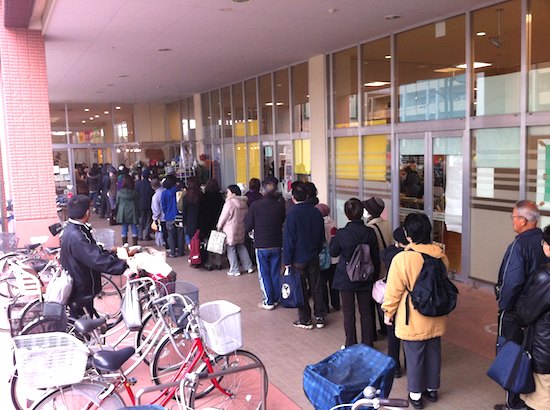
Second, people have been stocking up on food and supplies since Friday, something which did not change today. The lines I showed in my last blog post were simply a morning thing to keep the store from getting too crowded at once, and was the only store in the neighborhood doing it. Things are about the same today as they were two days ago, just a little farther progressed. People are buying because supplies look to be short, not because of radiation levels.There has been no sudden jump in buying or traffic.

People around here, as well as people I know around town, are all calm and coping. Television broadcasts show none of the panic reported above. Yes, some foreign residents are freaked out, but probably that’s because they depend on sites like the one I cite above, read headlines like this, and then react like the article shows.

Panic, my ass. Concern, yes. A few people freak out, yes. But on the whole, “Tokyo” is doing just fine.

Supply Lines

March 15th, 2011 4 comments

Well, distribution problems continue. Yesterday, gas stations were either closed or had very long lines. Supermarkets have been out of bread products for a few days now, and what comes in quickly goes out. I thought I’d check out the supply in the morning, and found this at about 10:30am:

Supermarket-03-15

I could not see inside enough to figure if they had fully restocked or not, but they won’t be for long, I am guessing. Maybe tomorrow I’ll try getting up a bit earlier and get in the (probably much longer) lines to get something. It is currently kind of hard to tell whether this is purely because of supply problems, or if panic buying and hoarding is playing a role. Since I did not get in, I could not see if prices had been jacked up, but they had not been yesterday when the place was nearly sold out.


I wrote the above this morning, and Sachi and I just got back from opening a bank account at the bank we’re getting a loan from. After going to the bank, we figured we’d check out the food store below Seiyu (owned by Walmart, incidentally). Their fruits & vegetables remained fairly stocked (seems that there are a lot of farms in the area, so no problems there), but milk, eggs, and bread and other bakery goods were cleaned out–along with meat and other items. In short, meat, bread, & dairy–which often come from up north–are predictably in short supply.

Supermarket-03-15-01

Supermarket-03-15-02

In surprisingly good supply: fish. I am guessing that most of the fleet was safely out to sea, and therefore unaffected by the tsunami, so there was lots of tuna and other seafood available. We got to the store at a good time for the bakery–the shop in Seiyu’s basement was baking stuff and putting it out on the fly (ringing a bell each time new stuff came out), so we could get some muffins, a few pastries, and a “milk bread” confection, all fresh out of the over. People were snapping them up as soon as they came out, but when I got there, they had just put out a lot of stuff and almost no one was there.

Prices remain stable, nothing has gone up noticeably.

In the meantime, fast food and other restaurants are still open, for the most part.

We have not had a blackout in our area yet, despite having been told twice that the power would be cut at such-and-such a time. I can only assume that they are planning for the worst and then doing what is necessary. One is due in about half an hour or so. Internet continues to stay on as it has since the quake started.

* [Probably Misleading] Article to Calm People Down about the Nuclear Thing

March 14th, 2011 22 comments

*I have been reminded that the writer of the below material posts links to strongly pro-nuclear organizations, and may be biased himself. I maintain that the writing is, at the very least, far more factual and probably much closer to the truth than a lot of the stuff we see in the media nowadays. Judge for yourself.

Update: More is coming out suggesting that Josef Oehmen and the people who put up the site are far less than unbiased or expert in the proclamations. It would appear that I got fooled. My apologies. If it’s any consolation to me, a lot of other people were taken in as well. Thanks to Troy and others for staying on top of this.


Here’s a great blog post by Dr. Josef Oehmen, a research scientist at MIT, in Boston, basically telling people that the nuclear situation in Japan is not even close to being as bad as it’s being made out to be by activists and a media looking for the sensational angle.

He explains in layman’s terms how the nuclear plants in question work, and why there’s not going to be a huge radioactive release.

A few excerpts:

I am writing this text (Mar 12) to give you some peace of mind regarding some of the troubles in Japan, that is the safety of Japan’s nuclear reactors. Up front, the situation is serious, but under control. And this text is long! But you will know more about nuclear power plants after reading it than all journalists on this planet put together.

There was and will *not* be any significant release of radioactivity.

By “significant” I mean a level of radiation of more than what you would receive on – say – a long distance flight, or drinking a glass of beer that comes from certain areas with high levels of natural background radiation.

I have been reading every news release on the incident since the earthquake. There has not been one single (!) report that was accurate and free of errors (and part of that problem is also a weakness in the Japanese crisis communication). By “not free of errors” I do not refer to tendentious anti-nuclear journalism – that is quite normal these days. By “not free of errors” I mean blatant errors regarding physics and natural law, as well as gross misinterpretation of facts, due to an obvious lack of fundamental and basic understanding of the way nuclear reactors are build and operated. I have read a 3 page report on CNN where every single paragraph contained an error.

He ends with this:

My assessment:

  • The plant is safe now and will stay safe.
  • Japan is looking at an INES Level 4 Accident: Nuclear accident with local consequences. That is bad for the company that owns the plant, but not for anyone else.
  • Some radiation was released when the pressure vessel was vented. All radioactive isotopes from the activated steam have gone (decayed). A very small amount of Cesium was released, as well as Iodine. If you were sitting on top of the plants’ chimney when they were venting, you should probably give up smoking to return to your former life expectancy. The Cesium and Iodine isotopes were carried out to the sea and will never be seen again.
  • There was some limited damage to the first containment. That means that some amounts of radioactive Cesium and Iodine will also be released into the cooling water, but no Uranium or other nasty stuff (the Uranium oxide does not “dissolve” in the water). There are facilities for treating the cooling water inside the third containment. The radioactive Cesium and Iodine will be removed there and eventually stored as radioactive waste in terminal storage.
  • The seawater used as cooling water will be activated to some degree. Because the control rods are fully inserted, the Uranium chain reaction is not happening. That means the “main” nuclear reaction is not happening, thus not contributing to the activation. The intermediate radioactive materials (Cesium and Iodine) are also almost gone at this stage, because the Uranium decay was stopped a long time ago. This further reduces the activation. The bottom line is that there will be some low level of activation of the seawater, which will also be removed by the treatment facilities.
  • The seawater will then be replaced over time with the “normal” cooling water
  • The reactor core will then be dismantled and transported to a processing facility, just like during a regular fuel change.
  • Fuel rods and the entire plant will be checked for potential damage. This will take about 4-5 years.
  • The safety systems on all Japanese plants will be upgraded to withstand a 9.0 earthquake and tsunami (or worse)
  • (Updated) I believe the most significant problem will be a prolonged power shortage. 11 of Japan’s 55 nuclear reactors in different plants were shut down and will have to be inspected, directly reducing the nation’s nuclear power generating capacity by 20%, with nuclear power accounting for about 30% of the national total power generation capacity. I have not looked into possible consequences for other nuclear plants not directly affected. This will probably be covered by running gas power plants that are usually only used for peak loads to cover some of the base load as well. I am not familiar with Japan’s energy supply chain for oil, gas and coal, and what damage the harbors, refinery, storage and transportation networks have suffered, as well as damage to the national distribution grid. All of that will increase your electricity bill, as well as lead to power shortages during peak demand and reconstruction efforts, in Japan.
  • This all is only part of a much bigger picture. Emergency response has to deal with shelter, drinking water, food and medical care, transportation and communication infrastructure, as well as electricity supply. In a world of lean supply chains, we are looking at some major challenges in all of these areas.

So, everyone stay calm!

It’s No Chernobyl

March 14th, 2011 3 comments

Here’s what seems like a voice of reason:

I wish the anti-nuke crowd would back off the rhetoric. I know this is a golden opportunity for them to scare people off of nuclear. Frankly, the whole nuclear debate is well worth going over, and personally I wish we were going full-on towards solar, wind, and sea power. But right now, people are in a state of near-panic, and activists going around talking about disaster so they can stir up support for their positions are being stupid and irresponsible. They are scaring a lot of people unnecessarily, and making life difficult for people here.

Anyway, I am headed in for work, so I will be offline for as long as it takes. Will be checking in all day long, of course.