Archive

Archive for January, 2006

Corruption & Lawbreaking vs. Apathy & Fear

January 16th, 2006 3 comments

A few nights ago, Bill Maher guest-hosted Larry King and made a statement that surprised me: that he’s OK with warrantless searches if it’s in the name of fighting terrorism. But one problem with Maher is that he doesn’t always do his research. And he’s not alone–I’ve been hearing a lot of people say the same thing. And everyone who’s said this obviously has not studied the matter or has otherwise bought into the Bush administration BS. The fact is: the warrants in no way, shape, or form hindered or delayed the legitimate search for terrorists. The retroactive 72-hour warrant allowed for immediate eavesdropping. The court approved more than 99.9% of all requests for warrants, and only objected to a few minor technicalities. The FISA court in no way hindered the intelligence-gathering that could have stopped 9/11–that was the fault of the Bush administration in not asking for the warrants in the first place. Hell, even Arlen Specter can see it was unnecessary and illegal.

But the right wing is excellent at lying, at making the public believe patent untruths. Almost as good as they are at corruption. Tom DeLay is now well on his way to prison, and his well-gerrymandered home district knows it–only 28% would vote for him. Republican poster boy for honesty Bob Ney is going up the river with DeLay–not just for taking bribes from Abramoff, but also for lobbying for Iran (where are all the conservatives who claimed Gore took money from Buddhists?). Who’ll replace DeLay? Already the Republicans are eating their own, with Shadegg accusing Blunt and Boehner of being tied to the lobbying scandals–and the media is starting to pay close attention to Blunt, who claims he’s locked up the leadership position. Even Ralph Reed is going down.

So, with all this and Bush at 39%, do the Democrats have a shot at gaining control of Congress next year? Bizarrely enough, that’s far from a lock. The Dems should have it all sewn up, but are still so damned timid that they’re not giving the people too much of an alternative. The Democrats should have put their foot down with Alito, daring the Republicans to trigger the nuclear option, whilst pouring out a river of outrage over the Congressional corruption and government spying in the media. I’m still waiting for them to grow some big brass ones. Until that happens, I am not overly hopeful that the Republicans’ overt corruption and lawbreaking will be enough to repulse a public which seems ready to accept all that out of apathy and fear.

Categories: Political Ranting Tags:

Bush’s Aspirin Factory

January 15th, 2006 1 comment

For the past few days, Bush has been basking in the light of seeming effectiveness with the news that we probably got al Qaeda’s #2 man, al-Zawahiri, in an air strike against a location in Pakistan near the Afghan border. But as we’ve just found out, the intelligence was faulty and rather than hitting an “al Qaeda compound” with Zawahiri, we instead hit three homes with at least 18 civilians, including five women and five children. Pakistan is outraged, has summoned our ambassador, and relations are now greatly strained.

I bring this up mostly to contrast something: on August 20, 1998, Bill Clinton ordered an air strike against what was believed to be a plant used to produce chemical weapons in Sudan, based upon the report of a CIA agent who allegedly took soil samples from the plant that showed a precursor to VX gas being produced. It turned out that the factory was not producing chemical weapons, but instead was bottling aspirin. Conservatives made endless sport of this error, and for years (even up to the present) have used it to ridicule Clinton for his ineffectiveness against bin Laden, his stupidity in hitting the wrong target, and his wrongness in taking out an innocent target.

So what are they saying about Bush, now? Clinton killed one man in the Sudan attack; are 18 people, including five women and five children, acceptable in comparison? Are they condemning Bush like they condemned Clinton?

Of course not. The Spin Patrol is still a little uncoordinated, but they’re getting the story out: it was Pakistan’s fault, they were heavily involved, and besides, it was an al Qaeda hideout, Zawahiri had just stepped out for a smoke, and most of the dead were extremists. NewsMax, for example, put quotation marks around the words “innocent civilians.”

Not to mention that this is hardly the first time that innocent civilians have been hit in bungled attacks against al Qaeda; there’s no telling how many men, women and children have been killed in these kinds of attacks–attacks that conservatives, and most Americans, will shrug off as regrettable but necessary. After all, the people killed were dark-skinned villagers in some third-world country, right?

Think that’s too harsh? Unfair? Imagine this story, but instead we had bombed a village in England where we thought al Qaeda operatives were hiding, and killed eighteen white people, including five women and children. Would we have reacted the same way? The difference in our reaction to those two stories measures who differently we value the lives of people based upon their nationality and color.

We take the killing of people in “those countries” far too lightly, as if they didn’t matter or count.

Categories: Political Ranting Tags:

Say Goodbye to Roe v. Wade

January 14th, 2006 2 comments

As the Scalito hearings begin to dissipate and it seems certain that the Democrats could not muster the solidarity or courage to turn him down, we have to now look forward to a future where privacy rights will become severely curtailed, and Roe v. Wade will be either overturned or, at the very least, gutted. Who knows, maybe Roberts or even Scalito will surprise us, maybe all that talk about respecting precedent wasn’t just slimy weasel talk–but I strongly doubt it. Fundie and wingnut organizations will, without pause, start an all-out campaign to get any and every abortion case put before the Supreme Court so that Bush’s new court can sacrifice Roe v. Wade on the altar of fundamentalist conservative judicial activism.

What that means, in turn, is that reproductive rights will take a 180 back into the 60’s and beyond. Wealthy states will likely keep it safe and legal, but the poorer and Bible-belt states will quickly drown it, trapping those caught in the most dire of circumstances with no choice, except the coat hanger or back-street butcher. Birth rates for those in poverty may well rise and create worse conditions, and the fundies who are popping champagne corks today will gleefully turn a blind eye to that pain tomorrow.

What is worse, this signals a greater change in the course of civil rights and our observance of the Constitution overall. Roe v. Wade is not just about access to abortion, it also signals a right to make one’s own personal choices without the government deciding your beliefs and forcing medical decisions on you. But the new court will have an even broader effect: for example, with Roberts and Scalito on the court, the outcome of the recent Ten Commandments cases–McCreary v. ACLU and Van Orden v. Perry–would certainly would have been different, and the separation of church and state would have begun its collapse. It will simply take a little longer for that to happen now. Say goodbye to privacy rights. Say goodbye to equal rights, as much as they currently exist. Say goodbye to a lot of rights and liberties, because the new majority of Scalia, Thomas, Kennedy, Roberts and Alito will soon begin to systematically tear them down. And because these guys are young, Bush’s neocon stamp on the court will last for decades.

This is not a good day for the country.

Categories: Political Ranting Tags:

The Rockford Files

January 13th, 2006 3 comments

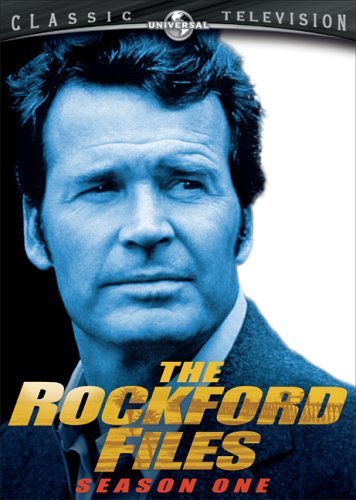
Rockforddvd2I just finished watching the first season DVDs for “The Rockford Files,” one of the usual set of DVDs that I buy from Amazon every Christmas when I go back to visit the family. Yeah, I know, you get it on cable where you are. I don’t. And I don’t like having to deal with the commercials, either.

Watching the shows brought back some things about the show that I’d forgotten about. One of those was how in almost every episode, the writers found a way to make it so that Rockford didn’t get paid. While a lot of people enjoy this kind of running gag, I find it a bit annoying. An extreme example of this was with the Steve Martin/John Candy movie “Planes, Trains, and Automobiles,” a film that I am sure was funny, but was about the most painful experience for me to sit through. In the film, Candy causes Martin to suffer an endless number of problems and annoyances, from the trivial to the harrowing. Essentially, Martin’s character just gets beaten down and humiliated throughout the film, subjected to one setback or failure after another. Some people enjoy that, and if it’s cartoonish and extreme enough I can get into it, but make it even close to realistic and it grates on me. Ergo my mild annoyance with the stick-it-to-Rockford gag–though it does make it nicer when he actually does get paid.

The other thing I’d forgotten about was how much driving there is in the series. It seems like one third of each episode is spent with Rockford driving his car around. And I’m not talking about the time spent on car chases or characters having a dialog in a car. I mean just minutes on end of watching this car go down that road, or that car turning that corner and going that way. A lot of it is one car tailing another, but sometimes it’s just driving. Atmosphere, I guess. But it feels more like killing time most of the time.

Don’t get me wrong–I love the series, and I’ll keep getting them as they come out. The main reason is Garner himself, and the writing for the series. Rockford’s sardonic and cynical style is priceless, and the driving and not getting paid aside, the plots and episode development are very, very good. One of main regrets is having to wait until the season five DVDs come out to see my all-time favorite episode “White on White and Nearly Perfect,” with Tom Selleck as Lance White, the Anti-Rockford. One of the best episodes in TV history, if you ask me.

Categories: Media & Reviews Tags:

Interesting Prediction

January 12th, 2006 4 comments

I’ve just been re-reading some of my Heinlein, and in his Expanded Universe anthology volume, there’s a very interesting piece called “Where To?” Originally written in 1950, he makes predictions about the year 2000. Prediction #4 reads thus:

It is utterly impossible that the United States will start a “preventive war.” We will fight when attacked, either directly or in a territory we have guaranteed to defend.

In a 1965 update, he restates that idea, writing “‘Preventive’ or ‘pre-emptive’ war seems as unlikely as ever, no matter who is in the White House.” Technically, Heinlein was right, in that Iraq happened after the year 2000 (and if you do not consider Vietnam a ‘preventive’ war).

More to the point, Heinlein’s prediction seemed to me to underscore how radically Bush has changed our policy. However, what surprised me even more was how easily Americans seem to have taken to it. I have always assumed that American policy has always been stridently opposed to the concept of first strike, pre-emptive or otherwise (officially, at least). In one of my first blog entries, made in August 2002 (a handmade blog page, before I discovered Movable Type), I wrote:

It would also shred our own values and long-held respected policies, most importantly the policy not to strike first without provocation. And sorry, but an alleged meeting between a terrorist and an Iraqi agent coupled with completely unsubstantiated reports that Saddam could develop nukes “any time now” does not qualify as “provocation.” We do not, as a nation, attack other nations simply because we think that maybe, at some future time, they could attack us in some way. Bush Jr. and Cheney warn about the penalty of waiting for someone to hurt us first, but the reason why we have held exactly that policy for so long is because it is the right thing to do. Would you teach your children to sucker-punch other kids based on the suspicion that the other kid might have started a fight later? Do you go around town shooting people you suspect might at some point break into your home? Sure, the children your kid punches out might be mean, and the people you gun down might be criminals–but it is not how we do things. Believe it or not, we wait for provocation, and then we fight. Not a moment before. We pay a price, as we always do, for our principles, but the price of abandoning those principles would be far higher.

What, am I just totally mistaken about American principles? Did I hear it wrong? I was shocked when John Kerry, in a presidential debate, answered John Lehrer’s question on his approval of a preemptive war with this:

The president always has the right, and always has had the right, for preemptive strike. That was a great doctrine throughout the Cold War. And it was always one of the things we argued about with respect to arms control.

Now, possibly, Kerry was weaseling out of a direct answer–note how he changed “preemptive war” to “preemptive strike.” But it sure seems like he was in favor of preemptive war, when I was expecting him to take Bush to task for it. Maybe somebody could set me straight on this, but I could swear that America had–proudly–stood by the policy of not initiating a war.

Categories: Political Ranting Tags:

But Do They Do Windows?

January 11th, 2006 4 comments

Okay, Steve Jobs introduced two new Intel Duo Macs today–an iMac and “MacBook,” both sporting dual-core CPUs, iSight built-in, and the usual round of goodies. But conspicuously absent from the keynote–and, to my surprise, also from the post-keynote web coverage–was the question of whether the new Macs can run Windows, and if one will have the ability to launch both side-by-side, switching easily between the two, without overtaxing the CPU. Although Microsoft’s representative appeared on-stage during the keynote and promised that MS Office for Mac would be supported for another five years (I could have sworn they’d stopped development with the last version, but apparently I’m wrong), neither she nor Jobs uttered a word about how cool it would be to run both systems on a Mac computer.

In fact, I had to do a search before I found anything on the subject, and found an AP story on Forbes reported that Apple has reiterated its claim that it will not “thwart” users who want to install Windows on the Mac. However, it’s pretty clear that Apple is not facilitating that option–yet.

Which means that if dual-boots and switching are possible, it’ll be a third-party hack, for now, at least. Intel’s Virtualization Technology promises something more advanced, and you’ve got to figure that Apple is going to jump on the bandwagon once people start doing it more.

One possible reason that Apple is holding back is the foreseen developer’s conflict, where software makers may drop Mac versions of software if they feel that Mac users will all be running Windows in tandem anyway. Perhaps Apple is not quite ready with it’s Dharma project (if true), and wants to introduce and popularize the development toolset before actively encouraging the dual-boot idea.

Categories: Mac News Tags:

Goodbye, Powerbook

January 11th, 2006 Comments off

Not mine. The whole line.

So the keynote is over, and we have quite a few new toys to play with. I’m not going to go over the software, because frankly, from the sound of it (reading the feed from MacRumors), all the software updates sound marginal. It’s the hardware that’s going to make the difference. New Intel iMacs and… MacBooks, the (slightly questionable) new name for the high-end portables (no more PowerBooks). Dual-core iMac and MacBook. Very fast-sounding, cool-sounding machines.

Just one thing. There was no mention whatsoever of dual-booting OS’s.

What’s up with that?

It’s late, and I gotta get to sleep. I guess I’ll find out in the morning, if anyone knows by then….

Categories: Mac News Tags:

Why to a Flag?

January 10th, 2006 6 comments

Perusing a story about the pledge of allegiance, it struck me: why pledge to a flag? Yes, you’re pledging to the Republic as well, but why to the flag? Because it’s a convenient symbol? Maybe, but there’s a big problem there: anyone can hijack the symbol. Why not simply make a pledge to the Republic alone? It can also be hijacked (witness the present), but at least it’s quite a bit more difficult–and it’s usually accomplished by hijacking the flag first.

Even better, why not make the pledge to the Republic and the Constitution upon which it is based? The flag can be twisted to represent all kinds of bad stuff, but the Constitution, that’s got the foundation for a nation of laws printed right on it. A bit harder to grab that and use it as a symbol of crushing someone’s rights and liberties. It specifically enumerates what we’re supposed to do and how. More general symbols, such as the flag and the sacrifice of past generations can be far more easily subverted by claiming that they stand for what you want them to stand for; the Constitution is much less forgiving of people trying to create meaning out of whole cloth.

So hang a copy of the Constitution and the Bill of Rights on the wall of classrooms, and make a pledge to it. “I pledge allegiance to the Constitution of the United States of America, and to the Republic based upon it: one Nation indivisible, with Liberty and Justice for all.” Give the “Under God” bit back to the Knights of Columbus who got it stuck in there during the McCarthy Era by using fear and manipulation; there’s no need for it in that pledge anyway, least of all for those true to their God.

And while we’re at it, let’s stop making kids recite the pledge until they can demonstrate real understanding of what it means. Mindless indoctrination was supposed to be something we’re against, right? Why are eight-year-olds reciting it? Most kids don’t have a clue as to what half the words mean, and I don’t ever recall a teacher explaining them. Heck, for years I thought that I was pledging “allegiance” (whatever that meant) to an “invisible” nation. I thought it was weird, but then, the whole Pledge thing was, to me, back then. Still is today, to the extent that it’s more a political tool than a meaningful pledge. Ergo my suggestion for changes.

Categories: Political Ranting Tags:

Back to School

January 9th, 2006 1 comment

So tomorrow is the first day I have going back to work after the Winter vacation. I caught a break in timing, in that the semester started on a Friday, and I don’t have classes on that day. This week, Monday is a holiday. Tuesday, tomorrow, will be my first day back. And a good semester it should be. I have three classes, but they are back-to-back on two days of the week, which means slightly longer but many fewer days. I’ve got the web site up to speed, and it all looks well-prepared and ready to go. I just have to figure out how to deal with it all with a broken foot.

One particular point of interest will be the MacWorld Expo in San Francisco, with Jobs’ keynote coming at (I believe) 2 a.m. on Wednesday morning, Japan time. (Rumor roundups here and here.) If, as is predicted, the new Intel Macs come out, this should change the computing landscape some, and that’ll mean changes possibly for my students as well. It’s always good when something big is happening in the field you’re teaching, it gives you a chance to go over all the aspects with your class.

In the past, I have set aside half of one class session each semester to demo the Mac OS, in part to give students another point of view to better understand what an OS is, and in part to show them how cool the system is. Perhaps more than that, they see how I use it myself every day–my monitor is almost always mirrored on the class monitor, and they can see how I navigate through things. And every semester, a good number of students come back very interested in the Mac, despite having seen little else but Windows machines all their lives. I know that if I could tell them they could get Mac and Windows all in one package, a lot more of them would make the switch.

So it should be a fun semester. Heck, if I’m lucky, I’ll be able to convince my school of the wisdom of shelling out a few bucks for a Mac Mini, should it become available with Intel and Windows. Our IT people wouldn’t know what to do with a Mac, but hey–I can do maintenance that side of things a lot easier than they can. It’ll take me a lot less time, and be cheaper for the school to boot!

Violation of Privacy

January 8th, 2006 4 comments

Your cell phone records are, apparently, not private. In the U.S., at least. For $110, anyone can obtain a list of everyone you have called, when, and for how long.

This may just be a temporary loophole, but it does raise questions of privacy. Seeing something like this is a bit of a shocker, mostly because it drives home the fact that this can have an impact on you (well, most of you). Would you really be okay with anyone for any reason digging through your phone records?

In writing this, I paused to think about possible situations to give as examples of how you would not want your cell phone records searched. I had come up with a few, like a stalker expanding his knowledge of your life, or your workplace trying to catch dirt on you, when I realized something: it doesn’t matter what the examples are. Privacy is a blanket right, and when you start trying to single out the most shocking examples, you begin to differentiate between the ‘less private’ and the ‘more private.’ And that’s a mistake, because then someone will argue that the ‘less private’ parts of your life are not worthy of privacy.

Not to mention that there are a lot of people who will argue that you don’t have a right to privacy at all–at least no legal right. I would rather strongly disagree, and so would the 9th Amendment, not to mention a few other amendments and the Supreme Court. We’re a territorial race, and privacy is fundamental to our makeup. We expect privacy, we demand it. We require it. None of us is completely open, no one. How could this possibly not be considered a fundamental human right?

So why are there so many people who stridently oppose the idea of a legal right to privacy? Do these people really feel that no one has a right to expect any privacy? Probably they don’t. It’s really about abortion, and the fact that major decisions such as Griswold v. Connecticut and Roe v. Wade are based upon arguments of privacy. So “the right to privacy” has become a nasty epithet to many conservatives, a sign of “judicial activism” and something that neither you nor I possess. I really doubt that conservatives would be OK with the idea that they have no legal right to privacy any more than liberals would. But in the conservative world, expediency is the name of the game (e.g., winning elections supremely trumps ethics), especially where civil rights are concerned–probably because most conservatives smugly believe that violations of such rights won’t likely happen to them.

Privacy is an extremely fundamental human right. Consider laws against breaking and entering, trespassing, accessing personal records, and, oh, I don’t know, maybe the Third and Fourth Amendments–a plethora of statutes designed to do what? Protect our privacy. Both physical privacy–no one can enter our homes without our permission–and informational privacy–your business is your business–are considered sacrosanct. If someone says they disagree, then tell them to sign a legal waiver that allows you to dig into their financial and medical records–and when they refuse, tell them to shut up.

However, as with all rights, it has limitations. We do allow law enforcement officials to transgress on that right. But we do that on two conditions only: when specific probable cause can be demonstrated, and when a judge takes on the responsibility of signing off on the warrant. But only if those safeguards are in place–because if they aren’t, then we no longer have a right to privacy. Any government official could delve into any of your private information for any reason. That is antithetical to the very concept of privacy, which is why we have those protections in the first place.

Hmm. Privacy. Warrants. I wonder what I could be leading up to?

<COUGH>, <COUGH>

Categories: Political Ranting Tags:

A Year and a Half Late…

January 7th, 2006 4 comments

David Pogue gave a report on Bill Gates’ presentation of Windows Vista, the next OS version after XP. It’s due out about a year from now (unless it’s delayed yet again, not an unlikely event). Pogue comes down on it pretty hard as mostly being a Mac OS X ripoff:

If I seem to be laying on the “stolen from Apple” language a bit thick, you’re darned right. Ordinarily, I’m careful about making accusations like this, because I know I’ll get hammered by Apple bashers. But in this case, there’s not a shred of doubt: most of the features Microsoft demonstrated last night were pure, unadulterated ripoffs from Mac OS X. I could hear actual whispers of recognition from the audience around me.

Pogue did mention that they had a few original features, but they didn’t sound like much to get excited about (go ahead and read yourself). But a lot of Vista’s big features–widgets, application switcher, fast search–are features that will be one and a half years old on the Mac before Vista comes out. A few new features, like photo organization and tabbed browsing, have been standard on the Mac for a lot longer than that. Pogue seems satisfied “to have these features on both platforms,” but why wait 18 months or even a lot longer to get them?

Meanwhile, Apple accidentally revealed (on its web site, a common place for this to happen) a new application coming out at MWSF: iWeb, apparently a consumer-level web page creation program. No details on it yet, but it might be styled after Pages, and could have easy drag-and-drop media capabilities.

Update: This site has a few nice videos which take the audio from Gates’ presentation of Vista and matches it with a movie-screen-grab of Mac OS X Tiger, showing the stuff that Gates is saying Vista will have a year from now has been available on OS X for the better part of a year already.

Categories: Computers and the Internet Tags:

Skype and the Intercom Effect

January 6th, 2006 6 comments

For some time, my father and I have been experimenting with using some kind of voice chat, but for some reason, we were never able to get anything to work. And then a week ago, just after I got back from the U.S., we tried Skype, and after working out a few bugs, we got it to work. And it’s great, too–very good sound quality, easy to use.

After using it for just the one week, we’ve discovered something very interesting about it: we use it very differently than we would use our telephones. With a telephone call, we would wait as much as a week or two between calls, and there would have to be more than just a casual reason to call. But with voice chat, it feels different. It feels like an intercom, and that my family is right next door, and not halfway around the globe.

I realized that this morning, when I decided I’d call my dad and just chat about things I wouldn’t have made a phone call for. I’d seen Bill O’Reilly on Letterman, and just felt like commenting on it with him. Particularly on how Letterman, before O’Reilly came out, stirred his pencil in O’Reilly’s coffee mug, and then later reacted when O’Reilly drank from it. And, while we were at it, about Robertson’s yet-another-idiotic-remark event with Sharon’s stroke being God’s punishment for dividing Israel. Stuff we might discuss in the course of a regular telephone conversation, but not enough to trigger a telephone call in the first place.

It’s hard to define why there is a difference. Mechanically, it’s not much different than a telephone; it even uses the same ringing sound effects as a telephone. A call is placed, is answered, and at the end, we hang up. But still, somehow, it feels different. It might be financial–even though our phone plans have gotten international dialing rates down to under ten cents a minute (low enough that we don’t even think about the expense any more), there remains the fact that it does cost money, and the clock is ticking, even if we don’t think about it as consciously as we did before. Kind of like taking photos: with chemical film, I was always conscious of the cost for each photo, and restrained myself from taking more than one or two at a time. But now, with digital cameras and no cost per photo, I snap away incessantly.

Or maybe it’s something as simple as the increased sound quality, capturing more of the ambience of the other side, and giving the other speaker more of a ‘presence,’ as if they were much closer. There was a bit of the same effect, I believe, when international phone lines were improved to the point where sound quality became the same as with local phone calls.

It could be because I’ve set this up only with my family and no one else, so it feels more like a private connection. Or perhaps it’s something as simple as the fact that I was just over there, in the U.S. with my family, and am still in the mode where I feel I can start chatting about anything.

However, I get the feeling that this will be a bit more permanent than that, and maybe it’s due to a combination of all the above factors. I think we’ll be using the telephone a lot less, and this a lot more, despite the limitations. Those limitations include the fact that we can only make calls when both laptops are on and not closed. Also, because of terrible feedback problems, we are forced to use headphones which tether us to the computers, and we can’t move far. Even so, there is something compelling about this kind of communication, closing even further the distance between us.

I compare this to when I first came to live in Japan, when telephone calls cost a few bucks each minute and were of terrible quality, and voice communication was more for emergencies, a luxury we couldn’t much afford. As with so much else, things have changed.

Categories: Computers and the Internet Tags:

Flash! MRAM?

January 5th, 2006 2 comments

Here’s a bit of Mac news, some more speculation on what will be released at MWSF in a few days. They’re saying that new Mac laptops may use flash memory associated with the CPU so that startup and general performance is increased.

Huh? Let’s go over that. First, you have to understand what “volatile” means in computerese. See, a computer’s CPU and RAM (like its ‘brain’ and ‘memory’) can only hold data while they are turned on. Switch off the power, and they go blank. That’s “volatile.” Imagine it’s like you lose all your memory whenever you go to sleep, and have to re-learn everything when you wake up. That’s why a computer takes so long to start up: it’s loading all the data from the relatively slow hard drive (which is non-volatile) back into the relatively fast RAM and the CPU–a lot of information taking a long path to its destination. The main point is that when you boot up, the computer has to ‘re-learn’ how to work.

Using flash memory speeds that up. Flash memory is both chip-based and non-volatile. Shut down the computer, and the flash chip still retains all the data. Turn the computer on, and the data (stored in a “cache,” located on or near the CPU) is instantly available. Your computer should be able to start faster and perform better.

This would simply be the first step in a line to even faster computers, however. Many researchers are working to perfect something called “MRAM,” a magnetic-based chip technology which would make CPUs and RAM (not just the caches) non-volatile. In other words, if you turned off your computer, it would never forget anything. Turn on the power, and the computer turns on instantly, like a light switch.

You would probably still need to re-boot the operating systems from time to time as they get unstable when used continuously over time. Still, it would be a great feature–like changing from a crank-start automobile to a push-button Prius.

But until MRAM becomes a common reality, flash caches will do quite nicely, I’m sure. It does make me wonder, however, at how many innovations will really come out of Apple at the MWSF, so many have been reported. Probably, as usual, fewer than half will be true. But the closer we come to the keynote, more accurate information will start leaking out.

Remember What It’s About

January 4th, 2006 1 comment

As Bush tries to divert attention by using fear in a new offensive against Congressional Democrats, the media seems to be buying into it, giving Bush good press and riffing on his themes. CNN ran a recent TV-headline titled “Bush’s Staunch Defense,” and failed completely to point out a number of facts completely contradicting Bush’s claims.

But one item I think is worth noting is how this all got started in the first place. By now, most Americans have probably bought into Bush’s recasting this as the Democrats trying to kill the Patriot Act–which is far from the truth. The politically-named act is complex and has many provisions. Many are needed, but some are controversial, and Democrats hold that those controversial provisions threaten Americans’ civil liberties. One example of this is Section 215, which allows the government to look at the personal records of Americans, such as financial, medical, phone, internet, student or library records, without probable cause, in conflict with the Fourth Amendment to the Constitution. Already, some sections of the act have been ruled as too vague or outright unconstitutional by courts.

The current mess came up when Democrats and some Republicans refused to agree to make many of these controversial provisions permanent, instead insisting on sunset clauses that would allow renewal of the provisions upon future review.

Let’s make sure we understand that. The Democrats (plus some Republicans) were not trying to shut down the act. They were not even trying to shut down those provisions. They were only trying to make it so that the most controversial provisions would have to be renewed every few years. That’s all. That’s it.

So, why did the act almost expire? Because Republicans decided they would rather see the act expire than to agree to the sunset clauses on those few provisions. Because they saw they could make a political play–act like the Democrats were trying to kill the law, frighten people into thinking it would expire, and then blame the Democrats for everything.

Even as the Democrats were offering a temporary extension so debate could continue, Bush and the Republicans were screaming at everyone who would listen that the Democrats were trying to kill the act. When, in fact, the Democrats were ready to approve the full act for a number of years, and the Republicans were the ones refusing to accept these extensions.

Essentially, Bush and the GOP want everything or nothing: give us 100% of what we want, or we let the act die and blame the Democrats.

While I am sure they really want the provisions which threaten our civil liberties to become permanent, I am convinced that this is more about simple opportunism: the GOP is in bad shape for the 2006 elections, and Bush is in huge trouble with his domestic spying program, so they are fabricating a non-existent issue in hopes of eliciting fear among the American people. That’s their way of gaining popularity, after all: frightening people. As Aaron Sorkin once wrote for the title role in The American President,

He is interested in two things, and two things only: making you afraid of it, and telling you who’s to blame for it. That, ladies and gentlemen, is how you win elections.

Sorkin got the Republican playbook down to a tee, didn’t he? Because that’s exactly what Bush and the GOP are trying to do here: make you afraid, and tell you who’s to blame.

Thief

January 3rd, 2006 7 comments

Thief

Boy, does this bring back memories.

It was the first time I had been hired for a real supervisory role, aside from a rather half-hearted string of assistant-manager stints at movie theaters while in college. I worked for a language school in Tokyo, had worked there for nine or so months as a regular teacher. There were four local schools, and four supervisors, one for each school. Two had been forced out by union activity, and the other two were leaving anyway, so the school had to hire for the whole local chain. The four that had been there each had 40-hour-a-week schedules, 30 hours supervising and 10 hours teaching. Each was paid a rather handsome amount by language-school standards, I believe in the range of $50,000 a year, if memory serves.

When the word had been put out that they were seeking replacements from within the school, I was interested, of course. The pay was good, the hours no worse than I’d been working, with more desk hours, which at the time was attractive (it was the 50-minutes-teaching followed by 10-minutes-prepping cycle that could burn you out rather easily). So I applied. What I wasn’t ready for was the idea that the school was planning to screw me over royally.

My first missed clue was when they planned to hire three of us instead of four. I should have guessed that they were planning to take advantage of the clean sweep to try to make a huge savings. This was in the early-to-mid-90’s when the economy was dropping out and business was getting tougher. But instead I saw what the guy I was to replace was making and figured I’d be taking over the position, with the salary intact. Certainly, the school did nothing to disabuse me of the idea, said nothing about any change in status.

One of the reasons I got fooled was the liaison, the American head teacher for the whole company, call him John (not his real name). John, I realized later, would have been great on a used car lot–he had the same ethics but had a more wholesome, almost deacon-of-the-church image he presented. He engendered trust, was good at selling, had the palaver down and had a talent for stringing you along, making you believe that the check was in the mail, though he’d been telling you the same thing for months and it had never arrived. (I should have figured it out when I found out he was an Amway salesman on the side.) That, and I was still gullible at the time.

Another big clue we (I and the other two candidates) were going to get hosed came when the hiring process was about done. We were the final candidates, but the managers were keeping too much from us. They refused to tell us how much the positions would pay, for example. We knew we would be hired as “assistant” supervisors, but it was made clear that this was only temporary, and that after a probationary period there was the chance of formalizing the full position. It had also been made clear that while we were on probation, we would receive probationary pay. But they did not tell us what that probationary salary would be, nor what we would get once we passed probation–they left us to assume it would be the full amount. It turned out there were even more layers to it than that, in fact. But again, we were trusting, and fell for all the salesman pitches they threw at us, like them asking strongly and repeatedly if we were going for these jobs “just for the money.” Truthfully, I could reply that I wasn’t–the experience would be valuable, I knew–but there was no denying that the money would be nice. We knew what the previous guys had been paid, and the managers knew we expected to get the same.

When they asked us to make our final decisions, we asked how much we’d be paid. They said it hadn’t been decided yet. Now, when have you ever heard of anyone not being told how much they’d be compensated before they were asked to commit to a job? But they had the power and we were gullible, and they had the money-doesn’t-matter responses in their pocket, and they knew we wanted the jobs and expected enough. So we said “yes.” And immediately after that, they told us what the pay would be, as if we wouldn’t see that they lied a few minutes before when they said the pay hadn’t been decided yet.

And the pay was dismal. Almost $15,000 a year less than the previous supervisors. More than that, we were expected to do more with a lot less time, a fact also revealed only after we’d committed. Where the previous four supervisors had 30 hours desk work and 10 hours teaching, we three were given 15 hours desk work and 25 hours teaching, each. For the supervisory work, a drop from 120 man-hours a week to just 45, about 1/3 as much time to do the same work. For about 30% less pay than the people before us.

If we’d been smart, we would have told them to shove it right then and walked away. But that would have entailed quitting altogether, a very hard thing to do, and there was still the prospect of full pay after the probation.

Here’s another point. If you are told that you are being hired on probation, how long would you assume probation would be? Again, the fact that we still trusted them to be fair worked against us. We assumed the standard three months. I had never, ever heard of any probation being other than that period of timed without said time period being specified. We all assumed three months. And so, after three months, when we asked when the review would come, John replied, as if sincere, that the probation was of course one year, why would we ever assume three months?

Well, we were pissed again, and we groused amongst each other again, but the alternative would be to quit and we still weren’t ready for it. By the end of one year, however, that changed.

This is where the Dilbert cartoon becomes relevant. You see, I performed very well not just in the first year, but in the first month. The previous four supervisors had worked 120 man-hours a week, and most of their work went into scheduling. The school’s schedule was flexible, which meant people were changing hours frequently, and finding substitutes was a constant task. The previous supervisors had binders with clear-plastic slip covers for each page, with each teacher’s schedule on a single piece of paper, the book full of all the teachers’ schedules. If a sub was required, the supervisor would have to go through the binder, sheet by sheet. First they would leaf through to find teachers who had that day off, and would call them, one by one. If they could not find a sub that way, they’d have to start leafing through from the beginning, this time looking for someone who could tack two or three hours onto their current schedule, thus filling part of the sub time. They’d call each teacher on the list for each segment, and if they found someone willing, they’d tell that teacher to hold on and then start yet again with the binder list, this time looking for teachers to fill in the remaining hours. If they found no one to complement the hours filled by the first willing substitute, they’d have to start all over again. And since teachers were often unreachable by phone (this was before cell phones became ubiquitous), the process was extended even further.

When I started working (and was given two of the four schools to manage), I found it was impossible to do the same job with the reduced hours. I essentially had the job two people had done in 60 hours weekly, and had 15 hours to do it in. Their system was impossible with the time they gave me. After two or three weeks of working dozens of unpaid overtime hours and still being swamped, I invented a new system out of sheer necessity. Staying late at the office several nights, I redesigned the sub-finding system with a computer using a spreadsheet program.

Instead of having a binder with separate pieces of paper for each teacher’s schedule, I made daily schedule sheets with everyone’s schedule for each day of the week on one page; each row would contain one teacher’s schedule for that day. Teachers were lined up, sorted by starting hours. All the teachers with the day off were at the top; all the working teachers listed below, with teachers starting early nearer the top, down to the teachers working late at the bottom. Each teacher’s phone number and availability info was right there. When one teacher called in sick, took a personal day, took a vacation, or otherwise got time off, all I had to do was pull out the sheet for the day in question and immediately see (a) who was fully free and (b) how I could divide the shift between the remaining teachers. That last point saved the most time: in advance, I could build scenarios and groups of matched teachers who could fill slots, thereby limiting the number of people I had to call, allowing me to focus on the most likely combinations first. Usually, just by asking a few people strategically instead of almost everybody in alphabetical order, I could fill the slot. A task that would have taken hours became a quick activity.

I then made up sheets such as these for the other supervisors as well, and kept them up-to-date. As a result, our jobs suddenly became doable; had I not come up with that solution, the school would have been forced to give us more desk time or hired more supervisors. Right there I saved the school tens of thousands of dollars a year.

That was not the only thing I accomplished, either. I settled the school down from its union jitters. The union had dissipated when the sole holdout had left for greener pastures, but there was still a great deal of friction between management and teachers. I helped allay a lot of that by making further refinements to the supervisory position, which allowed us to throw out a lot of rules the teachers hated. I made it so that the teachers would not have to request time off more than a month in advance. I refined the paperwork so the school saved more money and the teachers did not have to fill out so many forms. I had a lot of east-west liaison knowledge under my belt, and smoothed a lot of the Japanese-management-and-western-teacher friction that had contributed to the prior union mess. And so on.

So when the one-year probation period ended, I knew I was sitting pretty. Every time John had come by, he had nothing but praise; when I asked if he had any comments on how I could improve, he always remarked on what a great job I was doing. I knew I had not made any screw-ups worth mentioning, and I had made a lot of major accomplishments. The promotion and raise in pay would surely be mine.

What an idiot I was.

When the time for the meeting came, John again mentioned what a good job I had been doing. Except… the Japanese office manager, my immediate supervisor, had noted several months before that I had made a mistake. Frankly, I do not recall the exact details, but the incident was one where this manager and I had miscommunicated. We never had found the root cause, and it was likely a language error. But it had been between just the two of us, had cost nothing in productivity, and had been all but forgotten a few days later. But John brought it up as an “example” of my poor management skills, proving that I was not ready for a full supervisory position. When I asked for even one other “example,” John refused to do so. When I pointed out that I had asked him if there was anything I was doing that needed improvement and he always said I was doing great, he dodged the question and said it was upper management’s decision. When I pointed out how much I had achieved, John stressed the importance of trust with upper management and so forth. But in recognition of all I had done, John said he would personally push for me to get a $100 a month raise.

In short, I was Alice in the Dilbert cartoon. I was getting royally screwed. Served me right, for trusting them after they exhibited such weasel-like dodges from the start, but it hurt no less for that realization. I let them screw me, and should have known better. From that point on, I knew that keeping a job was far less important than maintaining my dignity and self-respect. I should have been ready to fold and leave the table after the first signs that they were being dishonest with me. But for most people, quitting is like failing, even if the fault is not your own. And the uncertainty of finding a new job is frightening. Both of these combined are enough to make you withstand far more than you really should. I learned that lesson. Fortunately, the next serious job I got is the one I have right now, which is the best I’ve ever had. The conditions are great and my relationship with my employers is excellent. But I’ll never again place myself in the situation I suffered before.

Knowing all this, you can likely now understand my reaction to the Dilbert cartoon. To be of immense value to a company which then uses a stupid, useless, piddling charge to deny one the rewards the company owes. But maybe its something you can’t truly feel unless you’ve been through it.

Anyone got stories?

Categories: Main Tags:

Marijuana

January 2nd, 2006 3 comments

How sick is the federal government’s campaign against marijuana, especially medicinal marijuana? In 1996, California voters passed Prop 215 to legalize marijuana used for medicinal purposes. In what has been a bipartisan effort, both the Clinton and Bush 43 administrations have fought to overturn state laws to allow for the drug to be used. Most of this activity seems aimed at California, where last month federal agents raided more than a dozen establishments dispensing the drug for medicinal purposes. They are using federal law to trump local laws (under the argument that even intrastate medicinal marijuana growing may possibly impact interstate drug trafficking) which allow the drug to be prescribed and used. Nevertheless, many states have a variety of medicinal marijuana laws that are still in effect.

One question: why is marijuana being targeted? Marijuana is less addictive than tobacco, less inebriating than alcohol. It is less of a “gateway” drug than either of those two, if it is even one at all. That it is illegal is an accident of history, and is not due to the deleterious effects of the drug. So why is the federal government wasting so much time and energy to combat it when there is so much else to do?

The government’s attack against medicinal marijuana is incomprehensible. Doctors prescribe drugs far more dangerous and far more addictive on a regular basis, and yet somehow marijuana is the danger? You may pull out studies which claim that marijuana does no better than other drugs (which usually turn out to be funded by drug companies with in interest in pushing their own meds), but there is a great deal of evidence that shows it is useful, especially in the stimulation of appetite and the control of nausea, and helps in most cases where other drugs fail.

Where government policy is most outrageous is in the use of marijuana in terminal patients. I mean, come on. Who the hell is worried about addiction in these cases? People dying of cancer in hospices, prescribed with marijuana by doctors, buying it legally from a pharmacy or other legal distributor–and the feds feel they have to bust that kind of thing up? How sick is that?

So what am I missing here? Why is the federal government so adamantly pursuing a relatively harmless and potentially beneficial drug? Is it true that pharmaceutical companies are behind the push so as to do away with a cheap competitor, or is that a conspiracy theory? Or is the cause simply that members of congress and administration officials are scared of looking weak on law enforcement if they don’t hunt down and destroy the “killer weed,” pushed forward by the ignorance of a general public that believes it is a dangerous narcotic? Does the government seriously think it’s a threat? What’s your take, what have you heard?

Categories: Political Ranting Tags:

Spam Spam Spam Spam

January 1st, 2006 1 comment

The title here is a bit of a defiant chant more than a Monty Python bit. As I may have mentioned before, spammers seem to get a perverted kick out of making blog posts which talk about spam a specific target of their spam-spew. They deliberately target any entries on spam, apparently using the word “spam” as a target text string. Well, spam them. Spam them all to hell. I can rename categories and individual pages faster than their spambots can catch on, and so their autospam programs wind up sending the spammy spam to non-existent addresses, which has resulted in hundreds of 404-page hits on my spam-free site in less than half a day. Spam!

They are currently in their now-traditional beginning-of-the-month spamfest, trying to rack up as many hits as they can so they can get to the top of the top-referrer lists. Of course, they’re idiots because nobody has top-referrer lists any more–not that such a fact bothers them much. Strange that they have ramped up their referral spam, and their assaults via blog comment spam and trackback spam have waned, considering that more bloggers allow the latter types of spam to go unchecked, and the former type probably gets them little or nothing. It’s almost as if they’ve stopped caring about the efficiency of their spam, and are now just using it, as much as for anything else, to vandalize sites which call them on their bullshit.

One thing I refuse to be is intimidated by these clowns. I’ll continue to chronicle anything and everything I can on the subject, and continue to block their garbage with 100% efficiency. That’s not a New Year’s resolution, it’s simply a way of life for a serious blogger nowadays. So spam away, Spamholes.

And for everyone else, a Happy New Year!

Categories: BlogTech Tags: