Archive

Archive for February, 2013

Wanted: Journalist Who Can Write, Editor Who Can Add Good Headlines

February 19th, 2013 1 comment

I have to say, I am really getting tired of the quality of “news” and other “informative” content on the web. I know that this is the Internet, but when major sites regularly have headlines that just scream “I’m too lazy to work on it,” or “I want to jazz this up by saying something patently false,” it gets kind of pathetic. When you read an article and the reasoning is something I would give a “D” grade for in a freshman college writing class, it makes you wonder what kind of quality control these “major” sites have.

Two examples today. The first is from SlashGear. The headline: Microsoft secretly increases the price of Mac Office.

Um, how do you “secretly” change an open retail price? The support within the article: “not a lot of people noticed.” </facepalm>

The second is more involved, and comes from a much bigger fish: CNN. The headline: How Samsung is out-innovating Apple. CNN’s “Business Insider” writer claims that after copying the crap out of Apple’s mobile devices, Samsung is “now leapfrogging it with bunch of useful features you can’t find on iPhones and iPads.” And yes, they left out the article before the word “bunch.” That’s another thing, proofreading seems to be a bit of a lost art. I make mistakes now and then, but I’m a part-time blogger with a day job.

The article then promises to lay out how “The evidence is everywhere, but it’s most apparent in products made by Apple’s biggest mobile rival, Samsung.” OK, let’s see the devastating evidence.

First: they have a huge marketing budget. Um. “…but you can’t ignore the fact that the company has innovated a lot by creating popular new product categories that Apple is wary to try.” Start off an article with a huge piece of evidence that Samsung is successful for other reasons than innovation? OK, it’s a contrast, but it means that the writer has to have even stronger evidence following.

Second: Samsung had an unexpected hit with a larger, thicker form factor with a stylus.

This is innovative? Make things larger? Add something that’s been around forever? These are not innovative. The iPad was not innovative because of its size, it was innovative because it redefined what a tablet was, nailing the look and feel but more so the natural usability for such a device. Somehow I don’t think millions of people were so impressed by a big, thick design or an almost retro stylus. iPads don’t come with a stylus, but you can get one. Maybe they were drawn in by a big screen, but that’s not innovative unless there’s a new purpose behind it.

The writer’s take: “Samsung created a new category of smartphone that people didn’t even know they wanted, much like Apple did when it released the first iPhone.”

Not evidenced—and if so, why? Could it possibly have something to do with pricing, marketing, and niche?

Third: Samsung “tout[s] its cool factor,” making fun of Apple fanboys. This is innovation? No, that’s marketing. It supports the point contrary to the thesis. And the article makes no mention of how Samsung products, thick and stylus-wielding, are “cool.”

Fourth, the article offers what may be the only “innovation” in the entire article: “the ability to run two apps at once in a split screen or separate window.” But then the article points out that this is only available for a handful of apps… failing to show how this allows them to “leapfrog Apple” and sell millions of units.

Fifth: software updates from Android. Yes, that’s very innovative of Samsung.

Sixth: Samsung “takes user and reviewer feedback into account when preparing to deliver new software updates.” Focus groups! Focus groups are innovative! Not. That’s the opposite of innovative, you idjit. It’s how you get results like “bring back the stylus” and “make things bigger.”

Last: Microsoft has advantages over Apple with Windows 8. Wait, how does this have anything to do with Samsung?

Then the writer sums up: “Based on all this evidence, Apple feels behind.”

Really? Based on the fact that Samsung has a big marketing budget, sells tablets with thick form factors, big screens and styluses, touts its “cool factor” in ads, has an extremely limited split-screen function, uses focus groups, and runs software from Android and Microsoft… that’s how Apple falls behind?

The writer then explains:

Take a look at its newest fourth-generation iPad. It has a killer processor and other great hardware features, but the operating system doesn’t take advantage of any of that. The home screen is still just a grid of static icons that launch apps.

Double-facepalm. Yes, it’s all about leveraging the speed of the device to make the operating system perform new tricks. Not about what software it can run and how it performs. Got it. Grid of icons are boring, yes, unless you realize that the icons are apps and you can open them and do more interesting things. Are you kidding me?

Apple also isn’t nearly as versatile at adding new software features to its devices. Apple usually makes users wait a year or more for a new version of iOS, and even then some older devices can’t access all the latest and greatest features.

Um, not that must faster, and the updates are slower than iOS to reach hardware. And, I am not certain on this—do all of Android’s and Microsoft’s most recent OS versions run on all past devices? If so, great—but again, not innovative.

Long story short: when will “journalists” learn to write again? I’d love to see that.
Categories: Journalism Tags:

Stop Lying

February 18th, 2013 8 comments

On Bill Maher this weekend, Jamie Weinstein of the Daily Caller made the outright claim that raising the minimum wage would increase unemployment.

As you can see, the others recognize this as outright absurdity, but Weinstein maintains his assertion—despite the fact that it has been thoroughly disproven as a concept. Higher minimum wages pump money right back into an economy; the money does not disappear, it goes out and comes right back in.

Unlike giving more money to rich people—which conservatives claim is a job-creating act. Precisely the opposite also of what is true.

Tax cuts for the rich are the least stimulative thing you can do.

In contrast, food stamps—another thing conservatives hate (because feeding poor people is so Communist)—is one of the most economically stimulative things you can do.

It’s as if conservatives set out to find all the things that help the economy most and destroy them, and then find the things that are worst for the economy and embrace them.

Of course, it was deliberate, but not for those reasons. Instead, it is simply, purely self-interest at work. Greed. Screw the nation, screw the people. I’m getting mine, and you can go to hell.

Or, in other words, American Exceptionalism!

Categories: Republican Stupidity Tags:

The Last Acceptable Prejudice

February 18th, 2013 1 comment

Confronting prejudice seems to be a matter of not just social norms, but of visibility, psychology, and choice.

On visibility, race and gender cannot be hidden, so they were confronted much earlier.

Homosexuality is easier to conceal, but hardly easy altogether; it came next.

Belief, however, can be the easiest thing to conceal, making it less necessary to confront.

Then there is how these prejudices tie into our psychology. Race was perhaps the easiest to confront on the grounds that it was justified partly a false scientific claim (that we are significantly different physiologically and psychologically), which was not too difficult to debunk, leading to the exposure of the fact that we are simply xenophobic. Our shared similarities across groups and differences within them helped to cancel much of this out.

Gender is more difficult to confront not just because there are physiological and psychological differences, but also because of the sharp duality most people see, not to mention historical and traditional roles and assumptions—many accepted or even embraced by many women themselves—making it harder to break through.

Homosexuality is tied to any number of sexual mores and bugaboos we still wade neck-deep in, and like gender, is tied to issues of control and self-identity, thus making it more difficult for some to break through.

Atheism, however, confronts some of our deepest fears: that of meaning, purpose—and oblivion. This connects to levels of suppressed horror and despair for some, which, even if subconscious (especially if subconscious!) are most difficult to confront.

Race, gender, and sexual orientation do have something in common, however, which sets them apart from atheism: choice. This is one thing that also delayed acceptance of homosexuality, that it was seen as a lifestyle rather than a permanent, set state of being. This still persists as a way for people to discriminate, because when it comes down to it, one of the best ways to justify a difference in human society is to demonstrate that the difference cannot be chosen or avoided, and thus demands equality on the basis of humanity.

Atheism, however, is in fact, a choice—mostly. Here, it is possible for one to truly convert as one cannot with race, gender, or orientation. I say “mostly,” however, because it is not always easy or even possible to change one’s convictions. For some, it is, but for others, it is so deeply tied to their self-identity that it is pretty much impossible.

All of these reasons explain why outright prejudice against atheists is still accepted.

Think about it: if Newt Gingrich had come out and said he would not accept non-whites in his cabinet, there would have been an outrage. Same for if he had said he would exclude women. Both may have been acceptable—or perhaps, politically survivable—statements more than half a century ago, but are utterly unacceptable today.

Had Newt Gingrich said he would not have any gays serving in government, there would also be public outcry against him. We still hear things like this, but they are now socially unacceptable; as gays come out of the closet, homophobes go in, to join racists and sexists.

But Gingrich did not say any of these things. He said, instead, that he would not accept any atheists serving in his administration.

Nobody even seemed to notice that he had said anything wrong.

And here, Gingrich even noted how it is easier to discriminate against atheists than it is to reject members of other religions:

Now, I happen to think that none of us should rush in judgment of others in the way in which they approach God. And I think that all of us up here I believe would agree. But I think all of us would also agree that there’s a very central part of your faith in how you approach public life. And I, frankly, would be really worried if somebody assured me that nothing in their faith would affect their judgments, because then I’d wonder, where’s your judgment—how can you have judgment if you have no faith? And how can I trust you with power if you don’t pray? Who you pray to, how you pray, how you come close to God is between you and God. But the notion that you’re endowed by your creator sets a certain boundary on what we mean by America.

In short, I can accept you if you’re a Mormon (he was speaking to Mitt Romney’s religion, ironically defining himself as tolerant), or if you’re Jewish, and even potentially if you’re a Hindu or a Muslim (though he would very likely escort such people quietly out the back door).

But if you’re an atheist? You’re damaged goods and have no place in our society. If you think I exaggerate, go back and read what he said again.

Following is a snippet of a discussion on this topic, which prompted this post.

Categories: Religion, Social Issues Tags:

Top 20 Pages with Ads You Should See

February 17th, 2013 Comments off

In case you were wondering why “Top 10” and “Top 20” lists are so popular right now, it’s the same reason why regular articles which are not that long are broken up into four parts, or why sites like the Christian Science Monitor offer so many “fun” quizzes and tests: to get money.

It’s all about the ad count. The more times you can make a reader visit a new page, the more ads they are exposed to. Numbered lists are perfect for this: each item gets its own page. Make it interesting, and you get 10 or 20 times the number of ads you can reasonably get away with on a page.

Quizzes (can you pass a citizenship test?) are even bigger traps: users are drawn into finishing these as they get no payback until the very end; this is abused when the number of questions is not initially revealed and the test goes on and on and on…. Alternately, sites can double the ad views by giving a page to each answer as well as to each question.

However, any quiz or numbered-item article should be approached with caution; they are the go-to gimmick these days, and are made not because they have anything interesting to forward, but simply because it’s time for a new one.

I understand that sites have to find a way to pay for everything, but there comes a point when it goes a bit too far.

You know what would probably pull in more money from ads? Stop making them distracting. I’d love to see an ad service that guarantees no ads will move, jump, cycle, or otherwise distract from the primary focus of the page. If they did that, I would switch off my ad blocker (as would perhaps millions of others) and, if the ads were designed right, I would probably start clicking on them.

But if Top 100 lists draw in enough yokels and lets those with ad blockers sail serenely past… well, so be it.

Categories: Economics, Entertainment Tags:

Recycled BlogD: The Futility of SETI

February 17th, 2013 1 comment

This is an article from 2006, and I stand by it just as much if not more than I did seven years ago. I feel it is important to reach out and find extraterrestrial life, and the recent discovery of so many exoplanets is an exciting step in this direction. However, for the reasons given below, I don’t think it’ll be accomplished using radio frequencies.

To me, that smacks of assumptions that are almost childlike: we are in our technological infancy, barely just discovered how to use electricity a century or so ago, and we presume that this is the ultimate communications medium that everyone is using. Seen in proper context, we kind of look like a six-year-old working with string tied between tin cans. Not that the technology can’t work, but rather than there are probably several generations of communications technology that are currently beyond our understanding.

A commenter in 2007 added another point: we presume that evolution necessarily leads to intelligence, in particular an inquiring or social intelligence, when that may not be the norm.


I am very much a fan of science, as well as science fiction. I am pretty certain that other life and civilizations exist out there, and am quite keen on the concept of contacting that life.

That said, I don’t think SETI will ever accomplish anything. Here’s why.

Imagine there is a tribe of primitive people on a remote and small archipelago in the south Pacific (where these imaginary tribesmen are usually located), who have never encountered anyone else in the world. They are way off of sea and air traffic lanes, so they have never even seen any evidence of others living on Earth. They do know the Earth is curved (they see boats going to their most distant island disappear over the horizon) and vast, and they wonder: are there any other people, any other tribes out there?

So they send their smartest people off to try to contact others using the most sophisticated communications technology they possess. These big brains climb the tallest mountain in the island chain, start a fire, and begin sending up smoke signals. The communications team figures that if anyone exists out beyond that horizon, surely they will see the signals, and if they do, they will reply in kind. The intrepid team spends weeks up on the mountain, sending signals and keeping a keen and vigilant watch on all horizons for any reply.

Eventually, after receiving no answers to their many signals, they decide to pack it in. Either there is no one else out there, or they aren’t watching for smoke signals, or they aren’t advanced enough to understand or send them, or they just don’t care to reply. Regardless of which is true, they cannot find any evidence of life out there.

And as they walk down the mountain in resignation, they are completely unaware that at that instant, countless radio signals from dozens of highly advanced civilizations on Earth are coursing through the very space they occupy.

In this analogy, we are the tribesmen.

It has always surprised me that this probable truth is never discussed, that I have encountered at least, in public discourse about the search for intelligent life in the universe. No one seems to consider or at least speak aloud the most likely case that alien signals abound around us–but we simply don’t have the technology to pick them up.

Think of the scientific arrogance: we are supposed to assume that the long-range communications technology we possess–electromagnetic radiation signaling–is somehow the ultimate in scientific achievement. Here we are, just beginning our scientific development, still without a unified theory on how the universe works, and yet the technology we developed just a hundred years ago–the blink of an eye by cosmological standards, and just the very beginning of what is likely a long technological evolution–is the end-all-be-all of cosmic telephony. I find the idea highly unlikely. You might say that there is no better conceivable technology than radio to communicate–but I’m sure that what was thought of the last best way to talk before radio technology was developed.

I have little doubt that decades, centuries, or even millennia in the future, we will discover if not one, then many more advanced stages of communications technology, and when that time comes, we’ll discover why things seem so silent in the universe when we listen just with radio telescopes.

Categories: Recycled BlogD, Science Tags:

I Do Not Accept the Terms of This EULA

February 16th, 2013 5 comments

So, you buy Office 2013—except now the purchase has changed. Instead of paying, say, $125 for a Home & Student version, which you can use for as many years as you like, you will pay a subscription for Office 2013, $100 a year. So, if you use it for just three years (I have been using my Office 2008 for 5 years now), you would pay $300. Deal, right?

It gets better. With Office 2010, you can transfer the software to a new computer. Your old computer gets too slow, so you buy a new one. Just delete Office from your old PC, reinstall it on the new one, and you get more years of use.

Not so with Microsoft’s new setup. Here, the suite is tied to a single machine. You get a new computer, you pay all over again. Even if your old computer is stolen or breaks down.

I know some people—not many, but some—who still use Office 2003. They may have paid $125 or $150 ten years ago, and still have a usable app. Microsoft’s new arrangement means that in order to do the same thing, they have to shell out $1000. Sure, you (presumably) get the upgrades over time, but people still using 2003 obviously don’t need them. And yes, you can still get the non-subscription apps—but Microsoft is clearly signaling a sea change here; you can expect the future to be by subscription.

They try to sweeten the deal, like with 60 free Skype minutes (Microsoft bought up Skype, making changes I hate, like the “home” screen you are unable to escape), and 20GB of SkyDrive space.

A lot of people feel compelled to get Microsoft’s office suite. Because it’s what everyone uses. Because they believe that only Microsoft’s product can create or open Microsoft files. Because they don’t know that any alternatives even exist.

Well, they do. There are cheap and free alternatives. If you use a Mac, Apple sells their suite for $20 an app (Microsoft sells theirs at $110 a pop as standalones), or the whole suite for $60, no subscription. Outlook sells for $110 also, while Apple’s Mail is free.

But even better are the freebies. You could use Open Office (if you feel like you want to use an Office 2003 clone), or even better, just use GMail. It will open and save MS Word docs, so there’s no problem with compatibility.

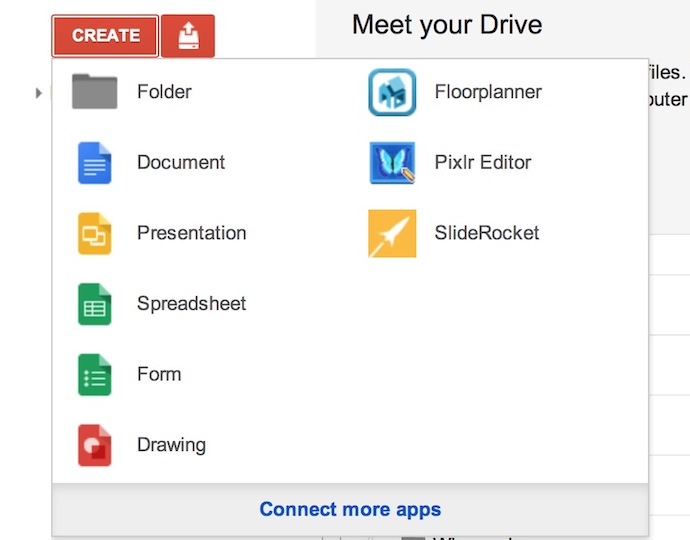
Create

Just create a free GMail account and get 10GB of storage (my school account gives me 25GB). Get Google Drive and have synced folders on your computers. Go into your account and click on the “Drive” link at the top, and you see all the files that are saved in that folder, from any computer you choose. You also get an Office Suite, not as powerful as Microsoft’s now-even-more-pricey version, but with all the features you are likely to use. Available on any computer you sign into GMail with—ultimately portable.

Wordproc

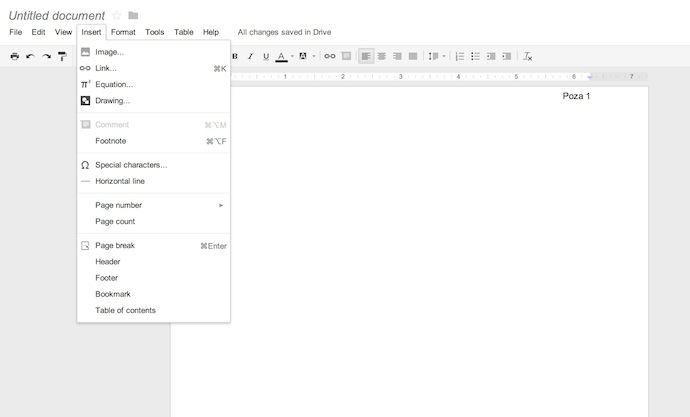
Go into the word processor, and use an interface not unlike Word’s. Use any of Google’s 600+ online fonts, or just the standards. Do text formatting, indents, margins, alignment, line spacing, the works. Keyboard shortcuts work much as they would on a regular app. Headers and footers with automatic page numbering. An equation editor. Comments. Insert images, create shapes, make tables. Open any document, save it to your Google account, or export it to your desktop as MS Word, PDF, Open Office, RTF, or plain text.

Printing will save the file to your computer as a PDF, preserving the fonts (though you can download and install any or all of them if you want).

Moreapps

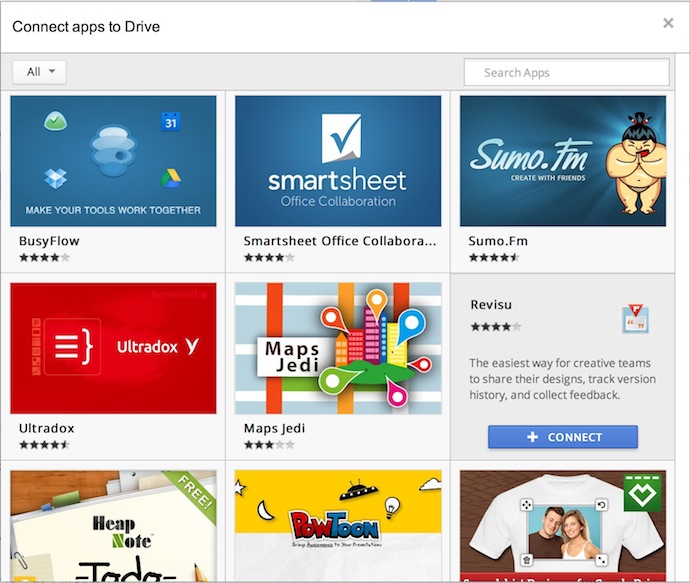
Same goes for spreadsheets instead of Excel, presentations instead of PowerPoint. There’s a drawing program and a form builder. And then you can add from a long list of extra apps, including code editors, QR code generators, Mail Merge, photo cataloging and editing apps, chart and diagram builders, as well as more alternatives for text editing and presentation building. More than 100 add-on apps.

Sliderocket

OK, so there’s no “Smart Art” or “Word Art.” How often do you really use those, anyway? If you need advanced features, then you’re out of luck—but probably 95% of all Word users don’t. And I have not checked all the add-on apps; it’s possible that some have the missing features you might need, like Mail Merge.

Don’t like where Microsoft is going? Don’t use it. Just get free GMail. Save a cool grand over a decade.

Categories: Computers and the Internet Tags:

I Want Everything I Have Coated with This Stuff

February 13th, 2013 2 comments

Pretty amazing…

Of course, it remains to be seen if this stuff is for real. Does it wear out after three days? Does it really perform like the demo, or is it rigged in some way?

Infomercial in three, two….

Categories: Gadgets & Toys Tags:

On That Note

February 6th, 2013 Comments off

Ann Coulter said yesterday, “Universal background check means universal registration, universal registration means universal confiscation, universal extermination. That is how it goes in history.”

Oh, and my dog crapped this morning.

Dog Lover

February 1st, 2013 2 comments

This is apparently true: in Jackson, TN, a man had a cute little bulldog—no name or age given—and handed him over to the local Rabies Control shelter to be euthanized. Not because he was violent; by all accounts, he’s a sweet little pup. Not because he chewed or tore up the house. Not because the owner was allergic.

No, it was because the owner was an ignorant ass.

The owner, as it is reported, found his dog “hunched over” another male dog, humping. Concluding the dog was gay, he sent him to the shelter to be killed.

Now, a suspicious person might see that and believe that the story could have been made up in order to garner sympathy to save the dog’s life. Which is what it did, as countless Facebook users and many others flooded the shelter with calls, with numerous people and organizations volunteering to rescue the dog.

But I don’t know, the story has just the right ring of stupid to it.

No that there would be anything wrong with a gay dog, but any idiot knows that dogs will hump anything—people, people’s legs, other dogs’ legs, toys, cats, barnyard animals, dead animals… even birds. Yes, birds. Puppies hump. Female dogs hump. Pretty much all dogs hump, and they hump pretty much anything and everything. It’s a dog thing.

So, assuming the story is true, we have a man somewhere in Jackson, TN, who is both homophobic and stupid. But I repeat myself.

And, to be quite serious and honest, things worked out best for the dog.

Categories: People Can Be Idiots Tags: