Skype and the Intercom Effect

January 6th, 2006 6 comments

For some time, my father and I have been experimenting with using some kind of voice chat, but for some reason, we were never able to get anything to work. And then a week ago, just after I got back from the U.S., we tried Skype, and after working out a few bugs, we got it to work. And it’s great, too–very good sound quality, easy to use.

After using it for just the one week, we’ve discovered something very interesting about it: we use it very differently than we would use our telephones. With a telephone call, we would wait as much as a week or two between calls, and there would have to be more than just a casual reason to call. But with voice chat, it feels different. It feels like an intercom, and that my family is right next door, and not halfway around the globe.

I realized that this morning, when I decided I’d call my dad and just chat about things I wouldn’t have made a phone call for. I’d seen Bill O’Reilly on Letterman, and just felt like commenting on it with him. Particularly on how Letterman, before O’Reilly came out, stirred his pencil in O’Reilly’s coffee mug, and then later reacted when O’Reilly drank from it. And, while we were at it, about Robertson’s yet-another-idiotic-remark event with Sharon’s stroke being God’s punishment for dividing Israel. Stuff we might discuss in the course of a regular telephone conversation, but not enough to trigger a telephone call in the first place.

It’s hard to define why there is a difference. Mechanically, it’s not much different than a telephone; it even uses the same ringing sound effects as a telephone. A call is placed, is answered, and at the end, we hang up. But still, somehow, it feels different. It might be financial–even though our phone plans have gotten international dialing rates down to under ten cents a minute (low enough that we don’t even think about the expense any more), there remains the fact that it does cost money, and the clock is ticking, even if we don’t think about it as consciously as we did before. Kind of like taking photos: with chemical film, I was always conscious of the cost for each photo, and restrained myself from taking more than one or two at a time. But now, with digital cameras and no cost per photo, I snap away incessantly.

Or maybe it’s something as simple as the increased sound quality, capturing more of the ambience of the other side, and giving the other speaker more of a ‘presence,’ as if they were much closer. There was a bit of the same effect, I believe, when international phone lines were improved to the point where sound quality became the same as with local phone calls.

It could be because I’ve set this up only with my family and no one else, so it feels more like a private connection. Or perhaps it’s something as simple as the fact that I was just over there, in the U.S. with my family, and am still in the mode where I feel I can start chatting about anything.

However, I get the feeling that this will be a bit more permanent than that, and maybe it’s due to a combination of all the above factors. I think we’ll be using the telephone a lot less, and this a lot more, despite the limitations. Those limitations include the fact that we can only make calls when both laptops are on and not closed. Also, because of terrible feedback problems, we are forced to use headphones which tether us to the computers, and we can’t move far. Even so, there is something compelling about this kind of communication, closing even further the distance between us.

I compare this to when I first came to live in Japan, when telephone calls cost a few bucks each minute and were of terrible quality, and voice communication was more for emergencies, a luxury we couldn’t much afford. As with so much else, things have changed.

Categories: Computers and the Internet Tags: by

Flash! MRAM?

January 5th, 2006 2 comments

Here’s a bit of Mac news, some more speculation on what will be released at MWSF in a few days. They’re saying that new Mac laptops may use flash memory associated with the CPU so that startup and general performance is increased.

Huh? Let’s go over that. First, you have to understand what “volatile” means in computerese. See, a computer’s CPU and RAM (like its ‘brain’ and ‘memory’) can only hold data while they are turned on. Switch off the power, and they go blank. That’s “volatile.” Imagine it’s like you lose all your memory whenever you go to sleep, and have to re-learn everything when you wake up. That’s why a computer takes so long to start up: it’s loading all the data from the relatively slow hard drive (which is non-volatile) back into the relatively fast RAM and the CPU–a lot of information taking a long path to its destination. The main point is that when you boot up, the computer has to ‘re-learn’ how to work.

Using flash memory speeds that up. Flash memory is both chip-based and non-volatile. Shut down the computer, and the flash chip still retains all the data. Turn the computer on, and the data (stored in a “cache,” located on or near the CPU) is instantly available. Your computer should be able to start faster and perform better.

This would simply be the first step in a line to even faster computers, however. Many researchers are working to perfect something called “MRAM,” a magnetic-based chip technology which would make CPUs and RAM (not just the caches) non-volatile. In other words, if you turned off your computer, it would never forget anything. Turn on the power, and the computer turns on instantly, like a light switch.

You would probably still need to re-boot the operating systems from time to time as they get unstable when used continuously over time. Still, it would be a great feature–like changing from a crank-start automobile to a push-button Prius.

But until MRAM becomes a common reality, flash caches will do quite nicely, I’m sure. It does make me wonder, however, at how many innovations will really come out of Apple at the MWSF, so many have been reported. Probably, as usual, fewer than half will be true. But the closer we come to the keynote, more accurate information will start leaking out.

Categories: Computers and the Internet, Mac News Tags: by

Remember What It’s About

January 4th, 2006 1 comment

As Bush tries to divert attention by using fear in a new offensive against Congressional Democrats, the media seems to be buying into it, giving Bush good press and riffing on his themes. CNN ran a recent TV-headline titled “Bush’s Staunch Defense,” and failed completely to point out a number of facts completely contradicting Bush’s claims.

But one item I think is worth noting is how this all got started in the first place. By now, most Americans have probably bought into Bush’s recasting this as the Democrats trying to kill the Patriot Act–which is far from the truth. The politically-named act is complex and has many provisions. Many are needed, but some are controversial, and Democrats hold that those controversial provisions threaten Americans’ civil liberties. One example of this is Section 215, which allows the government to look at the personal records of Americans, such as financial, medical, phone, internet, student or library records, without probable cause, in conflict with the Fourth Amendment to the Constitution. Already, some sections of the act have been ruled as too vague or outright unconstitutional by courts.

The current mess came up when Democrats and some Republicans refused to agree to make many of these controversial provisions permanent, instead insisting on sunset clauses that would allow renewal of the provisions upon future review.

Let’s make sure we understand that. The Democrats (plus some Republicans) were not trying to shut down the act. They were not even trying to shut down those provisions. They were only trying to make it so that the most controversial provisions would have to be renewed every few years. That’s all. That’s it.

So, why did the act almost expire? Because Republicans decided they would rather see the act expire than to agree to the sunset clauses on those few provisions. Because they saw they could make a political play–act like the Democrats were trying to kill the law, frighten people into thinking it would expire, and then blame the Democrats for everything.

Even as the Democrats were offering a temporary extension so debate could continue, Bush and the Republicans were screaming at everyone who would listen that the Democrats were trying to kill the act. When, in fact, the Democrats were ready to approve the full act for a number of years, and the Republicans were the ones refusing to accept these extensions.

Essentially, Bush and the GOP want everything or nothing: give us 100% of what we want, or we let the act die and blame the Democrats.

While I am sure they really want the provisions which threaten our civil liberties to become permanent, I am convinced that this is more about simple opportunism: the GOP is in bad shape for the 2006 elections, and Bush is in huge trouble with his domestic spying program, so they are fabricating a non-existent issue in hopes of eliciting fear among the American people. That’s their way of gaining popularity, after all: frightening people. As Aaron Sorkin once wrote for the title role in The American President,

He is interested in two things, and two things only: making you afraid of it, and telling you who’s to blame for it. That, ladies and gentlemen, is how you win elections.

Sorkin got the Republican playbook down to a tee, didn’t he? Because that’s exactly what Bush and the GOP are trying to do here: make you afraid, and tell you who’s to blame.

Thief

January 3rd, 2006 7 comments

Thief

Boy, does this bring back memories.

It was the first time I had been hired for a real supervisory role, aside from a rather half-hearted string of assistant-manager stints at movie theaters while in college. I worked for a language school in Tokyo, had worked there for nine or so months as a regular teacher. There were four local schools, and four supervisors, one for each school. Two had been forced out by union activity, and the other two were leaving anyway, so the school had to hire for the whole local chain. The four that had been there each had 40-hour-a-week schedules, 30 hours supervising and 10 hours teaching. Each was paid a rather handsome amount by language-school standards, I believe in the range of $50,000 a year, if memory serves.

When the word had been put out that they were seeking replacements from within the school, I was interested, of course. The pay was good, the hours no worse than I’d been working, with more desk hours, which at the time was attractive (it was the 50-minutes-teaching followed by 10-minutes-prepping cycle that could burn you out rather easily). So I applied. What I wasn’t ready for was the idea that the school was planning to screw me over royally.

My first missed clue was when they planned to hire three of us instead of four. I should have guessed that they were planning to take advantage of the clean sweep to try to make a huge savings. This was in the early-to-mid-90’s when the economy was dropping out and business was getting tougher. But instead I saw what the guy I was to replace was making and figured I’d be taking over the position, with the salary intact. Certainly, the school did nothing to disabuse me of the idea, said nothing about any change in status.

One of the reasons I got fooled was the liaison, the American head teacher for the whole company, call him John (not his real name). John, I realized later, would have been great on a used car lot–he had the same ethics but had a more wholesome, almost deacon-of-the-church image he presented. He engendered trust, was good at selling, had the palaver down and had a talent for stringing you along, making you believe that the check was in the mail, though he’d been telling you the same thing for months and it had never arrived. (I should have figured it out when I found out he was an Amway salesman on the side.) That, and I was still gullible at the time.

Another big clue we (I and the other two candidates) were going to get hosed came when the hiring process was about done. We were the final candidates, but the managers were keeping too much from us. They refused to tell us how much the positions would pay, for example. We knew we would be hired as “assistant” supervisors, but it was made clear that this was only temporary, and that after a probationary period there was the chance of formalizing the full position. It had also been made clear that while we were on probation, we would receive probationary pay. But they did not tell us what that probationary salary would be, nor what we would get once we passed probation–they left us to assume it would be the full amount. It turned out there were even more layers to it than that, in fact. But again, we were trusting, and fell for all the salesman pitches they threw at us, like them asking strongly and repeatedly if we were going for these jobs “just for the money.” Truthfully, I could reply that I wasn’t–the experience would be valuable, I knew–but there was no denying that the money would be nice. We knew what the previous guys had been paid, and the managers knew we expected to get the same.

When they asked us to make our final decisions, we asked how much we’d be paid. They said it hadn’t been decided yet. Now, when have you ever heard of anyone not being told how much they’d be compensated before they were asked to commit to a job? But they had the power and we were gullible, and they had the money-doesn’t-matter responses in their pocket, and they knew we wanted the jobs and expected enough. So we said “yes.” And immediately after that, they told us what the pay would be, as if we wouldn’t see that they lied a few minutes before when they said the pay hadn’t been decided yet.

And the pay was dismal. Almost $15,000 a year less than the previous supervisors. More than that, we were expected to do more with a lot less time, a fact also revealed only after we’d committed. Where the previous four supervisors had 30 hours desk work and 10 hours teaching, we three were given 15 hours desk work and 25 hours teaching, each. For the supervisory work, a drop from 120 man-hours a week to just 45, about 1/3 as much time to do the same work. For about 30% less pay than the people before us.

If we’d been smart, we would have told them to shove it right then and walked away. But that would have entailed quitting altogether, a very hard thing to do, and there was still the prospect of full pay after the probation.

Here’s another point. If you are told that you are being hired on probation, how long would you assume probation would be? Again, the fact that we still trusted them to be fair worked against us. We assumed the standard three months. I had never, ever heard of any probation being other than that period of timed without said time period being specified. We all assumed three months. And so, after three months, when we asked when the review would come, John replied, as if sincere, that the probation was of course one year, why would we ever assume three months?

Well, we were pissed again, and we groused amongst each other again, but the alternative would be to quit and we still weren’t ready for it. By the end of one year, however, that changed.

This is where the Dilbert cartoon becomes relevant. You see, I performed very well not just in the first year, but in the first month. The previous four supervisors had worked 120 man-hours a week, and most of their work went into scheduling. The school’s schedule was flexible, which meant people were changing hours frequently, and finding substitutes was a constant task. The previous supervisors had binders with clear-plastic slip covers for each page, with each teacher’s schedule on a single piece of paper, the book full of all the teachers’ schedules. If a sub was required, the supervisor would have to go through the binder, sheet by sheet. First they would leaf through to find teachers who had that day off, and would call them, one by one. If they could not find a sub that way, they’d have to start leafing through from the beginning, this time looking for someone who could tack two or three hours onto their current schedule, thus filling part of the sub time. They’d call each teacher on the list for each segment, and if they found someone willing, they’d tell that teacher to hold on and then start yet again with the binder list, this time looking for teachers to fill in the remaining hours. If they found no one to complement the hours filled by the first willing substitute, they’d have to start all over again. And since teachers were often unreachable by phone (this was before cell phones became ubiquitous), the process was extended even further.

When I started working (and was given two of the four schools to manage), I found it was impossible to do the same job with the reduced hours. I essentially had the job two people had done in 60 hours weekly, and had 15 hours to do it in. Their system was impossible with the time they gave me. After two or three weeks of working dozens of unpaid overtime hours and still being swamped, I invented a new system out of sheer necessity. Staying late at the office several nights, I redesigned the sub-finding system with a computer using a spreadsheet program.

Instead of having a binder with separate pieces of paper for each teacher’s schedule, I made daily schedule sheets with everyone’s schedule for each day of the week on one page; each row would contain one teacher’s schedule for that day. Teachers were lined up, sorted by starting hours. All the teachers with the day off were at the top; all the working teachers listed below, with teachers starting early nearer the top, down to the teachers working late at the bottom. Each teacher’s phone number and availability info was right there. When one teacher called in sick, took a personal day, took a vacation, or otherwise got time off, all I had to do was pull out the sheet for the day in question and immediately see (a) who was fully free and (b) how I could divide the shift between the remaining teachers. That last point saved the most time: in advance, I could build scenarios and groups of matched teachers who could fill slots, thereby limiting the number of people I had to call, allowing me to focus on the most likely combinations first. Usually, just by asking a few people strategically instead of almost everybody in alphabetical order, I could fill the slot. A task that would have taken hours became a quick activity.

I then made up sheets such as these for the other supervisors as well, and kept them up-to-date. As a result, our jobs suddenly became doable; had I not come up with that solution, the school would have been forced to give us more desk time or hired more supervisors. Right there I saved the school tens of thousands of dollars a year.

That was not the only thing I accomplished, either. I settled the school down from its union jitters. The union had dissipated when the sole holdout had left for greener pastures, but there was still a great deal of friction between management and teachers. I helped allay a lot of that by making further refinements to the supervisory position, which allowed us to throw out a lot of rules the teachers hated. I made it so that the teachers would not have to request time off more than a month in advance. I refined the paperwork so the school saved more money and the teachers did not have to fill out so many forms. I had a lot of east-west liaison knowledge under my belt, and smoothed a lot of the Japanese-management-and-western-teacher friction that had contributed to the prior union mess. And so on.

So when the one-year probation period ended, I knew I was sitting pretty. Every time John had come by, he had nothing but praise; when I asked if he had any comments on how I could improve, he always remarked on what a great job I was doing. I knew I had not made any screw-ups worth mentioning, and I had made a lot of major accomplishments. The promotion and raise in pay would surely be mine.

What an idiot I was.

When the time for the meeting came, John again mentioned what a good job I had been doing. Except… the Japanese office manager, my immediate supervisor, had noted several months before that I had made a mistake. Frankly, I do not recall the exact details, but the incident was one where this manager and I had miscommunicated. We never had found the root cause, and it was likely a language error. But it had been between just the two of us, had cost nothing in productivity, and had been all but forgotten a few days later. But John brought it up as an “example” of my poor management skills, proving that I was not ready for a full supervisory position. When I asked for even one other “example,” John refused to do so. When I pointed out that I had asked him if there was anything I was doing that needed improvement and he always said I was doing great, he dodged the question and said it was upper management’s decision. When I pointed out how much I had achieved, John stressed the importance of trust with upper management and so forth. But in recognition of all I had done, John said he would personally push for me to get a $100 a month raise.

In short, I was Alice in the Dilbert cartoon. I was getting royally screwed. Served me right, for trusting them after they exhibited such weasel-like dodges from the start, but it hurt no less for that realization. I let them screw me, and should have known better. From that point on, I knew that keeping a job was far less important than maintaining my dignity and self-respect. I should have been ready to fold and leave the table after the first signs that they were being dishonest with me. But for most people, quitting is like failing, even if the fault is not your own. And the uncertainty of finding a new job is frightening. Both of these combined are enough to make you withstand far more than you really should. I learned that lesson. Fortunately, the next serious job I got is the one I have right now, which is the best I’ve ever had. The conditions are great and my relationship with my employers is excellent. But I’ll never again place myself in the situation I suffered before.

Knowing all this, you can likely now understand my reaction to the Dilbert cartoon. To be of immense value to a company which then uses a stupid, useless, piddling charge to deny one the rewards the company owes. But maybe its something you can’t truly feel unless you’ve been through it.

Anyone got stories?

Categories: Main Tags: by

Marijuana

January 2nd, 2006 3 comments

How sick is the federal government’s campaign against marijuana, especially medicinal marijuana? In 1996, California voters passed Prop 215 to legalize marijuana used for medicinal purposes. In what has been a bipartisan effort, both the Clinton and Bush 43 administrations have fought to overturn state laws to allow for the drug to be used. Most of this activity seems aimed at California, where last month federal agents raided more than a dozen establishments dispensing the drug for medicinal purposes. They are using federal law to trump local laws (under the argument that even intrastate medicinal marijuana growing may possibly impact interstate drug trafficking) which allow the drug to be prescribed and used. Nevertheless, many states have a variety of medicinal marijuana laws that are still in effect.

One question: why is marijuana being targeted? Marijuana is less addictive than tobacco, less inebriating than alcohol. It is less of a “gateway” drug than either of those two, if it is even one at all. That it is illegal is an accident of history, and is not due to the deleterious effects of the drug. So why is the federal government wasting so much time and energy to combat it when there is so much else to do?

The government’s attack against medicinal marijuana is incomprehensible. Doctors prescribe drugs far more dangerous and far more addictive on a regular basis, and yet somehow marijuana is the danger? You may pull out studies which claim that marijuana does no better than other drugs (which usually turn out to be funded by drug companies with in interest in pushing their own meds), but there is a great deal of evidence that shows it is useful, especially in the stimulation of appetite and the control of nausea, and helps in most cases where other drugs fail.

Where government policy is most outrageous is in the use of marijuana in terminal patients. I mean, come on. Who the hell is worried about addiction in these cases? People dying of cancer in hospices, prescribed with marijuana by doctors, buying it legally from a pharmacy or other legal distributor–and the feds feel they have to bust that kind of thing up? How sick is that?

So what am I missing here? Why is the federal government so adamantly pursuing a relatively harmless and potentially beneficial drug? Is it true that pharmaceutical companies are behind the push so as to do away with a cheap competitor, or is that a conspiracy theory? Or is the cause simply that members of congress and administration officials are scared of looking weak on law enforcement if they don’t hunt down and destroy the “killer weed,” pushed forward by the ignorance of a general public that believes it is a dangerous narcotic? Does the government seriously think it’s a threat? What’s your take, what have you heard?

Categories: Political Ranting Tags: by

Spam Spam Spam Spam

January 1st, 2006 1 comment

The title here is a bit of a defiant chant more than a Monty Python bit. As I may have mentioned before, spammers seem to get a perverted kick out of making blog posts which talk about spam a specific target of their spam-spew. They deliberately target any entries on spam, apparently using the word “spam” as a target text string. Well, spam them. Spam them all to hell. I can rename categories and individual pages faster than their spambots can catch on, and so their autospam programs wind up sending the spammy spam to non-existent addresses, which has resulted in hundreds of 404-page hits on my spam-free site in less than half a day. Spam!

They are currently in their now-traditional beginning-of-the-month spamfest, trying to rack up as many hits as they can so they can get to the top of the top-referrer lists. Of course, they’re idiots because nobody has top-referrer lists any more–not that such a fact bothers them much. Strange that they have ramped up their referral spam, and their assaults via blog comment spam and trackback spam have waned, considering that more bloggers allow the latter types of spam to go unchecked, and the former type probably gets them little or nothing. It’s almost as if they’ve stopped caring about the efficiency of their spam, and are now just using it, as much as for anything else, to vandalize sites which call them on their bullshit.

One thing I refuse to be is intimidated by these clowns. I’ll continue to chronicle anything and everything I can on the subject, and continue to block their garbage with 100% efficiency. That’s not a New Year’s resolution, it’s simply a way of life for a serious blogger nowadays. So spam away, Spamholes.

And for everyone else, a Happy New Year!

Categories: BlogTech Tags: by

The City and the Stars

December 31st, 2005 1 comment

Time to recommend a book again. This time, one by Arthur C. Clarke, one of my three favorites when I was younger (Heinlein and Asimov were the other two, in case you were wondering). Arthur C. Clarke is the verbose one. His writing is poetic, polished and intelligent; reading it is like driving a really nice sports car. Furthermore, he has a talent for creating situations and environments which challenge you to embrace and encompass them, ideas that inspire awe and wonder. That said, his characters lack a certain variety, and there is a somewhat cold repetitiveness of style.

Michael Chricton exemplifies the extreme end of this flaw. While interesting, all his stories tend to be the same: a group of disparate and highly intelligent people are brought together in an environment where high technology has wrought terrible problems; they explore, theorize, discover, elucidate, and eventually about half of them die violently. The end.

Clarke is not so strikingly repetitive, but he does not range far from his base; he revisits more generalized themes and impressions. His novels tend to focus on grand, poetic mysteries, with intelligences far greater than our own, mysteries of tremendous age, artifacts of unimaginable size and scope. His protagonists tend to all be cooly rational, and even his characters with flaws tend to be calm and reasonable. His novels are about discovery, awe and grandeur.

1205-TcatsThe City and the Stars definitely fits this profile, but it does so in a fascinating way. Set in the extreme future, the billion-year-old city of Diaspar, thought to be the last remnant of mankind, is frozen in a stagnant but wondrous state. With technology that can do almost anything, the last humans live in a utopian state. Death has been beaten, and Clarke outlines a wonderful system by which these immortals can escape boredom. After a thousand years of life, a person selects which memories they wish to carry forward, and then is converted into stored energy patterns for a hundred thousand years. They awaken as a nearly-full-grown adult, but without access to their memories, and spend decades learning everything anew as a blank personality. After a certain time, their youth ends and their full memories return, and they pick up life where they left off, perhaps with a new perspective from having experienced life afresh. People are resurrected randomly enough so that they rarely encounter the same people in consecutive lives. Everything is safe and luxurious; people can indulge in any pastime or career they wish, with an endless supply of art, knowledge, and philosophy. Any item can be summoned at a thought, any adventure created in perfect simulation. The people have fallen into such an idyllic slumber that they now fear even the idea of the outside, a fear that even goes beyond the legendary past when faceless invaders beat a triumphant mankind back to its home planet, forbidding it to strike out into space again.

Of course, the story must be about the one citizen who rebels. Alvin is a curiosity: he is the first person to be born in Diaspar in ten million years, with no memories or past lives. His existence is part of a mysterious and ancient plan laid out by those who created the City, emphasized by Alvin’s prime characteristic: he wants out. And that’s where the story begins.

As is usual with Clarke’s novels, you are offered a wealth of speculation and scenarios on grand ideas that allow you to explore issues you might never have considered before. Would you want to be immortal, considering the pitfalls? Would you pay the price? Would you be satisfied with the necessities forced by immeasurably long life? And of course, Clarke serves up grand mysteries, a billion years’ worth of history for your imagination to fill in, strange planets only briefly described that you might wonder at what else exists there. He creates environments that you’d love to explore, and leave it up to you and your imagination to do so or not.

The City and the Stars is at the very least an engaging read, and along with Childhood’s End, one of Clarke’s best novels. Strangely, however, the novel is no longer printed by itself, but bundled with another of Clarke’s books, The Sands of Mars. Why, I don’t know. But it’s worth it to read this story, at least.

Categories: Media & Reviews Tags: by

Flying with a Broken Foot

December 30th, 2005 5 comments

It was two weeks ago that I came back home to California for a vacation with the family, and it wasn’t all that easy. I had broken my foot just ten days earlier, and was still in the process of getting used to the crutches that I would be using for the following month or two. I also made the mistake of trying to take the train from home to the airport.

At first, it seemed simple: taxi to the train station, train to Shinjuku, transfer to the Narita Express (NEX), get to the airport, and wheelchairs to the gate. The taxi and first leg of the train trip went without a hitch, and I was confident that all would go well. But not so fast, there bub. At Shinjuku, I had to get from the Keio Line to the JR NEX. Not so easy. First, a station worker sent me off on a wild goose chase that took me an easy 300 meters off course, telling me that an elevator was where it wasn’t, routing me way farther off my path than needed. 150 meters away from my destination, 150 meters back. Then another 100 meters or so to the ticket counter at Shinjuku. Those distances may be less than I count, but as I was on crutches all the way and was porting a heavy backpack, you will hopefully excuse the possible misjudgment of distance. Suffice it to say it was a long way on crutches, and by the time I got to the ticket office, I was sweating bullets and my good leg was killing me.

And then there were 20 people in line. All of whom, despite carefully not seeing the disabled guy in obvious serious discomfort, failed to offer me the chance to get ahead in line. There we no chairs, no place to rest. So I had to crutch-wait in line while post-exertion sweat doused me and I tried vainly to balance on crutches alone to give my good foot a break. Then there was the inevitable foul-up in the ticket (the clerk for some reason did not sell me the basic train fare, only charging me for the express surcharge. I found this out only after I had hobbled into the station, and tried to enter a coffee shop for a quick seating respite–bad idea, the place was a smoker’s refuge, choked with cigarette smoke.

From there, it got better–I asked for them to reserve a wheelchair for me at Narita. What I got, after a few minute’s wait, was two guys who came with a wheelchair right there, escorting me to the tracks. Good thing, too, because the car I was taking was waaay at the other end, and we got there only a few minutes before the NEX got there. After a nice train ride in, three guys were there to meet me at the airport terminal station, right outside the door, to wheel me to the check-in, and then an airline wheelchair to get me to the gate.

Then my luck gave out again: the “bulkhead seat” I had so ardently struggled to get from the airline turned out to be a bad move. Instead of being a spacious seat (one the airline claimed was reserved for injured people), it actually was more cramped than a regular seat. The bulkhead in front of the seat was just as close as a normal seat back in plain economy would be, but instead of having leg room under the seat ahead, the bulkhead just went straight to the floor, leaving perhaps the least foot space of any seat on the plane. And they gave me this seat as a confessed favor, knowing I had a broken foot.

I had to plead with the flight attendant for a regular seat–and got one, thirty-three rows back, farthest away from an exit or lavatory. Swell. Actually, that would be “swelled,” which my broken foot most certainly was, after I got through the flight. I had to either tuck my broken foot under the seat in front of me, where it could never extend fully, or on the floor in the narrow aisle, where it was in constant danger of being tromped on. Not pleasant.


I write this as I am flying back, and this time the trip is going much better. First, I was able to call the airline and get a seat in “Economy Plus,” which is basically Economy with three or four extra inches (a “special holiday gift,” the airline guy called it, though I’m sure O’Reilly would have been outraged by the agent’s attack on Christmas). Or, more accurately, “Economy Plus” is what regular Economy class used to be before they jammed the seats together; the “plus” means you get the old kind of seats. But believe me, that makes all the difference. Strangely, the bulkhead seats are in that section, despite the fact that they were even more cramped than Economy Normal.

A small aside–I got the wheelchair treatment at SFO to the gate, but the guy was really weird. He made very bizarre sounds unexpectedly. He’d be wheeling me along to my gate, and then suddenly he’d start making a sound like a sheep baa-ing. Or he’d suddenly blurt out the name of a celebrity for no reason and then shut up. Very surreal.

Anyway, after being wheelchaired in and seated first for today’s flight, I could tell that under-the-seat stretching would suffice, at least nominally. I still expected a swollen foot, but I’d be a bit more comfortable on the 10- to 11-hour flight.

But as the boarding continued, it became clear that this would not be a full flight, as it almost always is. In fact, seated on the right aisle seat in the center row, I had two seats free to my left, and a whole window-side row of three seats open to my right. That remained after the doors closed, and so I snagged the three window-side seats. That hasn’t happened for a long time.

So the flight has been going smoothly. Though you should know that airline seats are not designed for laying down across them–even with the seat arms up, the seat edges protrude up a bit, making for a bumpy bed. But I won’t complain too much about that. At least I can elevate my foot decently, even sitting up in one seat with my leg up on the third seat’s arm rest. Hopefully, not so much swelling this time.

Also, for the ride home–if I can catch the last one–I’ll be taking the Limousine Bus. Although the last bus headed for my neighborhood leaves about an hour after the scheduled landing time, I found on my trip in that being in a wheelchair means that you not only get wheeled in by staff, but they also wheel you past the security, immigration, and customs checkpoints reserved for flight crews. That’s fast. And on the way in, my luggage was tagged as priority, and so my suitcase was brought out in the first wave. Hopefully, I’ll get that again, and will have time to takkyubin (express-deliver) my luggage home overnight for $20 a pop, and catch the last Limousine Bus out to my area. From there, a quick taxi ride should bring me to my front door–no train transfers.

I’ll tag on an epilogue when I get home.


And here I am. The flight arrived on time, and I got wheeled around everywhere again. As before, the Japanese wheelchair service was better than on the U.S. side; where SFO wheeling was just one person, Narita supplied two people, who took me not only through immigration, baggage claim, and customs, but to the Limousine Bus window, the baggage express delivery service, and even up to the 4th floor to get me a Starbucks Frappuccino–they insisted. Then they got me to my bus stop, and I was off.

Certainly, for a broken foot, the Limousine Bus/taxi combo made a lot of sense; after such a long trip, doing a station transfer at Shinjuku on crutches would have killed me. As it was, I only had to hobble about 30 or 40 meters from where the bus let me off at Seiseki Sakuragaoka to the taxi terminal, then to my doorstep. In terms of cost, it kind of came out even, with the train narrowly beating out the bus (about ¥4500 for the train/train/taxi, and ¥4800 for the bus/taxi), though the bus had better seating than the Narita Express regular. On time, the bus actually beat the train; even with a fast non-injury-delayed train station transfer, the train option would have taken over two hours, while the bus/taxi combo got me home is almost exactly two hours.

So now to get back into the local time zone…

Categories: Travel Tags: by

The Dharma Project

December 29th, 2005 1 comment

When I last blogged on the Mac going Intel, someone made a comment that made me stop and think: essentially, that if one could run Windows apps on a Mac, that there would be no reason to make a native Mac port. Just write for Windows, and you’d get everybody; the Mac people could just switch to Windows to run your app.

There wasn’t much I could say to that, really. I could argue that the Mac OS is more stylish, intuitive, etc., and while that might be a draw for users to go to the Mac, to a software company looking at the bottom line, these would probably not be nearly important enough to spend time and money for a Mac build. A better argument would be that the Mac OS is usually 2-3 years ahead of Windows in adding features, so developers that want to be more at the cutting edge would have an incentive to port to the Mac–not to mention security and other advantages. Whatever way, it seems inevitable that the Mac will allow a simultaneous Windows boot–but I couldn’t imagine that Steve Jobs would overlook a hole as big as the one my commenter mentioned (one that is now being discussed at length in many Mac forums).

This is where Dharma comes in, formerly called “Yellow Box.” It’s a development environment which allows programmers to develop Windows and Mac OS X versions of software with much greater ease. It’s just a rumor at present, but it would make sense. It would be an equally if not more appealing alternative to simply making everything Windows-only. It would be more universal (not everyone with a Mac would also run Windows), and would be less expensive than a full second version of the software for another OS. Other enticements would be a better programming environment; I will not pretend to understand, but I’m reading many programmers saying that they’d love to program using Apple’s Cocoa environment. If true, and if using Yellow Box for that purpose would allow programmers to produce a Mac port with much greater ease, you’d probably see far more Mac-compatible software than you do now, and more reason for users to make the switch.

As evidence that it’s more than just a rumor, this image has started showing up–one of Apple’s Safari browser running on Windows. Unless it’s a well-made hoax, this matches up with reports that Yellow Box could allow for good multi-OS ports being produced with relative ease.

It is still far from the time we can know if such a strategy would be effective, or if it is even true. Maybe Jobs has something else in mind entirely–but one thing for sure, he’s got to be aware of this eventual possibility, and must have a strategy for dealing with it.

Categories: Mac News Tags: by

Impeachment Poll

December 28th, 2005 9 comments

The Rasmussen organization released a poll stating that 32% of the American people support president Bush being impeached. This is significant for a few reasons. First, Rasmussen polls usually provide Bush with some of his highest approval numbers (they currently have Bush at 50%, despite other polls averaging below 45%). And second–and most interestingly–the poll was taken on December 9 and 10, before the NSA spying scandal became news.

Other polls have found even similar results. A Zogby poll from early November found 51% of likely voters supported Congress considering impeachment if Bush “did not tell the truth about his reasons for going to war with Iraq.” That is up from 42% supporting impeachment from a Zogby poll in June, and equal to an Ipsos poll in October which found that 50% approved of impeachment.

All of this is before Bush admitted to an act which, despite massive arguments to the contrary by the administration, was illegal. So how is Bush doing in the polls now? We don’t know–because no trustworthy polls have been taken since the scandal broke. Rasmussen came out with Bush’s improbable 50% rating just a day or two after the NSA story broke, before it became a big deal, even if you discount Rasmussen’s bias. And there have been no major polls since that time. So we’ll have to see if Bush either took a hit, stood still, or somehow garnered support in the wake of the initial story breaking. It would be hard to imagine, however, that somehow fewer people would support impeachment now than they did a few weeks ago.

However, we may not get a full picture from all sources. The Washington Post, once known as a “liberal” newspaper but now with a notable conservative bent, is currently refusing to poll on the impeachment issue. The stated reason by polling director Richard Morin is that a question about impeaching Bush “is biased and would produce a misleading result.” This, however, is highly inconsistent with a poll the Post took in 1998, which asked about the Lewinsky scandal: “If this affair did happen and if Clinton did not resign, is this something for which Clinton should be impeached, or not?” Not only that, they also asked:

“There are also allegations that Clinton himself lied by testifying under oath that he did not have an affair with the woman. If Clinton lied in this way, would you want him to remain in office as president, or would you want him to resign the presidency?”

“If Clinton lied by testifying under oath that he did not have an affair with the woman, and he did not resign, is this something for which Clinton should be impeached, or not?”

Since Morin’s obviously inconsistent reply about such a poll being “biased” and “misleading,” he has changed his tune, and now says he won’t poll on the question “because it is not a serious option or a topic of considered discussion.” He said, on a December 20th online chat, that he would not poll on it until a “member of congressional Democratic leadership or any of the serious Democratic presidential candidates in ’08 are calling for Bush’s impeachment.” Of course, the day before he wrote that, Senator Boxer, a high-ranking Democrat, spoke forcefully on the matter. Not to mention that the Post poll on Clinton’s impeachment came out only two days after the story broke. So it’s pretty clear that Morin simply doesn’t want to poll on the question.

It is clear that a bias exists here. It’s OK to poll on Clinton’s impeachment, but to poll on a Bush impeachment when the matter is so relevant is verboten. Damn that liberal media, so soft on Clinton and never giving Bush a break!

Categories: Political Ranting Tags: by

All of the People Some of the Time

December 27th, 2005 1 comment

See if you can decode this statement by John McCain to an MTV audience:

“Every young American should be exposed to every point of view. I’m not saying [intelligent design] should be taught in science classes. But I’m saying young people should be exposed to it. I also believe that God had a hand in creation. I certainly don’t believe the Earth was created in seven days. But when I stand on the rim of the Grand Canyon and look at that grandeur, I detect the hand of God there in the time before time. I see no reason why students should not be exposed to all theories, recognizing that Darwin’s theory’s certainly one that is generally accepted in most of the scientific community. I think it’s not inappropriate to say there are also people who believe this. Let the student decide.”

This is what I hear: “Intelligent design blah blah blah I’m not getting behind this BS but I want to at least minimally please the right wing core blah blah blah students rock.”

I mean, really–“let the students decide”? Decide what? Not whether to have ID in science class according to his earlier statement, but if not that, then what? Or is this code for “ID is not science and doesn’t belong in the science class but let’s get it in anyway wink wink”? In a true academic environment, the students don’t decide the curriculum–but then, McCain’s statement was probably never intended to mean that students should have any say, but rather that parents, and through them, right-wing school boards and churches should. Steve Benen commented on this aptly:

In related news, McCain said he’d like to see students decide whether to believe the earth is flat, the South won the Civil War, the value of pi is exactly 3, and one can contract the AIDS virus through tears and sweat.

Maybe all the parents who want their children to learn only what is popular and/or approved by the church or the right wing should get together and occupy a deep-red state so only their kids get this claptrap. And then they can collectively wonder at why their kids score lowest on tests, and can’t think straight or get jobs when they grow up.

On the other hand, probably McCain’s “let the students decide” is more like a general utterance designed just to please students and the MTV crowd. Just as the “ID is not science” to please those who want science to be secular, and “the hand of God” to please the fundies. You can’t please everyone but it really sounds like McCain is trying.

That makes you believe he’ll probably try a run for the presidency in 2008. And he’d be the smart choice for the GOP–but he also clearly is not willing to give the fundies what they demand, which is full obeisance and compliance. They’re willing to forgive a veneer of independence, but not nearly as much actual free agency as McCain would probably need. Which means they may get Frist and trash McCain, in the style of when they backed Bush. Which would be great; while McCain is probably the least objectionable Republican to Democrats, he’s also too much of a party man and a GOP apologist to stem the tremendous damage that the GOP would continue to inflict on the country. He’d be a hundred times better than Bush, but he’d still be bad as he’d fully enable the GOP. And if someone like Frist were the candidate, the Dems would stand a much better chance of winning.

Interlude

December 27th, 2005 3 comments

As we rest this week in the holiday season, we have a chance to ask what will inevitably happen in the NSA spying case. Colin Powell went on the air and was as damning as he’ll ever be, considering the apologist he is for the administration. He said that it wasn’t necessary to avoid the courts, but Bush didn’t do anything wrong. That’s about as much as you’ll get out of him, but that is significant because of the tint. The shade of something off, which a few Republicans are already allowing.

One thing is pretty clear: Bush did violate the law. Can’t really get around that. 4th Amendment and all that.

The question is, will Bush get nailed for it? Such a thing is always a political question, and as such, is unclear. During the holiday respite, less is being reported and done concerning all this. That will change after the New Year’s break ends. But how will it progress? Where will things fall?

So far, Bush has been able to avoid general outrage by drowning the public in excuses, hoping everyone will find one or two that they’ll accept. Republicans control the Senate, which means no impeachment; the Republicans control the Congress, which means no serious investigations. Naturally, the first thing that Bush will try is to ride this one out, and hope the media will avoid the temptation of a hot but damaging story, and that the public will not care enough. The second will be to fight it out, allowing the Congress to drag their heels and eventually begin “independent” investigations which won’t get very far. Maybe accept censure, and act like that’s enough. Or perhaps call for an investigation themselves, like in the Valerie Plame case, hoping that like Plame, it will drag out for so long that by the time it ends, it’ll be 2008 already. That may be the best ultimate strategy: look like you’re doing something, then string it out beyond the 2006 elections so the impact will be minimal. They should be able to obfuscate enough by denying access to most information on the grounds of national security.

That’s the Bush-gets-away-with-it scenario, best as I can figure it. The other scenario, where Bush gets clobbered, involves events perhaps less likely, but nevertheless possible. Especially concerning details about the spying. If it included calls between Americans and other Americans, or especially if there was any political use of the eavesdropping, like monitoring communications by politicians, that could be enough to tip the scales and make even conservative Americans face the obvious. The media has pretty much been allowing the fiction of some semblance of legality to pervade, but if legal experts start pointing to statutes and precedents and say that Bush broke the law, that could create big problems for Bush and the GOP. If the Democrats are smart enough and crafty enough to keep the investigation in the limelight, this could become a major issue for the 2006 elections. If it’s seen as bad by enough people, then Congressional Republicans–already in trouble with unpopularity and scandals even aside from this one–could find themselves looking really bad if they refuse to investigate, or otherwise cover for the president. That could force enough Republicans to agree to Democratic demands for openness and strong measures. And if the Democrats win back the Senate next year, that could open the doors for impeachment, especially if the investigation has progressed far enough to reveal some ugly stuff.

So, we have the range of Bush getting away scot-free, or Bush being impeached–and all possibilities in between. Depending on how the media, the experts, and the people react; how the right wing will balance this in an election year; and how much more information will come out, and how damaging it will be.

Categories: GOP & The Election, Political Ranting Tags: by

Bluetooth Mouse – The Logitech V270

December 26th, 2005 2 comments

Lbtm1

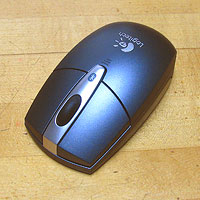
Why isn’t this technology used more? Beats me–I think Bluetooth is great. I waited for maybe 6 months for MacAlly to release their perpetually-coming-soon BTMouse (which some online stores perpetually advertised as “shipping in 3-10 days”), and then gave up rather unhappily when they finally fessed up that it was not coming soon at all. But Logitech came out with their version, the V270, an optical Bluetooth mouse. There are other mice out there, but most of them are mini-mice. Microsoft has a full-sized Bluetooth mouse, but (1) it’s a bit too big and clunky, and (2) it’s made by Microsoft. Apple has it’s new Mighty Mouse, but they went wrong with the scroll wheel/button, and tried to stay too true to the one-button-mouse form.

Lbtm2BThe V270 has it about right: the right size (slightly smaller than a regular mouse, but still palm-sized), a nice plain form, the obligatory (though not universal, apparently) on-off switch, and simplicity of use. For Apple, that is. It comes with an install disk for Windows, but on a Mac you just “discover” it and it works. It also comes with a very nice little zipper pouch, made of good material, simple and not overdone.

After using for a bit, it seems perfectly fine as a mouse. It tracks well, doesn’t jump or go berserk. The only problem is with distance. Even if the thing does work at 30 feet, one must have a clear line-fo-sight or it won’t work. With the computer on the sofa and the mouse higher on the kitchen counter, I couldn’t control it, because the bulk of the counter was in the way. And unless you’re in a really big room, you’re not going to find a flat surface with a direct line of sight with the computer thirty feet away–not that you could see the computer screen clearly from that distance, anyway. What I will do is click the mouse button, usually to advance Powerpoint slides, and that works fine as far as I get the mouse indoors.

The only other drawback I can think of is that it’s a 3-button mouse, the third button being the scroll wheel. Especially for a cordless mouse which would be of more use as a button-clicker rather than a desk-scroller, you’d thing at least a 4th button would be easy to add and much more functional.

On the brighter side, this is a true Bluetooth mouse, meaning that you don’t need a USB dongle sticking out of your laptop all the time, an easily-lost bit of really unnecessary extra hardware.

Categories: Computers and the Internet Tags: by

Scary Christmas!

December 25th, 2005 4 comments

Bensanta
Okay, this guy might be the new Pope, but there’s no denying it: he looks evil. In fact, he looks like a cross between Dick Cheney and Darth Sidious, dressed as Santa.

I mean, can you imagine being a six-year old kid and seeing that mug coming at you? It’d be enough to give any child nightmares.

“Come to the dark side, and we will rule the world together! Heh-heh-heh haaa!”

Seriously. How could they let this guy out? Was there no one to take a look at him before he went before the cameras, and say, “you know, I don’t think so.”

Photo by Canadian Press.

Categories: The Lighter Side Tags: by

And It’s Even Bigger

December 24th, 2005 1 comment

According to the New York Times, Bush’s illegal spying encompassed a far greater scope that Bush has admitted to so far:

The volume of information harvested from telecommunication data and voice networks, without court-approved warrants, is much larger than the White House has acknowledged, the officials said. It was collected by tapping directly into some of the American telecommunication system’s main arteries, they said. …

Since the disclosure last week of the N.S.A.’s domestic surveillance program, President Bush and his senior aides have stressed that his executive order allowing eavesdropping without warrants was limited to the monitoring of international phone and e-mail communications involving people with known links to Al Qaeda.

What has not been publicly acknowledged is that N.S.A. technicians, besides actually eavesdropping on specific conversations, have combed through large volumes of phone and Internet traffic in search of patterns that might point to terrorism suspects. Some officials describe the program as a large data-mining operation.

A great concern here is the fact that the eavesdropping now potentially includes almost all communications passing through the U.S.; that most of it is tracked by computers is hardly a consolation. Two disturbing facts remain: first, the eavesdropping was done illegally when a legal course lay available; and second, the potential for abuse is now exponentially greater than it was when only a few thousand individual acts of eavesdropping we were considering.

Phil Karn, a computer engineer and technology expert at a major West Coast telecommunications company, said access to such switches would be significant. “If the government is gaining access to the switches like this, what you’re really talking about is the capability of an enormous vacuum operation to sweep up data,” he said.

Essentially, they’ve set up the telephone and Internet networks to be their own giant Google search engine. This is not limited to just al Qaeda operatives, this is peering into your email, listening in to your phone calls.

Categories: Political Ranting Tags: by

The Scattergun Defense

December 24th, 2005 Comments off

Can you list the defenses the Bush administration has made for his Spying-on-the-People crime? There are so many, and every single one is a tissue-thin lie. And yet the media continues to regurgitate them as if they haven’t been challenged. That goes beyond lazy reporting and into the realm of complicity. Much of this is repeating what I’ve blogged on before, but an overall tally I think clarifies the Bush strategy: the scattergun approach, or to obfuscate by quantity of arguments. If you give enough excuses, people will lose track of the fact that all of them have been discredited, and will believe at least one or two of the many. Certainly the “liberal media” is playing along. Here’s the list as I have it:

  • It wasn’t illegal; Bush has such powers in the Constitution and in U.S. law – (No such authorization in the Constitution or U.S. law has been detailed; to the contrary, the 4th Amendment and the 1978 Foreign Intelligence Surveillance Act (FISA) say that it is illegal)
  • It saved us from terrorist attacks since 9/11 – (No evidence to that effect has been forwarded; there was an 8-year lull in al Qaeda attacks in the U.S. between 1982 and 2000 which was not won via illegal eavesdropping; alternately, the current anti-terror program has not stopped a multitude of al Qaeda attacks overseas)
  • Congress voted to give Bush the power – (To the contrary, Bush specifically asked for those powers and Congress turned him down)
  • Getting a FISA warrant would have slowed down the administration’s ability to act – (False: Bush could have gone ahead on any warrant immediately, getting a retroactive warrant from the FISA court, which approved 99.98% of them)
  • Bush has been safeguarding Americans’ civil liberties – (All talk and no action; to the contrary, Bush has challenged and abused American civil liberties)
  • The power will never be abused – (Power is always abused, as this spying case clearly demonstrates; the Homeland Security power was abused in the Texas redistricting political battle, as one other recent example)
  • Those who revealed the story aided the enemy and put the country at risk – (False: Al Qaeda has been well-aware that its communications have been under observation)
  • FISA restrictions prevented the administration from getting 9/11 data that could have prevented the attacks – (False: the Bush administration never asked for the warrants that could have uncovered the information that Bush says FISA prevented them from getting)
  • The classic Bush defense chestnet: Clinton did it – (And Carter too, so they claimed–but both claims were false, omitting a key provision that U.S. citizens could not be included in warrantless searches)

So while there might seem to be a profusion of defenses that make it seem that Bush’s actions were not illegal, every single one is false, and not a single one excuses, authorizes or explains what Bush did. The overall quantity of arguments does not in itself result in a strong defense–to the contrary, that all of them are lies only emphasizes how weak the administration’s case is.

More appallingly, the media has been falling for it, constantly reporting the defenses as if they had not been thoroughly discredited, or as if they were “opinions” that merited reporting simply because they exist.

Bush … broke … the … law. That’s what it comes down to.

Categories: Political Ranting Tags: by

Futurama to Return?

December 24th, 2005 4 comments

Futurama-OtherOh be still, my nerdling heart. Nothing is certain, but with the return of Family Guy and the success of DVD sales, Futurama could indeed find its way back to your TV screen, at least via your DVD player. Whether it will return as a direct-to-DVD feature or as a full-fledged TV series is unclear, though I would definitely enjoy the latter. I have all the DVDs, and would gladly buy more.

For those of you who don’t know about Futurama (HEATHENS!), it’s an animated series made by Matt Groening, creator of The Simpsons. It’s about Philip J. Fry, a delivery boy who, at the turn of the (current) millennium, is depressed by his fate to be a delivery boy. By chance (or maybe not), he is cryogenically frozen and awakes in the year 3000, deliriously happy to become… a delivery boy! But in the future! He immediately befriends an alcohol-fueled robot named “Bender” whose fate is to bend things, and a one-eyed alien (or maybe not) space-captain babe named Leela. He finds his great-to-the-umpteenth-time nephew, a decrepit old Professor Farnsworth, and through him the crustacean (and yet somehow Jewish) Dr. Zoidberg, the professional-limbo-dancing Rastafarian accountant Hermes, and Amy, a clutzy rich-brat exchange student from Mars. The show is just as rich with cultural gags as its cousin The Simpsons, except that all the famous people from the 20th century are now heads in jars. The series included guest voices Dick Clark, Pamela Anderson, Al Gore, Stephen Hawking, Lucy Liu, Sigourney Weaver, John Goodman, Hank Aaron, and almost the entire cast from the original Star Trek (some of them making more than one appearance).

The show was consistently funny, and remains at the top of my own list of Shows That Should Be Brought Back. And believe it or not, Starsky & Hutch, The Dukes of Hazzard, nor Miami Vice are not on that list.

Categories: Media & Reviews Tags: by

Not at Home

December 23rd, 2005 1 comment

Bush has been claiming that he was authorized by Congress, under the war powers granted him to fight the War on Terror™, to fight that war within the borders of the U.S., and therefore his authorization of eavesdropping in the U.S. was legal.

Except now it has become clear that he’s lying, again. The administration actually asked Congress to include the words “in the United States” to the war powers act, and Congress refused to do so. Tom Daschle wrote:

This last-minute change would have given the president broad authority to exercise expansive powers not just overseas — where we all understood he wanted authority to act — but right here in the United States, potentially against American citizens. I could see no justification for Congress to accede to this extraordinary request for additional authority. I refused.

Legally, that amounts to a prohibition against what the Bush administration claims it was expressly allowed to do. And since they asked and were turned down, they can’t claim that they assumed the U.S. was in-bounds for them.

Another lie is that the secret eavesdropping has been responsible for there being no terrorist attacks over the past four years. How so? The U.S. was not attacked by foreign terrorists between the 1992 World Trade Center bombing and the Millennium attacks–that’s eight years of no attacks, without the illegal wiretapping. Was Clinton an anti-terror genius? Certainly no convincing evidence (if any at all) has been forwarded to suggest that the illegal spying resulted in any safety gains.

Then there’s the case which Bush cited, saying that FISA restrictions caused them not to be aware of certain intel that could have stopped 9/11. Complete bull–FISA would have approved, had they been asked. It was the Bush administration that failed to go after the intel in the first place.

…And on a different topic but similar theme, as a reader of Josh Marshall points out, what happened to all the terror alerts? There were frequent terror alerts all the way up to the 2004 elections… and since then, not a single one. Golly gee, I wonder what’s up with that?

Categories: Political Ranting Tags: by

iPredict

December 22nd, 2005 3 comments

So the current consensus is that it is all but certain that Jobs will introduce the new MacTels at the MacWorld Expo in San Francisco two weeks from now. Probably it will be a Mac Mini and/or an iBook with a Yonah processor.

Not as much ballyhoo is being made of this as I would expect, and I don’t understand why not. This could be a huge move by Apple, and possibly could deal a serious blow to Microsoft, even though it may seem like Apple is sidling up to the software giant.

Here’s why: in the past, switching meant a big investment: new machines, new OS–but mostly, new software, which could cost thousands of dollars.

With MacTel, you can switch with simply your next natural purchase of a new CPU box, which you would do anyways.

All of this depends, of course, on Apple providing a smooth and slick way to easily switch between operating systems. That when you start up your new MacTel, both Mac OS and your choice of Windows or Linux would start up simultaneously, and you could just jump between them at a button’s touch–probably with a Command-key that you could customize.

The key to this could be a new Intel announcement about something the call the “Intel Virtualization Technology“:

Virtualization enhanced by Intel Virtualization Technology will allow a platform to run multiple operating systems and applications in independent partitions. With virtualization, one computer system can function as multiple “virtual” systems.

Since Windows will run natively on Intel chips, it is probable that by a keystroke, possibly using the Mac OS’s fast user switching capability, you could go from iMovie on OS X to MS Access on Windows XP in a flash, or if you wish, by a nice 3-D transition. Apple would probably be smart to bundle Windows with any new Mac purchase, seeing as how many Windows install discs are keyed to one piece of hardware and won’t work on other Windows-ready machines.

The benefits should be obvious. Malware attacks Windows, not the Mac, and spread via Internet activity, especially email. So a user could do all their web and email work on OS X (as I do now). Similarly, the iLife suite is far better than the scattered 3rd-party software for Windows that achieves the same end, so that would also be Mac-based. On the other hand, business-based apps as well as gaming would occupy the Windows side of the partition. But with easy switching, that would be a very fine distinction, and the two would flow almost seamlessly.

Almost. The control-versus-command hotkey dichotomy would confuse a good many people until something could be worked out. Perhaps the keyboard could be mapped so that the Windows control key could be the same as the Mac command key; the Mac’s control key could then be a secondary one. Any way you look at it, some keys would change place, but at least you wouldn’t have to re-learn the keyboard every time you switched between OS’s.

But that’s just the beginning, and where the real battle begins. After a few years, if enough people are using hybrid Mac-Windows machines, the question for developers would become whether Mac or Windows was the best place to plant their products–at least enough to create a Mac port of the app. This has been a big strike against Apple, maybe the biggest, that software makers haven’t seen enough of a market in the Mac to cater to that community. Yes, Explorer and Office will not be made for the Mac anymore, but Apple is very close to finishing their own office suite, and Explorer has always been a terrible browser in any case. Other reasons may also push 3rd party companies to the Mac, including security and the difference in environments.

It will also be a question of whether users will prefer Windows or Mac OS. Today, many prefer Windows, but do so as they claim that the Mac OS is “harder to use.” I don’t know how many times I’ve heard that, and wondered in amazement. The Mac OS is clearly easier to use (fewer steps, more consistency and intuitiveness, better visual interface). The perceived “difficulty” is due to the fact that these people are simply used to using Windows, and the Mac OS runs differently. That will likely change as more people get around to using the Mac–especially after they try doing a simple find-file with the two systems.

It won’t happen suddenly, but I would expect the Mac’s market share to increase a great deal within the next two to three years. At the very least, this new shift will change the whole OS paradigm.

Categories: Mac News Tags: by

Time Was Not an Issue

December 21st, 2005 3 comments

Okay, I’m still hearing people in the media buying into Bush’s lie about expediency being a reason for the secret illegal eavesdropping. Let’s get this straight: the FISA courts were not in any way, shape or form slowing down the ability of the intelligence community to get wiretaps. The administration had full authority to issue a wiretap immediately, and then take up to three days to apply to the FISA court retroactively.

Amazing that this information has been out there for days now, and very prominently, and yet journalists are still buying into Bush’s lies, repeating them to the public.

Categories: Political Ranting Tags: by