OpenOffice

January 22nd, 2006 5 comments

Sorry, but this thing is way too confusing for me. Trust me, I want OpenOffice to work. If it’s a good alternative to MS Office, then by all means I want it to work. I don’t know, maybe in Windows or Linux it’s easier, but frankly I doubt it. Sure, I can open it up and do stuff, and yes, a lot of the difficulty is related to my being used to other apps like Pages or Word. Yes, it’s worse quality, but it’s free and I can deal with that just fine. Yes, it breaks the Mac rules and demands Control-key command shortcuts instead of Apple’s “Command” key shortcuts, but again, I can deal with that. However, there are times when, trying my best, I attempt to do something that should be basic and simple, and I hit a brick wall.

Here’s a case in point: the suite does not directly access my fonts–instead, it has its own collection of special fonts, most of which I’ve never heard of. I want others. Not too much to ask, right? But I can’t figure out how. I go to the “Help” window, and find that I am instructed to follow a series of steps to add a font. It begins:

To integrate additional fonts in the OpenOffice.org software, proceed as follows:
1. Go to the {install_path}/program directory.

And wham, I’m stuck. Right there on the first step. “Go to the {install_path}/program directory”? Where? Under what menu and command? In the Finder? In a terminal app? And what the hell is the install path? Starting where? How should I type it? With what syntax? I’m no hacker, but I’m hardly a newbie either, and I cannot understand what I am supposed to do.

This is something I whined righteously complained about before: poorly-written documentation. Documentation is supposed to assist the reader in the most understandable way the authors can manage. But as with most documentation for non-mainstream software, it is written by programmers, who apparently are under the impression that everyone else in the world is a programmer too. Thus the instructions which I’m sure programmers can follow without problem, but the other 98% of us trying to use the software are hopelessly confused by.

So if you’re OK with partial functionality, or if you know what the hell an “install path” is and know where and how to type it, then OpenOffice might be good for you. But frankly, I’d rather spend the eighty bucks on iWork than deal with that kind of frustration.

Categories: Computers and the Internet Tags: by

Snowy Saturday

January 21st, 2006 1 comment

Tokyo got its first serious snow of the season, and the second of the year, as I’ve been told (the first came when I was in the U.S. on vacation, in December). And we got a lot–maybe half a foot or so, throughout the day. I’ve always said, if it’s gonna be cold and if it’s gonna precipitate, then I’d much rather have snow than rain. I’m safe in calling that a universal, right?

Anyway, being the proverbial kid with a broken bone who has to watch the other kids out the window, here’s a series of snow photos throughout the day.

0106-Snow1

0106-Yakiyuki2

The Yaki-imo truck has been coming by every few hours–just drove through a few minutes ago, in fact. I guess the idea of hot-baked sweet potatoes is more appealing in weather like this. The above were earlier in the day. Then it started coming down harder, and I spied some kids having a good time with it:

0106-Snow3

And the snow on the cars in the parking lot, to give you an idea of how much there was:

0106-Snow6

Then two more shots, of the parking lot leading into the forest behind my place, at day and night (the second being a 13-second exposure):

0106-Snow2

0106-Snow5

Okay, so it’s not Pulitzer material. Pretty boring, in fact, especially if you get snow where you are a lot. But hey, I’ve got a broken foot on a snow day.

Update: News reports are saying that “Tokyo” only got two and a half inches of snow yesterday, but apparently they were talking about central Tokyo. That’s more than two inches out there. They say Yokohama got 3 inches-plus, and Ibaraki got as much as six inches. I’d say we got a good four here in West Tokyo.

Categories: Uncategorized Tags: by

Hamster Movies

January 21st, 2006 4 comments

I recently remembered a few old home movies I’d made with iMovie, featuring my first hamster, Pika. (After all, the subtitle of the blog mentions hamsters, so I’ve gotta live up to that.) My second hamster, Mocha, has been featured on this site for a while now, in a short called “The Great Chicken Struggle,” where she valiantly tries to get a chicken leg-and-thigh bone, bigger than she is, into her cage.

The Pika movies date back to before my blog, so they never got in here before. The first one is called “Pika Has Lunch,” and features her doing what hamsters do as only they can do: stuffing their cheek pouches full of food. At the time, I had Pika on the dining room table and had given her a good supply of sunflower seeds. Sure enough, she stuffed her mouth full of them. But then she did something I hadn’t seen before (or since)–she disgorged them, right after having stuffed them in. Then she calmly looked at them, and then at me, as if to say, “Get a load of that!” After a minute or so, she seemed to change her mind again and restuffed her mouth full of the seeds. Then she spat them all out again a few minutes after that. I think it was on her fourth time doing this that I got around to getting the camera out, and filmed her doing it at least two more times. I forget if she stopped herself or if I stopped her. In any case, if you’ve never seen a hamster with her head twice the size of her body spitting out her weight in sunflower seeds to a game show theme, click the image and check out this movie!

Pikalunch1

Another film I found is titled “The Tissue Caper,” and is just Pika climbing out of her cage, going to a box of Kleenex, pulling a few out of the box and stuffing her cheeks with them, then going back to her cage and unloading there. But she looks pretty cute at the Kleenex box, seemingly eating tissues to a bluegrass version of “Turkey in the Straw.” Of course, she would do this with anything that could be used as bedding. I have a curtain behind where her cage was that got all chewed up when I put the cage too close and she was able to get at it. Anyway, the film can be seen by clicking on this image:

Pikatissue2

I had a third movie which featured Pika rolling around in her hamster ball to the tune of “Speed Racer,” but I couldn’t locate it. An old hard drive died, and it may have been there, but I also likely backed it up on a CD or DVD–it’s simply an issue of searching through my very large collection of discs to figure out which one it’s on. If and when I find it, I’ll post that also.

The above movies, by the way, are in QuickTime H.264 format, so you’ll need the latest version of QuickTime to run them (free download). They weigh in at about 10 MB each, so this is not for dial-up, unless you’re very patient. If they don’t play properly when you click them (different browsers act differently), then just right-click and download the link target to your disk. If you have a recent version of QuickTime, they should play then. Let me know via comments how it works!

Categories: The Lighter Side Tags: by

Despite the Image

January 20th, 2006 Comments off

George Bush has maintained a reputation for being strong and effective in the War on Terror™. But here’s the question:

Why?

Look at the record. What has he accomplished? Okay, there have been no serious attacks in the U.S. by al Qaeda since 9/11, but that says nothing. After their car-bombing of the World Trade Center in 1993, terrorists did not attempt to strike again until 2000; it’s not outside their pattern to stay dormant for years at a time. There is no evidence whatsoever that anything Bush has done since 2001 has prevented any kind of attack by al Qaeda, anywhere. Al Qaeda attacks have not declined worldwide, in fact they have increased, with London and Madrid as examples of an overall growing trend of terrorist attacks. So the fact that we have not suffered an al Qaeda attack does not speak one iota to Bush’s performance in securing our country from attack, and if held to account on a global scale, he’s certainly failed to stop al Qaeda there, despite massive eavesdropping on international communications.

So the only ways Bush could claim to have been effective are in preparedness at home, and taking the fight to al Qaeda where they live. Let’s take a look at that.

Osama bin Laden and his chief deputies are still out there, as we so recently found. Had Bush not diverted troops and funds away from Afghanistan early on so he could invade Iraq, we probably would have folded these guys up by now. And if you think Zawahiri, bin Laden’s #1 guy in Iraq was killed in an air raid that killed at least 18 including 10 women and children, then you’ve been watching the mainstream media–they reported the hell out of the news that we probably got him, and fell silent when the news came that we didn’t. We have, according to the media (which has been taking dictation from the White House), killed bin Laden’s “#3 man” about a half dozen times. These guys seem a dime a dozen, and al Qaeda’s operations are likely completely unaffected by such losses.

Bush invaded Iraq, apparently so we could “fight them over there so we don’t have to fight them here.” So far, no evidence exists that Iraq has dampened al Qaeda activity in the U.S. In fact, the invasion of Iraq has helped to flood al Qaeda’s ranks with new recruits, reaching as many as 18,000 as of a year and a half ago. And because of the invasion of Iraq, our own funding and military forces have been squandered in a quagmire; far more has been spent on the Iraq War than has been spent domestically to protect the nation. Iraq was not only unrelated to terrorism or any real threat to American security; instead, it has been a drain on security resources and an overall failure that has badly hurt the United States.

Meanwhile, homeland security has been “grossly underfunded” for years; in 2003, a report (PDF file) by the Council on Foreign Relations concluded that:

the United States is drastically under-funding local emergency responders and remains dangerously unprepared to handle a catastrophic attack on American soil, particularly one involving chemical, biological, radiological, nuclear, or high-impact conventional weapons. If the nation does not take immediate steps to better identify and address the urgent needs of emergency responders, the next terrorist incident could be even more devastating than September 11.

One would think that this would have prompted the government to spend more and cut down on the pork. But no. Since then, spending in key areas has been falling. Furthermore, George “I never veto pork” Bush has allowed Republican pork-barrel politics to siphon off huge amounts of what homeland security funding has been allocated. As much as half of the new spending has been spent on projects not related to security, shunted to pork projects when the Republicans in Congress simply tacked “defense” or “homeland security” onto the names of old pork spending proposals. To add insult to injury, flush American corporations, millionaires and billionaires have so far been granted billions more in tax cuts than has been spent on domestic security.

In the meantime, Americans have been hurt (unless you’re notably wealthy). Republicans have used the fear of 9/11 to ram their entire legislative agenda down America’s throat, in the process hurling us from miraculous Clinton surpluses to record Republican deficits, severely retarding the American economy. Our rights and freedoms have been curtailed and abused, and it looks like for the past four years, a very large number of Americans have been spied on by our own government. Today, you could be arrested on classified evidence, declared and “enemy combatant,” stripped of your citizenship, and sent overseas to be tortured–but you’ll be “secure” when it happens. While al Qaeda flourishes, America is slowly but surely being converted into a strikingly Orwellian police state under constant self-oppressive restraint due to fear created via an endless war that gives the president unparalleled and virtually unrestricted power.

Some Americans are all right with this because they think we’ll be “safer.” Even if that were true, it would not come even close to being worth it. And as I believe I have pointed out in my writing above, we are not in any way, shape or form “safer” than we were four years ago.

In the end, Bush and the Republican party have been far more damaging to this country than al Qaeda ever could be.

And yet, he maintains the image of being effective. Whoever said that politics is perception could not have been more right.

Categories: Political Ranting Tags: by

900

January 20th, 2006 Comments off

By the way, I reached 900 days of uninterrupted blogging on Wednesday. Also, a week or so ago, I exceeded 1600 total posts on the blog. There have been more than 3750 comments–and that does not include any spam. In the first 19 days of this month, there were 16,000 visits via search engines alone, and total daily readership averages at 1700 (including the post-New Year’s lull). Total monthly readership has been in excess of 30,000 unique visitors after taking spam into account. Totally not what I expected when I started this thing almost three years ago.

Categories: BlogTech Tags: by

Siamese Renality

January 19th, 2006 2 comments

I’d forgotten about this. A few years back, when I got an ultrasound during a medical checkup, the technician told me something I had not known about myself. I have conjoined kidneys.

Yep. That’s right. They’re joined at the… er, kidney, I guess. One big one instead of two little ones. Actually, they are, apparently, elongated and joined at the lower end, to make a kind of a “V” shape. Most bizarre thing I’d ever heard about my insides. I mean, I had never even heard of conjoined kidneys before. In fact, I’d never heard of conjoined anything in terms of one person’s internal organs. But there they were, on the ultrasound, looking like… well, okay, I was looking right at them and had no idea what I was looking at. But I took the guy’s word.

The tech said he didn’t know exactly how common, or uncommon, that was, but if he had to guess, he said it was maybe one in every ten thousand people. I don’t know, though–that sounds awfully high. Think about it–that’s more than half a million people on Earth with conjoined kidneys. One would think that with that many people that way, you’d hear about it a bit more often. A Google search comes up with little about conjoined kidneys–mostly pages that mention them indirectly, or pages no longer up for viewing–and one butt-ugly rendition of a pair, though not as elegantly vee-shaped as my own. Certainly not enough hits to make one think that one could fill up all of Milwaukee with people like me. Besides, if I’m going to have any conjoined organs, I want to be more unique than just one in every ten thousand.

Fortunately, the condition doesn’t mean anything, not that the doctor could come up with. Apparently people with one big ‘ol kidney doin’ the work of two never even know it–I certainly didn’t, before the sonogram tech (who was checking for something else) mentioned it to me in a kind of by-the-way fashion. I won’t bore you with how normal the, uh, renal output is, just take my word for it.

I’m not freaked or depressed by it or anything. I mean, think about everything you have two of and what it would be like if they were conjoined.

It could be worse.

Categories: Main, The Lighter Side Tags: by

Republican Reform? Yeah, Right

January 18th, 2006 Comments off

House Speaker Hastert (R) submitted a proposal which will presumably “clean up” the whole lobbying ethics scandal. The proposal, however, is worse than fake, it may even worsen the problem. First of all, the proposal does not touch campaign finance. Second, while the proposal pretends to stop lobbyists from giving congresspeople gifts, it in fact appears to make it more likely that gifts and cash bribes will prevail:

According to lobbyists and ethics experts, even if Hastert’s proposal is enacted, members of Congress and their staffs could still travel the world on an interest group’s expense and eat steak on a lobbyist’s account at the priciest restaurants in Washington.

The only requirement would be that whenever a lobbyist pays the bill, he or she must also hand the lawmaker a campaign contribution. Then the transaction would be perfectly okay.

So in other words, instead of just getting free trips and dinners, the lobbyists would have to add campaign contributions at the same time. There would be more bribery and corruption under Hastert’s proposal than otherwise. That’s Republican “reform” for you. Remember a few years back when Democrats championed a campaign finance reform law that had so much teeth that it hurt them more than Republicans? Can you imagine the Republicans doing anything even remotely close to that? Of course not.

In fact, Hastert tried to deny that he or other Republicans had ever heard of Jack Abramoff:

Well, you know, a year ago most people around Congress couldn’t tell you who Jack Abramoff was and didn’t know who his associates were or what connections there are.

One of the biggest, most powerful lobbyists in D.C., with strong ties to Republican leadership… and “most people around Congress” had never heard of him? Well, maybe if you took all the Democrats and the few Republicans who weren’t involved with him, then I guess you’d have “most people around Congress.” But even then, I doubt it.

Then there’s the news that Bush’s Medicare debacle is even more corrupt than thought. Aside from the administration lying about the costs and the usual corruption like preventing the government from negotiation down prices from drug companies, it turns out that Bush’s plan actually excludes many generic drugs from coverage–forcing Medicare to pay for far costlier drugs, and eliminating useful and cheap drug treatments.

This is the thing about the Republicans being in full control of the government: it’s like a corruption salad bar. On any given day, there are so many stories on how they’ve committed yet another act of fraud, greed, sleaze, or corruption in general.

Categories: Political Ranting Tags: by

Core Duo iMac Review

January 18th, 2006 Comments off

Ars Technica, a great tech site, has an excellent and comprehensive review of the new 17″ Core Duo iMac. The bottom line: it’s fast if you’re using “universal” apps (ones designed to work on both PPC and Intel chips), and acceptable if you’re using PPC-only apps (which is still most 3rd-party apps). At $1300, it’s an excellent value, according to the reviewer. Check it out.

Since I recently bought my Powerbook (less than a year ago), I have no great motivation to buy a new Mac any time soon. However, once I find that someone has a real and workable solution to dual-loading Mac OS X and Windows XP on an iMac, I will be sorely tempted–and may give in–to buying an iMac to replace my aging Celeron Windows box.

Categories: Mac News Tags: by

False Pretenses and Squandered Might

January 17th, 2006 1 comment

Iran is openly working on a nuclear program, and has terrorist ties. North Korea is openly working on a nuclear program, and has terrorist ties. So isn’t it ironic, that out of the “Axis of Evil™,” the only country that we did attack, invade and occupy was the only one that did not have a nuclear program, and did not have terrorist ties? What does that say about the true motivation behind the push for that war? And if building nukes and being buddies with terrorists were the primary reasons we went to war with Iraq, as Bush and his administration have repeatedly claimed, then why are we not attacking Iran or North Korea, countries far more threatening to us? Why, when Bush was so fired up and rarin’ to invade Iraq, is he now striking this tone when the true and real threat from Iran and North Korea is so much more deadly?

“What we’re doing now is beginning to lay out the strategy of what happens in the Security Council. That’s what friends do: We consult; we talk; we strategize as to how to achieve an important objective, which is not allowing – for Iran not to have a nuclear weapon.

“And you’re going to see a lot of public discussion about this matter. And the Chinese have got an opinion; the Russians have an opinion. We have opinions. Everybody has opinions.

“Our job is to form a common consensus. And so this is what’s called diplomacy. I know you know that, Steve. I don’t mean to insult you. But diplomacy is about talking to friends, allies and others about a common objective. This meeting has got a lot of diplomacy in it today, because this is a subject on which we spent a lot of time. I’m very interested in the chancellor’s opinion on the subject.”

The Chinese? The Russians? He’s paying attention to them now? Their opinions matter? That’s not what we heard in the entire buildup to the Iraq War. Remember, back then, all conservatives were saying, screw the Russians, damn the Chinese, to hell with the Germans, and let’s make “French” a traitorous expletive. A common consensus was never a goal for Bush. Remember, he didn’t even want to go to the U.N., he had to have his arm twisted to do that. And when he couldn’t get the major powers aside from the U.K. to go along, he dismissed them, called them all “irrelevant,” and dumped them on the wayside as he charged to war. And yet here he is today, saying the above, standing next to the German Chancellor.

Could it possibly be that Bush doesn’t deem it all-important if a hostile nation is building a nuclear program and terrorist ties? Could it possibly be that this was never the reason he wanted to invade Iraq, which had neither of these attributes?

Or, perhaps it could be that he has so squandered American military might (excessively more than Clinton ever came close to, though something that conservatives castigated Clinton severely for, and yet don’t seem to mind with Bush), that Bush has essentially rendered our military impotent to fight any nation that might pose a real threat to us?

So let’s look at the scorecard, shall we? How has Bush done in his “Struggle Against Global Extremism™”? Iraq: not a threat, no nukes, no terrorist ties–we invaded, occupied, lost 2220 (and counting) American lives, killed tens and possibly hundreds of thousands of Iraqis, depleted our military strength. Iran: nukes, terrorist ties–Bush has done little or nothing of real consequence to stop them, and by invading Iraq, has probably prompted them to step up their nuclear program. North Korea: nukes, terrorist ties–Bush ignored them for years, let the problem fester, and now things are worse than ever.

Excellent job!

Categories: Political Ranting Tags: by

Corruption & Lawbreaking vs. Apathy & Fear

January 16th, 2006 3 comments

A few nights ago, Bill Maher guest-hosted Larry King and made a statement that surprised me: that he’s OK with warrantless searches if it’s in the name of fighting terrorism. But one problem with Maher is that he doesn’t always do his research. And he’s not alone–I’ve been hearing a lot of people say the same thing. And everyone who’s said this obviously has not studied the matter or has otherwise bought into the Bush administration BS. The fact is: the warrants in no way, shape, or form hindered or delayed the legitimate search for terrorists. The retroactive 72-hour warrant allowed for immediate eavesdropping. The court approved more than 99.9% of all requests for warrants, and only objected to a few minor technicalities. The FISA court in no way hindered the intelligence-gathering that could have stopped 9/11–that was the fault of the Bush administration in not asking for the warrants in the first place. Hell, even Arlen Specter can see it was unnecessary and illegal.

But the right wing is excellent at lying, at making the public believe patent untruths. Almost as good as they are at corruption. Tom DeLay is now well on his way to prison, and his well-gerrymandered home district knows it–only 28% would vote for him. Republican poster boy for honesty Bob Ney is going up the river with DeLay–not just for taking bribes from Abramoff, but also for lobbying for Iran (where are all the conservatives who claimed Gore took money from Buddhists?). Who’ll replace DeLay? Already the Republicans are eating their own, with Shadegg accusing Blunt and Boehner of being tied to the lobbying scandals–and the media is starting to pay close attention to Blunt, who claims he’s locked up the leadership position. Even Ralph Reed is going down.

So, with all this and Bush at 39%, do the Democrats have a shot at gaining control of Congress next year? Bizarrely enough, that’s far from a lock. The Dems should have it all sewn up, but are still so damned timid that they’re not giving the people too much of an alternative. The Democrats should have put their foot down with Alito, daring the Republicans to trigger the nuclear option, whilst pouring out a river of outrage over the Congressional corruption and government spying in the media. I’m still waiting for them to grow some big brass ones. Until that happens, I am not overly hopeful that the Republicans’ overt corruption and lawbreaking will be enough to repulse a public which seems ready to accept all that out of apathy and fear.

Categories: Political Ranting Tags: by

Bush’s Aspirin Factory

January 15th, 2006 1 comment

For the past few days, Bush has been basking in the light of seeming effectiveness with the news that we probably got al Qaeda’s #2 man, al-Zawahiri, in an air strike against a location in Pakistan near the Afghan border. But as we’ve just found out, the intelligence was faulty and rather than hitting an “al Qaeda compound” with Zawahiri, we instead hit three homes with at least 18 civilians, including five women and five children. Pakistan is outraged, has summoned our ambassador, and relations are now greatly strained.

I bring this up mostly to contrast something: on August 20, 1998, Bill Clinton ordered an air strike against what was believed to be a plant used to produce chemical weapons in Sudan, based upon the report of a CIA agent who allegedly took soil samples from the plant that showed a precursor to VX gas being produced. It turned out that the factory was not producing chemical weapons, but instead was bottling aspirin. Conservatives made endless sport of this error, and for years (even up to the present) have used it to ridicule Clinton for his ineffectiveness against bin Laden, his stupidity in hitting the wrong target, and his wrongness in taking out an innocent target.

So what are they saying about Bush, now? Clinton killed one man in the Sudan attack; are 18 people, including five women and five children, acceptable in comparison? Are they condemning Bush like they condemned Clinton?

Of course not. The Spin Patrol is still a little uncoordinated, but they’re getting the story out: it was Pakistan’s fault, they were heavily involved, and besides, it was an al Qaeda hideout, Zawahiri had just stepped out for a smoke, and most of the dead were extremists. NewsMax, for example, put quotation marks around the words “innocent civilians.”

Not to mention that this is hardly the first time that innocent civilians have been hit in bungled attacks against al Qaeda; there’s no telling how many men, women and children have been killed in these kinds of attacks–attacks that conservatives, and most Americans, will shrug off as regrettable but necessary. After all, the people killed were dark-skinned villagers in some third-world country, right?

Think that’s too harsh? Unfair? Imagine this story, but instead we had bombed a village in England where we thought al Qaeda operatives were hiding, and killed eighteen white people, including five women and children. Would we have reacted the same way? The difference in our reaction to those two stories measures who differently we value the lives of people based upon their nationality and color.

We take the killing of people in “those countries” far too lightly, as if they didn’t matter or count.

Categories: Political Ranting Tags: by

Say Goodbye to Roe v. Wade

January 14th, 2006 2 comments

As the Scalito hearings begin to dissipate and it seems certain that the Democrats could not muster the solidarity or courage to turn him down, we have to now look forward to a future where privacy rights will become severely curtailed, and Roe v. Wade will be either overturned or, at the very least, gutted. Who knows, maybe Roberts or even Scalito will surprise us, maybe all that talk about respecting precedent wasn’t just slimy weasel talk–but I strongly doubt it. Fundie and wingnut organizations will, without pause, start an all-out campaign to get any and every abortion case put before the Supreme Court so that Bush’s new court can sacrifice Roe v. Wade on the altar of fundamentalist conservative judicial activism.

What that means, in turn, is that reproductive rights will take a 180 back into the 60’s and beyond. Wealthy states will likely keep it safe and legal, but the poorer and Bible-belt states will quickly drown it, trapping those caught in the most dire of circumstances with no choice, except the coat hanger or back-street butcher. Birth rates for those in poverty may well rise and create worse conditions, and the fundies who are popping champagne corks today will gleefully turn a blind eye to that pain tomorrow.

What is worse, this signals a greater change in the course of civil rights and our observance of the Constitution overall. Roe v. Wade is not just about access to abortion, it also signals a right to make one’s own personal choices without the government deciding your beliefs and forcing medical decisions on you. But the new court will have an even broader effect: for example, with Roberts and Scalito on the court, the outcome of the recent Ten Commandments cases–McCreary v. ACLU and Van Orden v. Perry–would certainly would have been different, and the separation of church and state would have begun its collapse. It will simply take a little longer for that to happen now. Say goodbye to privacy rights. Say goodbye to equal rights, as much as they currently exist. Say goodbye to a lot of rights and liberties, because the new majority of Scalia, Thomas, Kennedy, Roberts and Alito will soon begin to systematically tear them down. And because these guys are young, Bush’s neocon stamp on the court will last for decades.

This is not a good day for the country.

Categories: Political Ranting Tags: by

The Rockford Files

January 13th, 2006 3 comments

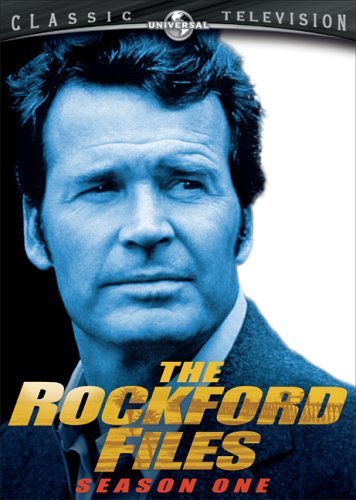
Rockforddvd2I just finished watching the first season DVDs for “The Rockford Files,” one of the usual set of DVDs that I buy from Amazon every Christmas when I go back to visit the family. Yeah, I know, you get it on cable where you are. I don’t. And I don’t like having to deal with the commercials, either.

Watching the shows brought back some things about the show that I’d forgotten about. One of those was how in almost every episode, the writers found a way to make it so that Rockford didn’t get paid. While a lot of people enjoy this kind of running gag, I find it a bit annoying. An extreme example of this was with the Steve Martin/John Candy movie “Planes, Trains, and Automobiles,” a film that I am sure was funny, but was about the most painful experience for me to sit through. In the film, Candy causes Martin to suffer an endless number of problems and annoyances, from the trivial to the harrowing. Essentially, Martin’s character just gets beaten down and humiliated throughout the film, subjected to one setback or failure after another. Some people enjoy that, and if it’s cartoonish and extreme enough I can get into it, but make it even close to realistic and it grates on me. Ergo my mild annoyance with the stick-it-to-Rockford gag–though it does make it nicer when he actually does get paid.

The other thing I’d forgotten about was how much driving there is in the series. It seems like one third of each episode is spent with Rockford driving his car around. And I’m not talking about the time spent on car chases or characters having a dialog in a car. I mean just minutes on end of watching this car go down that road, or that car turning that corner and going that way. A lot of it is one car tailing another, but sometimes it’s just driving. Atmosphere, I guess. But it feels more like killing time most of the time.

Don’t get me wrong–I love the series, and I’ll keep getting them as they come out. The main reason is Garner himself, and the writing for the series. Rockford’s sardonic and cynical style is priceless, and the driving and not getting paid aside, the plots and episode development are very, very good. One of main regrets is having to wait until the season five DVDs come out to see my all-time favorite episode “White on White and Nearly Perfect,” with Tom Selleck as Lance White, the Anti-Rockford. One of the best episodes in TV history, if you ask me.

Categories: Media & Reviews Tags: by

Interesting Prediction

January 12th, 2006 4 comments

I’ve just been re-reading some of my Heinlein, and in his Expanded Universe anthology volume, there’s a very interesting piece called “Where To?” Originally written in 1950, he makes predictions about the year 2000. Prediction #4 reads thus:

It is utterly impossible that the United States will start a “preventive war.” We will fight when attacked, either directly or in a territory we have guaranteed to defend.

In a 1965 update, he restates that idea, writing “‘Preventive’ or ‘pre-emptive’ war seems as unlikely as ever, no matter who is in the White House.” Technically, Heinlein was right, in that Iraq happened after the year 2000 (and if you do not consider Vietnam a ‘preventive’ war).

More to the point, Heinlein’s prediction seemed to me to underscore how radically Bush has changed our policy. However, what surprised me even more was how easily Americans seem to have taken to it. I have always assumed that American policy has always been stridently opposed to the concept of first strike, pre-emptive or otherwise (officially, at least). In one of my first blog entries, made in August 2002 (a handmade blog page, before I discovered Movable Type), I wrote:

It would also shred our own values and long-held respected policies, most importantly the policy not to strike first without provocation. And sorry, but an alleged meeting between a terrorist and an Iraqi agent coupled with completely unsubstantiated reports that Saddam could develop nukes “any time now” does not qualify as “provocation.” We do not, as a nation, attack other nations simply because we think that maybe, at some future time, they could attack us in some way. Bush Jr. and Cheney warn about the penalty of waiting for someone to hurt us first, but the reason why we have held exactly that policy for so long is because it is the right thing to do. Would you teach your children to sucker-punch other kids based on the suspicion that the other kid might have started a fight later? Do you go around town shooting people you suspect might at some point break into your home? Sure, the children your kid punches out might be mean, and the people you gun down might be criminals–but it is not how we do things. Believe it or not, we wait for provocation, and then we fight. Not a moment before. We pay a price, as we always do, for our principles, but the price of abandoning those principles would be far higher.

What, am I just totally mistaken about American principles? Did I hear it wrong? I was shocked when John Kerry, in a presidential debate, answered John Lehrer’s question on his approval of a preemptive war with this:

The president always has the right, and always has had the right, for preemptive strike. That was a great doctrine throughout the Cold War. And it was always one of the things we argued about with respect to arms control.

Now, possibly, Kerry was weaseling out of a direct answer–note how he changed “preemptive war” to “preemptive strike.” But it sure seems like he was in favor of preemptive war, when I was expecting him to take Bush to task for it. Maybe somebody could set me straight on this, but I could swear that America had–proudly–stood by the policy of not initiating a war.

Categories: Political Ranting Tags: by

But Do They Do Windows?

January 11th, 2006 4 comments

Okay, Steve Jobs introduced two new Intel Duo Macs today–an iMac and “MacBook,” both sporting dual-core CPUs, iSight built-in, and the usual round of goodies. But conspicuously absent from the keynote–and, to my surprise, also from the post-keynote web coverage–was the question of whether the new Macs can run Windows, and if one will have the ability to launch both side-by-side, switching easily between the two, without overtaxing the CPU. Although Microsoft’s representative appeared on-stage during the keynote and promised that MS Office for Mac would be supported for another five years (I could have sworn they’d stopped development with the last version, but apparently I’m wrong), neither she nor Jobs uttered a word about how cool it would be to run both systems on a Mac computer.

In fact, I had to do a search before I found anything on the subject, and found an AP story on Forbes reported that Apple has reiterated its claim that it will not “thwart” users who want to install Windows on the Mac. However, it’s pretty clear that Apple is not facilitating that option–yet.

Which means that if dual-boots and switching are possible, it’ll be a third-party hack, for now, at least. Intel’s Virtualization Technology promises something more advanced, and you’ve got to figure that Apple is going to jump on the bandwagon once people start doing it more.

One possible reason that Apple is holding back is the foreseen developer’s conflict, where software makers may drop Mac versions of software if they feel that Mac users will all be running Windows in tandem anyway. Perhaps Apple is not quite ready with it’s Dharma project (if true), and wants to introduce and popularize the development toolset before actively encouraging the dual-boot idea.

Categories: Mac News Tags: by

Goodbye, Powerbook

January 11th, 2006 Comments off

Not mine. The whole line.

So the keynote is over, and we have quite a few new toys to play with. I’m not going to go over the software, because frankly, from the sound of it (reading the feed from MacRumors), all the software updates sound marginal. It’s the hardware that’s going to make the difference. New Intel iMacs and… MacBooks, the (slightly questionable) new name for the high-end portables (no more PowerBooks). Dual-core iMac and MacBook. Very fast-sounding, cool-sounding machines.

Just one thing. There was no mention whatsoever of dual-booting OS’s.

What’s up with that?

It’s late, and I gotta get to sleep. I guess I’ll find out in the morning, if anyone knows by then….

Categories: Mac News Tags: by

Why to a Flag?

January 10th, 2006 6 comments

Perusing a story about the pledge of allegiance, it struck me: why pledge to a flag? Yes, you’re pledging to the Republic as well, but why to the flag? Because it’s a convenient symbol? Maybe, but there’s a big problem there: anyone can hijack the symbol. Why not simply make a pledge to the Republic alone? It can also be hijacked (witness the present), but at least it’s quite a bit more difficult–and it’s usually accomplished by hijacking the flag first.

Even better, why not make the pledge to the Republic and the Constitution upon which it is based? The flag can be twisted to represent all kinds of bad stuff, but the Constitution, that’s got the foundation for a nation of laws printed right on it. A bit harder to grab that and use it as a symbol of crushing someone’s rights and liberties. It specifically enumerates what we’re supposed to do and how. More general symbols, such as the flag and the sacrifice of past generations can be far more easily subverted by claiming that they stand for what you want them to stand for; the Constitution is much less forgiving of people trying to create meaning out of whole cloth.

So hang a copy of the Constitution and the Bill of Rights on the wall of classrooms, and make a pledge to it. “I pledge allegiance to the Constitution of the United States of America, and to the Republic based upon it: one Nation indivisible, with Liberty and Justice for all.” Give the “Under God” bit back to the Knights of Columbus who got it stuck in there during the McCarthy Era by using fear and manipulation; there’s no need for it in that pledge anyway, least of all for those true to their God.

And while we’re at it, let’s stop making kids recite the pledge until they can demonstrate real understanding of what it means. Mindless indoctrination was supposed to be something we’re against, right? Why are eight-year-olds reciting it? Most kids don’t have a clue as to what half the words mean, and I don’t ever recall a teacher explaining them. Heck, for years I thought that I was pledging “allegiance” (whatever that meant) to an “invisible” nation. I thought it was weird, but then, the whole Pledge thing was, to me, back then. Still is today, to the extent that it’s more a political tool than a meaningful pledge. Ergo my suggestion for changes.

Categories: Political Ranting Tags: by

Back to School

January 9th, 2006 1 comment

So tomorrow is the first day I have going back to work after the Winter vacation. I caught a break in timing, in that the semester started on a Friday, and I don’t have classes on that day. This week, Monday is a holiday. Tuesday, tomorrow, will be my first day back. And a good semester it should be. I have three classes, but they are back-to-back on two days of the week, which means slightly longer but many fewer days. I’ve got the web site up to speed, and it all looks well-prepared and ready to go. I just have to figure out how to deal with it all with a broken foot.

One particular point of interest will be the MacWorld Expo in San Francisco, with Jobs’ keynote coming at (I believe) 2 a.m. on Wednesday morning, Japan time. (Rumor roundups here and here.) If, as is predicted, the new Intel Macs come out, this should change the computing landscape some, and that’ll mean changes possibly for my students as well. It’s always good when something big is happening in the field you’re teaching, it gives you a chance to go over all the aspects with your class.

In the past, I have set aside half of one class session each semester to demo the Mac OS, in part to give students another point of view to better understand what an OS is, and in part to show them how cool the system is. Perhaps more than that, they see how I use it myself every day–my monitor is almost always mirrored on the class monitor, and they can see how I navigate through things. And every semester, a good number of students come back very interested in the Mac, despite having seen little else but Windows machines all their lives. I know that if I could tell them they could get Mac and Windows all in one package, a lot more of them would make the switch.

So it should be a fun semester. Heck, if I’m lucky, I’ll be able to convince my school of the wisdom of shelling out a few bucks for a Mac Mini, should it become available with Intel and Windows. Our IT people wouldn’t know what to do with a Mac, but hey–I can do maintenance that side of things a lot easier than they can. It’ll take me a lot less time, and be cheaper for the school to boot!

Categories: Computers and the Internet, Mac News Tags: by

Violation of Privacy

January 8th, 2006 4 comments

Your cell phone records are, apparently, not private. In the U.S., at least. For $110, anyone can obtain a list of everyone you have called, when, and for how long.

This may just be a temporary loophole, but it does raise questions of privacy. Seeing something like this is a bit of a shocker, mostly because it drives home the fact that this can have an impact on you (well, most of you). Would you really be okay with anyone for any reason digging through your phone records?

In writing this, I paused to think about possible situations to give as examples of how you would not want your cell phone records searched. I had come up with a few, like a stalker expanding his knowledge of your life, or your workplace trying to catch dirt on you, when I realized something: it doesn’t matter what the examples are. Privacy is a blanket right, and when you start trying to single out the most shocking examples, you begin to differentiate between the ‘less private’ and the ‘more private.’ And that’s a mistake, because then someone will argue that the ‘less private’ parts of your life are not worthy of privacy.

Not to mention that there are a lot of people who will argue that you don’t have a right to privacy at all–at least no legal right. I would rather strongly disagree, and so would the 9th Amendment, not to mention a few other amendments and the Supreme Court. We’re a territorial race, and privacy is fundamental to our makeup. We expect privacy, we demand it. We require it. None of us is completely open, no one. How could this possibly not be considered a fundamental human right?

So why are there so many people who stridently oppose the idea of a legal right to privacy? Do these people really feel that no one has a right to expect any privacy? Probably they don’t. It’s really about abortion, and the fact that major decisions such as Griswold v. Connecticut and Roe v. Wade are based upon arguments of privacy. So “the right to privacy” has become a nasty epithet to many conservatives, a sign of “judicial activism” and something that neither you nor I possess. I really doubt that conservatives would be OK with the idea that they have no legal right to privacy any more than liberals would. But in the conservative world, expediency is the name of the game (e.g., winning elections supremely trumps ethics), especially where civil rights are concerned–probably because most conservatives smugly believe that violations of such rights won’t likely happen to them.

Privacy is an extremely fundamental human right. Consider laws against breaking and entering, trespassing, accessing personal records, and, oh, I don’t know, maybe the Third and Fourth Amendments–a plethora of statutes designed to do what? Protect our privacy. Both physical privacy–no one can enter our homes without our permission–and informational privacy–your business is your business–are considered sacrosanct. If someone says they disagree, then tell them to sign a legal waiver that allows you to dig into their financial and medical records–and when they refuse, tell them to shut up.

However, as with all rights, it has limitations. We do allow law enforcement officials to transgress on that right. But we do that on two conditions only: when specific probable cause can be demonstrated, and when a judge takes on the responsibility of signing off on the warrant. But only if those safeguards are in place–because if they aren’t, then we no longer have a right to privacy. Any government official could delve into any of your private information for any reason. That is antithetical to the very concept of privacy, which is why we have those protections in the first place.

Hmm. Privacy. Warrants. I wonder what I could be leading up to?

<COUGH>, <COUGH>

Categories: Political Ranting Tags: by

A Year and a Half Late…

January 7th, 2006 4 comments

David Pogue gave a report on Bill Gates’ presentation of Windows Vista, the next OS version after XP. It’s due out about a year from now (unless it’s delayed yet again, not an unlikely event). Pogue comes down on it pretty hard as mostly being a Mac OS X ripoff:

If I seem to be laying on the “stolen from Apple” language a bit thick, you’re darned right. Ordinarily, I’m careful about making accusations like this, because I know I’ll get hammered by Apple bashers. But in this case, there’s not a shred of doubt: most of the features Microsoft demonstrated last night were pure, unadulterated ripoffs from Mac OS X. I could hear actual whispers of recognition from the audience around me.

Pogue did mention that they had a few original features, but they didn’t sound like much to get excited about (go ahead and read yourself). But a lot of Vista’s big features–widgets, application switcher, fast search–are features that will be one and a half years old on the Mac before Vista comes out. A few new features, like photo organization and tabbed browsing, have been standard on the Mac for a lot longer than that. Pogue seems satisfied “to have these features on both platforms,” but why wait 18 months or even a lot longer to get them?

Meanwhile, Apple accidentally revealed (on its web site, a common place for this to happen) a new application coming out at MWSF: iWeb, apparently a consumer-level web page creation program. No details on it yet, but it might be styled after Pages, and could have easy drag-and-drop media capabilities.

Update: This site has a few nice videos which take the audio from Gates’ presentation of Vista and matches it with a movie-screen-grab of Mac OS X Tiger, showing the stuff that Gates is saying Vista will have a year from now has been available on OS X for the better part of a year already.

Categories: Computers and the Internet Tags: by