Archive

Archive for June, 2008

Big One, Even 400 km Away

June 14th, 2008 4 comments

About half an hour ago, Sachi and I woke up to the building swaying: an earthquake, and a relatively sizable one. The building swayed strongly enough for us to notice pretty easily in bed, and the doors made creaking sounds as they swayed (probably what woke us more than the movement). The swaying here lasted for several minutes. The epicenter was 240 miles (400 km) distant.

My usual quake sites report a 6.7 on the Richter, but the TV is saying it was a 7.0; in Japanese quake scale terms, it was a “strong 6,” which is pretty huge. No major news stories on Google News yet.
No tidal wave concerns–it was way inland. Probably not too much fun in Iwate or Akita, in norther Honshu where the quake was centered–but the epicenter looks fairly sparsely populated. Still, probably a few small villages just got wiped out.

Categories: Focus on Japan 2008 Tags:

The Tax Plans: Obama Helps the Poor and Middle Class, McCain Favors the Super-Wealthy (Surprise!)

June 13th, 2008 3 comments

An analysis of both candidates’ tax plans has been released (PDF) from the Tax Policy Center, a respected source of analysis on such matters. And guess what: Obama’s plan is far, far better, unless your surname is Hilton or Gates. But if you’re an average working schmoe, then you’re definitely going to want to vote for Obama.

On the plus side for McCain, he cuts taxes for everybody. On McCain’s bad side, he gives the biggest cuts the super-rich, with only a paltry handout to anyone making less that $38,000 a year. Even up to incomes of $66,000, you’re looking at a $320 cut–not very good, considering that recent hikes in gas prices probably have already eaten up much more than just that. But millionaires can look forward to saving more than a quarter million per year–sweet, if you’re rich.

Obama, on the other hand, gives everyone with incomes up to about a quarter million dollars a year a cut of up to almost $3000, with the cuts spread much more liberally at the lower end than McCain’s. While McCain would give low-income earners an insulting $19, Obama makes a huge difference in their lives with a $567 tax cut. All the way up to earners of $112K per year, Obama gives more back to the earner than McCain. And even for the upper middle class, Obama’s plan is not bad–with a tax hike of a mere $12 for those making up to $600,000 a year, I think it’s reasonable to say that you’ll have to really have tons of money before Obama starts taking anything away from you. And while Obama really socks it to Bill Gates, I think that people making eight figures or more can well afford to pay their way after the cash cow days under Bush.

Neither Obama’s nor McCain’s tax plans look hopeful in terms of balancing the budget anytime soon, but the report makes one thing clear: while neither will balance the budget, McCain’s tax cuts will cost about a trillion dollars more over the next ten years. McCain claims that he’ll offset this by spending cuts, but what he means is that he’ll increase spending for the military while slashing stuff like Medicare. McCain may claim that he’ll get it by cutting pork, but there simply isn’t even close to that much pork to be found.

Here’s the total breakdown of the tax plans by income level:


Income Obama’s Plan McCain’s Plan
$0 ~ $19K cut $567 cut $19
$19K ~ $38K cut $892 cut $113
$38K ~ $66K cut $1,042 cut $319
$66K ~ $112K cut $1,290 cut $1,009
$112 ~ $161K cut $2,204 cut $2,614
$161K ~ $227K cut $2,789 cut $4,380
$227K ~ $603K raise $12 cut $7,871
$603K ~ $2.9M raise $115,974 cut $45,361
$2.9M ~ Bill Gates raise $701,885 cut $269,364


What’s more significant here is that Obama’s plan is progressive, while McCain’s is regressive–in other words, Obama gives a higher-percent break to lower-income earners, while McCain gives the biggest percent-of-income breaks to the wealthy.


Income Obama’s Plan McCain’s Plan
$0 ~ $19K -5.3% -0.2%
$19K ~ $38K -3.2% -0.4%
$38K ~ $66K -2.0% -0.6%
$66K ~ $112K -1.5% -1.2%
$112 ~ $161K -1.6% -1.9%
$161K ~ $227K -1.5% -2.3%
$227K ~ $603K 0% -2.3%
$603K ~ $2.9M +6.1% -2.4%
$2.9M ~ Bill Gates +7.9% -3.0%

As you can see, Obama’s plan helps those who need help the most, while McCain continues Bush’s policy of giving the most help to the people who need it the least, and leaving people on the bottom rung with crumbs at best.

And here’s a bonus: McCain has been going around for a while now claiming that Obama is “going to raise your taxes by thousands of dollars per year,” and has even recently raised the Cold-War-era canard of “tax and spend.”

One can only assume that McCain was addressing an audience of millionaires, because that’s the only group which will have their taxes raised by “thousands of dollars” under Obama’s plan.

Categories: Economics, Election 2008 Tags:

McCain Store Fun

June 12th, 2008 Comments off

A few days back I posted on the McCain Store and Golf Gear, but apparently there is a lot more going on there, so much so that Obama supporters are watching the site as a new entertainment venue.

First, there was the Golf Gear, which, as I mentioned before, came across as white and elitist. But then McCain actually started allowing people to post reviews of the gear, Amazon.com-style. You can guess what happened:

Mcgolf22

They finally wised up and shut down comments.

But now, there’s even more fun at the site: McCain has branched out his sports line and is selling nautical gear. Presumably because nothing helps steer you away from the elitist white guy image better than yachting.

But it gets funnier: his modestly-priced $200 nautical lapel pin shows three nautical flags, which, in order, mean:

Mcnlp

“On Fire, Keep Clear; Engines Going Astern; I Am Stopped.”

I will leave it to you to make the obvious connections.

Categories: Election 2008, The Lighter Side Tags:

McCain and the Iraq Statements

June 12th, 2008 Comments off

Recently, McCain said that when U.S. troops come back from Iraq is “not too important.” He was instantly criticized by Democrats; in response, he complained that the criticism ignores the context.

And you know what? McCain is right: his statements were taken out of context.

The catch, for McCain, is that if you look closely enough at the context, you’ll see an even deeper problem. The context is that McCain’s statements about Iraq (including way back to his “hundred years” statement) are based upon the premise that Iraq will very soon become a peaceful place where our soldiers never get attacked or killed. That’s what McCain is talking about when he says that our having soldiers and bases in Iraq will be just like our having soldiers and bases in Japan, Germany, and Korea.

And within that context, you can see why McCain’s latest comment makes sense: if things are peaceful in Iraq, then having troops there will be just another ordinary overseas assignment–whether a soldier gets posted to Baghdad or Yokota simply depends on that soldier’s preference for weather and the occasional venture into trying out the local cuisine.

This, however, is where McCain’s context breaks down: there is no evidence whatsoever that Iraq will become anywhere near so peaceful in the near future. It could happen, but that is so unlikely as to approach absurdity. Yes, last year’s cease fire by the Mahdi Army (and not the Surge™) has allowed for lower casualty rates among our soldiers, which is more than I would have thought possible–few predicted that al Sadr would do such a thing–but even with Iraq’s most important militia leader playing nice, even with things going as well as we can temporarily hope for, we’re still seeing an American soldier killed every day on average. Hoping for violence to completely disappear is almost literally a pipe dream.

But McCain is hoping to rewrite the conventional wisdom by acting as if a peaceful Iraq in the very near future is a foregone conclusion–that’s a big part of what his “2013” speech was about. He’s hoping to take the illusion of a successful Surge™ and ride it to the assumption that we’re winning in Iraq and will soon see it become just another U.S. ally where IEDs, marketplace bombers, and mortar attacks simply do not happen.

And this is where McCain could get into trouble: the pitch just isn’t selling. Most Americans do not make the same assumptions that McCain is making–which is why his “not too important” and “hundred years” comments play so badly.

And McCain has seen this trouble before. If you recall, he dropped into obscurity late last year, and everyone (myself included) figured he was toast. But people seem to have forgotten why that happened. McCain’s campaign plummeted after he made his statement that Iraq was safe enough to walk around its streets completely unarmed and unprotected–and then“proved” his point by visiting Iraq and taking a “stroll” through a marketplace–wearing a bulletproof vest, surrounded by a hundred soldiers, and covered by three Blackhawk helicopters and two Apache gunships. Soon afterward, he became something of a laughingstock.

Iraq is doing better now than it was then, which may have contributed to McCain’s comeback, but it is not doing so well that we can consider it another Japan or Germany. As I see it, McCain’s press to change assumptions about Iraq can have only a few possible outcomes, and none of them are very good for McCain. At best, he’ll get many or most Republican voters to see Iraq as maybe becoming manageable enough to keep our troops there. However, I think it is much more likely that things will continue as they are now: people will not accept McCain’s assumptions, and his statements about Iraq will continue to disconnect with what Americans perceive.

So, when McCain complains that his statements are being taken out of context, he is correct, but it is more his fault than anyone else’s–they’re taken out of context because McCain’s context is so patently absurd that no one will accept it.

SoftBank, Day 2

June 11th, 2008 3 comments

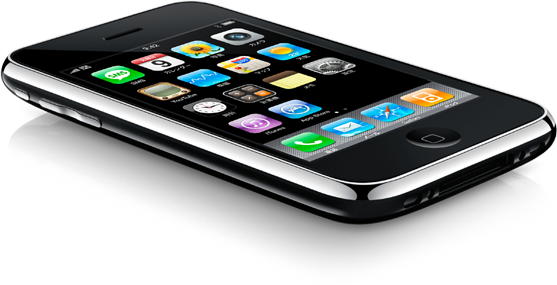
BiphnThe SoftBank store I pass on the way to work had iPhone posters up today, announcing the July 11 release date–and pretty much nothing else. You can go inside and put in a reservation for a phone, but I have a feeling that is mostly for SoftBank to (a) gauge interest in the new product, and (b) get new phone numbers and email addresses for their mailing lists. You give your name, mobile number, email address, and what model you want.

But the guy behind the counter will not promise a thing–not even that the application will reserve an early purchase for you. That’s the hope, he’ll tell you, but there’s no guarantee. No price yet, but the guy seemed to think that it was unlikely that the iPhone would be subsidized, and thought that a 50,000 yen (about $500) price was more likely than not. He wouldn’t even say if the usual member plans would apply to the iPhone. It seems that they are trained to say that nothing is certain, assume the worst, and maybe people could be pleasantly surprised later on.

News reports say that the price point will be the same in Japan as it is overseas; this source says they will start at ¥20,000 yen, this one says that “prices in Japan have yet to be decided but they will be comparable to those overseas, according to sources close to the matter.” If this is true, then I’m getting the 16GB model and Sachi will probably get the 8GB one. But I doubt it’ll be ¥20,000; hardware almost never costs less in Japan than in the U.S. In fact, Apple hardware in Japan usually has a 5~15% surcharge over U.S. prices. $199 is ¥21,450 now, so I suspect that ¥23,500 (8GB) and ¥35,000 (16GB) is not too much to expect at the low end.

Th guy at the Softbank store did say that about seventy people had signed the forms for an iPhone at that location since they put the posters up that morning.

Categories: Focus on Japan 2008, Mac News Tags:

McCain: Just How Desperate Can I Look?

June 11th, 2008 1 comment

McCain is trying to scramble to see how he can avoid looking bad after a very bad week. He scalded Obama for not knowing anything about Iraq, then proceeded to demonstrate that he himself knew nothing about Iraq, then defended his lack of knowledge. Then there was yet another lobbyist/campaign advisor in embroiled in scandal (former Senator Phil Gramm, McCain campaign co-chair and chief economic advisor, lobbyist and executive for UBS). McCain came out against a popular GI education bill on baseless grounds. And McCain made a landmark speech that made him look like a complete idiot. Even Fox News couldn’t bring themselves to like him–and when the media’s penchant for giving McCain favorable news coverage can’t quite stop him from looking bad, you know it’s not a good time in McSamesville.

So maybe it’s not surprising that Obama is now taking off in the polls against McCain–jumping to a 6-point lead in the Gallup poll after staying tied for a while. Rasmussen has Obama jumping forward to an 8-point lead. That, and Obama has been hitting home with the theme that McCain is running for a third Bush term. This is based, of course, upon the fact that McCain has tied himself closely to Bush, voting with Bush about 90% of the time, having the same policies on taxes, Iraq, the economy, social security, abortion, immigration, etc. etc.

McCain’s riposte? “Senator Obama says that I’m running for a Bush’s third terms [sic]. It seems to me he’s running for Jimmy Carter’s second.”

And, how is that? Well, umm… there’s really no justification for it, though McCain lamely argues that it’s somehow all about “tax and spend.” Wow! How original! I’ve never heard that before! Jennifer Rubin puts it well:

Now it doesn’t “work” of course in the same way that McCain’s association with George W. Bush does. Carter is not the incumbent president and Obama is not running on a platform to continue any of the Carter policies. But that is not really required for McCain’s purposes.

Exactly. Obama is making a carefully crafted, well-evidenced, and well-earned criticism of virtually McCain’s whole policy platform. All McCain has in return is a punch line–pretty much the only thing working for him this week.

But McCain shouldn’t worry; it shouldn’t be long now before the press finds another non-issue to bash Obama with so they can get back to completely ignoring McCain’s non-stop tour of lies, scandals, and ethics violations.

Categories: Election 2008 Tags:

Now That’s Keeping a Secret Really Well

June 10th, 2008 1 comment

Well, here’s a hoot: I just called the SoftBank support line, and it seems I knew more about it than the operator did–she told me that the iPhone would be available “later this year,” and insisted that their web page had no press release. Even after I walked her through the process for reloading the web page, she claimed that she still did not see the updated press release. I had to read off the URL for the specific press release, and only then did she see it.

Talk about keeping it super-secret!

I can only guess that they didn’t anticipate immediate calls. I made my call only about ten minutes after they opened for the day–but still, I am very surprised that they were not already getting lots of calls on this.

Update: only a few minutes later, the gal at SoftBank called back. She was very nice, but she didn’t have any details beyond the press release (and not even that until I told her about it!). No pricing or anything else yet. Next call: the Apple Store. Not yet, though, as I have to get ready and go to work. And not that I expect them to have any more info on pricing….

Categories: Focus on Japan 2008, Mac News Tags:

iPhone Japan: July 11 from SoftBank

June 10th, 2008 1 comment

I guess you didn’t want my business after all, DoCoMo–and you may very well lose my wife’s business, too. She mentioned a while back that she wanted to be on the same service as me.

But the big news is the release date; despite what the people at the SoftBank store told me last week, the iPhone will be released in Japan on July 11, much sooner than I expected–exactly the same time as everywhere else, in fact. No information on pricing, but you can bet that I’ll be calling SoftBank soon about that.

Disappointments: it’s still only 8GB and 16GB, and the camera is still only 2 megapixels. What’s with that, Apple? Leaving room for an upgrade a few months later in case sales sag?

Not disappointed: no video camera on the front. Sure, it would have been fun, but far from necessary. The features of MobileMe look a lot more appealing. I’ll probably be finally breaking down and getting that.

Categories: Focus on Japan 2008, Mac News Tags:

Live Blogging of the Live Blogging Audio Stream

June 10th, 2008 11 comments

Well, that’s what I’m reduced to. I’ve done it before, posting my reactions to others’ reactions. But since Apple stopped streaming video of their keynotes, this is the only game in town. Why they don’t stream, I don’t know–if they were worried about selling out, they shouldn’t have–it sold out. One would think that baseball rules apply–blackouts lifted in the case of sellout crowds. But apparently not. Maybe Apple just figured they didn’t need to.

So instead, the Mac blogs have taken over the load, doing live blogging via WiFi (cellular connections?) from the event–and their pages are heavily trafficked. MacRumors, Engadget, Gizmondo, and many others. iPhone Alley is streaming audio–but it sounds like the adults on a Peanuts TV special. But just this moment, it just got a whole lot better. Jobs’ voice is very clear… although he’s mostly just talking about how well things are going.

Al Gore is there…

Wwdc 08 01

Jobs presented some enterprise stuff, Exchange, businesses and so forth saying “we can use the iPhone” in so many different ways. Push email/contacts/calendar, etc. Now they’re talking about how great the SDK (software developer’s kit, which allows developers to create software for the iPhone) is. We could probably go on for a while with only stuff that people already know or that only developers would be interested in.

Wwdc 08 02

It’s easy to build apps for the iPhone… blah blah blah. Okay, I know it’s important for developers. But it’s 2:30 am here in Japan–get to the good stuff!

Some app demos being shown. A $10 game called Super Monkey Ball with 100 levels… eBay auctions… Loopt, keeping track of friends with iPhones with location-aware software–seeing photos they’ve taken, setting up lunch meetings–free software… TypePad! Photo-blogging over the iPhone, also free! (I’m getting that–erm, unless it’s not WordPress-compatible… I’m sure that WordPress will have something compatible)… Associated Press, all kinds of ways to access news… Pangea games (okay, enough demos, thank you)… “Band,” software that allows you to play musical instruments virtually on the iPhone, recording your musical doodling… Medical anatomical learning…

Wwdc 08 03

Wwdc 08 04

I really like the fact that several of these apps will be free; I was under the impression that everything would cost something. This could really be good.

As usual, Apple stock is doing weird stuff–down $10 despite seeing a lot of good stuff. Maybe they’re going down until they see something really tasty. However, one thing the endless demos do is show you the breadth and depth of all the apps available, and if you look at it carefully, you can see the potential of all this.

Okay, finally the developers have finished. So what next? One feature request asked for: alerts for an app that isn’t even running. A better system than Windows mobile: Push Notification for all apps, not just Enterprise. IP connection from server allows the background software to run remotely, saving the battery life of your phone. Really, a lot of great tools here. Apple stick has just regained $5, so it’s only $5 down.

New features: contact search–about time. iWork and MS Office document viewing support. Scientific Calculator by turning the phone sideways… parental controls… Many languages, including two forms of entry for Japanese! And Chinese. Drawing kanji with your fingers… switching between languages on the fly. Forget the plastic keys!

Wwdc 08 05

Another thing: Ad hoc distribution: certify up to 100 iPhones, run and sync all those iPhones.

Mobile Me!! “Exchange for the rest of us.” Apple’s own service with Push services. Hmm… worth the $99 price after all? So all messages, changes automatically updated on all linked devices, over cell networks. Web 2.0 apps: on me.com, rich email environment, as expected in rumors, like having Mac apps on the web. Mail, iCal, etc. Also file browsing–like having your Mac on the web. 20GB per account, 60-day free trial. Mobile Me replaces dot-mac.

Now about the iPhone: already a success, 80% using 10 or more features! 6 millions iPhones until they ran out 6 weeks ago. 3G iPhone! Enterprise Support. 3rd party app support, more countries–“believe me, they’re in use in more countries!” The iPhone more affordable: taking it to the next level: iPhone 3G, this is what it looks like: flush headphone jack, much better audio.

Wwdc 08 06

3G speeds approaching WiFi… great battery life: standby time 300 hours: up to 5 hours talk time; 5-6 hours of high-speed browsing time; browsing 24 hours, video 7 hours.

GPS built-in! Can do tracking…

Wwdc 08 07

No mention of video conferencing or a front-facing camera.

Playing the song “It’s a small world,” listing all the countries. Now in 6 countries, goal of 12 countries, stretch goal of 25 countries, total of 70 countries… and before Japan came up on the map, I accidentally quit my browser. That’s what comes from staying up until 3:45 am….

Okay, Japan is on the list. And I’ve restarted my browser.

Wwdc 08 08

And the keynote is over. No front-facing video-conferencing, no various-sized iPhones… but I don’t think that anyone is disappointed. The Apple store is still offline, but should be back up soon. But at almost 4:00 am, I won’t be able to stay up long enough. Not everything that all the rumors predicted–no look at Snow Leopard yet, no tablet Macs–but certainly good enough. The only question is, will Wall Street think so?

The Apple Store Japan is back online and they have the iPhone–but I can’t find the release date, and am too tired at this point to do so.

I’ll be back tomorrow morning for a quick comment.

Categories: Mac News Tags:

Passing the Test

June 9th, 2008 7 comments

Even among the sites that have been harsh on Hillary until now, there is a lot of graciousness and forgiving going on, even statements of expectation that people who don’t like Hillary should be doing an about face right now. All of a sudden, Hillary is the good guy again.

I have always believed in judging a person’s character not according to whether they’re doing what you want at the moment, but instead by the totality of their actions. I usually do not hold grudges; this is not a rationalization to support an emotional statement. I like what Hillary has finally decided to do, I hope we can get all the support from her that we can. But while I respect all that Hillary has done over her career, this campaign, more than anything else she has done, has revealed a great deal about her character–and it’s not very pleasant in many ways. Sure, she’s tenacious, fights for what she believes in, most of them things I believe in strongly, and she doesn’t give up easily.

However, this race has also shown that she has an ego that goes beyond even the gigantic egos normal to politics; her self-centeredness at times has been stunning. It has shown that while she fights for what she believes in, fighting for herself comes first and foremost, sometimes even to the detriment of those values. It has shown that she plays politics rough and dirty, and does not mind stooping to dishonesty. It has shown that she has no problem changing the rules, breaking the rules, twisting them to her advantage. It has shown that she is perfectly okay with base pandering, using voter-bait which is at the very best useless and meaningless. There is more, but I think you get the idea.

Much of this is reflected in her past record; the vote on Iraq is a good example, showing that she believed that political expediency trumped principles. But with a few possible exceptions during her husband’s tenure in the White House, nothing in her career has pressed her, put her to the test, pressured her enough to show exactly what she is made of more than this primary election battle has. This was the test of her lifetime, and she did not perform well.

Some might excuse her actions late in her campaign as an effort to strengthen the party–by continuing to run, she gave many Americans a reason to register and vote in the Democratic primaries, many of whom may never have registered. And had she run a clean campaign that did no damage, then I could have believed it. But her campaign continued to undercut the Obama campaign, virtually right up to the end. While increased Democratic registration may have been an effect, it was not a cause, in either sense of the word.

I can still respect her for her strengths and her accomplishments. I can still welcome her continued hard work as a senator as well as her support for Obama; she is still a bastion in the Democratic Party and can still accomplish a lot of good things. It is just that the weaknesses she has demonstrated when put to the test have shown that she is not the person I would want in the White House.

This is not about charisma, this is not about oratory skills, nor is it about experience. This is about how you act when things are at their worst. That, to me, matters much more than anything else. And quite frankly, Obama did a much better job than Clinton did when put to that test.

Categories: Election 2008 Tags:

So Long As We Can All Have Them

June 9th, 2008 1 comment

Florida tried to get this license plate approved for public use a while ago, and now South Carolina is trying to pick it up and run with it:

Fl-Lp-Bl

I say fine, so long as they also allow this one to be sold:

Fl-Lp-Rs

Fair is fair.

Categories: Religion Tags:

Before Your Cooked Right Eye

June 8th, 2008 1 comment

Sachi and I just now got back from the Teppan-yaki place (cooking “right before your eyes,” as the famous Engrish misquoted) Sachi took me to for my birthday. Wow, that stuff is good! We ordered filet steaks–I got the “special” (read: extra-fatty) version, and the entire course was fantastic. The appetizer was high-quality roast beef, followed by a fish course of cooked scallop (though I got a replacement dish of nama-hamu and fruit), followed by the main course. Like Benihana in the U.S., the cook prepares the whole meal in front of you. He started by cooking garlic slices (delicious–just like garlic crisps!), then prepared the filet steaks (medium-rare), slicing them into bite-sized pieces as he cooked them, followed by asparagus and sprouts, everything garnished with delicious onions, garnished with rock salt. There were three tasty sauces–apple-flavored, tomato sauce, and soy sauce with an original wasabi garnish, all to dip it into before eating.

We were served a bottle of wine (after three beers between us), so we got appreciably high during the meal. The problem was, they seemed to be waiting for us to finish our wine before they served dessert, and we were saving the last of our wine to have with dessert. So it was a good 40 minutes or so of waiting before we finally got the idea and told them to take the wine to the dessert table–where they had a nice birthday cake (white layer cake topped with whipped cream, laden with cherries, orange slice and kiwi-fruit) waiting for us.

The place is local (to Ikebukuro) and pretty expensive, but man that was good! We splurged on a taxi home (all of seven dollars and worth every penny, in our state), and somehow made it back in the door.

Would every birthday be so delicious and fun.

Categories: Main Tags:

My Birthday Suit

June 8th, 2008 5 comments

Sachi got me a very nice Ralph Lauren suit for my birthday, and topped it off with a nice cotton shirt and matching tie this morning.

Bdaysuit

Why, what were you thinking the title meant?

Seriously though, I look like I’m running for office or something….

Categories: Ikebukuro, Main Tags:

Introduction to CSS ( CSS Tutorial )

June 8th, 2008 7 comments

I’m teaching an evening class this semester on web page design, and I hope to get around to CSS this time. Of course, it helps to actually know CSS–which I didn’t–so I dove in recently. Now, I’ve known about CSS for years, and got slightly familiar with it five years ago when I started this blog–it was necessary to customize the blog’s appearance. But back then, it was mostly just taking a pre-made CSS style sheet and altering numbers and image URLs until I got what I wanted. I didn’t learn how to actually write CSS myself.

So I started looking around for an acceptable tutorial on CSS–and that’s not easy to do. Most tutorials for stuff like this which you find on the web are terrible. Either they’re written in so disorganized or unclear a fashion that you can’t understand it, or the writer assumes you know a lot already without even mentioning what you need to know before reading the tutorial. It’s incredibly helpful to find a tutorial somewhere that is understandable, and where you don’t quickly run into something leaves you completely befuddled. I found a few sites that seemed fairly good, but none that explained everything to my satisfaction. I had to go to several sites to find enough explanations that told me what I needed to know.

So here’s my own try. For this, I will assume that you know basic HTML–which you have to in order to get started with CSS, frankly. (If you don’t know HTML but want to, here’s what I use to teach it in my college course.) If you know about tags (commands) and attributes, basic rules, and have an HTML vocabulary that allows you to make a basic web page, then this tutorial on CSS will be understandable–I hope. Let me know what areas might trip you up.

If you already know or are not interested in CSS, just skip over to the next post. Sorry about the length of this post, but I didn’t want to hide the lesson under the fold.


CSS is a kind of coding related to HTML. It allows for much greater control of the formatting of a web page. Regular HTML allows for some format control, but it is very limited, like using a really basic, bare-bones text-editing program. CSS allows for much finer control, like a more advanced word processing program.

There are three ways to add CSS to a document:

  • in-line
  • internal (embedded)
  • external (as in a style sheet)

In-line CSS is CSS coding which is independently inserted into an HTML tag. For example:

<p style="color: red;">This text will be red.</p>

will result in the text turning red. As you can see here:

This text will be red.

The CSS is in the tag attribute "style." There is no need for other CSS code to be placed anywhere; the code is independent.

Internal CSS is where you define certain styles within the head of a web page, and then refer back to those styles within HTML tags throughout the page. The value here is if you want to apply the same style in many different points in your document, but don’t want to insert the CSS code again and again at every point you need it.

External CSS is where you define your styles in a separate document called a style sheet. This allows you to define the styles for many web pages, all at once. Instead of defining the styles again and again in each page’s header, you define the styles once in the style sheet. Every web page links to the style sheet once in the head. After that, references to these style definitions in the web page code will draw from the style sheet’s definitions. This way is best for maintaining a single style over an entire web site (such as in this blog).

In this tutorial, we will begin by using internal CSS. This will allow us to later take this knowledge and apply it to in-line or external CSS.


Next, we need to understand selectors. In internal CSS, you put them in the head of your document; in external CSS, you put them in your style sheet. They define a style which can be applied in an HTML tag in the body of a web page.

Since we are doing internal CSS, then within the head command, you will add the command:

<style type="text/css">
</style>

And then within that command, you will place the selectors. Each selector begins with a name followed by properties inside curved brackets; the properties include declarations, each which take up a line and end with a semicolon; each declaration has a property followed by a colon, and then the value. Here’s what it could look like:

<style type="text/css">

selector {

property: value;

property: value;

property: value;

}

selector {

property: value;

property: value;

}

</style>

There are three kinds of selectors:

  • element
  • class
  • id

Following is an explanation of each type of selector. (Note that there are more than three types; we’re just looking at the main three.)


An element will change the effect of an HTML tag. For example, a <blockquote> command in HTML will have the effect of indenting text by a half inch in a paragraph separate from the preceding and following text. If, however, you define an element style for the <blockquote> command in CSS, then every use of that command will result in different effects. For example:

blockquote {

background-color: lightblue;

}

If you add this style, then every <blockquote> you add to the web page will have a light blue background, no exceptions. For example:

Here’s what that example might look like in practice.

A nice feature of elements is that they allow you to create your own HTML commands. If the element you create already exists (for example, "blockquote") then the style you define will be added to the command’s existing properties. However, if you create an element which is not already an HTML command, then it becomes a new command with the properties that you define. For example:

blah {

background-color: lightblue;

color=darkblue

}

This will create the command <blah> which you can then use to apply the styles you defined. However, it should be noted that some CSS styles will not work with all tags; for example, text-indent CSS properties will only work with existing block HTML tags like <p> or <blockquote>. I don’t know (at present, at least) of any way to create new block-level tags.


Next, a class allows you to add styling to a variety of HTML tags, or to some tags but not all instances of them. For example, what if you want some of your blockquotes to have light blue backgrounds, but some not? In such a case, you would introduce this selector:

.blueback {

background-color: lightblue;

}

Note that the class selector begins with a period.

Here, you have introduced a new class called "blueback." You can call the class anything you want within the naming rules (to be safe, keep it one word, lowercase, avoid punctuation or symbols). You then activate the class by adding the attribute class="classname" (no initial period) to any command that can use it. For example, you could add this to the <blockquote> command, the <em> command, the <b> command, and so forth.

At this point, however, you might wonder if it’s almost as much work to add the selectors and the tag attribute than it is to just add the CSS directly within the tag. But this example only has one declaration, which is "background-color." You can add as many as can apply, for example:

.blueback {

background-color: lightblue;

color: red;

font-weight: bold;

font-size: 16pt;

}

With that many declarations, it is much more economical to simply add the "class" attribute to any particular command.


Finally, we have id selectors. They begin with a number sign (#) whereas classes begin with a period (.). They are almost exactly the same as class selectors, except that they are supposed to be used with only one tag per page, instead of with many tags. This is for special cases where the position of an object on a page, as defined in CSS, is unique and does not exist elsewhere. However, since the class selector can do the same thing, id selectors are in a way redundant–but are still widely used anyway.


Now, for those of you who enjoy learning a few quick tricks now and then, here’s a fun one. Have you seen web pages where stuff changes when you pass the mouse over it? Text changes color, size, etc.?

This can be accomplished by duplicating a selector, adding ":hover" to the name of the second version of the selector, and changing the declarations in the hover version to be what you want. For example:

<style type="text/css">

.blueback {

background-color: lightblue;

color: red;

}

.blueback:hover {

background-color: lightgreen;

color: blue;

font-size: 120%;

}

</style>

The above will take whatever commands it is applied to, add a blue background and red text–except when you hover the mouse over the text, whereupon it will take on a green background, and the text will turn blue and slightly larger. You will notice that this effect is used in this blog when hovering over links. It changes post titles from black to red, and in-post links from plain to underlined.

However, you can use the alternate :hover effect almost anywhere you can imagine, to whatever effect is possible. Try hovering the mouse over this paragraph, for example.


Naturally, there is a lot more to CSS, but what we have covered up to this point will get you a fairly long way. Of course, one of the most important points in learning a new language is vocabulary. Above, I have covered grammar and syntax–but to really use CSS, you must be familiar with–or at lest possess a cheat sheet–showing a lot of the possible properties and values. So I have created an independent cheat-sheet page which you can print out and use whenever you are coding CSS. It doesn’t have all properties that are out there, but it’s a long list with most of what a beginner would want or need.

In a later post, I will wrap up by explaining how to take what we’ve learned here and apply it to in-line or external CSS formats.


I hope that this tutorial serves to introduce you to CSS in as simple, clear, and useful way as possible. If you’re in my target audience–HTML coder who doesn’t know CSS very well yet–and you tried out this tutorial, please leave a comment to let me know how it achieved its goal. If you had a problem somewhere, please let me know where it was and what the problem was. Thanks!

Will the iPhone Sell in Japan?

June 7th, 2008 3 comments

Yesterday, my boss wanted to know what his cell phone number was. It’s not forgetfulness–many of us don’t know that because we never call our cell phones or even give the number out very often. I’ve had my cell phone for more than eight years, and I still don’t know my own number. But the problem my boss had was, he had no idea how to get the number from his own cell phone. So he handed the phone to me, the usual go-to guy for tech issues at my workplace, so I could figure it out. Now, on my own phone, I know how to do this–press Function and then Zero–but someone else had to show me–it was not marked in any menu, nor was it self-evident. It was more like an easter egg, in fact. And when my boss handed me his cell phone, I wasn’t able to figure it out myself. Now, the self-number is a no-brainer as far as features go–almost everybody has to access this from time to time. It should be self-evident, or at least not too hard to figure out. But I couldn’t find it. I went through all the obvious feature-access buttons and cruised the menus (most in English, though the phone sometimes jarringly switched to Japanese), tried sub-menu after sub-menu, checking all the logical suspects. After three minutes or so, I had to hand the phone back in defeat; I could not figure it out.

My own phone is not too dissimilar; it also has lots of features that I wouldn’t mind accessing from time to time. However, most of them are so buried in user-unfriendly toolbars and menus that it would be simply far too much work to figure out. Multiple menus with features too similar to each other to figure out why they have different menus, some features buried in seemingly unassociated menus, bad icon choices for many of the menus in the first place. To use any feature, I would have to dig out my manual (Japanese only except for a brief user’s guide in English, so I have to go into Japanese for any non-basic task) and teach myself how to use it.

The problem here is, unless you use a feature every few weeks–and many phone features you would not use so often–you can easily forget how to do it. Plus, if the task you want to do should only take a few moments, but learning how to do it takes up a solid fifteen minutes, then it starts becoming too much trouble to look it up. If your phone has too many features, then you won’t access many of them often enough to learn how to access them.

A new Wired article makes some good points about this, explaining how massive feature creep has overloaded Japanese phones:

Indeed, Japanese handsets have become prime examples of feature creep gone mad. In many cases, phones in Japan are far too complex for users to master.

“There are tons of buttons, and different combinations or lengths of time yield different results,’” says Koh Aoki, an engineer who lives in Tokyo.

Experimenting with different key combinations in search of new features is “good for killing time during a long commute,” Aoki says, “but it’s definitely not elegant.”

Japan has long been famous for its advanced cellphones with sci-fi features like location tracking, mobile credit card payment and live TV. These handsets have been the envy of consumers in the United States, where cell technology has trailed an estimated five years or more. But while many phones would do Captain Kirk proud, most of the features are hard to use or not used at all.

Now, remember that the primary argument saying why the iPhone will fail in Japan is that it will be a yawner next to most Japanese cell phones, which have for some time featured much of what the iPhone offers, and often much more. While the feature sets in Japan have indeed been rich for a long time, that’s not what makes the iPhone special.

What makes the iPhone special is that it is easy to use. I don’t even have an iPhone, and only used one for a few minutes while helping my sister get used to hers last December, but I am fairly certain that I could have found my boss’ number without any trouble had it been an iPhone. Just go to the contacts, I’m pretty sure it’ll be there. Or else go to the settings, it should be there, too. I just expect these things from an Apple product. (Can anyone with an iPhone confirm that you can get your number either of these ways?)

Japanese cell phones are not like this. I tried using some of those feature-rich ones a few times when I passed a cell phone shop and had some time to look. It was painfully hard. I had a tough time understanding what the heck to do even when I got the salesperson to switch the phone to English (it took them a minute or two to figure even that out themselves). After ten minutes with a nice-looking phone, I decided that I did not want to use the damned thing, as attractive as all its touted features were. Not to mention that some of the “great” features are in fact dogs:

“When I show this to visitors from the U.S, they’re amazed,” Hayashi says. “They think there’s no way anybody would want an iPhone in Japan. But that’s only because I’m setting it up for them so that they can see the cool features.”

In actuality, Hayashi says, the P905i is fatally flawed. The motion sensors are painfully slow, and the novelty of using them is quickly replaced with frustration. And while being able to watch TV anywhere is a spectacular idea, there’s no signal in the subways, and even above ground, the sound cuts out every few seconds.

“There’s nothing more annoying than choppy TV noises,” Hayashi says.

Long story short: Japanese phones have far too steep a learning curve, making most features unusable, and many of the features people would use are not as great as they seem.

That’s where the iPhone does its magic. You can do things with it. The list of features may not be as long, but they are good features, and you can use more of them, more easily. The list of usable features on an iPhone beats out the other phones. The web browsing is huge. Email is good, and the keyboard allows for much easier typing. Visual voice mail is a no-brainer. Google Maps with the search features tied in is huge (I know Sachi and I will use that a lot). The GPS almost certain to be included soon will make it even more attractive (I will use that so much when on my scooter). And you can easily forget that this is an iPod, with hi-res (for a handheld device) video, and the iPhone will probably get video telephony with the new models. Then there will be the app store, allowing for huge expandability. And odds are that most Japanese will be able to figure out more of these features, faster and with less reliance on manuals. Certainly, my boss would have never asked me for help that time if he’d had an iPhone.

That’s a big part of why I really want an iPhone myself. Before the iPhone was announced eighteen months ago, all I really wanted was a cell phone that could sync calendar and address book info with my Mac–I would have switched to another phone instantly had I found it (especially if it were bluetooth-ready). The iPhone delivers a great deal more than that. So despite living in the Nation of Advanced Cell Phones, I will wait for however long it takes to get an iPhone. And as soon as Japanese users–conditioned to simply take the standard Japanese fare without question–begin to see and hear about what the iPhone can do, it will take off.

It might take a year or two, but it will eventually trend that way. I seem to recall that when the iPod was introduced in Japan, people similarly predicted it would have trouble catching on because the Japanese market was already saturated with and dominated by advanced, domestic-produced music players. But today, when I walk around town, I see most people using iPods. The success was not immediate, as I suspect the iPhone’s will not be. But the iPhone should succeed despite the naysayers’ reasons, in just the same way as the iPod did before.

Unfortunately, we may need to wait a little longer: I dropped by the SoftBank store a few days ago, and the clerks there said they had no more info that was in the terse press release–but that they doubted the iPhone would be released soon. They have already released their summer line of phones, and new phones require setting up with the service. The clerk said a Fall release was the soonest he expected it, and it might even have to wait until the winter line comes out.

Categories: Focus on Japan 2008, Mac News Tags:

Putting Your Worst Face Forward

June 6th, 2008 2 comments

Golfleader

A lot of people are pointing this out recently: On McCain’s web site, “Golf Gear” is given just slightly less priority than Iraq. Now, we know the man is desperate for funds, but how much can he make off selling McCain-branded stuff at the cost of a presidential appearance? Both candidates sport links to stores which sell their stuff, but this looks more like some commercial promotion beyond pins, T-shirts, and bumper stickers. But that’s all within the store, not promoted noticeably on the candidate’s main page just above a prominent photo. Not to mention that the stores are less about money-making than they are about advertising, and you won’t advertise very well by having rich folks carrying around your stuff on isolated golf courses.

That leads to another mystery in regards to the gold gear: golf? I mean, nothing says “old rich white guy” quite like golf does. Selling sports gear in general including golf stuff would have been better–a more widespread and even youthful appeal–but why focus on golf so prominently? Are they trying to invite comments about his age? Not to mention that Obama proudly displays the fact that his store’s stuff is made in the US by union labor. McCain, who proudly boats how much he loves NAFTA, has no indication of where his gear was made. China, probably.

And the kicker: McCain hates golf.

On another note, what the hell was with McCain and that speech? Forget the Obama with 32,000 while McCain had a few hundred; forget the lime-green backdrop. What was with that demented laugh and smile?

Ouch. Keep that stuff up, McCain.

Categories: Election 2008 Tags:

Lame Plane Claim

June 5th, 2008 1 comment

McCain’s feeble joke within his debate proposal:

McCain also suggested the two candidates fly together to the meetings, joking that that would save energy and money.

“I even suggested we travel to them together on the same plane, probably help out on energy savings,” he said to applause from an audience in Baton Rouge.

No problem, McSame: you can both commute on your wife’s private corporate jet–you know, the one you’ve been monopolizing to get around campaign finance laws, violating even your own self-set policies.

Funny how nobody in the Liberal Media™, which has been giving wide play to McCain’s ‘joke,’ has so much as mentioned the corporate jet, much less gone for this low-hanging fruit of a jab, something the media usually leaps at. Oh, wait–I know why: the media has completely failed to report on stories like McCain’s immersion in lobbyists or the corporate jet story, so no one would get the jibe if they used it.

McCain to Obama: Hand Me the Advantage

June 5th, 2008 Comments off

This is a theme now in McCain’s campaign, and you have to hand it to him that he’s getting the upper hand on these things by beating Obama to the publicity punch. A while back, McCain made a “challenge” to Obama to commit to public financing–which would suit McCain great because Obama is a fundraising giant, with the added advantage of raising most of his money from citizens in small denominations, where McCain is more dependent on large donors and PACs. Obama would have to be stupid to give up that incredible advantage, but McCain scored points off the impression that somehow the challenge shows McCain is somehow more of a campaign-finance saint, when in fact McCain is immersed in lobbyists.

Then, a few days ago, McCain pulled a similar stunt on Iraq, pointing out that Obama had not been to Iraq in a long time, and “invited” Obama to go with McCain to Iraq. Never mind that McCain doesn’t seem to have even the most fundamental facts about Iraq down, such as whether or not we are or soon will be back to pre-surge levels; never mind that trips to Iraq are for PR purposes only and don’t do much to actually educate politicians about what is going on there. McCain was able to play the situation up to make it look like he’s the knowledgeable expert on Iraq–despite the fact that he’s made almost every wrong decision on Iraq, while Obama has made better ones from day one. For Obama to go to Iraq with McCain would be pointless–neither would really learn anything–and doing so would allow McCain to lord his “superior” status over Obama, acting like the teacher giving Obama lessons.

And now McCain is taking the initiative in the debate arena as well, calling for ten town-hall debates with Obama. Again, it makes it sound like McCain is being open and reasonable–but at the same time, it plays incredibly unevenly in McCain’s favor. McCain does terribly at podiums, while Obama does very well; the town hall, meanwhile, is McCain’s home-field advantage, coming across as more homey, while Obama is not as skilled in that venue–and you can bet that McCain’s campaign would play to the hilt the low-expectations game, touting Obama as the great orator so that when McCain does well in town halls, Obama will look all the worse. So many town hall meetings would also play to McCain’s financial advantage, as they would give McCain more visibility and exposure without having to pay for it. So Obama would not be wise to take McCain up on that, at least not in full.

Categories: Election 2008 Tags:

Official: iPhone in Japan… Later

June 5th, 2008 4 comments

The details are as skimpy as they get, but SoftBank today announced on their web site that they’ve signed a deal with Apple:

SOFTBANK MOBILE Corp. today announced it has signed an agreement with Apple® to bring the iPhone™ to Japan later this year.

The Japanese version of the announcement says “in this year,” not “later this year,” but since both the English and Japanese come from SoftBank, I presume that they mean the same thing. “Later” is kind of fuzzy, though–are we talking August or December? It definitely doesn’t sound like July, though.

Also unclear is… well, everything else. Whether SoftBank is to be the exclusive carrier, for example. It would be a bit strange if it weren’t–as far as I am aware, Japanese cell phones are almost always (if not always) tied to specific carriers.

I was also on the verge of posting recently that Docomo seemed less and less likely to release the iPhone for a few different reasons; one being that they will be selling the Prada Touch phone by LG, considered an iPhone competitor; also, they just released a big line of new 3G cell phones, equipped with large screens, video streaming, GPS–the works. Doubtful they’d release such a big line of phones like that so close to announcing the iPhone.

Nevertheless, people are still talking about how the SoftBank iPhone contract might be a way of pressuring Docomo or something; for some reason, I doubt this a bit. I drive by a SoftBank store every day on my commute to work; maybe I’ll stop by today and ask some questions.

3Giphonerumorpics

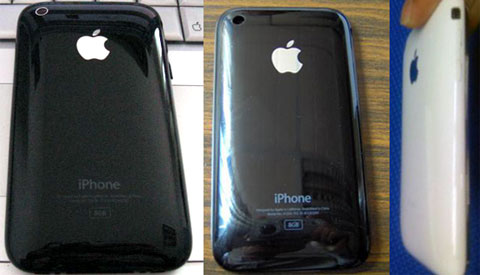
Meanwhile, just a few days before Jobs is expected to spill all the beans about the new 3G iPhone at the WWDC, rumors fly–ranging from minimalist reports that the new phone will be thicker and have no other upgrades aside from the 3G ability, all the way to hopeful, soaring rumors that the new phone will be slimmer, have a longer battery life, and will feature GPS, video conferencing and more. What many seem in agreement about is that the new form factor will have rounder edges, and the phone will come in at least white and black varieties (though more colors have been rumored).

In other Mac news: Apple’s “.Mac” service is going to get rebranded and maybe overhauled, it seems; Apple seems to have bough the names “Me.com” and “MobileMe,” and the new service will probably fold iPhone connectivity into the package, along with unknown feature changes. Among the rumors: online versions of Mac apps like Address Book and iCal in a new system that offers “push” syncing.

Also out today is news that Jobs will introduce OS X version 10.6 at the WWDC this week, an OS to be released next January–which is really early in terms of OS releases for Apple, just 14 months after Leopard. However, the release will be unusual: as it’s name–“Snow Leopard”–suggests, it will not be a full-featured upgrade. Instead, it will be “heavily focused on performance and nailing down speed and stability,” and will be made for Intel Macs only.

So, presumably, no tablet Macs with Multi-Touch which can talk in soothing tones while mixing drinks for you. But who knows.

One other thing–Sachi heard the SoftBank story on the news last night–and didn’t tell me. We’ve got to have a serious talk about this kind of thing.

Categories: Mac News Tags:

Another Reason to Not Like Japanese Traffic Cops

June 4th, 2008 5 comments

I ran out of gas on the way in to work this morning, so I had to stop and fill up–and as a result, I was running a few minutes late. Still, I took care as usual when driving–did not exceed the speed limit (at least not by any more than everyone else did), and followed the traffic rules.

But then, not too far from work, after just rounding a corner, a motorcycle cop on foot flagged me down and waved me to the roadside. It was the typical speed trap–they have some guy with a radar gun right before the turn, and when you trip the sensor, they pull you over. Except I hadn’t been speeding.

Still, you get the usual range of surprise, fear, adrenaline, and (in this case) anger, when you get pulled over. It is an extremely unpleasant feeling, as your mind races over the fees and the points against your license, and the problems with renewing your license later on. No one enjoys getting pulled over by a cop.

So I pull over and a police woman approaches me. And hands me a package of tissue. What the…? It is accompanied by a flier, telling of traffic fatalities. “There have been a lot of accidents here, so be careful!” she starts out. Exasperated, I explain that I am late and don’t have time for this. She says something I don’t catch, then waves me on.

I was reminded of a story I once heard, of a woman who was driving along and a cop started his siren and pulled her over. It turned out that he wanted to compliment her on her good driving. She was livid. And so was I. The police have no business pulling people over for stuff like that–I was driving within speed limits, safely, and wearing better gear than most (a firmly-starpped-on full-face helmet, where most scooter drivers wear cheapo top-of-the-head-only plastic helmets, often loosely applied). Police must know they scare the crap out of people when they do that. A roadside sign would have done the job better. As I left the round-up, I was not more cognizant of traffic safety–I was seething at the police for needlessly scaring me and making me late, probably concentrating less on traffic safety as a result.

As I have written before, Japanese police, especially traffic police, are widely disrespected, and deservedly so.

Categories: Focus on Japan 2008 Tags: