Ewww

October 22nd, 2006 2 comments

I hate bugs. Most of them, that is. Butterflies I like, moths are OK, and stuff like ladybugs and pill-bugs I can tolerate. But most of ’em creep me out, big time. Like the one time a 5-inch-long spider started crawling across my bedroom. And that’s the strange thing–they always show up in my bedroom. Not the kitchen. Okay, the one time in 6 years in this apartment when I saw a cockroach (big one, too) it was in my living room. But the portal of preference is, it seems, the bedroom.

Tonight, it was a centipede. So, okay, it was a 2-and-a-half-inch centipede, small by some standards. But the thing moved fast, had all that creepy leg action, and showed up on my bed. And it was hyper, moving like it was on speed or something. Like that’s all I need, to see a big bug that loves dark crevices crawling right where my ear canal would be if I were sleeping. Sorry, but that just sends me up the wall.

At first, it seemed like it would get away. I had nothing to capture or kill it with and it was quickly running to the edge of the bed. It got on the floor before I could grab a bowl it would be trapped in, and I thought it had gotten away twice before I finally cornered it.

For those of who who either like bugs, or like being creeped out by them, there’s a picture and a movie of the thing below the fold.
Read more…

Categories: Uncategorized Tags: by

Less Crowing than I Expected

October 22nd, 2006 1 comment

So far, I haven’t gotten the expected wave of conservatives I thought would swarm in to gloat about the recent bankruptcy filing by Air America Radio (AAR). That, of course, doesn’t mean that conservatives in general haven’t been gloating.

Of course, what they have been overlooking is the fact that conservative outlets like Fox News and the Washington Times lost far greater truckloads of money for many years, and only survived because of super-rich sugar daddies who were willing to subsidize the news operations at their personal expense. Thom Hartman does an excellent job of outlining how Rupert Murdoch lost hundreds of millions of dollars with Fox News before it started turning a profit.

Originally, Murdoch started “News Corp,” a precursor to Fox News, which lost so much money that Murdoch had to put up his personal assets as collateral, and still almost lost everything when a Pittsburgh bank threatened to do the exact same thing to Murdoch that one of AAR’s creditors just did–demanding payment that would force a Chapter 11 filing. That’s where AAR is now, doing worse, but not that much worse. AAR is still on the air and has a good chance of staying on.

But Murdoch’s money problems did not end there. After creating the Fox News Channel in 1996, the operation lost huge amounts of money for about five years. According to Brit Hume, the über-conservative mothership lost around $80 to $90 million per year before it finally started turning a profit. Compare this to AAR losing $10 to $20 million a year. AAR went bankrupt partly because of management issues, but more so because it doesn’t have the kind of billionaire sugar daddy that conservative outfits enjoy. Conservatives would have you believe that it’s liberal programming that’s doing the damage, but by that measure, conservative programming was far more unpopular even in the conservative 90’s, because Fox News performed even worse then.

AAR has only been out there for just a few years. If it is able to survive its current bout with creditors, it still has the same chance (just as it is having the same problems) that Fox or other conservative news outlets had when they started.

And in case you think that I am just making up excuses on the fly in the face of AAR’s mortal demise, keep in mind that I and others were pointing out expected growing pains from the start. Back in the first month of AAR’s operation, I blogged about Fox News’ starting woes, and a few months later reminded readers that Rush Limbaugh took five years to get ratings worth talking about. AAR is starting from a tougher place than any of these conservative bastions did, and still has years to go before it takes them longer than Fox, Limbaugh, and others took to reach a point of profitability.

As I have noted before, I am a Mac user, so I am very much used to people crowing prematurely about the demise of a company I respect.

Not to mention that there are hopes for the future. The swing towards conservatism has ended, and the pendulum is very clearly moving back towards liberalism; the same political tide that buoyed Fox and Limbaugh and others in the 90’s is turning, and could very well sweep up the liberal voices on the air.

And AAR is not the only operation out there. The same folks who started up AAR have just started up a new network, Nova M Radio, which streams live over the Internet (listen on iTunes).

In short, the jury is still out and liberal radio’s demise has been greatly exaggerated.

Categories: Media & Reviews, Political Ranting Tags: by

Are the Republicans Planning an October Page Surprise?

October 21st, 2006 Comments off

Republicans are self-destructing over the Foley page scandal, and have desperately, crazily been trying to find some way, any way at all, to smear the Democrats with this so they can say, “See? It’s not Republicans, it’s the Congress as a whole!” This way, voters will not be turned away from Republicans at the polls any more than they’ll be turned away from Democrats.

This technique worked like a charm with the Jack Abramoff scandal. Abramoff worked exclusively for Republicans, and because the GOP runs both houses of Congress, almost all the graft was Republican. But there is always graft on both sides, no matter how lopsided, and so Republicans didn’t have much trouble portraying the whole thing as a problem the Democrats somehow shared in equally. Since the media is always afraid to be tagged as “liberal,” whenever a conservative scandal breaks they are more than willing to trump up any Democratic involvement, no matter how minor, as somehow being equal; this they did in the Abramoff scandal, and the public bought into it.

The Foley scandal is different: a Republican committed the initial offense, Republicans leaked the story, Republicans accused each other, and Republicans covered it up–Republicans were the only ones involved in the commission and publication of the scandal, from beginning to end. Conspiracy theories blaming Democrats failed for lack of any evidence whatsoever. Attempts to smear Democrats with the same Bush sounded lame, as you had to go back decades to find a Democrat guilty of the same offense as Foley–and the main charge against Republicans is not just the emails and IMs, but that the Republicans knew and covered it up.

But recently, there are hints that Republicans might try to accuse a Democratic politician of having his own page scandal. So far, the hints have been nebulous, and do not even mention party affiliations–only that the congressman is male and the page is female. It started less than two weeks ago when Tucker Carlson leaked that a new scandal may be breaking: “Foley’s not the only one who behaved in an inappropriate way with pages – there is at least one other, a heterosexual, and his name, I believe, will come out.”

And now, today, Republican congressman Jerry Weller of Illinois is saying that he has information on inappropriate actions by a fellow congressman with a page. Again, no party affiliations are mentioned.

This might not be the same thing Carlson was talking about, and Carlson may have just been repeating a wild rumor without foundation. But seeing as how Republicans have been trying every conceivable sham to smear some of their own excrement onto their Democratic colleagues, I would not be in the least bit surprised if this were building up to something. And the fact that this is coming only from Republicans also smells suspicious. When they accuse their own, they blurt it out, they don’t build up to it for weeks.

The fact that it is taking so long to be revealed makes sense, especially if it’s a bogus charge; it would benefit Republicans to wait until the last week before elections to spring this, so they could go full-force with a campaign to say, “See? Democrats are just as bad!” without giving enough time for the truth about the allegations to come to light.

Hopefully, I’m just being paranoid. But when it comes to Republican election tactics, being paranoid is usually a pretty safe way of seeing things.

Categories: GOP & The Election Tags: by

Dr. Jekyll and Mr. Foley [Updated]

October 20th, 2006 1 comment

In the context of the current scandal, it really doesn’t matter what the priest did or did not do to Foley. It does not mitigate what Foley did to those kids. It might help explain what Foley became, but it does no exculpate him from his responsibilities for his own actions. And the fact that it’s yet another conservative using the [insert problem here]-caused-me-to-do-it excuse is an example of hypocrisy in general terms.

It’s a common conservative claim that liberals love to excuse people from responsibility because of problems they suffered in life. I remember reading a crime novel my brother loaned me, written by such a person, and was already getting fed up when I reached a part that made me put the book down in disgust; it read something like, “the lawyer was a liberal, which is to say he didn’t believe black people were ever responsible for crimes they committed.” The thinking is that liberals believe that people go bad because their parents mistreated them, or because they’re alcoholics, or some other bad thing made them go wrong, so they shouldn’t be held responsible. A widely-held conservative concept which is, of course, wrong.

Liberals are sometimes interested in such formative experiences as a means of helping to understand why a person does something, to identify root causes so as to help correct them, perhaps. You may even find liberals willing to blunt a heavy punishment–say, change a death sentence to life imprisonment–as a result of understanding such a cause. Certainly not all liberals, but some, and perhaps as often to avert a punishment they would believe immoral in any case.

But I have never heard of a liberal (outside of conservative fantasies, of course) who would suggest that such formative experiences excuse the perpetrator for their actions and is a cause for dismissing liability. Right-wingers love to claim this about liberals, but it just ain’t so. Nor do liberals believe any more than conservatives that a few weeks in rehab or a stint in a psychiatric hospital will cure them and make it unnecessary for them to pay for their crime, so go ahead and release them on the public.

The hypocrisy comes in the shape of conservatives trying to use such excuses to exonerate themselves of wrongs they have committed. Mel Gibson tried to blame anti-semetic remarks on alcoholism. Mark Foley tried to blame alcoholism and molestation by a priest for his behavior. Both later claimed personal responsibility after the booze-made-me-do-it announcements didn’t work (just like Jim Bakker did, after first claiming the devil was responsible for his wrongdoings), but their initial use of personal problems to excuse their actions belies the whole “I’m taking full responsibility” pose later on. Republican Bob Ney claimed alcoholism made him accept bribes from Jack Abramoff. I had no idea that booze made you susceptible to bribery, time and time again.

Conservatives in the media are trying yet again to paint a wide brush with this one, finding a way to include Democrats so as to make it look more bipartisan–and in order to try to look bipartisan, the mainstream media is tagging along. The current slant: to include Patrick Kennedy in with Gibson, Ney, and Foley.

Why not include Kennedy? Because he went into rehab after he crashed his car, and admitted to a substance abuse problem. Alcohol can make you crash your car as a result of dulling your reflexes. It can’t make you into a sexual predator, an anti-semite, or a corrupt politician if you are not one already. Fault Kennedy for drinking and driving–for that, he should resign. But he does not fit into the current crop of right-wing rehabs.

One more thing, a note to conservatives reading this: if you’re going to agree with me that Kennedy should resign because of his drunk driving, you had better be just as willing to make the same statement about both Bush and Cheney, who have three DUI’s between them.

I thought not. Although, you do have to give them both credit for one thing: neither went to rehab after they were arrested. And Bush didn’t try to blame the booze for covering it up. Instead, he used his daughters–and, of course, blamed the Democrats for good measure.


Update: Something else just occurred to me. I’m sure someone else has noted this by now, but I just haven’t spotted it yet.

While he was a congressman, Foley made a big thing out of protecting children, and hunting down sex offenders.

So, why didn’t he name the priest who molested him then? For years, while he had a very high-profile job in which he was supposed to be taking care of children, he kept mum about a sex offender who might still be molesting others.

Yes, he would have been reluctant to make such a personal statement while a congressman–but it would have dovetailed into his anti-molestation efforts, and could have easily been engineered politically as a sign of personal bravery and concern for others.

Instead, he maintained his silence in a way that may have put children at risk, but showed no hesitation at all to point the finger of accusation at the priest once he himself needed some form of defense to cover his own hide, spread the blame, and generate some quick sympathy.

Categories: Political Ranting Tags: by

Landing on the Sun

October 20th, 2006 2 comments

There’s an old joke about [insert your favorite group to be japed at here] planning to send a rocket to the sun. “Won’t the astronauts burn up?” is the standard question, to which the reply is, “No, because we plan to land the rocket at night!”

Strangely, there is a serious real-life analogue that exists: a photograph taken of the sun… at night. By Japanese scientists, no less. [See photo below.] At least, partly at night. It was accomplished by capturing the image through the Earth, or at least partly so–half of the image was collected at night, as it was taken over 503.8 days and nights, with neutrinos. Since neutrinos can travel through the Earth rather easily, collecting them from the sun at night is not a hindrance.

N-Sun

Hat tip again to Cosmic Variance.

Categories: Science Tags: by

I Want One of These

October 19th, 2006 1 comment

This gadget is way too cool.

Hat tip to Cosmic Variance.

Categories: Computers and the Internet Tags: by

Video iPod in December, iPhone in January? Meanwhile, Vista Sucks More

October 19th, 2006 1 comment

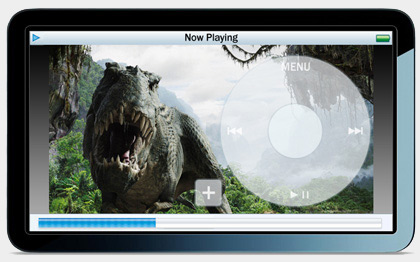
Ipodwide2

According to this site, the touchscreen video iPod will be out before the end of the year, possibly in time for holiday purchasing. The writer claims to have spoken to an executive from a third-party iPod accessory company, who says they are kept in the loop by Apple. One of their new products, he reportedly said, has been made for the 6th-generation iPod, or the full-screen touch-control iPod long rumored to be in production, and universally expected to debut by early next year. The iPod would, hopefully, have “480p” resolution–that is, the vertical resolution would be 480 pixels, which is essentially the same as any pre-HDTV television set–even better, as progressive scan (the “p” in “480p”) delivers twice the video information of interlaced scan (what old-style TVs offer).

Take the rumor for what it’s worth…


Meanwhile, Microsoft takes a cheap shot at Mac users: they have just released their licensing information for Vista, and it appears that they are forbidding use of Vista Home version in virtualization applications, such as Parallels. That means that if you want to run Vista in virtual mode, you’ll have to pay for the Business or Ultimate editions, starting at $300.

Is there some actual, legitimate reason for doing this, or are they just being assholes?

Categories: Computers and the Internet, Mac News Tags: by

Why I Don’t Like Reading the Japanese News

October 18th, 2006 Comments off

There are too many stories like this one [short-lived link]:

Woman, who made 9-year-old stepdaughter eat rubbish off floor, arrested

There are just too many stories about horrendously depressing personal tragedies in the Japanese press, more often than not having to do with child abuse and family members killing each other. A few examples from the last few week’s news include:

  • Woman commits suicide after losing boyfriend in derailment
  • Aichi man sentenced to life in prison for killing 6 relatives
  • Osaka man arrested for beating woman, letting her freeze to death
  • Mother given 12-year prison term for starving 19-year-old son to death
  • Body of woman wanted for questioning in deaths of Nagano family found in river
  • Three found dead with nails stuck in their heads in Nagano home
  • Couple admits to strangling woman in Gunma apartment
  • Aichi woman slashed by knife-wielding stranger
  • Driver who killed 4 children in Saitama caused accident in May due to same reason

— Stories gleaned from Japan Today

Now, I’m not one of those people who want the press only to publish feel-good, positive news stories; I simply have little desire to read about the gruesome details about how badly individuals abuse each other, and the Japanese press simply seems to me to have far more than the usual share of stories about how people abuse, maim, and kill each other, with the grisly details spelled out in the headlines so you can’t avoid cringing at them.

I’m not sure about this, but I really started seeing this trend grow in the 1990’s. In the 80’s, there would be some stories of this nature, but not so many. However, after the bursting bubble and economic decline between those decades, I started seeing a lot more in this vein, especially after a few landmark stories, like the serial killer of little girls who had massive amounts of porn in his apartment, and the student who decapitated another student and put the head in a storage locker at a train station. This was about the same time that Japan fell from it’s superior Japan-is-safe mentality, when people were afraid to travel to places like Hawaii for fear of the horrible crime wave that awaited them; that reversed in the 90’s as people saw Japan as falling apart, full of crime–despite the actual crime stats not wavering all that much.

There is some personal preference involved in my reaction as well; I am averse to news which peers too closely into the private lives of others. I deliberately avoid reading the stories about celebrities’ private lives; I could not tell you much if anything at all about Michael Jackson’s escapades, Britney Spear’s baby troubles, Brangelina’s bouts with paparazzi, or Madonna’s current adoption story, outside of what I glance in the headlines as I pass the stories by. I could care less. But the same goes for the private lives of anyone, doubly so for depressing stories. Maybe I’m just not a people person, but I just don’t want to hear about it. I’d sooner read stories about local zoning ordinance changes discussed in the city council chambers.

(OK, I’ll fess up to approving of the spilling of details about Republican politicians’ private lives, but only because [a] they sell themselves as the high-family-values-and-morals crowd, an [b] they do the same in spades to Democrats–it’s more of a sauce-for-the-goose kind of thing.)

Part of this is also my standing on what the press should be reporting. Zoning ordinances aren’t sexy, but they are relevant and important. People’s private melodramas are sexy, but have zero relevance to anyone not immediately related to the participants, unless it somehow or other touches on law or social issues.

And I seriously believe that news organizations should be restricted when it comes top reporting on private matters. Yes, I know, the First Amendment in inviolate–but not when it conflicts with other rights just as important. You can’t publish libel, you can’t incite murder, etc.

And it seems to me that freedom of the press was intended to report to people about what was happening publicly, so as to lead to an informed population; it was not intended to make the entire population into an inviolate peeping tom. Gossip columns, “news” stories about personal affairs and dalliances, and stories about others’ personal details might be entertaining to most, but that does not make them protected. The right to a free press is being taken and abused in a way that I do not see as necessary for maintaining a free press; I do not believe that gossip is a necessary evil.

Just as much as I believe in the right to a free press, I believe in the right to privacy; and where there is a conflict, the freedom of the press should only win out in cases where public relevancy can be demonstrated. I think that this is a clear enough distinction that there would be no risk to losing the true protections of the First Amendment were this to be enforced.

Okay, I’ve strayed a bit. But there is a common thread here–we really should stop nosing into the private affairs of strangers. For me, that’s easy: I have no desire to in the first place. But for those who love it, it is still none of their business, and only serves to harm.

This all brings to mind a line I very much enjoyed from an episode of the new TV show Ugly Betty (a surprisingly good new series), where a fashion gossip show host smugly told her audience: “Remember, we only make other people feel bad to make you feel good.”

Categories: Media & Reviews Tags: by

Mutations Can Be Fun

October 17th, 2006 1 comment

How could you not love fainting goats?

Call me insensitive, call me cruel to animals… but the sight of these goats flipping on their backs with all four feet straight up in the air like some cartoon, I just love it. The goats are no worse for wear; it can happen to them even if they are excited by a call to eat, and they recover after a few seconds, getting back up no worse for wear.

The mutation in the goats causes them to have an exaggerated startle reflex which stiffens all their legs when they get excited. The older, more experienced goats learn to simply brace themselves upright, while the younger goats topple sideways or upside down, all four legs woodenly splayed. This causes the bizarre-looking reaction where a herd of goats, being startled by an opening umbrella or the like, begin to bolt for a split second–then all goats, as if on cue, simultaneously freeze, half of them standing, half of them toppling.

According to the breeders, the goats cannot startle each other–they mate, butt heads, and do general roughhousing just fine.

Categories: The Lighter Side Tags: by

Spanning Sync

October 17th, 2006 1 comment

SpansyncFor those of you out there who use Macs and like both iCal and Google Calendars, there’s some very good news: a company called “Spanning Partners” is developing an Internet application that will “seamlessly” sync the two. It’s called Spanning Sync, and the public beta will begin in about a week. You can sign up to be notified to join. One site says that only 100 people will be allowed into the initial beta testing, but I can’t be sure that’s the real limit.

Still, whenever it becomes available, it’ll be good news. I use iCal, but have trouble syncing it–I don’t have a .mac account (the usual way to sync iCal between two Macs), nor would I want to pay $25 for the only working shareware I could find for the purpose. But to be able to sync with Google Calendar (and hopefully, through that, between my two Macs) would be great. if I could also share my calendar with my students and let them actively make appointments, which would then show up automatically in iCal… that would be a cool app. So long as it doesn’t become too costly in the post-beta releases.

I’ll let you know when I find out more about this.

Update: the limit of 100 testers is confirmed; they will add that many people to the testing program to see how their servers react to the load. If everything goes well, they’ll add more people in groups of 100 until all who have signed up are added. Of course, this begs the question: why would this app put a load on their servers? The app is supposed to sync your Mac’s iCal with the Google Calendar web site; how does this app’s web site get involved?

Update II: Answering some of my questions, a person claiming to be involved in the project said that: (a) this software would allow for syncing iCal on different Macs via the Google Calendar; (b) changes in one calendar (additions, edits, deletions) would be automatically reflected in all linked calendars; and (c) the software will be pay software, the price being “less than .Mac [$100] and more than free.” That leaves a huge space for the fee, of course, which is not too encouraging…

Categories: Mac News Tags: by

The Survey and the Pipe Dream

October 17th, 2006 2 comments

Have 655,000 civilians really died in Iraq? Or is the real number less than one-tenth that amount? Is the situation in Iraq well in hand, or has Bush botched the war so badly with no hope of setting it right, that putting Saddam Hussein back in power is actually starting to look like a palatable alternative?

Naturally, conservatives cling to the much lower numbers, as they make similarly unsubstantiated claims that Saddam Hussein probably killed hundreds of thousands of people and disappeared them. The new survey, carried out by researchers at Johns Hopkins and reviewed by The Lancet, a credible and very well-established journal, has been called untrustworthy–but only by people with a political bias, and never for reasons that hold up well under scrutiny (if any rationale is even given in the first place). The survey says that the total numbers could range anywhere between 420,000 and 790,000 deaths, but that the higher numbers are more likely closer to reality.

While the Iraq Body Count web site estimates around 45,000 civilian deaths so far, it is restricting its count to “civilian deaths that have been reported by recognized sources,” which means that they wait until any death is reported by “two or more independent approved news sources.” Naturally, this will leave an enormous number of civilian deaths unreported.

Bush claimed that the Hopkins estimate was “pretty well discredited,” but that claim in itself is highly questionable. Most who make that accusation claim the survey’s methodology is discredited, but like Bush, they give no details on how it was discredited, or by whom. The most coherent argument came from the Iraq Body Count (IBC) site, which claims that such high numbers would mean that there is a massive conspiracy underway in Iraq to hide civilian deaths from the media–but give no supporting data to back this up, not even a brief explanation.

The claims of the Hopkins study being “discredited” is probably mostly just a casual comparison with the IBC numbers, with the right-wing observers choosing which study to discount based upon what they want to see rather than the actual methodologies.

The IBC methodology, which counts less than 10% of the numbers found in the Johns Hopkins study, is, according to IBC itself, a “conservative” measure of deaths (in the statistical sense, not the political sense–though that works here, too). They themselves have said that “our own total is certain to be an underestimate of the true position, because of gaps in reporting or recording .” The Media Lens web site has an extensive, two-part report on how the IBC is missing the mark by a far wider amount than they claim. Among the reasons: IBC ignores all non-English media reports, in particular Arabic sources, which do a far better job of counting casualties than the English-language media; it ignores all deaths not widely reported; it does not account for reporting bias by news agencies in favor of covering “good news”; and it strongly undercounts deaths by helicopter attack, unmanned drones, and tank fire. There’s a lot more, but it is pretty clear that the IBC methodology can be very strongly discredited.

The Johns Hopkins study, on the other hand, relies on what is called the “cluster sample survey” technique, where 12,801 Iraqis were surveyed in representative groups, the results of the survey extrapolated for the whole population. This technique is commonly used, and is considered accurate (where it does not step on any political toes, that is). It is probably the most accurate counting technique possible for a place like Iraq, where full reporting of events is clearly hindered by the same violence that is being reported on.

Johns Hopkins has an update that reaffirms the original estimate.

So, if we accept the report as accurate, then what’s the conclusion? Simply put, three times as many people are dying now than were dying under Saddam Hussein. Add that to the fact that everything from employment to power, sanitation, and water service are far below pre-war norms, and it paints a pretty grim picture–especially considering that things only stand to get worse.

Conservatives are violently in denial over the numbers for good reason: they don’t like it when the facts bear out that their favorite president is three times as much a bloodier despot than Saddam Hussein himself. When the president’s stewardship over Iraq causes many times the deaths caused under the “Butcher of Baghdad’s” rule, it makes a startlingly coherent case for the sheer catastrophe this president has produced.

This is nothing new; for a long time now, conservatives have been crafting their own reality, their “truthiness” about the state of things in Iraq. They have constantly and persistently painted an unrealistically rosy picture, standing by their fantasy even as one delusional excuse after another got shattered by hard reality. You could even say that the shams started before the war began, with the talk about how we would be greeted as liberators, how our troops would be showered with floral welcomings. After the invasion ended and the insurgency began, there were all kinds of excuses. Those weren’t insurgents, we were told–they were terrorists from outside Iraq; the people there love us, just look at the Kurds. The Kurds in the north were very often brought up whenever conservatives wanted to show how things were going well, as were reports from soldiers from any quiet corner of Iraq that could be located.

Fake news was also a strong component of the shams. That iconic event where the statue of Saddam Hussein was toppled in the midst of throngs of cheering Iraqis is now burned into our cultural psyche–even though it has long been proven to have been a staged PR event, with the media as willing accomplices. The “throngs” of Iraqis was actually a small gathering that took up only a tiny portion of the public square; the media photographers shot from a low angle to hide the fact. The Iraqis were at least in part ringers–several of them were confirmed as associates of Ahmed Chalabi, the Bush administration’s corrupt despot-to-be at the time. The American flag that got draped over the statue’s head was, by sheer coincidence of course, the same flag that flew over the Pentagon on 9/11. Whaddaya know.

The deniers quickly turned on the media, however, once the media started reporting a little more of the truth; like Reagan in the 80’s, they blamed the messengers for the bad news, saying that there was plenty of good news, it just isn’t being reported. Look at that new school being opened! What about the stadium that just got rebuilt? Look how many neighborhoods have gotten their power and water restored! However, this pipe-dream fantasy slowly got torn down as reality seeped through. The schools were not being reported on because our own military told the reporters not to; if the media reported on a new school opening, it became an instant target and was destroyed. Reporters tried to report on new stadiums and such, but all to often it was far too dangerous to venture out to do that reporting. And it became all to clear over time that public utilities and services were in a disastrous state of disrepair.

The administration even had their own people act as ringers for media reporters, or paid off reporters to cover the news they wanted with the slant they wanted. There was a political office in Baghdad that was charged with sending out rosy media reports during the election year, something the deniers could point to and say, here’s the news that isn’t being reported on.

Politicians and observers tried to use visits to Iraq as credibility for their claims. “I’ve been to Iraq, and things are fine!” we used to hear, and sometimes still do. But then we started finding out that photographs of calm neighborhoods in Iraq that politicians posted on their web sites were actually taken in other countries, and the tours these people were given were through the calmest places–in short, they were patronized while the soldiers babysitting them rolled their eyes and resented the hassle they presented.

When sectarian strife erupted into what many called a “civil war,” the deniers couldn’t have that floating around, so they started parsing words, saying that “civil war” meant something else entirely. They even spread the incredible and fantastic claim that the violence in Iraq was no different than daily life on the streets of many American cities; this reporter sharply cut that statement to shreds.

In contrast to the claims that things are much better in Iraq than we’re hearing in the media, the truth is that things are actually much worse than we’re hearing. Hard to imagine, but the evidence backs it up.

In the end, there is no denying it: Bush’s War in Iraq, like the president himself, is a miserable failure. Now, the knee-jerk right-wing response to that is to create a straw man: “how dare you insult the troops!” (Bill Maher got that response from his wingnut guest just a few days ago.) Of course, observing that the war is a failure does not reflect on the troops; it is a matter of sending them on a mission that is futile and impossible in the first place, a long shot even if the president hadn’t screwed up the war planning and execution in almost any and every way possible. Trying to use the troops as a human shield against criticism is dishonorable and constitutes the basest form of cowardice.

Deny all you want, the truth doesn’t care. Iraq is a failure, and that is clearly evident to anyone who takes an honest, objective look at the immense tide of facts that are available to anyone who wants to see.

Why is this important? Because if one makes plans and executes policies based upon a falsehood, it is bound to create further disaster. That’s why we have to accept information such as the Johns Hopkins study, as sober realities of the war, and proceed intelligently and responsibly.

As if the Bush administration is ever going to do that.

Categories: Iraq News, Political Ranting Tags: by

In Case You Forgot

October 16th, 2006 Comments off

Our people are still dying in Iraq, and the death toll is rising quickly. So far, October 2006 is more deadly for U.S. troops than any month since April, 2004, with an average of seven U.S. service members being killed every two days. It may count even worse than that, since other high-casualty months have included a large number of non-hostile deaths caused by helicopter crashes or vehicle accidents. So far in October, only two of the 54 U.S. troops deaths are listed as non-hostile, and they were among the six deaths on the first day of the month. All since have been casualties in combat or have been caused by roadside bombs.

This is especially unusual since the Bush administration is known for scaling back operations in the month or two before an election so as to lower the death count. Purely for political reasons, of course–right after the 2004 election, the administration ramped the violence right back up with a major operation in Fallujah. That’s why October 2004 was relatively quiet–63 U.S. troop deaths–and November 2004 was one of the bloodiest months of the war, with 137 deaths, almost all in combat–67 of them happening in the week following the presidential election, 95 deaths in the ten days following. Looking at the daily casualty listings, you can clearly see when the election ended–almost no deaths in the days before, then an explosion of carnage immediately after. As I commented at the time, how would you like to have your death choreographed so as not to inconvenience a politician’s re-election campaign?

Perhaps Bush forgot to call the troops in to hide and wait out the election campaign. The New York Times is reporting that U.S. troops are now serving in higher profile, conducting more operation than last month. I guess that Bush only feels it is necessary to manipulate the military for his own campaign purposes, but not for Senate and House races in the midterms.

However, the White House excuses for the high death toll don’t fully add up:

In contrast, the American military has not conducted any major operations this month: the military has not initiated a new urban cordon-and-search operation for more than two weeks. Instead, it has focused on patrolling the areas already swept, officials say.

This in contrast to the major offensive in Fallujah two years ago, which accounted for most of the deaths in combat that month. So, it could be that the war in Iraq is simply flaring up. If Bush decides to call the troops in to hunker down until election day, will that have much of an effect? And would Bush do it, knowing that it would allow the insurgents to gain territory, which would cost more lives of our soldiers later on? He did it before.

Update [Oct. 18]: it’s getting more violent, with 72 deaths (70 American) after 18 days; that’s 4 deaths per day this month so far.

Categories: Iraq News, Political Ranting Tags: by

That Damned Liberal Media!

October 15th, 2006 Comments off

A conservative “watchdog” group has a new twist on the Foley scandal: smear the Democrats and the media at the same time:

The establishment media has a double standard when reporting the sexual proclivities of Republicans versus Democrats, a media watchdog group found in a report on the Mark Foley scandal.

Over the past 12 days, more than 150 stories on Foley aired on morning and evening news shows on ABC, CBS, and NBC, the Media Research Center, parent company of Cybercast News Service, found. Compare that to 19 stories over one year in the scandal involving Mel Reynolds – a Democratic congressman from Illinois convicted in 1995 of having sex with a 16-year-old campaign worker.

“The numbers are clear and shocking: 152 stories on Mark Foley over 12 days, yet only 19 stories on Mel Reynolds over an entire year. This double standard reeks of political partisanship and proves how far the liberal media will go to downplay the sexual degeneracy of a liberal Democrat and trumpet the sexual degeneracy of a Republican,” said MRC President Brent Bozell in a statement.

The biggest difference between the two cases that these clowns are intentionally ignoring is that in the Foley case, virtually the entire Republican Party leadership was indicted as knowing about Foley and yet doing nothing. That element was missing from the Reynolds case. The “Media Research Center” conveniently glosses over the fact that this difference puts a wide chasm between the two stories. Had the Foley scandal been just about Foley, it would have gotten, at most, the same play as the Reynolds story. The story would have died out within days.

It’s the complicity of major House players which is the real story, and that’s why it has legs.

Categories: GOP & The Election, Political Ranting Tags: by

Positive Message, Wrong Location

October 15th, 2006 Comments off

A story I saw at DKos mentions a message on posters and billboards which our taxpayer dollars put up in Iraq as a way to inspire hope in the country torn by war. The message reads:

No matter how strong the storm, it will go away in the end.

Of all places, they put this sign up in the Middle East? Clearly, someone in our PR department is not reading his history. I’m sure the sentiment is appreciated, but I doubt that too many people are reassured by it. Especially when you look up to see the message on a bullet-ridden wall after having just found the headless body of your nth friend/relative discarded in the street.

Categories: Political Ranting Tags: by

Extraordinarily Stupid Person Buys Mac, Can’t Figure Out Squat

October 15th, 2006 5 comments

Man. If you know Macs, and want to see how stupid a person can be, check out this article. I had to check the site’s main page to find out that it was not, in fact, a parody magazine–the guy’s take on the Mac was so ridiculously wrong on so many counts, it seriously looked like a spoof. I’ve fallen for those before. But this time, it’s for real–this guy is just plain dumb.

Let’s go over the article’s high points. First, a preview of his gripes from the second paragraph:

I was suckered in by the hype about freedom from viruses, simplicity of computing and versatility. Instead, I bought a boat anchor that can’t view Web sites properly, is not compatible with Microsoft Word and can run only dumbed-down versions of regular software.

How do you respond to that? The Mac is not easy to use? He addresses that later on, but we’ll see that his main complaint is that the Mac is not identical to Windows XP. Security he dismisses out of hand, as if it were not worth anything. “Not compatible with MS Word”? And “dumbed down versions” of software? But as I said, that’s just a preview. Let’s get down to his real gems:

I’ll be lucky to get half of the $4,552.71 I paid for the Mac on May 21, 2006.

Here’s a real sign of his cluelessness: he bought a pre-Intel professional-level Mac G5 just a few months before the Intel-based machines were released. That’s like buying a brand-new, top-of-the-line VHS player today–you’re buying into the old technology just a short time before it becomes outdated.

What’s more, why did he buy a top-of-the-line desktop system? His previous computer was an IBM ThinkPad, for crying out loud. It sounds like he loaded it up with massive amounts of RAM as well–and the costs would not be less for a similarly-equipped Windows PC (a common fallacy in this article–complain about the Mac for having the same downsides as every other computer out there). Why not get the Intel iMac 20-incher, already out by that time? It would have cost less than half as much, and almost certainly would have met his needs–probably more so, as it could run Windows as well. And all he talks about is running Word, PowerPoint, and the browser–no 3-D gaming or video editing. Clearly he bought the wrong computer. The iMac is plenty fast for his stated needs. This guy clearly did not do his market research, at all. And this guy works as a marketing consultant?

I liked the sexy FireWire with its zippy transfer speeds, although I used it only to transfer data to my external hard drive.

Another sign of cluelessness. Firewire is 400 Mbps. USB 2, which has been out for a few years now and is standard on all computers including Macs, is 480 Mbps. Maybe he’s talking about the Firewire-b port, which goes up to 800 Mbps–but that speed is only of use if you have super-fast peripherals, like a heavy-duty RAID array. Video editing pros need it, for example. A law firm marketing consultant, though? What for? The hard drive he mentioned was likely an out-of-the-box consumer drive, which uses only a fraction of the Firewire speeds.

The signs of doom were there on day one, but I ignored them. I pretended that I liked the one button mouse. I quickly started using click + command keys (and other keyboard shortcuts). I really missed the little scrolling wheel in the center of the mouse.

What the hell is he talking about? First, the Power Macs selling in May 2006 came with the Mighty Mouse, a 4-button mouse with a scroll ball (more versatile than a scroll wheel). How idiotic do you have to be to not realize there are three extra buttons on your mouse? Did this guy read no manual and speak to no Mac user?

Second, even if he was given a one-button mouse, he could easily just buy any USB mouse out there and it would work fine. What is wrong with PC users that they can’t buy any mouse that was not shipped with the computer? I got a Windows machine and didn’t like the old-style ball mouse they gave me, so I went out and bought a laser mouse. It’s not brain surgery.

I put up with the fact that the HP printer, which I had purchased on the recommendation of an Apple Store, would work about 50 percent of the time with the Mac. I was constantly deleting print jobs and starting them over.

I have an HP printer, and it works beautifully. In fact, I don’t even have to install the driver software, even if the specific driver for my printer is not installed in OS X; the Mac simply sees the printer, and makes up its own driver. I have only had trouble with network printers, and only in some cases even then. My PowerBook G4 easily connected to and used a Fuji-Xerox color copy machine on my office network, after just 30 seconds of setup. You have to be pretty inept not to be able to print correctly from a Mac.

I noticed it was slow; I saw that stupid spinning colored wheel a lot. The Mac would hang up; the TV ads said Macs didn’t do that.

Here’s another sign something was unusually wrong, or else he’s massively exaggerating. Even though it was pre-Intel, the top-of-the-line Power Mac G5 was lightning fast. What was he trying to do that got him the spinning cursor “a lot”? He never reveals this. I suspect the exaggeration explanation. As for hangs and crashes, that depends on what software he uses, in what combinations. Maybe the guy was loading up with beta software; crashes with finished software are rare, at least in my experience. Again, he’s probably exaggerating; frustrated people with a grudge do that a lot.

I did like the Finder because it was quick in locating files, but it would turn up a lot of false hits. It was comparable to the Google Desktop searcher on my PC.

It’s called “refining your search terms.” False hits are a problem endemic to all search engines, PC or Mac. So how does this show the Mac is worse? And does this guy not appreciate all the advantages in Spotlight over Windows alternatives, even despite the software’s version-1 shortcomings?

What drove me nuts was that I would open Word for Mac and couldn’t delete files while I was in Word. There is no File | Delete option.

This is something that I suspect a lot of people would not recognize, and this guy does not even correctly identify it. He’s talking about the ability in Windows to manipulate files and folders from within the navigation dialog box–say, when you do an “Open” or “Save” command, and you want to look for where to open or save something. It’s not a Word feature, it’s part of the operating system.

It gets better:

So the documents took up space on my hard drive, until someone told me I had to find the document in Finder and then move it into the trash from there. This seemed stupid to me; I just wanted to highlight a file and tap “delete.”

How dumb is that? This guy never caught on to the fact that in both Windows and the Mac that the standard way of manipulating files was in folder windows?

More amazing, without the ability to delete files in a dialog box, he would never delete any of his files? And by the way, how is his hard drive filling up with Word files? My superpowers of observation tell me he’s exaggerating an inconvenience again. Create more folders and organize, Pointdexter.

Look, I’ll admit right here and now that I like that ability in Windows, and would like to see the Mac pick it up–but to be chained to it so absolutely that he could think of no other way to function is so computer-illiterate to be laughable–at least for a guy who puts on the airs of writing an article about it in the media. Or are complete N00bs commonly writing tech articles now?

The really vapid thing here is that even after he’s told how to do it the standard way, he sees it as a chore that is somehow more difficult, when it is practically the same thing, just in a different location. Instead of opening a dialog box in Word, just open a window in the Finder. Navigation is virtually the same–easier on a Mac, in fact. To get rid of the file, instead of tapping “Delete,” tap “Command-delete.” I know it’s rocket science, but get with the program.

Word files transferred from the Mac were missing pictures. PowerPoint files transferred from the Mac would lose their formatting. PCs and Macs are not compatible, regardless of what they say.

Interesting–I transfer Word and PowerPoint files with my students, who use PCs, all the time, and I never have these problems. My guess though: the pictures that disappeared were in a file format that his version of Office for the Mac could read, but the Windows version of Office could not. I would guess that he saved the file using Office for Mac 2004, and tried to open it in Office for Windows 2000. I know that causes this kind of problem a lot. In short, he’s probably whining about the Mac because he’s too thick to figure out that the software version is different. This is true on Windows-to-Windows compatibility as well; it’s a universal software version incompatibility, not an OS shortcoming. As for the loss of formatting, I’d be willing to bet he used a font on the Mac that didn’t exist on the PC–which would be his error, not the computer’s.

The multiple clicking to accomplish simple tasks was a constant annoyance. Things I could do with a PC in two keystrokes took four or five clicks with the Mac. To do a “fast print” required clicking File, Print, find Copies & Pages, click Paper Type/Quality, click Normal and finally clicking Fast Draft. And there was no way to leave the setting as the default. I had to do it manually every time.

He’s basing the ease-of-use of the OS on a single printing task? How about doing a find-file between the two OS’s? A far more common task where the Mac does in one stroke what takes five or more for the PC. How about mounting and ejecting USB flash memory sticks? How about creating a new folder within a file & folder window? How about changing screen resolutions? How about setting up printers? I could go on and on; the list of things a Mac does faster is a lot longer than the list of things you can do faster on a PC.

Doing a simple screen capture was an immense chore. On a PC you just press Alt and tap PrtScr. With the Mac I had to download and launch special programs to accomplish this simple task.

So, doing a Command-shift-3 is an “immense chore”? (By the way, a screen capture on Windows in not what he says it is–he’s describing a window capture, not a screen capture!) This guy is wailing on the Mac because he’s too damned lazy to even look up the keyboard shortcuts? (Three clicks: System Preferences, Keyboard & Mouse, Keyboard Shortcuts. Boom.) The same shortcuts he could easily customize on a Mac but not in Windows? You don’t have to open the “Grab” application (which, by the way, comes pre-installed on your Mac) to do a screen grab on the Mac; that app is mostly good for “timed” screen grabs, so you can get a picture of the cursor in action, pulling down menus and such.

In fact, the Mac is easier and more versatile here than Windows. In Windows, you only have the keyboard shortcuts “Print screen” (to capture the whole screen) and “Alt-Print screen” (to capture the image of a window or dialog box). On the Mac, there are six keyboard shortcuts (most of them customizable), for capturing the whole screen, a window/dialog box/any-object-selected, or a custom-sized area you define, and to save it to the clipboard or as a file on the Desktop. With a free utility, you can specify where the file is saved and what image format it is saved as.

Here’s a perfect example of the Mac being way better than Windows, but this guy is just too dumb to realize it.

I didn’t even bother with the Mac’s iCal or Mail, which required me to buy an @mac.com address.

Wrong. Mail can work freely with any email account, just like any other software. iCal works fine without .Mac as well; the mac.com address only serves as a convenient way to publicly publish your calendars and sync them between multiple computers–things you can achieve anyway if you have a bit of technical knowledge.

Instead, I went straight to Outlook for Mac. A lot of the software for Mac — such as AOL for Mac OS X — was dumbed down and missing may features of the current PC versions.

AOL for Mac was his prime example of dumbed-down software? And the outdated and feature-poor Outlook was an example of better software than what comes with a Mac? What a buffoon.

For me the killer was the Web browser. Safari simply cannot read Flash. It is, quite simply, a second-rate browser.

That’s funny, my version of Safari reads Flash fine. In fact, I had to get special software to selectively disable Flash animations on Safari, they annoy me so much! Did he try downloading the plug-in? As for my Mac, I didn’t need to–the Flash plug-in was included when I installed OS X.

Now, it is true that some web designers lazily create their sites so they only work cleanly for Internet Explorer, but that’s the web designers’ fault, not the Mac’s. You’ll find the same difficulties with Firefox. It’s not anyone else’s fault that some web designers are exclusive because they don’t want to work hard enough to check their pages on different browsers and do the necessary touch-up work. Besides, finding a web site that doesn’t work in Safari is not an everyday experience; aside from a Google app or two, in fact, I can’t recall encountering a non-functional page in Safari for some time now.

I even called Apple headquarters and asked when a better version would be available and was told that Apple is in no hurry to improve it.

Yeah. Right. I’m sure that’s exactly what they told him. I’d bet a lot that he’s either lying about even calling them, was unable to explain his problem clearly because of his ineptitude, or that he’s massively exaggerating again–or the last two combined.

On the suggestions of friends, I downloaded Netscape and Firefox, which were no better.

I rest my case.

I scraped along with Internet Explorer 5.0 for Mac, and then discovered in 2006 that Microsoft would no longer support the Mac version.

This explains why his browsing experience on the Mac sucked–he used the crappiest possible browser, in a version several years out of date, just because he couldn’t figure out how to play Flash animations on a web page he visited in Safari. What a loser. A coworker of mine emailed me a few weeks ago to complain of web sites not working and that his browsing experience on the Mac sucked big-time. He was amazed when I accurately guessed that he was using Internet Explorer, and after I got him started on Safari, he had no complaints.

I run several Web sites, all optimized for IE 5.5 or higher.

Here’s another clue. He’s one of the lazy designers who “optimizes” for Internet Explorer. He apparently does not know that “optimizing for Explorer” means that instead of using universal coding so that every browser can read the page, he instead codes specifically for the Explorer browser in an exclusive way that simply shuts out visitors not using Microsoft’s software. Then he whines about Safari “not working.”

I couldn’t operate my own Web sites with the Mac. That was the straw that broke the camel’s back.

Say what? How, exactly, could he not operate a web site using a Mac? I do it just fine. Oh, I bet I know–he probably still uses Microsoft FrontPage and can’t find a Mac version. Outside of that, there’s no reason he can’t use a Mac for this, not that I can figure–and I run several web sites myself just fine, thank you.

Then the hard drive croaked on me after only three months of owning the machine. I couldn’t tell what was going wrong and had to hire someone for $125 an hour to come over and tell me what the heck was happening. Apple replaced it for free, but I became leery of what other hardware would fail unexpectedly.

Here’s a clue: hardware can fail on any machine. You expect the Mac to never have hardware problems? How does the fact that a hard drive failed make the Mac any different than a Windows PC?

Furthermore, you had to hire a guy at $125 an hour to tell you that your hard drive wouldn’t work? And you claim the expertise of running several web sites? The author claimed he went to an Apple Store before buying his printer, which means he had access to a Genius Bar. Sure, it’s a pain to haul the big Power Mac chassis into the store, but it has those big handles on it, and surely it would be worth saving $125 an hour?

This is the definitive Ugly-Windows-User bashing of the Mac. A moron who doesn’t bother to read up or learn how a Mac is different or what it can do, then complains when his Mac doesn’t act like Windows. If I posted a blog entry on Windows that was as stupid as this article is, I would be too embarrassed to write again at all for a month, and would never expect anyone to trust anything I wrote about computers ever again.

There is one fringe benefit to this, however: if I ever need market consulting, I know exactly who not to call for assistance. If this guy is so clueless about operating a simple computer, I wouldn’t trust him to do anything more complicated than driving a stick-shift, following a recipe for cookies, or programming a VCR–and probably not even that much.

Down But Not Out

October 14th, 2006 Comments off

Air America Radio filed for bankruptcy today when negotiations with a creditor broke down. It has apparently been losing money for some time. This is normal for a startup, but AAR apparently has not been able to get up off the ground financially, despite good demographics and a listener base of 4 million. Since it does not have a zillionaire backer like Rupert Murdoch, there was no one who was able to pour a billion dollars into the network to start it up and then run it at a loss for many years until things shaped up. Instead, it is a small startup, having the same problems as other small startups. Is it a matter of delivering the goods for advertisers, or simply selling the concept of liberal talk radio to advertisers who simply buy into the right-wing pitch that it just won’t work? Are the demographics as good as they have been painted generally, or was that a selective reading? (So far, there has been no unbiased analysis either way.) Or is it simply the stigma of an unproven startup without much backing? If only the right-wing conspiracy theorists were right and George Soros would pour the money into AAR that Murdoch did into Fox, then the story would be different. Instead, there are struggles–but, at least for the time being, AAR is still on the air. It might continue to struggle and then die out, or it might shape up and do better, perhaps after the social pendulum continues to swing back towards liberalism.

Until then, one can be sure that there will be a tremendous amount of crowing and celebrating among conservatives over this development; I predict that the same people who cower and stay away from commenting when news is bad for Republicans, will come out in force, doing Google searches for blog posts on AAR so they can come in and gloat, ignoring how long it took people like Limbaugh or networks like Fox to pick up steam…

Categories: Media & Reviews Tags: by

Yet Another Reason to Avoid Vista: The Pervasiveness of Virtual Serfdom

October 14th, 2006 Comments off

As if there weren’t enough reasons not to get Vista already, Microsoft keeps coming out new ones. This time it’s one related to the license: Microsoft will limit the number of times you can transfer Vista’s license to a new computer. So let’s say you buy Vista for your existing computer, then you decide to get a Mac, for example, and license it to that. The next time you buy a new computer, or if you want to simply switch to a different computer, you’ll have to buy Vista all over again–even if you disable Vista on your older machines. Even if this will not effect you directly, the whole idea is offensive in principle.

This is not true on Macs–in fact, Mac OS X doesn’t require activation–hell, Mac OS X doesn’t even have a freakin’ serial number or “product key”! They just trust you to use it honestly. But they wisely do not even try to do anti-piracy measures which would probably accomplish little aside from massively annoying their customers. Now, it is true that Apple tends to care more about selling hardware–heck, before Mac OS 7.5, the Mac OS was always free. But in principle, Apple’s way is far more attractive.

The idea of individual ownership is quickly disappearing, and is being replaced by a system akin to serfdom, where the serf (you) is not allowed actual ownership, so that the master (the corporation) maintains control. As the information age develops, “license agreements” pervade in a way that limit your ownership of something. If you buy a movie on your computer, the studios want to limit the license agreement so that even after you’ve paid your money, the studios still control how you watch the movie, and on which appliances. While the claim is that they are trying to avoid piracy, that’s bull–they just want to limit it so they can sell you the same thing all over again in a different format, and still control what you “own.”

Examples of this abound. One variation is the “region encoding” of DVDs, which restricts the buyer of a DVD to play that DVD in the same geographic region where they bought it. For example, I live in Japan, which is region 2; however, I want to buy DVDs from the U.S., which is region 1. But when I try to play a region 1 DVD in a region 2 player, it won’t work; they want to force me to buy the DVD in Japan. Why? To fight piracy, they’ll claim. Again, bull. Pirates can easily, effortlessly get rid of the region encoding. They don’t want to stop pirates, they want to stop legitimate consumers from getting around regional pricing and release dates. If I buy DVDs in Japan, they cost about 50% more, and are usually released months after the U.S. release. Region encoding is not to protect from pirating, it is to protect the profits of the movie studios.

In short, any license agreement at the individual consumer level has one purpose: to make more money for the vendor by denying true ownership to the purchaser.

The whole “licensing” business is as if you bought a new car, but the “license agreement” only allowed you to drive the car to work, and you are forbidden to do shopping or leisure using the vehicle; for that, you need to buy another car. And just to make sure you follow the license agreement, the car dealer will have someone follow your car around to make sure you honor it, ready to disable your car should you stop off at the convenience store. That is the effective analogy for what these “intellectual property” vendors are doing.

Microsoft’s one-license-transfer-only policy could be equated to giving a car to a new family member. When you buy the car, you may sell it or give it to one person, but that person must then keep it or throw it away–the car may not be given to another person again, ever.

The Vista scheme is a sham because the transfer of the license to a new computer could be performed in a way that ensures the copy on the older machine is disabled. But the probable reason Microsoft is doing this is because their whole “activation” scheme costs them money in terms of hiring telephone operators to help people with the process; to avoid the extra cost of assuming you’re a criminal, they want to limit your legal property rights.

Here’s a radical concept: when you buy something, you own it. You can do whatever the hell you want with it. Since information can be duplicated, and that is a form of stealing, that can be forbidden rightfully. But beyond that, what you own, you control. This whole license crap is nothing but a way to deprive individuals of the right of legitimate ownership.

Asteroid Impact: Averted

October 14th, 2006 Comments off

Got the from FG, who got it elsewhere. It’s a spoof on a computer animation released in Japan, showing what would happen if a large asteroid hit the earth in a rather devastating way. The original video is somewhat devastating to watch, but the spoof showing how to avert the disaster is hilarious. Enjoy.

Categories: The Lighter Side Tags: by

Tempting Faith: It Just Keeps on Coming

October 13th, 2006 Comments off

More good news for the Republicans: now their core is revolting. Rather, I should say, it probably will in the next series of revelations coming out about the Republican Party. And like the Foley scandal, the shots are coming from the right, not the left, making the charges that much more significant.

If you read the political blogs, you’ll have heard about Tempting Faith, a book written by former Bush White House staffer David Kuo. Kuo used to be a “special assistant to the president,” and was the number-two man in Bush’s “Office of Faith-Based Initiatives.” Kuo’s primary charge is that while the Bush White House claimed to be loyal to the evangelicals, behind closed doors they ridiculed them, and continued to make promises they knew they would never back up.

“Tempting Faith’s” author is David Kuo, who served as special assistant to the president from 2001 to 2003. A self-described conservative Christian, Kuo’s previous experience includes work for prominent conservatives including former Education Secretary and federal drug czar Bill Bennett and former Attorney General John Ashcroft.

Kuo, who has complained publicly in the past about the funding shortfalls, goes several steps further in his new book.

He says some of the nation’s most prominent evangelical leaders were known in the office of presidential political strategist Karl Rove as “the nuts.”

“National Christian leaders received hugs and smiles in person and then were dismissed behind their backs and described as ‘ridiculous,’ ‘out of control,’ and just plain ‘goofy,’” Kuo writes.

More seriously, Kuo alleges that then-White House political affairs director Ken Mehlman knowingly participated in a scheme to use the office, and taxpayer funds, to mount ostensibly “nonpartisan” events that were, in reality, designed with the intent of mobilizing religious voters in 20 targeted races.

Kuo credits this manipulation for winning 19 of those 20 races, and says the strategy was instrumental for winning Ohio for Bush. Certainly, in more states than just Ohio, the Christian turnout was largely credited for giving Bush and the Republicans the lift they needed. They don’t call them the “core” and the “base” for nothing.

But now, things are changing. Evangelicals were already turning away from voting the Republican Party line before Kuo’s claims were made public. The war in Iraq and the Foley matter are two issues which have turned them off; Kuo reveals that Republicans have also been stripping money from their pet social programs, and crassly used and manipulated the movement’s leaders and followers while not really agreeing with or caring about their values. It probably doesn’t help that Bush and the GOP so shamelessly use them as pawns in elections, as with the fake gay marriage issue.

For several election cycles now, Republicans have brought up the gay marriage issue, because they know it energizes the base, and gets them to the polls. It alienates them from the Democrats, who vote the other way. But when the election smoke clears, the Republicans always turn out to have abandoned the issue; they only put forth gay marriage bills they know will not pass, all for show and nothing else. After being revved up so many times and then coming away with nothing, the evangelicals are probably starting to feel like Charlie Brown trying to kick Lucy’s football.

This is not to say that Bush and the GOP are not the best friends of the religious right; the Christians will always get more of what they want from Republicans than they will from Democrats. Bush is actually with them on several issues, such as breaking separation of church and state and abortion, to name a few. But Bush and the GOP are clearly not willing to go nearly as far as the Christian conservatives want them to go. To liberals, the degree of separation between Republicans and the evangelicals may be one of an insignificant degree (they all blend in together from our vantage point, it seems), but that degree is a yawning chasm to many social conservatives, who are beginning to find out that money, business, and power are more important to the GOP than are faith and values.

The funny thing is, Republicans have always tried to steer blacks away from the polls by throwing out the idea that the Democratic Party takes them for granted; now, however, the shoe is on the other foot, as evangelicals are seeing that the Republican Party is taking them for granted. To boot, Democrats don’t look down on blacks the way Republicans look down on evangelicals. Were it to come out that Nancy Pelosi and Howard Dean, in private, called blacks “nuts,” “out of control,” and “just plain goofy,” there would certainly be a backlash. Same difference here.

If anything, Kuo’s book is going to turn more people off of the Republican Party. This won’t make many evangelicals vote Democrat, but it will make them stay away from the polls and vote less enthusiastically for any Republican candidate or cause. And with the Christian base being vital for Republicans to win elections, that could be a nuclear bomb for candidates in tight races this November. Certainly, the timing of Kuo’s book is not accidental–and like with the Foley scandal, however hard they try, Republicans won’t be able to pin this one on Democrats.

The election is still four weeks away, and anything could happen. But if it ever looked like the right-wing chickens are coming home to roost, this is it.

Keith Olbermann, by the way, is all over this, breaking most of the story. Check out Part One of his broadcasts on the story at Crooks & Liars.

Categories: GOP & The Election Tags: by

iWork ’07: Fleshed Out

October 12th, 2006 1 comment

Reports have been trickling in that iWork ’07, the next release of Apple’s Office suite, will finally reach full strength with the addition of a spreadsheet app, code-named “Lasso,” to the package. Like Pages and Keynote, Lasso’s initial release won’t be as full-featured as its Microsoft Office counterpart, Excel, but also like Pages and Keynote, it will be fully compatible with Excel, as well as with Apple’s old spreadsheet app from the now-defunct AppleWorks suite.

Lasso’s function editor will sport more than 200 hundred functions that will span a number of needs, from financial to statistical and possibly niche applications such as engineering, sources say. Lasso will also feature limited integration with the Internet, making it easy, for example, for users to create a spreadsheet that automatically downloads and inputs updated stock market information at a specified interval. Wrapping such functionality in an attractive, straightforward interface will be Lasso’s strong suit, bringing practical, advanced capabilities to the masses.

To that end, Apple will also include a number of attractive templates with Lasso for such needs as personal finance, business, personal planning and health, such as exercise performance charting and calorie counting logs. Several templates will also target K-12 teachers, including grade books and lesson plans.

One can also expect Apple’s spreadsheet app to be uber-cool in the graphics department, particularly which it comes to making charts and graphs. I only hope that the app allows the user to choose any design they want for each chart, and not be limited to one design per “theme,” like Keynote is now.

Apple will also update Keynote and Pages. While Keynote’s upgrade will be “incremental” (read: no new big features or design changes, just added templates and stuff), Pages will get a much-needed revamp. People have often complained that Pages is trying to be both a word processor and a desktop publishing program, and the mix doesn’t work (I’m OK with it, but I see their point). This new report says that Apple will be separating the two functions into different “modes,” presumably similar to Microsoft Word’s “normal” and “print layout” views. They also report that Apple may even build interfaces with Wikipedia and Google directly into the program so that people writing anything which requires web research won’t have to switch to a browser window to do so. (Curious: will they make academic citation of web sources easy, accessible, or even automatic? That would be cool.)

The significance of the spreadsheet app being added is that the iWork suite will then be a complete package to supplant Microsoft Office, a much more expensive suite of applications, and, let’s face it, a suite created by Microsoft. While the initial release of the iWork spreadsheet might not be as feature-rich as Excel, it will doubtlessly do the job more than well enough for a vast majority of users. Also, if you recall, both Pages and Keynote were feature-poor on their initial outings, but both have grown into more mature applications, and will grow more as time goes on. iWork ’07 will be important as it will allow almost any Mac use to leave Microsoft apps completely behind, while remaining fully able to read and generate MS Office documents.

Price will also be a factor: Keynote was released at a $99 price point, but when Pages was added, the price actually went down, to $79. I would expect the iWork ’07’s 3-program suite to kick the price back up to $99–making the whole suite the same price as Microsoft Word alone, and one-fourth as expensive as the MS Office suite. Another big incentive to make the change, and it will probably come a half-year before Microsoft updates it’s Office suite for the Mac with Office 2007–which may be the last upgrade of Office for the Mac that we’ll see.

Categories: Mac News Tags: by