Archive

Author Archive

Sometimes It’s Hard Not to Say What You Think

January 5th, 2012 3 comments

Rick Santorum, speaking to a crowd in Sioux City on how liberals make people dependent on them by aggressively signing them up for Medicaid, said this:

I don’t want to, to make black people’s lives better by giving them somebody else’s money; I want to give them the opportunity to go out and earn the money.

What’s interesting is that his speech for the most part was clear and fluent, but when he came to the part about “black people,” he hesitated and stuttered a bit, and the word “black” came out a bit slurred, almost as if he was trying damned hard not to say it but couldn’t come up with something else quickly enough without coming to a complete rhetorical stop.

Santorum later claimed, “I’m pretty confident that I didn’t say ‘black.” [I] was starting to say one word, and I sort of came up with another word and moved on and it sounded like black.“

Nope, it was pretty clearly ”black.“ It’s hard to imagine what else the word could have been. But his denial only adds to the verbal stumbling in creating the rather clear impression that he is focusing on the idea that black people mooch off of whites, that this is what he believe is the real problem, but knows that would sound racist (because it is) and so, like creationists using ”intelligent design,“ dresses it up in more respectable clothes.

Categories: Election 2012, Race Tags:

Looking Before You Leap

January 3rd, 2012 3 comments

My iPad (first generation) has been more or less disabled by Apple. How? Because I upgraded to iOS 5, thinking that because I had not heard any horror stories about the upgrade on various sites, it must be OK.

Huge mistake. If you have a first-generation iPad, DO NOT upgrade to iOS 5.

Apple should be ashamed of itself for allowing iOS 5 to be approved for the iPad 1, considering how they will easily disallow upgrades on devices whenever they feel the user experience is not supportable with new software. How they felt that the iPad 1 could work under iOS 5 is completely beyond me.

It’s mostly a matter of RAM memory. Using iOS 4, I could count on about half of the iPad’s 256 MB of RAM to be free upon a restart. This would often dwindle, especially when I used memory-intensive apps like Civilization Revolution. I noted that if free memory got down to below 10 MB, any app I used would be likely to crash.

After “upgrading” to iOS 5, primarily because I wanted to use iCloud with all my other devices (Apple’s syncing with all prior software sucked big-time), I started installing stuff–and began to notice that apps would start crashing all the time. I checked the free memory and found it to be below 10 MB. I tried restarting, and it jumped to about 30 MB–only to fall to 15 MB in a few seconds, and fluctuated below 10 MB regularly.

I tried a new restore–same problem. I restored again, this time as a new iPad–same problem. I checked out various web sites and Apple discussions, and people claimed it was just the restore that would fix it. But then I stumbled across the correct answer, finding the culprit which was causing most of the grief.

iCloud. Yep, the app which was pretty much the only reason I upgraded was the one which essentially wiped out the iPad’s memory and made the device completely unusable. This was not something wrong with my iPad or mys settings. This was Apple’s recommended basic setup.

15 MB of free RAM after a basic startup is ludicrous. What the fuck was Apple thinking?

So I restored once again and this time didn’t activate iCloud, and sure enough, memory cleared up–somewhat. Now I’ll have as much as 60 MB of memory free upon startup–only half of what there was before–but now the damned thing at least will not crash all the time. I suspect that I won’t be able to use many of the apps I took for granted before, and as such will have a half-lobotomized iPad.

I intend to complain, loudly, to Apple and insist they do more than tell me that I’m screwed. Not that it will get me anywhere, but customers have to give companies grief if they pull crap like this.

Categories: iPad, Mac News Tags:

Ewww

January 3rd, 2012 4 comments

Now when I see headlines like Santorum surges in Iowa, How Slimy Is Santorum?, or Murdoch Tweets That He Likes Santorum Surge‎, I have to wonder if they’re double entendres.

However, it seems pretty obvious looking at all the headlines that the media is trying its best not to create headlines which could be giggled at in light of the candidate’s Google-bombed alternative definition.

Let’s face it, the most logical headline from Iowa in the past week should have been “Santorum Comes From Behind,” which this Catholic news site almost used. Had it been anyone else, it would have been the standard headline; as it was, nobody in the media used it except one guy in Pittsburgh, and that was intentional.

My guess is that the “Liberal” media is holding it in and keeping it clean until Santorum fades away, which they expect will be in a few weeks anyway. Though one has to wonder if they would ever bring it up out front.

Categories: "Liberal" Media, Election 2012 Tags:

New Year’s Quake

January 1st, 2012 1 comment

Sachi and I just felt a really strong tremor. Looks like it might have been a 5 or so in the Pacific to the south. Really shook us strongly here.

Update: now they’re saying it’s a 6.8.

Update: Now it’s upgraded to a 7.0, 300 miles to our SSW. Despite that, it registers as being strongest from Tokyo northward to Fukushima.

Large

This one may have been distant, but it registered strong here. It had Sachi and me getting ready to look for cover.

Categories: Focus on Japan 2011 Tags:

Year of the Dragon

January 1st, 2012 Comments off

This is my year, my fifth time around, so I’m turning 48 in June. Holy cow, I’ll be 50 soon. Just after midnight, Sachi and I celebrated with a snack of ham, cheese, and nuts with red wine (a gift from a friend), not the healthiest of late-night snacks, but it’s not like we do this every night. Even Ponta got a nice snack of rice and a little bit of cheese.

2011 was, well, a full year. I started out with a case of the flu in January. Since I got permanent residency in late 2010, we were in full house-hunting mode throughout the first four months of the year. We got scammed by our realtor who faked us into signing for our house (which, fortunately, turned out to be a house we’re happy with, which does not excuse the scumball realtor). Between that and actually finalizing the deal, a 9.0 earthquake shook the whole of eastern Japan, causing a tsunami which killed as many as 19,000 people, and setting off a nuclear disaster which seemed to go on forever. Stores were low on supplies for weeks while the whole nation sat on the edge of their collective seats waiting to see how bad bad could get in Fukushima. My school closed for the remainder of the semester. Then we moved into our new house, with all the work and technicalities involved with all that. We bought a bunch of new furniture and settled in. In May, we landscaped our small garden and learned that bin Laden had been killed. Judgment Day came and passed, and then came and passed again. Sachi and I planned a housewarming party, but then her father, Junzo, passed away. We went to Nagano for the funeral. I fractured a bone in my right foot which I had broken some years back, which kept me on crutches for more than a month, foiling our plan to buy a puppy in late July. Then I fell and sprained my left wrist which made it hard to use crutches. I made a DIY PC. I stopped blogging on a regular basis just as the right wing went nuclear and the Occupy movement started gaining steam. After my foot got better, we got Ponta, for whom I started a blog. A typhoon hit, prompting my school to close early that day. Steve Jobs passed away. Sachi and I planned another housewarming party and had to cancel it as my mother fell ill and I had to take an emergency trip back to America. My mother passed away while I was there. I came back to Japan, finished my semester here, and bought a used car (having a car is a fairly big deal if you live in Japan). Then I went back to America for a two-week visit, and came back to Japan to celebrate Christmas and New Year’s with Sachi and Ponta.

It’s hard to think back to a year as event-filled as this one, and brings to mind the Chinese curse about living in interesting times. But there’s been good along with the bad, the most significant of which was getting Ponta, who has been a particularly bright spot in our lives.

Let’s hope this year will be a better one, Mayan calendars notwithstanding.

Categories: Focus on Japan 2011, Main Tags:

Assumptions and End Logic

December 31st, 2011 4 comments

This Rand Paul quote won the Malkin Award at Sullivan’s blog:

With regard to the idea of whether you have a right to health care, you have realize what that implies. It’s not an abstraction. I’m a physician. That means you have a right to come to my house and conscript me. It means you believe in slavery. It means that you’re going to enslave not only me, but the janitor at my hospital, the person who cleans my office, the assistants who work in my office, the nurses. … You have a right to beat down my door with the police, escort me away and force me to take care of you? That’s ultimately what the right to free health care would be.

This did not make sense to me the first time I read it; it sounded like a completely absurd non-sequitur, that having compulsory health care enslaves everyone in the health care industry. No doctor would ever be forced to do anything at gunpoint or by any other means of coercion, much less for no pay as the charge of ‘slavery’ would imply.

He did make this rationalization:

Basically, once you imply a belief in a right to someone’s services — do you have a right to plumbing? Do you have a right to water? Do you have right to food? — you’re basically saying you believe in slavery.

The problem, of course, is that it doesn’t work that way. I have a right to legal representation, but that doesn’t make a slave of the public defender. Such public services are paid for by the government, and no one in the service industry is forced to participate, nor is forbidden from making their own private practice.

So one has to wonder, is Paul deranged? How did he make the leap to slavery? I didn’t see it at the time.

However, reading it now, I see a code statement there which completes the “logic” circuit of the statement (if “logic” is a word that can be used here):

You have a right to beat down my door with the police, escort me away and force me to take care of you?

Out of context, that just sounds like a statement which supports the wild claim of enslavement, but it actually opens a window on the basis of the entire view (with the word “ultimately” in the next sentence modifying the sentiment).

This is something I did not realize before because I had not heard a core belief of Libertarian anti-taxation reasoning.

The reasoning is this: taxes are mandatory, which means that if you steadfastly refuse to pay them, the government will, ultimately, send people with guns to your door to force you to pay. Therefore, taxation equals theft at gunpoint. This reasoning is especially applied to compassionate acts, government activities to benefit the downtrodden. This is bad, as the use of tax money to do good acts is essentially use armed robbery to accomplish charity, and that is wrong. You can’t force people to do good things.

For some Libertarians, especially those of the Randian stripe, this is a fundamental concept which is thoroughly ingrained in their thinking.

In light of that reasoning, re-read the Rand Paul statement above, and suddenly his thought process becomes apparent. He wasn’t thinking through a real-life scenario where the issuance of the Affordable Care Act would literally lead to him being dragooned into medical thralldom.

Instead, he was taking the Libertarian maxim that taxation (especially for government acts of compassion) equals armed robbery, and applying it to the context of health care reform. Since taxation means that eventually the government forces you to pay at gunpoint, he reasoned that the equivalent is that compulsory health care eventually means that doctors will be forced to treat at gunpoint. From there, he got to the idea of health care workers being enslaved. Confusing the point is his statement that it was not an abstraction–but that’s exactly what it was. It just wasn’t an abstraction for Rand Paul, because the idea of taxation being armed robbery is so solidly hard-wired into his world-view that he takes it completely literally, and thinks it is a concrete step in a chain of reasoning.

Without the Libertarian concept in mind, one gets lost along the way. Paul could see the sense in it, as could many who have the same core philosophy. Without that knowledge, however, his claim sounds not just ludicrous, but wholly nonsensical.

This is the problem with any kind of interpersonal communication, really: many of us have basic assumptions which may differ greatly from those held by others. Since we form chains of reasoning which employ these assumptions, we come to conclusions which confuse other people because they lack that assumption.

For example, let’s say that I believe that computers put out radiation which causes all manner of health problems with just limited exposure. Let’s say that it is so core a belief that I either assume that everyone else knows it or can’t imagine anyone else not knowing it. Consequently, when you take out your laptop when you are around me, you will not understand why I get upset or accuse you of trying to kill me. I’ll sound like I’m insane.

In short, the key to understanding the madness on the conservative side of politics today is to know what particular brand of utter bullshit the people you hear talking take for granted. That will allow you to better understand their lines of thinking which lead them to believe that Obama runs death panels and other crap along those lines.

Alternatively, all too often there is no line of reasoning–they believe all manner of demented nonsense simply because they heard it somewhere and want to believe it. They’ll hear bullshit from sources like Fox News and simply assume that there is a line of reasoning which leads to the story they enjoy hearing.

That’s how, for example, they can believe Obama is a communist and a fascist at the same time–they heard one pundit say he’s a communist, and another say he’s a fascist. They trust both sources and simply accept whatever they say as truth. Since they did not go through the thought processes which lead to the conclusion, nor did they question either conclusion, they believe both at the same time and see no problem with it.

How to Piss Off a Canadian

December 29th, 2011 1 comment

Rick Perry knows how:

“Every barrel of oil that comes out of those sands in Canada is a barrel of oil that we don’t have to buy from a foreign source,” Mr. Perry said in Clarinda, earning a loud round of enthusiastic applause.

One has to wonder exactly how many people in that crowd of supporters actually noticed the error.

One thing that you find out from being around Canadians (as I have here in Japan, where the working holiday visa has drawn a disproportionate number) is that they don’t particularly enjoy it when Canada is naturally assumed to be a “part” of the United States. If you want to really annoy a Canadian, ask them if Canada became a state before or after Hawaii. One interesting by-product of the resulting conversation is that you will learn how many and which Hollywood stars are actually Canadians.

Merry Christmas!

December 25th, 2011 5 comments

2011 has been a long year for us, with unusually extreme ups and downs. This was the year of the Tohoku earthquake, tsunami, and nuclear crisis. It was also the year we lost Sachi’s father and my mother.

On the other end of things, however, we bought a car, got our brilliant little puppy Ponta, and bought a new house. I was even supposed to get Spanish citizenship, though that was thwarted at the last moment by Spanish bureaucracy (I’ll almost certainly get it later, though). Things have changed fast, making life today almost unrecognizable from what it was a year ago.

So here’s looking towards a bright future, with greetings from us here in the Poza household.

Here is our Christmas Card (enlarge on click) for this year:

Pozas-Merry-Christmas

And yes, I photoshopped the license plate, we don’t really have all fives. If you would like to see Sachi’s souped-up and doggie-fied version of this, go check out the post at Shiba Me.

Merry Christmas!

Categories: Focus on Japan 2011, Ikebukuro Tags:

Christmas Eve Dinner

December 25th, 2011 Comments off

Sachi made a very nice dinner last night, even including Ponta in the festivities.

Pozadinner02

It was a nice chicken meal, spicy dark meat with carrots, onions, and pumpkin, and a nice avocado salad, with rice and a cheese/tomato sauce on the side. Ponta had chicken breast with toast in pumpkin soup with carrots and some kibble.

Pontadinner03-1

Afterwards, Sachi and I had a nice dessert–a homemade winter log cake (not uncommon in Japan) with sweet whipped cream/cream cheese frosting (yum!):

Pozadinner04

It was a great Christmas Eve–how could it not be with these guys?

Pozadinner01-1

Categories: Main Tags:

Voting Republican

December 24th, 2011 3 comments

Unless you consider yourself to belong to the upper class–that is, if you are worth less than a few million dollars or make less than a hundred thousand dollars a year–then if you vote Republican, you’re a total idiot.

Republicans want to do away with most taxes on rich people by lowering the marginal tax rate by more than half to 15%, and by lowering to zero the capital gains tax, which is a major source of income for the wealthy.

At the same time, they want to raise taxes on the poor, as evidenced by (1) the 15% flat rate which would instantly raise taxes significantly on the poorest Americans, (2) their intense disgust that people making a pittance don’t pay income taxes at all and should start doing so, and (3) their favor of de-emphasizing income taxes (which presently favor the poor) with sales or VAT taxes (which would favor the rich and hurt the poor). All this despite their pledge to never raise taxes–a pledge they only seem to honor if it refers to taxes on wealthy people.

Then there’s representation. Republicans love the idea that corporations are people and elevated the practice of lobbying to a high art, assuring that institutions of wealth, controlled by the wealthiest people, have the most powerful representation and influence possible.

Meanwhile, through voter ID and other laws based upon utterly false claims of election fraud, they seek to suppress the ability to vote amongst the poor, the elderly, the young, and especially among minorities. This tendency is accentuated with the use of practices like voter caging, false representation of voting times and places, fraudulent registration scams, illicit “felons list” disenfranchisement, and a host of other exercises in what is actually election fraud.

But, according to Republicans, it’s liberals who are engaging in “class warfare.”

You might say that Democrats will raise your taxes. See above–unless you’re in the upper class, it’s the Republicans who have come out clearly for raising your taxes–while Democrats have lowered your taxes, though you probably failed to notice it.

You might say that Democrats spend more. This despite the fact that Republicans show every propensity to spend as much as if not more then Democrats. Not to mention that Democrats want to spend the money on things that you probably want, like Social Security and Medicare, while Republicans want to spend the money on Defense and fighting massive land wars in Asia, which you might approve of but nevertheless benefits you not at all.

And yes, Obama has spent a lot–but most of it has either been spending Republicans pressured him to spend, or else has been spent trying to undo the mess Republicans got us into. Had Obama become president in 2000, it is likely he would have massively underspent Bush.

You might say that you’re social conservative–but even that’s not much to go on. Most of the stuff right-wingers go on about in terms of social issues are things that are not real, like the “War on Christmas” or other imagined attacks on white Christians (usually males), or are things that Republicans are not actually trying to change because they work so well to rally voters like yourself.

It could very well be that there are things that Republicans actually fight for and achieve that you really believe are more important than all the things they do which make your life worse–but the chances are against it.

And if you long for the classic Republicans, the Republicans of the Reagan years, for example, then look no further: they call themselves “Democrats” nowadays.

That’s Quite a Cough

December 20th, 2011 2 comments

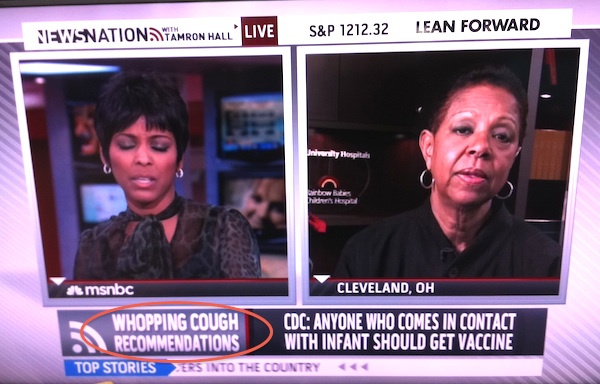
You have to wonder what kind of checking and oversight they do on spelling when creating these banners:

Whoppingcough

Now, that’s a natural misspelling, very understandable: the spell checker would not catch that “whopping” was a misspelling of “whooping.” If these are random, then they are at least explicable if not acceptable at that level.

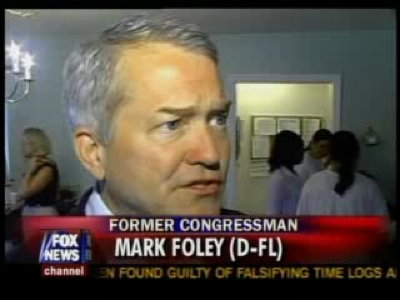
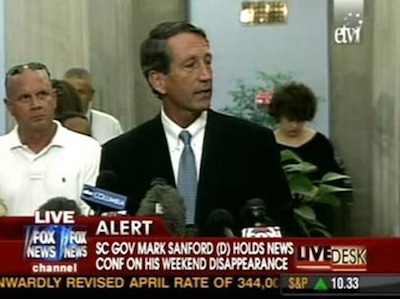
Fox News, on the other hand, seems to intentionally make errors. The easiest place to see this is where they paint disgraced Republicans as Democrats, usually with a “D” before their name:

Oreilly-Foley-D-3

Sanforddfox

If this happened just once, even twice fully at random, then maybe… but it has happened several times under specific conditions. That’s not an error, that’s a pattern.

True, Fox sometimes makes actual errors out of sheer stupidity, as they did with the graphic of Japan showing a nuclear reactor in Tokyo named “Shibuyaeggman.” This does not, however, mean that all errors are due to ineptitude; quite few are demonstrably intended.

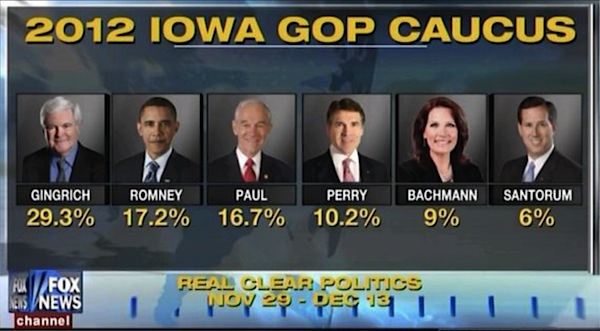
A real tell was with this screen:

Foxobamney

No way that was a typo. That graphic could not have been made in “error.” It was clearly intentional, intended as a swipe at Romney.

In essence, Fox intentionally makes “mistakes” to even further slant the “news” they present.

Categories: Right-Wing Slime, The Lighter Side Tags:

Supporting the Troops vs. Using the Troops

December 19th, 2011 2 comments

Tucker Carlson’s agitprop outfit just came out with a rather stunning slant in a piece where they criticize Obama for… praising the troops. Now, how, you may ask, could they criticize Obama for that? Easy: make it seem like Obama actually hates the troops, usually reviles them, thus making his current lavish praise seem “unfamiliar” and “unprecedented,” in effect suggesting that he’s doing it purely for shallow and dishonest political reasons.

Their evidence in this regard, of course, is non-existent–the article is heavy with implied claims that Obama has somehow ignored or even hated the troops until now, thus creating the larger impression that his current praise can be explained away as posturing, thus explaining how he could heap such praise and yet still not contradict the right-wing fiction that he hates the troops.

The only support they provided for the claim that Obama abused the troops was that he had provided the soldiers and their families with a large number of programs to help them out, making sure they got good medical and psychological care, assuring that the families were looked after sufficiently, seeing to the education of their children–stuff like that. In other words: supporting the troops.

How, exactly, did conservatives paint Obama as abusive to the troops with this? They claimed he had painted them as “victims dependent on social-welfare and medical services offered by the Democratic coalition.”

You see, when you do things like recognize soldier trauma and high suicide rates and needs for things like education for their children, you are actually hurting the troops, insulting them by making them into victims and robbing them of their pride and self-reliance. Instead, you should let them suffer without support, and not reward them substantively for their service, so when they come through it all, they’ll be more proud. Apparently, only lip service is required from the rest of us. That is the Republican definition of “supporting the troops.”

Liberals don’t hate the troops; quite the opposite, they have, from individuals up to national politicians, always been concerned about the health and welfare of the men and women in the armed forces, and mindful of their needs. I am sure that most rank-and-file conservatives respect the troops in general, but the conservative establishment sees them as more of a resource to be used. This attitude is more aptly expressed in how they weild the troops as a tool, a means to an end. The best example of this is when they use the troops as human shields to avoid political criticism; when conservatives screw up, they deflect any disparagement of their actions as “attacking the troops.”

It is simply a long-standing lie that liberals hate or disrespect the troops. The lie has been propagated since the Vietnam War, when liberals protested the war and the political administrations, and conservatives wanted to deflect those criticisms. So they created the cowardly lie that any criticism of the war was somehow criticizing the troops, and not the leaders.

On a general level, the lie fits in with the conservative myth that right-wingers are “pro-military” and liberals are anti-military. The distinction is sometimes blurred in the eyes of the public because conservatives are hawkish and want more military spending, whereas liberals oppose egregious or harmful use of the troops and the military, and often disapprove of the corporate-military complex. Because these are not simple divisions, they are easily mischaracterized, and thus we get the current mythos.

The conservative “pro-military” stance, however, is not so inclusive of the troops; it is more about wanting to send troops to war, and reward wealthy patrons who are military contractors, like Halliburton. Democrats, on the other hand, tend to run wars where troops are kept out of harm’s way, and try to run a leaner yet fully-capable military.

As General Wesley Clark so aptly put it in 2004, “Republicans like weapons systems; Democrats like the soldiers.”

Remember how liberal protesters spat on Vietnam vets on the airport tarmacs as the vets returned from Vietnam? That’s an image ingrained upon the America psyche–and is pure fiction. There was not one soldier who got spat on by a liberal protester on any airport tarmac–it never happened. We know that because liberal protesters were never allowed on military bases to protest, and soldiers returning on civilian airlines were not in uniform nor were their arrivals publicly announced–nor were protesters allowed to congregate on civilian tarmacs in any case. The entire thing is a fiction produced by right-wingers who wanted to vilify liberals as soldier-haters, a lie perpetuated by–of all things–Hollywood, in movies like Rambo, whose title character famously said, “I come back to the world and I see all those maggots at the airport, protesting me, spitting. Calling me baby killer and all kinds of vile crap!” People saw that made-up right-wing fantasy and other such characterizations and simply accepted the idea.

The fact was, liberals during Vietnam were mostly the same as liberals during the Iraq War: they protested the political administration or elements of the military hierarchy which propagated the war–but not the troops themselves.

Am I claiming that there were never any liberals anywhere who hated soldiers in general? Of course not, there must have been–just as there are extremists on the right today who see soldiers as jack-booted thugs. You’ll find crazies at the extreme of any movement or group. Conservatives are simply extraordinarily talented at taking such extremes, exaggerating them and padding them with lies, and then painting the entire opposition with that brush.

The fact is, many of the liberal protesters were soldiers themselves, vets who returned from the war and saw the liberal protesters as forwarding their cause–to stop the war and bring the soldiers home. Troops who would never had associated with the liberal movement in general had that movement been populated with people who spat on returning soldiers.

Conservatives more crassly use troops as a resource, as cannon fodder, easily starting ground wars and even mercilessly extending tours of duty, whilst promoting G.I. benefits only as a way to entice recruitment, but otherwise not giving a crap about their actual welfare. Soldiers are raw material to be used militarily, politically, even sometimes socially. They are to be proselytized and reshaped to a conservative ideal, to be used and then discarded. Not, of course, by all conservatives, not by a long shot–but that is how they are treated by the conservative establishment.

In the past few decades, maybe longer, whenever we saw a bill to raise the troops’ pay or benefits or help them in some way other than signing bonuses, it was the Democrats pushing for it and the Republicans balking, while Republicans were mostly responsible for cutting pay and benefits, and for abuses like we saw done with stop-loss and failure to outfit the soldiers with body or vehicular armor.

Republicans committed the lion’s share of our forces to not one, but two decade-long land wars in Asia, where more than 4500 soldiers were killed. Democrats started actions in Bosnia and Libya, where mostly air power was used on a short-term basis to positive effect, with a minimum risk to the troops.

I think Republicans burn at seeing Obama lavish praise on the troops because they know Bush didn’t do it as much. Bush not only tried to hide military funerals, he didn’t even sign condolence letters; Obama reversed that trend of neglect. Bush slashed soldier’s benefits and cut their families adrift; Obama passed dozens of programs to bring back support to the troops and their families–and right-wingers hate him for it.

What does that tell you?

I will leave you with a post from nearly a year ago when I laid out much the same case:


During the Bush years, Republicans made their usual big deal about supporting the troops. When it comes to actual support though, the right wing really only supports the military contractors, who are, after all, among those paying the bills. Despite their talk about cutting spending, they won’t touch Defense, despite there being a lot to cut; Lockheed Martin alone receives an average of something like $260 from each taxpaying American family.

When it comes to the soldiery, the support from the right is not quite so strong. Oh, yes, the words come out. Support the troops and all that. But actions speak louder than words, and during the Bush years, much of the action was abusive. Lengthening tours of duty, employing stop-loss, scaling down pay increases, cutting benefits, failing to outfit them properly–basically chintzing the soldiers on nickels and dimes while pouring billions into the pockets of firms like Halliburton. When a veteran’s organization ranked senators on how they voted on veteran’s issues, the disparity was striking: Democrats occupied the top of the list, while Republicans uniformly failed to support the troops themselves where it counted.

There is one aspect in which Bush and the Republicans liked the troops: as a prop to help them politically. How many times did you see Bush–the AWOL draft-dodger–give speeches before uniformed audiences, helpfully arranged behind him for effect; how many times did we see him reviewing the troops, a purely PR-related activity?

Whenever Bush’s decisions were questioned, the reply very often was to use the troops as a human shield. Anyone who criticized Bush was accused of attacking the troops–an act of hatefully vile cowardice which I personally despise.

When a selflessly patriotic man gave up a lucrative personal career and volunteered to serve, and then was killed in “friendly fire,” the details of his death were covered up while the Bush administration shamelessly used him as a poster boy for their PR campaign after their disgrace at Abu Ghraib.

But people believe that liberals are the ones who abuse the troops. After all, wasn’t it liberals who spat on soldiers on the airport tarmac as they returned from service in Vietnam? Well, no. It’s an urban legend, another lie generated to discredit liberals. In fact, during the Vietnam War, liberals supported the soldiery just like they do today; it was the administration they despised. Again we see the tactic of using soldiers as a human shield, to very great effect–so many people even today believe the image of liberal hippie protesters spitting on deplaning soldiers, despite the fact that it would have been physically impossible for that to even happen.

Whenever a bill to support the actual soldiers came through, it was almost always a Democratic effort, and was usually opposed by Republicans, who, after throwing billions at contractors, could not see themselves clear to tossing a few million to actually support the troops. Take this GI Bill for example. The only time Republicans assented to spending more on the troops was in order to bring more people in the door–enticements for signing on or staying on. When it came to helping the troops without an ulterior motive, simply because it’s the right thing to do, Republicans suddenly had other things to do, leaving the Democrats to pick up that particular ball.

That continues today. From the White House:

President Barack Obama on Monday announced a governmentwide series of 50 programs and proposals to increase support for U.S. military families.

The 50 initiatives — including more counseling to prevent suicides, increased education grants and expanded child-care assistance — resulted from efforts by first lady Michelle Obama and Jill Biden, the wife of Vice President Joe Biden, to address concerns of military families.

Seriously, do you ever recall Bush doing anything even remotely like this during his eight years in office?

Me neither.

None of the reports indicate that this will have to pass through Congress. Let’s hope not, because you know who would most likely decide that it’s not worth doing, or should be pared down somewhat.


Specifics, Please

December 6th, 2011 2 comments

Newt Gingrich comes out with a positive ad:

Some people say the America we know and love is a thing of the past. I don’t believe that. Because working together I know we can rebuild America. We can revive our economy and create jobs. Shrink government and the regulations that strangle our businesses. Throw out the tax and replace it with one that is simple and fair. We can regain the world’s respect by standing strong again.

Being true to our faith and respecting one another. We can return power to the people and the states we live in so we all will have more freedom, opportunity, and control of our lives.

Yes, working together we can and will Rebuild the America we Love.

Something that I have long noticed about many of the right-wing commenters, on this blog and elsewhere: they usually don’t get into specifics. The few that do have trouble, because it then becomes a rather simple matter of tearing their arguments to shreds. There’s not too much to the right-wing message today that cannot be easily dismantled in the light of detail.

Look at Newt’s message. It provides a halcyon view of American life: immaculate, tree-lined, white-picket-fenced suburban homes flying the American flag, a pretty young woman running a flower shop, a rural Main Street tableau, wheat silos–even the Statue of Liberty and literally purple mountains. In short, ignore any problems we might have and take a trip to Pleasantville, the America we all imagine but which never really existed.

And how will we accomplish this? Vaguely, we will:

  • Shrink government
  • Reduce regulations
  • Produce a simple tax code
  • Stand strong
  • Be true to our faith
  • Respect one another
  • Return power to the states

Sounds nice, certainly to a conservative. Problem is, when you start to realize what specifics must be involved, it all falls to pieces.

Shrink government. OK. Except, when did Republicans ever do that, actually? They were in more or less total control for about half a decade–and government spending exploded. Now they want to shrink government? They were for that before, and didn’t follow through. Why trust them now? But OK, Newt is all about being forgiven and reforming himself, so let’s give him the chance. What will you shrink, Newt? Kill Social Security? Gut Medicare? Slash the military? Only the last of those has any chance of really drawing back government much (the others aren’t about “shrinking” government as much as they are about cutting back the safety net for Americans most in need). But cutting military spending is likely not on Newt’s plate–the opposite, in fact, is likely true.

Reduce Regulations. This conservative rallying cry would be great if they were actually interested in only cutting the ones that truly hold back business success without endangering, impoverishing, and even killing Americans. So, Newt, would you mind giving specifics about exactly which regulations should be cut? Really, what he’s talking about is doing stuff like allowing corporations to pollute the environment and steal money whilst evading any responsibility and not being legally obliged to create a single new job. Somehow conservatives think that by doing this, corporations will not simply collect the profits and run, but will instead pile every single penny saved into creating new high-paying jobs. Which, of course, is ludicrously stupid, and I think they know this. It’s not about jobs or benefitting Americans; it’s about more and more profit-taking to the dear expense of most Americans.

Produce a simple tax code. This has long been a code message meaning “give even more tax cuts to rich people,” playing on Americans’ hatred of filling out tax forms and the illusion that a “simple” tax code would make rich people pay as much as everyone else. It wouldn’t. Aside from instantly raising taxes significantly on most Americans at the lower end of the scale–a goal Republicans have openly endorsed–many flat-tax plans include a value-added tax or federal sales tax which would effectively be a double tax on poorer people, hardly affecting people with a lot more money. Wealthy people would also, inevitably, also still have loopholes and evasions, likely in the form of lower taxes on capital gains (Republicans also support no taxes on capital gains at all) and other rationalized deductions, exemptions, and ways rich people could shuffle their bookkeeping and so pay little or nothing in the end. So, Newt: mind releasing the full specifics of your “simple” tax plan and allowing us to project its actual effects?

Stand strong. Nice. Except, how? Aside from massively increasing military spending–i.e., expanding government and further enriching corporations–this is a meaningless platitude. But you can bet that, if Newt became president, it would eventually translate into more military spending. Again, Newt, mind being specific about how this will work?

Be true to our faith. Although Newt is not specific in this particular ad, he has sadly been specific elsewhere. In short, Newt sees religious piety as equalling goodness, and lack of same to represent immorality. He has effectively stated that he would not allow any atheists to hold a post in his administration (which violates Article VI of the Constitution, by the way) in saying, “How can you have judgment if you have no faith? How can I trust you with power if you don’t pray?” Statements which are extraordinarily dangerous, in many different ways. And what this means is, ironically, that government will be more in the face of the people, and in the most sacrosanct of contexts: their religious faith, or their right to the lack of same. Newt is not just making the usual religious pitch that he is informed and empowered by his religion, he is actively stating that he would openly discriminate against people he considered not religious enough–which you can bet also translates into specifically being Christian, which inevitably evolves into being the right kind of Christian. This is all even more ironic since Newt has a long history of rank dishonesty and immoral behavior; he seems to like religion because, so long as you toe the line, your sins are forgiven. Religious people would apparently place more trust in a religious man who always sins but asks God for forgiveness each time than they would an atheist who is never dishonest in the first place. This will somehow “restore America.” To which era he did not specify.

Respect one another. Umm, okay. How will you accomplish this as president, Newt? Because unless it’s more of government interfering in our lives–which it’s a good bet you’ll try to do–then how would a president make this happen? By example? Newt, really? Your example?

And finally, return power to the states. This is another conservative code phrase, most specifically meaning to outlaw abortion, but also standing in for a bevy of other right-wing causes like doing away with effective gun control. As always, it’s not really about giving states power; if states want to legalize drugs or give people the right to die, for example, then big government under a Republican president will always be pushing aside the states’ rights and powers in an instant–as has been the case under all presidencies. What “states rights” or “power to the states” really means is, whenever there is an issue which conservatives can’t win with or don’t like at the federal level, they will push it to the states where it will more easily be changed to whatever conservatives want it to be. But if states try to do something that conservatives don’t like, then states don’t have any rights and don’t deserve power.

This is why Newt and other conservatives love ambiguity: it hides the reality they’re proposing. None of these stand up to the light of day, and certainly none, in the light of day, would come close to producing the America Newt exhibits in his ad–unless it is a gated pocket community, complete with artificial rustic scenery, built for the very small minority Newt’s plans would in fact benefit, with the rest of the country outside going straight to hell.

The end result of Newt’s proposals would mean even more wealth to the wealthy, more unchecked corporate greed and malfeasance, bigger government paid for with higher taxes on poorer Americans, and greater government monitoring and control over the most private and personal details of our lives. In short, exactly what we had under Dubya, only this time doubled down.

Post-Racist Conservatism?

December 4th, 2011 5 comments

Some have commented recently that, no matter how it turned out in the end, the Cain campaign proves once and for all that conservatives are not racist and would accept a black candidate for president.

Um.

I have to respectfully disagree with that assertion. In doing so, I should make clear that I have never thought that all conservatives are racist to some degree, nor that most of them are. Exactly what proportion I cannot guess, but it is clear that a good many are. Probably only a small percent are hardcore racist (i.e., would admit to it openly), and most of the remainder who are racist find rationalizations and belong to the “some of my best friends” category.

How can I say that racism is still a problem in the GOP, however, after a black man was, for some time, the GOP front runner?

First of all, one has to remember that this is pre-primary, not an election. This is the tryout period, where you can “approve” of someone without it meaning anything.

One should also keep in mind that the current race is more of a political purity test among the GOP core, and reflects the other qualities of any given candidate to a much lesser degree.

Also, Cain never rose above 25% in the polls; he was the “front runner” only in that he was, for three weeks, no more than 3% ahead of Romney at any given time.

Next, one must remember that many white conservatives likely supported Cain for the same reason they assumed liberals supported Obama: because it made them feel good to be able to say that they support a black person for president. This was something which, when conservatives were accusing liberals of it, made little sense to most white Obama supporters. We didn’t vote for him because he was black; had that been the case, Jesse Jackson would have been the candidate long ago. Obama could have been white and we’d have supported him all the same. His race was no more than a fringe benefit, an inspiring side note. But for many conservatives, this was the only thing that made sense, because it is how they would have felt. Conservatives project a lot.

Then there’s the fact that they’re looking toward an election against a black incumbent; remember Michael Steele being appointed GOP chairman right after Obama became president? Remember how they imported Alan Keyes to run against Obama in the Illinois Senate race? There’s more than a little conservative history of playing race against race, especially against Obama.

Finally, one has to remember the context of Cain’s campaign. The GOP has been frantically scrambling to find someone, anyone, who could possibly challenge Obama next year. For crying out loud, Michele Bachmann, a complete loon, was the front-runner for a while. Perry, an idiot, had far better numbers. And after Cain, the same people are now looking to Gingrich, a mercurial, flip-flopping serial adulterer with serious likability issues. Against this backdrop, becoming the front-runner by a few percentage points is pretty far from a ringing endorsement.

So we have Herman Cain, who, for about three weeks, barely edged out the next candidate by a few percentage points in a political purity test a few months before the primaries in a desperate race where all the other candidates have serious problems themselves.

This is hardly what I would call iron-clad evidence that racism is no longer a problem for conservatives in America.

Categories: GOP & The Election, Race Tags:

The Number Four

December 4th, 2011 Comments off

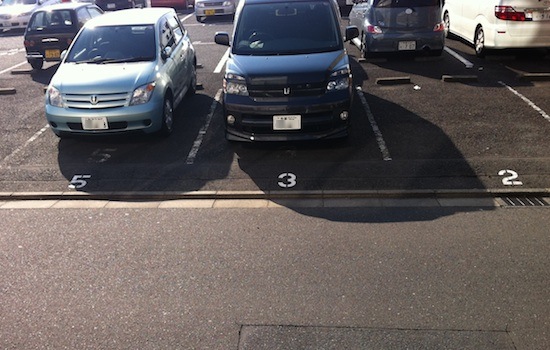
This feature of a parking lot around the corner from our house kind of stands out when you pass it:

Nofour-Pl01

Nofour-Pl02

It caught me by surprise at first, and then I realized: Japanese have a superstition about the number four, as it is phonetically similar to the Japanese word for “death.”

The strange thing is, this is not typical. Hospitals are famous for omitting the number four for rooms, the same way we leave out the 13th floor in buildings. But outside of hospitals, the number four is not usually left out. I’ve never seen a parking lot with the same gap.

Stranger still, in the same parking lot, they begin at “one” again a few rows in–and the number four is present there. As is the number “42,” even closer to the sound for the word “death” in Japanese.

Strange.

Categories: Focus on Japan 2011 Tags:

Whee!

December 4th, 2011 1 comment

This is a prominent feature of a building in the neighborhood:

2Fslide

At first I thought it was a cool feature in a facility for kids. What kid wouldn’t love to have this around instead of a staircase? I went around the side of the building to see what kind of place would have this.

Turns out it’s an old folk’s home. Huh?

That puzzled me for a while, then I figured it out: if there’s a fire, many would have trouble going down stairs. It is, in all likelihood, an emergency slide.

Categories: Focus on Japan 2011 Tags:

Bill O’Reilly Ready to Abandon Staff Over Pittance

November 17th, 2011 6 comments

I was working on this before a family emergency drew me away and then I got loaded up with work upon my return. Soon after I made my post on how stupid it is to assume that raising taxes on the rich will cause them to up and quit, Bill O’Reilly fabricated another deep cesspool of Randian BS:

If you tax achievement, some of the achievers are gonna pack it in. Again, let’s take me. My corporations employ scores of people. They depend on me to do what I do, so they can make a nice salary. if Barack Obama begins taxing me more than 50%, which is very possible, I don’t know how much longer I’m gonna do this. I like my job, but there comes a point when taxation becomes oppressive.

First, O’Reilly is lying outright. Well, that’s obvious, and he’s lying about more than one thing. But right off the bat, it is not even remotely possible that Obama would raise the top marginal tax rate to 50%. He is suggesting 39.6%, a mere 4.6% increase; just that will be a battle royale against a dead-set GOP relentlessly opposed to wealthy people paying as much as the middle class. Raising it another 10% above and beyond that would be virtually impossible, and suggesting it is “very” possible is a flat-out lie. O’Reilly knows this damn well, and clearly has no problem making a patently false claim from the outset.

Now, even Obama’s 39.6% is just his opening bid–we all know too well that Obama usually moves towards Republican numbers from there, so what is “very possible” is that he’ll settle for something less than that, or just as likely get nothing. But let’s assume Obama stands firm and we get a tax hike exactly as he proposes.

O’Reilly makes at least $20 million a year, and his net worth is estimated to be at least $50 million. Now, let’s keep it simple and presume that he pays the top marginal rate on every dollar (he doesn’t) and has no deductions, shelters, or other ways to lessen his payment (you can bet your ass he’s got lots of those). This would mean that at 35%, O’Reilly takes home $13 million. Under the increased rates Obama would be lucky to get passed, O’Reilly would take home $12,080,000.

So, a man who is sitting on a fortune of more than $50 million and takes home $12 million a year is going to lay off “scores”–that’s at least 40 people, probably more–sending them to the unemployment lines and possibly derailing their careers, not to mention stop doing what he clearly loves to do, simply because he is unable to receive 4% less of $20 million when he has such a massive fortune already?

Keep in mind, of course, that O’Reilly is not claiming that he is tired of doing his job and thinking of retiring anyway, and this just is the last straw. No, he is acting as if he’s perfectly happy to work now–but would be so put off by a minor tax hike that he would kick “scores” of people he employs out on the street because his embarrassingly gigantic income dropped by such a small amount that he would have to look carefully at balance sheets to notice that anything had happened.

What kind of pathetic psychopathic prick would do that?

Of course, we’re assuming that O’Reilly’s screed is honest on its face. And that is never a good assumption.

Categories: Economics, Right-Wing Lies Tags:

Decoding the Scam

November 9th, 2011 6 comments

Romney’s Health Care proposal:

First, Medicare should not change for anyone in the program or soon to be in it.  We should honor our commitments to our seniors.

Second, as with Social Security, tax hikes are not the solution.  We couldn’t tax our way out of unfunded liabilities so large, even if we wanted to.

Third, tomorrow’s seniors should have the freedom to choose what their health coverage looks like.  Younger Americans today, when they turn 65, should have a choice between traditional Medicare and other private healthcare plans that provide at least the same level of benefits. Competition will lower costs and increase the quality of healthcare for tomorrow’s seniors.

The federal government will help seniors pay for the option they choose, with a level of support that ensures all can obtain the coverage they need.  Those with lower incomes will receive more generous assistance.  Beneficiaries can keep the savings from less expensive options, or they can choose to pay more for a costlier plan.

Sounds good: keep Medicare as it is for those who are in it, don’t raise taxes on anyone, and instead allow new entrants to choose from a competitive market. At first glance, it seems a reasonable plan.

However, it falls apart if you start to think about it. For example, who was proposing tax hikes specifically to secure Medicare? I was not aware of any proposals along those lines, rather plans to solve deficit problems in general. Romney is effectively saying here, “No tax hikes for rich people, instead we solve our deficit problems by addressing Medicare–which means making cuts.” He’s also trying to throw in the statement that he’s for Social Security, to reassure seniors especially.

Now come back to his first statement: “Medicare should not change for anyone in the program or soon to be in it.” If one takes a careful look, the implicit message buried in that statement is, “Medicare WILL change for anyone NOT soon to be in the program.” The word “soon” being undefined. Essentially, he’s promising to change Medicare a la Ryan’s plan, to get rid of it in favor of private plans.

But then we come to the last part, in which he talks about people having a choice. Now, this is immediately suspect: people have a choice right now. Unless I am badly mistaken, no one is forcing seniors to get Medicare. Romney’s plan would seem to differ only in that it allows people to use government subsidies to buy private plans. Subsidies which, you can bet your life on, will be substantially lower than current benefits.

Note that Romney uses nebulous terms: the government will “help” to pay for “needed coverage” with “more generous” support for people more in need. Those terms could mean practically anything–“help” could mean to pay a small amount; “needed coverage” is a subjective expression which could be interpreted to mean only vital care; “more generous” than a pittance might still be a pittance. All that is guaranteed here is that seniors will pay for a substantial chunk of their health care themselves.

At which point we get to the key statement: “Competition will lower costs and increase the quality of healthcare for tomorrow’s seniors.”

Really? How will that happen? Sullivan points out that, even ideally, only as much as 8% of costs could be cut by competitive means. And we can’t forget the fact that private providers will charge a profit, which Medicare doesn’t. Or that “competitive” inevitably means “lower quality.”

Now, Romney seems to be promising equal or better quality–but how can that be assured? Only one way: government regulation. Which Romney and conservatives are steadfastly against. Which means that we’ll fall back on “self-regulating,” which really means “corporations trying to make a crappy thing sound good,” which means lower quality.

Really, the private market can’t beat Medicare. Which is the whole point. Which also brings us back to Romney’s indirect statement that he will not preserve Medicare for future recipients. This seems to fly in the face of his statement that “traditional Medicare” will be an option. If that’s really true, then the private plans would not be able to compete. Which is where his proposal falls apart: in order for private plans to have any chance of competing, “traditional Medicare” cannot be allowed to continue–which would fall in line with his original suggestion that traditional Medicare would, in fact, not be preserved.

In short, Romney fully intends to dismantle Medicare as it now exists and replace it with an unspecified level of government support to buy private programs. The claims that this will provide the same level of quality as Medicare today are, we are left to deduce, purely an assumption. But don’t worry, seniors–he’s not shortchanging you, so you can still vote for him.

Which, if you look back at the original statement, is not exactly what Romney sounded like he was talking about. Nor is it anything which, if enacted, would (a) save any money or reduce the deficit in the short term, or (b) prove effective or not during any period of time Romney could potentially be in office.

Yep. Quite a plan he’s got there.

Will the iPhone Succeed in Japan?

October 26th, 2011 5 comments

When the iPhone 4S was released, the iPhone was divided into eight different listings in Japan’s smartphone sales figures; no other phones were so divided. Despite this, the iPhone 4S dominated the top six spots, with the old iPhone 4 taking two of the following five spots for a total of 8 of the top 11 best-sellers.

How’s it doing in the second week? It now holds the top seven spots, and eight of the top ten.

In other words, every single variation (in capacity and carrier) of the 4S outsells the total number sold for any other smartphone–but even if you subtract all of those, the year-old iPhone 4 still tops the charts. Even just one of the the capacity versions (the 32GB) all by itself outsells the latest of any other brand.

Remember when the iPhone was supposed to fail spectacularly in Japan? From Businessweek, December 2007:

[C]onsumers here won’t be as starstruck by the iPhone’s high-tech gadgetry as users elsewhere. Japan’s 10 handset makers, which dominate the domestic market, already offer dozens of models typically costing several hundred dollars that send e-mail, browse the Internet, shoot photos and videos, and even pick up live TV broadcasts. Most come with a built-in global positioning system, and some even double as credit cards and commuter passes or safeguard personal data using fingerprint or face-recognition technology. … In its current form, the iPhone’s 3.5-inch touchscreen and its access to online applications such as YouTube and Google (GOOG) Maps are about all that set it apart from other handsets in Japan.

Ha. A few months later, when the iPhone was still seen as an unsure thing in Japan, I wrote about how these “features” in Japanese cell phones were virtually useless:

I tried using some of those feature-rich ones a few times when I passed a cell phone shop and had some time to look. It was painfully hard. I had a tough time understanding what the heck to do even when I got the salesperson to switch the phone to English (it took them a minute or two to figure even that out themselves). After ten minutes with a nice-looking phone, I decided that I did not want to use the damned thing, as attractive as all its touted features were. Not to mention that some of the “great” features are in fact dogs.

I pointed out that while the iPhone had no TV reception, digital wallet, or even the all-important hook to let little plastic toys dangle from a strap, the magic of the iPhone was in its ease of use–that, seeing as Japanese phones were impossible to figure out how to use, any one feature on the iPhone was worth ten on any other keitai. Not to mention that with the App Store, the iPhone had far greater potential to multiply its utility. I had a hard time understanding why so few people could see this, but it has always been true–many people pay attention to little else but the list of tech specs, and completely ignore the user experience. That’s why tablet computers failed before the iPad came along. That’s what Jobs was great at–making things a joy to use, instead of simply having a something with tech specs you could brag about but not really put to much use.

And yet, years later, many people still don’t get it–ergo the number of people believing that removable media, USB ports, or faster CPUs are all that a tablet needs to dethrone the iPad. Sadly, competitors seem to be unable to think independently–or, to think different–as is evidenced by the fact that virtually all iPhone and iPad competitors look virtually identical to the Apple products they seek to outclass.

They won’t be successful until they do what Jobs did: come up with something new and better.

Categories: Focus on Japan 2011, iPhone Tags:

Republicans and Economics: Reputation for Expertise, Track Record for Cluelessness

October 23rd, 2011 8 comments

A few weeks ago, I posted a stump speech I felt Obama should be making. In it, I pointed out that while Obama is trying to push a modest jobs plan, Republicans are blocking it. I also claimed that Republicans have no jobs plan of their own. They would deny this, of course; they have pitched a plan that they call a “jobs” plan. The plan: erase even more regulations so corporations can pollute. The idea is, if we stop holding back industries from making our air unbreathable, our water undrinkable, and our soil packed with toxic wastes, they will be free to create more jobs. That is logic along the lines of letting criminals serving time for assault & battery out of prison so that we can hire more doctors and nurses.

Paul Krugman (hat tip to Ken) meets this proposal with scorn from the economic side, debunking the idea that it will create loads of new jobs. Pay close attention to the last sentence in the excerpt:

Mr. Perry has put out a specific number — 1.2 million jobs — that appears to be based on a study released by the American Petroleum Institute, a trade association, claiming favorable employment effects from removing restrictions on oil and gas extraction. The same study lies behind the claims of Senate Republicans.

But does this oil-industry-backed study actually make a serious case for weaker environmental protection as a job-creation strategy? No.

Part of the problem is that the study relies heavily on an assumed “multiplier” effect, in which every new job in energy leads indirectly to the creation of 2.5 jobs elsewhere. Republicans, you may recall, were scornful of claims that government aid that helps avoid layoffs of schoolteachers also indirectly helps save jobs in the private sector. But I guess the laws of economics change when it’s an oil company rather than a school district doing the hiring.

This is really what is at the heart of Republican thinking, especially when it comes to economics: “facts” are things we make up to benefit ourselves.

When people listen to conservatives speaking about economics, they tend to give them credence, in part because they sound so confident giving all of these “facts,” but also because conservatives have a long-standing reputation for fiscal responsibility and know-how.

The truth, however, is that they play fast and look with the facts, and when they want to argue their own points or lambaste the opposition, they tend to do so in reckless disregard for even the most fundamental economic principles.

For example, one claim they have been making for a few decades now is that during the Reagan years, taxes were cut and revenues doubled. I heard this just last week, coming from a conservative on Bill Maher’s show. This claim is not just wrong, it is actually fraught with distortion. It tries to proves the claim that cutting taxes increases revenues, but ignores that fact that while some taxes were cut during that period, other taxes were raised, arguably for a net tax increase.

However, the big lie in the assertion is that Reagan doubled revenue, based on the fact that government revenues went from $517 billion in 1980 to $1,031 billion in 1990. First, this calculation includes Carter’s last year in office as well as Bush 41’s first two years. To be accurate, we must actually run from Reagan’s first year in office–1981, by the end of which Reagan’s economic policies were just beginning to kick in (his first tax cut did not take effect until 1982)–as a baseline, and then take the last year in office as a reading of actual increases. That gives us a rise from $599 billion to $909 billion, an increase just a shade over 50%. So, right there, we see the claim half-shattered.

But that’s not even the main point–remember, I am positing the idea that conservatives abandon the most obvious economic facts and principles to distort reality. What was the fundamental economic idea they ignored here?

Inflation. In order for any judgment to be made on revenue, inflation absolutely must be factored out–otherwise Jimmy Carter would come across looking like a magician. So, when you look at the numbers honestly and factor out inflation–using 1987 constant dollars–how did Reagan fare? Well, he went from $767 billion in 1981 to $877 billion in 1989. A net increase of 14%. Add to that the fact that the U.S. population grew by 7% during that time, and we see the net increase which could be attributed to tax policy brought down to a mere 7%.

So, instead of Reagan cutting taxes and doubling revenue, we have him raising taxes overall and increasing revenue by 7%.

Conservatives, however, would prefer to credit Reagan for things that happened when he was not president, and conveniently forget fundamental economic factors such as inflation and population growth.

Nor is the conservative habit of playing fast and loose with economics limited to Reagan. A more current example is their claim that Obama is responsible for the unemployment rate hitting 10%. Sure enough, unemployment hit 10.1% in October 2009, fully 9 months after Obama took office. So, hard to refute that one, right? Pretty sound fact conservatives have to nail Obama with, right?

Of course, no. First of all, when Bush took office in 2001, the unemployment rate was 4.2%; this rate rose to 6.3% by June of 2003, a fact which, one can be sure, conservatives would quickly attribute to the recession they claim Clinton saddled Bush with. It was another two and a half years–five years after Bush took office–before the rate fell below 5% again.

Jump forward to early 2008, a full year before Obama took office. The unemployment rate was at 4.8%, near to where it had been hovering for the previous three years. Then, in mid-year, the effects of the sub-prime crisis, the beginning of Bush’s Great Recession, started to show; the unemployment rate rose until, in February 2009, when Obama was in office, it hit 8.2%. (Unless you want to credit Obama with numbers that represent a month 2/3rds presided over by Bush, in which case it was 7.8%.)

So, right off the bat, we have Bush overseeing a rise in the rate from 4.8% to 8.2%–a 3.4% jump, or a 70% increase. Conservatives conveniently pretend this never happened–that the rate rose under Bush at all, or that the trend began with him. While they would eagerly attribute two years of rises in the Bush unemployment rate to Clinton, they would not dream of crediting Bush with any of the rate’s rise in Obama’s first nine months.

But still, the rate rose from 8.2% to 10.1% under Obama, right? That’s a 1.9% rise, or about 23%–so, still we can criticize Obama, right? OK, let’s blame Bush for the rate’s rise once he started office. See? I can be reasonable when it helps my argument. Can’t we then blame Obama for the 1.9% spike up to 10.1%?

Here, again, is where conservatives conveniently forget Economics 101. The unemployment rate, you see, is what you can call a “lagging” indicator–in other words, it does not immediately reflect changes in the economy. It takes 2-3 quarters to do so. For example, consistent job losses did not begin until January of 2008–but it took until May or June for these figures to have an effect on the unemployment rate.

Which means that at least the first six months of the unemployment rate under Obama is actually a direct reading on the last six months of the Bush administration. That would mean Bush was directly responsible for taking the unemployment rate not just up to 8.2%, but up to at least 9.5%–a total rise of 4.7%, roughly double the rate. Obama, then, is only responsible for the rate going from 9.5% to 10.1%–a mere 6% next to Bush’s staggering 98%.

And that is only if you blame Obama for the unemployment rate increases that started the moment he sat down at his desk, which is unrealistic, as he had to slow the plummet before he could turn it around. It is completely fair to claim–I would even say it is a solid fact–that Bush was completely responsible for the rise in the unemployment rate. Considering also that job losses did not begin to slow until just after Obama’s stimulus and therefore can easily be attributed directly to that act, it would be just as fair and factual to attribute the subsequent lowering of the rate to 9.1% to Obama.

So, instead of Obama causing the unemployment rate to shoot up to 10%, Bush is fully responsible, while Obama stopped the increase and actually brought it down a bit. Conservatives deny this simply by ignoring Bush’s existence and then conveniently forgetting the fundamental economic fact that the unemployment rate is a lagging indicator.

Not that any of this is a surprise. Whatever financial & economic clout, aptitude, or reputation conservatives might have had, it has now been thoroughly trashed. Yes, there are undoubtedly conservatives with good economic smarts around–but they seem to be in hiding.

In fact, the Republican party seems to be going completely around the bend; instead of just claiming that tax cuts for the rich will create jobs, now they are clamoring for significant tax hikes on the poor and the middle class in addition to tax cuts for the rich–and are arguing that in order to create jobs, all we have to do is open the flood gates on pollution. And, oh yeah, they want to dismantle health care.

If the American people–the 99%–vote Republicans into office next year, they will get exactly what they deserve: a trashed economy, higher taxes for them, even more tax cuts for the rich, and air, water and soil so polluted they’ll start getting sicker faster–just as Republicans shatter the last remnants of public health care.

In other words, they will not only be idiots–they will be suicidal idiots.

Seriously, could the Republican Party be more openly hostile to the American people? They’re like a mugger who just stole your money and knifed you in the gut, then told the you that it was all the fault of the cop who tried to stop him but failed–so vote for the mugger!