Archive

Archive for September, 2003

Small Things I Like About Japan

September 30th, 2003 Comments off

The norm of many foreigners in Japan (usually the short-termers) is to talk about the things that are wrong with the country, and like any country, there are indeed a lot of things wrong to focus on. But what about the better things? Well, people often mention the bigger things, like greater public safety and on-time trains. But here are a few nods of recognition for the lesser positives that are nonetheless appreciated.

English. Okay, this is not so much a small thing, but still not huge, and not acknowledged enough. When I hear people complain that English should be in more places in Japan, I think of how spoiled people tend to be; English is available in so many places, especially considering that only about half a percent of the population consists of non-Asian foreigners. In the U.S., bilingualism usually is triggered when a much more substantial portion of the populace in non-English speaking. But despite the relative sparsity of native English speakers in Japan, there is a wealth of English to help us, from signs in train stations, bilingual ATM machines, materials in city offices, English speakers at business help numbers, and more. Recently, I bought a cell phone which included an abbreviated English manual, and had the option of switching all displays into English.

Stalls in Public Toilets. Ever been sitting in a stall in a public restroom in America, and someone outside peers in at you from the crack between the door and the frame of the stall? Not exactly a comfortable moment, that. Well, in Japan, that doesn’t happen. Toilet stalls in this country were designed for privacy. The doors go all the way to the floor, and bevels on the door ensure that there is no crack for strangers to peer at you through. An added nod to privacy, though less certain as a positive because of the water it wastes, is the “courtesy flush” that men’s urinals automatically set off by infrared sensors. This masks the initial sounds, and for many people, helps get the old waterworks running as well.

Walk and Shop. The relative lack of cars as a means of popular transportation means that things tend to be more localized in Japan. In the U.S., one usually has to drive to the market, or at least suffer a long walk (well, suffer on bad weather days, at least). In Japan, things are still smaller and more localized, despite recent trends towards mall-ization. Almost anywhere you set down here, there will be some small businesses where you can get what you need. Convenience stores are everywhere. Supermarkets are more easily found. Restaurants, or at least fast-food joints, are more likely to be nearby. And vending machines, sometimes looked down upon, are nevertheless quite handy at times.

Department Store Clerks. Ever been to a department store in the U.S. where you had to hunt down a clerk to give your money to? And when you found them, you had to wait behind three or four other people buying half the store with a personal check? And forget about asking someone a question. In Japan, clerks are all over the place in department stores. Yes, less so that in the booming 80’s, but still they can commonly be found, usually just by standing where you are and turning 360 degrees or less. It’s only at the high-volume stores like Yodobashi Camera, or the lower-cost value stores like home centers, that you have to really look for someone to ask a question–but even at these places, there is no shortage of cashiers.

More to come as I keep my eyes open for them–and that would be a good thing for all of us to be on the lookout for here in Japan–the little things that make life easier here, that usually go unappreciated.

Anyone have observations they’d like to contribute?

Categories: Focus on Japan 2003 Tags:

Finally, West Wing DVDs

September 29th, 2003 Comments off

Finally, after four years on the air, the first season of Aaron Sorkin’s The West Wing is coming out on DVD, and they seem to be doing it right. For some time, The West Wing has been available on DVD only from the U.K., and that was just a plain set of episodes, no special features. In addition, the DVDs were Region 2, meaning they could only be played in some countries (U.K., Japan, Middle East), they were in the PAL format, not playable on American TV sets anyway, and to top it off, the First Season set was 45 pounds (currency, not weight), or about $71.

The new set available in the U.S. is priced at $39 (from Amazon) and includes special features such as commentary by Aaron Sorkin on five episodes (with others joining him on a few), deleted scenes, bloopers, and short documentaries.

First season episodes are: “Pilot,” “Post Hoc, Ergo Propter Hoc,” “A Proportional Response,” “Five Votes Down,” “The Crackpots and These Women,” “Mr. Willis of Ohio,” “The State Dinner,” “Enemies,” “The Short List,” “In Excelsis Deo,” “Lord John Marbury,” “He Shall, From Time to Time…,” “Take Out The Trash Day,” “Take This Sabbath Day,” “Celestial Navigation,” “20 Hours In L.A.,” “The White House Pro-Am,” “Six Meetings Before Lunch,” “Let Bartlet Be Bartlet,” “Mandatory Minimums,” “Lies, Damn Lies and Statistics,” and “What Kind of Day Has It Been.”

Release date has been seat for November 18th, but you can pre-order now.

Categories: Media & Reviews Tags:

More on Blog Comment Spam

September 29th, 2003 3 comments

[Editor’s Note: Posting #300! Small milestone, but then again, I am trying to post daily, subtantially, and have missed only a few days in the past three months.]

Blog Comment Spam seems to be coming into vogue now; the blogs I participate in or run are getting it more and more often. Xpat.org, which I run with Sako, just got hit by an infamous “penis-enlargement” spammer from China, who posts a very long list of sexual-aid device web sites, completely off-topic from whatever post, and then ends with the ludicrously absurd comment, “If you find this entry inappropriate please remove it from your database.” Yeah, like a lot of people would find such a post appropriate.

As I’ve mentioned before, some blog spam is subtle, designed so that most people won’t even recognize it. I got one spam message which actually clipped text from a previous comment and mechanically (though in a very clever way) reworded it into a genuine-sounding, on-topic sentence–but the link provided, which was automatically tagged onto the poster’s name, was a spam site.

I even got one spam that was hand-written (at least partially), but nevertheless was from a marketer (he identified himself as such) who included three links to his business site. When I called him on it, he protested vigorously, saying I should keep the links because his comment was on-topic–but spam is spam.

One poor fellow told the story of getting a spam comment in every one of his posts, which would require going through each one manually and deleting them, more than a hundred times–except that he was an experienced power user, and was able to do it quickly. (One good reason to back up the blog database at regular intervals–easier to re-load an older database and then re-add recent posts.)

One rather persistently obnoxious spammer is some fool named “Mishka,” who has a program that auto-spams comments to a single entry in a blog twice within the span of a few minutes, only posting the short comment “Mishka rules!” Again, the name-link points back to this pinhead’s site.

The interesting thing about most of this spam is that the spammers don’t even usually aim for people to follow the link in the comments directly to their site. Much of the spam is aimed at older entries, usually a few weeks or a few months old, way back in the archives somewhere.

So why post spam where few will see it? Because the idea is not to get people to come from the blog, the idea is to establish links from blogs to the spam site. If a site has a large number of links coming from other sites, it will get listed higher in Google, Yahoo, and other search engines. Hopefully, the search engines will find some way of tweaking this, such as not counting blog comment links in their rankings, so that such spam will be of little or no benefit to the spammers.

What ticks me off here is the principle: complete strangers are hijacking resources I have paid for to use as a tool to add value to their own resources. Like someone coming by your house and slapping an ad for their shop on your front window, or stealing your name and falsifying an endorsement for their goods. If someone wants to advertise, fine–but they can do it on their own dime, not on mine.

So I would strongly encourage everyone running a blog site to carefully monitor every comment that comes in, checking for bogus URLs. If any link leads to any kind of business site at all, then immediately delete it. The links provided for in comments are supposed to be for personal, not business, sites.

Categories: BlogTech Tags:

The Most Insidious of Traitors

September 29th, 2003 1 comment

Josh Marshall found this rather interesting quote by George Bush Sr., which indirectly but clearly condemns his son’s administration:

“We need more human intelligence. That means we need more protection for the methods we use to gather intelligence and more protection for our sources, particularly our human sources, people that are risking their lives for their country. Even though I’m a tranquil guy now at this stage of my life, I have nothing but contempt and anger for those who betray the trust by exposing the name of our sources. They are, in my view, the most insidious, of traitors.”

George H.W. Bush
April 16th, 1999
Dedication Speech
George Bush Center for Intelligence

Meanwhile, Condi Rice and others are busy trying to quiet the whole thing down, saying that there was no White House “effort” to blow the cover of Wilson’s wife in the CIA. That’s pure spin, folks–it sounds like a denial that the leak came from the White House, while actually not saying that it didn’t come from the White House

And if an investigation ensues, will it be fair? Will the administration’s own Justice Department be able to investigate it’s own boss and his staff? With this administration’s record on internal oversight (can you say, “9/11 investigation”?), and Bush’s own long record of malfeasance covered up by his father’s own right-wing “enforcers,” it is highly doubtful that any Republican investigator within the administration will ever blow the whistle. More likely: the Justice Department will carry out a pro forma investigation as quietly and slowly as possible, then try to slip out a low-profile release after all interest has died saying that nothing could be found.

I hope I’m wrong–I hope the two White House staffers are caught and threatened with prison terms, causing then to fess up as to where they got their orders from. God forbid that a Bush White House staffer should actually do the moral thing and confess outright without any threat. But that’s not too likely to happen.

Categories: Archived Tags:

Good Lord, Here We Go Again

September 28th, 2003 Comments off

President Bush, realizing that jobs are important to the American people, headed out to Indiana to lay out his master plan for revitalizing the job market for average Americans.

His first step: more tax cuts for the rich.

And no, I’m not kidding. I wish I were. And it gets worse: it’s a future tax cut, one that won’t even kick in until a decade from now. He plans to make the temporary, decade-long tax cuts permanent. Because we all know that future enrichment of the super-rich and endless budget deficits are exactly the stimulus the job market needs right now.

Next: Reducing government regulations on business. Yeah, that’ll help. Just like it did with Enron, Worldcom, the entire energy industry (ask Californians about that), and countless other examples, back to the Savings & Loan debacle and farther.

Next: Protecting companies from class-action lawsuits. Think of all the jobs that will create!

Also: Allowing companies to put less money into their employee pension plans. Yes, that will certainly–um… well, it will… uh… Wha?

Even Republicans are scratching their heads on this one. Bruce Bartlett, an economist who worked for Bush, Sr., said, “Basically, he’s just crossing his fingers and hoping for the best.” Well, that’s what he’s done from the start: get a far-right-wing agenda pushed through, claim it is due to [insert present crisis or agenda goal here] and it will fix [insert issue-of-the-day here], and then wait until some crisis abates naturally, and then jump all over it, saying, “See? I told you my plan would work!”

And his brother Jeb still has some great real estate in Florida to sell you.

Categories: Archived Tags:

More Commentary on the News

September 27th, 2003 Comments off

Remain Afraid, Administration Encourages

The Bush administration’s State Department is telling Americans to remain fearful and worried of possible terrorist attacks. But really, tell me: are we truly any more at risk today than we were three years ago? The threat has neither increased or decreased. The terrorists are no more nor less capable of or committed to doing anything. But a fearful populace follows its leaders with less questioning, and more readily supports infringements on its own liberties. This is not a new idea or revelation; we have heard before that our own fear, and what it leads us to do, is the only thing we truly have to fear. So live your life calmly. Approve only what security you believe is truly necessary, remembering that security and freedom are always a trade-off.


A Political Culture Without Morality

When former ambassador Joseph Wilson had the temerity to point out that Bush lied to the American people about Saddam Hussein buying uranium from Niger, the administration did not admit its mistake. Nor did it even withdraw the assertion. It tried to shift blame, pin responsibility on lesser officials, claimed they relied on the British intelligence more than their own. Everything but admit to responsibility for the lie.

But the immorality did not stop there. Furious that Wilson would show up the president, White House officials sought out ultraconservative columnist and pundit Robert Novak, and illegally informed him that Wilson’s wife was a secret CIA operative who had suggested her husband be the one to investigate the Niger story.

Remember that the Bush administration keeps a great deal of information secret with the excuse that it protects people. People are arrested and detained, and yet are denied access to witnesses or information because the administration says it would put covert operatives at risk. But when a diplomat tells the truth that the president was lying to the American people to drag them into an unwise war? The administration unveils his wife’s covert status just out of spite.

While we’re watching the administration reveal information that should be classified, how about some information that should be unclassified, but it keeps secret anyway? What happened to flight 93 on 9/11? We don’t know; they won’t release the flight data recorder, severely limited access to the cockpit recorder, and have gagged witnesses to the event who contradict the administration’s story of what happened. Who sat on the president’s energy council and what did they say? Sorry, that’s confidential. You might find out that a swarm of Texas oil cronies of Bush practically dictated the nation’s energy agenda, and that would certainly hurt some people in the White House. What did Saudi Arabia have to do with 9/11? We won’t know more about that for any time soon, the Bush administration censored that part of the report on 9/11.

Bush’s people have their own morality in play, echoing the Nixonian sentiment that the White House can do whatever it pleases. We need a John Dean here, someone who will break down and do the right thing.


Meanwhile, Europe, Rest of World Mysteriously Unwilling to Help Bush

Go figure. You engineer a war to gain votes, win oil fields and please your party’s hawks, lie to your people and to the world, belittle and ridicule long-time allies and new friends who don’t want to go along, call the world’s foremost body to promote peace “irrelevant,” cut short their attempts to make peace, kill 6000 civilians, and destabilize an entire region. And then, when you get stuck in the mud and need help, you come before those same countries you made fun of, as arrogant and uncompromising as before, asking for them to give money and blood in return for no control and no business opportunities–what does the rest of the world do?

The say “no”! The ungrateful wretches! How dare they? Bring back “Freedom Fries!” We need to ridicule these ingrates some more!


One Step Closer to Privacy

After U.S. District Judge Edward Nottingham in Denver put the kebosh on the FTC’s Do-Not-Call list, perhaps the single most popular initiative to come out of Washington D.C. in years, the high 10th Circuit court has given every indication that it will overturn the lower court’s ruling and allow the list to go into effect.

Meanwhile, Tim Searcy, executive director of the American Teleservices Association, argued on Crossfire that so many people would lose their jobs if the list was enforced. Crocodile tears, of course; the industry is perhaps most famous for using a mechanical calling device to contact people during dinner time and get them to listen to a recorded sales pitch, a device which had a single purpose: to allow the industry to fire as many of the people to whom they pay minimum wage as possible in order to hike their own profits. These people could care less about the people they hire, and if the list is indeed enforced, the telemarketers won’t be out of business, they’ll just have to find a less annoying way to do their business, and they will still need to hire people. But there is nothing new about megacorporations holding their employees hostage, using them as human shields to protect themselves against being fairly regulated, taxed, or held accountable for their misdeeds.

Side comment: have you ever been caught by one of those machine callers? They are extremely convincing; you would think that you could tell a marketer, or especially a machine, right away. But the recorded messages are carefully scripted to make you think that a neighbor is calling, or some other ruse. Only when you (a) try to interrupt, or (b) stay on long enough to see that it’s a sales pitch, and then interrupt, do you realize that you’ve been listening to a machine. If you’ve never gotten a really well-designed auto-caller, don’t scoff–it’s easier to be fooled at first than you might think.

Categories: Archived Tags:

News Updates 9/27/2003

September 27th, 2003 Comments off

A major quake hit Japan yesterday, but no one here in Tokyo seemed too concerned–no one mentioned it to me all day long at work, I only found out by going to CNN that night. Yes, it was an 8.0 (followed by a 7.0), but the epicenter was about 100 kilometers off the coast of Hokkaido, which is a sparsely populated island. The closest major city, Sapporo, is at least 250 km. from the epicenter. Various reports have the number of injured up to as high as 500.

People (like Steve Forbes on CNN this morning) are talking about where George Bush’s poll numbers will be by whatever time frame, whether his popularity will jump or tank by Thanksgiving or by the end of the year. Don’t these people look at more than just the last few polls? For the past two months, I’ve been mentioning as much as possible the fact that Bush’s poll numbers follow an amazingly simple pattern: they jumped for 9/11 and the Iraq War, otherwise they have followed a highly regular and predictable downward trend since he took office in 2001.

In August, I plugged Bush’s poll numbers since the Iraq War into an Excel worksheet and produced a chart, and then extrapolated a linear trendline. That was two months ago. The trendline said that by the end of September, his poll ratings would be hovering around 49%. Well, by golly, that’s exactly where they are. So what does the trendline say for the future? Barring terrorist attacks or a new war, Bush should be at about 42% by Thanksgiving, and as low as 36% by the end of the year. At some point, Bush will have to bottom out (the trendline reaches zero by September 2004), and it will be interesting to see where that will be. But for now, with the predictions for this year on the record, let’s see what happens.

Davis challenged Schwarzenegger to a debate, head to head. Do you even need me or any news site to tell you Arnold’s response? No, of course you don’t. But then, it was an unlikely proposition; Schwarzenegger obviously wants to duck any non-controlled appearance he can get away with avoiding, and it probably would not do him much good–and it would lend publicity and popularity to Davis. On the grounds of principle, it was the Right Thing–the public deserves to hear as much debate as can be arranged, and after all, they are the real main contenders in the race, Arnold does take every chance he gets to smear Davis publicly, and since half the election is about recalling Davis, he should be allowed to face his challenger head-on. But then again, we know that principle is never allowed to get in the way of electability.

I‘m getting sick and tired of people slamming illegal immigrants in California and elsewhere, with a how-dare-they response to the desire to have things like driver licenses. We hear so often about illegal aliens arrested and being taken away, but we never hear about the people who hire them illegally being punished. The fact of the matter is, these people come to the U.S. because we offer them jobs. They’re not the problem. We are.

We need them, the California economy would collapse without them. The question is not why they come, the question is why don’t we offer enough work visas to accommodate the necessary immigrant workforce, and why don’t we crack down severely on employers who take advantage of these people? I get the very strong impression that the people who hire them want them to be illegal–that way, they can pay them less, and overall administration for the employer is reduced. It also means that we as a state or country can avoid giving them the benefits they deserve as residents, creating a virtual apartheid-like system.

We need to do a few things. We should determine the number of jobs these people fill and set up a temporary work visa program that would allow them to enter the country safely and legally, with the least administrative hassle and cost for employers. Perhaps general visas for an industry (farmworking, construction, etc.) could be granted, and then employers could recruit from that pool. Far better than doing so from the back of a truck. Finally, levy serious fines for anyone who employs illegal aliens more than once, with jail terms for the worst offenders. Once the illegal jobs dry up, so will the illegal aliens.

Another thing I’m getting tired of hearing is how election candidates can “win” debates simply by not losing them badly. On a CNN interview this morning, Peter Beinart of the New Republic mentioned that Howard Dean won the last debate by not stumbling. George W. Bush, who even called himself the “master of low expectations,” “won” his debates with Gore effectively by not self-destructing.

Now, I was never in debate club in high school, but I seem to recall hearing somewhere to the effect that the winner of a debate is the one who makes the best argument. But today it’s all spin and presentation. The thing is, it’s not the fault of the politicians or pundits for presenting these standards, it’s our fault for accepting them, for voting for anyone on those grounds.

Bush, responding to polls that he supposedly doesn’t follow, is beginning to back away from his preference for the U.S. paying for rebuilding Iraq, as opposed to doing it on loan, to be payed back by future Iraqi oil revenues. In a few weeks, we’ll likely be hearing about how loans were the president’s idea in the first place.

We’ve heard that before too many times. Remember when Bush first proposed invading Iraq? He said he didn’t need the approval of Congress, even went so far as to lay out legal grounds for making it an executive decision. But then he did a 180, and afterwards claimed that he never tried to do it without Congress. Then he said we didn’t need U.N. support. When that didn’t fly, he went to the U.N., and again, later acted like that was all part of his master plan from the start. Then he opposed U.N. weapons inspections, and cut them short with his premature invasion–and yet again, later claimed that he wanted inspections, but Saddam Hussein refused to even let them in.

This is the man who criticizes others for being “revisionist historians.”

Categories: Archived Tags:

More on Panther and Other News

September 27th, 2003 3 comments

A few more notes on using Panther. I experienced a few crashes while trying to play video files in QuickTime and iMovie, for example, and there was one problem recovering from a Virtual PC crash; no kernel panic, but app crashes and a system slowdown made me have to reboot in both cases. Also trouble playing a 640×335 QT movie file in full-screen mode–the playback was not at all smooth. Also, when I tried to use fast user switching in a different location from my first Panther experience, the rotating-block animation failed to materialize, except when I specifically called for the Login Window; if I tried a direct switch, a fade transition appeared instead. It might have been an environmental factor due to the different location.

On the interface, I find that with all the new ways to switch to new windows using Expose, and with the basic OS X addition of a hotkey for hiding other apps, the one single-step function that’s missing is the ability to clear all apps and have the Desktop only. You can temporarily clear the Desktop in Expose, but just temporarily; the app you were using when you typed F11 is still active, so to go to the Desktop, you have to click on it, then do a hide others, and still you have to type F11 again to finish the Expose move. Or, you can switch to the desktop using the Dock or Command-Tab, and then do a hide-others. But there’s no fast way to simply clear everything off the Desktop and have it active. That ability has been in Windows for some time; it might be time to get it for the Mac as well. (If it’s there and I’m missing it, someone please tell me–but if it’s there, it’s probably not too intuitively placed). Maybe Expose could include buttons or artificial windows to express options like this.

MacOSrumors is reporting that the response to the latest Panther build, 7B79, is highly positive and that the OS may be stable and ready to go Golden Master soon. AppleInsider, however, is reporting on builds 7B80 and 7B81 as having many new animations and optimization that increases install and interaction speed. Such new changes suggest that Golden Master may not be quite so near.

Meanwhile, on the hardware front, Think Secret is reporting that Apple’s share of the U.S. laptop market has jumped from 5.1% to 7.0%, and there’s good news in other areas as well: Apple’s U.S. desktop share jumped back up to 3.8% after dropping to 2.9% last quarter, and smaller gains were made in overseas market share, up .6% to 4.1% for laptops and up .3% to 2.3% for desktops. With the introduction of the G5, desktop shares should enjoy a jump similar to laptops in the next quarter.

There’s also an update on Tokyo University buying 1,150 iMacs–a better translation of the Asahi article on the intended purchase. Frankly, the translation software that Sherlock accesses is not all that good at translating Japanese to English–but it is much better at translating the other way around. Go figure.

By the way, the 640×335 QT movie I was trying to watch is the new theatrical trailer for Matrix: Revolutions. Very cool trailer. For some reason, new Matrix trailers are not being listed on Apple’s Movie Trailer page, despite the fact that QuickTIme is still the only video format being used. Kinda weird.

Categories: Mac News Tags:

Panther vs. XP: Worth the Upgrade?

September 26th, 2003 7 comments

A comment came through on the post I wrote on Panther, and I thought the comment was worth its own post. The comment, from Paul, read as:

Apple has charged its users $129 twice, for two OS X upgrades (Jaguar and Panther), since the first version shipped; Microsoft has charged for XP just once, and XP Home costs less than OS X. So it’s safe to say it’s far more expensive to stay up to date with OS X than it is with XP, which has seen only free or low-cost (Plus! Digital Media Edition for Windows XP, $20) enhancements since it was first released. Apple, still playing catch-up, is charging a lot of money for the privilege.

Paul was right on the pricing, I thought XP Home was $300, not $200. But if one can get academic pricing on OS X, one can still get it on the cheap. And yes, the XP upgrade package can be had for $100.

However, if you wait three years between OS upgrades like you have to with Windows, you can upgrade straight from OS 9 to Panther–no one is forcing you to get 10.1 or Jaguar. That makes the price difference for the upgrade $130 for the Mac (no discounts considered) and $100 for Windows. Throw in educational pricing, though, and the Mac is in fact cheaper than XP! Also, for those who prefer not to break the EULA, Apple offers a family-pack version, up to 5 users for $200.

As for the “enhancements” Paul mentions, the vast majority are security updates that cover holes in the OS that shouldn’t have been there in the first place; the others are simple incremental upgrades. And OS X gets them free as well, they’re simply not so numerous, but provide much better feature enhancement. As for “Plus! Digital Media,” it’s paying $20 for stuff that comes free in OS X.

Still, even for those getting the new version of OS X every chance they get (like me–I paid for the original public beta and Jaguar), I feel that upgrading your Mac OS X is worth far more than XP, for several reasons.

First, the upgrades are more significant. I use Windows 2000 at school, and Windows XP at home, and aside from the improvements in appearance, there is really very little new that I see in XP that is useful to me. OK, they got fast user switching in the upgrade (I don’t use it), there’s a remote assistance feature Mac doesn’t support in-house (again I don’t use it), and you can see icons with visual document previews. Almost everything else they tout about the upgrade is simply new versions of tie-in apps like Explorer and Windows Media Player–not software I would call first-class by any means, and not upgrades that knock my socks off at all.

In short, by going from 2000 to XP, you got a nice facade makeover and a few new features, but really not much else.

But going from OS 9 to Panther, there is a world of difference. The changes were far more than eye candy–though OS X’s eye candy is fantastic, and beats XP’s hands-down. You also got superb functionality: a brand-new kernel, UNIX, providing much better stability and power. Quartz and Quartz Extreme, which make the eye candy work better and which compromise processor workload less. The Dock, which is far better than the Windows Task Bar and does much more. Expose, which handles window sorting and display with a panache that Windows can’t even come close to. Rendezvous networking, and all the other networking tweaks that allow for cross-platform access (Windows doesn’t even bother). The fast-find feature in the Finder window, now way faster in Panther. Fast user switching (executed in a cooler fashion than XP). Improved font management, fax controls, PDF viewing and authoring, compression, file encryption, and a ton of other stuff as well. Stuff like the Zoom option, which is great in OS X, but badly implemented in Windows. And stuff which Windows can’t come close to doing, like switching the main language of the operating system.

Next, there’s the large suite of free applications that come with the Mac OS:

iTunes — A truly fantastic MP3 player that puts WMP to shame. Intuitive, feature-rich, works beautifully with the iPod.

iMovie — If you haven’t used it with OS X to make movies, you don’t know how easy it is. Makes it possible to create movies with surprising levels of control and effects.

iPhoto — Not the best cataloging tool, to be sure–it runs slowly on all but the fastest Macs, doesn’t have very elegant file organization, and has limited photo editing controls. But it still is acceptable, despite being the least impressive of the iApps.

iDvd — The one iApp I don’t use, but it is way cool for doing what it does, making video DVDs at home with ease-of-use that Windows can’t give you.

iLife — An amalgamation of the prior four apps, but worth mentioning because of the suite functionality between those four apps, blending their operational abilities splendidly. OK, iLife isn’t free if you don’t get a DVD-equipped Mac–but $50 ain’t too steep for what you get. And if you don’t use iDVD, like me, then you still get the inter-operability of the other iLife apps, for free.

Mail — A very good email app, equal to Outlook Express and approaching Eudora. Just one upgrade away from being my default mail app. And the spam filter beats out anything in Outlook.

Address Book — Simple, but intuitive and interacts very well with other apps.

iCal — Does an excellent job; still not as feature-rich as it could be, but is strongly on its way.

iChat — Text, voice and video messaging done better than Messenger, with better inter-operability. I can’t tell you the hassles I’ve had making voice and video work well using Messenger on PCs.

iSync — Does what it says, and very well, too.

Safari — To wrap up the package, a strong new entry into the browser market. Unlike Microsoft, which at first offers a broken-down piece of c*** and then gradually makes it bearable, Apple presents good software straight out of the gate. I still prefer Mozilla, but Safari is far better than Explorer already, and like Mail, is one upgrade away from being my app of choice.

And with the Mac being virtually virus-free, you don’t need to shell out the bucks for a virus-protection program, which is absolutely essential for Windows machines.

The only thing missing is a suite of Office applications–and with Keynote in the bag, that suite is not far off, with Document and a spreadsheet app expected soon. And Keynote sells for $100, versus $230 for Powerpoint. A Mac office suite will likely sell for a similarly low price.

Add the general ease-of-use (as an example, look at the Find File process on both OS’s and you’ll see what I mean), the smooth inter-operability of Apple software & between hardware and software, and the lower maintenance needs–it’s no contest as far as I am concerned.

All in all, you get way more for your upgrades from Apple. And as for an upgrade every year, would you really rather wait three years to see great new improvements come out? Yeah, it’s a pain to pay–but you get far more bang for your buck.

Categories: Mac News Tags:

Come Again, Bob?

September 26th, 2003 Comments off

Back in early August, Bob Novak assured us that the Bush administration had found iron-clad proof of bio-weapons found in Iraq–they were just holding back until mid-September so even more damning evidence could be released along with it. I commented on it at the time, noting that this kind of thing had been claimed before by right-wingers, and was likely part of a general PR campaign to give the appearance of having found WMD while not actually finding them.

Well, guess what? Mid-September has passed us by, and no announcement. Also little hope for Bob Novak to claim they’re still holding it back–Bush would have had to have been a complete loon to not offer such evidence in his U.N. speech, and he most certainly did not. And I haven’t heard Novak speak of it since, either–no big surprise there.

Well, back to the old drawing board. How long before the next rumor comes out? And how long before this new set of fake reports cause 69% of the American people believe in the tripe?

Categories: Archived Tags:

Panther Review

September 26th, 2003 22 comments

UPDATE: Okay, the madness has died down, a little. For two days, traffic was at about 4,000 unique IP visitors per day, putting quite a spike in my stats. Yesterday, the traffic went down to “only” about 800, so the photos come back up. Enjoy.


I was able to use Panther recently, and am very impressed with this OS. Panther is the code name for Mac OS X, version 10.3. Even though it sounds like a small, incremental update (like Jaguar [10.2] before), there are big improvements to be found here.

First, speed. One of the main complaints about OS X is that it feels sluggish, especially on older machines. I have a Powerbook G4 running at 800 MHz–no slouch, but hardly top of the line–and OS X has always lagged a bit, with graphics not always drawing in as fast as I’d like. Fast enough, to be sure, but you lose some of the fast, snappy feel to it. Panther fixes that, more than Jaguar did. Things seem snappier, scrolling is better, everything looks and feels faster than before. My software opens faster as well.

Second, the biggest snazzy update is something called Expose (“Exposé” for those of you with browsers that can decode the accented “e”). Expose is a big addition. Have you ever had a ton of windows open, and want to switch more easily between them? Had ten images open in Photoshop and wanted to choose clearly which one to bring to the top? Or maybe you wanted to attach a document to email, but the icon on the Desktop was hidden behind a window and you had to move stuff out of the way? Expose fixes that by allowing all windows to reduce in size and present themselves so you can pick and choose which one to put on top–or clear them all off the Desktop momentarily so you can snap up that Desktop document and drop it in the window you choose. See the image (top) of the screen as it looks normally, and (bottom) when Expose spreads out the same windows:

The bottom image shows all the open windows retracting from each other, like spreading out papers on a desk to find the one you want. Very intuitive! And the graphics are pretty as well–the windows shrink and spread very smoothly, it’s a neat effect.

Along with Expose, another tweak is the application switch. Before, one could hold down Command-Tab, and could cycle through open apps in the dock. Hold down the shift key too, and you could reverse-cycle. Panther switches the cycling to an image in the middle of the screen, allowing for a click-choice as well:

The Finder has received many tweaks as well. Below is an image of the new window design. Note the quick-access panel at left; touted as a big plus, I am less sure of its usefulness. But a big plus for me is the upgraded search dialog in the upper right corner. Though it looks the same as in Jaguar, it is much improved. Before, Jaguar made searching easy–type in a search term and hit “Return,” and it would search the volume/folder for the term, including all subfolders within. Panther made two big improvements: first, you don’t even have to hit the “Return” key, it just searches as you type, a la iTunes. Second, the search itself goes by much faster. Jaguar made a Windows PC search seem glacial; Panther makes even Jaguar seem plodding. My Windows PC has a 1.8 GHz Celeron chip; despite having twice the apparent (in hertz) chip speed as my G4, a C: drive search on that computer takes up to five minutes; with Panther, the same search lasts only a dozen or so seconds.

One more nice touch is networking: it is now much easier to connect to a PC or PC network. Just click the “Network” icon in any Finder window (top left), and the connected machines are instantly visible as folders or volumes, with shortcuts that can easily be dragged to the Dock or Desktop for permanent open display. After the initial login is saved by the Keychain, connecting to a PC network is no different from browsing local Mac disks.

Another new Finder tweak is a long-missed feature from OS 9 and before, you can now assign a color to any icon. Instead of color-shading the entire icon, the filename instead takes on a colored button-like appearance. Sorting by color is now available as well. And in the contextual (right-click pop-up) menu, you have the added options of compressing (by using zip) the item, or “Toasting” the item–archiving to a CD-R using Toast.

Another cool feature is user switching (see images above left, and below). If you have more than one user account, you can run both at the same time. A small text menu at the top right of the screen drops down and allows you to quickly switch between users without having to log out first (you can also choose to have no password in secondary accounts, allowing for faster switching). The switch uses a very nice 3-D rotating-block transition effect straight out of Keynote, Apple’s new Presentation software.

Also, the speech technology seems very much improved. Before, I had a lot of trouble getting my Mac to understand me. In Panther, it hardly missed a word I said. Much smoother than before. There are new things you can do with it as well, such as display phone numbers from the Address Book on the screen–but it had a lot more trouble understanding which name I was saying, and often got the name and number wrong.

Those are the main changes that I’ve found immediately useful. I’ve quickly looked at improvements in the PDF-reading Preview app (better search, display and scrolling than before), Font Book (allows you to group and switch fonts used by the system), and found them mildly interesting so far. A lot of other stuff is here–Apple touts a hundred or so improvements–but many of them appeal to people with technically specific needs.

I only noticed one bug–I use the zoom feature (in the “Universal Access” control panel) quite a bit in the Computer class I teach; it helps a great deal to show my students the details of what I’m doing on my computer. (Throw in Virtual PC, and it’s even better–I don’t even have to use a PC to teach the PC!). But Panther has a small bug there–if I hold down the zoom keys (Command-Option-Plus) continuously, the zoom sticks at one point, and will not un-zoom; one has to visit the control panel and switch zooming off to get it unstuck. No biggie–you just have to tap the plus key instead of holding it down steadily, then the bug doesn’t happen. But that’s the only bug I found after prolonged use and testing. Not bad at all, for a pre-release OS–and no kernel panics or software crashes either.

All in all, a very nice set of improvements for the Mac. Pricing, alas, will likely be same as with Jaguar–$70 for education, $130 or so for others, and again, may have no breaks for upgrade as opposed to straight purchase. But then again, it is way cooler than Windows Home version, and costs about what Microsoft charges for an XP upgrade (while giving much more), so one cannot complain too much. Sure, you have to pay more if you buy every upgrade, but as I explain in a post a few stories upstream, you’re not forced to buy every upgrade, and even if you do, it’s worth the value you get. The official release was supposed to be this month, and now is “before the end of the year.”

Categories: Mac News Tags:

Tokyo University Goes Mac

September 25th, 2003 Comments off

Next April, Tokyo University, considered the best public university in Japan (think U.C. Berkeley meets Harvard), has decided to replace its inventory of IBM PC’s running Linux with brand-new iMacs (linked news article in Japanese) next April, when the school makes its 5-year hardware swapout.

The reasons given? Ease-of-Use, fewer problems cropping up, and less maintenance required. The university will replace 1150 of its current 1400 computers when it does.

Now, if only my college would do the same! We can’t even get reasonable maintenance for our PC’s, and the IT guys we hire to run our networks seem to be less than excellent at keeping things running right. They had no idea how to deal with Macs, either, even within the Windows environment. Several years before OS X came out, I asked if they could make the Windows network at school more open to Macs; they swore up and down that it was flat-out impossible. I asked them to look into it more; they said they did, and couldn’t find a way to connect my iBook to the system. So I had to rely on DAVE, a Mac program that emulated a PC network connection. But after two years of this intermediate solution, I heard that our IT guys were absolutely wrong: all along, Windows had a feature called “Services for Macintosh,” very evident and easy to find, that, when switched on, let me connect with no problem, without special software. Typical Windows network mentality: simply expect that Macs can’t do anything.

They were even more surprised when I showed them OS X, and how I needed their help even less. I could go to the Windows server myself and simply create a user account, and then OS X would do the rest. The upcoming Panther (10.3) version of OS X will make connecting even easier–no login dialog even, just open a network folder and boom, there’s the PC network. Cool.

Anyway, back to the Tokyo U. story: one thing this goes to show, an important why-to-get-Mac reason, is that while Mac hardware is still a bit more expensive than PC hardware (less so if you compare performance and quality, rather than simple GHz numbers), you wind up saving more money in training and maintenance.

About time more people started realizing this. Remember, when your IT guy insists that Macs are too expensive, s/he is arguing less about cost to the business and more about I-want-to-keep-my-job. It’s like asking a Safeway Manager if you should shop at Costco instead–self-interest gets in the way.

Categories: Mac News Tags:

Debate Scorecard: My Rundown of Winners and Losers

September 25th, 2003 Comments off

I just watched my tape of the California debate; here’s my assessment of the winners and losers, from the best-performing to the worst:

1. Cruz Bustamante. He definitely won the evening for a few different reasons. First, he didn’t try to sugar-coat anything; he didn’t give the rather unbelievable lines given by others that they could balance the budget and increase value delivered without raising taxes. He made it clear that “the easy things have been done, and now it’s time to do the tough things” [paraphrase]. Second, he was humble; he admitted when there was something he’d done wrong, and outlined how things would change; he even accepted blame where blame was not fully his–after all, the lieutenant governor has less power and responsibility than the legislature or the governor. Third, he came across as reasonable and agreeable, being the only one not to lash out to anyone else, or to raise his voice. The only departure from that was when he was somewhat condescending to Huffington; even so, it was on a topic that rung true: he’s one of the only ones that realizes the realities of the system, and that you can’t just ride in to Sacramento and do anything you want; there’s a system, and you have to understand it to do anything.

2. Tom McClintock. This was a tough one, and Peter Camejo almost took the place. McClintock gets second place for clarity, for getting his message across, and for being the next-most-agreeable member of the panel. He stated his case with less glitz, jabs, and one-liners, and more with plainly stated views. That said, he also tended to go way over his allotted time, and breezed over budget-cutting proposals that were too fantastic to be true (obviously ignoring political realities). His line on illegal immigration rang hollow, saying that illegal immigrants “cut in line” in front of “millions” waiting in line to come here legally. The fact is, the industries that so badly need immigrant workers (as Bustamante made clear with his important stats on how California depends on these people) do not grant the visas needed for enough people to come in legally, so they can hire illegal workers whom they can pay less and for whom they can avoid paying benefits.

3. Peter Camejo. He winds up more in the honorable mention category, for making sense in many places, and pointing out a few real problems with the system–but at the same time, focusing too much on those few issues, and not realistically addressing a lot of other issues. Like McClintock and Schwarzenegger especially, he did not seem to recognize the political realities that do not allow a governor to do whatever he pleases. For example, he complained that corporations do not pay their fair share, and I completely agree with him on that. However, the fact remains that there is a bidding war for businesses to invest in states, and, as McClintock pointed out, if other states offer better terms and lower taxes, we could lose those businesses. He scored big points for pointing out the inequities, and for wanting to build in the right places rather than making the cuts McClintock and Schwarzenegger avoid mentioning but would have to do to avoid making things worse; but he loses points for not being realistic in how to accomplish these goals, coming in closely behind McClintock in that area.

4. Arnold Schwarzenegger. He scores below average for the usual reasons: strong on flash, but low on substance. He gets honorable mention for one-liners, and will likely win applause for (a) showing up, (b) being famous, and (c) not self-destructing. Outside that, however, I believe he performed poorly. He was far too bellicose, interrupted and condescended to others, and had little substance behind his words. He was quick to point out what was wrong, and avoided cutting to the chase on the realities of actual solutions. For example, at one point he said, “… when we bring jobs back and the economy is booming, then we create more revenue and then we can afford some of the programs and are also able to pay off the debt….” Well, that’s fine. But how do we bring back the jobs? He sounds good by pointing out the problems and saying how nice things will be when the problems are fixed. But he fails badly at telling us how he realistically plans to get from point A to point B.

5. Arianna Huffington. This was disappointing, because when this whole thing started, she was my favorite. But she has continually disappointed me, and tonight was no different. She was even more flash-over-substance than Arnold, was the most combative, attacking just about everyone, jumped off-topic all over the place, and failed to really state the case as to how she would fix things. She relied more of flashy accusations, and referenced the Bush administration too many times, while failing to state the case as to how that was relevant. She may be right on many of the issues and I think she’d be way better than Schwarzenegger or McClintock, but she just did not come across well tonight–too combative, not constructive enough.

Other observations: McClintock did not criticize Schwarzenegger at all, and Schwarzenegger spoke (after the debate) of he and McClintock being a “team,” which leads to some worries for the left. One gets the strong impression that McClintock is staying in the race to become a known quantity, get his name and face out there, and have his day in the sun. But he’s too low in the numbers to have any chance of winning, and it is not hard to guess that he will agree to pulling out in exchange for major political concessions from Schwarzenegger and the GOP. If he does pull out of the race, likely in a week or so as I feel he will, and if Camejo and Huffington stay in (as they will) and pull votes away from Bustamante, this could mean a victory for Schwarzenegger. Not a good sign at all. Usually, I would not be too troubled by a moderate Republican with liberal social views, but Schwarzenegger comes across as not the person to fix the problems–and exactly the kind of person who would delegate important positions in the state government to people much more to the right than he is, to do a much greater damage, especially when it comes to turning the machinery of the state of California to help Bush win in 2004, like Jeb Bush’s people did so destructively in Florida in 2000.

A good transcript of the debate is available at the San Francisco Chronicle.

Categories: Archived Tags:

Watching TV As You Drive

September 24th, 2003 Comments off

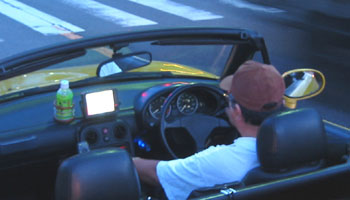
I’ve noticed that a lot of cars have little TV screens for the DVD navigation system–but all too often, I noticed that people are watching TV instead of the navigation maps. Makes me wonder exactly how safe these drivers are. You see enough people smoking or talking on cell phones–watching TV is not a distraction you really want to add. In the back seat, for the kids, maybe….

Categories: Focus on Japan 2003 Tags:

Sunset, Sunrise

September 24th, 2003 Comments off

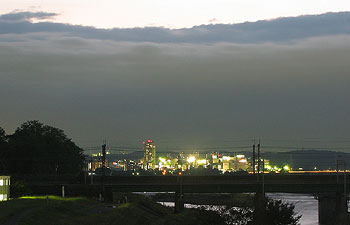
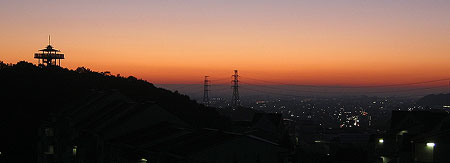
Some photos taken in the past few days. First, I caught a sunset–not great as a sunset, but some interesting photos within nevertheless. Then a sunrise, after a very late night up, taken from my dining room window.

Seiseki Sakuragaoka, on the Keio Main Line, seen from the bridge. A time elapse shot, about 10 seconds.

An egret in the water below. This shot is not reduced in size, but rather is a crop from a much larger photograph; otherwise, I would never have gotten it so close up. A “digital zoom,” I suppose you could say.

A nice two-second elapse shot, a truck rolling by.

And the shot out my dining room window. A nice view, I just wish it got sunsets rather than sunrises–I’m not awake for enough of the latter.

Categories: Focus on Japan 2003 Tags:

Different Perspectives, Different Languages

September 23rd, 2003 Comments off

President Bush will be giving a speech at the U.N. tomorrow to ask them to come to our aid. Previously, he went before them, and threatened that they would become “irrelevant” if they did not go along with his unilateral decision. After charging toward war without consultation with our allies, he came to them instead (claiming credit for being “diplomatic” for doing so) and essentially said, “We want your rubber stamp, but if you don’t go with us, we’re going alone anyway.” This after his famous “you’re either with us or against us” speech about a year before.

Well, they stayed back and did not come with; and Bush charged ahead with a “screw you” thrown over his shoulder at them. Even Turkey did not agree to let us so much as use their borders, despite tens of billions in bribes that Bush offered. And when Bush did go in, despite the tremendous effort and heroic fighting done by our troops, we sank quickly into the quagmire. The WMD that Bush promised were there were not, which the U.N. might have discovered had not Bush’s invasion cut short their inspections; and while the Iraqi military was not nearly the force we thought it would be and the terrorist ties were found to be false, the guerilla afterfight wound up killing more than the war itself. The Iraqi people, far from cheering and welcoming us (minus the few staged ones) as Cheney was sure they would, they more resent us and in too many cases, fight us to the death. And now we either stay and pay a tremendous cost, or we leave and allow Saddam, anarchy, or religious fundamentalists come to rule. But the U.S. is already strapped financially, and Americans, disenchanted, are likely not going to tolerate the continued burden in deficit dollars and lost lives. And the U.N.’s participation would add great legitimacy to the rebuilding of the country.

This situation has forced Bush to go back to the U.N. to ask for their help. Now, when Bush campaigned to be president, he said that other nations would respect us only if we were “humble.” But, according to reports, Bush is not going to be very humble. Yes, the U.N. can help write a constitution, and yes, they can oversee the elections. But first, the war was right (forget all those lies we told you), the U.S. will retain control (if you send troops, they must be under our command, and don’t think of coming near the power base) and will hold on to the profits (give us your money, but U.S. companies get dibs on taking it).

In other words, he’ll throw out some bones and keep the meat, while asking the U.N., whom he insulted and berated before, to get their member nations, whom we ridiculed, to send their sons and daughters to fight and die for our cause and for our profit, to clean up the mistake we made despite their warning.

The only reason the U.N. would agree to this galling presentation would be because they are caught between Iraq and a hard place: refuse to accept Bush’s demands, and Iraq could fall apart and the region could become unstable, added to the deaths and misery the Iraqis themselves would suffer. Essentially, Bush holds them hostage.

But there may be reason for Bush to worry. 82% of Germans and 72% of the French believe that the U.S. invasion has made the world more dangerous, and similar number oppose their countries’ troops going in to Iraq to help the U.S. In the face of such strong opposition, will these countries really bow down before Bush’s demands?

I have the feeling that the U.N. may eventually go in, but they’re not going to accept Bush’s terms automatically; if they do, that will be what renders them “irrelevant.” With the known arrogance of the Bush people, I would not be surprised if they refuse to compromise, but then again, with an election coming up and even the most generous polls now dropping to 50% approval, Bush could be in even bigger trouble if he doesn’t get the U.N. to come in. So the U.N. seems to hold the stronger cards; the question is, will they risk Iraqi security to call Bush’s bluff?

Categories: Archived Tags:

Card on RIAA

September 22nd, 2003 Comments off

I don’t always agree with his politics, but Orson Scott Card is a great fiction writer, no question about it. Here are his views, as an author, on the RIAA and copyrights. Very interesting view.

Categories: Main Tags:

Judicial Politics

September 21st, 2003 1 comment

The executive and legislative branches we have always expected to be highly political, and although we have always known the judicial branch has its politics as well, he have, perhaps naively, expected that branch of government to be relatively objective in their rulings. We did not expect them to be outright party hacks. Yes, we have expected that their political biases to swing their judgment in an underlying, philosophical way; for instance, to favor Constitutional Constructionism as a way to justify conservative biases. This covert rule of bias at least allowed us to covet the belief that the judiciary was still above the fray, that we could count on the courts as being the final bastion of objective fairness.

That objectivity, whether true or simply a thin sheen, has been quickly evaporating over the past few years, and the judiciary has evolved into a political system all too much like the other two branches of government. It was doubtlessly energized by the standardization of court-stacking that evolved, in the 20th century, into the fine art conservatives have made of it (place young judges with known far-right leanings but little in the way of a paper trail, so as to control benches for decades). The overt politics-over-law trend, however, started to come fully out in the open with the 2000 elections, and the purely partisan ruling in Bush v. Gore, a ruling that had far more basis in politics than in actual law (read Vincent Bugliosi’s The Betrayal of America for further edification).

Another such outburst, lesser-known, was when the Fifth Circuit court, in 2001, used the case United States v. Emerson in an attempt to single-handedly re-interpret and reverse a long history of high-court decisions, including two Supreme Court decisions, on the nature of the Second Amendment to the Constitution. Over a hundred high court decisions, including the two by the Supremes, had held steadfast in the interpretation that the Second Amendment applied only in militia, or military, situations, and did not guarantee an independent, individual right to keep and bear arms.

The Emerson case, interestingly enough, did not even touch on Second Amendment rights, but two of the three judges on the Fifth, both strongly right-wing, issued what is called a “dicta” ruling–essentially, a ruling on law that is unconnected to the case. In the dicta, these two justices rewrote more than 60 years of judicial history and unilaterally declared the Second Amendment an individual right.

This ultraconservative judicial coup prompted an opposite but more than equal response from the more liberal 9th Circuit, which ruled in Silveira v. Lockyer in 2002 that the 5th Circuit was incorrect, and re-instituted the long-standing legal rulings on the matter. A good, brief, and objective reading of the story can be found here.

But the politics had come out of the judicial closet. And in a manner very similar to all this, the hard-right-wing judgment from the Supreme Court in Bush v. Gore was answered by a liberal trio from the 9th Circuit last week when it cited the 2000 decision in its ruling to delay the California elections until March of 2004. And now, a group of eleven conservative judges on the 9th is seeking to overturn their brethren early next week, in a move that is more of a political gunfight at the O.K. Corral than a stately, informed judicial proceeding.

We are beginning to see judges become outright politicians more and more often, as with judge Roy Moore in Alabama trying to force his own personal view of the First Amendment, and with the aforementioned 5th Circuit in Texas forcing their personal views on the Second.

Add this to John Ashcroft taking a partisan political stand on the law, and at the same time trying to rework several of the Amendments on his own, and we have a state of affairs which is truly dismal indeed. What used to be, at least, the outward appearance of judicial restraint and objectivity is breaking down into down-and-dirty politics. Of course, there are still quite a few fair judges out there, but they are at best being heard less above the political roar, and at worst, are being replaced by a new generation of political judges.

Lady Justice is taking off her blindfold, and choosing sides. Say goodbye to the balance, and watch out for the backswing on that sword.

Categories: Archived Tags:

Quake: 9/20/2003

September 20th, 2003 Comments off

A pretty strong quake just hit. I had just been on the phone with my father and sister for a few minutes when I felt the room shake. It wasn’t violent, but it was a pretty darned respectable shaking, probably the strongest I’ve felt in Japan so far. The glass doors on my video cabinet were shaking, and the ceiling lamp was swinging quite a bit. It has been announced on NHK as a 5.5 quake (don’t know if that’s Richter or Japanese scale), 80 km deep under southeast Chiba prefecture, just east of Tokyo. That’s not the biggest quake I’ve felt since in Japan, but it was the strongest because it was the nearest big quake.

Tenki.jp and Hi-net are both not responding, probably deluged by people like me, trying to access their pages to see about the quake.

More as it comes in.


Here’s a map that came from the Tenki.jp site, which is now responding again:

Categories: Focus on Japan 2003 Tags:

Faux News

September 19th, 2003 Comments off

Nightline had a piece on Hurricane Isobel today, and they showed a plethora of shots from newscasters following the hurricane “formula,” which include the broadcaster standing in the gale-force wind (I think Dan Rather was one of this style’s pioneers).

Most laughable was the Fox News broadcaster, who made it look like he was caught in the middle of, well, a hurricane, doing theatrics with the wind, staggering against the gales, even sitting down one time to keep from being swept away.

Then, at one point, his pants started getting blown off. So he walked just a few steps out of the way… into a completely windless area. Turns out the wind he’d been showing off in was a highly localized phenomenon, a kind of narrow wind tunnel created by a street.

About par for Fox.

Categories: Archived Tags: