Archive

Archive for July, 2005

Tokyo Wild Bird Park, July 15 2005 – Part 2

July 17th, 2005 Comments off

Sorry, it’s taken more than the one day I planned to get this post up. To finish on my last bird post, here are the other birds, including most of the new species, that I saw at the Tokyo Port Wild Bird Park.

First, the Gulls. Previously, I had spotted a Herring Gull along the Tama River, but at the park the other day, I found two other types of gulls: First, the Black-tailed Gull, which in Japanese is called “Umineko” (ウミネコ), or the “Sea Cat”:

705-Blacktailedgull1-450

This one may be immature, due to its lighter tail feathers and relatively dim red tip to its beak, but it is definitely a Black-tailed. See the head detail:

705-Blacktailedgull1A-450

And here’s another shot:

705-Blacktailedgull2-450

I thought I saw the same gull, very immature, as it had very light plumage, but it turns out that this is probably a completely different gull, probably the Glaucous Gull (Shiro-kamome • シロカモメ), though I am not 100% certain:

705-Glaucousgull-450

Then there were the Plovers. First, the one I’d seen before, the Little Ringed Plover; note the yellow ring around its eyes:

705-Littleringedplover1-450

705-Littleringedplover2-450

But there was another plover which I thought might be an immature Little-Ringed, but it turns out that instead it’s a Kentish Plover (Shiro-chidori • シロチドリ), due to the black legs (the Little Ringed Plover has yellow legs, better visible in the first of the two above photos) and other markings:

705-Kentishplover1-450

705-Kentishplover2-450

Then we have the Sandpipers: first, the Common Sandpiper (Iso-shigi • イソシギ), which I’d spotted before on the Tama River:

705-Commonsandpiper1-450

705-Commonsandpiper2-450

And then the more interesting, curve-billed Terek Sandpiper (Sorihashi-shigi • ソリハシシギ):

705-Tereksandpiper1-450

705-Tereksandpiper3-450

And to finish off the series, a few picture of the Terek Sandpiper taking a bath, while we see, walking nearby, the Little Ringed Plover:

705-Rplover-Tsandpiper-450

…And with the Kentish Plover:

705-Kplover-Tsandpiper-450

Categories: Birdwatching, Uncategorized Tags:

The Keyboard of the Future?

July 17th, 2005 3 comments

Every once in a while, a new product comes along that stands to break long-standing paradigms. The GUI (mouse, windows, menus, etc.) is perhaps the most significant example. Cameras going from film to digital is another big one. The kind of change that opens up new possibilities for a piece of equipment, allowing you to use it in a variety of new ways. One that will probably change a long-standing (almost 140 years) keyboard paradigm may be coming soon: the Optimus keyboard, from Russian designer Art Lebedev. The keyboard is designed so that every key is a stand-alone, miniature OLED display:

Opt1

Opt2

Instead of each key’s function being painted on simple plastic key caps, the function of each key is indicated by the display–which, of course, can change to whatever you want it to show. That means an instant keyboard switch, not just between languages and QWERTY-DVORAK layouts, but also to any controls that any application might require. Playing a game with keyboard controls, but having trouble remembering what key controls what function? It would all be visible, right there on the keys. Want to see all the key functions when you hold down the shift, alt or function keys? Want the key caps on your keyboard to reflect the font you’re using? Want to redesign the keyboard completely? This keyboard would allow for that. Below is an animated GIF made from images from the Optimus’ site, showing how the keys can change, in this case from English to game mode (for “Quake”) to Photoshop and cycling back through:

Opt

The OLED technology means that the keys emit light, so they require no backlight. From what I can gather, the keyboard is wireless, but I haven’t found out if it uses infrared ports, Bluetooth, or something else. Nor has it been specified whether it runs on disposable batteries, rechargeable batteries, or some other way of keeping the juice up, not how long the charge holds.

Optw

Though the keyboard is designed nicely and looks svelte, it is also looks pretty wide (an extended keyboard with extra keys on the left); you might not have the desktop space for it. Then there is the question of how the keyboard feels, an important point for many. And finally, there is the issue of durability: any key that sticks or blacks out permanently could screw up the whole keyboard. Will the keys be replaceable?

On the other hand, the makers are claiming that price will be between $200 to $300, a seeming bargain considering what you’re getting; specialty keyboards can already cost much more than that, and even standard wireless keyboards can cost up to $200. So despite the new functionality, the price (which may fall considerably over time) will not break the bank and relegate the new keyboard to the backwaters of super-expensive toys.

Some have claimed that this is not even a real device, even a prototype, but is rather a design presentation, a graphic rendering only. If that’s true, then they did a damn good job of it. Even if that claim is true and the product is only an imagining, I would think that it is revolutionary enough to spur production of the real thing. But the site claims that it could be out by next year, and a lot of people take this seriously. We’ll see.

One additional note: this also is another step in the direction of Star Trek technology, just like today’s cell phones imitate the communicators from the 60’s series. In the 80’s series Star Trek: The Next Generation, computer controls were portrayed as reprogrammable visual displays; you want to do something different at a work station, the keyboard would change for you. Hmm.

Categories: Gadgets & Toys Tags:

That Was Fast

July 16th, 2005 2 comments

The new Harry Potter book arrived today, from Amazon Japan. But then again, it’s past midnight Friday in Japan, though not yet in the U.S. And just past midnight in the U.K. Not to mention that many (resellers and libraries) have had the book in their possession for some time now. In any case, I’ve got a bit of reading material now. It will be very interesting to compare this with my brother’s work.

Update: apparently, Amazon Japan mistakenly sent a lot of the copies out a few days early. I got mine delivered within an hour after the worldwide release time, so not early but not really that late, either.

Categories: Main, Media & Reviews Tags:

Beyond Spin

July 16th, 2005 1 comment

One thing that the GOP hasn’t picked up on yet is that the Rove case is beyond spin. They should know this, they’ve used it to highly advantageous effect against Democrats in the past, especially Bill Clinton. When the general public has the solid impression that a wrong was done, spin stops being a cover and starts sounding like bullshit.

Right now, the GOP is spinning like mad, and it doesn’t look good. Scott McClellan repeating “I’ve answered that question” when he hasn’t, “I won’t comment on an ongoing investigation” when he has. The president saying he won’t comment until the facts are in when he said before he’d fire anyone involved, and Rove is by God undeniably involved. The Republican Senators still trying to attack Joe Wilson, with lies debunked years ago, and the attacks smack of partisan desperation in any case. The right-wing talking heads spinning every possible out for Rove: he didn’t use Plame’s actual name, he didn’t know she was undercover, Novak spoke her name first to Rove, Rove was just trying to stop Cooper from saying the wrong thing. When the average American hears that stuff, it all sounds the same now: bullshit, bullshit, bullshit. The story has passed the threshold now, and no amount of spin can save it. More spin just piles the bullshit higher on the Republican party and its agenda. Hell, if the Media Whores™ aren’t buying the bullshit, who do they think is? Sure, the party faithful, but you had them from “Hello.”

Janet Reno had it right: when you’ve screwed up, you’re screwed, and the best thing to do is claim responsibility, pay the price, and move on. But the right wing finds that impossible to do: claiming responsibility means sending Rove to jail, and they can’t let go of Karl Rove. He’s too much their boy, they’re too much beholden to him. So they have no choice but to bullshit, despite how transparent it all is. And it’s bringing the party down.

Do I disapprove? Hell, no. This is too much fun. Would I do differently? Maybe not. But this is what you get if you bullshit too much, too long, and you try to grab too much power without facing the fact that consequences are involved. Time to pay the price; try to stall, and the price just gets higher.

I can wait.

Categories: Political Ranting Tags:

Wither Wristwatches?

July 16th, 2005 3 comments

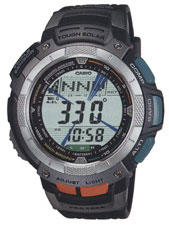
HugewatchA bit more than a year back, my last digital wristwatch went kablooie, and I never replaced it. Sometimes, in my classes, if I need to time something, I’ll ask around for anyone with a wristwatch. And because of this, I haver noticed that almost none of my students wear watches. This seemed quite odd to me, until I realized that probably it was because they all have digital cell phones now that display the time in large numbers on the LCD screen on the outside of the phone–this serves the same purpose for most people, so why buy and wear a watch anymore?

Of course, the decline in wristwatch wearers might also have something to do with the fact that said watches nowadays tend to be the size of small aircraft carriers. I mean, seriously, when you wear one of those behemoths, can you even get your hand into your pants pocket? Since when did it become trendy to wear something on your wrist that couldn’t possibly fit under your cuffs unless you unbutton them? This is the reason I don’t wear one any more–I actually went shopping for one when mine broke down, but wasn’t able to find one that had the features I wanted (stopwatch, countdown, multiple alarms) without also being bigger than my wrist after playing handball for ten hours straight.

At least my class problems are solved by the iChrono widget, which gives me a handy stopwatch to time my students’ PowerPoint presentation projects.

Categories: The Lighter Side Tags:

iTunes Music Store Japan: Next Month?

July 15th, 2005 Comments off

Well, that’s what they’re saying now. And more people are saying it’ll open in August sometime. Even Forbes said it as if it were definitive. Hmmm. I’ll believe it when I see it, but here’s to being hopeful.

Categories: Mac News Tags:

Tokyo Wild Bird Park, July 15 2005 – Part 1

July 15th, 2005 1 comment

It was such a nice day out, I decided on the spur of the moment to head down to the Tokyo Wild Bird Park, seeing as how it had been three months to the day since I had been there last. I probably should have visited more often, especially in May, but somehow either never got around to it, or the weather was unfriendly. But I went there to\day, and picked up several new species–as well as getting some very nice shots of some old ones. I’ve divided this post into two because there were just so many birds, it’d make far too long a single post–and I’m not even displaying shots of all the birds I spotted today.

Among the species I saw but had spotted before: Little and Great Egrets, Grey Herons, Barn Swallows, Tree Sparrows, Great Cormorants, Spot-billed Ducks, Eurasian Coots, Little Terns, Little Ringed Plovers, Common Sandpipers, as well as Starlings and of course, Crows. The new species were: Greater Scaups, Terek Sandpipers, Kentish Plovers, Black-tailed Gulls and what I think was a Glaucous Gull. I heard others in the trees, but couldn’t spot them. Seventeen species in all.

First, the best: Grey Herons (Aosagi • アオサギ). There was a family of them, staking out an area very close to the 1st watcher’s blind at the east end of the park, so I was able to get some very nice pictures, as opposed to the single, far-off chance shot I had gotten before. This one is the best: the Heron is standing right in front of me, and relaxed its wings out to the sides:

705-Greyheron1-450Tall

Almost as if to give me a bit of a Heron fashion show, the bird turned around for a back shot…

705-Greyheron2-450Tall

And then a profile:

705-Greyheron3-450Tall

The Heron’s offspring, still with immature plumage, was off to the side but still nice visible:

705-Greyheron4-450

Previously, as I stopped along the Tama River before going to the park, I spotted the Heron’s cousin, a Little Egret, and happened to snap it catching lunch:

705-Lesseregret1-450

705-Lesseregret2-450

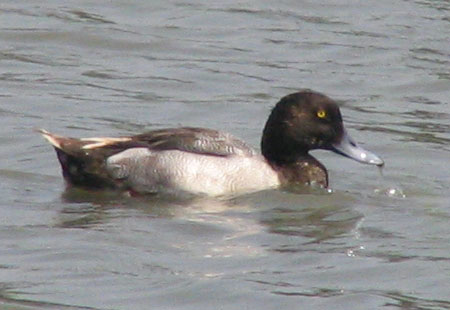
From time to time, I’ll spot a bird and snap photos of it, expecting it to be a certain species, and only discovering later on that it was something else. I almost absent-mindedly shot this duck, thinking it was a Tufted Duck or some other species I’d seen before–but it turned out to be a new one for me, the Greater Scaup (Suzugamo • スズガモ).

705-Greaterscaup-450

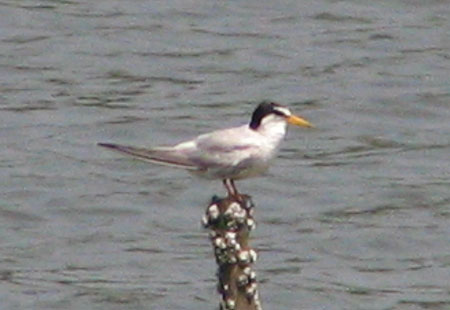
One more before wrapping up this post, another repeated bird: the Little Tern (Koajisashi • コアジサシ). Got a few nice shots as it rested on a post in the water.

705-Littletern1-450

705-Littletern2-450

Coming later: two Plovers, two Sandpipers, and two Gulls.

Categories: Birdwatching, Uncategorized Tags:

Audacity

July 14th, 2005 Comments off

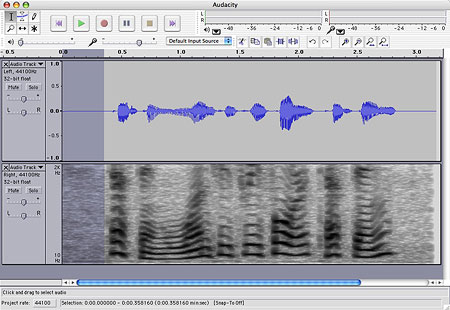
A few weeks ago, I went on a bit about how to make a podcast, and I recommended a few audio recording and editing programs. I’m back to say that there’s one I missed which outdoes all the others. It is a freeware app called Audacity, and it’s a great program–so much so, you wonder why it’s freeware. Maybe Peak LE does stuff that pros use which I don’t know about, but as far as lay-people using apps to record and edit, this program has Peak beat hands-down.

Auda1

It works much the way SoundEdit did, perhaps even better, and is a worthy successor. Audacity can open WAV, MP3, OGG, AIF and Sun AU audio files (MIDI import is also possible). THe application can save audio projects as proprietary Audacity files, and can export at WAV or OGG; you can also export as MP3 with the use of a LAME library file. You can also use Audacity to record via a microphone.

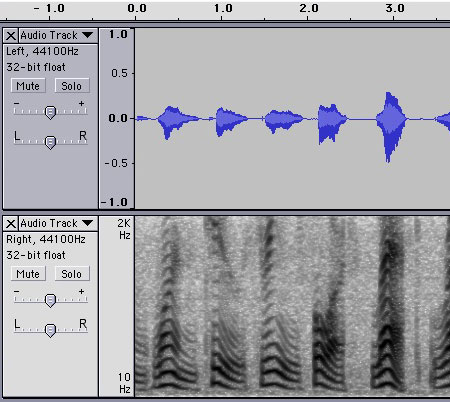
Once open, you can view and edit audio files in a variety of ways. In the example below, the left audio track is shown as a waveform while the right track is shown as a spectrogram:

Auda2

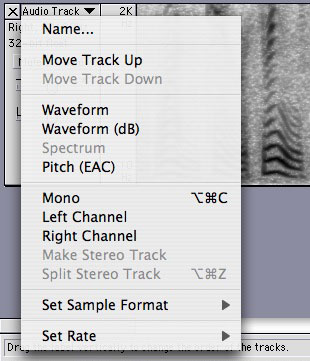
You can split stereo audio tracks and edit them separately, adding or subtracting tracks as you go. You can change the view for or switch channels for each track:

Auda3
Picture 10
A small control panel (shown at left) allows you to change the cursor mode between selection, edit volume (envelope), edit samples, magnify, move and multi-tools modes. The envelope mode is pretty neat, allowing non-destructive volume changes on the fly which you can edit back and forth without resorting to a dialog box, making permanent changes to the volume.
Auda4
Another toolbar (shown at right) allows you to cut, copy, paste; crop in and crop out; undo and redo; zoom in and zoom out; and most useful, the last two controls allow you to quickly expand either the selection or the entire audio track to fit the window.

The tracks themselves are easily and intuitively expandable, allowing you to resize the display to whatever is most convenient for you.

The audio-out and audio-in volume are even presented just right (for my tastes at least). Almost everything feels like it was designed in just the right way. Complex enough to please high-end users, but simple and intuitive enough for a lay person like myself.

Auda5

Furthermore, Audacity has a range of special effects very similar to SoundEdit, including fades, pitch/speed/tempo changes, amplification, bass boost, normalization, equalization, reverse/inverse, etc. etc. It can also generate tones and silence, sometimes useful and usually missing from other apps.

It’s also available cross-platform, Mac (OS 9 and X), Windows, and Linux/Unix.

If you’re looking for a good audio program and don’t want to pay for a professional package, this is your baby.

Categories: Gadgets & Toys, Mac News Tags:

Images, Hotlinking and Bandwidth

July 13th, 2005 2 comments

By the way, one other thing I found in looking at the stats of my blog site is that a lot of people are hotlinking to images from my site. “Hotlinking” refers to the practice of “borrowing” images on other people’s web site to adorn your own. This is not about downloading an image from somewhere else and uploading it to your own site. Instead, it is the practice of leaving the image on the other person’s web site, and by using simple HTML code, making the photo appear to be located on your own site–but really it’s located on the original site, and every time someone visits your site, their browser takes a covert side trip to the site with the photo, snags the image, and plops it into the hotlinker’s page, as if it were really located there.

Probably the hotlinkers do a Google image search, find a photo from my site there without ever visiting it, and then use the URL of the image where they like. In doing this, anyone can display a photo on their web page, even though the photo is hosted by someone else. But the Internet is not really free, as much as it may seem like it sometimes. To host an image–that is, to keep an image file on a web server hard disk–costs money. Similarly, to transmit data, like the image file, is called “bandwidth,” and also costs money. In other words, they’re paying the rent and transportation, which you’re hijacking to your benefit. While it may not be fully honest to grab someone else’s image and put it up on your site, at least you’re paying the rent and bus fare. Hotlinkers steal everything.

Some people hotlink to images because they feel they have no choice, like Blogspot bloggers who can’t upload images–or that is, they couldn’t before, but now they can but haven’t learned that yet. Others maybe can’t upload images from whatever service they’re using.

Either way, it comes down to this: if you use someone else’s URL in your image tag so they host the picture but it shows up on your site, then you’re stealing bandwidth. It means that in order for your page to look good, I have to pay my web host x number of dollars for hosting the image and using bandwidth so people who visit your site can see it. It’s like my using your phone line to make all the calls I like. But people do it casually probably because they don’t understand what they’re doing–or perhaps they do understand but just don’t care.

I tried to engage something called “hotlink prevention,” which would prevent such bandwidth theft, but as a result, many people with some browsers were not able to see the images I put up on my own blog, so that had to go. What I am left with is detecting which photos have been hotlinked, renaming each photo so affected, and then re-editing my own blog post which used the image so that the new name is recognized; that severs the link to the hijacker’s site while keeping the photo visible on my own site. Sometimes, if I am sufficiently annoyed by someone costing me a lot of bandwidth, I’ll change the name of the original and reflect that in my blog, but then I will also place a new image with the original file name–with a replacement image carrying a sharp graphic message telling the hotlinker to stop stealing bandwidth. They probably didn’t figure that (a) I would be able to see that they stole the image, or (b) I could change the image and in so doing, change their site.

Recently, one image in particular has been hotlinked a lot, one I grabbed from a Simpsons episode. At least three different forum/member sites had this image hotlinked; one of those sites had the image in the main index, meaning everyone who visited would activate the link, and a different web site had several members who each had the image in their profile pages, as if one had used it and the others picked it up from them. The image was getting hotlinked more than 100 times a day because of this; at 20K a pop, that’s 60 MB every month, just for that one photo. No thanks.

Categories: BlogTech Tags:

Is Japan a Militaristic Society?

July 12th, 2005 8 comments

I’m not trying to be jingoistic or anti-Japanese here, it’s an honest question.

Ever since I can recall, I have always heard of modern, post-WWII Japan referred to as a peaceful nation. Scarred by the war and in particular by the atomic bombings of Hiroshima and Nagasaki, Japan truly renounced war–not just because that was imposed on the country–and stood as a symbol of peace in a post-nuclear world.

Not to see how things are going in Japan today, though.

Right-wing newspapers, for many years, have been fighting an aggressive media campaign to convince the people of Japan that it is necessary to amend or rescind Article 9 of the Japanese Constitution–the article that says Japan forever renounces war. Back when I had subscribed to the English-language Daily Yomiuri, I remember frequent front-page headlines along the lines of “Japanese People Support Revision of Article 9.” (Closer examination of the data suggest that a majority of Japanese approve of general revisions to the Constitution, but most oppose revising Article 9.) And a point could be made that Japan has technically, if not officially, crossed those bounds; for example, ever since the 80’s, many have noted that though superficially only a self-defense force, Japan’s navy is one of the largest and most powerful in the world. A few decades ago, the question was about how far above the legal % of GDP Japan spent on the military; today, Japanese “self-defense” troops are station in Iraq. And the pressure to get rid of Article 9 has only increased. Certainly, the present conservative government seems determined to take this path.

Furthermore, the media seems to be taking the same tack. Japan has never been big on self-scrutiny in terms of its wartime wrongs. Few films like “Platoon” get released here. Instead, the tone is more one of “we got framed.” A 1999 film called Pride (which was lavishly budgeted as far as Japanese films go) took a revisionist tack, painting Hideki Tojo as a hero and presenting Japan’s wartime actions as defensive. Current author Harutoshi Fukui, described as a “Japanese Tom Clancy,” is seeing three of his books released as films this year alone, the first of which dealt with a Japanese WWII submarine foiling an American attempt to atom-bomb Tokyo. In short, you see and hear quite a bit in the media about a yearning for militarism, and less and less about peace.

Granted, a good deal of this probably has to do with the identification of the Constitution with a rule of law imposed on Japan by the United States. American bases with tens of thousands of soldiers still dot the Japanese countryside (one of them, in fact, is quite literally in my own backyard, the border fence just a few dozen meters behind my building). Whenever there is any infraction by an American soldier against a Japanese person, it makes national headlines. Japan has seen American culture, politics, and military needs trump its own. A lot of Japanese see Koizumi as Bush’s lapdog and are not pleased with that. Perhaps this was better tolerated when Japan was on an economic high roll, but now Japan is more than a decade into a recession and the compensations may seem less attractive.

The history of relations between the two countries is also felt strongly here, especially one statement made by Douglas MacArthur during the occupation to the effect that Japan was/is a “nation of twelve year olds.” Author Fukui addressed this, saying “We were 12-year-olds just as Americans said, but over the last five years, we think we’ve become at least 14-year-olds. There is a clear difference between 12 years old and 14 years old, when self-consciousness sprouts and the person reaches adolescence. … It’s like a person who says, ‘The world is a scary place, and I should learn to fight like my father.’ But the same person says, ‘I want to get away from my father and go my own way.'”

Then there is the fright factor, just like Americans are reacting to with terrorism. Not only does the specter of al Qaeda hang over Japan, but North Korea is very, very close and is now the country’s number-one boogeyman, firing its missiles over Japanese territory and sending its ships into Japanese waters.

And then there are those who say that Japan is and always has been militaristic, and has lost its way since America imposed a system where money rules. Certainly, with Japan’s famous bushido traditions, there is support for this; however, it again reflects more what the ruling class has imposed, and not perhaps the true voice of the people, now more important in a more democratic society.

However, most of the factors bringing on militarism seem to crowd in from the outside, pushing the people instead of following their desires. Are the Japanese people militaristic, more often than not? A difficult question to answer objectively as an outside observer: an American asking that question to a Japanese citizen is just as likely to receive the answer which the Japanese citizen feels the American wants to hear. Not from deception, of course, but from a desire to avoid possible conflict.

This is something about which I intend to speak with some of my Japanese friends and acquaintances, and would like to hear your opinions as well. Is the recent trend towards militarism a product of the media, a push by right-wingers within and without the government, or is it really the will of the people? I am not asking if Japan is on the path to becoming like it was 60-plus years back, that would be taking things too far too soon. But is Japan on the general track of militaristic independence and possibly military influence, and if so, from where within Japan is that coming?

Categories: Focus on Japan 2005 Tags:

Bird Photos from the Island

July 11th, 2005 10 comments

My father just got the next generation of Canon digital camera from my own. I’ve got a PowerShot S1-IS, a 3.2 MP camera with 10x zoom; my father just got the S2-IS, a 5 MP camera with 12x zoom. He’s getting the Canon tele-converter that goes with it soon, to bring him up to 18x zoom. A strange story with that, too–he called up Canon, and they seemed to claim that the S2 had no tele-converter from Canon. And yet, here it is, made by Canon itself. But try to go to Canon’s web site and find it, and it doesn’t seem to exist. Stranger still, the S2 seems to require a different lens adaptor and uses a different model tele-converter than the S1, despite the near-identical appearance of the two cameras. Why would Canon change that? Or is this just the next generation of tele-converters and adaptor rings? Additionally, the Canon tele-converter for the S2 is a 1.5x converter, as opposed to the 1.6x converter I have. Which means that despite the fact that my camera is 10x and my father’s is 12x, the corresponding converter lenses will bring both to a total of 18x zoom. Why would Canon limit the new camera’s add-on zoom to be the same as the old one? As I said, kinda strange. We should find out if my father could still use the 1.6x converter for a 19.2x total zoom.

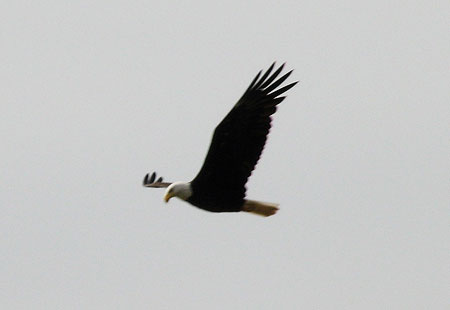
In the meantime, he’s taking photos with just the 12x zoom, and is having fun (a feeling I well know). Here are a few shots taken on the island (a place not too far from Seattle), of eagles fairly common in the area right now:

705-D-Baldeagle1-450

705-D-Baldeagle2-450

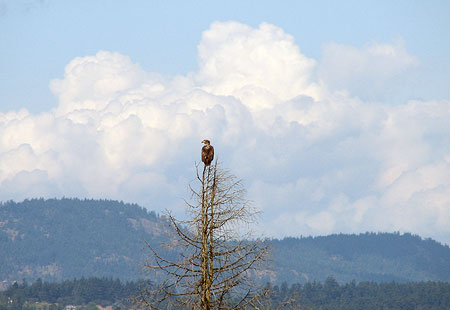
And here’s an immature eagle, taken from about a quarter of a mile off. First, nearly the whole photo, reduced:

705-D-Immbaldeagle1A-450

And then the eagle only, cropped:

705-D-Immbaldeagle1B-450

Some nice photos! Coming soon may also be some egrets and kingfishers. I’m looking forward to them.

Categories: Uncategorized Tags:

Harry Potter Fan Fiction Trilogy: Phoenix Intuition

July 11th, 2005 3 comments

And so we come to the third and (I believe) final installment in my brother’s Harry Potter book series. His first two installments, Harry Potter and the Veil of Mystery, and Harry Potter and the Ring of Reduction, covered the sixth and seventh years of Harry Potter at Hogwarts, following Rowling’s first five books (picking up at the end of Harry Potter and the Order of the Phoenix) and ending Harry’s years as a student at Hogwarts. Veil and Ring were written in the same style as Rowling’s books, covering one year at Hogwarts, and written in the “third person limited” point of view–that is, the story is told completely as the protagonist views it. Each of these two novels were also long, equivalent to perhaps a 1000- to 1200-page book.

This last novel, Phoenix Intuition, breaks those rules in many ways. First of all, it is not written in the third person limited; it is in the third person omniscient, and often leaves Harry to view other events outside of Harry’s experience. Second, Harry is no longer a student and this novel does not restrict itself to the Hogwarts calendar–in fact, it starts several years before the main events in the story. Third, the novel is shorter, about half as long as the previous novels. And fourth, the story not only incorporates real-world events, but is set on a world stage. So if you’re looking for a different kind of Harry Potter novel, written by someone whose writing is excellent and tested, then this will be a good read for you.

Since Phoenix Intuition relies somewhat heavily on the previous two novels by my brother, I would strongly suggest reading the other two before picking up this one, otherwise you won’t know a lot about what is happening. Also keep in mind that these three fan fiction books assume a branching of events after the end of The Order of the Phoenix; they diverge–sharply, would be a sound guess–from the direction Rowling is taking in her sixth Harry Potter Book, The Half-Blood Prince, due out in less than a week. So if you read The Half-Blood Prince, assume its events take place in a different Harry Potter “universe” or “timeline.”

Please find the novel presented here in PDF form, in two versions: U.S. Letter (8.5 x 11) size, for those who wish to print the entire book out on your printers (496 pages), and B5 (roughly 7 x 10 inches) size, for easier reading on a computer screen. A text-only version for those who will read on their iPod, PDA or other plain text reader will be released soon; look to this post or the main Harry Potter Fanfic entry.

Pib811
Pibb5

Enjoy.

Categories: Main, Media & Reviews Tags:

Rove Nailed

July 10th, 2005 Comments off

From David Corn:

…tonight I received this as-solid-as-it-gets tip: on Sunday Newsweek is posting a story that nails Rove. The newsmagazine has obtained documentary evidence that Rove was indeed a key source for Time magazine’s Matt Cooper and that Rove–prior to the publication of the Bob Novak column that first publicly disclosed Valerie Wilson/Plame as a CIA official — told Cooper that former Ambassador Joseph Wilson’s wife apparently worked at the CIA and was involved in Joseph Wilson’s now-controversial trip to Niger.

To be clear, this new evidence does not necessarily mean slammer-time for Rove. Under the relevant law, it’s only a crime for a government official to identify a covert intelligence official if the government official knows the intelligence officer is under cover, and this documentary evidence, I’m told, does not address this particular point. But this new evidence does show that Rove — despite his lawyers claim that Rove “did not tell any reporter that Valerie Plame worked for the CIA” — did reveal to Cooper in a deep-background conversation that Wilson’s wife was in the CIA.

With the Republicans solidly in control of both houses of Congress and the executive branch, one can expect first-class protection for the GOP’s golden boy. While I hope Rove gets sent to prison–and not Danbury minimum security–it seems very likely that he’ll be able to feign ignorance of Plame’s undercover status just well enough to escape serious jail time. Of course, it’s obvious that he knew full well: revealing Plame’s CIA status would have had no purpose for Rove unless she was indeed undercover.

One good thing that will come of this is that it will expose the Bush administration for what it is, with zero ability of the right wing to claim otherwise without looking like complete fools. Of course, that never stopped right-wingers before: Oliver North betrayed his country, violated national security, lied to Congress and the people and generally did a lot of loathsome stuff, and he’s still a hero of many conservatives. It’s the whole faith-based thing: believe no matter what.

Categories: Political Ranting Tags:

Compassionate Words of Sympathy Pour out from the Right Wing for London Bombing Victims

July 9th, 2005 2 comments

“My first thought when I heard – just on a personal basis, when I heard there had been this attack and I saw the futures this morning, which were really in the tank, I thought, ‘Hmmm, time to buy.'” —Brit Hume, Fox News Anchor


Brian Kilmeade, Fox News Host: … I think that works to our advantage, in the Western world’s advantage, for people to experience something like this together, just 500 miles from where the attacks have happened.

Stuart Varney, Fox News Commentator: It puts the Number 1 issue right back on the front burner right at the point where all these world leaders are meeting. It takes global warming off the front burner. It takes African aid off the front burner. It sticks terrorism and the fight on the war on terror, right up front all over again.

Kilmeade: Yeah.


It’s like I said — 40 people dead, 150 seriously wounded, 1,000 wounded, out of over 1 million people in that transit tube. It’s not a successful terrorist attack, folks. —Rush Limbaugh

Categories: Political Ranting Tags:

This Happens Whenever I Turn on CNN

July 9th, 2005 3 comments

I’ve stopped watching CNN regularly because their reporting is so terrible (they’re not as bad as Fox News, but they’re trying to be), but with the recent bombings in London, I’ve had the Babble Channel on from time to time to see what’s going on in the video news world. And, as usual, once the direct reporting of the big story is over and they turn to the commentary, I can’t listen for three minutes before they say something outrageous. This time it was in a story about the Madrid train bombings last year. The story included a good amount of detail on finding the suspects in the bombing and how that investigation ended up. The reporter mentioned about how so many Spaniards took to the streets to protest terrorism, but then he went on about how they voted out of office the conservative government which had gone into Iraq despite its unpopularity–and mentioned how this was seen as a capitulation to terrorists.

In other words, after a year and more, after the story should be settled enough to be clear in retrospect, they’re still regurgitating the Bush administration spin rather than reporting the whole story; they are still intentionally editing out important, even overriding facts which put a completely different light on that election.

The conservatives did not lose the election because of the bombing; they lost it because the Spanish people were angered by the government’s attempt to play politics with the bombings. After the train attacks and just before the election, the Aznar government blamed the attacks on the ETA (Basque separatists) and withheld information about possible al Qaeda suspects and evidence that pointed away from the ETA. An ETA attack could have given more credibility to the conservatives:

Spain’s ruling Popular Party went down in defeat to the Socialists in Sunday’s national election. It did so amid accusations that the government had withheld information on the bombings in an effort to influence the forthcoming vote.

A tough line on ETA had long been part of the Popular Party’s platform. If indeed such a horrific ETA attack occurred, it would be certain to win Prime Minister Jose Maria Aznar’s chosen successor the prime ministership. But with the Iraq war strongly unpopular among Spaniards, Islamic jihadi involvement in Thursday’s nightmare would have grave implications for the Popular Party’s votes, and it indeed did.

In short: the Spanish people voted out the Aznar government because it tried to manipulate the attack for political purposes on the eve of an election.

It was people like the Bush administration who went into high spin mode after this humiliating defeat for the so-called “coalition of the willing” (90% of the Spanish people were not “willing”). They painted the election results to say that the Spanish people caved in to al Qaeda out of fear. However, the huge anti-terror protests following the bombings showed they were spectacularly unafraid and unintimidated; far from being cowed, they were outraged and resolved.

The truth about why Aznar lost the election is not a secret, nor is the story hard to find or even disputed by any actual evidence whatsoever. It was absolutely clear why Aznar lost.

And yet, here we are, one year and four months later, and CNN is still spouting the Bush lie; the CNN reporter, who clearly looked into the story well enough to find the truth, plainly omitted the fact that the Aznar government manipulated the bombings and withheld evidence (the CNN story included details about the al Qaeda suspects, after all), and just as plainly ignored the entire scandal that changed the election.

Like I said, this is why I stopped watching CNN, and why I would be even more disgusted were I to even try to watch Fox News. Journalism has gone from reporting the truth to choosing a spin to cover–and then perpetuating it. Just like the Jessica Lynch story and the tearing down of the Hussein statue–both stories fabricated by the Bush administration, and yet knowingly swallowed whole by a willing press, who still report them as true even today–the Spain election story is yet another in the line of conservative rewritings of modern events that is maintained and preserved by these shilling media whores.

Categories: Political Ranting Tags:

To Reveal a Source, Or Not?

July 8th, 2005 2 comments

You remember the Valerie Plame case: Joseph Wilson was asked by the U.S. government to investigate claims that Niger was selling uranium to Iraq; he found and reported that the claims were bogus; Bush ignored these results and “relied” on debunked foreign reports to the contrary, citing the Niger case in a State of the Union speech as rationale to invade Iraq; Wilson spoke publicly on the matter; Karl Rove went ballistic, and in an act of revenge, called reporters under the cloak of the anonymous source, revealing that Wilson’s wife, Valerie Plame, was an undercover CIA operative, blowing her cover and putting her life and the lives of others at risk. Essentially, a treacherous act against our own intelligence community in the name of political payback.

You may have heard recently about the developments in which two reporters, Time magazine reporter Matthew Cooper and New York Times reporter Judith Miller, have been threatened with prison if they don’t reveal their sources for the information about Plame. Even though the disclosure of these sources would help reveal crimes committed by the Bush administration, few if any liberals have been cheering the idea of reporters forced to reveal sources; most have reservations, and some stand strongly against the idea. (Imagine the situation applying to a Democratic administration; a lot of conservatives would be out there demanding the reporters reveal the source or go to prison.)

I’m in the “strongly against” category. I don’t think that a reporter should ever have to reveal a source. This despite a strong personal abhorrence for how the anonymous source is abused, both by dishonest reporters and by dishonest sources. And it even must cover reporters when a crime was committed, else the oft-used cloaking lie about “national security” (which can be applied without fear of exposure to make just about anything a crime) could be used to pry any source from any journalist.

That said, I also believe that Cooper and Miller should have, from the very beginning, willingly revealed their source.

Why? Because they were used. Not just politically, but criminally. While the state should not be able to force disclosure of anonymous sources, journalists should not be bound to secrecy if the anonymous source was not acting in good faith. Once these reporters realized that Rove had used them to commit a highly illegal act of political vengeance, they should have outed him without even being asked.

The confidential source is supposed to be all about protecting whistle-blowers who feel compelled to uncover secrets, either government or industrial, which could lead to retribution against them, personally, legally, or both. “In the public interest” is supposed to be the yardstick; why not use it? If the public interest is not being served and the reporter was misled or otherwise used by the source to commit a crime or attack innocent people, I would think it would be against the interests of the journalist to protect the source, as it would only encourage further abuse in the future. So long as journalists made this principle clear, then anonymous sources coming out in the public interest would not feel any lack of trust in being protected by the journalists they speak to.

Case in point: back in the days of the Iran-Contra scandal, Oliver North was testifying before Congress about why he had lied to them about what he had been doing. North claimed that the Reagan administration feared leaks from Congress, which could not be trusted to keep secret information without blabbing about it all to the press. When pressed for an example of a Congressional leak, North pointed to a case where information was divulged to the media regarding how the U.S. tracked a plane carrying the Achille Lauro hijackers bound for Tripoli. North called this a breach of national security, and berated Congress for putting our intelligence sources at risk. And that was his rationale for lying to Congress about Iran-Contra.

Here, North was trying to cover his own ass for working against the public interest and then lying about it to Congress and the people, and at the same time he was attacking the Democratic Congress, blaming them for violating the public trust when it was he himself who was responsible for it.

Of course, Congress didn’t leak that information to reporters. In fact, Oliver North himself did that. And in that case, the Newsweek reporter who received the information from Oliver North came forward and outed North as the source. Quite rightly, and quite justly. If an anonymous source abuses their anonymity, they should be revealed for what they are. (The reporter who ratted North out, by the way, tells the story himself and expounds on the Plame investigation.)

By the same token, Cooper and Miller should have exposed Rove the first time they were asked. Nothing Rove told them was of value to the public, quite the contrary in fact. And Rove was only hiding behind the anonymity to commit a federal felony, the purpose being payback for embarrassing him and his boss. Do reporters want this kind of thing to happen? I know the argument about the principle of confidentiality, but as I said, if the lines are drawn clearly and publicly enough so that everyone understands them, then confidentiality can be preserved, sources can feel safe and protected, and journalists can be shielded from this kind of abuse.

Categories: Political Ranting Tags:

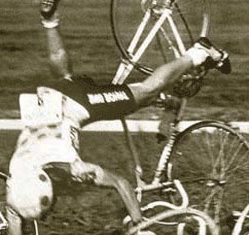
Can’t This Guy Stay on a Bike?

July 7th, 2005 12 comments
705-Crash
Image from The Londonist

Yet again, our fearless leader fall off his bike and go boom. This is, if I am not mistaken, the third time he has taken a bike spill, not including the time he fell off of a Segway (which takes talent). This time, in England for a G8 summit, Bush collided with a police officer, who was immediately shot taken to a hospital.

As usual, the White House press office insists that Bush was going really, really fast and it had been raining. Maybe, but take that with a huge grain of salt: the last time this happened, in Texas, they also claimed it had been raining and the topsoil was loose, but when someone checked the weather, they found out that it had not rained for more than a week.

So we know they lie about the weather to make it sound more dashing and less stupid; we still have no confirmation that Bush was actually riding super fast (“pretty good speed” and “quite a clip” are the terms used). It is not unlikely that in both cases, Bush was going slowly when he crashed. One piece of contributing evidence: if you’re really booking along and you collide with someone, you usually get more than just a few scrapes and bruises. Bush’s injuries are more consistent with lower-speed falls. So the high-speed thing is possible, but not likely. The whole thing with the press office trying to make Bush seem macho when he falls off his bike is laughable and not just a little pathetic. Simply say he had another spill and don’t embellish.

“You know what really makes this embarrassing? The other day the president said the leaders in Iraq are ‘ready to take off the training wheels.’ That’s what he said, ‘take off the training wheels.’ Then he goes out and falls off his bicycle. And they wonder why the rest of the world doesn’t take us seriously.” —Jay Leno

Categories: The Lighter Side Tags:

First Official Podcast

July 6th, 2005 9 comments

About a week ago, I made a podcast and was successful in getting listed in the iTunes Music Store. That first podcast wasn’t really an “official” cast, though–I just needed something to fill the space, and so I read the post I made about podcasting and uploaded it. Since then, I’ve been waiting for the right topic to start the real series of podcasts. Alberto Gonzales seemed to be a good topic. As may be the case with a lot of the casts I may do, this was not just a quickie with little detail; I tried to make it fairly extensive, without getting too gabby or getting into boring detail. Still, it runs just shy of ten minutes. But hopefully it’ll give you a good idea about a man who might be a Supreme Court nominee.

So I’ve uploaded the podcast (and deleted the first episode from the RSS feed). However, iTunes is of two minds on podcasts: they have the searchable listing in the Music Store, and then there’s the subscription in your podcasts window. The subscription can be updated immediately, and will show you the new podcast. However, the searchable listing in the Music Store may take a day or more to update. You can still search for “BlogD” or “The Blog from Another Dimension” and find me, but you won’t hear the Gonzales podcast unless you subscribe and go to the Podcast window. More on how that works when I figure it out.

So from now on, I will make a post to announce when I have published a new podcast. The XML feed for the podcasts is here. The episode on Gonzales can be found here (you can either click to listen in your browser, or right-click and download the file to listen with another application). I am also including an iTunes icon into the title of each post with a podcast; you can click the icon to download the podcast. Let me know if the HTML code within the title looks screwy in any way or in any situation.

Sometime soon, though, I’m going to have to buy an actual microphone; I’m using the built-in mic on my Powerbook, and the quality is not what I’d hope for.

Categories: Podcasts Tags:

A Fix, Maybe

July 6th, 2005 Comments off

For those of you who have been following the perils of this blog lately, you know that the latest implementations of perl/mysql/cpanel have knocked out some of the Movable Type scripting that makes comment and entry posting-and-rebuilding work. The dreaded “500 – Internal Server Error” messages have plagued both commenters and myself alike. It’s all very technical, but let me see if I can lay it out so that maybe you can clear it up if you’re having these problems yourself.

First of all, the errors are not fatal. They only occur on a save-and-rebuild with making new blog entries and with making new comments. The entries and comments are saved, but the pages are not rebuilt. That can be solved by a manual rebuild. Everything gets saved and eventually appears on the site, it’s just that the rebuilding must be done manually.

The fix: in the perl scripts, downgrade the DBI to 1.47, and downgrade the DBD::Mysql to 2.9006. If you don’t run your own server, then ask your web host to do it for you. However, you must also tell them to reset the cpanel autoupdate for your site so that it does not automatically reload the upgrades every night. My web host did this once, and it worked for 12 hours or so, then reverted. I told them of this, and again, they fixed it. They did not tell me if it involved further settings changes, but it was likely something in the cpanel that continued the autoupdate. So stress to your web host that the cpanel autoupdate must be verified as turned off, and then wait 24 hours to make sure that took hold. I’m still not clear as to whether the problems will return yet again, but it is clear that they are fiddling with the right toggle which gets rid of the bugs. I’ll let you know when the problems have stayed away for more than a day.

This should end your MT blog problems for the time being. Word has it that the developer of DBI::Mysql has versions 3.0000_0 and 3.0001_0 out by now, but whether that will fix the Sql/MT bug or not, I cannot say. More news as it comes in.

Update: for four days in a row, my web host tried to disable the automatic upgrading of the site, and on each day the fix worked–for about half a day. The auto-update kept kicking in and the errors would return. Well, maybe five times lucky: my host has disabled the auto-update completely now, so let’s see how that plays out.

Categories: BlogTech Tags:

As If She’d Ever Even Heard of Tempel 1 Before

July 5th, 2005 2 comments

You know it had to happen, somewhere. NASA is being sued by an astrologer in Russia for disrupting her work. She claims that she cannot accurately calculate horoscopes anymore since the Deep Impact probe hit the comet Tempel 1.

“It is obvious that elements of the comet’s orbit, and correspondingly the ephemeris, will change after the explosion, which interferes with my astrology work and distorts my horoscope,” Izvestia daily quoted astrologist Marina Bai as saying in legal documents submitted before Monday’s collision.

Ms. Bai wants NASA to cough up $300 million.

The article goes on to state that “NASA representatives in Moscow were unavailable for comment.” Apparently they have not finished laughing yet.

Categories: The Lighter Side Tags: