Archive

Author Archive

Between Countries

January 29th, 2010 Comments off

Sometimes being caught between countries sucks. I want to buy software item “A” in English. You can buy it in America just fine. In Japan? Not available–just in Japanese, sorry. And retailers in the U.S. won’t ship it to you, as it violates the license for the Japanese seller, even though the language makes it a different product. And the Japanese seller can’t be bothered to sell an English version, even if it’s a download which would be dead simple to sell. Seriously, they’d just have to spend five minutes altering their web site, and they’d have more sales. But nope, can’t be bothered.

It is especially frustrating for my college, an American college in Japan. We are essentially a bubble of English language, a small bit of American soil in the heart of Tokyo. Our model is to replicate the experience at home campus. Except, of course, that those who sell software and media usually don’t recognize this. Can’t have the U.S. version, Japanese version doesn’t fit, you’re outta luck too bad.

I fear this will be the case with ebook purchases, in that we have lots of students here who would love to use ebook readers for textbooks, but international licensing agreements will probably frustrate us. Because of our location, we won’t have access to the textbooks we need–America won’t sell and Japan won’t offer.

Essentially, being a stranger in a strange land is a niche that businesses haven’t paid enough attention to, something which makes zero sense in a digital world. There are some businesses which address us, but they usually see us as prey more than customers, people who are left out and so will pay a premium to get what everybody else takes for granted.

Apple is one of the few businesses which has done a fair job of addressing this. When Apple makes software, they allow for a variety of languages to be used. Their OS software, whether for computers, the iPhone, or iPad, comes with at least a dozen base languages built-in. Apple’s software architecture allows for “localization,” or various languages to be built into every software package. Switch your OS to a new language, and all apps with that language in their localization files will automatically run in that language. Which means that if I buy Apple software in Japan, it simply runs in English for me, because my OS is set to that language.

You see this in a few other places–for example, the “Ultimate Matrix” Blu-ray set is sold in English, but put it in a Japanese player and it switches languages. Unfortunately, such setups are rare. Windows, for example, refuses to do this, and even many Mac software makers stodgily refuse to localize, instead issuing different packages for each language.

Categories: Focus on Japan 2010 Tags:

The iPad

January 28th, 2010 7 comments

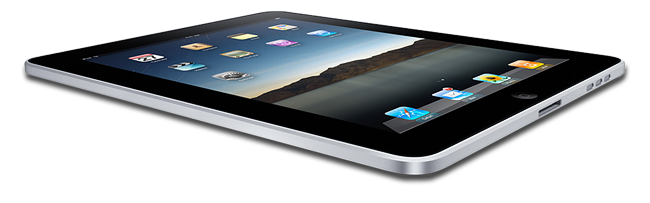
Ipad

One word: potential. Remember how I mentioned people hyping it up too much? This is what I was talking about. Clearly Apple wanted to start from bare basics and then upgrade. Essentially, this is exactly what people heard since a while ago: a giant iPhone or iPod Touch. Apple clearly wants to ride the familiarity people have with the iPhone, which may or may not be a mistake. People were expecting something revolutionary, and instead they got the familiar, just bigger.

In one respect, the iPad is disappointing in that it really doesn’t do anything new. No 3-D interface, no use of advanced multi-touch, and no steep learning curve. It doesn’t even have multitasking, which people expected the iPad would bring to the iPhone. Instead, we’re all trapped under a single app at a time, which is virtually inexplicable for a device with a 1 GHz CPU that reportedly performs very quickly. I can only guess that Apple wanted to prevent the device from slowing down after opening up too many apps at the same time.

What Apple did right: the price. The base unit, 16GB WiFi and no carrier contract, starts at $499, which, if you recall, is exactly what the original 4GB iPhone cost with a contract. The 16GB price is obviously meant to sell, as I seriously doubt that doubling the memory really costs an extra $100. Apple wanted the low-end model to be at a price people wouldn’t gag at, and they did it: $500 for a tablet computer is actually pretty damn good. Add the pre-existing app base and how comfortably anyone will be able to slide into using this, and you begin to understand Apple’s strategy.

And that, I suppose, was a key point: make it available for most people, get the basics down right, and then follow up with more features every model. You can fully expect a new iPad in 8-12 months with a front-facing camera, Bluetooth and a compass, then another one after that with new screen sizes and multitasking, and so on. This is what Apple does. I called that one spot-on in my prediction 10 days ago:

Like the iPhone, one should expect a relative paucity of such features upon the initial release, allowing not only for everyone to focus on the core innovations of the product, but also to allow for Apple to make the subsequent generations of tablets more attractive.

See?

Apple is indeed going with the closed ecosystem; again, they are going with their strengths. Hopefully, you will be able to “authorize” the iPad so it can use all of your purchased apps right off the bat, without having to buy them all over again. Apple is adding iWork to the mix, so we get a long-overdue office suite. The apps are priced at $10 a pop, I presume no discount to buy all 3. But $30 for an office suite seems quite acceptable to me.

Missing from the presentation: any indication of how the file system will work. Now that we have an Office-style set of apps, surely we’ll need a place to save them. How will that work? If they introduced that, I haven’t seen it yet.

And textbooks! What’s up with that? No mention of textbooks in the keynote? Surely there will be something coming, but Apple better not make it so you have to buy a separate textbook app for each publisher. Even free apps from each publisher would be a pain in the ass, as you’d have to remember which textbook you’d gotten from what publisher, and you’d have to switch back and forth.

My predictions for the tablet were not bad–I got a lot right, probably more wrong, though I probably fared better than most analysts. The iPad is slightly larger than I thought, in order to accommodate the border/bezel, which I believe I accurately predicted–I think that’s about a half-inch, maybe a bit wider. I nearly nailed the pixels-per-inch prediction, guessing 130 (it’s 132), and was right that there’d be at least a 720p resolution–I guessed 1080 x 720, it’s really 1024 x 768, not spot-on but fairly close. I predicted that viewing angles would be an issue, and was right–Apple went with a special type of LCD called “IPS” which was a wide viewing angle. I don’t recall many other prognosticators addressing that issue. I was right about the camera not being there, and why not; I was right about the price but for the wrong reasons; and I was right about the importance about there being a Wi-Fi-only option.

I was wrong in my expectations for the interface to use advanced multitouch, though I fully expect Apple to start from the familiar base OS and upgrade gradually instead of shocking people with a new, hard-to-learn UI. I was wrong about the home button location, but right on all the other buttons. I was wrong about the mini-USB and the mic, and missed it on the CPU.

Overall impression: Jobs did not hit one out of the park like he did with the iPhone, in that this is not a huge, awe-inspiring device. Instead, it is far more subtle and subversive: it will slide people into a new way of computing, slowly acclimating them instead of diving right in.

In the end, the question is, will people buy it? It’s a very nice, familiar tablet/ebook device for an affordable entry-level price. I think people will indeed go for it, though not in the excited droves they went for the iPhone. Jobs is playing this one safe rather than taking risks. It’ll be a sleeper, slow in the short-term, but a long-term hit.

Categories: iPad Tags:

Oh, If Only

January 26th, 2010 2 comments

But as I explained recently, this will never happen.

Newsenatemapa

Categories: Political Ranting Tags:

The Onion Channels the Weak, Suffering Voice of the Remnants of Rush Limbaugh’s Broken, Microscopic Conscience

January 26th, 2010 Comments off

When you read it, you keep thinking, “My god, they are really going over the top with this one,” and then you remember who they’re talking about and go, “Well, maybe not.”

Categories: The Lighter Side Tags:

You Get What You Deserve

January 26th, 2010 10 comments

All indications now seem to point to Republicans picking up at least 4 or 5 Senate seats and who knows how many House seats come the midterm elections.

Let me see if I understand the causal chain correctly:

  1. Republicans spent the last eight years in power trashing the economy, starting quagmire wars, and generally mismanaging things so badly that most people agreed they sucked
  2. Obama elected because people want change
  3. Obama and Democrats get to work addressing major problems: economy, health care, etc.; early results were startlingly good as stimulus sharply reversed job losses, and large majority wanted some form of health care reform
  4. Republicans throw biggest hissy fit in memory, rage with over-the-top histrionics, throwing about outrageously obvious lies like “Obama’s creating death panels to kill your grandparents”
  5. Republicans throw 100% of their weight in obstructionist effort to grind business to a halt for the openly stated reason of wanting the president to fail so they can gain politically from it
  6. People respond by thinking Obama is doing a bad job and reward Republicans with election victories and more power

Whatever low opinion I had of Joe Voter just dropped through the floor. I know that the Dems have been more than a bit weak-kneed and ineffective in doing what they’re doing, but at least they were intent on doing well for the country, and no matter how bad they may have been, they are far more preferable than what the Republicans have to offer. It’s as if the people have completely forgotten about what happened the past ten years, and like gullible saps, are willing to believe just about anything the right-wing propaganda machine feeds them. I mean, really, does anyone believe that giving Republicans more power will result in more action being taken? Exactly the opposite: get ready for Obstructionism on Steroids as the GOP sets its sights on taking the White House in 2012.

If Americans are so astonishingly stupid as a group, then I suppose we get what we deserve.

We Can Dream

January 25th, 2010 4 comments

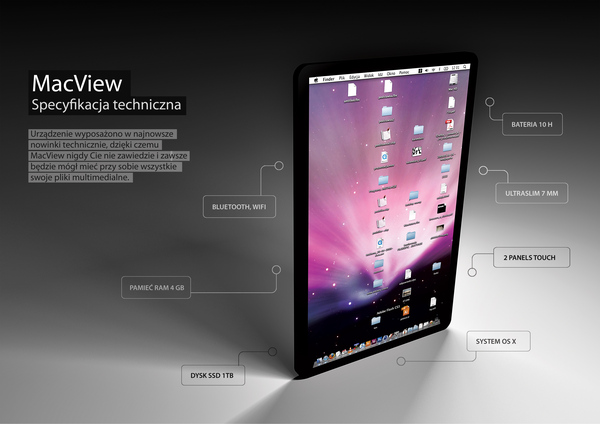
A new concept has been released by a Polish student showing a new take on the Apple tablet idea. The concept is certainly stunning, and I agree with commenters that it is a far more interesting mock-up than the standard ones proffered, which tend to simply be over-sized iPhones. Check it out:

Pt-01-Stand

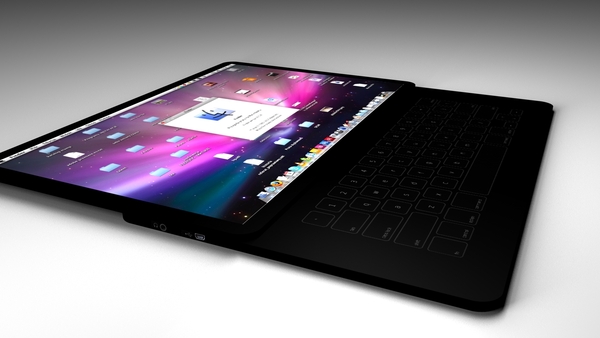
Pt-02-Extend

The illustrations make it a bit hard to see the second, slide-out touchscreen LCD panel, but that’s what that is.

Pt-03-Slide

Now, I will be the first to admit that this is an incredibly cool concept, and like many of the fanboys out there currently raving about the design, I would like nothing more than to have something like this. However, there is one small hitch: the design is, by current standards, simply impossible to achieve.

The depth, for instance, is supposed to be only 7mm. Well, that’s nice, but the iPhone is currently 12.3 mm thick, and even the iPod Touch is 8.5 mm. Each LCD screen would have to be 3.5mm (roughly 1/8th of an inch) thick, have a sturdy enough back panel to protect a 10“ screen, and still somehow pack a computer inside there as well. Somehow I just don’t see that happening.

Furthermore, the designer decided to add a 1-Terabyte solid-state drive (SSD). A look at the only 1TB SSD I could find out there shows that this part alone requires a case 25mm thick; even spread out over a broader plane, the SSD alone would take up more space than the device would have. Not to mention that such an SSD would cost upwards of $3000, even if it could be crammed into the casing. That, the two LCDs, 4GB of RAM, and other impossibly small components would surely price this baby over $10,000 even if it were possible to make with current technology.

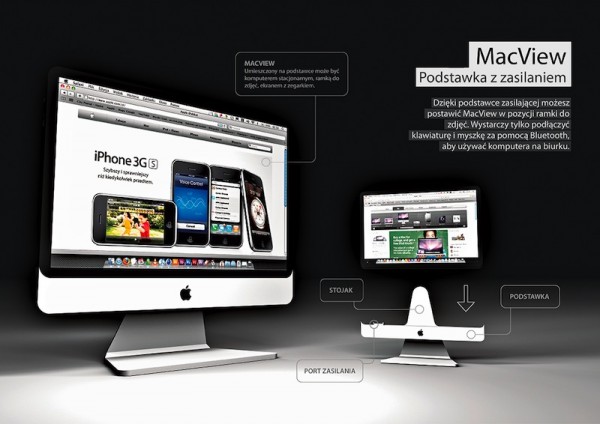
Now, there was one design element which was both interesting and possible with today’s technology, and would not break the bank:

Pt-04-Stand

The best word for this is perhaps ”cute.“ As for practical, that’s another matter. Maybe if the stand could tilt back a bit, it would be better; with such a small screen, so low to the desk, I imagine one would have to hunch down to see it well if it’s standing upright at 90 degrees. This also mostly negates the touchscreen, so it would be a less-than-perfect way to use the device. But the idea of sliding it into that little frame and it becomes a tiny iMac, there’s something almost irresistible about that. The charger-connector would have to be on the long edge of the tablet for this to work, but if it is and even if Apple doesn’t do this, I bet a third-party manufacturer could make some bucks selling a stand like that.

So, I’d have to give this guy an ”A“ for originality and coolness, but from a design perspective, especially if one must be constrained by realistic technological and cost restraints, this simply isn’t feasible.

Which brings me to a slightly different point: stuff like this isn’t helping. At least, it’s not helping Apple, nor is it helping those who want to be suitably impressed by what Apple comes out with this week. People see concepts like the one above and get impossibly high, pipe-dream expectations–and it just makes the actual device seem a lot less impressive, and unfairly so. Now, if people came out with more realistic designs, then that’s fair. For example, there have been a few iPhone design concepts for the ”4G“ model that could work, and may be cooler than what Apple comes out with. So, actual designs which don’t defy reality or break the bank, that’s a fair comparison which Apple should be expected to live up to. But to break the rules helps no one; I might as well imagine an Apple tablet with a 4 GHz, 16-core CPU with 32 GB of RAM and that terabyte SSD, with 3-D holographic displays in a 4-mm razor-sharp case made of unobtanium. Oh, and did I mention it’s a quantum computer? That would certainly be cool, but it’s also cheating–and to expect anything close to it would be pointlessly self-defeating.

Categories: Mac News Tags:

Point Taken

January 24th, 2010 Comments off

I have kind of cut myself off from politics recently as it was just too stressful and held little if any hope of ending happily. While I was looking the other way, somehow a Democrat lost Ted kennedy’s seat to a Republican, the people of Massachusetts apparently believing that (a) Obama was spending too much time on health care instead of helping people without jobs (hopefully I won’t have to explain how immensely wrong and stupid that idea is), that (b) the correct response would be to scuttle health care which is effectively what they did, and that (c) somehow this was not the fault of the Republicans who have done their best to crap on the people of the United States, and therefore they should be rewarded with a fantastic victory and a vindication of their hateful, lie-filled obstructionism which works to deprive the American people of health and livelihood.

In short, I am glad that I missed all of that.

Had I been around and watching closely, I probably would have become as angry and calloused as Keith Olbermann did, when he called Scott Brown “an irresponsible, homophobic, racist, reactionary, ex-nude model, teabagging supporter of violence against women and against politicians with whom he disagrees.”

Note the slim difference between an accurate description of Republicans (say, at the end of my first paragraph in this post) and the over-the-top description Olbermann offered. They are “hateful,” not a doubt about that; they lie constantly, something that has been well-documented on this blog and in many other places; they are obstructionist, obviously so; they clearly wish to support insurance companies and big pharma at the expense of the people and leave them without adequate health care; and whether they intend to or not, they have made it far more difficult for people to find work at livable wages. All these are substantial facts. But Olbermann stretched way too far with allegations like “supporting violence against women”; I saw that clip, and Brown either didn’t hear the curling iron comment or just ignored it.

John Stewart, in an excellent example of how he makes fun of all people who deserve it and is not just a leftist taking partisan stabs at right-wingers (right-wingers simply provide far more material for him), did a longish segment pillorying Olbermann for that comment and the rationalization he gave in a later broadcast.

Now, had someone like Rush Limbaugh or really any of the gasbags on the right been subjected to this attack, they would either have ignored it or argued with it. Olbermann, however, aired the segment in its entirety on his own show, and then after a bit of lame humor, ended with a refreshingly truthful and humble statement for a political talking head of this day and age: “I have been a little over the top lately. Point taken. Sorry.”

True, he could clarify better that he is being ironic with the “a little” over the top comment, but even if he were serious about the degree, it’s still a lot more humility than any other partisan commenter I can think of. Watch the whole segment:

Maybe I’ll start watching again next week.

Categories: Political Ranting Tags:

What the Heck Is It with Amp Sets in Japan?

January 24th, 2010 7 comments

I have been pricing them because we want to get one for my school; we have a lecture series and we want wireless mics that’ll be amplified through a speaker–should be a simple setup, right? But the cheapest setup I can find in Japan is priced at about ¥130,000 ($1,450), which seems ridiculously, even hideously expensive for two mics and a speaker.

I look at Amazon.com in the U.S. and I find a solution for about $350.

I know I have posted here before about price differences, but differences on this kind of scale are highly unusual, for specialty products. So, maybe I’m doing something wrong, looking in the wrong places or something.

Does anyone know what that is, or are we just going to have to shell out huge amounts of money here?

Categories: Focus on Japan 2010 Tags:

Nice to Know That the Economy Is in the Hands of Such Responsible People

January 23rd, 2010 2 comments

Great. My Apple stock was doing great–at $215 a share, and set to go way up. Everyone rates it as strong, and there’s general concurrence that it will go up to at least $260, with many speculating that over the next few years, it can go up to $500 or even $1000–and for very good reason. Apple is set to release the tablet, computer sales are up, it is conquering the smartphone market worldwide, and its computer market share is growing, with lots of potential.

But over the past three days it has slid from $215 to $197, $10 of that just in the last day. WTF?

And then I see the reasons:

The game was “on” big time this week. Petulant “let’s teach Obama a lesson” Street players did their thing on Thursday and Friday (today). The market’s big move down was partly the Street’s retribution against the Obama Administration for daring to regulate proprietary trading by banks.

The news on China and Bernanke didn’t help, but they weren’t the only causes here:

Apple (AAPL), being a large part of the QQQQs, was caught up in today’s down draft and was sold and shorted mercilessly, finishing the day down $10.58 (5.04%). Helping to accelerate the selling was a false report today about Apple (AAPL) being downgraded by Deutsche Bank. This “Apple (AAPL) downgrade” story was pumped widely by the Street echo-chamber (i.e. hedge funds, institutional trading desks and other denizens of Wall Street). It is my opinion that the majority of trading desks understood precisely what happened at Deutsche Bank, but held tight to the truth and may have intentionally misled the financial press (by omission).

Don’t you just love it when your personal fortunes are in the hands of these pricks playing their little games? As for Obama regulating trading, the Street’s reaction proves exactly why there should be a lot more regulation.

Categories: Economics Tags:

Ditch Explorer

January 22nd, 2010 5 comments

Banie2You’ve probably heard about how China has been spreading malware and using it to hack in to email accounts to spy on activists, journalists, and god knows who else. Of course, this should not be surprising: the Chinese government has quite a track record of acting like complete pricks and never facing consequences because everyone is afraid of losing access to a market with more than a billion customers and a very cheap labor force. So, old news, we all knew China’s doing crap like this.

What’s more immediately interesting are some reactions to this. France and Germany, for example, have begun urging their citizens to dump Internet Explorer–all versions–in order to avoid security breaches like those committed by China, which exploited security holes in the browser to invade people’s privacy. Of course, I fully support this; Internet Explorer is the Worst Browser Ever, with issues not just concerning security, but also concerning standards–IE completely fails standards tests, and not just by a little; whereas Safari gets 100% and Firefox gets close to that, IE scores in the 20-30% range–even including IE8 and the as-yet-unfinished IE9.

In short, IE is a bad joke and should be abandoned by everybody for Safari, Firefox, Chrome, or Opera. That said, to be completely fair, if IE hadn’t been around, China would have probably just hacked a different browser. None are inviolable, but IE is known to be particularly open to attack.

An amusing postscript to the story: Microsoft is now advising users to drop not only IE, but Windows as well! Of course, they’re not telling them to drop Microsoft products entirely, just old versions–they advise upgrading from IE 6 to IE 8, and from Windows XP to Windows 7. In other words, they are using this attack to sell their new OS.

However, an upgrade is indeed called for:

Upgrade

Categories: Computers and the Internet Tags:

They’re Back!

January 21st, 2010 Comments off

Screen Shot 2010-01-21 At 2.02.51 Pm

The Shiba Inu mama Kika has had a new litter of 5 puppies (3 red, 2 cream), born a bit less than a week ago. Popularly known as the “SF Shiba Inu Puppy Cam,” this became a sensation a while back as 3 million people watched the puppies on a more or less regular basis.

If you have missed your regular fix of Shiba Inu puppies, or if you wished you could have started watching them when they were younger, then here they are.

Categories: Computers and the Internet Tags:

The iSlate / MacTouch / iTouch / MacTablet / JesusTablet

January 17th, 2010 5 comments

Only ten days to go, and the rumors are flying like bullets in a war zone. The tablet could cost $500, or it could cost $2000; it might have an LCD display, or an OLED, or a completely new haptic touch screen; it might run on an nVidia system-on-a-chip, or it runs on an Apple-made CPU with an nVidia GPU. Who knows? Whoever does enjoy such insider info must certainly have god’s own NDA hanging over them like the Sword of Damocles.

Some elements are more or less universally agreed upon: the tablet will have a screen about 10 inches in size; it will likely share design elements with the iPhone; it will be thicker than an iPhone, but not too much thicker, with an aluminum case; it will share many qualities of the iPhone, including the ability to run iPhone apps, and will likely be a closed ecosystem like the iPhone is. It will use multitouch, most likely to an extent not attempted before, and there will be no stylus. And it will probably have 3G, in addition to the even more likely WiFi and Bluetooth.

From there, it’s anyone’s guess. A lot of the remainder constitutes bells and whistles, like the possibility of a built-in camera for video conferencing, for example. Such features are relatively unimportant, as they are the kind of thing that subsequent models will eventually include. Like the iPhone, one should expect a relative paucity of such features upon the initial release, allowing not only for everyone to focus on the core innovations of the product, but also to allow for Apple to make the subsequent generations of tablets more attractive. Look at the iPhone: it started with Edge and no 3G, no app store, a weak photo-only camera, no GPS, no compass, no stereo Bluetooth, etc.; each new model adds these features. If the tablet comes fully decked out right at the start, then where’s the ability to upgrade?

The Interface

The main draw of the tablet should be the OS, and in particular, the touchscreen interface. Rumors have suggested a new way to interact with the device, something with a “steep learning curve,” and which will have the user interact with the tablet in surprising ways. A “3-D” environment has been suggested by the usual avalanche of Apple patents.

I agree with the assessment that there will be a new emphasis on touch. There will almost certainly be no mouse, and probably no ability to attach one. Many new Windows-based devices use touch screens, but many only mirror the single point of the mouse-driven cursor, which is worse than useless in a touch screen (it’s like having 9 of your fingers amputated). Those that allow multi-touch are limited to fewer gestures than a current MacBook touchpad (especially with a cool utility like BetterTouchTool).

The question is, will the tablet’s gestures be intuitive or arbitrary? Some touchpad gestures are pretty intuitive: two fingers for scrolling; three fingers right and left for going forward and back; a two-finger tap for a pop-up menu. In their own ways, they make sense, and so are easy to remember. Even the four-finger swipes for showing the Desktop or using Exposé to reveal all windows are fairly intuitive, though I keep forgetting which requires the up-swipe and which needs the down-swipe.

If the gestures on the tablet are not intuitive enough (which could be what the “steep learning curve” is referring to), then the tablet could be in trouble, especially if there is no easy alternative way to carry out the same functions. Ever since the original Mac came out with the GUI, intuitive features have been Apple’s golden egg; they would bypass this standard at their peril.

Get a Grip

Another important consideration in the touchscreen interface will be how the device is handled. A tablet does not lend itself to flat surfaces as well as a laptop; we are used to screens being propped up at an angle to our faces. That’s not to say that it’s impossible to put a tablet down on a desk or a table, but there are problems involved.

Here’s a way you can test it for yourself. If you have a laptop with a relatively stiff screen hinge, try placing the laptop on a table, desk, or on your lap, upside-down, on its monitor with the keyboard sticking up (it’ll have to be at a 90-degree angle). Then imagine using the screen only and that the part sticking up doesn’t exist. What do you notice? My impression was that it wasn’t so bad–in fact, it seemed pretty cool. It wasn’t uncomfortable to look at, even though it was more at an angle than I am used to. The main disadvantage that I noticed was that the screen I have starts to fade out as the viewing angle increases. This might even suggest that the tablet indeed has an OLED screen, as some rumors are saying. But I can accept using it that way, although at times a sturdy back-stand seems to make a lot of sense.

Why is this important? Because the alternative is that either the tablet will come with a desktop stand for active use–unlikely for a mobile device, not to mention that touch becomes problematic unless the stand is slide-resistant–or it will be cradled in one hand while the other is used to control the interface (like a clipboard, except the tablet might be supported by one’s palm against the tablet’s back, instead of holding it at the edge, as with a clipboard).

The Keyboard Is Key

The way one holds it will greatly influence the method of interaction, especially for typing. A larger device like a tablet would lend itself better to two handed-typing; if only one hand can be used, then the keyboard would need to be altered. Will there be two kinds of keyboards available depending on how you use it? Convenience would suggest so, but Apple’s design history says no; look how long it took Apple to make just the landscape keyboard universal on the iPhone. Jobs has a tendency to stick with one way of doing things, even if it’s inconvenient. Despite my own desire for multiple keyboard styles, I expect that Jobs will have ordained The Best Way to Type and will expect everyone to follow that way.

Typing is indeed a crucial aspect: not only is it something we do all the time, but it is the one point in multi-touch where two hands are almost necessary for efficient input. As I noticed in this Jeff Han presentation at the Seoul Digital Forum (see “Interface: Beyond Interactivity” at the link; available only through web site; you must allow pop-ups for it to work), Han used only one hand even with the big wall-sized screen. He switched to two hands notably when he brought up a keyboard and started typing.

Getting Soft

Other considerations will include the software you can use with it. Will you be able to use existing OS X apps with it? The answer is, probably not. Apple has too good a thing with its closed ecosystem. Not just because Apple gets a 30% slice of each sale, but also because the platform lends itself to anti-piracy and lower app prices. Most notably for Jobs himself is that he gets to control the environment tightly, which is how he likes it. So expect an iPhone-style app situation, but now able to expand to use much more space and a more powerful processor–so popular database and Office apps, as well as fast-CPU-dependent apps will show up where they did not for the iPhone. While this won’t replace your laptop, it will allow for much greater daily use than your smartphone.

Multimedia is another area that everyone expects will work with this device. It is pretty clear that magazines and newspapers see the Apple tablet as a potential savior (Update: The NYT just more or less announced their Apple Tablet rollout), moving back to the paid-subscription model, and college students will likely use the device as an e-book reader for textbooks. The ability to play music may very well be redundant–almost every user will also have an iPhone or other device which they would more likely use for that feature. Video, however, will take on a new focus. Apple will probably attempt to tie this in with Apple TV, although they must not make that peripheral necessary for enjoying video. Still, there will likely be a focus on downloading video from a separate storage device or network as there will probably not be enough space to save all that video on the device itself. Apple will probably push for streaming video over the iTunes store. But video will be a big element in addition to print.

This, of course, will make a powerful CPU and GPU more important; keep a close eye on what Apple uses to run this baby.

3G or Not 3G

The networking will be vital for that reason. Many are saying that 3G will be a part of it, but I am waiting to see how plans with the carriers will be handled–especially if this will be another subsidized purchase. Will this be tied in to your iPhone account? If so, what extra contractual requirements will be foisted upon you? Will this be sold as a stand-alone data plan with a carrier, not associated with a cell phone contract? At what cost? The details of the deal may be critical.

For me, 3G is not really so important. I am guessing that I will be using this mainly at the home and office, where I have WiFi. I need 3G for my iPhone primarily for phone calls and GPS; otherwise, I could probably get by on WiFi alone. Will a 3G data contract be required to buy a tablet? Is that the only way it will be affordable? Will there be a range of options, like buy one for $500 with a contract for a data plan, or $900 without–I might go for the plan without a data plan or other contractual obligations, and live on WiFi alone.

Sex Appeal

Finally, there is form factor and physical features. Most of the mock-ups are essentially modified iPhone designs: a fairly thin screen with black bordering and a beveled chrome edge. Some bit larger borders on the ends and include the iPhone Home button. Others put the screen almost flush with the edge. There is one problem with having the screen too close to the edge, though: the device will likely have a rectangular screen, but also rounded edges. If the border of the device is too thin, that comes out looking quite strange. With Apple’s current design scheme featuring fairly wide black borders, and with the problems of accidentally activating something if you hold the device by the edge, I am guessing that there will be perhaps a half-inch border around all edges. (Addendum: it later occurred to me that they could handle this the same way they do the iPhone: have the screen go to the edge on two long sides, and have borders on the short sides; however, I don’t think they’ll do this for the tablet.) This would allow for hardware button placement (if there will be hardware buttons on the face) and potential placement of cameras and proximity sensors. It would also give more room inside to spread the hardware around and make the device thinner, which is what people will like.

As for how it will feel, imagine holding a thin hardcover or large-format softcover book–in fact, go get one from a shelf somewhere–and try holding it in your left hand as if it were a tablet. Most likely your left palm will fit neatly under the back if you hold it in landscape; in portrait, your thumb may rest along the side. You hear “ten inches,” and you think of something fairly large; but an 11-inch (diagonal) slate winds up being not so huge; try it and you’ll see.

Many are talking about exchangeable batteries, but these are mostly people who forget who is making this; at this point, it would be a shocker for Apple to allow for that. Steve Jobs likes unbroken surfaces, and that’s that. Don’t expect an optical drive, of course; like the MacBook Air, the tablet will very likely depend of WiFi connections for most of its data transfers. Even an SD card slot is not a solid bet; even though most users would want one, Jobs might decree that it is not to be.

Which brings us to connectors: what will there be? Will Apple use the standard iPhone connector? Possibly, but Apple loves to confound users with new cables and connectors all the time; don’t be surprised if there’s yet another new connector type here. Common sense would allow for a mini-USB jack, if for no other purpose than to allow you to download photos from a digital camera or other data. This may, however, depend on how close Jobs wants the ecosystem to be.

And how about screen resolution? We’re all expecting a 10-inch screen, but how many pixels? I could swear that I wrote a blog post on this, even seem to remember discussing it in comments, but for some reason, I cannot find it. In any case, a 10-inch screen will likely be about 6 inches tall and 8 inches wide; the iPhone has a pixel density of 163 pixels per inch (ppi); if these hold for the tablet, that means a 1300 x 980 pixel screen, which would be pretty good hi-def. However, the iPhone screen is denser than Apple’s laptop screens, which are about 112 ppi; at that density, the tablet would be more like 900 x 670 resolution. If Apple can get a ppi of 120 or better, then we have a 720p screen–which I think may be likely here.

Of course, that depends on the aspect ratio–I am assuming 4:3 here. The iPhone has a 3:2 ratio. The tablet could be more widescreen than I am expecting. If it’s 4:3 and we’re going for 720p, then the full resolution would be 960 x 720; if it’s 2:3, then it would be 1080 x 720, with a slightly higher ppi, around 130.

Laying Down My Bet

So, if I had to guess: a form factor of maybe 9“ x 6” with a 10 or 10.5“ screen, and a half-inch black border with a chrome bezel. A 130 ppi screen with a resolution of 1080 x 720, probably OLED or something else which will look good at more extreme viewing angles. My guess is no haptics on the touch screen, but would not be surprised if that was an added feature in a future model.

The screen will of course be multitouch, depending far more on touch than any Apple device so far, with a fairly new interface style. Like the iPhone keyboard, it’ll take a bit of practice to become comfortable with it, but it will be pretty intuitive and won’t be that hard to get the hang of. This will likely be the highlight of Jobs’ presentation, and what people will be buzzing about for some time after that.

There will probably be no camera (I am depending on rumors for that–personally, a camera seems like a no-brainer to me), which would imply no mic either. I am guessing at grille speakers along two opposite edges, a headphone/audio jack, an iPod/iPhone connector, and maybe a mini-USB port. There will be physical switches for power, volume, and maybe also a home button–along the edges, not on the face.

If Apple wants to move the device, then hopefully it will avoid the fiasco with the original iPhone and price reasonably from the start. $800 is believable, but many will choke at that price. I would guess that Apple will have deals with carriers for a subsidized data-plan contract–maybe a 2-year contract at $40-50/month, which will bring the price of the tablet down to $500 or less, and might even tie into existing 3G contracts for better savings. Alternately, you could purchase the tablet outright at the $800 price point (which I would definitely opt for myself), depending completely on WiFi for data.

Apple will likely be a bit cryptic about the CPU. I would like to imagine that Apple’s acquisition of PA Semi will mean a powerful in-house chip–but many times in the past, Apple has not utilized such resources. And there’s the nVidia Tegra 250, a dual-core 1GHz computer-on-a-chip able to handle 1080p encode/decode, should deliver good performance for gaming, and excellent battery life. If Apple does go with its own chip, then perhaps there will be an nVidia GPU along with it.

Anyone else want to make predictions?

Categories: Mac News Tags:

On Being Wrong

January 17th, 2010 Comments off

Most people hate being wrong, even fear being wrong. Some will go to great lengths to assert their correctness, even (or especially) after they know that they’re wrong. Next to the desire for vengeance, this is perhaps one of the most destructive features of the human psyche.

While being wrong is not necessarily a great thing, it is also not a bad thing–on the condition that it is used to learn, in which case it becomes productive and even positive. But that’s the catch: you have to be ready and willing, even eager, to discover when you are mistaken about something. But it is good, and it is respected: people will admire a person who readily admits when they are wrong

The only thing wrong with being wrong is not admitting, to yourself and others, that you’re wrong.

If children were effective taught this from a young age, I think the world would be a far better place.

Categories: Quick Notes Tags:

These Guys Should Work for the RIAA

January 15th, 2010 3 comments

Wow… a week without blogging? What’s up with me?

Just wanted to comment on the recent report that Apple and iPhone developers have been robbed of $450 million due to piracy. Really? Part of what that number is based upon is the estimation that fully 75% of all purchased apps are pirated.

That’s where I get off the train. Three out of four? Doesn’t quite jibe with what I observe amongst fellow iPhone users, but then I am not hip deep in the pirating community–I only know one person who jailbroke their iPhone and I know a lot more than 10 iPhone users. Even so, I find the 75% piracy rate a wee bit unbelievable. The figure comes from a report on 24/7 Wall St.:

While it is difficult to get a firm grasp on exact piracy rates, some developers have put features in their software that prompts it to “phone home” when the phone has been cracked. Developer testimonials put the figure much higher than many analyst [sic] would expect. Developers Neptune Interactive Inc and Smells Like Donkey Inc have reported piracy rates has [sic] high as 90% for their game $1.99 Tap-Fu, and claim that it was available in a pirated version within 40 minutes of its release on the App Store. Web Scout Inc. reports a 75% piracy rate for its $0.99 iCombat game. The developer of the $4.99 art program, Layers, reports a piracy rate of 75%, and Fish Labs reports 95% for its $7 Rally Master Pro 3D. Piracy rates almost certainly increase with the cost of an application. TomTom’s US & Canada GPS product for the iPhone, which retails for $79.99, ranks second in handheld application downloads on piratebay.com, a file-sharing torrent. The top 100 downloads listed at piratebay.com is littered with expensive TomTom and Garmin GPS products. A conservative estimate of the average piracy rate is that for every paid application developed and sold at the App Store 3 more are pirated.

It doesn’t take much to begin to see the biggest flaw in their reasoning: just because a few among the tens of thousands of paid apps are popular among the community that pirates, that does not mean that every single paid app has a similar piracy rate.

First of all, companies that add phone-home-when-cracked features in their apps are, naturally, ones which are much more likely to have the apps pirated, thus skewing the numbers. Next, one would expect that a company with a very low piracy rate might not want to publish those results for fear of seeming unappealing (“Nobody wants to steal our crap!”); similarly, it’s the developers who get pirated the most who will make the most noise. So, right off the bat, the estimates are slanted.

They then add more blind guesses atop more blind guesses: they estimate the number of paid apps, the average cost of a paid app, and the percentage of pirates who would have paid the full price if they hadn’t pirated–that on top of guesses as to how many iPhones are jailbroken, and how many jailbreakers pirate apps. By the time we come out the other end, the estimate is so iffy that it’s pretty hard to take seriously, even if the authors didn’t have so many typos and awkward phrases in their published writing.

TUAW does a handy calculation which helps knock down the estimate: if the numbers presented are accurate, then every iPhone/iPod Touch software pirate has an average of 510 pirated apps on their device.

Oops.

Categories: iPhone Tags:

Ocular Migraines

January 9th, 2010 25 comments

When I was a kid, I accidentally burned the retina in my right eye. It left a small but permanent scar on the retina, right near the center of my vision; thanks to the magic of the brain, however, my mind edits it out, making it invisible except when I close my left eye. Think of it as similar to the blind spot everyone has–same principle. Still, it does pop up when floaters or whatever obscure the vision in my left eye, and leaves me worried that if anything happens to the vision in my left eye permanently, it could seriously impair my ability to read.

When I was in high school, though, I got a huge scare: suddenly, the blind spot was in both eyes. That alone made me worry like hell. After a few minutes, I began to panic as the blind spot started to grow bigger.

I excused myself from class and called home. As I waited for my mom to pick me up, the blind spot just kept getting bigger and bigger. It went from being a spot to becoming a very large spot, a round blotch off-center to the left. It was affecting both eyes equally. I thoroughly believed that I was going blind on the spot. After my mom got me and we were driving home, however, something greatly encouraging happened: as the blind area grew, I regained vision in the center of the spot. From that point, the blind area took the form of a ring, which slowly began to move toward to edge of my vision. Before an hour had passed, it had completely fled my field of view, and my vision was normal again.

That was my first ocular migraine, also called a “scintillating scotoma.” A form of migraine headache, it mercifully does not come with the pain usually associated with such an attack. I get these periodically, but not too often–maybe once every 3-5 years. They last about 30-45 minutes, and thankfully are benign. Though they scare the crap out of you the first time, they leave no damage–it is happening in the brain, not the retina, ergo the fact that it affects vision in both eyes (strangely, that is a reassuring symptom, when you know what’s going on). After the first few times, the visual aura was less a ring and more of a semicircle, always arcing and growing to the left.

I blog on this because it happened again today, as Sachi and I took the train to meet with Maruko and her family. As usual, it begins as a small distortion near the center of vision, and is hard to discern; I usually mistake it for the kind of distortion one might suffer with an afterimage of a very bright point of light. For the first five or ten minutes, it’s indistinct enough to make it hard to recognize as a migraine, and so I have to worry through that until I can see that the distortion is both growing and is truly in both eyes; after that, I relax and wait for it to take its course.

There’s no easy way to represent this, but here’s an attempt. Keep in mind that it’s moving; the blind area is kind of dark, kind of sparkling–I get similar images when I squeeze my eyes shut real hard for a bit, I don’t know if you get the same thing. This is what it looks like late in the event, not too long before it moves out of the field of vision.

Scotoma

Anyone else get these? From what I read, they’re not too common, especially the kind that comes without any pain.

Categories: Health Issues Tags:

Maruko

January 9th, 2010 1 comment

Today, Sachi and I met with some blog friends. Sachi loves Shiba Inu (an affinity I have acquired from her), and reads a blog about a Shiba named Maruko. The author was kind enough to send us a calendar of her pooch, and we arranged for a short coffee. Below are some of the pictures of Maruko from the encounter.

Maruko 01

Maruko 07

Maruko 02

Maruko 03

Maruko 04

Maruko 06

Maruko 05

Maruko 10 Maruko 09

And as a bonus, a nice animated gif of a classic Shiba ear-wag:

Maruko Ear

Categories: Focus on Japan 2010, Shiba Inu Tags:

Ballmer Again

January 8th, 2010 1 comment

Steve Ballmer on the tablet computer:

This morning, I interviewed Ballmer and asked him about the market for tablet/slate computers. He made the excitement sound like empty chatter. He claimed to believe that there isn’t a sizeable market for the tablet.

“They’re interesting,” he said. “But it’s not like they’re big numbers compared to the total number of smart devices in the world.”

Well, Ballmer’s an expert in the field, isn’t he? Here’s Ballmer three years ago, on the iPhone:

There’s no chance that the iPhone is going to get any significant market share. No chance. It’s a $500 subsidized item. They may make a lot of money. But if you actually take a look at the 1.3 billion phones that get sold, I’d prefer to have our software in 60% or 70% or 80% of them, than I would to have 2% or 3%, which is what Apple might get.

Well, there you go.

It might have something to do with the fact that Ballmer had just attempted to steal Steve Jobs’ thunder by showing off three tablet computers at the CES in Las Vegas, to underwhelming disinterest. Since his presentation was a flop, it has to be because tablets just won’t work at all, right?

Cue Steve Jobs, January 27th.

Hoisted by Her Own Teabag

January 6th, 2010 Comments off

This story is getting coverage in all the lefty blogs, and I must admit it’s way too funny to pass up. For some time, crazed loon Michelle Bachmann (R-MN) had been spreading insane lies about the upcoming U.S. census, telling anyone who would listen that the census will be used to round up conservatives so they could be sent to concentration camps. She encouraged people to not fill out their census forms.

But now, she’s mum on the census, has been for a few months–and a Minnesota newspaper has discovered the most likely reason why: if Minnesotans don’t fill out their census forms, the state could lose a House seat–and that seat would most likely be Michelle Bachmann’s. More details here.

Oh, sweet irony.

Categories: Republican Stupidity Tags:

Hie Shrine Hatsumode

January 4th, 2010 2 comments

Hie 00

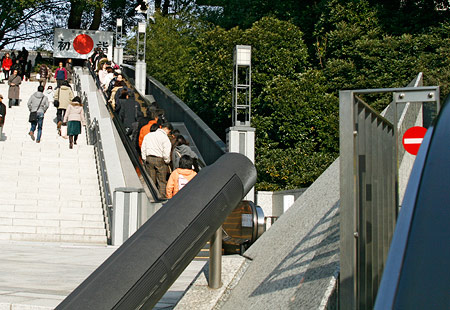
Sachi and I did our annual hatsumode (New Year’s shrine-going) yesterday. Nice weather, though a bit cold. I may have pointed out before, Hie Shrine, in the heart of Tokyo near Akasaka, is the only shrine I know with a set of escalators.

Escalator 01

Escalator 02

Escalator 03

Once you get in, there’s the usual line of people waiting to get to the front to pray.

Hie 03

Prayerline 01

Once you get there, you throw a coin into the box at the front, yank the red and white ribbons (sometimes a rope) to rind the bell, clap your hands twice, then pray.

Prayerline 02

Here’s a sound file to get an idea of what things sound like in line:

This is the big money season for the shrines; they get most of their funds at this time. Some shrines are so crowded that people don’t get much of a chance to get to the front, so some people actually throw the money from a distance and then pray. These bigger shrines will actually lay sheets over a large area in front to catch the thrown money. But for most shrines, it’s a special box, which is there year-round, which catches the money–usually via slats, so no dishonest visitors can make a withdrawal instead of a deposit.

The idea behind the bells and the clapping is to attract the attention of the kami you wish to pray to.

Hie 08

Out with the old, in with the new: hand in your old good-luck arrows and charms at the stand (though I prefer the bonfire myself), then buy a new set for the new year. I was a bit irked that the person who sold us the charms this year gave me the wrong one–I wanted a sticker for my scooter, they gave me something else instead–didn’t notice till we got home. You can also buy omikuji, or fortunes: for a hundred yen (about a dollar), you shake a wooden cylinder with a number of sticks in it; one stick falls out a small hole in the bottom, indicating which fortune you get. You can then tie the fortune to a wall to see it come true.

Hie 07

Hie 06

Hie 05

And then there’s the food: all sorts of stalls, many of the usual sort–takoyaki, okonomiyaki, sweet crepes, and so on. The frankfurters–foot-long dogs on sticks–look good, but are universally tasteless, so you’re better off slathering it with the ketchup and hot mustard if you must get one. Hie Shrine has a good selection of stalls, though–this year they had great fried chicken, a good kebab stand, and tasty “baby castella,” little round pellet cakes cooked fresh on the spot.

Hie 10

Hie 11

Hie 12

To finish off, here are a few shots of one of the shrine maidens, doing her annual “I am the goddess of the discarded good luck arrows” dance or something.

Hie 09

Dancer 01-1

Categories: Focus on Japan 2010 Tags:

McAds

January 4th, 2010 5 comments

Saw this on the subway yesterday:

Mcad 01

Apparently McCalories Japan is doing an American-themed burger campaign for the first three months of 2010, starting with a “Texas” burger. What makes it Texan? From what I can tell, BBQ sauce. Unless the second tier of bacon and onions is somehow uniquely Texan, though of course the whole thing is just a gimmick.

Next up: New York, BLT on a burger with Monterey Jack cheese; California, same as the New York, but with a “wine” sauce; and Hawaiian, apparently being bacon, cheese, and lettuce below the patty, egg with gravy on top.

Yeah, I know.

Categories: Focus on Japan 2010 Tags: