More Detail on Trusting the Generals

September 23rd, 2007 Comments off

About ten days ago, when commenting on the testimony given by General Petraeus, I wrote this:

I know what the knee-jerk right-wing response will be: what about Wesley Clark? Well, his service in the military gives him the same basic standing as Petraeus. Because we know Clark has presidential ambitions, we weigh his words with those ambitions in mind. The exact same applies to Petraeus. Both generals must be considered not to simply give the straight story, but rather the story that serves them best as far as a political campaign is concerned.

I soon noticed in my web stats that several people were coming from a web page, in which someone had linked to me saying this:

The blogger points out that Petraeus is politically ambitious and his testimony must be weighed in the light of that. He expects the right wing’s response to that criticism of Petraeus will be to say “what about General Clark?”, to which he responds, no problem, we can weigh General Clark’s words with his ambitions in mind as well. … I thought General Clark might be amused by this blog.

Clearly this supporter sees his preferred candidate as above such things. And well he might be. Perhaps I did not make myself clear enough; perhaps this commenter thinks that I see Clark as being no better or more honorable than Petraeus.

A quick search of my blog would tell you differently, but as I said, I may not have expressed myself as clearly as I should have.

Here’s the concept: generals carry weight with public opinion for two reasons–first, their service and perceived accomplishments to earn their rank, and second, because they are thought to represent the military, and to be dedicated to serve the people of the United States of America, gutsy enough to be willing to tell truth to power, brave enough to tough out the consequences and give up everything for their honor.

We have seen this quality demonstrated well enough in the past four years; how many generals have spoken up and and then been taken down by the Bush administration? How many have quit instead of prop up this sham? The answer is, quite a few.

Petraeus is not one of them. He has turned out to be a politician. He may still lay claim to the first reason why people respect generals–the assumption that he has earned the rank, until proven otherwise–but he cannot be expected to claim the second, that he is giving it to us straight. In revealing his political ambitions, he has set aside that automatic presumption and revealed a built-in bias. He may or may not be lying, we must judge that for ourselves–but he can no longer step up and expect the fact the he is a general in the armed forces be enough for the public to believe in what he says. That is why Petraeus does not deserve the sacred honor that Republicans try to paint him as having, as being above suspicion or reproach.

So what of Clark? Is what he says suspect? Of course. He lays claim to the same genesis–he worked his way up to be a general, he served in the armed forces, and that means something to most Americans. But he no longer serves in the armed forces, and he has his own political ambitions. That does not mean he is lying, or that he has allowed his ambition to overpower his duty to give it straight to his countrymen.

But it does mean that we cannot automatically expect that of him. It means that we have to weigh his words like we weigh the words of any politician. As with Petraeus, he has the credibility of a man who has worked his way up to be a general. Also like Petraeus, he must now earn our trust by telling it straight because we know both have ambitions that could potentially cloud their judgment.

Petraeus has failed that test; he has clearly told us a story that is politically skewed. He has contradicted well-known fact, and revealed his fealty to a politician rather than to his people. Had he done the latter, he might have told us that he feels we need to stay in Iraq and finish the job, but he would not have snowed us with twisted statistics and rosy fantasies of how “well” things are going. He has discarded the trust he earned via his position by way of his current actions.

Clark, on the other hand, has stayed true to the principles he swore to uphold, and has continued to earn the trust we first placed in him. Again, read my blog posts on the general and you’ll see why I respect him.

But I also respect the process of critical thinking and sound judgment, which is why I hold both generals’ statement as suspect due to their ambitions, until their words and actions prove otherwise.

And I expect that General Clark would agree, if he is the man I expect him to be.

Categories: Political Ranting Tags: by

Bush’s Iraq

September 22nd, 2007 1 comment

There is an excellent story in a Canadian journal, called “MacLean’s” about Iraq. It is titled “How George Bush Became the New Saddam,” and sports a picture of Saddam with Bush’s face Photoshopped in. This has brought it to the attention of some liberal web sites, but that attention may be a bit shallow; the article is not a polemic against Bush, but rather a surprisingly in-depth, knowledgeable, and frank dissection of the current Iraqi social situation and its formation, from a reporter with a great amount of experience in and understanding of Iraq. The author, Patrick Graham, previously spent a year with resistance fighters there.

This is not to say that much in the article can’t be used to tear the Bush administration a new one; there is quite a lot of that, and I am not below doing so myself, as you’ll see below. But the article is not partisan, either; it jabs the American left as well, and though that part is given less attention, it is only insofar as the left is that much less involved in direct control over and administration of Iraq.

A reading of this article will give you much greater insight into the fundamental errors of the American occupation, the current state of Iraq from an on-the-ground view not generated or influenced by the U.S. PR machinery, and a better understanding of why Iraq will not be so easily won–or so easily left behind.

Early in the telling of the story, one understands much better why Iraq is not like an “Indiana marketplace in the summertime”:

Going back to Iraq is like sitting through a depressing Scheherazade, 10,001 Nights of Horror Stories. Everybody had them. Do you want to see a picture of someone’s 10-year-old boy, chopped up in pieces and put in a cooking pot because his parents couldn’t pay the Shia militia’s ransom? Here, look at the burns on my body, inflicted by the bodyguards of the Sunni politician who sold my eight-year-old son and me to al-Qaeda. Let me tell you about being kidnapped in Falluja by a gang that pretended to be al-Qaeda–they made me drink urine and had a fake beheading studio where they set up mock video executions to scare us into raising ransoms. … Sadly, these stories are true, while so much that is said about Iraq is myth and delusion. As the famous American war correspondent Martha Gellhorn wrote about armed conflict, there is “the real war and the propaganda war.”

There may be areas of Iraq–especially in the northern Kurdish areas–where violence does not prevail, but not so in so many places in Iraq, and certainly not where it matters.

Graham explains how the country is falling apart politically, and how the current government has very little real chance of succeeding:

Certainly the notion of there being any cohesive central power in Iraq is a myth. Whatever is running the country, it’s not a government. Iraq’s body politic has some kind of autoimmune deficiency syndrome in which the antibodies designed to defend it have turned on its own organs. It’s a perfect environment for opportunistic parasites, in this case Iraq’s neighbours. So it seems almost unfair to criticize Prime Minister Nouri al-Maliki’s failure to govern, as if somehow he was in charge of anything that could be called a state.

He also explains a very cogent reason why sectarian violence has fallen in some areas–and it’s not because of the effectiveness of the “Surge”:

By one estimate, Baghdad was once 65 per cent Sunni; today it is 75 per cent Shia. Deaths from sectarian killings are reportedly down, in large measure because there are few mixed neighbourhoods left. Almost the entire Sunni middle class lives in Jordan or Syria. If you are named Omar, a traditional Sunni name, chances are you are dead or living abroad.

He also points out that Iran really has little choice but to be involved in Iraq. It is not to say that Iran should be allowed to do what it is doing, that Americans should not take notice, or that Iran is warm & cuddly; it is simply to point out certain realities, and to understand that Iran has its reasons. Without understanding those reasons, one can hardly make sound judgments about what to do in the situation.

Iraq, Iran’s neighbour to the west, is Tehran’s self-declared security zone. Iran has already been attacked once from Iraq–by a then-American ally, Saddam–and won’t let it happen again. Nor do the Iranians want, as the West does, a secular Iraqi government that could destabilize their own theocracy. For them, Iraq is a survival issue. U.S.-led invasions have conquered not only Iraq but Afghanistan on Iran’s eastern flank. The U.S. Navy is floating off Iranian shores. Every few weeks, Washington debates whether to bomb Iran. How could Iran afford not to be involved in Iraq? Following the American example, the Iranians have learned that it’s better to fight the U.S. on the streets of Baghdad than the streets of Tehran.

Iran is hardly admirable, but one can easily see why they feel they need to be involved here. As it is with al Qaeda in Iraq and elsewhere, Iran’s involvement is very much the creation of the Bush administration’s handling of affairs in the region.

Graham points out another problem we now have to handle:

These days, though, the biggest concern on the highways of Baghdad is not Sunni insurgent bombs, but the explosively formed penetrators that fire a molten copper slug through even American heavy armour. According to U.S. intelligence, they are provided by Iran’s Revolutionary Guard Corps to Shia militias. Of course, U.S. intelligence accusations are now as suspect as the Iranian government denials that they provoke.

This is a very real, and to me, a very worrying problem. Iran may well be a terrible threat. However, the Bush administration has turned America’s intelligence agencies into PR and propaganda arms of their administration. This is disastrously dangerous, as it impairs our ability to assess the real situation in Iraq and Iran–no doubt exactly what the administration wants. Without reliable information, we are blind–and the administration is the only source of guidance we have. Imagine being lost in a pitch-black cave deep underground, and your only hope of survival is to be led by the hand by a sociopath. That is effectively where we are right now.

The article also explains the nature of al Qaeda in Iraq, and America’s part in its creation. More and more, it is becoming apparent that al Qaeda was created as much as–or even more–by the United States as it was created by Osama bin Laden. This is true not just of al Qaeda in Iraq, but al Qaeda in general. The truth is, what we and now others call “al Qaeda” is a loose federation of various cliques who are in contact with each other. America generated the name “al Qaeda” and the specter of an ominous force; the cliques simply appropriated this very convenient and menacing name. As Graham put it: “America’s other main enemy is al-Qaeda in Iraq, which is to Osama bin Laden’s al-Qaeda what a cheap watch is to a Swiss timepiece–effective, easily reproduced, and disposable.”

The main value of this article, however, is how Graham does a good job of laying out the divisions and structure of Iraqi society. I say “lay out” instead of “clarify” because I am not so sure it can be “clarified,” being the jumbled mess it is.

And as I noted above, this is not a liberal screed; Graham paints the Democrats as being similarly clueless, just from a position of potential control rather than actual control:

As Visser points out, U.S. Democratic party supporters have found the argument for partition to be a convenient solution for a problem they have no clue how to solve, but which makes them sound less clueless and cruel than saying, “Forget the Iraqis, let’s leave.”

And, to continue the previous point and to sum up:

The discussion in Washington and New York has always drowned out the reality of Iraq. One of the terrifying aspects of the war is the monumental failure of analysis and action on the part of America’s political, military, journalistic and even business elites.

That problem may be systemic–the result of a “fact-based” America confronting a society it did not understand and simply making up an alternate reality, guns ablaze. So far, the Republicans have done an impressive job at failing in Iraq. Soon it may be the Democrats’ turn to fail, albeit in a different way. It’s a shame because Iraqi political parties are perfectly capable of doing that on their own. Indeed, they seem to be going out of their way to compete with the Americans on that score.

One down point of the article: I cannot see Graham making suggestions or arguments to fix the situation. Either he is as clueless as the rest of us on that problem, or he simply did not want to include his personal conclusions in contrast to the more objective reporting of the article.

Alas, the title and cover photo for the story are somewhat misleading; the article does not really focus too greatly on how Bush is equal to Saddam. One can come to such a conclusion obliquely, but Graham doesn’t really focus on it. However, it does become apparent through inference. If anything, Bush is actually worse then Hussein was. Like Hussein, he is playing factions within Iraq against each other; he is threatening war with Iran; he is running prisons with torture and rape rooms; he is killing of large portions of the populace. One can defend Bush by saying that these are not policies, but then again, Baathists could have tried to make the same claims about Saddam–yet another similarity.

In one way, however, Bush can be painted as even worse than Saddam: with the exception of the Kurds in the north, it can easily be said that life under Bush’s Iraq is even worse than it was under Hussein’s:

Arriving in Baghdad has always been a little weird. Under Saddam Hussein it was like going into an orderly morgue; when he ran off after the U.S.-led invasion of March 2003 put an end to his Baathist party regime, the city became a chaotic mess. I lived in Iraq for almost two years, but after three years away I wasn’t quite ready for just how deserted and worn down the place seemed in the early evening. It was as if some kind of mildew was slowly rotting away at the edges of things, breaking down the city into urban compost.

Welcome to Bush’s Iraq.

Categories: Iraq News Tags: by

Waaahh!! The Bad Man Called Me a Bad Name! Waaahh!!

September 22nd, 2007 3 comments

Okay, granted, the name-calling of General Petraeus by MoveOn.org was puerile.

That said, what of the right-wing reaction? Is the right wing, or the military, or the general, so weak and easily scarred that such name-calling warrants this level of outrage?

Of course not. The outrage is purely self-serving; the right wing has found that they can manufacture a villain which they can easily “fight” and cast themselves as heroes and defenders of a man in uniform, and they are pulling out all the stops in order to do so. And they can depend on the fact that the media loves a good, dirty fight–something the right-wingers excel at.

Categories: GOP & The Election Tags: by

Site Outages

September 21st, 2007 4 comments

Sorry about this folks. I have the strong suspicion that when I was subjected to massive spam and hotlinking attacks a month ago, my web host transferred me to a “bad behavior” server, where users constantly hog the CPU and other server resources and cause everyone else to be shut down for hours on end. Maybe not, it could be a coincidence, but after those attacks on my site, my own site started being shut down by abuse on other sites on my server–at least four times now by my count, each time for many hours at a go. The last one just ended about 5 minutes ago.

I hope this can get resolved, whatever it is, and service back to usual reliable standards. In the meantime, if you come here and the site is down, come and visit again later. My apologies for the inconveniences.

Categories: BlogTech Tags: by

NBC Doesn’t Really Get It

September 21st, 2007 Comments off

After having skipped out of Apple’s iTunes Store, NBC seems to be flailing about a bit. They signed on to sell their shows on Amazon.com’s video sales service, and now have announced another “free” download service that is ad- and DRM-laden.

The Amazon.com Unbox service seems to be the most reasonable; it allows for more flexible pricing, which the networks of course desire. However, it is also restricted; it requires Microsoft’s “PlaysForSure” DRM software–something also desired by NBC and other content providers–which pretty drastically limits viewing abilities. You can’t play the video unless you’re running Windows or opt for the TiVo option. The video cannot be played on iPods or even Zunes.

The “NBC Direct” route is set up to be a disaster. Not only is it so heavily restricted that you can only play it on NBC’s proprietary software and can’t use it on anything but a Windows PC, but it carries ads which cannot be skipped. Sure, it’s free, but so long as you’re allowing ads into it, why be so stupid as to watch it on NBC’s player where you can’t skip them? Why not just tape or TiVo the show? The “NBC Direct” idea is completely nonsensical.

Part of the reason NBC left Apple was over pricing. Apple claims NBC wanted to charge as high as $5, and other reports suggest that Apple wanted to lower the price on all TV shows to $1. Probably the NBC suggestion of $5, if it happened, was less a serious proposal and more an idea thrown out there. And I can certainly see content providers wanting to set their own prices.

The thing is, Steve Jobs is no idiot, and NBC would be well-advised to listen to him. Sure, he gets money from iPod sales, demands large profit margins for his own products, and does not lose money if the margin on TV shows sold on the iTS is slashed. I will give you all of those.

Nevertheless, Jobs is one of the best marketers around, and he stands to profit by selling more and more and more of NBC’s content. And more often than most people in the business, Jobs has been right. Case in point: music sales on the iTS. It’s wildly successful. But remember how the music labels had to be dragged, kicking and screaming, into allowing for $1 song sales and no tiered pricing? Well, the iTS has been a rousing success, having sold more than 3 billion tracks in 4 years–over half of which sales occurred in the last one year–capturing 88% of the music download market, becoming one of the biggest outlets for music sales.

Like I said, Jobs is not an idiot. And selling TV shows for $1 apiece is similarly very astute. A lot of people have downloaded TV shows at the $2 price, but that can be sustained for only so long and at only so high a rate. Most people will begin to realize that at the end of a season of shows, they have only the shows to own, and they have shelled out between $40 to $48, depending on how many episodes there are in a season. In the meantime, the networks release the DVD set very soon after the TV broadcast ends, and one can own the whole season at higher quality, with all kinds of extras an add-ons, for less money. Payment for one is not transferable to another–you can’t apply the $46 you paid for season 1 of Heroes to the $40 price of the DVD box set. And if you want to watch the show in your iPod or other handheld player, you are limited to downloading via BitTorrent or another service, though you might have to process the file to squeeze it into a format the player can handle.

Yes, that fits nicely with the network paradigm of making viewers pay multiple times for the same content. But enough viewers are not stupid enough to make this a big seller. Jobs has the right idea: price the bare-bones, lower-quality version for lower, and people might go for the double-purchase a lot more easily. After all, $23 doesn’t seem quite so bad a price to pay for having immediate, portable, commercial-free access to a whole season of shows while you’re waiting for the feature-rich, expanded DVD box set to be released. A lot more people would go for that, and NBC would make a lot more money. In the meantime, a lot more people are instead turning to BitTorrent.

Here’s an even more radical idea: make the downloaded versions into the equivalent of a boxed DVD set. Offer the extra versions as extra downloads included in the price of a season pass. You can raise the price because you are essentially selling the DVD box set plus the ability to get it delivered a lot earlier, as the episodes air. Instead of $40 for the box set, sell the season pass equivalent for $50. That would represent a lower profit margin, but I bet increased sales would make up for it–and you would cut out the crowd who only buy one or the other but not both.

But here’s the biggest idea: drop the frakking DRM. Jobs was dead right earlier this year when he said that DRM was stupid. It is. It does not stop piracy one bit–in fact, it encourages piracy. Why? Because if you pay for the video, you have all these restrictions and roadblocks and limitations; if you download it for free, there is absolutely no restriction on what you can do with the file. DRM does not even slow pirates down, and it punishes paying customers. Why NBC and other content providers fail to see this glaringly obvious point is beyond me. Remove the DRM, and sales will rise, piracy will suffer. What is with these idiots at the studios?

In the meantime, if you aren’t in the BitTorrent crowd, expect to pay higher prices multiple times, and face higher obstacles to viewing where and when and how you like.

Bye bye, McNova

September 20th, 2007 4 comments

The infamous Nova language school, the most well-known of all the McSchools in Japan, looks like it’s on the verge of collapse.Nova-Usagi

Nova has been looked down upon in the teaching community in Japan for quite some time. It has been seen as a school that skimps on quality, mistreats its instructors, and short-changes its students. It is best know for its slogan, “Ekimae Ryugaku” (“Study Abroad Right Near the Train Station”), and its rather bizarre, pink, parrot-billed rabbit mascot.

Nova seems to have been a lightning rod for bad news stories over the years. In 1994, when two Nova teachers were caught possessing drugs, Nova demanded that all of its foreign teachers submit to drug testing (Japanese employees were not included in the testing). This set off a firestorm of protest, and boosted Nova’s teacher union to new heights. It was universally seen as a bad move–not only discriminatory, but also a public statement of lack of faith in their employees.

Last Winter, however, seven Nova teachers were arrested on drug charges–unrelated, of course, but still it did not look all that great. One has to wonder if the school’s eagerness to hire untrained teachers with the barest college degrees and working-holiday visas (the easiest to arrange for working in Japan) may have had some part in this–you hire whomever comes off the boat, you can’t be too surprised if you get some bad apples.

To add insult to injury, in March this year, a 22-year old female Nova teacher was found murdered, likely by one of her students, who remains at large.

But Nova’s real business troubles came about early this year. Nova had apparently been cutting the number of teachers it made available, creating teacher shortages during peak hours, and was investigated by the Ministry of Trade, Economy and Industry as well as other government and consumer organizations. Apparently, Nova was making fraudulent promises to students, and failing to honor cancellations students were entitled to, in violation of Japanese commercial transaction law.

After failing to make their case in the courts, in June Nova was banned from selling long-term contracts for six months. And since then, the company seems to have been spiraling down the drain. It is closing down 100-200 of its 900 schools.

But that’s not the part that seems to signal a collapse of the entire business. If the school were simply restructuring, that might be a sign of survival. But many of the branches that are shutting down may be doing so because landlords are complaining of non-payment of rent. Japanese employees are leaving the school in droves, according to the same story. And to top it off, many teachers are complaining that their pay is late in coming this month, after 2000 of its Japanese staff were not paid on time the previous month.

All of these are signs of a business in the process of self-destructing. Maybe I’m wrong, but I have seen these signs before.

Except for the impact on the thousands of employees who would lose their jobs, Nova’s disappearance from the language-school scene would not be a great disaster in itself; it’s not as if it was a model of great instruction or peerless business administration. It would be missed probably only a bit more than the long-defunct Bi-Lingual school, the one that advertised using ink ribbons and photos of foreign male teachers and young Japanese female students almost kissing. The education community can do with fewer schools like that.

The problem, however, is one of consumer confidence in the industry in general, especially if Nova closes its doors suddenly and leaves countless students hanging with paid-for lessons that will never be delivered. That has happened before.

In fact, it happened a long time ago to the side of the education industry I work in–American colleges in Japan. Back in the 1980’s, when Japan was flush with cash and seemed poised to rule the world, a few dozen American colleges and universities decided that it would be a great idea to set up branch campuses in Japan. Many schools did this without due consideration of all the factors involved, and that wound up hurting everyone later on.

First of all, most American schools had to partner up with a Japanese organization to handle the administrative and financial side to running a college in Japan, and many of them chose poorly. That, and the timing was bad–when the Japanese economy went south in the early 90’s, many of the partner companies went under, leaving the American colleges high and dry. Many closed their doors suddenly, leading to a collapse in consumer confidence, which led to the demise of most of the remaining schools (along with grade inflation and other problems).

Only a few schools survived, my own being one of them (primarily thanks to a serious partner organization and a doggedly committed home campus), but the mid-90’s were tough years. When I first arrived at my school in the late 90’s, we were at the nadir, with only several dozen students in the academic program. The first graduation ceremony I presided over, in fact, had all of two students receiving their diplomas. Things got much better over the following three years as we nearly tripled our student body, and graduating classes swelled to dozens of students per semester. (I’d love to claim cause-and-effect from my taking over the school, but that would be succumbing to the “post hoc ergo propter hoc” fallacy we teach our students to avoid.) Yes, enrollment hit a snag in 2002 after 9/11 scared students, but the school has done surprisingly well since then, especially in the face of a quickly-diminishing youth population in Japan.

However, for a while there, our school, like so many of the others, hit upon hard times–not because the school was deficient in any way, but rather because of the poor image that collapsing businesses left in their wake; we suffered by association. When there is a notable default and sudden closing-of-doors in the industry, it hurts everybody in that industry. Of course, my school is far distant enough from the Nova-class conversation schools that it won’t affect us (who knows, we might even benefit as people seek out more dependable schools), but the English Conversation industry is fairly certain to take a major blow over this–and that industry has already seen bad times in recent years.

When I came to teach in Japan at that level in the mid-80’s, it was not too hard to find a fairly well-paying job, and managerial jobs paid very well indeed. Today, pay for such jobs is depressingly low, and many jobs require teachers to take on classes with small children, something relatively rare back in the 80’s.

Nova is a disaster waiting to happen. The only question that remains, it seems, is how many others they’re going to take with them when they implode.

Categories: Focus on Japan 2007 Tags: by

Filibuster, Filibuster, Filibuster…

September 19th, 2007 1 comment

Senate Republicans are still filibustering everything in sight. Today’s lineup:

Giving Washington D.C. residents representation in Congress. Washington D.C. has more people in it than the state of Wyoming (D.C.: 581,000; Wyoming: 493,000), but Wyoming has full representation in Congress. The people of D.C. don’t get that privilege. They are effectively living under the equivalent of colonial rule–taxation without representation. Democrats want to give those people a vote. Republicans oppose for a simple reason: D.C. would vote Democratic. If they would vote Republican, the GOP senators would vote for the measure in a heartbeat. But they’re not, so the GOP wants to continue denying them their fair representation. With a filibuster, no less.

Senator Webb of Virginia wants to give U.S. troops–you know, the ones we’re supposed to be supporting?–enough leave time back home so they won’t be as over-stressed and overburdened. Bush has repeatedly extended their tours of duty, bringing them back to Iraq again and again, forcing them to stay longer and longer each time. The strain is showing. Suicide rates among veterans and soldiers are climbing. So Webb–a decorated Marine officer whose son is also a Marine and is serving in Iraq–introduced an amendment to a defense funding bill that will require our troops to get as much time at home as they serve abroad.

So how do the Republicans in the Senate respond? With a filibuster, forcing our troops to serve beyond all reasonable expectations, and get burnt out. Way to support the troops!

Fox Misp
Somebody buy Fox News a dictionary! Or a spell checker.

And then there’s Habeas Corpus (which, apparently, Fox News can’t even spell–see inset at right), which Democrat Chris Dodd is trying restore after Bush and Gonzales denied Americans has any such right. Guess what Republicans are planning to do to keep Americans from enjoying that right? Yep. Filibuster time!

Apparently, Republicans feel that since the Democrats used the filibuster in a strictly limited fashion to block far fewer judges than Republicans denied Clinton (Bush got through more nominees than any president in recent history), it is now OK for Republicans to filibuster everything in sight. As always, taking things to extremes.

Democrats blocked bat-guano crazy extremist judges that one could easily choke on. Republicans are filibustering your Constitutional right to Habeas Corpus, leave time for extremely overburdened soldiers, and the right for Americans to have representation in Congress. You know, commie liberal stuff.

Republicans are living up to their promise to Americans: burn out the troops and wreck the military, strike down your Constitutional rights, and deny minority voters the right to representation in Congress, using the very same means they themselves called “unconstitutional” and “undemocratic.”

These guys deserve to lose everything in the next election. Let’s see that they do.

Taser Incident at Kerry Speech

September 19th, 2007 15 comments

If you haven’t seen it yet, below is the YouTube of that incident where Kerry was making a speech.

Alas, this is probably going to reflect badly on Kerry, despite the fact that he had no control over or responsibility for the event–unless one wants to suggest that speakers like him at events like that must wade into the center of frays like that and micromanage the situation. What we’re seeing here is something that ever-present videotaping and unrestricted video presentation on the web have made possible–in short, we see all the idiots in the world acting like idiots and then the aftermath that follows. This one incident is now heading the news leads only because it happened in front of Kerry.

One might be tempted to call the campus police on the charge of excessive force, but when you think about the alternatives and what they could have or should have done, I can’t really find myself faulting them too much.

It’s not just that this guy was a complete jerk-off who was obviously enjoying making a spectacle of himself and ruining the event for others (one can be fairly confident that this self-promoting clown is ecstatic over the attention the story is generating). As un-Buddha-like as it may be, one tends to enjoy seeing bozos like that carted off.

Rather, you have to look at this from a crowd-control perspective. This kid had hogged the mic well beyond his allotted time–he was allowed to go over time once at Kerry’s behest–and it was pretty clear that he was not asking a question, but rather that he was making speeches. This was pretty clear not only from his diatribe, but from the fact that when his time was more than up and someone tried to stop him, the student angrily shot back at the woman trying to talk him down, “He’s been talking for two hours, I think I can have two minutes!” and then went on about how he was going to “inform people” before asking his questions.

In short, he had broken the rules allowed in the forum, had already been asked politely to step down, and he refused to cooperate. True, after his mic was cut, he was not given an additional chance to quietly leave–instead two uniformed campus policemen started to escort him from the auditorium–but one could easily argue that he had used up his allotment of good will.

As the police are taking him out by the arms, the audience starts applauding; one can only guess that it’s because they approve of this loudmouth being taken off (a pretty safe guess, though). However, as he’s being carried away, some students can be heard saying that “he just wants to ask a question,” as if his diatribe were reasonable in the context of the town hall. That’s when he starts becoming a real showboat, screaming “HELP! HELP!” as if he’s being beaten up or something, and starts wrestling away from officers, jumping and jerking away.

Controlling someone who is out of control like that is never pretty. In this case, it was apparently the judgment of the police that he had to be tasered before he could be safely taken away. This video, which includes a segment cut from the video above, makes it a bit more clear:

In it, you can see that as the police were about to take him out the doors, he tore away from them, and they had to tackle him to subdue him. Before tasering him, they were trying to handcuff him, and he was pretty clearly resisting arrest–and frankly, by this time, he pretty much deserved to be arrested. He was not allowing the officers to cuff him, so they did what they had to.

A student or two around the action started becoming a bit hysterical, but if you discount the gross hysterics of the guy being subdued and think of what the police could be expected to do, it doesn’t really leave much room for second-guessing. They had already tried to take him out of the auditorium peacefully, and he had already torn away from them and flailed at them, several times. They had excellent cause to handcuff him, and he was not allowing them to do that.

Kerry deserves credit for at least trying to deal with the student peacefully at the outset of events, trying to let him have his say, trying to answer the question. Like I said, what was Kerry supposed to do? Sadly, Kerry’s people released a statement to the press with the wrong angle–pointing out that Kerry didn’t know the guy had been tasered until after the incident. Right-wing blogs, generally approving of what the police did, nevertheless took every chance to poke at Kerry, and jumped on Kerry’s statement, as if it were unimaginable that Kerry didn’t know what was happening. Frankly, I can fully believe it. The student was screaming theatrically throughout the whole arrest, and Kerry did not have the close-up camera view that everyone else had–he was just trying to get on with the town hall, likely doing his best to ignore the fracas. But everyone else does have the close-up camera angle, and might have difficulty divorcing themselves from that point of view and understanding that Kerry’s view was far different.

As I said, this is what you get when cameras are pretty much everywhere. Sometimes people act like idiots, and sometimes you see the police doing an uncomfortable but necessary task.

Categories: People Can Be Idiots Tags: by

Uh-oh

September 18th, 2007 Comments off

Now Republican Senator Larry Craig is really in trouble. Sure, pleading guilty to disorderly conduct in a public-restroom gay-sex-solicitation sting was really bad, especially where his state’s governor is a Republican so his seat will be safe either way. And deciding not to retire quietly but instead to challenge the guilty plea and get it reversed, well, that didn’t win him much praise in right-wing circles either–they just want him to quietly bow out.

But now Craig’s challenge has brought him utter disaster: the ACLU is backing him.

As far as conservatives are concerned, he may as well have just joined the Nazi Party and been done with it. Let’s see how quickly Craig’s staff can make a public spectacle of refusing any ACLU assistance or association.

Categories: GOP & The Election Tags: by

Tasty Seal

September 17th, 2007 2 comments

Saw this yesterday at a Seibu department store meat shop, in the basement food arcade.

0907-Seal Meat1-450

0907-Seal Meat2-450

In case you’re wondering, all the other signs like this in the display case said “SALE.” This was the only one with the misprint.

And yes, it was a misprint. I asked.

Tax the Rich?

September 17th, 2007 2 comments

Okay, let me start out by saying that Economics is a subject I know little about. All I have to go off of here is common sense, so this post is more of a question than a statement. But I wanted to bring up and question a conservative principle that I have heard for some time and always thought was fallacious.

I was reminded of all this after reading an article which talked about yet another loophole which allows wealthy people to reduce their tax burden to a point lower than many in the middle class have to pay.

Laffer Curve
Neolaffer

The conservative argument is: taxes on wealthy people should be low because if you raise them, people will have less motivation to make money. This argument is based upon the Laffer Curve, which in basic principle is a respectable argument–if taxes are set at 0% or 100%, then the government collects nothing (at 100% no one has any incentive to work). Somewhere in between is the optimum taxation rate.

The problem is, it is not as simple a curve as it is expressed at right, especially in a progressive tax system. For example, let’s say you tax a $50,000 salary 20% so the earner takes home $40,000, and you tax a $1,000,000 salary 96%, so the earner takes home $40,000, the return on the greater salary is zero, giving one no incentive to earn more. Such effects don’t fit so neatly on the curve. And when you get out of the extremes, other variables creep so strongly into the equation that it collapses into the snarl seen below Laffer’s curve at right, as illustrated by Martin Gardner.

The argument I am referring to never actually applies to extremes as high as 90%+; while such brackets may have existed in the past, current discussion centers on whether such brackets should be in the 15~50% range. And as Gardner points out, within that range, Laffer’s curve fails to serve as an accurate predictor.

First of all, taxes are never as simple as conservatives portray them in public discussion. You often hear about how people “pay” the top tax amount. However, the top earners never pay 35%, the top bracket today. There is a difference between tax brackets and net taxes paid. People talk about the 35% tax rate, but that doesn’t mean that every dollar of your income is taxed at 35%. You get the first chunk tax-free (deductions), then the next chunk is taxed at 10%, then the next chunk gets taxed at 15%, and so on. And then we have other loopholes, shelters, and dodges, like capital gains tax, which tops out at 15%; a lot of wealthy people make huge portions of their income this way.

But let’s ignore all that for now, and simply focus on the principle itself.

Let’s say that I propose raising taxes so that a person earning more than a million dollars would pay half of their whole income in taxes.

According to the conservative argument, many people would throw up their hands, say “what’s the use?” and not work so hard to make more money. As a result, incomes would drop, and therefore tax revenues would drop.

Somehow I just don’t buy this. I don’t think that people give up money so easily just because they’re not making a bit more more money.

Let’s say that you make $2 million a year and you have, say, 30% taken away in taxes, so you come home with $1.4 million. Then I raise your taxes to 50%; at the 50% tax level, if you make $2 million, then you take home $1 million. You don’t like that, but let’s say you can’t avoid it. Your only choice is to work less or to work more. Will you really be tempted to cut your work levels so that you make $1.8 million and take home $900,000 instead?

I strongly doubt that. Or, if you do, then I think the cause is not the 50% tax bracket, but the desire for less work–that cutting a certain portion of the workload would result in less stress, more free time, etc. Under such circumstances, the same person would likely cut their work levels if the tax rate were zero–the motivation to work less is linked to the desire for free time, not because they get a smaller return than in some other imaginary situation.

After all, people get taxed today, and yet they still work their asses off to make a fortune, or make more of a fortune. Why aren’t more people saying, “Hey, I could be making millions more, but the government takes so much–I could get loads more if the tax rate were half what it is now, so why should I work this hard?”

In fact, I would argue that the motivation factor works in the exact opposite direction to what conservatives argue. And this is my central argument: People who make large incomes are usually highly motivated to make more money. They will not be motivated to make less if the tax rates are higher–if anything, they will be motivated to make more money in order to make up for the loss to taxes.

Think about it. Will you really give up on the chance to make an extra million dollars if the take-home is $500,000 instead of $800,000? You would really deny yourself half a million dollars just because taxes ate up $300,000? Or would you say, “damn the government for eating up that $300,000, but I want/need that $800,000,” and try to find a way to get more?

Then there is the fact that people who make that much money–that is to say, more than they need to live comfortably–tend to be motivated by the desire to make as much money as they can, to succeed as much as they can; these people are the ones who will work even harder should tax rates rise.

There is a threshold at work where at some point, higher taxes start to be counter-productive, and to be certain, it starts at a lot lower than 96%. However, I am pretty sure that it also starts at a lot higher than 35%–today’s top bracket, which means actual tax percentages are a lot lower.


Query for information: is there any resource which lists the actual average tax payments as a percent of total income based on income levels? Say, a list which shows what percent of total income an American taxpayer shells out when making $50,000, $100,000, $500,000, $1 million, and so on? Not just straight-out, assuming standard income only and no application of loopholes or other dodges, but a real-world view? As far as I can tell, that doesn’t exist.

I would think that for any informed debate on tax levels, such a chart would be essential, and well worth the effort it would take to research and calculate it. Which makes me wonder why there might not be one.

Categories: Economics Tags: by

Vista Sales 60% lower than XP’s

September 16th, 2007 4 comments

Surprise, everyone. Vista sales suck. It’s now official, and Microsoft can’t sham people about it any more:

Standalone unit sales of Vista at U.S. retail stores were down 59.7 percent compared with Windows XP, during each product’s first six months on store shelves, according to NPD Group.

Well, I’ll be. Who could have predicted that?

In terms of revenue, sales are also down, but the drop has been less steep, at 41.5 percent.

This is probably due to the new tiered version plan–the “Vista Home Basic” version which they use to tout how “cheap” Vista is, is so cut-down that it is effectively a piece of crud. It has few of the features that Vista is actually sold on. When XP was sold, there was only the “Home” version, not versions of the Home version. People have to pay more now for the basic package–ergo the relatively higher revenues on fewer sales.

Microsoft also agreed that an analysis of boxed copy sales is not representative of Vista’s momentum, noting the trend of people getting a new operating system with a new PC has further accelerated with Vista.

Like Bush and Iraq, Microsoft is trying to apply lipstick to a pig. Read the above statement again. They are effectively saying that more people are getting Vista only when they buy a new computer. However, there is one possibility in that trend that might indicate higher Vista sales: Vista is such a resource hog that people realize that they must buy a new PC in order to use it. If that’s happening a lot, then Vista might be doing relatively well. Otherwise, Vista sales are tanking.

PC sales doubled between 2001 and 2006, before Vista was released, so Microsoft can’t take credit for that. If there was a sudden spike in PC sales after Vista, Microsoft could claim credit for it, but I’m pretty sure that such an increase, if it happened, was not so great. The last fig leaf that Microsoft can hide behind is that a lot of people want Vista, and they just happen to be buying new PCs anyway. But it’s getting harder for them to cover up the fact that Vista just plain sucks.

Last semester, I had one student in my Computer class who has Windows Vista. I asked him if he liked it, and his response, purely physical, was unmistakable–the entire class giggled and laughed, as did the poor, sheepish Vista victim. This semester, I have more students who have Vista, and the reaction is still the same. I have not heard one positive thing from any of them yet, though I have asked. Some report frequent crashes, others complain of hardware and software incompatibilities. Others could not even find much-ballyhooed new features, like the Sidebar with Gadgets–Microsoft hid that one within several layers of sub-menus in the Start Menu. One of my students let out a startled yelp when I activated it in a demo.

When I visit Bic or Yodobashi, the Vista section is deserted, while the iPod sections are lively. Yes, I know, it’s hardly scientific. But the overall signs are pretty hard to miss.

Microsoft’s great hope for revitalization lies in Vista SP1, which in theory will fix most of those bugs everyone is complaining about. My students’ ears pricked up when I mentioned it–and they were just as disappointed when I passed on the information that it was due out “sometime” next year. Most corporations are taking a similar wait-and-see attitude with Vista SP1.

News on the retail front is brighter for Office, which was released to stores the same day as Vista.

Retail sales of Office products from January through June were roughly double those of Office 2003 during its first six months on the market and up 59.6 percent from Office sales for the first six months of last year. (Sales of Office 2003 at retail continued to grow over the life of the product.)

Now this I can understand. I have been remaking my Computer class web site because my school switched from Office 2000 to Office 2007. The intermediate upgrade to 2003 was OK, but not all that impressive. 2007, however, is a huge step forward. The live format previews, much-improved graphics, and the easy-access Ribbon are all significant steps forward, in my opinion; I think Microsoft did a great job with this one, and I can easily see sales of it performing well.

But here’s an interesting twist:

While much of the sales were for the new Office 2007, Swenson said just over 20 percent of all boxed copies of Office were Office for Mac. Swenson credited the large number of people switching to Macs as part of the reason for the spike in Mac Office sales.

That’s credit for how good Office 2004 for the Mac is. Office 2008 for the Mac is due out in January, but if 2004 is selling that well, it’s good news for Microsoft’s Office unit–not so well for their Vista unit, though. The news is mixed for Apple–good news on market share, but it also shows that people aren’t fully aware of the iWork suite.

One last ray of hope for Vista:

Just because boxed Vista sales are down doesn’t mean they won’t pick up, he added. He noted that XP sales peaked a few years after its 2001 launch.

“My hypothesis as to why is that there were a lot of people that bought PCs running 2000 or ME before the XP launch, and thus when they decided to upgrade they opted for the XP upgrade awhile after their initial purchase,” Swenson said. “There is a possibility that we might see a similar trend with Vista.”

A weak hope, at best–people who bought XP within the last year who will hang on to it just because they don’t feel like upgrading so soon. Can we shoot that one down?

But given the fact that only relatively new PCs can be upgraded to Vista, and with standalone sales not showing signs of improving, Swenson said, “it’s looking less and less likely that this will happen.”

Good point. The hope is that Vista would be like XP–but the main point of this whole news article is that Vista is sucking relative to XP. Add the fact that Vista often requires a major hardware upgrade, and that hope dims further. It’s not that people are waiting to upgrade to Vista, it’s that they can’t upgrade to Vista. Big difference.

Here’s where one of the advantages of PCs over Macs boomerangs on Microsoft. While Macs are priced competitively to PCs when you buy Macs and PCs with similar feature sets, you can buy super-cheap, stripped-down PCs, while you can’t get Macs like that. This is what perpetuates the PCs-are-cheaper-than-Macs myth. The problem: people who bought PCs even a year ago, not too long before the Vista release, still can’t upgrade to Vista because a Celeron running with 256 MB of RAM won’t cut it with Vista.

Without a “killer app” motivation to upgrade, a lot of people are going to be content to stay with XP. And if they decide to buy a new computer, more and more often the Mac will gain attention as a possible replacement.

Categories: Computers and the Internet Tags: by

Out the Window

September 16th, 2007 3 comments

One thing I’ve noticed looking out our window here in Ikebukuro is that you ca see more than I cold see before in Inagi. Sure, you can see farther, but there is also more happening. As Sachi and I sat down for dinner tonight, we heard something, a sound that could have been anything, like a dog barking… but it was much too regular, far too rhythmic. So I opened the balcony door, looked out, and saw a small, local temple festival on the street less than a block from our place.

0907-Wasshoi-450

You know, nothing special. Just another local festival.

It’s a nice view, even if you get tired of the city lights, which I haven’t.

Categories: Ikebukuro Tags: by

Missed Opportunity

September 15th, 2007 Comments off

On the train home from the school barbecue picnic, I saw a guy on the train. He was reminiscent of Natsume Soseki, though his mustache was bushier and more narrow–kind of bulged out of his upper lip like a large, hairy plum or something. He was wearing a T-Shirt that had pretty good Engrish on it. The perfect photo, except I didn’t have the nerve to take a shot of him or ask him to pose.

The T-Shirt read:

ABSTINENTLY PLEASURE

Somewhere crying out for help

In between the two lines, there was more text about dogs trained to save people’s lives.

Sometimes I am so tempted to risk annoying people by taking their photos.

Categories: The Lighter Side Tags: by

Freaky Trick

September 15th, 2007 5 comments

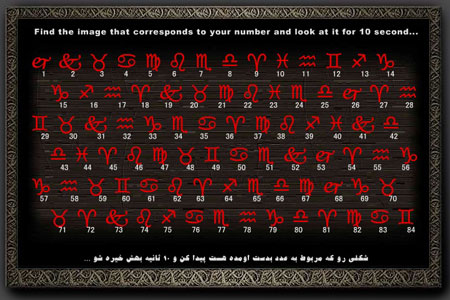
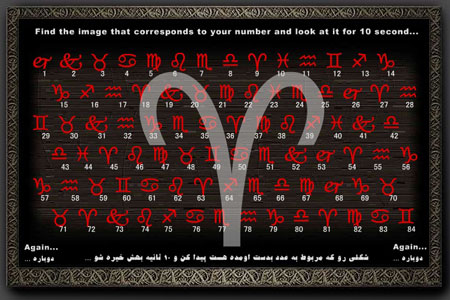
Cosmic Buddha pointed out this freaky puzzle/game on a web site. You are asked to pick a two-digit number. You then add the two digits of the number together (for example, if your number was 87, then you add 8+7), and then you subtract that sum from the original number. Then they show you a chart where each number is matched to a symbol. You find the number with your symbol, wait a moment… and then the web site magically displays an enlarged version of the symbol you are looking at!

0907-Chart1

0907-Chart2

Seriously, it’s kind of freaky at first. You start to wonder how they know what number/symbol you’re looking at. At first I thought it might have something to do with where your mouse is–that most people might hover their mouse over the symbol. But that wasn’t it. The game worked every time I tried it honestly. If I cheated and chose a symbol at random, it didn’t work.

Go ahead and check it out. If you can’t figure out how they manage to do it, then click through to see below the fold and I’ll explain…
Read more…

Categories: The Lighter Side Tags: by

Hey, I Guessed Right

September 15th, 2007 3 comments

As to Bush’s “36 Nations” fib, my own speculation was that they were including the NATO training mission:

Perhaps he is counting the ten extra countries involved in NATO’s training mission, a non-combat affair–where none have more than 15 people involved?

And it turns out that was the case. Of course, the accounting is still bogus even if you accept the NATO mission as “troops on the ground.” In the list of countries the White House released, Canada (1 “liasion officer”) and Tonga have withdrawn–Tonga, in fact, withdrew almost three years ago. Other problems with the “36” count are detailed in the TPM Muckraker article, but suffice to say that the Bush nation count has always been bogus in some form or another, like counting Costa Rica, which has no military.

The problem is, this count is so bogus it makes me wonder why they included it. Were they so careless that they just used an old number from somewhere? Are they so desperate for the illusion of international support that they’ll say anything no matter how blatant? Or were they so deeply engaged in lying throughout the speech that they figured, “hey, we don’t fact-check anything else in this speech, why fact-check this?”

Or did they throw this lie in intentionally so that people would focus on what is really an inconsequential statistic, and give less attention to the whopping huge lies in the speech, like “things are improving in Iraq,” “the surge is a success,” or “you can trust me on this”?

Bonus material: Here’s a fun geography game to play. Assuming you have basic country-on-the-map identification skills (and you’re not one of those poor schlobs who can’t fine the U.S. on a map), then look at the list of nations that have “troops on the ground” according to the White House. See the list? OK, now go to an unmarked map of the word, and see if you can correctly identify all those nations on a map.

The point: the list of 26 nations not in the NATO mission, even people with reasonably good geographical skills would have trouble locating even half of those on a map. At least one of the countries most people could get–Japan–withdrew a year ago. I imagine that most people would only find five or six. The NATO list is far easier–but then again, these are not actually “troops on the ground” in the sense that they’re fighting the war.

Categories: Iraq News Tags: by

Selling Iraq, Part CXXVII

September 14th, 2007 1 comment

So Bush spoke on Iraq today, which is to say that he lied. Six of one.

Once again, Bush attempted to strengthen the idea that Iraq=al Qaeda, Iraq is a direct result of 9/11, that if we leave Iraq, then 9/11 will happen again like it happened before. All in all, Bush mentioned al Qaeda twelve times:

Last year, an intelligence report concluded that Anbar had been lost to al Qaeda. … The local people were suffering under the Taliban-like rule of al Qaeda, and they were sick of it. … Today, a city where al Qaeda once planted its flag is beginning to return to normal. … They pledged they would never allow al Qaeda to return. … They show al Qaeda that it cannot count on popular support…one of the brave tribal sheikhs who helped lead the revolt against al Qaeda was murdered. … One year ago, much of Diyala Province was a sanctuary for al Qaeda and other extremist groups, and its capital of Baqubah was emerging as an al Qaeda stronghold. … A free Iraq will deny al Qaeda a safe haven. … Al Qaeda could gain new recruits and new sanctuaries. … We should be able to agree that we must defeat al Qaeda… It is never too late to deal a blow to al Qaeda.

As if al Qaeda were the only, or even the predominant, enemy. As if even the element that identifies itself as al Qaeda in Iraq is the same “al Qaeda” that wants to “follow us home” and attack the U.S., when in reality, al Qaeda is more of an idea in Iraq than an organization, and those who subscribe to it have no interest in following us anywhere.

But Bush claims that leaving Iraq not only would be abandoning Democracy itself, but that it would pose a clear and present danger to the people of the United States in their homes. He punctuated it with a blatant 9/11 reference:

We would leave our children to face a far more dangerous world. And as we saw on September the 11th, 2001, those dangers can reach our cities and kill our people.

Of course, Bush is not saying that Iraq had anything to do with 9/11, right? He’s only stating things in a way that will make uninformed listeners believe that such is the truth.

In making his case, Bush had all the sincerity of a farmer smearing lipstick on a pig: the Anbar leader who Bush lauded was assassinated today. Bush emphasized that remaining leaders pledge to push on, but the news was a blow to the success of the province, which is anything but stable. Despite its relative security, Anbar remains the second most violent province in Iraq today, after Baghdad itself. More lipstick included the oil-revenue-sharing Bush lauded has been deadlocked for a long time now and has less chance to succeed than it has to fail.

In his speech, Bush pushed idea that Anbar Province is proof of success of the surge. The problem with that statement? Anbar started turning around only because of internal Sunni politics. The leader who was killed today decided to turn last September–months before even the idea of the surge was known. And the violence started dropping in Anbar last year in November. The “Surge” was announced in January, and the full force of the surge did not arrive in Anbar until later. All Bush did here was move the “Surge” into an area where local politics was fueling success, then went on a PR trip there to claim the success as his own.

Bush continued his speech by building on the Anbar “success” and suggested that this “success” is spreading throughout Iraq. “Ordinary life is beginning to return.” Rosiness all around, everything is going peachy. Except that it’s not. Bush simply chose one or two bright spots in Iraq and ignored the dark areas, the places that have gotten worse, like Kirkuk, Tikrit, Samarra, Diyala, Balad, Basra, Mosul, and Amarah. As so many have pointed out, Iraq–like most insurgencies–is a whack-a-mole situation, where violence will ebb in one place only because the insurgents have moved on to easier grounds elsewhere to spread their violence.

And then there is the claim that Bush is “pulling troops out of Iraq,” when really what he’s planning is to bring troop levels back down to pre-surge levels–and even then, not until the summer of 2008–which, by coincidence, is just before the elections. Surprise!

You know when you go to a store and see an item marked down “50%”? And you know that the item was probably assigned a retail price by the manufacturer that was lower than you’re looking at, but the store then pasted their own ridiculous “retail” price to it, and then “slashed” that price to give you the illusion of a bargain? That’s what we’re getting sold to us here–a troop draw-down which is really just a restoration to what we had before.

Actually, Bush is probably pulling down those numbers more because of resource constraints than anything else: he has so crippled our military that we simply cannot maintain the “Surge” numbers beyond the timelines he has set down.

When it comes down to it, when Bush leaves office, two years after the American people gave the clear and undeniable message that they wanted out of Iraq, we will have about the same presence in Iraq that we had before the 2006 midterms. By using the “Surge” and throwing in all these delays (“just wait a little longer… and then longer after that… and then we’ll reveal that all that is needed is to wait a little longer!”) and tweaking troop levels, he will have successfully played Americans for fools and completely ignored their clearly-stated demands.

At the end, Bush could not help but to shamelessly use the sacrifice of a soldier and the grief of his family to paint a poignant facade on his incompetence. Once again, he tied the utter failure of his administration in Iraq to the honor and sacrifice of the troops, as if the two had any connection whatsoever. This continues to strike me as the most reprehensible of all political maneuvers. If Bush wants to honor the troops for their sacrifice, great; if he wants to make his case about Iraq, let him. But to honor the sacrifice of the troops only as a selling point for his miserable failure that caused the needless sacrifice that the soldiers bravely supplied, this is contemptible beyond expression.

After Bush’s speech, politicians were given the mic and more or less gave their standard stump speeches. Barack Obama said, “The bar for success has been lowered so far that it is almost invisible” (a variation on the statement he’s made in the past day, “The bar for success is so low that it’s almost buried in the sand”).

John McCain, on the other hand, expressed an interesting new twist in rationalizing the “Surge” which he helped author: blame Rumsfeld. He characterized everything bad that happened as the “Rumsfeld strategy,” and painted himself as having heroically fought against that since the beginning–as if there was nothing wrong with the invasion or with the administration’s management of the war aside from Rumsfeld, and McCain only suggested stuff that worked. As with Obama, McCain cribbed from his stump speech, he’s been on a “blame Rumsfeld” kick for a week or so now.

Michael Ware on CNN had an excellent sum-up of how Bush’s claim that “ordinary life is beginning to return” is full of it.

If the president means by ordinary life, families essentially living locked up in their homes, in almost perpetual darkness, without refrigeration, or perhaps constantly struggling — struggling for ever more expensive gas to run generators, if he means waiting in their homes, wondering if government death squads will drag them off and torture and execute them, if he means living in sectarian, cleansed neighborhoods where people who were your friends have had to flee, if he’s talking about living in communities that are protected by militias, then, yes, life has returned to ordinary.

Ware painted a very bleak picture of “ordinary life” in Iraq today. He may have emphasized the despair too much, but I would bet good money that his assessment of life in Iraq today is far more accurate than Bush’s.

One last nitpick: Bush said in his speech that “We thank the 36 nations who have troops on the ground in Iraq….”

Thirty-six? According to Wikipedia, there are 22 countries with troops on the ground in Iraq today (21 by the count of the Center for American Progress), including the United States. There were 18 other nations that sent troops (if you include Iceland’s 2 soldiers and several other nations, like Japan, who sent troops for strictly non-combat duties). Perhaps he is counting the ten extra countries involved in NATO’s training mission, a non-combat affair–where none have more than 15 people involved? Even with that, it doesn’t add up to 36.

So, where is he getting the number 36? The best I can tell, there were by some counts 36 nations in the Coalition with troops on the ground when the invasion of Iraq began–but Bush used the present tense, “have troops on the ground,” not “had.” That’s written in the pre-released transcripts as well.

Edit: I started writing this just after Bush finished his speech–but it looks like I’m not the only one who caught the “36 nations” lie.

Bush can’t even tell the straight truth about how many countries are helping us–or he is in extreme denial over the countries who have lost faith in the mission and have pulled out.

For Bush, Iraq continues to be one colossal, bloody lie.

Categories: Iraq News Tags: by

You Can Trust the Generals, Right?

September 13th, 2007 2 comments

A great deal of the credibility of the Petraeus report is based upon the idea that since he’s a general, he is therefore respectable and we can trust us to give it to us straight.

The problem, of course, is that by this time, any high-level Iraq War posting is more likely than usual to attract a general who is more oriented towards political ambition than would be otherwise. The good generals have resigned over this in principle. Among what we have left are the kind of people who gravitate to the top in an administration like this one.

Evidence of the fact: Petraeus, it seems, has presidential ambitions.

The US commander in Iraq, General David Petraeus, expressed long-term interest in running for the US presidency when he was stationed in Baghdad, according to a senior Iraqi official who knew him at that time.

Sabah Khadim, then a senior adviser at Iraq’s Interior Ministry, says General Petraeus discussed with him his ambition when the general was head of training and recruitment of the Iraqi army in 2004-05.

“I asked him if he was planning to run in 2008 and he said, ‘No, that would be too soon’,” Mr Khadim, who now lives in London, said.

General Petraeus has a reputation in the US Army for being a man of great ambition. If he succeeds in reversing America’s apparent failure in Iraq, he would be a natural candidate for the White House in the presidential election in 2012.

Which means that Petraeus is a political animal as much as, if not more than, a clean-cut military man, and what he does now is very likely colored by what he believes will serve him in a political campaign not too far in the future.

I know what the knee-jerk right-wing response will be: what about Wesley Clark? Well, his service in the military gives him the same basic standing as Petraeus. Because we know Clark has presidential ambitions, we weigh his words with those ambitions in mind. The exact same applies to Petraeus. Both generals must be considered not to simply give the straight story, but rather the story that serves them best as far as a political campaign is concerned.

The difference is, Petraeus is active, still serving in the military, and so should be above such things. That is precisely the image the White House is depending on: this report comes not from a politician, but from a general, and we can trust them.

Petraeus, as it turns out, however, is just another politician. And his performance in spinning the data to political advantage certainly gives us no reason to doubt this.

Categories: Iraq News Tags: by

You Can Insult Anyone in America Except Christians

September 12th, 2007 3 comments

Kathy Griffin won an Emmy last and created a bit of a stir with her acceptance speech:

“A lot of people come up here and thank Jesus for this award. I want you to know that no one had less to do with this award than Jesus,” an exultant Griffin said, holding up her statuette. “Suck it, Jesus. This award is my god now.”

Asked about her speech backstage a short time later, an unrepentant Griffin added, “I hope I offended some people. I didn’t want to win the Emmy for nothing.”

Christians were livid:

The speech drew fire from a leading Roman Catholic group, the Catholic League for Religious and Civil Rights, which condemned Griffin’s remarks as “obscene and blasphemous.”

Some went even further:

The comedian’s remarks were condemned Monday by Catholic League President Bill Donohue, who called them a “vulgar, in-your-face brand of hate speech.”

Okay, remember two posts ago, where I mentioned that Christians in America were among those who exulted in victimhood?

I mean, let’s get real here: “hate speech”? “Obscene” and “vulgar” are pushing it pretty far already, but “hate speech”? If you said, “Christians are all despicable people and should be rounded up,” or suggested violent acts against Christians, that would be hate speech. But “Suck it, Jesus”? To call that “hate speech” is greatly exaggerated–not to mention, aren’t these the same people who scoff at the idea of “hate speech” when it’s directed at gays, women, or minorities?

Not that this reaction is really unexpected. At this point, I would be surprised if Christians didn’t react that way. Take Christmas, for example–Jesus and Christianity are everywhere, permeating the culture, songs about Jesus saturate the airwaves, it’s virtually Jesus 24/7 for all of December–but if shops start saying “Happy Holidays” instead of “Merry Christmas,” if they simply fail to join in the near-universal obeisance to Christianity and instead remain neutral, then suddenly there is a “War on Christmas” and Christians everywhere are victims of it.

Similarly, Christianity was wormed its way in to our legal system to an un-Constitutional extent, with religious oaths and iconography; it has encroached unacceptably upon government, with religious tests for office and Christian sentiments on money and in schools and other public places. And yet if we dare deny the Christians the ability to enshrine the Ten Commandments in a large granite monument in a courthouse so as to proclaim it a house of worship, implying unfair treatment to unbelievers, then Christians take that as an attack on their religion, as persecution, as part of a “long war on Christianity.” It is perceived as discrimination, and Christians, in reaction, throw themselves prostrate on the ground, in agony over their suffering.

Like I said, Christians, like right-wingers, revel in their perceived victimhood.

Despite Griffin’s probable truth-saying about it being her accomplishment and not Christ’s, what she did was clearly a gag. She did what a lot of comedians have been talking about for some time. I think it may have been Bill Maher who did a bit not long ago where he tired of sports players crediting Jesus for every victory, and hoped for one someday to pronounce that Jesus didn’t do anything, it was all me. That’s what Griffin did, the comic’s dream come true.

In short, it was a joke. Lighten up, Christians.

Categories: Religion Tags: by

Wait on That iPhone Unlock…

September 12th, 2007 1 comment

If you were considering paying $100 for that iPhone unlock from iPhoneSIMfree, hold on to your wallet for a little bit. There are people who are studying what iPSf are doing and are working to duplicate it for free. They may be very close to a solution.

Now here’s an ethical dilemma: is it unethical to reverse-engineer from people who reverse-engineer?

Categories: Mac News Tags: by