OK, We’re Still Waiting

September 21st, 2006 2 comments

It’s about a month and a half before the midterm elections, so where the hell is the Democratic unified strategy? What the hell is Howard Dean doing? At the very freakin’ least, the Democratic Party should by now be releasing a slate of principles and initiatives, a clear, strong, ten-point bullet list of what Democrats will do when they have control of Congress, so that voters will have something to vote for, instead of simply voting against Republicans (who have been working so ardently to deserve being voted against). It seems that like two years ago, Democrats now are again taking the strategy of staying quiet out of fear that saying anything will cost them votes. I hope to god that I’m wrong and that there’s something big coming up, because if there’s not, the Democratic Party could very effectively show how this could be their election to lose.

Here’s my 10-point bullet list, expanded with explanations:

  • Set a timetable for a withdrawal from Iraq, so that the Iraqi government knows that they either firm up or else, that we won’t be there to let them fail easily. Yes, this will draw instant “cut and run” attacks from Republicans–which will make it possible for Democrats to instantly respond with vehemence, unity, and force that this is the right thing to do, instead of cowering in fear. Democrats have everything to gain by showing backbone, and this issue is perfect: most Americans approve of this kind of idea, but it is also controversial enough so that fighting for it makes you look resolute and tough, willing to take risks.

  • Vow to actually capture Osama bin Laden by making the actual resources to capture him available. This is not really the Congress’ bag, I know, but it will emphasize the Republican failure in this regard. Tie this into the Iraq issue, point out how a withdrawal from Iraq will free up resources to pour back into Afghanistan (the people who actually attacked us, remember?), where the Taliban are back and bin Laden is still running free.
  • Security: vow to actually respond to the 9/11 Commission’s security suggestions, and do far more to actually secure American cities. Make an issue of how Bush’s “war on terror” has been primarily to invade Iraq and scare the people with terror alerts, while virtually ignoring actual domestic security, instead focusing on meaningless and fake non-issues that don’t help much. Focus on 100% searches of incoming cargo containers, and other strong points the Republicans have been fighting against. Point out the Republican corruption of using counter-terrorism funding to fill porkbarrel roles.
  • Health Care for Children. At the very least. A good, comprehensive plan so that all children are covered. Let the Republicans try to argue why we shouldn’t spend money to keep children from dying. And attach a promise to work on health care for everyone else who is uninsured as well.
  • Education: find a plan to make college affordable. Point out that education is a huge, positive investment in the future, spurring economic growth and strength. Expand government grants and loans, make college tuition tax-deductible. Beneficial changes for the education system at large could be added to bolster this point.
  • The Budget: cut porkbarrel spending, rein in the budget, stop deficit overspending, bring back the Robust Democratic Economy. Great issue for highlighting the massive overspending spree Republicans have been enjoying for the past several years, while also pointing out that Democrats have a far better record on the economy.
  • Jobs: pass a minimum wage increase that is not tied to yet another tax cut for the rich. Pass legislation to encourage job growth, especially well-paying manufacturing jobs, right here in the U.S. Here, you could use the fact that jobs under Bush have gone sour (jobless recovery, low-paying jobs predominating), and that Bush’s economic adviser tried to classify flipping burgers at McDonald’s a “manufacturing industry” job.
  • Energy & the Environment: vow to commit spending to research and develop alternate energy sources that can truly replace oil and coal. Vow to overturn Bush’s anti-environmental legacy, and to bring back clean air & water standards. Point out how laws which require energy efficiency, like those in California, have actually succeeded in their goals, while the energy problems have been caused by deregulation and greed within the energy industry; use Cheney’s energy task force and the administration’s Enron collusion and bludgeons.
  • Protect Social Security: get the AARP working for the Democrats. Point out how Democrats stopped Bush and the Republicans from killing the program with unpopular “privatization” schemes. Another popular issue.
  • Tax Fairness: promise to bolster middle-class tax cuts as Democrats have been suggesting since before Bush, while at the same time scaling back the excessive, wasteful, and unnecessary tax cuts for rich people and super-profitable corporations. Point out how Bush kept insisting that his tax cuts targeted the middle class while they actually screwed them over, again and again giving billions and even trillions to the affluent while short-changing the little guy. Firmly position the Democratic party as being for the middle class, while the Republicans are exclusively for the rich and elite. (Yes, use the Republican catch-word “elite” against them for a change.) The Republicans want to call out a “class war”? Fine–give it to them, and let the GOP stand for the upper class!

Note that the first three points are about security–no oversight there. Democrats have got to fight for a strong reputation on the issue. It’s the perfect time, because Republicans still monopolize security, but are now weak on it.

Of course, when it’s issued, it will have to be a more compact list, looking more like this:

  • Set a timetable for a withdrawing most from Iraq: leave the supervisory forces that can do actual good, force Iraq to take responsibility for itself, and bring our soldiers out of the futile meat grinder.

  • Capture Osama bin Laden and defeat the Taliban: remember the real war on terror? The one that Bush has forgotten and lost?
  • Bolster American Security: follow the 9/11 Commission’s recommendations, secure our cities as Republicans have failed to do, and end GOP corruption in security spending.
  • Health Care for Children. And why not for all uninsured Americans while we’re at it?
  • Focus on Education: Education is the best and most profitable investment of all. Make college affordable and reform education policies at all levels.
  • Control the Budget: cut porkbarrel spending, stop massive Republican overspending and deficits, bring back the Robust Democratic Economy.
  • Democrats Are the Party for Jobs: build better jobs, stop conservative outsourcing of high-paying employment, raise the minimum wage to a living wage.
  • Establish Sanity on Energy & the Environment: Develop alternate energy resources instead of the GOP’s lip service; bring back workable & valuable environmental policy.
  • Protect Social Security: stop Republicans’ efforts to kill the program and ensure the survival of retirement protection.
  • Tax Fairness: bolster middle-class tax cuts, and scale back the excessive, wasteful, and unnecessary tax cuts for rich people and super-profitable corporations.

Please, go ahead, copy and paste that list, make refinements if you want to, but start emailing it and posting something like it wherever you can. I know people have done this before, but for god’s sake, it hasn’t been done enough, and if the Democratic Party won’t, we have to, to show people that Democrats do indeed stand for things. I know that the Democrats have initiative lists out there, but they need to do four things:

  1. Make the list compact and eminently readable, like I did just above;

  2. Publicize the crap out of it, featuring it above everything else at every level, so it’s impossible for the media to ignore (which you know they’ll try to);
  3. Rinse and Repeat: don’t just publicize it once, hammer away at this, repeat the same damn list again and again and again and again, drive it home, hard; and
  4. For Christ’s sake, unify, god dammit! Get every single Democrat aboard on this, make it an integral part of every Democratic Party member’s agenda. Hold events where large numbers of Democrats come together for massive photo ops the media can’t brush off, where every Democrat signs a pledge to uphold these promises. Yes, that’s right, a virtual “Contract for America”; if the Democrats are going to pull off what the Republicans did in 1994, now is the time. It might even be possible to use that directly, saying that this is the Democratic Contract for America, and point out how miserably the Republicans failed to uphold their contract.

The problem, of course, is that we’re not seeing this unity, at least not yet. But in my opinion, it’s the best and only hope the Democrats have for grabbing this once-in-a-generation opportunity and running with it, instead of meekly and fearfully hiding in a goddamned corner and hoping that if they stay quiet enough, people will simply vote against Republicans.

Howard Dean, where the hell are you?

Categories: Political Ranting Tags: by

HD/BD-DVD±R/RW/RAM/DL/RE, M-O-U-S-E

September 21st, 2006 3 comments

If you’re confused about all the different DVD formats, don’t worry. You have a right to be. You might also be confused by the current high-definition format war, and again rightfully so–it’s a real ping-pong match going on.

First, Blu-Ray seemed like they had it sewn up, when the Sony PS3 game console was planned to provide the platform cheaply and widely, and more movie studios backed the higher-capacity format. But then HD-DVD lurched ahead with its hardware being released month earlier and at half the cost of stand-alone Blu-Ray recorders, and the Microsoft X-Box will ship with $170 HD-DVDs. Blu-Ray still seems to be ahead in general, but it is much more of a toss-up today. Both formats have a few dozen films selling already on their discs.

I went to a PC store the other day and noticed a Blu-Ray burner being sold. Both formats are about to hit the market in a fairly big way. And probably a lot of people will be hanging back, waiting to see who is going to win the Beta-vs.-VHS rematch. As it turns out, however, it may turn out to be less of a Death Match and more of an uneasy truce.

The clue, really, was in a different DVD war: the fight between DVD-plus and DVD-minus formats. It’s possible that you don’t know what I’m talking about, but there are two different fundamental formats for writing recordable DVDs, the kind you can burn on many computers today (and probably all computers a few years from now). There are actually so many DVD formats now that it could make your head spin: DVD-ROM, Video-DVD, DVD-R, DVD-RW, DVD+R, DVD+RW, DVD-R DL, DVD+R DL, and DVD-RAM. DVD-ROMs and Video-DVDs can be played in almost any player; after that, there is the minus family (DVD-R/RW/RAM) and the plus family (DVD+R/RW), each family also having a dual-layered (DL) version. And if that’s not enough to make your head spin faster than the discs themselves, there are even more different varieties of recorders and players.

But the main fight was between plus and minus–until, of course, we got hybrid DVD recorder/players, commonly tagged “DVD±R/RW.” These drives could accommodate both families, thus more or less ending the format war. Oh, it still rages, in some ways–Minus tends to be ahead, but Plus got the dual-layered discs out earlier and gained a bit of an edge. For example, the drive I’m getting with my 24-inch iMac is a DVD+R DL / DVD±R/RW / CD-R/RW drive, commonly referred to simply as a “Super Drive.” If your drive is hybrid and plays DVD-RAMs as well, it’s a “Super Multi Drive.” And so on.

The point here is that hybrids came along and–at least for the consumer–made the whole “format war” kind of moot. And that’s what seems to be happening in the Blu-Ray/HD-DVD format war as well. Betamax and VHS couldn’t easily have had a hybrid to marry them together, but the DVD formats can, as they all use the same size media, and they are electronic in nature, which means the machines that read them can be highly flexible. A hybrid Blu-Ray and HD-DVD (not to mention standard DVD) is inevitable, and now Warner Brothers seems ready to make Sony (Blu-Ray) and Toshiba (HD-DVD) play nice, with a new technology that allows for the discs themselves to be hybrids–one disc, for example, could be either DVD and HD-DVD, DVD and Blu-Ray, or HD-DVD and Blu-Ray. (This follows Toshiba itself trying to make its own hybrid disk, combining HD-DVD and DVDs.) Eventually, I think you can count on seeing recorders and players coming out that can read and write all formats as well. But that may not come for a few years.

In the meantime, get used to more alphabet soup. HD-DVD is sticking close to standard nomenclature, calling their discs HD-DVD-ROM, HD-DVD-R, and HD-DVD-RW, in 15GB capacity (30GB coming soon). Blu-Ray, however, is redoing the naming, calling their disks BD-ROM, BD-R, and BD-RE (rewritable), available in 25GB and 50GB capacities.

In case you were wondering, here is the basic pricing for all the different formats, in Japan (Yodobashi Camera) and in America (Amazon.com):

Japan
America
DVD-R
$0.64
$0.25
4.7GB
DVD+R
$0.96
$0.33
4.7GB
DVD-RW
$2.30
$1.20
4.7GB
DVD+RW
$2.47
$1.10
4.7GB
DVD-R DL
$7.48*
n/a
8.5GB
DVD+R DL
$6.43
$1.60
8.5GB
DVD-RAM
$8.88
$5.89
9.4GB
Blu-Ray BD-R
$15.14*
$12.40*
25GB
HD-DVD-R
n/a
n/a ($20?)
15GB
Blu-Ray BD-RE
$21.09*
$25.00*
25GB
HD-DVD-RW
n/a
n/a
15GB
Blu-Ray BD-RE
$36.40*
n/a
50GB

The * denotes discs that were sold in single packs only; the rest were sold at discount in packs or spindles containing anywhere from 5 to 100 discs each. Note the interesting divide in pricing; standard DVD media costs significantly less in the U.S. than it does in Japan (following the pricing structure for electronics in general), but the Blu-Ray media is more evenly priced. I could not find any blank HD-DVD media being sold, but I did find one secondhand report of a Memorex 15GB HD-DVD-R disc being sold at Fry’s Electronics in the U.S. for $20–take it with a grain of salt.

I hope you are now perhaps slightly less perplexed than when you came in. Frankly, I think that the DVD industry should adopt a universal motto, that being, “Hail Eris!” Fnord!

Categories: Computers and the Internet Tags: by

Who Checks Their Data Anymore?

September 20th, 2006 Comments off

I should not be surprised at this, really, but it does continue to be frustrating. Reports are going all around the web over one company’s data that show’s Apple Computer’s OS market share has been flat recently. One representative excerpt:

…data gathered by Net Applications shows that the Mac OS had 4.35 per cent of the world’s operating system share last December. Now it only has 4.33 per cent.

This is being reported as very bad news for Apple, indicating that the expected revolution has failed. Other articles, such as this or this, are ultimately based on an article in TechWeb. While the articles do mention how the data was collected–a firm called Net Applications monitoring web site accesses–none of them point out the fact that MacWorld reported:

…it must be borne in mind that the Net Applications data is based on the company’s PC-only web monitoring software which checks for what platform users are on when they visit a small collection of compliant websites.

In other words, the data is a non-scientific survey of people visiting web sites designed to work best on PCs. While the survey does measure changes over time, it is hardly an accurate measure of such; were it a submission of data for a scientific organization, it would likely be rejected out of hand. Hell, if I were using an Intel Mac running OS X but visited the site using IE on XP under Parallels, it would measure as an XP visit. Not that I expect the figures are much changed by that, but it is one example of how the data could easily be skewed aside from the obvious fact that the measurements are PC-centric in the first place.

Not to mention that this analysis of Mac shares staying flat from December to August flies in the face of Mac sales increasing 12% from summer 2005 to summer 2006, and Mac sales rising steadily over the past several years. (Coolest Gadgets also has a good analysis on the report.) Also not to mention that we’re heading into what could be a big rise for Apple as Vista and Leopard are coming out, and Vista ain’t looking too good. And on top of all that, there is the fact that people still haven’t caught on to the fact that (a) Macs are now as cheap as, if not cheaper than, equivalent PCs, and (b) Macs can run Windows as well as the Mac OS. As awareness of these points increase, it’s inevitable that Mac shares will grow–but by how much is the question. Will Apple’s sales explode, or will it just be a slightly more popular niche, but still a niche?

In any case, one should treat this latest Apple-doomsayer story like the other recent flurries, such as the bogus virus threats, more virus threats, and yet more virus threats (recycled). Not to mention the infamous WaPo hack-the-Mac video in which a hacker appeared to be able to take control of a Mac remotely, hacking into the system through a vulnerability. Later, it turned out that the Mac’s built-in wireless system was quite secure, and the hacker had invaded the system by exploiting a weakness in a third-party wireless card that was not even needed on the Mac, as all Macs that can accept the wireless card have built-in WiFi.

This is pretty much the gold standard nowadays for negative reporting on the Mac: accept any negative claim without checking its veracity.

Categories: Mac News Tags: by

Arrr

September 20th, 2006 1 comment

Alas, I doubt that my Japanese students would have understood had I tried it with them.

Categories: The Lighter Side Tags: by

More on Jesus Camp

September 19th, 2006 2 comments

Here is another video showing more detail from Jesus Camp. This one shows the lady from the trailer describing how she wants Christian kids to be just like the kids of Islamic extremists, learning how to put on “bomb belts” and use hand grenades and machine guns:

You can visit the movie’s site here.

Categories: Religion Tags: by

Willie Nelson Arrested for Drug Use

September 19th, 2006 1 comment

The news headline tonight, Willie Nelson Cited for Drug Possession.

The police figured this out just now?

Categories: The Lighter Side Tags: by

Extremism

September 18th, 2006 2 comments

You may have heard that the Pope gave a lecture at a university recently, and that there was a widespread reaction of anger in the Muslim world over what was said. For those of you who are curious, here is the Pope’s quote; if you’re not interested, skip just past this quote and I’ll paraphrase.

In the seventh conversation [text unclear] edited by Professor Khoury, the emperor touches on the theme of the holy war. The emperor must have known that surah 2, 256 reads: “There is no compulsion in religion”.

According to the experts, this is one of the suras of the early period, when Mohammed was still powerless and under threat. But naturally the emperor also knew the instructions, developed later and recorded in the Qur’an, concerning holy war.

Without descending to details, such as the difference in treatment accorded to those who have the “Book” and the “infidels”, he addresses his interlocutor with a startling brusqueness on the central question about the relationship between religion and violence in general, saying: “Show me just what Mohammed brought that was new, and there you will find things only evil and inhuman, such as his command to spread by the sword the faith he preached”.

The emperor, after having expressed himself so forcefully, goes on to explain in detail the reasons why spreading the faith through violence is something unreasonable. Violence is incompatible with the nature of God and the nature of the soul. “God”, he says, “is not pleased by blood – and not acting reasonably … is contrary to God’s nature….”

In essence, the Pope brought up the concept of proselytizing through force, and quoted a 14th century dialogue in which a Byzantine emperor said that anything new that Mohammed brought was evil and inhuman, and proselytizing by force was one example. This is the quote that the media focuses on, especially the part with the words “evil” and “inhuman.” Interestingly, this is perhaps less offensive than other parts of the speech, at least in terms of what is the Pope’s voice and what is a quote that he may not personally agree with. The imperial quote was phrased so that the Pope’s own view of the matter was occluded, except that he found it “forceful”–which could leave the door open to him agreeing, but not willing to put it so strongly.

What seems somewhat more objectionable to me would be a subsequent paragraph:

But for Muslim teaching, God is absolutely transcendent. His will is not bound up with any of our categories, even that of rationality. Here Khoury quotes a work of the noted French Islamist R Arnaldez, who points out that Ibn Hazn went so far as to state that God is not bound even by his own word, and that nothing would oblige him to reveal the truth to us. Were it God’s will, we would even have to practise idolatry.

This information is presented differently, as fact. The Pope is essentially saying that the Muslim faith has no reason or consistency, that God can be dishonest. Seems to me that this is the worse thing to say. Well, unless it’s true and Muslims have no problem with that.

Keep in mind, however, the points made: that Islam can be violent, irrational and contradictory.

So what was the reaction in the Muslim world? There were angry protests worldwide, Iraqis burned the Pope in effigy, and in Somalia, one of their number killed a nun and her bodyguard, shooting the nun in the back four times.

So, apparently, these individuals wanted to make the Pope’s argument for him.

It should be pointed out, however, that the objectionable acts were carried out by extremists. On the other hand, we don’t seem to see Muslim leaders pouring out to condemn these acts.

My question is, how deeply does religious extremism really run? What percentage of Muslims really do feel sympathetic to the people who committed these acts? I suspect it’s a lot less than the media makes it seem, but sometimes I wonder; there seems to be so much righteous anger in the world today, more than can be accounted for by a few extremists. Is it that the extremists are not actually so extreme at heart, but rather just in the actions they take?

And before you object to my singling out Muslims, I would point out that I feel exactly the same way about Christians. Watch this Jesus Camp trailer if you want an example. Sure, Christians might not react violently to political cartoons and speeches by Muslim leaders which attack Christianity (as many, especially Christians, take pains to point out), but that is far from saying that some Christians don’t react violently, or in threatening manners, about things that are just as important to them as the Prophet is to Muslims. Killing doctors who carry out abortions, bombing clinics, harassing and threatening women who go into these clinics–just a few examples in one specific area. Christians can react just as violently when it comes to something that offends them as much, and Christian leaders also often do not come out and condemn their actions.

Sometimes, religion scares the hell out of me. It allows for people to act immorally and believe that it is moral because it is in the name of God. It drives people to believe things that don’t make sense, to become apologists for absolute contradictions because to admit to anything else would threaten their world view.

And since their world view is often tied directly to their belief that they will live after death, any criticism against their belief in general can threaten that anchor they have chosen and cause them to react in irrational ways. (If you’re religious, not like this, and starting to object, then note my modifiers.)

The supreme irony appears in this other quote from the Pope’s speech:

The decisive statement in this argument against violent conversion is this: not to act in accordance with reason is contrary to God’s nature.

Now, that’s quite something to say. Religion is about faith, sometimes to the exclusion of reason–all too often, from what I can observe.

This entire episode, it seems to me, proves exactly that point.

Categories: Religion Tags: by

Site Outages

September 18th, 2006 2 comments

If you’ve had trouble getting through to my site, you aren’t alone. I’ve been having small to large outages for the past few weeks. I’m on my web host about this, but sometimes web hosts do this, and you have to bear through it… One of the frustrating things is that you don’t always know what causes it. Web hosts never admit to screwing up. They either dismiss it as a minor technical glitch beyond their control, or they blame it on a disruptive user on the server. With continued outages like this one, neither makes any sense; either they should have repaired the glitch or given the boot to the disruptive user long before now… which probably means it’s the web host screwing up somehow.

My apologies for the inconveniences. I’ll post a quick note when service seems to be stabilized.

Update: Great. I get a message back saying that the problem “was due vulnerable perl scripts running under a user,” and that they have “disabled that user.” Except when I check, my own site’s comment script has been disabled. Charming.

…And as I tried to post this, I got an error message. Can’t post, either. Swell. My site is up, but it’s also dead. [Obviously I posted this after the problem was fixed.]

Categories: BlogTech Tags: by

The IRS Presses on in Its Capacity as a Political Weapon

September 17th, 2006 Comments off

About nine months ago, I commented on the story that the IRS is being used as a political tool. There are churches under investigation by the IRS, in danger of losing their tax-exempt status because of their dalliances in the realm of politics. Now, don’t get me wrong–I think that churches should remain utterly neutral in politics; left-leaning or right-leaning, it doesn’t matter. A church can espouse morality, but it should stay away from endorsements or engagement in politics. So it’s not the fact that churches are being investigated that I object to. It’s the political bias implicit in the investigations.

Politicization at the pulpit does goon, and rather heavily on the conservative side. The Republican Party asks for and gets church directories, essentially mailing lists of churchgoing members to beef up their contributions and get-out-the-vote drives. Many churches, especially Baptist churches in the South, commonly endorse politicians (overwhelmingly right-wing, of course), and leading religious figures such as Jerry Falwell commonly work for the Republican Party both directly and indirectly, using their tax-exempt organizations to do so. The Catholic Church even went so far in 2004 as to deny Kerry communion because of his abortion beliefs–despite the fact that the church did not condemn all politicians who hold the same opinions, including some right-wing politicians.

I cannot find any mention that any of these organizations are being investigated by the IRS for encroaching upon political ground.

There are, however, churches being investigated and in danger of losing their tax-exempt status: liberal churches. As I mentioned in January, the All Saints Episcopal Church in Pasadena, CA, is being investigated because a retired pastor made a guest appearance in which he commented on the 2004 election. And though it has since been cleared, a heavy IRS investigation of the NAACP for similar reasons begs the question: why are liberal organizations being targeted by the IRS when conservative churches and other tax-exempt organizations–which are far more commonly and vehemently political–are left alone?

Well, now, just as the 2006 elections are ramping up, the IRS is kick-starting their investigation of the All Saints Episcopal Church again, this time demanding that the church “turn over all the documents and e-mails it produced during the 2004 election year with references to political candidates” as well as financial record.

As others have noted, the timing of this stinks, if you will forgive the expression, to high heaven. But, at the same time, it is not a great surprise–this administration is by no means above using Nixonian dirty tricks–and the IRS–to get what they want this election year.

Categories: Political Ranting, Religion Tags: by

What’s Wrong with This Woman?

September 16th, 2006 10 comments

I stopped watching Larry King Live some time ago. Part of it was because of King’s incessant focus on celebrity crime cases, or crime cases where he turned the accused into a celebrity of infamy. And I’ve never been a fan of these high-publicity crime cases. In my opinion, we need a law like some countries have where the media is forbidden to report on a crime case until it is resolved by the courts.

Yes, I know, free speech and the first amendment. But then there’s also amendments 4-8, which protect the rights of the accused; I think there’s enough evidence here that the founding fathers were more than just a little concerned about how we treat defendants in criminal cases. And media reporting on court cases can severely impact the outcome of a trial. So which right outweighs the other? Considering that media coverage of these trials is almost purely gratuitous, for titillation and little else, it seems a no-brainer to me. Considering how much attention the founders paid to this issue, I think Americans give far too little respect to defendants’ rights. In fact, conservatives tend to hold such rights in contempt, Constitution or not.

One component of the reason I don’t watch King anymore is what I heard him say on more than one occasion: that if an accused person is innocent, they would naturally want to go on national TV and make their case; so if they do not do this, it makes them look guilty. For King to say this is, in my opinion, criminally negligent, certainly a conflict of interest, and absolutely outrageous. If you are accused of a crime, especially if you are innocent, the last thing you want to do is to go on national TV and discuss the case. Prosecutors live for a defendant dumb enough to go out in public and make a variety of statements concerning their case. The more a defendant says, the more chance there is that there will be some inconsistency, which a prosecutor can then cash in for a guilty verdict in court.

If you think that an innocent person cannot be made to look guilty to a jury, then you’re naive. To speak on an issue without making even the slightest error in consistency, even if you are positive that you’ve got it all down cold, is wildly improbable. You’re bound to get something wrong.

So not only was King wrong factually, but he was guilty of extortion as well. King makes his bread and butter by getting such guests on his show. In making his statement, he was essentially saying that if such accused people don’t come on his show, he’ll pronounce them guilty on his show.

But even King is not the worst offender. Somehow, King has always found a way to discover the most offensively vile person possible to argue the why-the-accused-is-guilty side of things. Strangely, this person is almost always a blonde woman, one of the many in the ranks of blonde bimbo Republican pundits, of which there seems to be a peculiarly endless supply.

One of the worst has been Nancy Grace. Apparently convinced that even the slightest appearance of guilt is proof of pure evil, this woman incessantly goes for the jugular of any poor sap accused of a crime. And recently, she may have driven a young woman to suicide:

Two weeks after telling police that her son had been snatched from his crib, Melinda Duckett found herself reeling in an interview with TV’s famously prosecutorial Nancy Grace. Before it was over, Grace was pounding her desk and loudly demanding to know: “Where were you? Why aren’t you telling us where you were that day?”

A day after the taping, Duckett, 21, shot herself to death, deepening the mystery of what happened to the boy. …

Duckett’s family members disputed any suggestion that she hurt her son. They said that the strain of her son’s disappearance pushed her to the brink, and the media sent her over the edge.

“Nancy Grace and the others, they just bashed her to the end,” Duckett’s grandfather Bill Eubank said Tuesday. “She wasn’t one anyone ever would have thought of to do something like this. She and that baby just loved each other, couldn’t get away from each other. She wouldn’t hurt a bug.”

To me, the issue of whether Duckett turns out to be innocent or guilty is moot. In the United States, we theoretically have a principle of assuming innocence in criminal cases until guilt is proven. Under this principle, Grace’s actions are so reprehensible as to be virtually criminal themselves. When presented with someone who might have committed a crime–who was barely an official suspect in the case–who either way is obviously going to be severely distraught–you do not take this person and bash their head onto a table, drilling them on national TV like they were some despicable criminal. Sure, the person might be guilty–but they might be innocent, and you are supposed to presume the latter. And if the person is innocent, what Grace did was inexcusable. Though I’m sure it made for great ratings. Good show, CNN.

In response to the news of the suicide, Grace’s spokeswoman issued a statement that emphasized Grace’s concern for finding the missing boy, and completely sidestepped how Grace treated the mother. How sweet. I’m so glad this wasn’t about getting ratings or venting arrogant presumption, but was purely about helping a little boy by pushing his mother over the edge and making her shoot herself to death.

In fact, in a later interview, Grace actually said she felt no responsibility for the outcome, and said that “If anything, I would suggest that guilt made Melinda Duckett commit suicide.”

Grace, of course, as sick as she is, is only a symptom of a sick society, one where we love to assume guilt. Which is why we need that media ban on active criminal court cases.

Categories: People Can Be Idiots Tags: by

Seven to Ten Days

September 15th, 2006 1 comment

Well, I broke down and ordered it. I had been told that I would have to fill out a special form in Japanese, so I called Apple Japan just to ask about that. The agent told me that wouldn’t be necessary, and all I had to do was tell him the name of my school and we were on. (I already had an account with Apple Educational anyway, from my ordering Tiger from them last year.) I was taken a bit by surprise by this–I wasn’t really ready to order right then–but then I thought, the hell with it, I know I’m going to get it, why wait? So I did.

I got a boost in going this direction by stopping by Yodobashi Camera earlier in the day. I was on my way up to the 2nd floor of the main Nishi-Shinjuku branch (where they have a Mac center) when I noticed their Mac island in the middle of the main floor. Even better, one of the iMacs had Parallels installed with XP running. I played with it, and it’s pretty damned nice. It should do everything that I need from a PC at home–most of which has to do with preparing lessons for my Computer course, where they still use Windows (though I think I stand a very good chance of switching them to iMacs next time they have to buy a new bunch of computers). Having played with Parallels and the 24-inch iMac at the store, I pretty much convinced myself to buy.

All told, the purchase was ¥259,852 ($2212) including sales tax (¥247,478 or $2107 base). That’s for the 24-inch iMac, an extra gigabyte of RAM, and the wireless Apple keyboard and mouse. I’m currently looking into how to get XP (academic or OEM) for less than the $200 regular pricing; parallels is a download and will be easy. I’m also looking at getting the Applecare (thanks to Dazza for the LA tip, I’m contacting them [Update: Dazza, the LA firm got back to me; they will sell at a lower price as you indicated, but shipping to Japan costs an additional $45, way too much. The Apple Store Japan has educational pricing for Applecare; I think I’ll go with that.]); I’ve never had a serious meltdown on a Mac, but with a 24-inch LCD on an all-in-one desktop, I think it’s worth getting the insurance.

The iMac is not upgradeable, true. But then again, I’m not much of an upgrade person. I wind up not getting any extra video cards, or whatever else. The iMac already has most of the bells and whistles you would upgrade to, in any case.

But I have to admit, it’s the 24-inch screen that really got me with this one. I never really owned anything bigger than a 17-inch CRT–heck, I don’t think I ever even worked on anything bigger than a 17-inch LCD. So the 24-incher is a huge step up, and probably impresses me a lot more than it does you. But as my sister-in-law put it, if it makes you happy, that’s the big thing.

So my Windows PC and old 500 MHz G3 tower, conjoined with a 17″ CRT monitor, will all get exiled down to my free desk space in a lesser-used corner of my apartment–in seven to ten days, that is.

Categories: Mac News Tags: by

Public Classics

September 14th, 2006 3 comments

DVDs in Japan cost considerably more than in the U.S. New releases of DVDs in America generally cost around $20; in Japan, the same movies go for $30. For example, current releases of V for Vendetta, Poseidon, and The Da Vinci Code all sell for about $30 at Amazon Japan, while the same titles sell for $20 at Amazon U.S.–except for The Da Vinci Code, which sells for $15.

This is one of the main reasons why I buy my DVDs from the U.S., and use a region-free player (or the Region 1 player I lugged here from the U.S.)–because U.S. releases are so much cheaper, in addition to having earlier release dates. Generally, much earlier–the latest X-Men movie is just out in Japanese theaters, while the U.S. DVD is on sale soon. Often, summer Disney titles go on sale by Christmas, just as they are opening in Japan.

This of course, is why they have region encoding in the first place: to keep people from benefitting from different marketing plans.

500Dvd2But there is a strange hole in this: if you want to buy the DVD for Gone with the Wind in the U.S., it costs $20. In Japan, the same movie costs $5–or more precisely, ¥500.

Same with Casablanca–$20 in America, the same movie is $5 in Japan. The same deal applies to movies like King Kong, The African Queen, Arsenic and Old Lace, The Treasure of the Sierra Madre, It’s a Wonderful Life, The Wizard of Oz, and more. The DVDs are “all-region,” and come with English and Japanese subtitles (which can be turned off).

So how did that happen? Well, it has to do with copyright law and a court case. As part of corporations’ quest to become legally immortal super-human beings with endless ownership rights, they have been lobbying to indefinitely extend copyright protections. Previously, copyright protection for films was 50 years; in 2004, it was extended another 20 years. However, a recent court case decided that, in Japan at least, the 20-year extension was not retroactive. So a movie made in 1954 will stay protected until 2024. But a movie made in 1953 is now in the public domain.

500Dvd1I reported on this a few months back when I heard about the case, but it was just last week when I finally saw the DVDs on sale. I picked up Gone with the Wind, Notorious, Roman Holiday, Citizen Kane, The Third Man, and To Kill a Mockingbird for ¥3000, sales tax included–about $26, actually, at today’s rates. Six movies for less than any one of them would cost “legitimately.”

This in part reveals the actual production costs for DVDs–or even more sharply, the recent decision by Warner Home Video to start selling their movie titles in China for just $2.65. Although that is to compete with the widespread $1 pirate DVD market, you know that Warner wouldn’t be selling at that price unless they were making even a small amount of money from them.

Meanwhile, back in Japan, we can enjoy some good classics for a still comfortable price. You can see the on-line catalog here; to see categories of specific movies, click the links after the English words “PICK UP” near the top left. (By the way, you can see they made the web page using Adobe GoLive 6–check out the web page title. Think it was a pirated version?)

They’re only selling 140 titles now, but there should be more than 140 good ones made before ’54. Alas, movies like The Man Who Knew Too Much (the Jimmy Stewart/Doris Day version) won’t go on sale for another two decades.

Categories: Focus on Japan 2006 Tags: by

New Mac Stuff

September 13th, 2006 6 comments

Several Sites are streaming the new Mac announcements live. Best is Engadget, who give the most information and have good-quality photos up very quickly. So far:

New iPods, not the full-screen video we’ve been waiting for, but upgraded regular video iPods. They come in 30GB and 80GB sizes (priced $250 & $350 respectively); they have brighter, better screens, a search function, and downloadable games like Pac-Man for $5 each.

iPod Nanos, in brushed aluminum colors (Blue, Pink, Green, Silver, and Black), in 2GB, 4GB, and 8GB sizes.

iPod Shuffle, in new, tiny aluminum case (matchbook sized!) which itself is a clip-on, a small clock & controls, 1GB memory, $80.

iTunes: going to version 7; videos increase in size from 320×240 to 640×480 (near NTSC-size resolution; should play back on TV rather well). New organization for layout. The “iTunes Music Store” (iTMS) is now just the “iTunes Store” (iTS).

Movie Downloads (as expected): $10 for most movies, $13 for new movies until the end of the first week of sales, $15 for new titles after that. Also at 640×480 resolution, “near DVD-quality.” 75 titles to begin with, from Disney-owned studios (Walt Disney, Pixar, Touchstone, Miramax). Dolby surround audio. Takes about 30 minutes to download a movie, but you can start watching immediately. Initial sales from U.S. store only; international sales start in 2007 (hopefully).

Media Box: codenamed “iTV” (not the final name), a set-top media box connecting wirelessly between a Mac or a PC (via iTunes, apparently) and the TV set/media system. To be released in early 2007. Also has ethernet, USB, RCA, optical audio, HDMI ports. Allows you to play downloaded TV/movies, other Internet video media. Priced at $300. Cobbled-together photos from Engadget feed below:

0906Itv

My reaction: well, OK. We expected the movie downloads. The new hi-res download standard is good, but they kind of had to do that to make people pay $15 for a downloaded movie. Sounds like the DRM will be reasonable, and maybe with the TV playback, the inability to burn it to a DVD won’t be such a problem.

The media box looks nice, but I’m going to have to see what it really does before I get excited about it. I mean, you can hook up your Mac desktop or laptop to your TV right now and watch video played back from the computer. How does “iTV” change that? Why pay $300 when a $20 cable could do the same thing? OK, iTV looks like it has a very nice interface. Wireless is nice too. But what else? If it just pipes video, I really don’t see the point.

OK, the Apple web site is back up, along with the Apple Store. The iTunes Store is still down, at least for me.

Gotta get to bed. This time zone thing kills me on these events…

Categories: Mac News Tags: by

Post-9/11, A Short History (Part I)

September 12th, 2006 1 comment

My post yesterday on the fifth anniversary of the event was one of general principles and ideas. After finishing the post, I felt that there was more to say, but none that would fit within the general style of the writing, so I instead write them here.

As I have noted elsewhere, Bush’s popularity was already waning considerably in early September, 2001. Over his entire presidency, it has been Bush’s pattern to fall steadily, save minor bumps, until some dramatic event raised those numbers–only to immediately begin the normal pattern of decline. Before September 11th, Bush was closing on a 50% rating and falling steadily.

It seems hard to recall back then, as 9/11 changed things so considerably. If you recall, Bush was pushing his missile defense shield, and in so doing, was in the process of violating several international treaties. The U.N. was starting to unseat the United State from committees. Political cartoonists commonly portrayed Bush as being tiny (with big ears), sitting in Cheney’s lap. Already the taste of bitter partisanship was in the air. Right out of the gate, Bush created an “Energy Task Force” in which Cheney went into secret meetings where energy industrial heavyweights were allowed to write national policy. Bush bolted from the Kyoto Treaty, and was already well on his way to breaking the country in two. The partisanship was so severe, even against moderates within the GOP itself, that Jim Jeffords, Republican Senator from Vermont, bolted from the party, declaring himself an independent aligned with the Democrats–momentarily breaking Republican control over the Senate.

Then, 9/11 happened. Pretty much all Bush had to do was to go out into the rubble with a megaphone and, like the cheerleader he once was, rattle off a few platitudes. Instantly, public opinion changed. Bush vaulted to 90% approval in the polls, and political cartoons literally portrayed him as a giant. As I have observed more than once before, in our time of crisis, we needed a great leader; lacking such a leader, we fabricated one out of whole cloth.

Bush actually did start off strong. He followed the right strategy in Afghanistan; his definition of terrorism to include those who harbored terrorists was exactly correct. I admired his admonishment to the people not to lay blame for 9/11 on those who shared ethnic backgrounds with the terrorists. The thing is, these are no-brainers, the easy part, just like the megaphone moment. Bush gets the credit, but it is hard not to notice that virtually any president could and would have done these things.

After the easy start, however, things quickly fell apart.

Just ten days after the 9/11 attacks, Bush began to sow the seeds of partisanship and international isolationism with his “either you are with us, or you are with the terrorists” statement, which evolved into the now infamous “you’re either with us or against us” mantra. He indicated that there was no middle ground, and that his position alone bore moral superiority. This set the theme of his administration which continues to this day: agree with what I say, support what I do, or you are a terrorist sympathizer and an enemy of the country. Criticize me, and you embolden our enemies. Defeat my plans, and you defeat the nation. It was more than just a call to arms, it was a statement of political policy.

A month later, the “Patriot” Act was railroaded through Congress. Written by Republicans, a vote on the bill was forced only 24 hours after it was introduced; at 342 pages, there was not enough time for those in Congress to fully read and comprehend the bill, which, it turns out, severely eroded civil rights, especially in regards to the 4th Amendment. This became a normal method for Republicans to pass legislation–keep it veiled until the last moment, release it late at night, and ram in through; claim national security is at stake.

Whatever claim to partisanship the administration and the GOP made soon evaporated in light of their arrogant, single-minded, deadly partisan approach–no compromise, no quarter, no hostages taken. Even within their own party, dissent was treated like treason, in some ways, mirroring Republican arrogance before 9/11, but even more strongly now. Now it was not just betraying the party, it was betraying the “country,” in the eyes of the GOP.

But just as complicit in all of this were the Democrats. They were supposed to be the opposition party, but they simply caved in. So quiveringly fearful of being labeled “unpatriotic,” so absolutely terrified of losing votes over issues that could be in any way, shape, or form be connected to security, they simply rolled over and let the Republicans run amok and do whatever they pleased. Political cartoonist Oliphant now cast the Democrats as a beaten and debased hound dog, letting Bush run away with the house silver without letting out the merest yelp in alarm.

Just months after 9/11, Bush started laying the groundwork for the war in Iraq. At the end of January, 2002, Bush declared the “Axis of Evil” to consist of Iraq, Iran, and North Korea. Bush boldly pronounced that Iraq “supported terror” and was madly driving to develop WMD. Just a few months later, in Spring 2002–a full year before the Iraq invasion and long before any Congressional approval had been given–Bush started to divert troops and resources from Afghanistan to Iraq. The decision to invade Iraq had already been made, and the move began to cripple the search for Osama bin Laden and al Qaeda in Afghanistan. Bin Laden escaped, and Bush didn’t give a damn: “I don’t know where [Osama bin Laden] is. I have no idea and I really don’t care. It’s not that important. … I truly am not that concerned about him.” Bush said that just at the time he started diverting our forces to focus on Iraq.

This went beyond mere partisanship, beyond political maneuvering. Bin Laden was the declared enemy, and Bush simply gave up, preferring to focus on Iraq. And so for a solid year and then some, Bush let al Qaeda fester and grow while he squandered our resources and attention on a knowingly bogus war in Iraq.

To be continued

Categories: Political Ranting Tags: by

TubePort?

September 12th, 2006 Comments off

TUAW claims to have the agenda for tomorrow morning’s Apple event. Included in the highlights are the Movie Download store, the widescreen video iPod, and something called “TubePort,” which appears to be simply a USB-to-TV converter, performing the same function as a VGA-to-TV or video-minijack-to-TV converter.

Frankly, I’m doubtful; as described, “TubePort” would simply do for $100 what a simple $20 cable would do today, not to mention that “TubePort” is an incredibly lame-sounding name. And to save that for the “one more thing” spot when the video iPod is in the mix, well, it doesn’t ring true.

I’m still hoping for the video iPod, and the movie download store seems like a lock. If there’s a third thing, it’ll probably be Apple’s long-rumored media box which connects the computer to all of your AV equipment in the house, the “media jukebox.” Definitely something connected to the movie download bit.

The “agenda” also includes a movie download price structure which, in addition to a $15 movie download, includes a $20 price point for full-sized movie plus video iPod version. While this sounds very much like what the movie studios want, it is definitely not an Apple-like idea.

Categories: Mac News Tags: by

9/11: 5 Years Later

September 11th, 2006 3 comments

Three years ago, on the second anniversary of 9/11, I wrote a commentary on the event for another site, and asked this question:

The paradigm shift since 9/11 has been drastic. Our perceptions of security and our place in the world have changed. But did reality change after 9/11, or just our view of it?

I tried to answer those questions then, and I hoped that certainly by the five-year mark, the answers would be well-understood universally. However, that is not the case. The core right-wing base still steadfastly stands by the conservative version of reality, and the “reality distortion field” thrown up by their dogged persistence has most of the people in the middle still fazed. Most people now believe the war in Iraq was a mistake, for example, but almost a majority also still believe that Saddam Hussein was involved in the 9/11 attacks.

Along the way, a word was created, by Stephen Colbert, to describe the distortion: “truthiness.” The same concept has gone by many names in the past, including “agitprop” and “The Big Lie.” But it’s all the same: tell lies that are palatable to the people, play on their fears, keep insisting that your lies are true, and repeat them as often, as widely, and as loudly as possible, and you will be believed.

This particular set of lies is actually so egregious that it has taken a nearly non-stop campaign to keep the distortion field in place, and as time has worn on, the fabric of lies has worn thin and has broken in some places. But the lies are still in place, and too many people still believe them. The only real answer is to combat the lies with truth and the facts, to keep battering at the distortion field until it crumbles and breaks. Eventually, it will, and on this, my 2000th post for this blog, I will add my small share to the barrage.


Terrorism is nothing new:
In the 1st century, Zealots conducted a fierce and unrelenting terror campaign against the Roman Empire in the eastern Mediterranean. The Zealots enlisted sicarii to strike down rich Jewish collaborators and others who were friendly to the Romans.

One can be certain that terrorism existed before that. The use of violence is older than humanity itself. Our intelligence, however, has provided us with a new way to use violence: using example and anticipation to make people fear the potential of violence, and so act in ways desired by the terrorist. In fact, the terrorist does not harm or kill the majority of his audience; instead, he kills some as an example, and makes the audience believe that it can happen to anyone at any time. The quintessential bully.

However, the game is more complex than that. Terror is not as simple as a gun that one holds; it is an insubstantial weapon, depending upon communications–the media, in short–to survive. In order for people to fear something, they must see it or hear about it. If you can control the media which transmits these messages, you can control the fear, and thus direct the power summoned by terrorism.

That is what has happened.

The terrorists who carried out the 9/11 attacks did so in order to create that environment of fear. But after that point, people in power, especially in the United States, but to different degrees locally across the world, started working with the substance of the 9/11 attacks, using them like clay to mold their own form of control. These people had their own agendas and desires to shape their worlds, and recognized the 9/11 attacks as a free-floating form of power that could help them accomplish those goals. And the people of these countries, being fearful, responded as desired.

While those in power did not originate the 9/11 terror attacks, they did exactly what the terrorists themselves intended: they used the fear created by the terrorism to change things to their liking. In Japan, for example, conservatives took people’s fears of 9/11 and terrorism, mixed it in with fear of an aggressive North Korea, and have since been slowly using that cumulative terror to work changes in Japan’s political and military structure. Japan has since sent troops overseas, and is firmly set upon a course to overturn their constitution’s prohibition against war. Look at almost any country, and you will be able to recognize people who have been using the power of 9/11 to shift the balance of power and remake their societies in an image they prefer.

Nowhere has this been more true than in the United States of America. Look at the changes. We now are at war with a country not only completely unassociated with the terrorists, but a country where the leader was an enemy of the terrorists themselves. We now have a pre-emptive strike policy, the opposite of the decades before. The liberties of the people have been severely curtailed, and without going through the necessary legal processes, many constitutional rights have been curtailed and overrun, some to the point of creating de facto precedence simply because they have not been sufficiently challenged. The presidency has been transformed into a far more powerful role, in some ways approaching the level of dictator in that the office has elevated itself above the legislature and above the judiciary–or has tried its best to do so. It is still not strong enough to do anything it pleases, but the desire and the will are unmistakable.

This has worked because the country is like an arena permeated with fear which greatly empowers those now in control. And no one in a sufficient position of power has had the courage to enter the arena, armed only with fact and reason, and do battle against the new Goliath. There has been no Edward R. Murrow to take on the Joseph McCarthy of our day. Not yet.


The damage done to our country over the past five years has been immeasurable. Our economy has been gutted where it once stood on the edge of hope, and now may never recover as it could have only a few years ago. We are now mired in a meaningless war that has so drained and torn apart our military that it is questionable as to whether we could sustain ourselves in a serious conflict. Our freedoms and civil liberties are endangered as never before. What once was a news media that worked to a degree has now been subverted and dragged down into a mud that makes anything that comes from it suspect. The arena of politics, in even worse shape when this started, is now so degenerate that it is hard to see anything constructive coming from it again.

It is easy to lose hope. But there is a way out. And one prerequisite of finding the way out is that we recognize the source of the problem. And the source is not the terrorists.

The terrorists were a spark. They are still a danger, but not the greater danger, to be certain. The majority of plagues that we now suffer were created by those who hijacked the power created by the fear the terrorists instilled in us. So let me suggest some tools that could be used to fight the real danger:

  1. Resolve not to fear. Our present leader tells us to be afraid, where past leaders taught us to avoid fear. We have terror alerts, terror arrests, we are told that enemies abound in the world and unless we do as we are told by the government, they will slaughter us. Criticize the government, we are told, and you embolden the enemy.

    Do not be afraid of terrorists. They are not that great of a threat, not enough to allow what has been done to us in the name of fear. There will always be attacks. We simply have to live with that, just as we live with the possibility of traffic accidents, natural disasters, and crime. 50 times more people have died in traffic accidents in American since 9/11 than died in terror attacks. Be vigilant, have good investigative police work, have good international cohesion and support, and we can deal with terrorism as well as it can be dealt with. Terrorists were here before, and they will always be here. We must protect against terrorism just like the other threats, but it should not control us or allow others to control us.

  2. Fight for liberty. By “liberty” I do not mean “against terrorists”; such a mindset empowers those who truly threaten us now. By “liberty” I mean the principles that our country was founded upon, the principles so threatened at this time. The principles that so many conservatives hate so fiercely and would wish to destroy. The principle of separation of church and state. The principle of individual rights. The principle of limited governmental power. It is not our personal safety which is at stake here, it is our liberty. And it is not terrorists who threaten us, it is our own current government and those who support it.
  3. Appeal to reason and fact. Do not allow others to think for you, and truly study and understand what is happening. Almost all the conservatives I have observed visit this site have come armed with nothing more than arguments they heard others make, their arguments as shallow as the punditry they absorbed. It is usually easy to shatter the arguments simply by digging just a little bit past the copied-and-pasted propaganda; what is harder is to shatter the presumption of righteousness that goes beyond facts, information, and truth. These are the extreme examples of people who have surrendered their ability to rationally observe a set of facts in order to instead appease their desired perception of reality. If you surrender your reason to sate your desire, you are terribly easy to control, like a cigarette smoker instantly believing a study that says smoking is not harmful, disregarding the fact that the study is a fraud paid for by the tobacco companies.

    Most people are not yet too deep in that abyss yet. To keep from being dragged in, you must never allow your desire for a thing allow you to believe it. I believed in the Killian National Guard memos too easily and for far too long, only because I wanted to; that caused a weakness in my ability to argue and debate, and probably caused those who read what I wrote to believe my words less. Don’t be afraid to question what you want to hear. Study the information. Reason for yourself instead of simply following the crowd you have chosen. Don’t be afraid to come to a conclusion, but allow the facts, and not your fears or desires, to inform that conclusion.

    A tangent to this is the need to keep the media honest. Do not accept the words of those whose bias overrides their dedication to the facts and honest appraisals of a situation; do not accept the idea that opinion rates as strongly as fact. The truth does not compromise; if a contention or representation is not supported by fact, then it is not acceptable. The truth, the whole truth, and nothing but the truth should be the standard, and if a media entity giving the impression that it relays facts does not live up to this standard, it should be duly and strongly scorned and disrespected. Somehow, along the way, too much opinion crept into factual reporting. There is a place for reporting, but the core of a healthy news media is stark, bare fact.

  4. Be willing to sacrifice. Desire can be all too compelling a weakness for others to control you with. You want money too much, and so others use that desire to rob you. You want safety too much, so others use that to steal your freedom. We are far too easily manipulated because we crave more than we think. We crave tax cuts and so vote for them, only to find we’ve been shaken down and tossed aside. We think we can get things without paying for them, so we end up with education and health care in a shambles, and still believe the impostors who tell us that “throwing money at the problem won’t fix anything,” even as they throw trillions of dollars at rich people because that will “fix” the economy.

    As Robert Heinlein said, TANSTAAFL: There Ain’t No Such Thing As A Free Lunch. Don’t vote for a tax cut because you’d like an extra few bills in your pocket; be willing to sacrifice for better schools and hospitals. And instead of whining about how politicians can’t be trusted to spend, try to actually monitor how your representatives vote and control their actions like you should be doing. In a democracy, the citizen is supposed to be the boss. So act like one. Be informed, responsible, and manage. Surrender that control, and expect to be cleaned out by con men.

    And one more thing: if you think a war is necessary, be prepared to enlist and fight. If even half the conservatives of fighting age who spend their days vehemently arguing the ‘rightness’ of the war in Iraq were to actually enlist and serve, there would be no problems with the shortage of troops.

I’m sure that list could and should be longer. Go ahead and add to it in the comments. But this is, in essence, what we have to do.

So many politicians have appealed to our sense of patriotism since 9/11. But in this climate of fear, blind patriotism is what the politicians have been counting upon. Blind patriotism, however, is the antithesis of actual patriotism, just as blind faith is the antithesis of true faith. True patriotism does not mean that you do what you are told. “My country, right or wrong” does not mean that you overlook the wrongs and support those who commit them. True patriotism is a citizen who goes to the trouble to find the truth, to the best of their abilities, and in good faith, works and sacrifices to make their country strong, peaceful, and free.

I would call on you to do nothing less than your patriotic duty.


It was exactly five years ago as I write this that I came home from work, sat down in front of the television, and happened on to a news channel just as the attacks began. We cannot undo the attacks and their aftermath, but we can repair the damage, and perhaps learn enough to prevent the same thing from happening again. This is the purpose of history. I have hope for that.

Categories: Political Ranting Tags: by

To Wait 6 Months… or Cave Now

September 11th, 2006 8 comments

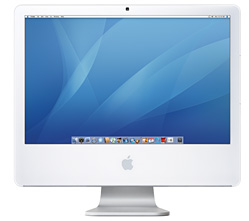
Imac24I really, really want one of these puppies.

The new 24-inch iMacs are out. I went and played with one at the Apple Store today. Now, when I first saw the 20-inch iMac, I thought, this thing is huge. But the 24-incher puts its 20-inch sibling to shame. For a minute there, I almost thought I was looking at Apple’s 30-inch super-luxury monitor; even knowing the size difference, I still walked over to the 30-inch display to compare. You can tell the difference, of course, but it doesn’t feel like much. Maybe the iMac’s large white facade makes the screen look bigger, but really, I don’t think it needs any help. In MS Word, a 2-full-page display of a document left the pages displayed more than large enough to read comfortably and had lots of screen space left over. Unfortunately, there was no full-screen, high-quality video on the machine to test, though in hindsight I now realize that I could have downloaded an HD trailer from the Apple movie trailer site.

The specs for the $2000 (base price) desktop are pretty impressive. The new Core 2 Duo chip (2.16 GHz, option for 2.33 GHz for an extra $250) has a 4MB L2 cache (that’s good, take my word for it if you don’t know what I’m talking about), and a fast NVIDIA graphics card. 250 GB HDD, Superdrive with DVD+R DL/DVD±RW, Built-in Bluetooth 2.0 & WiFi-g, built-in iSight camera, and the ability to use S-Video out to the TV (Apple does a good job of high-quality video out) in case the 24-inch monitor just ain’t humongous enough.

I decided some months back that I would get an iMac as my next computer purchase, but not until next year, after OS X v. 10.5, Leopard, is released. My last computer, this PowerBook I’m using now, I bought just a few months before Tiger was released, and I had overlooked the extra money it’d cost me to buy separately–one downside of Apple’s no-upgrade-option policy on software purchases. But when I decided to wait, I thought Leopard was coming in January (now March or even later seems more probable), and the 24-inch model hadn’t been released. And with the iMac line being refreshed now, it’s likely that I’d just see another iMac speed bump occur just a few months after getting one in Spring–which would make me want to wait a bit more, and I’d get caught up in the eternal wait-for-the-next-better-model game. Now it’s beginning to seem a bit silly to wait six months or more to buy a computer just because I don’t want to pay $130 for a new OS–especially when, as an educator, I have the academic discount that puts Leopard at $70.

There is one nit I have, though: Apple sells the iMac with 1GB of RAM, which is nice, but I of course want to upgrade to 2GB at least. The problem: the on-board 1GB is really two 512MB RAM chips which occupy both of the iMac’s only slots–no empty slots to add RAM. Which means that if I wanted to upgrade, I’d either have to pay Apple $175 for what should be a $120 upgrade, or I throw away perfectly good RAM chips, which in the end would be even more expensive. Bad form, Apple. The 1GB of RAM should absolutely have been a single GB chip–but maybe that was their idea, to make you buy from them up front. (One other nit for Apple: running Windows natively on a Mac is a huge plus point; why not demo it in Apple stores? You may well have lost a sale today when my Japanese friend couldn’t see it at work when we visited the Shibuya store.)

Japan pricing, usually higher than American, would add $140 to the total; however, I luckily am eligible for the 7% educational discount from Apple Japan, which would set it back down to $2000. But I’d have to shell out the full $200 for Windows XP–due to their system of educational sales, I would not be able to buy it without going through massive headaches with my school’s home campus, thousands of miles away (unless anyone out there knows differently?). The whole shebang, including XP, the 2GB Apple RAM, and the option for wireless keyboard and mouse, would set me back about $2400. Oh, wait, I forgot that I’d want to buy Windows virtualization software–almost certainly Parallels. Add another $80, call the whole deal $2500. Add another $170 (total of $2650) if I want to opt for the extra 2 years’ AppleCare warranty.

Partly I’m writing this to work out for myself whether to buy it now or wait. I have this personal rule where I don’t buy anything expensive until I’ve considered it for at least two weeks. However, that’s more for impulse buying something that I wouldn’t really use and don’t truly want (like the five hundred bucks I shot on a Sony Clie PDA years ago, virtually unused all this time). I know I would use the iMac, though.

Any thoughts?

Categories: Mac News Tags: by

Path to 911 Counts of Defamation

September 10th, 2006 Comments off

Via C&L: Salon.com editor Joan Walsh was on Real Time with Bill Maher, says she’s seen the miniseries, and says that the movie is “worse than you think.”

“They make him out to be a buffoon, there are several points where they juxtapose bad decisions that actually weren’t real decisions, didn’t happen, where they juxtaposed those with Clinton saying, ‘I did not have sex with that–‘ the thing you heard a million times, they make him out to be completely ineffectual, and bumbling, and distracted.”

Even the anti-left guest, P. J. O’Rourke, who said he’d love it because it bashed Clinton, harped in on the “why completely make stuff up about recent history” question, which is as far as some right-wingers will go on this one if they have anything critical to say about the movie. Well, maybe conservative Libertarian O’Rourke wasn’t paying attention to what the right wing is like when it comes to recent political history lately.

But another recent revelation indicates that Democrats aren’t the only ones slandered (‘libeled’? It’s both spoken and published…) in the movie. According to AmericaBlog, American Airlines is defamed as well. In the movie, Mohammad Atta is shown going up to the American Airlines counter at Boston’s Logan Airport, where a security warning pops up. Despite one airline worker’s disbelief that Atta is not even searched, another senior employee waves Atta through.

Except that (a) the warning appeared in Maine, not Boston; (b) there was no call in the warning to search people on the list; and (c)–the big one–Atta flew on U.S. Airways, not American.

But, if AmericaBlog is accurate (and it seems to be; though I can find no official confirmation of all the details, The New York Times does quote the film as showing Atta checking in at an American Airlines counter), then AA is made to look like their own carelessness and incompetence allowed Atta to walk onto the plane, when they could have nailed him right there.

Another scene for Disney/ABC to cut if they don’t want their fannies sued off.

Update: BTW, the movie’s ad claims that it features “Everything that might have prevented [9/11].” I would bet you a lot that it doesn’t.

Update 2: Apparently, Bush has scheduled a speech that will interrupt part 2 of the miniseries–the part that includes the small bits that showed his administration ignoring terror (although from reports, the movie doesn’t come close to showing Bush’s true negligence). No interruptions from the White House for part 1, of course.

Categories: Political Ranting Tags: by

Barriers, Physical and Otherwise

September 10th, 2006 2 comments

I went to a barbecue party with people from work yesterday (great party, lots of fun), and to get there, I took the train and had four transfers–quite a few escalators and staircases along the way. Not to mention a few new train lines. One of them was the Tsukuba Express Line, which had an interesting feature common to most new train lines: a platform guard wall, pictured below.

0909-Tranbarr2

0909-Tranbarr1

When the train stops, the gate doors open with the train doors. Japanese trains have always stopped at exact locations relative to the platforms (locations marked on the floor of the platforms for waiting passengers to line up at), which is necessary anyway for this to work.

Considering the tendency of many Japanese suicides to use jumping off railroad platforms as a tool for demise, this seems a prudent measure–though I suppose someone determined enough, and in good enough shape, could easily vault the fence anyway. However, this being Japan, I wouldn’t be too surprised if even suicides decided that it would be too uncouth to do so.

One other feature of the train line is, from what I could determine without my computer along to test it, is an on-train wireless Internet connection. Most of the articles I read seemed a bit unclear about whether it was free or not, but a few said it was only available to DoCoMo users. Still, it seems a new thing, and if it spreads and is opened up to anyone for free, it’d be a big new reason to take the train–if you can get a seat, of course.

Right now, however, I don’t take the train much for a few different reasons. First, I have never been comfortable with the sanitation of being crammed together in those cars with so many people with god alone knows what viruses and so forth. I’d wear a surgical mask, but they don’t make one here that works effectively with a nose as big as mine, not that I think it’d make that much of a difference. And on cold days, one can see the windows not just fogged, but dripping with precipitation–which, when one considers it, is really saliva exhaled in mist form from all the passengers on the train, dripping down the sides of all the glass surfaces. Ewww.

Second, there’s the footwork involved. I live in a place where I have to walk five minutes to a bus station, then take a seven minute ride to the train station, then walk for about 400 meters up and down several levels to transfer to the subway line to get to my school, and then walk from the station. The wait between the bus and the train is usually long, as the bus arrives at the station just as the every-20-minutes express train leaves; it’s a choice between taking the local and transferring to a crowded express halfway there, or waiting almost 20 minutes for an express I can sit down on. Coming home, I can get a seat–if I am willing to stand in line an extra 10-15 minutes to get on a subsequent train.

Relative to that, taking my scooter has too many advantages to give it up. A guaranteed seat, door-to-door transport, and taking into consideration the walking, buses, and transfers, it’s actually quite a bit faster than taking the train. Disadvantages include inclement weather (though the scooter is lovely in hot weather), and the dangers of driving in Tokyo. But for the time being, at least, I’ll take the bike. At 35 kpl (83 mpg), gas doesn’t cost too much–but then there’s one last disincentive: my school only reimburses travel by train and bus. Despite it being cheaper by about half, even with wear-and-tear costs factored in, they don’t pick up that particular tab. Ah well. Who said life was perfect?

Categories: Focus on Japan 2006 Tags: by

Here’s a Thought

September 9th, 2006 1 comment

It just occurred to me: there might be one unique source of pressure to make Disney decide to yank “Path to 9/11” from TV: Apple.

Consider: Steve Jobs recently joined Disney’s board, as a powerful new force. Jobs has never been outwardly political, to my knowledge at least, and seems to be more focused on business. But on September 12, just one day after the controversial movie is supposed to be broadcast, Apple is expected to make a very important announcement about a new movie download service–and it is expected that Disney will be their primary, if not their only, initial source of media.

This could be a huge turning point for Apple, a very important event, and for their major partner to be disgraced in a media scandal the day before the unveiling–well, Jobs might very well want to avoid that. And that could very well lead to pressure on Iger to do the right thing–or at least the right thing for good business.

Categories: Political Ranting Tags: by